Bright Spot
 

BRIGHT SPOTS


In honor of Head Start’s 60th anniversary this month, here are reflections from three Head Start alumni on how the program set them up for success and inspired them to become educators.


QUOTABLE & NOTABLE

“That’s what Head Start really is: an economic engine as much as an educational and family empowerment one.


“The program’s design reflects many of the values we hold dear in Ohio. Funding flows directly to local organizations, not federal agencies, so decisions are made by people who know their communities best. Local leaders assess needs, direct resources, and are held accountable for results. It’s government at its most responsive and efficient.


“And the results speak for themselves. Children who participate in Head Start are more likely to graduate, more likely to avoid the criminal justice system, and less likely to rely on public assistance down the line, and the benefits carry on to the children of former Head Start students.” 

Who:

Julie Stone, executive director of the Ohio Head Start Association

Where:

“Head Start strengthens families — and Ohio’s economy” commentary published in Ohio Capital Journal


FACT OF THE WEEK

 
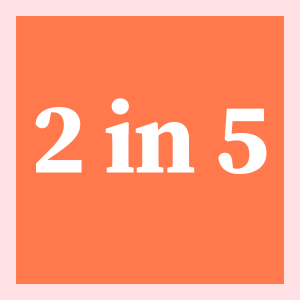
2-in-5
 

As policy makers consider possible cuts to Medicaid at both the state and federal levels, it’s important to understand who is covered through the program and who may be most impacted. According to data on Medicaid coverage in Ohio, 2 in 5 Ohio children are insured by Medicaid, and the state’s largest Medicaid caseload involves families and children (53.2%).


POLICY RADAR

Ohio 

The state’s Controlling Board just approved a budget adjustment enabling an additional $67 million to reimburse school districts for free- and reduced-price school meals. Cleveland.com describes data on eligible students and growing needs for school meal support.

Groundwork Ohio’s Troy Hunter describes what’s at stake with HB 141, a bipartisan bill that would create Prescribed Pediatric Extended Care (PPEC) centers to support children with complex medical needs. A similar bill to create PPECs was proposed last fall in the 135th General Assembly but did not make it out of committee.


BEYOND THE BUCKEYE STATE

A quick (10-minute) video produced by Vox tells the story of how a conservative state like Oklahoma became a leader in offering universal pre-K.

There are currently 20 states that set their minimum wage below $10 an hour. (Ohio’s minimum wage is $10.70 an hour for non-tipped employees.) The Prenatal-to-3 Policy Impact Center published a brief on the economic impact for families if states below that threshold were to increase the minimum wage to $10 an hour, which is shown to have beneficial impacts for babies, young children, and families. Doing so would enable families to garner about $3,900 a year, the equivalent of three years of diapers or 6.5 months of groceries.


WHAT WE'RE READING

An important and timely read by Vox discusses the “competing visions for good [child] care” at play in the U.S. While at times seeming to oversimplify perspectives on quality — i.e., defining quality by credentials and standardized ratings versus informally, through nurturing adult-child relationships — the article pinpoints key philosophical differences and the evolution of quality debates over the past few decades. It includes a review of state quality rating and improvement systems (QRIS), research studies on QRIS and child outcomes, and the paramount importance of quality interactions between caring adults and children.

AT&T is piloting a 10-week long summer camp for the children of employees at their headquarters in Dallas, Texas — just one example of businesses stepping in to help employees with their child care needs. As more employers provide child care benefits, it’s important to consider the limits of this approach as a sustainable — and equitable — solution to meet families’ needs.


RESEARCH ROUNDUP

The non-partisan, public policy research group RAND published a report with findings from their 2024 American Pre-K Teacher Survey. The survey was administered to over 1,400 public-school based pre-K teachers as well as their K-12 peers and peers in similar industries. The study examined wages, job-related stress, and intentions to leave the field. Key findings show that public school-based pre-K teachers reported earning about $7,000 less than public K-12 teachers, and $24,000 less than similar working adults. Thirty-eight percent of pre-K teachers surveyed felt that their compensation was adequate. More pre-K teachers reported job-related stress than peers working different jobs. Pre-K teachers ranked sources of job-related stress as managing student behavior, low pay, supporting student well-being, and administrative workload. They reported working an average of 47 hours/week, rather than their contracted 39 hours. Despite lower pay and more job-related stress, 18% of pre-K teachers reported the intention to leave their job — compared to 22% of public K-12 teachers and 24% of similar working peers.


This edition was written by Jamie O’Leary and Janelle Williamson.

If you like this newsletter, forward to a friend! Subscribe here.


crane.osu.edu

X  LinkedIn