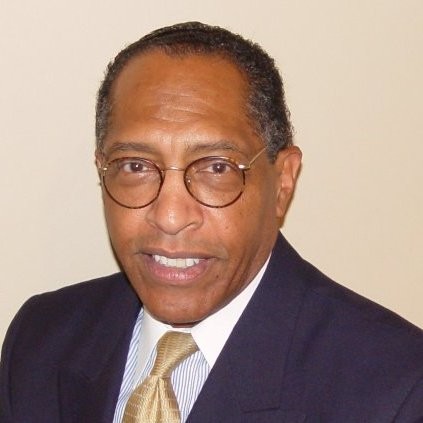
As with many African Americans, I knew fragments of my family history. My sister and I got bits and pieces from our parents and other relatives. But that information was painfully deficient compared to the comprehensive collection of data and evidence that began to surface after my cousin Denise Lester actually moved to Richmond, Va., and began serious research of the Woolfolk family history. What she uncovered generated emotions ranging from sadness to empathy to absolute pride.
From the records available in Richmond and surrounding counties, the white Woolfolk men were sheepherders long ago in Wales. In the early 18th century, brothers Robert and Richard Woolfolk arrived in America from Wales. Robert settled in Caroline County, Va.; Richard in the Holly Hill area. Through marriages and children, the Woolfolk family grew and settled around Richmond and in Kentucky. There is even a Woolfolk family crest that can be traced back to the late 1600s.
Historic records indicate that in January 1791, “Peter a Negroe fellow was sold to John G. Woolfolk for the sum of fifty pounds.” Later records dated August 18, 1808, note that John’s will left an “old” Peter and a “young” Peter to his son Jourdon Woolfolk living in Caroline County.
Detailed records were not kept. Recent DNA samples from my father Peter C. Woolfolk, Sr. — then 99 years old — determined his descendants were from the Republic of the Ivory Coast. Woolfolk, Sr. passed away at 101 years old.
Along the way, the “young” Peter and his family had learned to read. A rather prolific fellow, he married three times and produced 11 children. His first daughter, Maggie, would later become a teacher at the Freedmen’s Bureau and one of the first “Colored” teachers in Richmond. Somewhere along the way this “young” Peter Henry was captured and became a Confederate prisoner of war. He was eventually released in 1865 after the fall of Richmond in the Civil War.
Surviving the harsh circumstances of the time, Peter Henry Woolfolk overcame barriers and imprisonment, yet he managed astounding accomplishments for a former slave. In 1871, local school board records showed him as one of the first Colored teachers in Richmond, receiving a salary of $50 per month. He has a letter — dated April 22, 1865 — published in the Freeman’s Record outlining his experience in the school. Peter Henry met another Colored teacher in the school, Otway Steward. Together they co-founded the first Colored newspaper in Virginia, the Virginia Star (1877 to 1888). A May 11, 1878, copy of the newspaper’s front page prominently lists Woolfolk and Steward as editors. He didn’t stop there.
From 1881 to 1884, Peter Henry is listed as the “Grand Worthy Secretary of the United Order of True Reformers.” He and another member were the only two that could read and write at the time. Noted in a “Study of Negro Problems” presented at Atlanta University, May 1904, The True Reformers was one of the most remarkable Negro organizations in the country. They created one of Richmond’s largest insurance companies — The Grand Fountain — with Peter Henry as its secretary. In addition, as a leader of the True Reformers, a temperance group, Peter Henry also co-founded the True Reformers first Black-owned bank in Richmond in 1889. Because of its entrepreneurial spirit, Richmond was known as “the Birthplace of Black Capitalism” and the Black Wall Street.
A man of faith, Peter Henry was a member of Richmond’s Third Street Bethel AME Church, considered one the two most historic churches in Virginia. The church is now listed on the National Historic Register and the Virginia Landmarks of Black History.
Passing away in 1896, a newspaper notice said, Peter Henry was known as “a Christian gentleman, honest in his dealings and careful of the rights of others. He became a favorite with all classes.”
Peter Henry Woolfolk was such an intriguing Black person in his day that historians are consistently writing books and conducting studies on his participation in Black affairs in Richmond’s post-Civil War era.
Our family is exceptionally proud to have a great grandfather of such great character and accomplishment — particularly after having been an ex-slave. God bless you, Peter Henry!
This article originally appeared in the PRSA newsletter and is reprinted here with the author’s permission.
|
|
Bill Plante Chair in Leadership & Media Integrity, Loyola University Chicago
Freedom Forum Fellow in Women’s Leadership
In an ideal world, managers look out for each other. They understand one another’s responsibilities, joys and challenges. They are inclined to say yes to requests for help. They communicate clearly, so everyone’s viewpoints are understood, even when they conflict.
And they do conflict. Resources may be limited. Visions of success might differ.
One manager’s advocacy for his or her team members may seem to put their interests above others.
In the idea factory of a newsroom, there’s always give-and-take about what’s interesting, what’s innovative, what’s worth extra time and effort. Managers of various teams, desks, or projects may not always agree.
How they deal with those tensions is a test of their leadership skills – especially emotional intelligence, communication and conflict resolution.
It can set the tone for how their respective staff members interact, too.
It can make the difference between an organization with healthy, collaborative teams, and one with self-contained silos.
Some tips for aspiring collaborative managers:
- Connect with one another routinely, not just when you need something.
- Invite your colleagues to learn about your team and its work.
- Understand how your team meets theirs in the organization’s workflow – and make sure your staff does, too.
- Give other managers a “heads up” when something related to your team’s work could have an impact on theirs.
-
Strive for reciprocity. I’ve written before about the “give and get ledger” that people keep in their heads. Make sure yours is in balance with your colleagues’ when it comes to doing favors.
- Whenever differences arise, step away from your keyboard. Talk, don’t text.
- Try to resolve conflicts between/among you before escalating them to your boss.
- Don’t let disagreements fester. Passive aggressive behaviors like the silent treatment can be as bad as plain old aggressive behaviors like bad-mouthing colleagues to their faces or behind their backs.
- When your team has a win, make certain to give credit to other teams that contributed, even in a small way, to the success.
Here’s the bonus to collaboration, something collegial managers know: Not only does it make your management responsibilities easier and more enjoyable, you just might make some friends for life.
|
|
|
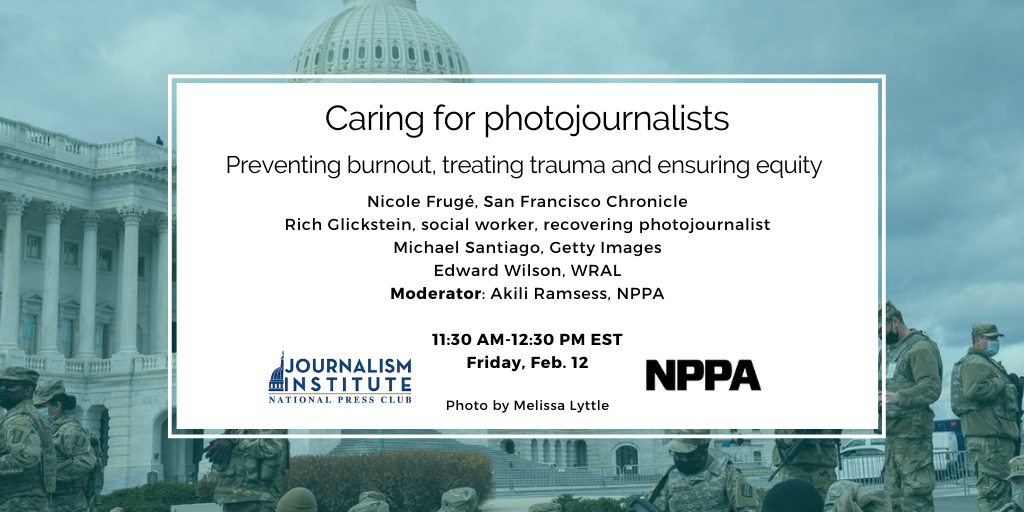
Visual journalists have been on the front lines of the pandemic, injured at protests and attacked at the Capitol insurrection. Holding a camera makes those who are reporting on events a visible target for law enforcement or people angry at the media. And working remotely is not an option when you’re the community’s eyes and ears at the scene. So how do we care for photojournalists facing more pressure than ever under exhausting and dangerous circumstances?
Join the National Press Club Journalism Institute and the National Press Photographers Association for honest answers to this question from visual journalists who understand the challenges and importance of capturing history.
The panel will feature:
-
Nicole Frugé, director of photography, San Francisco Chronicle
-
Rich Glickstein, recovering photojournalist, trauma therapist and social worker
-
Michael Santiago, staff news photojournalist, Getty Images
-
Edward Wilson, chief photographer, WRAL
-
Moderator: Akili Ramsess, executive director, NPPA
|
|
This newsletter is written & edited by the National Press Club Journalism Institute staff: Beth Francesco, Holly Butcher Grant, and Julie Moos. Send us your questions and suggestions for topics to cover.
|
|
|
|
|
|
|