NFFV Action Alert


Upcoming

Government, Military and Veterans Affairs Committee Hearing

Friday, February 20, 2026

1:30 PM, Room 1507


Oppose

LB1149 - Require disclosure of proposed state agency contracts with private entities that have contracts with United States Immigration and Customs Enforcement

The Stated Intent: LB1149 is intended to provide clarity for taxpayers about any public dollars that are to be paid by state agencies to private entities who contract with U.S. Immigration and Customs Enforcement (ICE).


Any state agency seeking to enter a contract with a private entity would be required to disclose any contracts entered into by the entity with ICE, and this contract information would be public record accessible via The Department of Administrative Services (DAS).  

So what is LB1149 all about?


LB1149 simply adds the following the Nebraska statutes 73-301 and 73-302.


"and (e) any contracts entered into by such private entity with United States Immigration and Customs Enforcement."


That's it, no other changes.

The Background


Nebraska Statute 73:301 details what the Director of Administrative Services must do when a state agency enters a contract for personal services. It defines such contact as:


"contract for personal services means an agreement by a contractor to provide human labor but does not mean a contract to supply only goods or personal property. The term includes contracts with private service providers, consultants, and independent service contractors."


Nebraska Statute 73:302 details what the state agency entering a contract must submit to the Director of Administrative Services. These requirement are narrowly focused on core procurement and performance justifications. They include:


  • The proposed contract itself
  • A review of long-term actual cost savings with detailed projections for 12 and 60 months, including direct and indirect costs
  • Measurable goals for improving service quality.
  • An assessment of in-house alternative and feasibility.


These all center on the economic efficiency, quality assurance, and whether outsourcing makes fiscal and operational sense.


As a quick side note, statute 73:301 is one item State Auditor Mike Foley questions regarding Nebraska's contact with Global Sustainability Developers LLC (GSD), a Lincoln-based firm led by Julie Bushell. The statute states:


"The contract shall be subject to the public bidding procedures established in the State Procurement Act except in emergencies approved by the Governor."

Motivations


Does having a private entity list any contract it may have with ICE fall under the economic efficiency, quality assurance, and whether outsourcing makes fiscal and operational sense? A reasonable person would say, no. So what is the motivation, transparency?


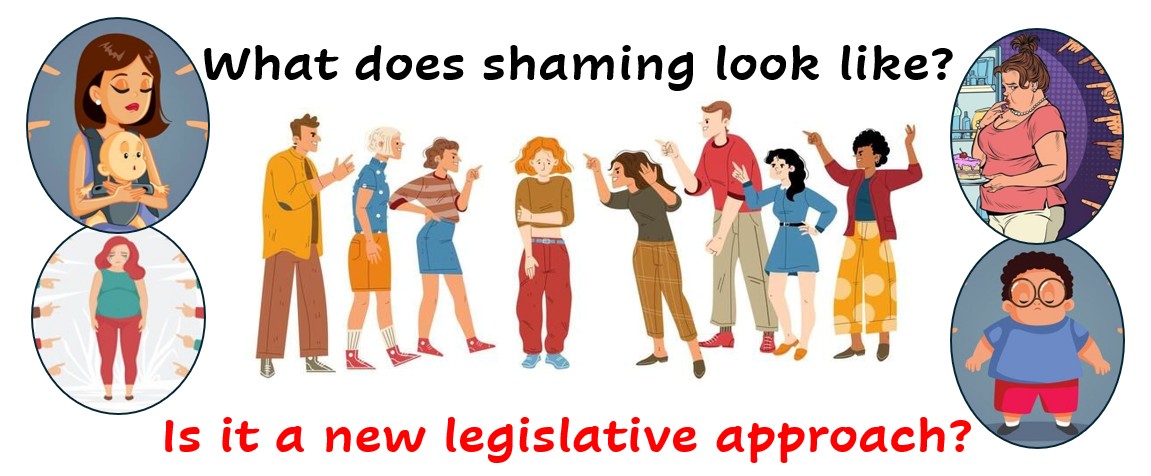
If transparency is the motivating factor, then why only list ICE. What about contracts with other federal agencies like the FBI, DEA, EPA, HHS, or DOD and so on? No, this isn't about transparency either. This appears to be about shaming private agencies from applying for state contracts if they have ICE contracts as well.


Here is what we know about those that use shaming.


Individuals and Relationships:

  • Abusive or personality-disordered parents often use shaming to control children, making them feel worthless or inherently flawed. 
  • Teachers, religious leaders, and authority figures may shame students or followers, sometimes unintentionally, through public criticism or dismissive remarks. 
  • Partners in relationships may use shaming to manipulate or exert control, especially in emotionally abusive dynamics.


General Psychological Mechanism:

  • Shaming is a form of relational aggression used to enforce conformity, control behavior, or assert power. It is often rooted in a desire to uphold perceived moral or social standards, but it can lead to resentment, defensiveness, and long-term psychological harm. 


Should shaming practices be used by our legislatures?

What we know


Agreements and contacts with ICE has exploded in President Trump's second term. There are many working to support ICE in their efforts to uphold immigration law. In January 2025 there were roughly 135 agreements nationwide with ICE. Mid-February 2026 that number is around 1,400 active agreements marking a 900% to 950% increase in one year.


Most of that increase comes under The 287(g) Task Force Program, authorized under the 1996 Immigration and Nationality Act. This program allows ICE to deputize local officers to enforce federal immigration laws.


We also know that crime levels dropped significantly in 2025 across most categories. Homicides had the largest single year drop on record and potentially the lowest U.S. murder rate since 1990. Violent crime trends showed broad declines in areas like robberies (down 23%), aggravated assaults (down nearly 10%), carjackings (down 61% since 2023), motor vehicle thefts (down 27%) and residential burglaries (down 17%).


Drug overdose deaths have also declined significantly in 2025 with early data results showing a nearly 21% drop from August 2024 to August 2025. That's a five year low. Overdose deaths were reported to have fallen in 45 states.


Of course, many factors contribute to these very positive numbers. However, there is no denying that current policies are having some influence, exactly how much, only time will tell.


It is clear, the majority of American's still approve of President Trumps handling of immigration. Following are some numbers reported on by the Daily Wire.


  • 51% approval for Trump's handling of anti-ICE protests.
  • 67% opposition to sanctuary city policies.
  • 60% believe Democrats are encouraging resistance to ICE, with 57% opposing that tactic.

Let YOUR senator(s) know:


  • It's hard to believe some in the legislature would try and actually legislate shaming. What is next, legislating bullying? 


  • Whether you like the current administrations policies or not, the very positive results on crime and drug overdoses are hard to dispute.


  • There is support for getting violent illegal aliens off American streets.

Your voice is powerful, make it heard on LB1149. The committee hearing is scheduled for Friday, February 20, 2026. NFFV recommends you "Oppose" this bill. 


How to be heard? Here are three ways:


  • Most Effective: Testify in person. Going to the Committee hearing and sharing YOUR story with committee member Senators is very impactful. For first time in person testifier here are some helpful hints. 
  • Effective: Submit written testimony. If you can't be there in person then submit written testimony. Not sure how to do that, click here. Note: The deadline to submit and verify a comment for the hearing record for LB1149 is Friday, February 20, 2026 at 8:00 AM Central Time.
  • Least Effective: Email your position letter to the Committee Senators and CC your own Senator. For a listing of the Government, Military and Veterans Affairs Committee Senators click here. Note: emails should be sent by noon, the business day before the committee hearing. It's not likely these emails will be included in official hearing minutes, however, there is a better chance Committee Senators will see your comments. You can request they be added to meeting minutes in your email to Committee Senators.

If you liked the content provided in this Minuteman, consider donating to NFFV. You can donate by clicking the button below or by mailing a check made to Nebraska for Founders' Values.

Nebraskans for Founders' Values

PO Box 255

Walton, NE 68461


NEBRASKANS FOR FOUNDERS' VALUES

Board of Directors Team

www.nffv.org