Product Design | Audio Electronics | Acoustics | DIY | Audio Innovations
|
|
KEF Launches Updated Blade Meta and the Reference Meta Loudspeakers |
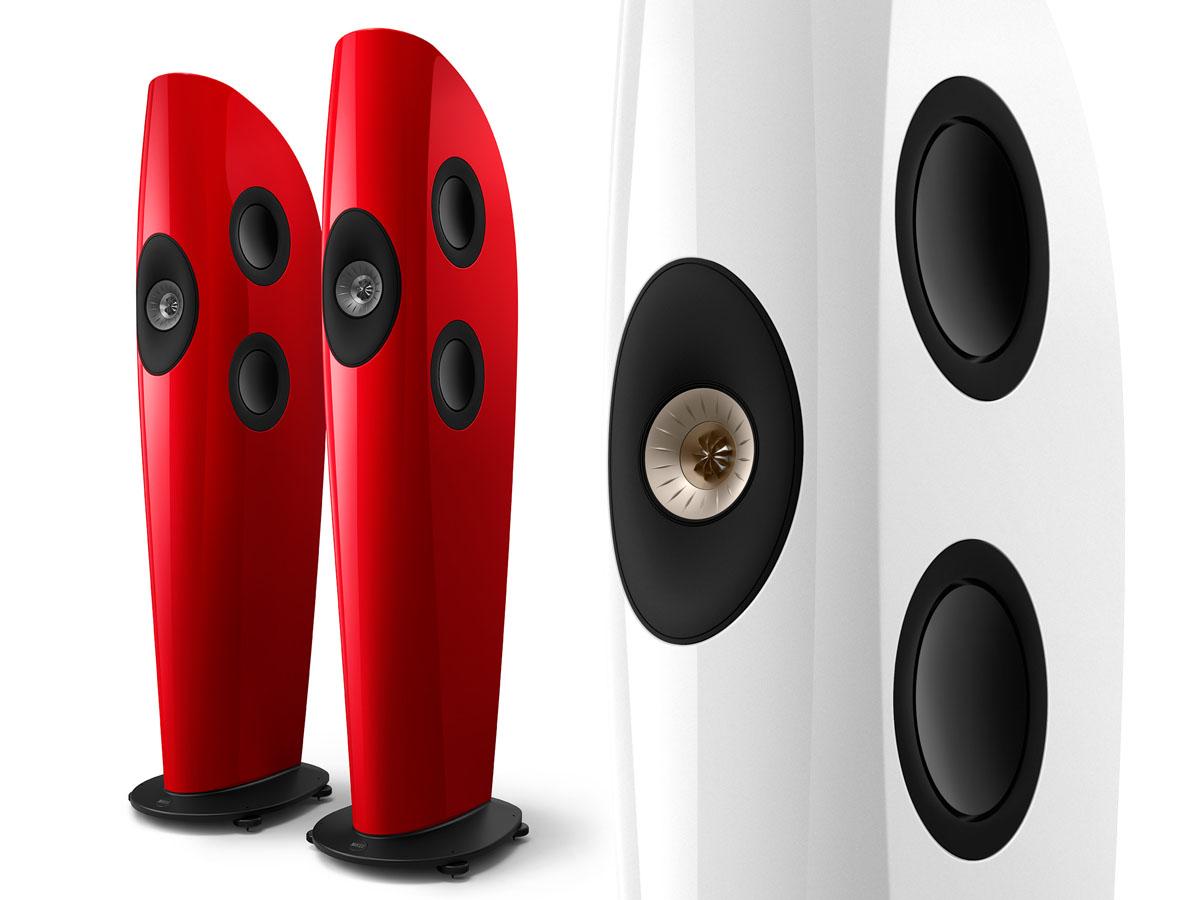
Capitalizing on successful research and significant improvements demonstrated by the KEF LS50 Meta speakers, the British hi-fi brand has officially launched the latest updates to its high-end loudspeaker offerings – Blade and The Reference. The two ranges have been updated with KEF’s latest acoustic innovations, including a new, high-end 12th Generation Uni-Q with Metamaterial Absorption Technology (MAT). The Blade Meta and Reference Meta loudspeakers are now available. Read More
|
|
|
|
|
COMSOL 6 For Speaker Design and Transducer Development Explained! |
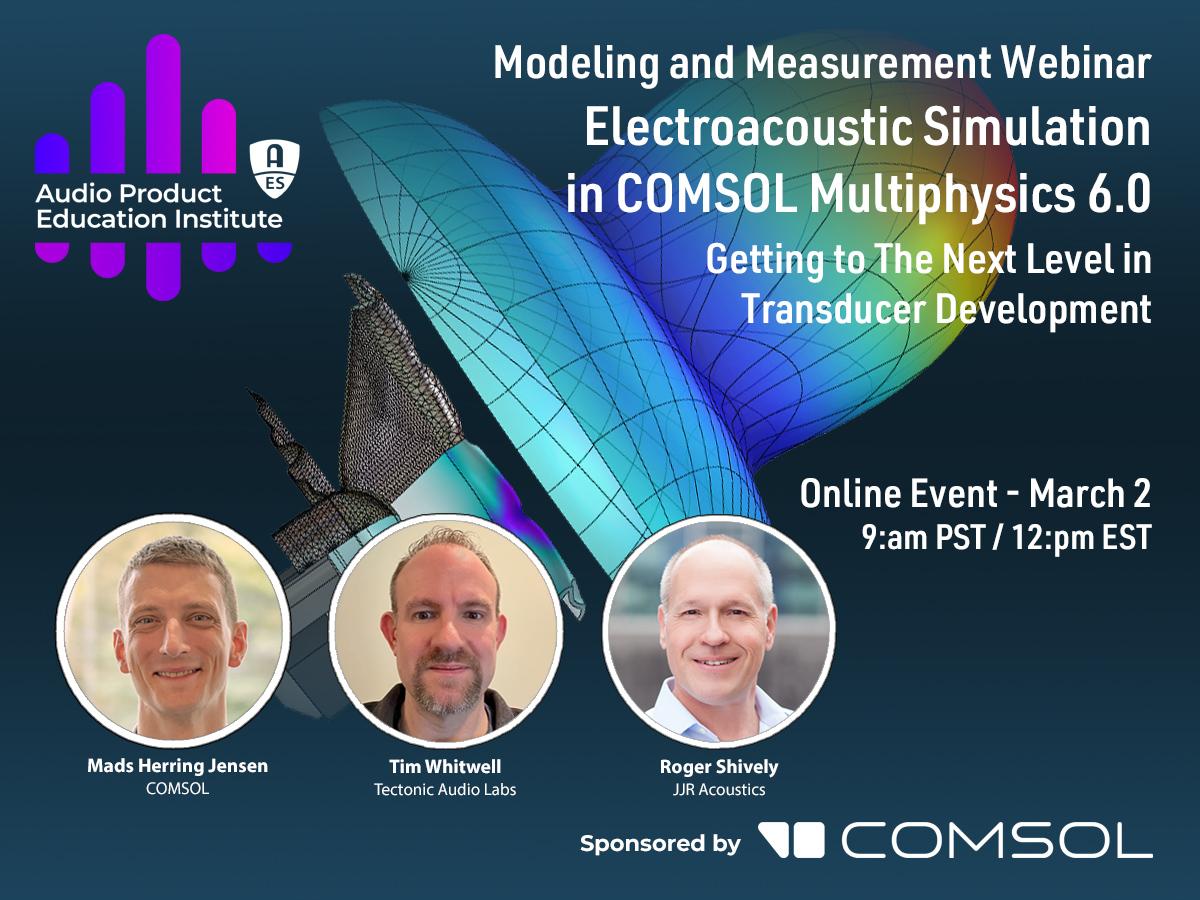
The AES Audio Product Education Institute (APEI) is presenting a new online event on Wednesday, March 2, exploring the latest updates to the Acoustics Module in COMSOL Multiphysics 6.0 and its possibilities for loudspeaker development. The session, presented by simulation expert Mads Jensen from COMSOL, will detail and explain the significant improvements introduced in the latest version, specifically focusing on transducers and all the great new features for speakers in general. A great opportunity for the audio industry to get familiar with the new possibilities and also ask questions that relate to electroacoustic transducer applications. Read More
|
|
FLUX:: Immersive SPAT Revolution Software Adds Wave Field Synthesis for Spatial Audio Reproduction |
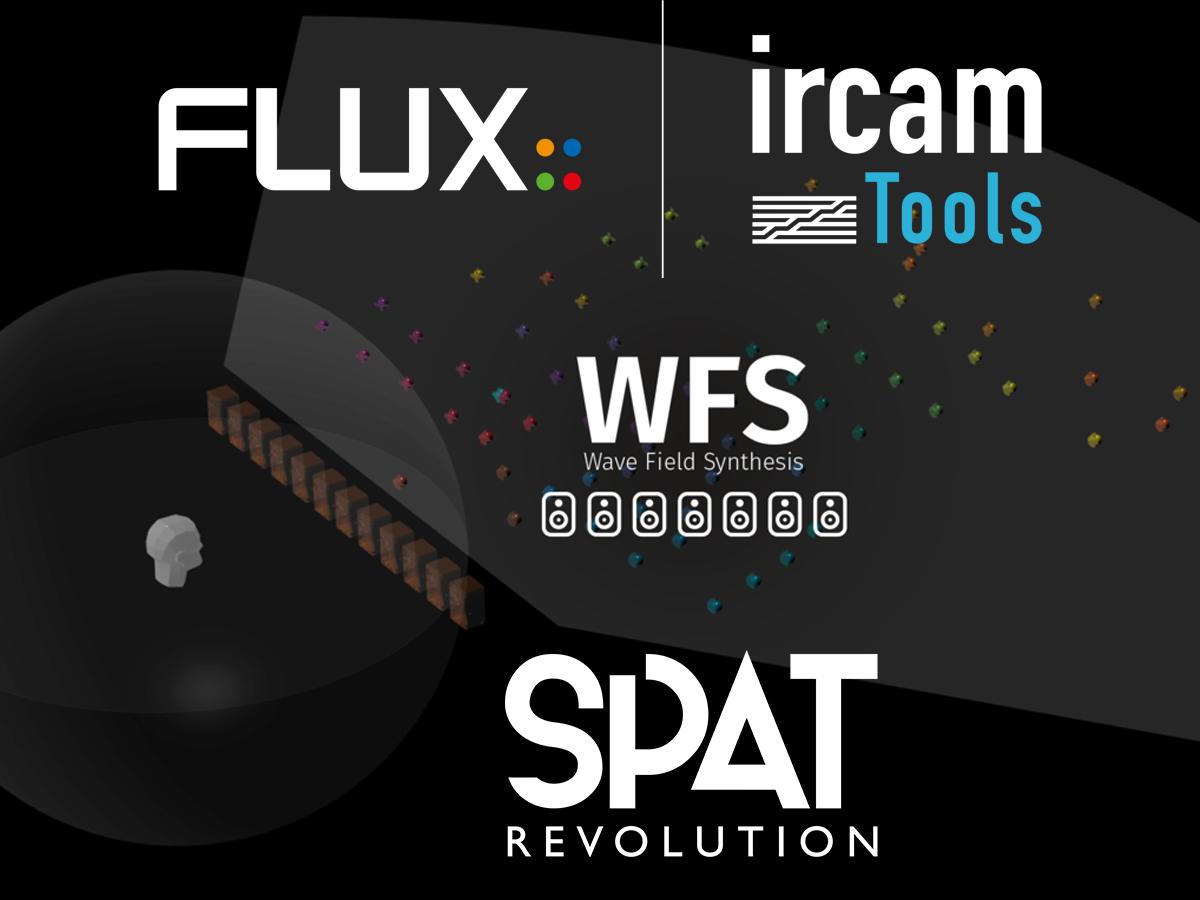
SPAT Revolution, the result of a successful partnership between FLUX:: Immersive and the French research institute Ircam, is a complete software suite created to bring the vast research performed at Ircam available to the market. SPAT Revolution 22.02 is a free software upgrade, packed with new features and improvements, and includes a Wave Field Synthesis option with an add-on license. It also offers reinforced support for QLAB and Logic Pro, OSC messages for snapshot recall, and enhanced ADM-OSC support. Read More
|
|
|
|
|
Ultrasone Introduces Wireless Bluetooth Headphones and TWS Earbuds |
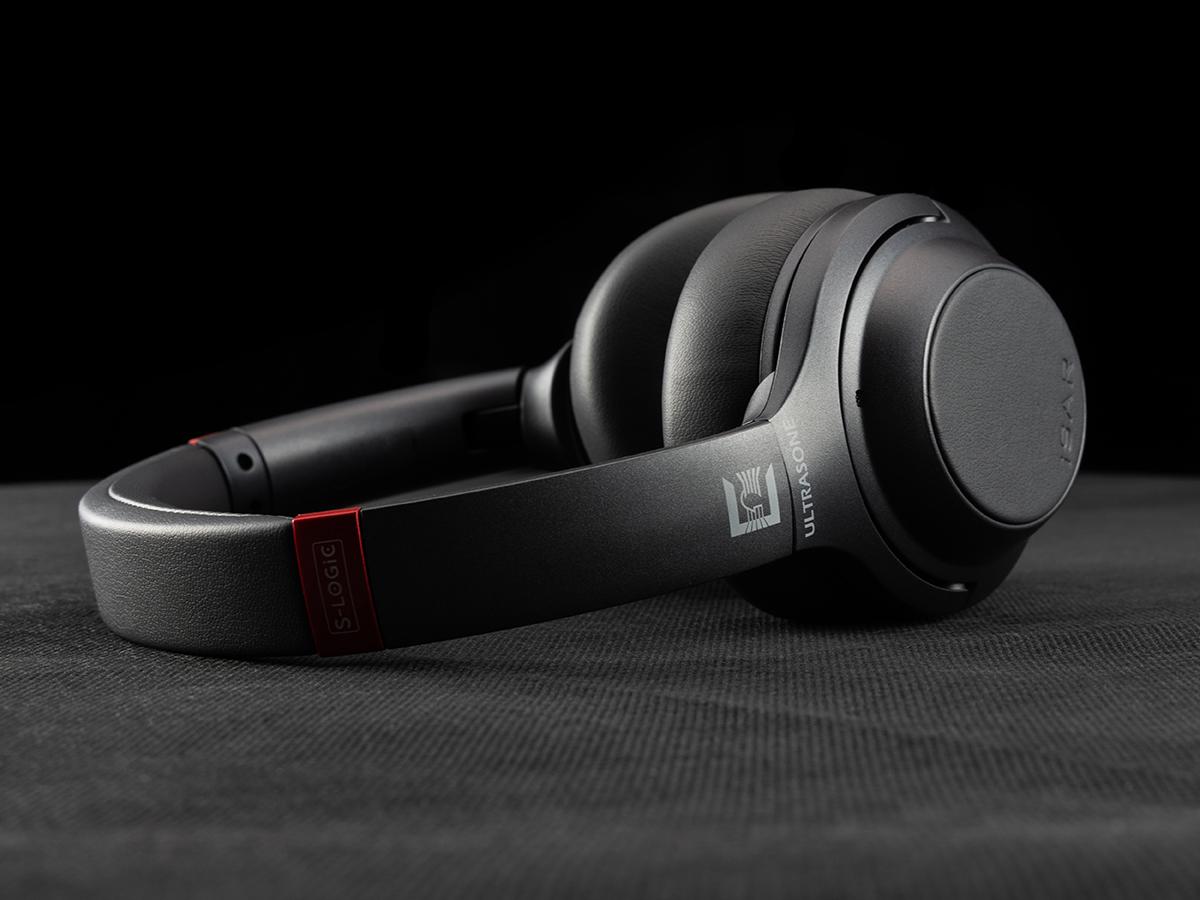
German headphone brand Ultrasone unveiled three new wireless options to expand its product catalog. The new Ultrasone ISAR, LAPIS, and METEOR ONE are effectively the first Bluetooth headphones in its long company history and also target new markets. Ultrasone says these are the result of more than two years of development, invested by the Bavarian headphone specialist to completely reposition itself within the important "wireless personal audio" segment. Read More
|
|
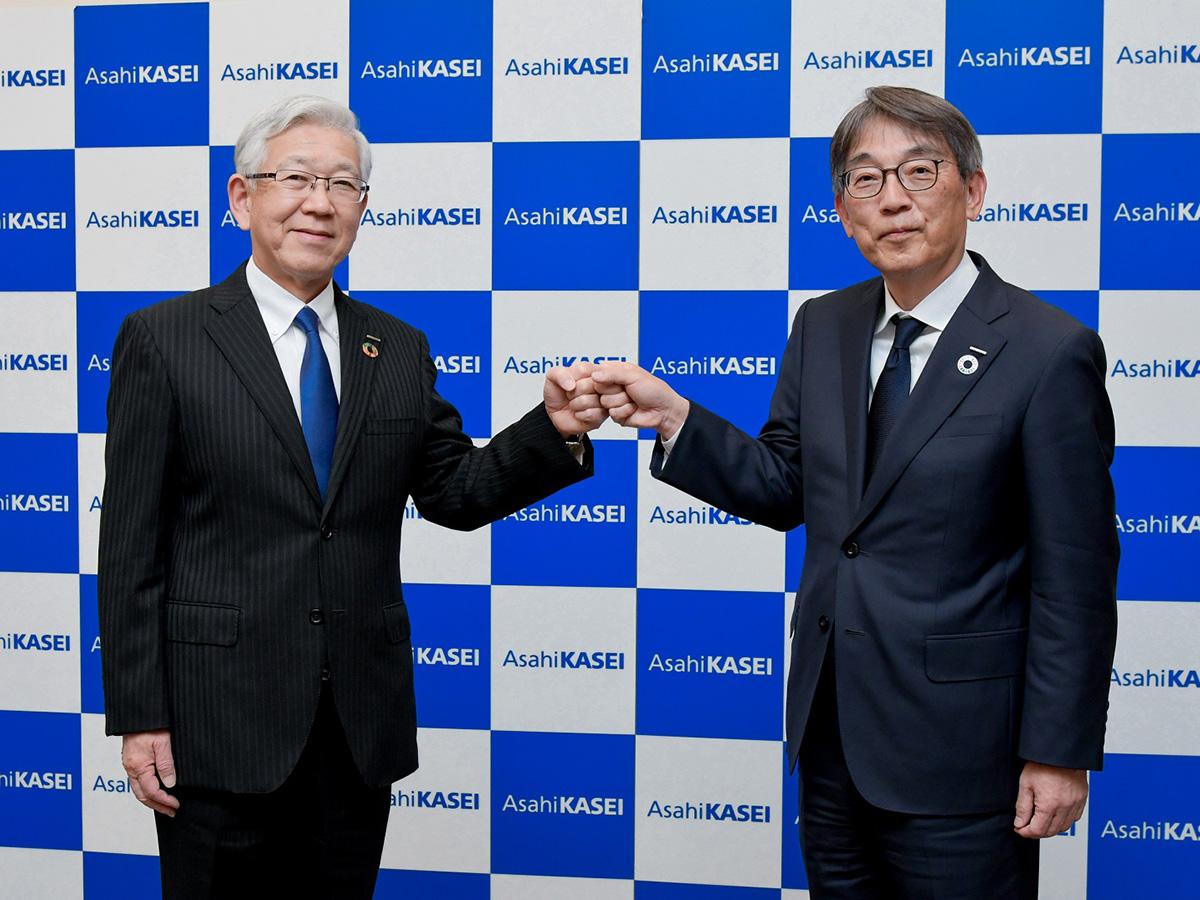
Koshiro Kudo to Become New President of Asahi Kasei |
Asahi Kasei announced at the end of January 2022 a change in the company's management. As of April 2022, Koshiro Kudo will assume the role of President and Representative Director. The current President Hideki Kobori will become Chairman of Asahi Kasei. Koshiro Kudo takes over the position in a robust business setting as the recently presented quarterly results show. With 40 years of corporate experience as a solid foundation, the new President will lead the company into a new century of its history, as Asahi Kasei celebrates its 100th anniversary in May 2022. Read More
|
|
|
|
|
Aspinity AML100 Analog Machine Learning Chip Redefines Always-On Power Efficiency for Voice Applications |
Aspinity launched the first member of its analogML family, the AML100, which is the industry’s first and only tiny machine learning (ML) solution operating completely within the analog domain. As such, the AML100 reduces always-on system power by 95%, allowing manufacturers to dramatically extend the battery life of devices and migrate walled powered always-on devices to battery - opening whole new classes of products for voice-first and smart home systems. Read More
|
|
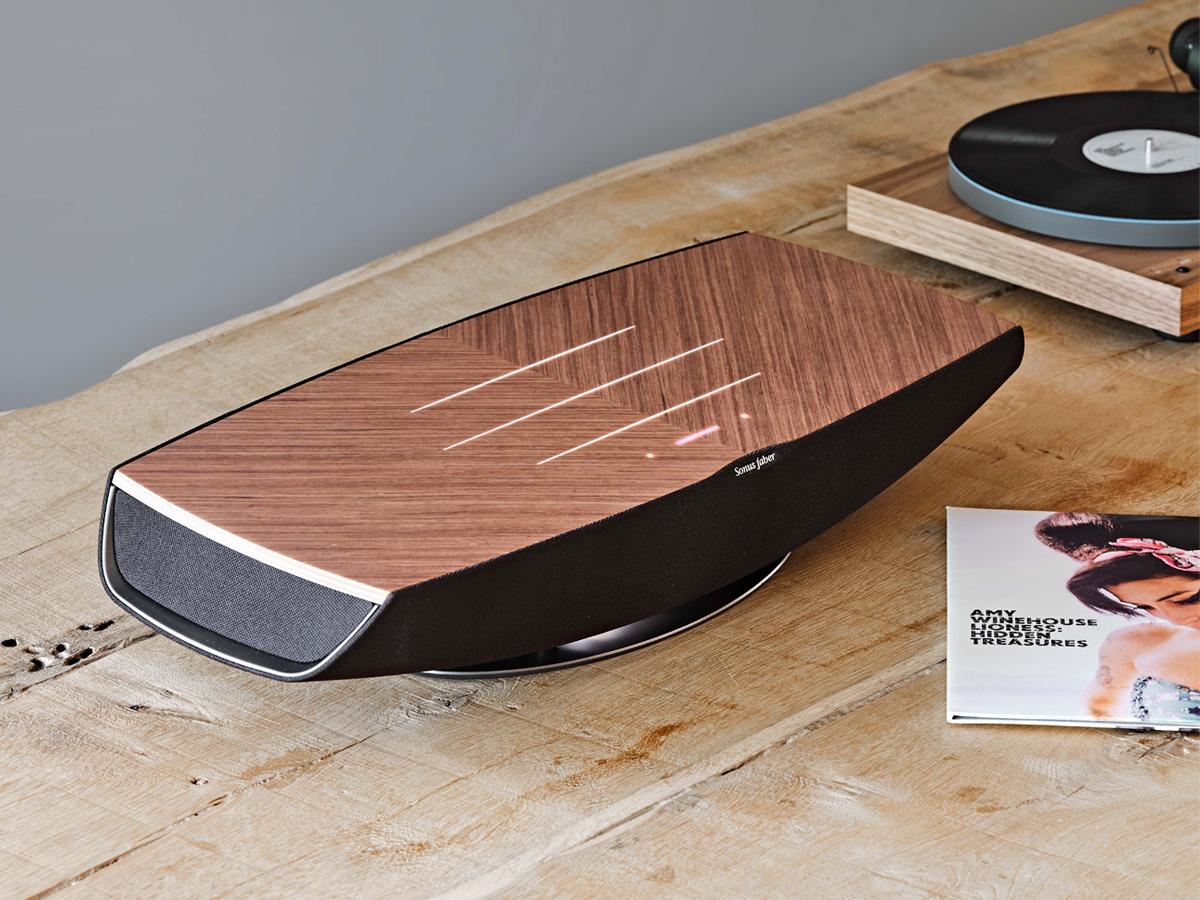
Sonus faber Launches Accessible Omnia All-in-One Wireless Speaker System |
Sonus faber announced the premiere of Omnia, the brand’s new premium wireless speaker and the latest effort from the Italian brand to create an all-in-one lifestyle music system. And for this new project, the Sonus faber team covered all the bases, going beyond a stunning high-end design. The Omnia supports all forms of streaming, from AirPlay 2 and Chromecast and Tidal Connect, to Bluetooth with aptX HD, offers all imaginable digital and analog connections, including a phono preamp, and fills any room with convincing sound with advanced signal processing. Read More
|
|
|
|
|
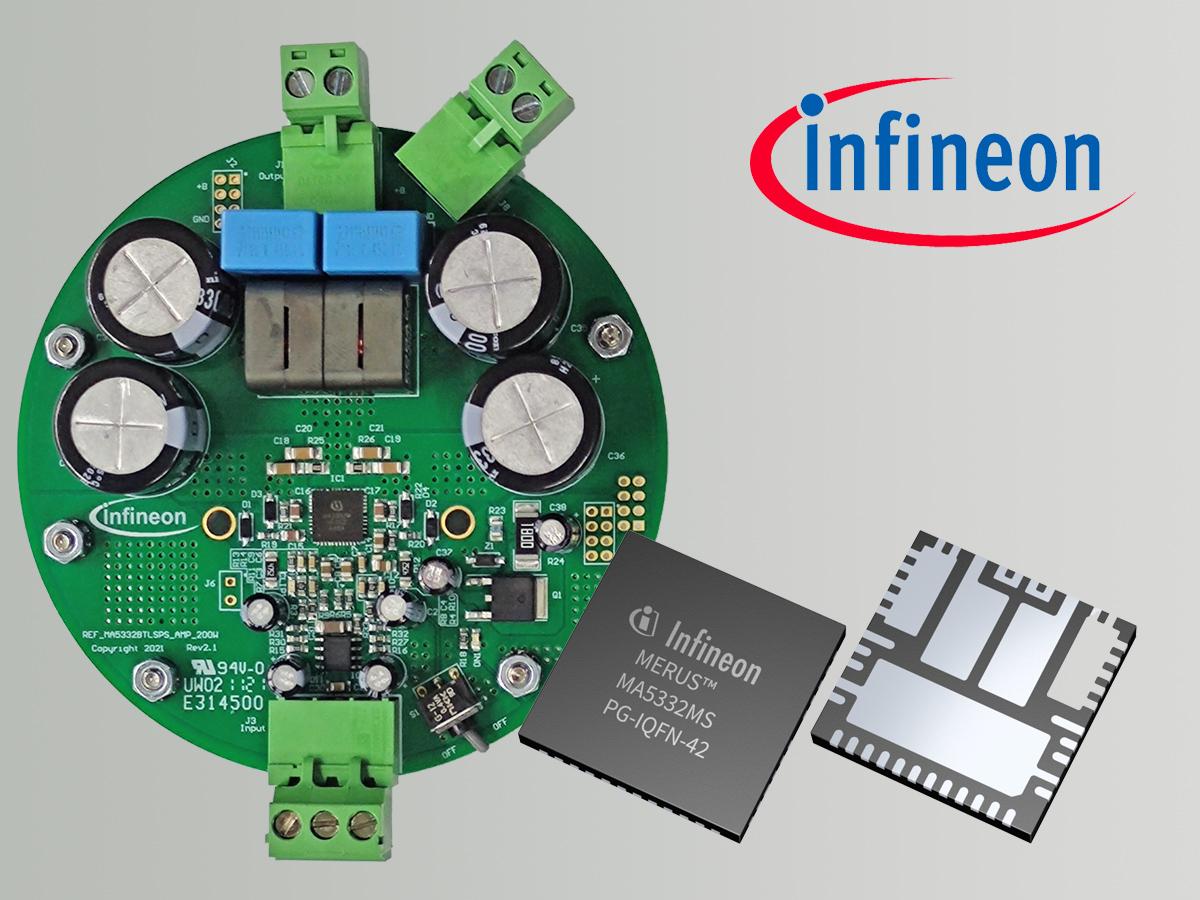
New Higher Power MERUS MA5332MS Class D Audio Amplifier Multichip Module Now Available |
Unlocking the potential of its best-in-class power MOSFET technology, Infineon Technologies introduced the MERUS two-channel, analog input, Class D audio amplifier multichip module (MCM) MA5332MS, adding a higher power and smaller footprint device to its MERUS technology family. It is a powerful upgrade to its predecessor, offering the same or even higher output power than monolithic alternatives, without a heatsink and 50% less footprint . Read More
|
|
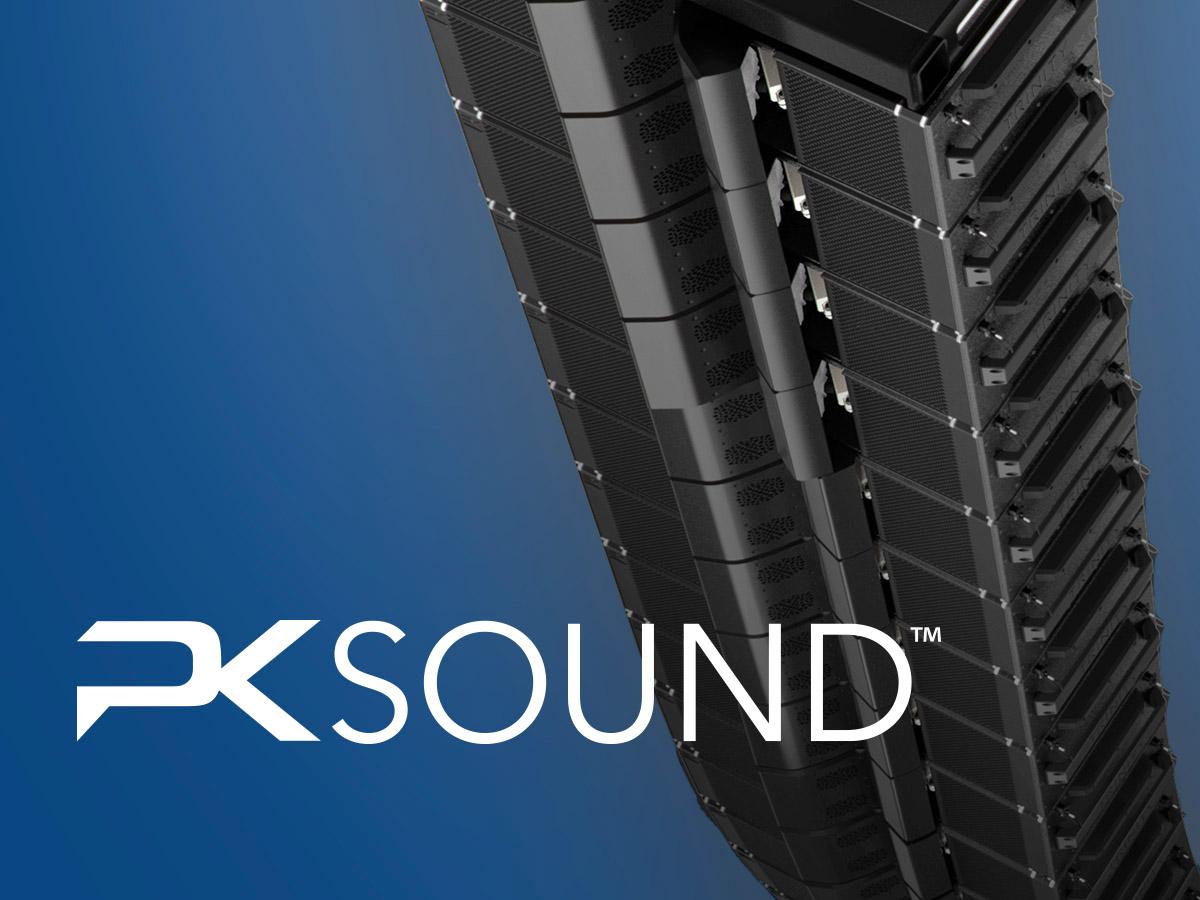
PK Sound Launches Trinity Black Robotic Line Source Element |
PK Sound, the innovative robotic line array company from Canada, has introduced Trinity Black, the latest generation of the industry’s first robotically controlled line source element. Distinguished by a new all-black aesthetic and already featuring the company's modern Polar Kinetic logo, the new Trinity Black systems are loaded with revamped v4 presets to offer significant acoustic enhancements over previous iterations. An important product to project PK Sound into the large scale sound reinforcement market. Read More
|
|
|
Guest Editorial
David Ciccarelli
(Chief Executive Officer, Voices)
|
Where AI Voices Make Sense
Reasons Why AI Will Not Threaten the Human Voice
|
|
|
From gate change announcements at the airport to recipes read aloud by Alexa in the kitchen, AI voices are showing up wherever there’s a short voiceover job that needs to be done. Most often used for communicating timely information and as a hands-free tool for assisting us humans while doing other tasks, artificial voices are guiding us more and more toward destinations and achieving our goals.
It’s no surprise that smart speaker adoption was faster than any other consumer device; a trend that those in the audio industry are uniquely positioned to capitalize on. The ubiquity of smart devices in society is driving a greater demand for easier to use and more unique voice user interfaces for consumers, to the tune of $7.6 billion.
“Always listening” features will be baked into practically every major consumer electronics product. And as online services increase and consumer trends change, businesses are forced to develop greater voice user interfaces and their own unique voice brands, creating a $5.4 billion industry. One market in particular that has really taken hold of this is the medical field. Clinical documentation, greater adherence to treatment and long-term cost-effectiveness have been the drivers behind patients and physicians creating a $1.8 billion market.
|
|
Voice search and voice assistant technology using synthetic, artificial intelligence and human voices are becoming increasingly popular, and the need for brands to have a voice representing them on these growing audio-based mediums is expanding. Brands are contemplating if they should use a synthetic voice in their communication strategy. |
|
AI in Audio
I’ve long argued that there’s a time and a place for AI in audio, and specifically voice. And, this is typically for work that no person would want to record because the pay wouldn’t justify the time required to record, edit, and export.
Navigational Content: From navigating the city and listening to turn-by-turn directions to navigating your way through a subway, train station, or airport, automated voices inform you of arrivals and departures, gate changes, and other public service announcements. This content can change frequently, and therefore it’s impractical to post a job, get auditions, and hire a professional voice talent to record a few lines. Instead, the short duration of the content and the timeliness of making the announcement are driving factors in selecting an AI voice.
Information Content: When content changes frequently, such as weather updates, sports scores, and stock ticker quotes, either a voice talent must record all permutations and combinations or the more practical choice is for the app provider to use an AI voice.
Kiosks and Self-Checkouts: Self-service options abound whether you’re renewing your driver’s license, filling up the gas tank, or checking out at the grocery store. Instructional content, informing you what to do next, is a third use case where AI voices make sense. Because of the helpful nature of these kiosks, we experience these voices as voice assistants. While a store clerk or cashier may always be there for human help (I suppose other than at the employee-less Amazon Go stores), there are times when the fastest check-out experience is using a self-service checkout. In which case, the AI voice is there as your guide.
In each of these scenarios, voice talent are recognizing that the work likely pays little, is not creative, and likely will need to be updated constantly. Hardly the dream job of any voice actor. Instead, let the robot do the talking in these situations.
|
|
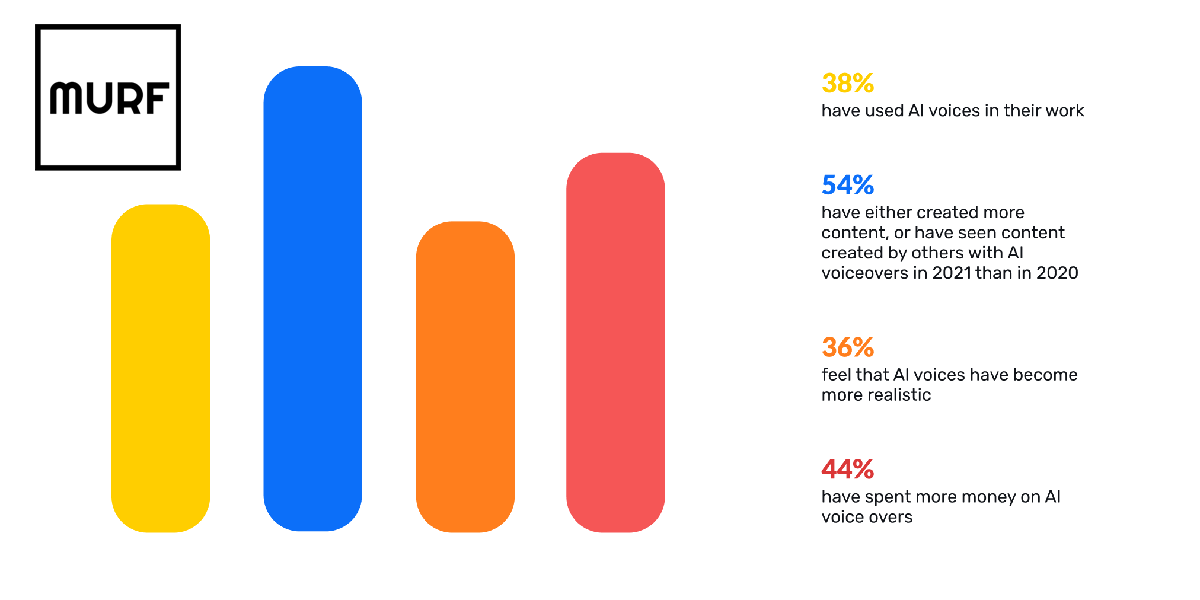
Professionals use AI voice-overs in their presentations, marketing videos, course modules, and audio content. Murf AI is an example of a service providing lifelike voice-overs using AI. The company recently published the results of its Voice AI survey "5 Emerging Trends in the AI Voice Over Industry." |
|
Human Voices
Where the human voice shines is when there is a story to be told. For millennia, people have been enamored with the power of storytelling. Every story has common elements, such as the protagonist, the antagonist, the situation, and challenge that with the help of a guide, is overcome to conclude in a satisfying resolution.
People want to hear from people and unless the plot calls for a robot, then content follows the format of a story, even one as brief as a 15-second ad, then stories should be performed by a voice actor. Only people, in this case, professional voice actors have the ability to evoke emotion. |
|
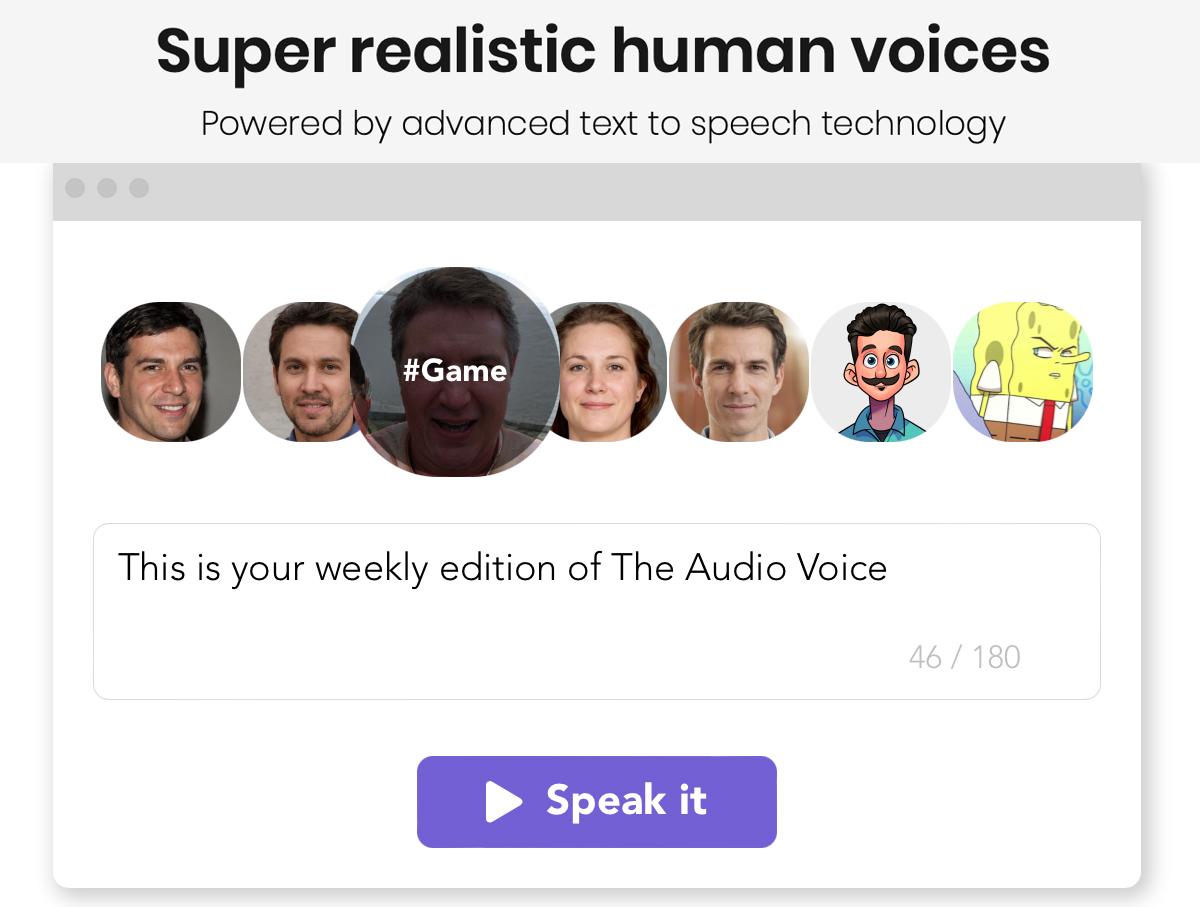
Many online services are taking text-to-speech technology to a whole new level. Love.ai offers a great example of next-generation AI Voiceover & Text to Speech with human-like voices. You can type a text and listen to the examples. |
|
The Ethical Dilemma and Evolution
What’s fascinating to observe is the conflict when evaluating the opportunity that AI voices create. Voice actors are finding themselves in a dilemma to lend their voices to software developers who are then using those samples to replicate the human voice and thus create a synthetic voice. By doing so, they are generating income, albeit, while also generating the machine that could displace a portion of their income over the long run. Alternatively, excluding yourself entirely from the opportunity may be short-sighted.
Likely the best path is to explore what the future might hold and decide on your own terms if and when you’ll participate in the creation and use of AI voices.
Similarly the content producers, particularly those in organizations who traditionally support the arts are faced with a dilemma of their own. Pondering if they should work with a voice actor who will give them the perfect read with emotion but come with a financial commitment, or rely on a text-to-speech application to generate the audio file needed.
For example, in some organizations, there is simply no budget, or perhaps a limited budget for the compliance videos and other corporate training material. The content was carefully crafted by a curriculum designer using PowerPoint that likely isn’t a voice casting director. And yet, for accessibility, he has been asked to include an audio option for those who have a need or a preference to listen to the material.
As both audio and AI continue to evolve, there is no question that there will be interplay between the two. However, as shown from our industry analysis and historical trends, it is unlikely that AI will have a disruptive effect on audio as it has on other creative industries.
Instead, AI presents an opportunity for audio to be used in new ways, augmenting a customer experience. Content producers and brand managers should start thinking about how to use voice in their communications and if AI voices are appropriate. For transaction sound-bits, an AI voice is suitable. Yet, for many other situations, the warmth of the human voice is your best choice.
|
|
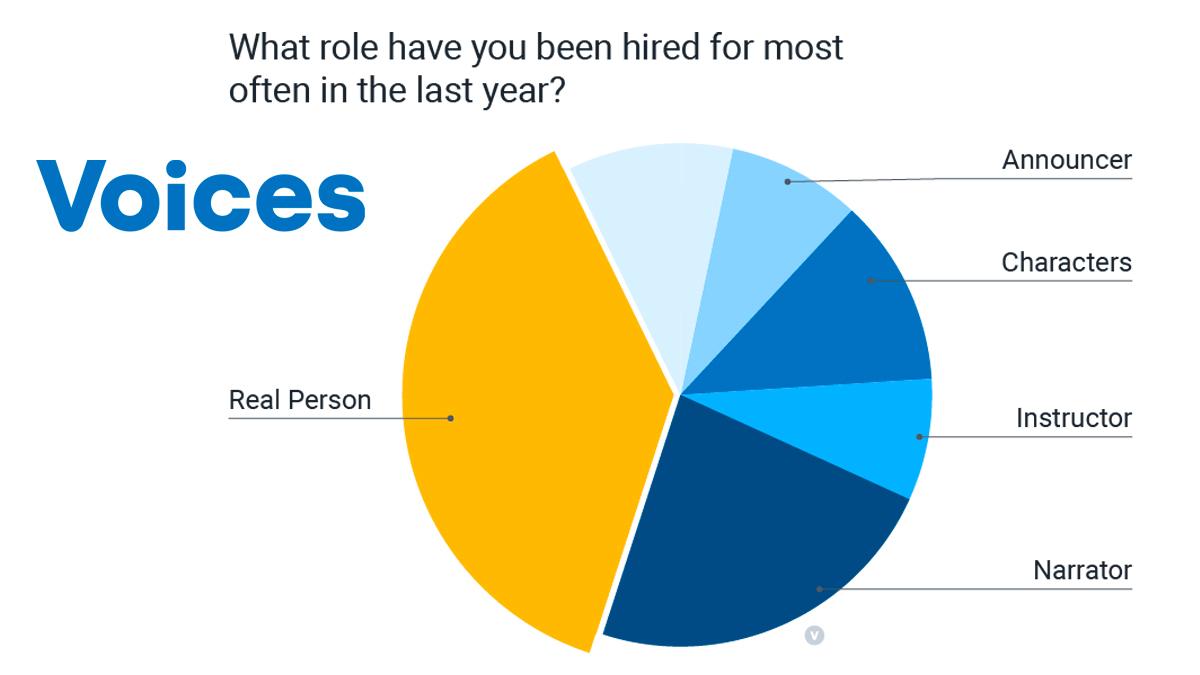
As a leading services platform for voice actors, voice-overs, music, audio production, and translation professionals, Voices produces interesting annual surveys. Its "2022 State of Voice Over" highlights notable trends around remote work, the freelance economy, and audio-first experiences. |
|
About the Author
David Ciccarelli is the Founder and Chief Executive Officer of Voices, a leading Creative Services Marketplace, with more than 2 million registered users. Headquartered in London, Canada, Voices helps match clients with voice over, music, audio production, and translation professionals in more than 160 countries. David Ciccarelli is a finalist of the EY Entrepreneur of the Year Award and a Canadian Innovator Award. He graduated with honors from the Ontario Institute of Audio Recording Technology, and in Business Administration and General Management from Harvard Business School.
|
|
A DSP Audio Processor at the Heart
By Al Clark (Danville Signal Processing)
|
|
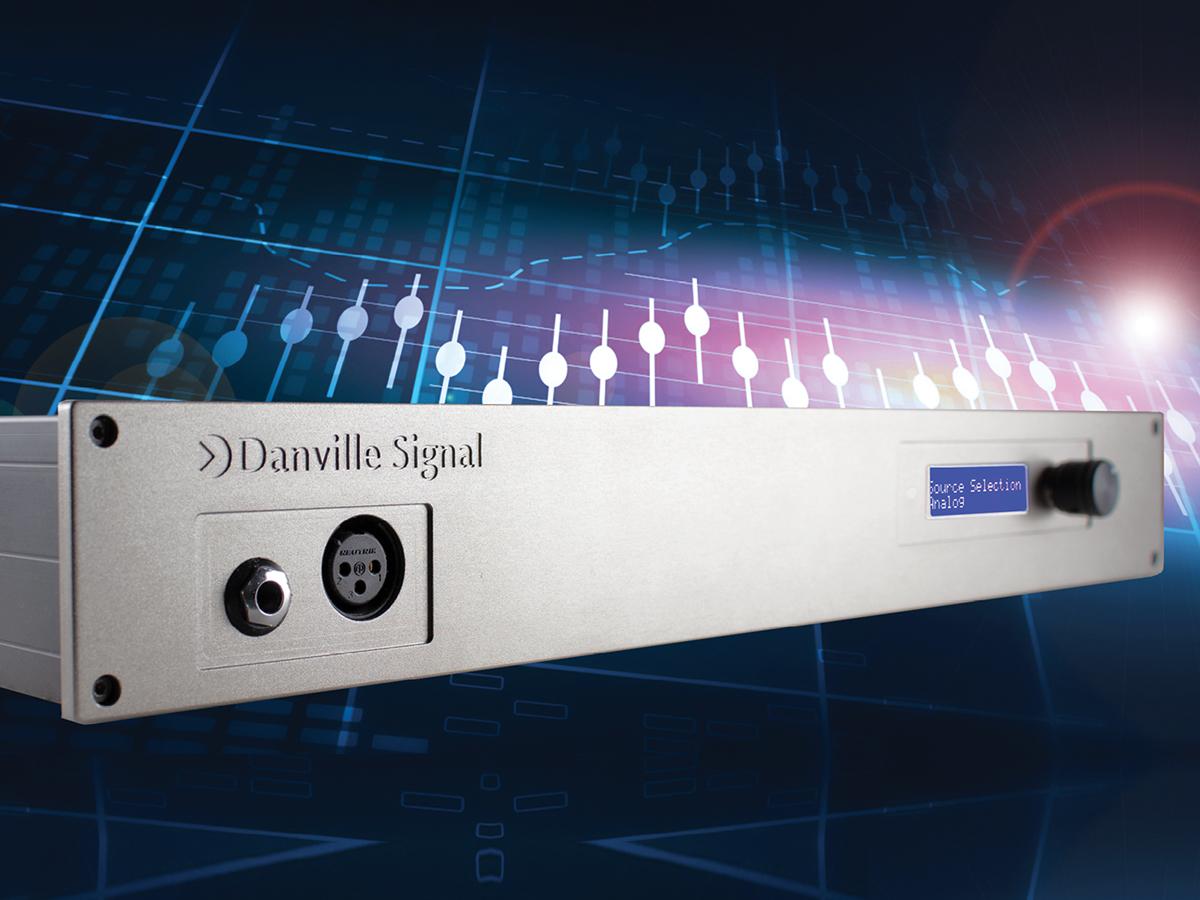
This article, written by Al Clark (CEO, Danville Signal Processing), tells the story of his company’s R&D journey into the development of the dspNexus DSP Audio Processor. An interesting perspective about how the author’s experience led him to maximize the possibilities of digital audio, resulting in successfully bringing to market a dedicated DSP audio processor that could be used as a control center, a preamplifier, and a DSP engine for powered loudspeaker applications. This article was originally published in audioXpress, November 2021. Read the Full Article Now Available Here
|
|
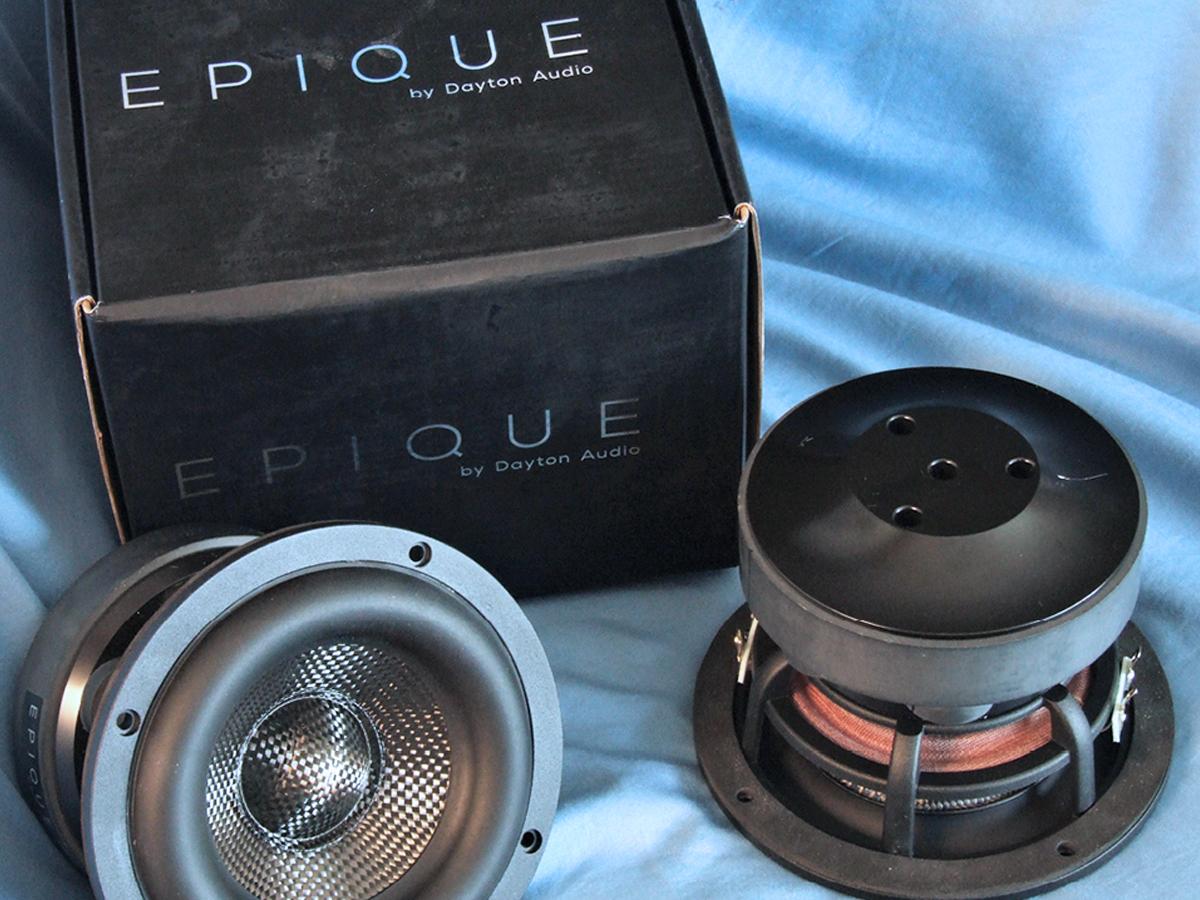
The E150HE-44 5.5” Full-Range Subwoofer from the Dayton Audio Epique Line
By Vance Dickason
|
|
This Test Bench explication focuses on the Dayton Audio Epique MMAG E150HE-44 "full-range subwoofer," in itself an interesting concept. Like its larger E180HE-44 brother in the Epique line, the E150HE-44 is based on the patented Multiple Magnet Air Gap (MMAG) technology invented by Enrique Stiles. The two new Dayton Audio Epique MMAG woofers were designed with direct support by Enrique Stiles as an independent transducer engineering consultant, working in conjunction with the engineering team at Dayton Audio. The "full-range subwoofer" concept is ideally suited to the MMAG technology given the typical high-excursion/low inductance aspect of this motor design. This article was originally published in Voice Coil, December 2021. Read the Full Article Now Available Here
|
|
Audio Product Design | DIY Audio Projects | Audio Electronics | Audio Show Reports | Interviews | And More
Don't Have a Subscription?
|
|
Industry News & Developments | Products & Services | Test Bench | Acoustic Patents | Industry Watch | And More
|
|
Advancing the Evolution
of Audio Technology
audioXpress features great articles, projects, tips, and techniques for the best in quality audio. It connects manufacturers and distributors with audio engineers and enthusiasts eager for innovative solutions in sound, acoustic, and electronics.
Voice Coil, the periodical for the loudspeaker industry, delivers product reviews, company profiles, industry news, and design tips straight to professional audio engineers and manufacturers who have the authority to make powerful purchasing decisions.
The Loudspeaker Industry Sourcebook is the most comprehensive collection of listings on loudspeaker material in the industry. Purchasers and decision makers refer to the guide for an entire year when making selections on drivers, finished systems, adhesives, domes, crossovers, voice coils, and everything in between.
© 2022 KCK Media Corp. All Rights Reserved.
|
|
|
|
|
|
|