|
Our office focuses on implementing report recommendations from the last 30+ years that guide UH Mānoa in becoming reflective of Hawaiʻi's language, culture, values, and knowledge systems from which all people learn, connect, grow, and heal:
- Hawaiʻi-Guided Student Success
- Hawaiʻi-Grounded Staff and Faculty Development
- Cultivating Hawaiʻi Environments
- Hawaiʻi-Reflective Community Engagement
We cannot do this work alone. It is our mission to foster the potential within each of you to positively contribute to our collective kuleana to make UH Mānoa reflective of Hawaiʻi. These monthly newsletters, with written reflections that cover the preceding month's happenings, are meant to keep you connected, highlight your work and continue to inspire you.
| | |
HKHAʻ26 Closing Session: Mele, Moʻolelo, & Momentum
Na Hope Matsumoto
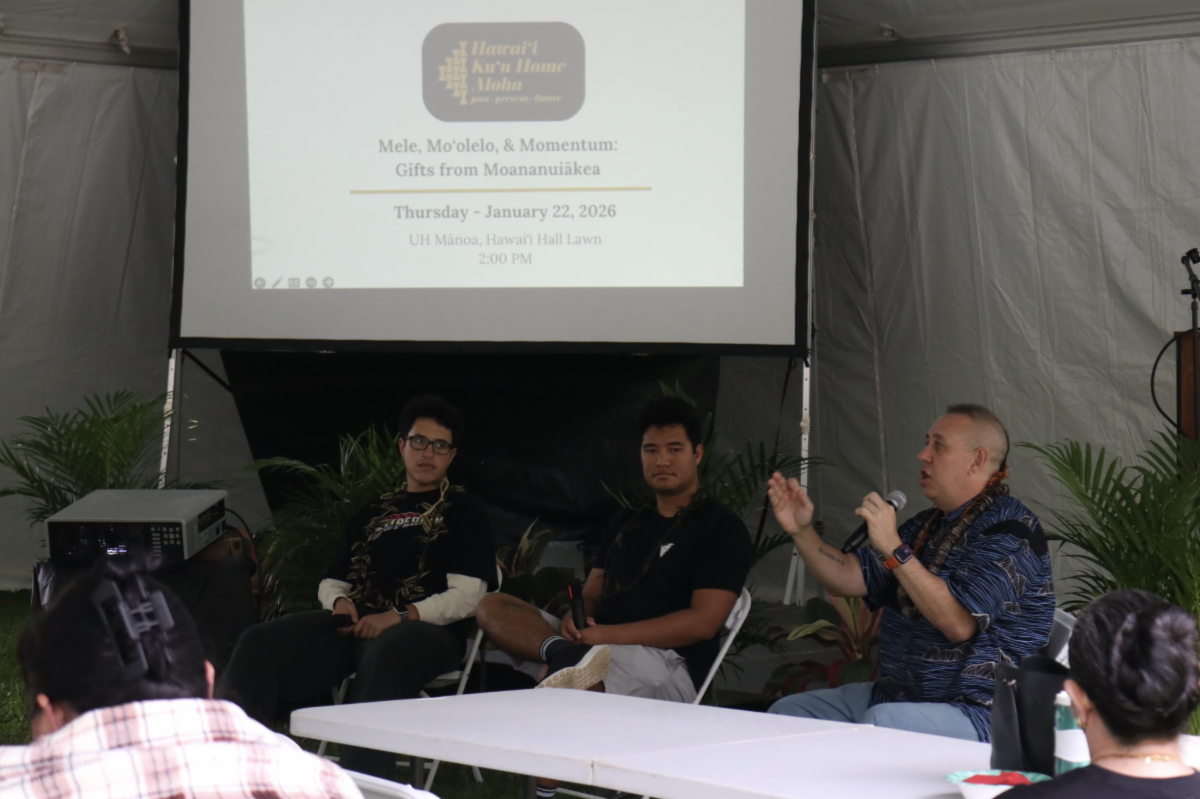
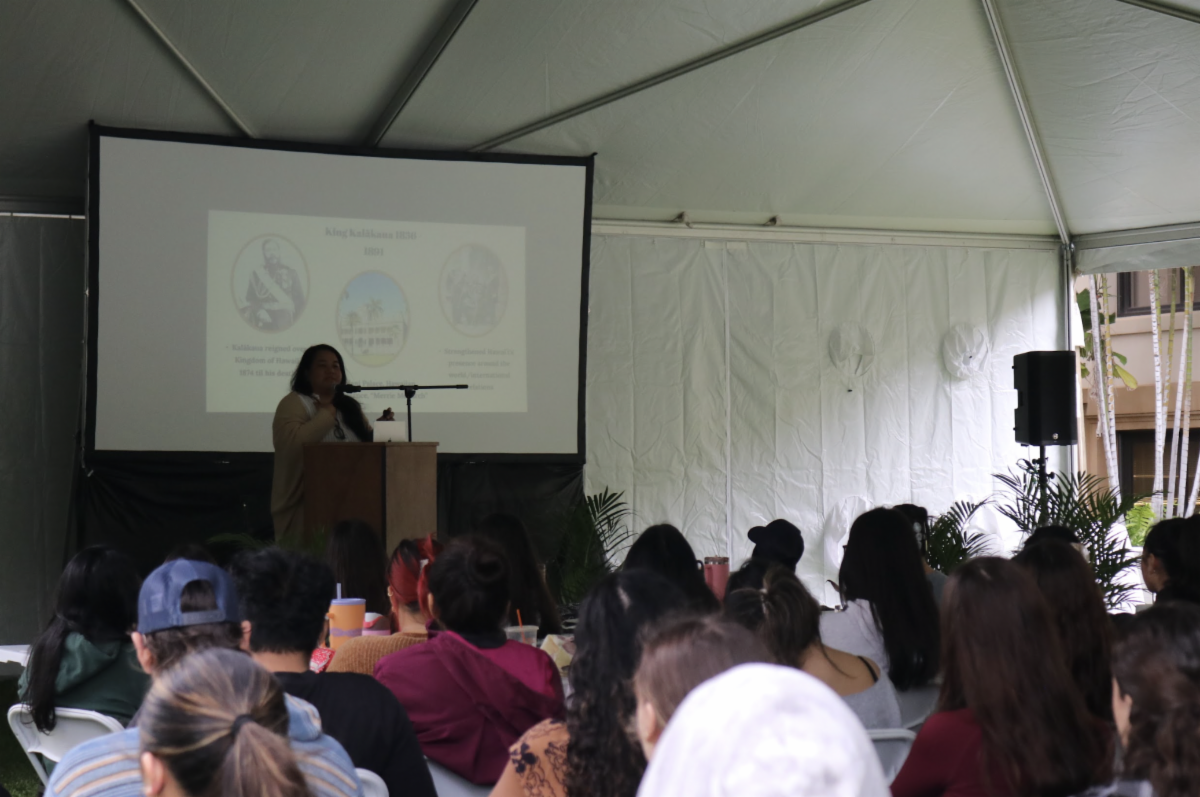
| | The closing session presentation of Hawaiʻi Kuʻu Home Aloha Summit on January 22, 2026. | | |
ʻO Hawaiʻi nei nō kuʻu home aloha. Experiencing this closing session was a returning to my body and an honoring of the resiliency of this ʻāina. Hawaiʻi indeed is a beloved place, and attendees gathered together for a presentation made ever-more profound by the act of sharing time, space, and even languages. As we learned from the stories of students who speak their own native languages from Moananuiākea, we heard for ourselves the similarities among our mother tongues. We even realized the significance of shared time zones across the Pacific Ocean—and how miscommunications might arise in the reality of splitting non-shared time zones across Moananuiākea.
One reflective question that was posed during this session is still staying with me: How can we not be an albizia in a place that teaches us to albizia? In Hawaiʻi, albizia trees are notorious for their fast growth, seed dispersal, and ability to out-compete other plants, especially by leeching water and sunlight. My own interpretation of this charge to “not albizia” is to consider the ways that I am giving back to the ʻāina that feeds me. As we learned about the moʻolelo of Keaomelemele, Dr. Kaʻimi Watson emphasized the significance of Kuaihelani as the place where Keaomelemele was raised, and thus, this space and time is integral in shaping the moʻolelo of Keaomelemele. In honoring Hawaiʻi nei as the place that nourishes me, I also continue practices of returning water and sunlight back to ʻāina—my first body of resilience and my beloved home.
| | |
Cohort Kumukahi Lunch & Learn
Na Kawehionālani Goto
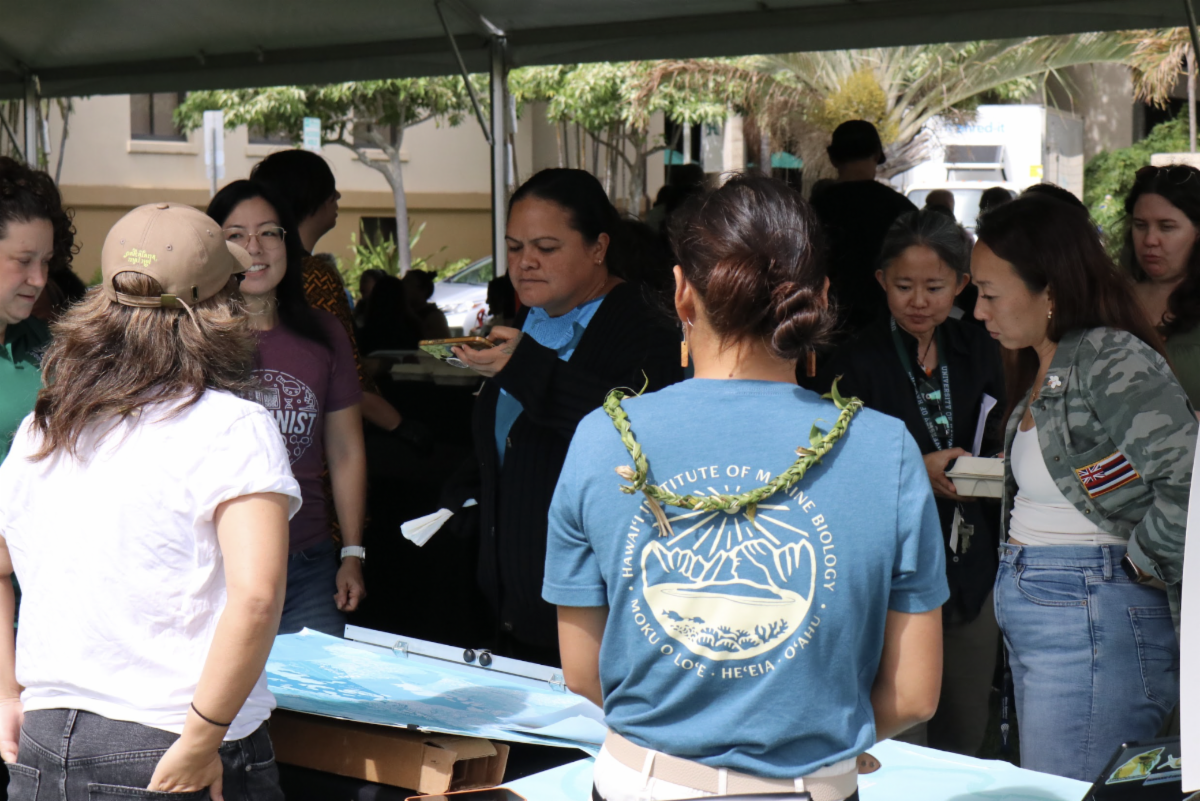
| | Participants engaging with presenters at different unit tables of the Cohort Kumukahi Interactive Gallery. | | |
On January 22, 2026 Cohort Kumukahi hui members — faculty, staff, and students — gathered not just to celebrate the culmination of two dedicated years together but to illuminate a pathway that was charted by deep listening, meaningful reflection, and a clear commitment to becoming more rooted in Hawaiʻi.
At the lunch & learn: interactive gallery, Cohort Kumukahi hui members shared their five-year roadmaps with the Mānoa community, inviting in questions and feedback. This gathering was filled with the exchanging of ideas, laughter, and a sense of coming home that felt like a reunion of sorts. I appreciated the vulnerability I witnessed as others got curious about making the work-in-progress plans reflective of Hawaiʻi.
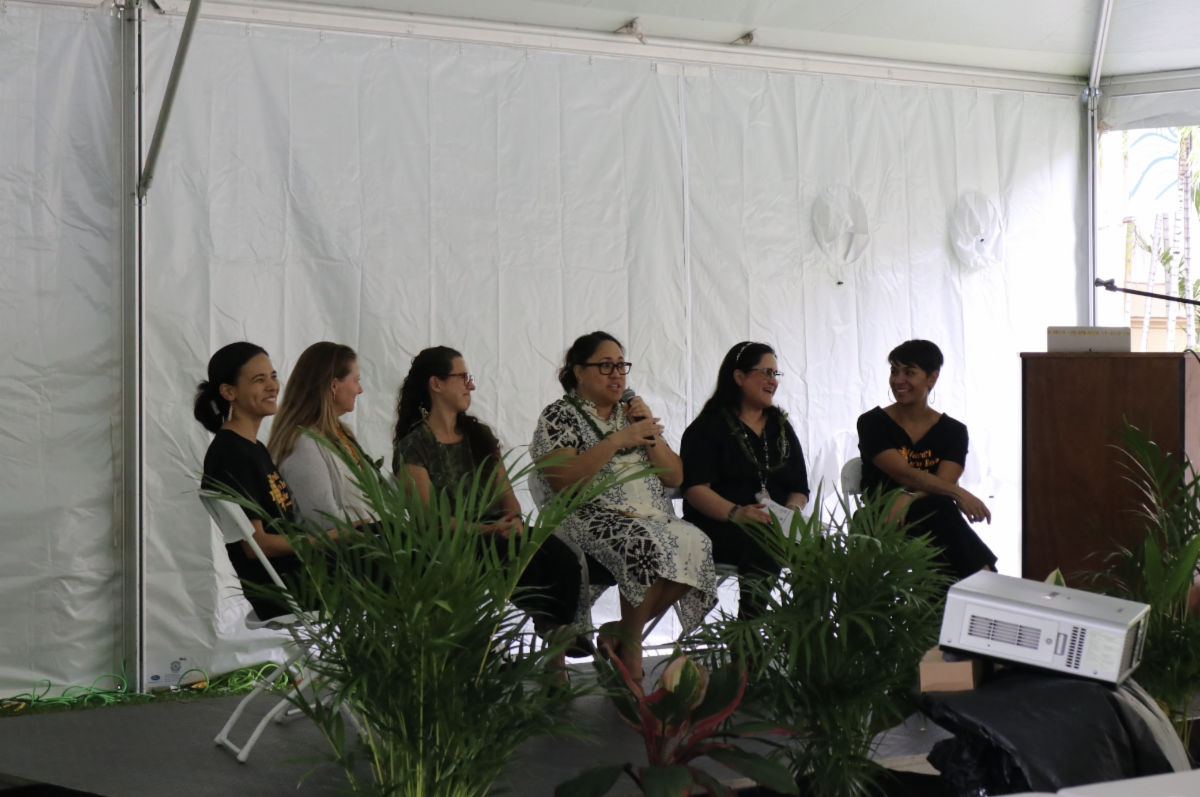
At the “Behind the Blueprint” discussion, Mary Beth (Institute for Astronomy), Beth (Hawaiʻi Sea Grant), Donna (School of Nursing and Dental Hygiene) and Lee (John A. Burns School of Medicine) honestly shared about the realities, breakthroughs, and challenges of moving from aspiration to actions, often taking different approaches but towards the same vision for our university - as a place that is reflective of Hawaiʻi and responsive to all people who call our campus a beloved home. Their journey reminded me that transformation is possible through patience, humility and a commitment to ʻāina: the people, places, and practices of Hawaiʻi. Congratulations to all of our Cohort Kumukahi huis for making it this far, and we look forward to continuing this journey together!
As you consider your own role in shaping UH Mānoa’s future, what does your “blueprint” look like? What is your commitment to making UH Mānoa more grounded in Hawaiʻi?
| | “Behind the Blueprint” panelists from across various Cohort Kumukahi units sharing about their experiences and responding to audience questions. | | |
"Hawaiʻi Ponoʻī" Workshop
Na Timmy Tran
| | Kumu Pelehonuamea Harman leading a mele workshop on “Hawaiʻi Ponoʻī.” | | |
“Hawaiʻi Ponoʻī” is a long-forgotten friend of mine. I was fortunate enough to have learned the mele as a kid in elementary school, and even though I knew little then, “Hawaiʻi Ponoʻī” and I will cross paths multiple times again before I truly learn their intentions. Though I didn’t know the deep meanings of the words back then, I am grateful to Kumu Pele for reintroducing “Hawaiʻi Ponoʻī” back to me line by line, word by word, kaona by kaona.
To focus on a specific moment of the workshop, an audience member asked a question about a line from the English interpretation of “Hawaiʻi Ponoʻī.” Their question referenced the line “Hawaiʻi’s own true sons” and asked if it was only for the men of Hawaiʻi. Kumu Pele answered: the translated gendered language is more a reflection and fault of western influence. I loved Kumu Pele’s openness to challenging questions and fearlessness to push back on colonial translations.
I found this workshop led by Kumu Pele was not only profound as we explored the layered meanings within “Hawaiʻi Ponoʻī,” but also important as we learned the genealogy of the mele. I am grateful to relearn and experience the presence of my friend, “Hawaiʻi Ponoʻī.”
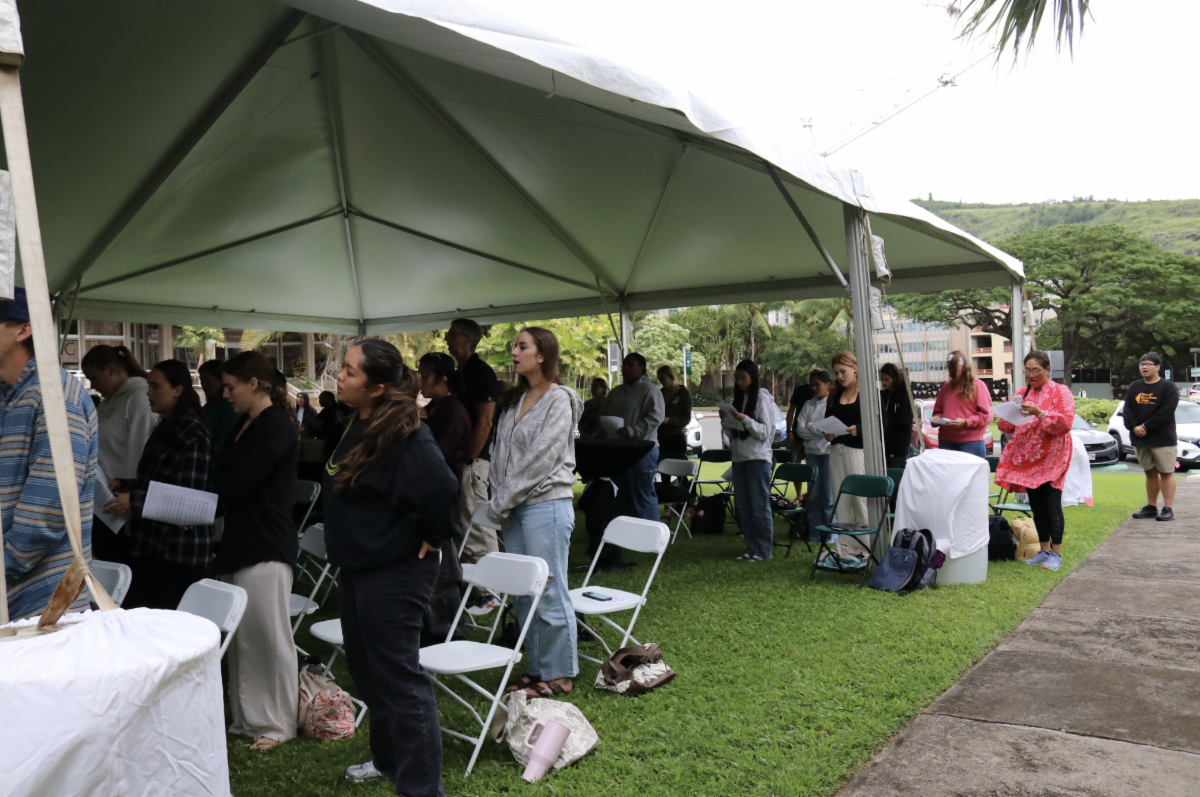
| | Workshop participants singing all three verses of “Hawaiʻi Ponoʻī” together. | | |
Mālama ʻĀina Workshop
Na Keaupuni Davis
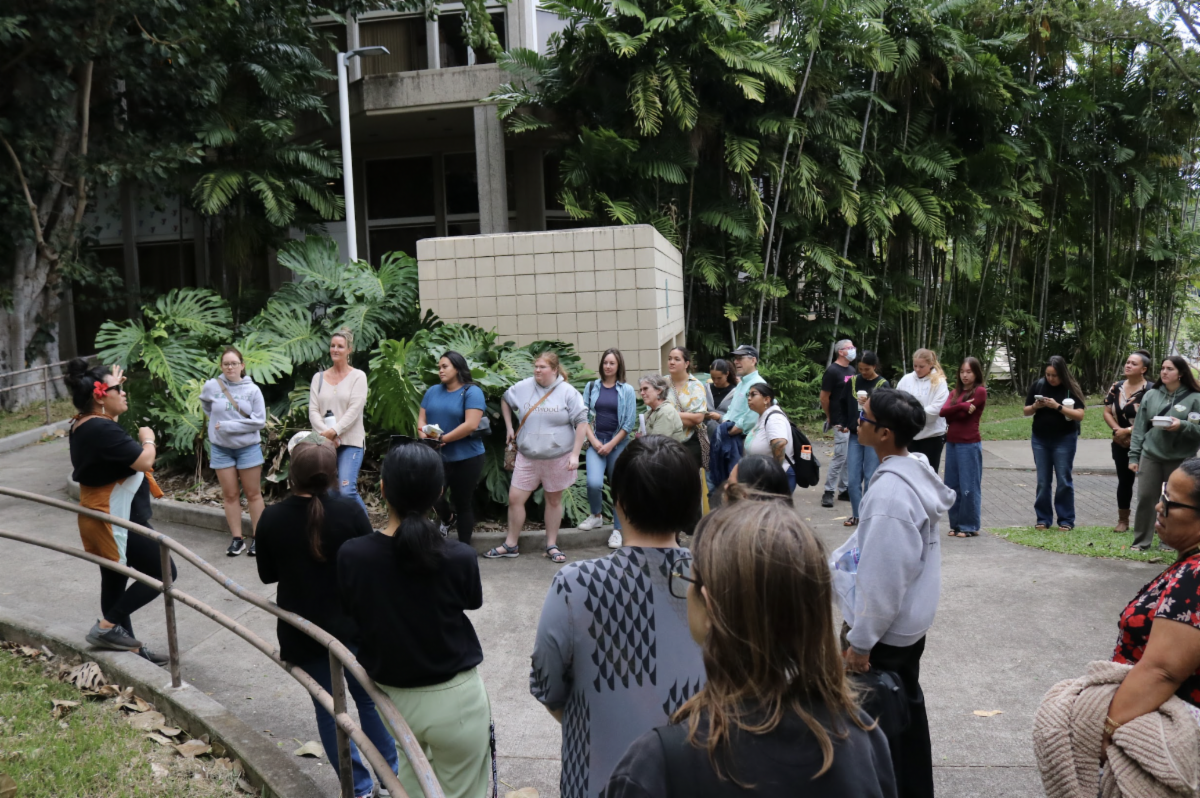
| | Workshop participants gathered beneath and learning about the Bodhi tree towards the mauka side of Hawaiʻi Hall. | | |
He keiki aloha nā mea kanu; Beloved children are the plants
—Mary Kawena Pukui, 1983
Is there a mea kanu that you’ve cherished? For me, it’s the Pīkake that grows in my yard at Waikapū. When I have the chance, I string them to make a lei. This year’s Hawaiʻi Kuʻu Home Aloha, I had the privilege to participate in Kumu Nōweo Kai’s workshop on mea kanu and mālama ʻāina. Nōweo is our curator of the UH Mānoa Campus Arboretum. Just like the plants she sees, she nurtures us with showers of her manaʻo on the mea kanu around our campus. The historical walk tour taught us about the historical ties of certain mea kanu on campus, like the Ficus religiosa, and be sure to say it like you’re casting a spell, right between Saunders Hall and the Queen Liliʻuokalani Center. The Ficus religiosa, or the Bodhi Tree, was brought by UH Botany Professor Jose F. Rock and planted on May 12, 1912 by the first graduating class. It was said to be a descendant of the original Bodhi tree under which Siddhartha Gautama sat under for seven weeks to achieve enlightenment. Most of our on-campus mea kanu are from all over the world with deep roots connecting us from afar.
Nōweo also raised issues on relationality and politics of space, who to care for these plants, and what to grow. It’s a reality we all must engage in, especially by being a part of these spaces. Though we can’t solve all problems in a day, taking small steps like the mālama ʻāina part of the workshop is a great start and wake-up call. Students, faculty, staff, community members, and so on came together in the workshop to clean the greenery in front of the Architecture building: pulling weeds, removing trash, and piling green waste for the in-house compost. It was hard work if you’re not used to “work yard” as my family would say, but altogether we built pilina with one another, with place, and especially with the mea kanu in the area.
After the workshop, I thought about the possibilities and futures we can all come together to build, like more lei plants or plants to feed or to heal. But, to make these possibilities happen, we need to be active in supporting our Campus Arboretum and the mea kanu we have the privilege of being in their presence. So, is there a mea kanu that you’ve cherished?
| | |
Friends of ʻIolani Palace
Na Nick Childs
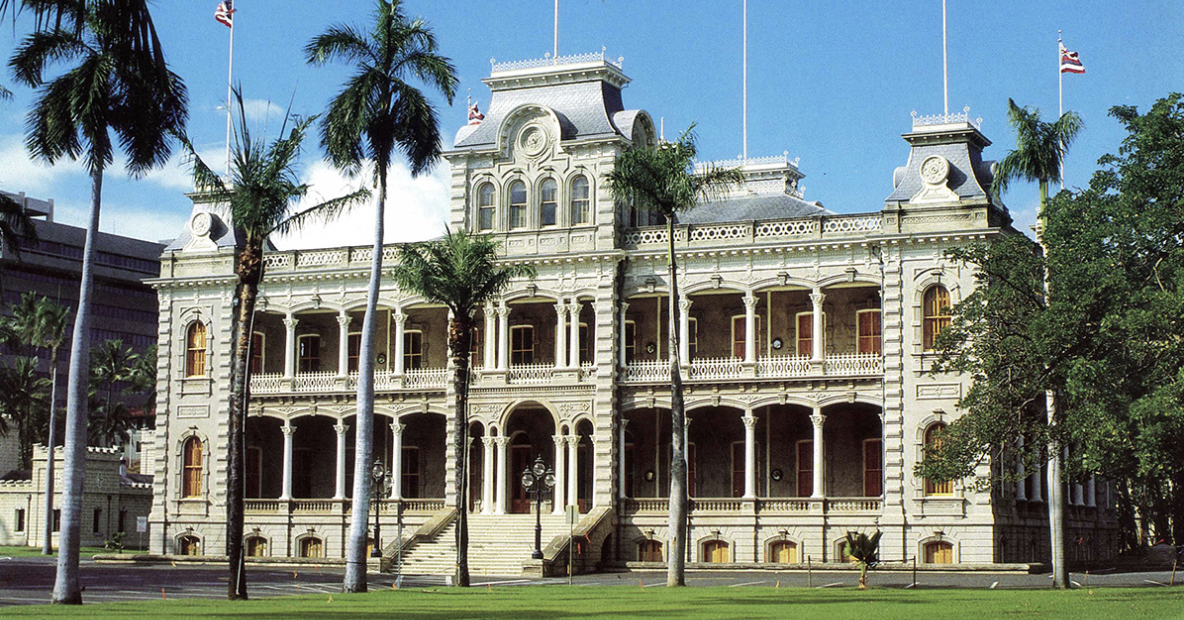
| A front view of the historic ʻIolani Palace, image courtesy of the Friends of ʻIolani Palace. | |
On January 17th, 1893, the day of the overthrow of the Hawaiian Kingdom, Queen Liliʻuokalani stated: “ke ae wale nei no Au e panee aku i Koʻu Mana a hiki i ka manawa a ke Aupuni o Amerika Huipuia, mamuli o na mea oiaio e waiho ia aku ai imua ona, e hoololi ai i na hana a kona Luna Aupuni a e hoonoho hou Iaʻu maluna o ka mana Aʻu e koi nei ma ke ano Aliiaimoku o ka Paeaina Hawaii.” - Hawaiʻi Holomua v. III, no. 141.
During Hawaiʻi Kuʻu Home Aloha, we recognize this enduring protest and those who continue to preserve and perpetuate the legacy of the Hawaiian Kingdom. We are thus highlighting The Friends of ʻIolani Palace, whose mission it is to preserve, restore, and protect ʻIolani Palace, the residence and the political center of the Hawaiian kingdom. The Friends of ʻIolani Palace hold and host events throughout the year, including educational programs, concerts, and tours. If you would like to volunteer, donate towards its preservation, or visit and explore the grounds, please visit iolanipalace.org.
| |
ʻOnipaʻa March
Na Kikilia Lani
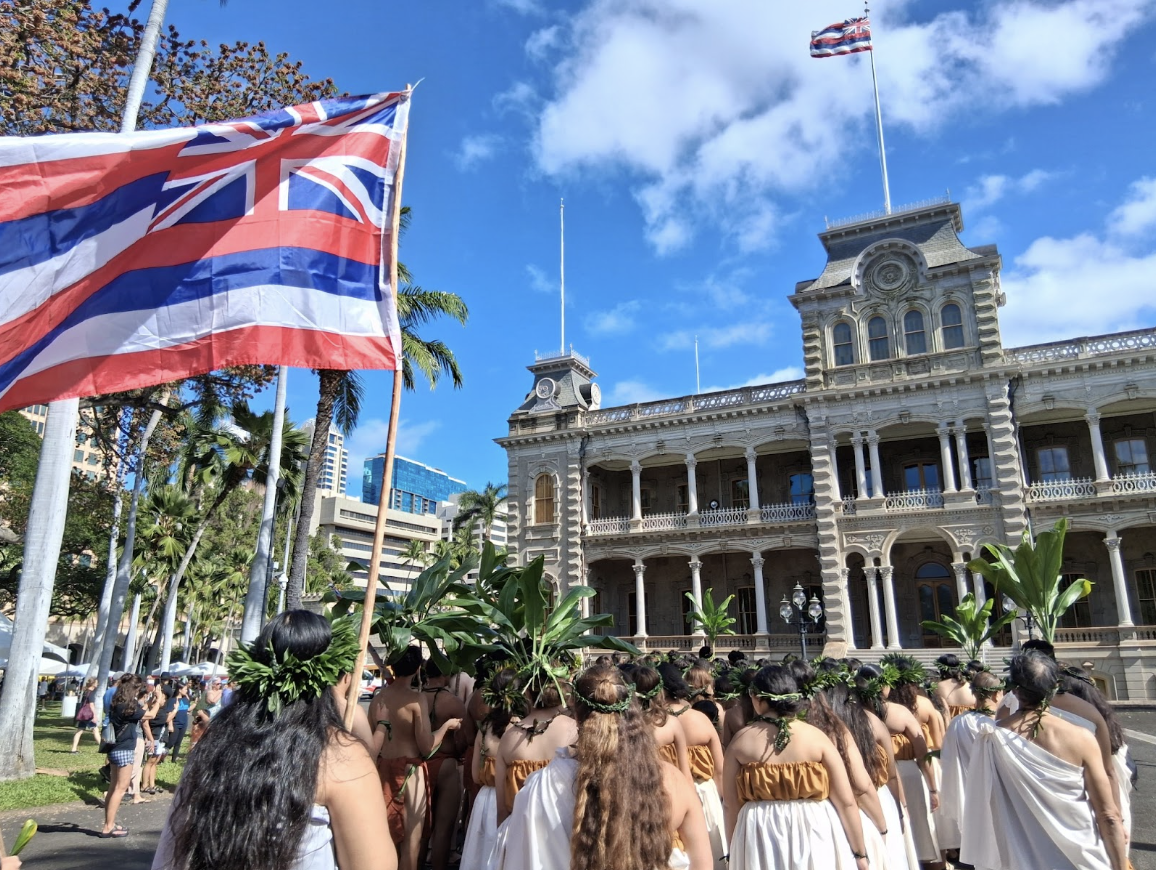
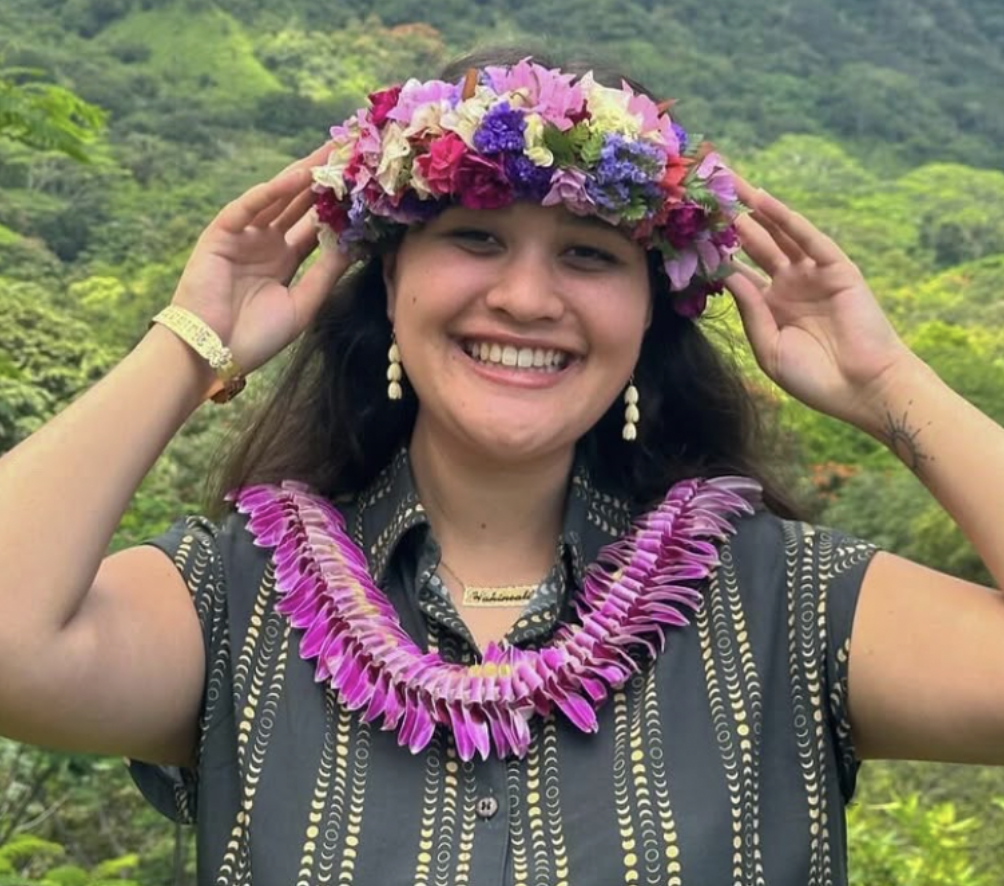
| | Saturday’s procession, led by the haumāna, kumu, and ‘ohana of Hālau Kū Māna, pauses momentarily before ‘Iolani Palace in commemoration of the overthrow of the Hawaiian monarchy. | | This year’s ‘Onipa‘a Commemoration offered a meaningful opportunity to reflect on Hawai‘i’s history, the legacy of Queen Lili‘uokalani, and what it means to ho‘omau and mālama kuleana. Observed annually in January, ‘Onipa‘a (referring to steadfastness and resolve), invites participants to remember the overthrow of the Hawaiian monarchy in 1893 and to consider its ongoing relevance today. As a lāhui member, the experience was deeply grounding. Prior to the procession, students of Hālau Kū Māna shared oli and hula at Mauna‘ala in honor of our ali‘i. Their kumu spoke about the importance of understanding where we come from and honoring the legacies of our kūpuna, encouraging haumāna to move through the world with confidence in who they are and care for their respective communities. Walking alongside my keiki as they chanted with pride and witnessing my ‘ohana engage thoughtfully with the messages shared throughout the day was especially moving. Though physically tiring, the huaka‘i left me renewed—reminded of the strength found in collective remembrance and intergenerational connection. It also made me think: What does it mean to remain steadfast in who you are and where you come from, and what legacy are you shaping for those who will come after? | | Kainani Wagner, this month's lamakū feature. | | |
Kainani Amber Wagner
Birthplace/Hometown:
Heʻeia, Oʻahu
High School:
Kamehameha Schools Kapālama
UHM Degrees:
BA in English (2024)
Certificate in Women's, Gender, and Sexuality Studies (2024)
MA in Library & Information Science (currently pursuing)
MA in Pacific Islands Studies (currently pursuing)
Current Occupation:
Graduate Research Assistant with Hawaiʻi Papa o Ke Ao Native Hawaiian Place of Learning Advancement Office
What inspired/inspires the path for your academic major?
Growing up, libraries were a second home for me. My mother has worked at a number of libraries around Oʻahu all of my life; some of my fondest childhood memories are when my sister and I would go to work with her and get to spend our entire day with piles of books to read by our sides. Seeing the way my mother genuinely loved her job made me want to grow up to be just like her— as it turned out, that feeling never truly left me, and here I am pursuing my own degree in Library & Information Science!
I knew that I wanted to work with Indigenous materials, but I didn’t know much about people outside of Hawaiʻi. At the same time, I was dissatisfied with how little I knew about my own culture, making me ashamed and unsure of where to begin. I was very concerned that I wouldn’t be able to appropriately— or confidently— serve whatever community I ended up working for. That’s when I discovered the Pacific Islands Studies program and found out that it was part of the dual-degree program alongside Library & Information Science. Since joining the program, I’ve learned an incredible amount about the cultures and people of Oceania and am determined to work in a Pasifika-based library collection upon graduation.
What are your future goals in your work?
My future goal is to become a university librarian or special collections librarian working within and with Oceania and its people. The people of the Pasifik have long had their voices ignored or undermined in favor of dominant colonial narratives. I want to give them a space to re-present and re-imagine themselves in the academic world. The curation of such a collection and the opportunity to be a wa‘a of stories and knowledge from all of Oceania is my biggest career goal.
Along the way, I hope to breach at islands of mo‘olelo. My research interests lie in the traditional stories of Oceanians, and it is my hope to start a motif-based indexing system to trace the mo‘okū‘auhau of these stories for the preservation of our cultures. Like us, mo‘olelo have traveled far and wide, shifting and swirling with the tides. An index cannot completely capture every complexity within mo‘olelo, but who am I to give up before even trying? The system I am working to create is meant to be a love letter to the sea and its people. As I further my work as a future librarian, my commitment to them only grows.
How do you see your time at UH shaping the way you aloha ʻāina?
My time at UH has exposed me to a number of different perspectives and viewpoints regarding aloha ʻāina. It’s made me aware that there is a gap in some people’s knowledge regarding what aloha ʻāina is and why it’s so important to all of Hawaiʻi’s people, not just Hawaiians. That gap has made me reflect on what I’ve been doing to serve the land, my community, and my own self; as a result, since becoming a student at UH, I’ve changed my way of living and thinking exponentially. Aloha ʻāina is not just love for the land— it is recognizing that ʻāina is both what we are and what we should strive to be like. In mo‘olelo, you will often read about people or actions being compared to different aspects of the ‘āina; notice how you will never read about the Ko‘olau mountains standing as tall as a kanaka, but instead about a kanaka who stands as tall as the Ko‘olau. To me, aloha ‘āina includes the recognition of this intrinsic connection and deference that our kūpuna had to the ‘āina and carrying that same sentiment with us today, tomorrow, and in every generation to come. ʻA‘ole i pau.
What does UH Mānoa as a Hawaiian place of learning mean to you?
For me, UH Mānoa’s commitment to be a Hawaiian place of learning means that the institution has a responsibility to uphold Native Hawaiian culture, history, and values in every aspect of its being possible. People tend to think of professors and instructors as the only ones who have to do this by incorporating ʻike Hawaiʻi into their lesson plans or teachings, but real change starts within the administration. If they don’t set a strong example for the rest of the faculty, how can they expect campus-wide change to be enacted and upheld for the years to come? The responsibility of fostering a Hawaiian place of learning cannot just fall on the shoulders of a select few. It must be fully embraced by all lest it be viewed as nothing more than a marketing tactic or a tagline that the university can deploy at its convenience.
| | | | |