Greetings!
The need for collaboration for a better life never lessens.
In the United States we have taken the COVID-19 pandemic as the central concern in our lives. In Tanzania, life continues more normally.
Why the difference? We aren't predicting outcomes, but we observe Tanzania has a very youthful population. It is a low-income country with much less medical service than in the U.S. Alternatives like home schooling aren’t supported there with technology or parental experience.
Tanzania closed the schools in March but reopened them recently, revising their viewpoint that it would be best for children to continue to learn and receive care at school. The Tanzanian
economy
is weaker now, especially because tourism stopped. So the Tanzanians are feeling the impact of the pandemic in various ways, but there is a general effort to keep life going as normally as possible.
What is our job now?
ICSEE works
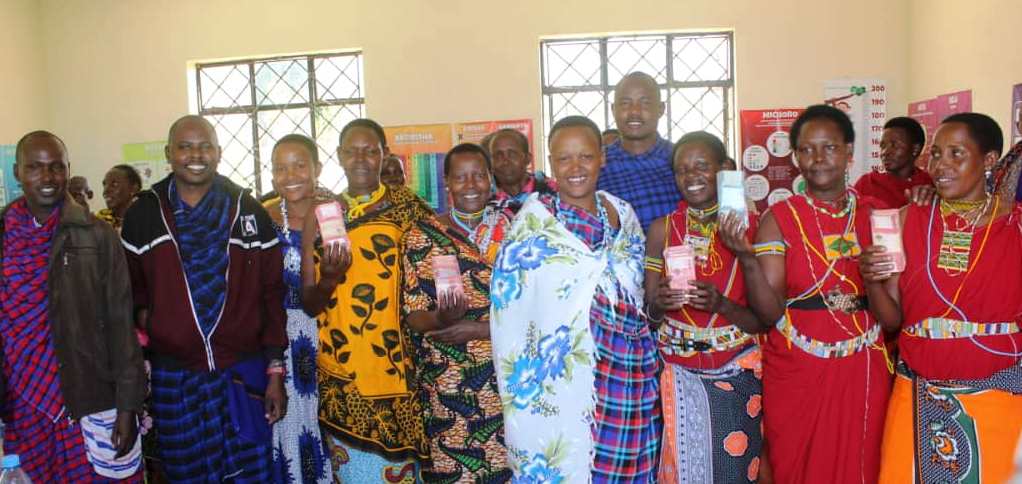
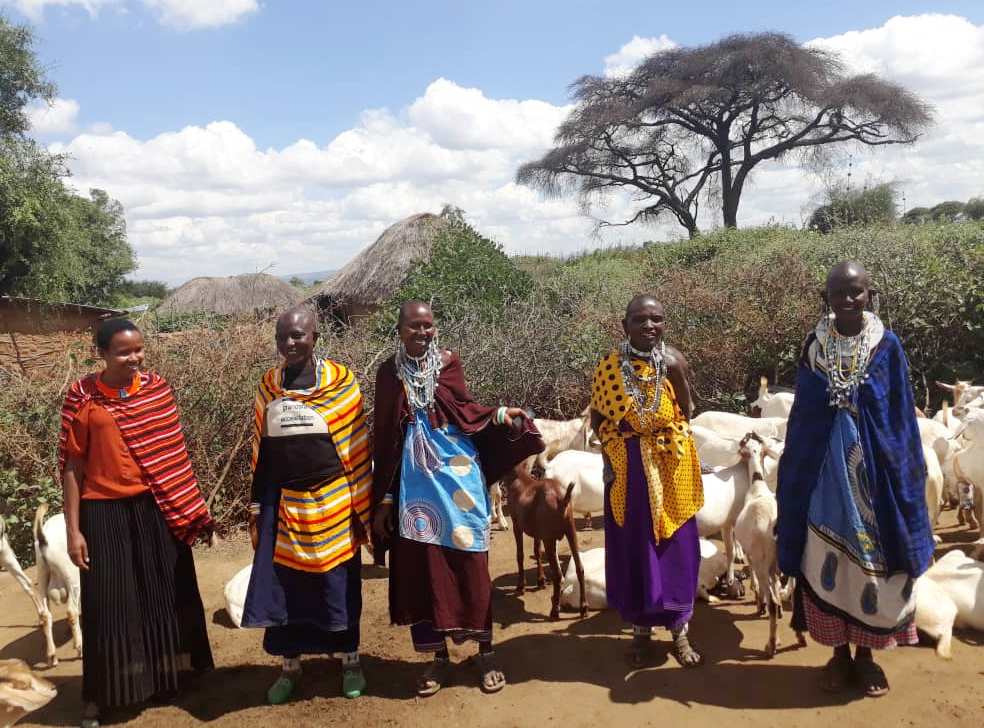
with hundreds of Maasai men and women, and accepts their decisions about how they collaborate and work now. The people, staff, and leaders of the ICSEE are doing what they find best to avoid infection, and are taking good care of themselves. For these reasons, in our photographs of work gatherings you will not see people staying at a distance from one another or wearing masks.
The Maasai life is conducted largely outdoors and they mix with family and others in their own ways. We organize nothing that makes them feel less in control of their own health. The work continues.
We most fervently appreciate that you are with us. Thank you.
|
|
With love and hope for us all and our future together,
Twende!
July 2020
|
|
|
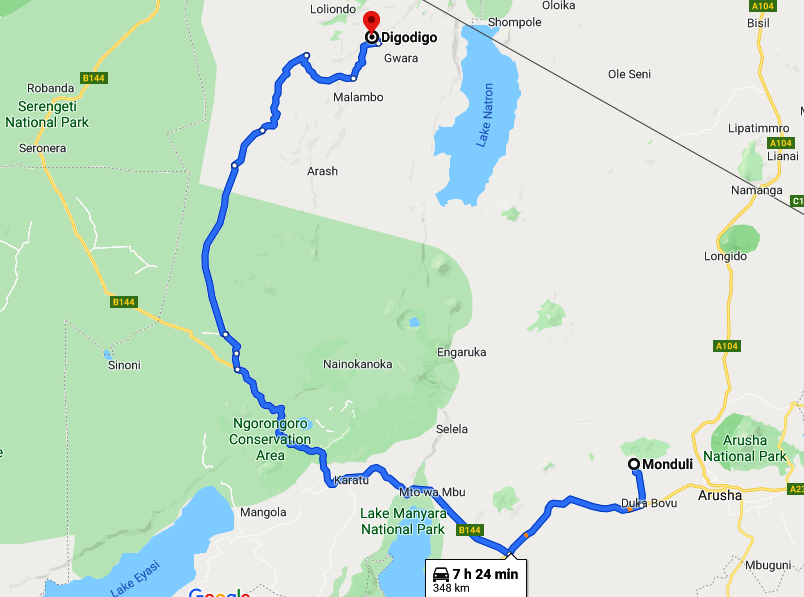
Digodigo village-pictured at the red dot towards the top of the map, near the Kenyan border
|
|
The Project comes to Digodigo
|
|
A generous donation from Judy Lane, Founder of
Maasai Partners, has made it possible to organize a new group in
Digodigo, a community in the Ngorongoro district in the Rift Valley north, near Kenya.
|
|
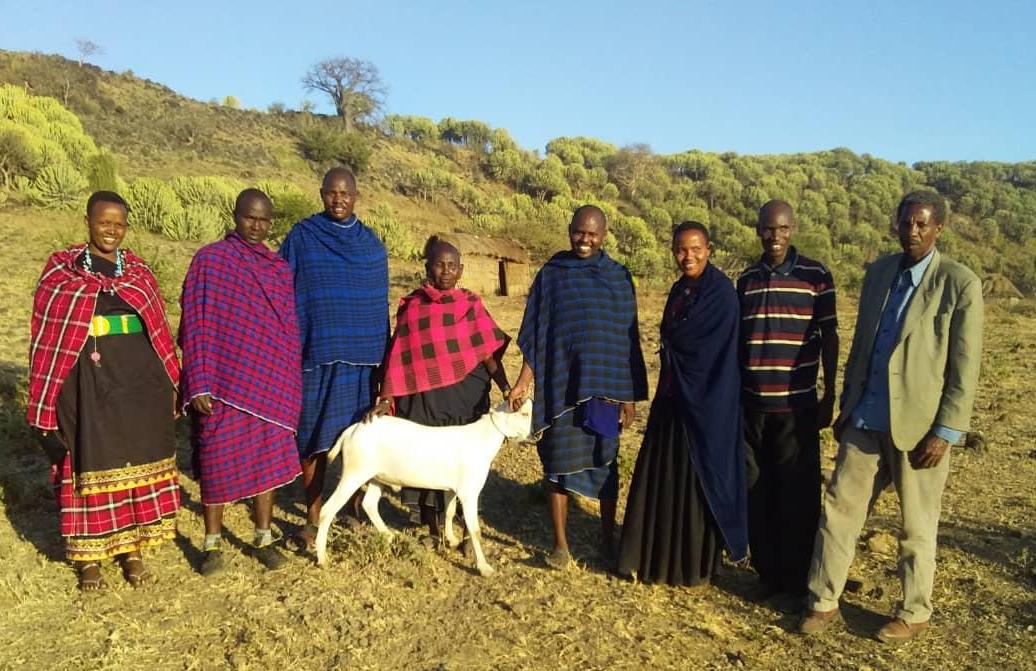
ICSEE Organizing Team and their new goat -- a gift to them from the community
|
|
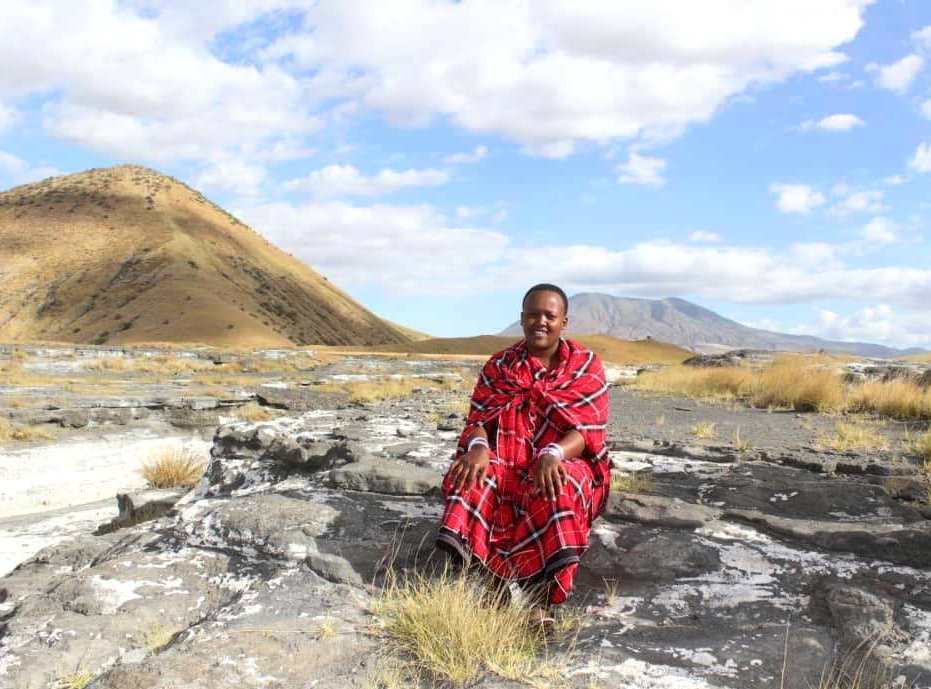
Lead Organizer Mesha Singolyo hails from this area and we are very pleased to give our strong support to stimulating economic opportunity in her home village.
The people of
Digodigo are of the small
Sonjo tribe with both farming and livestock traditions. In
Digodigo, farming is a cooperative enterprise of men and women.
Upon arrival, ICSEE's organizing team of seven immediately found a group of women and men waiting and ready for the cooperative bank training and capital input they were bringing.
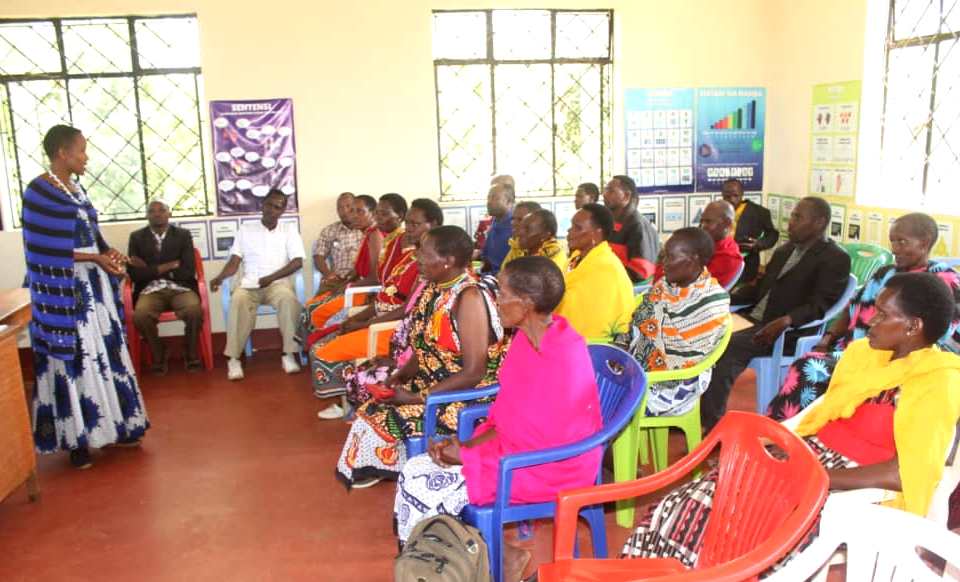
Digodigo now has an organization that operates with the same methods as the ICSEE widow’s groups. All members buy shares weekly and vote to elect their leaders. The group lends the bank holdings to a collectively-held business and also lends to individual businesses. Individuals may also receive loans for personal needs such as school fees and home construction.
|
|
Mesha working with the Digodigo group
|
|
The
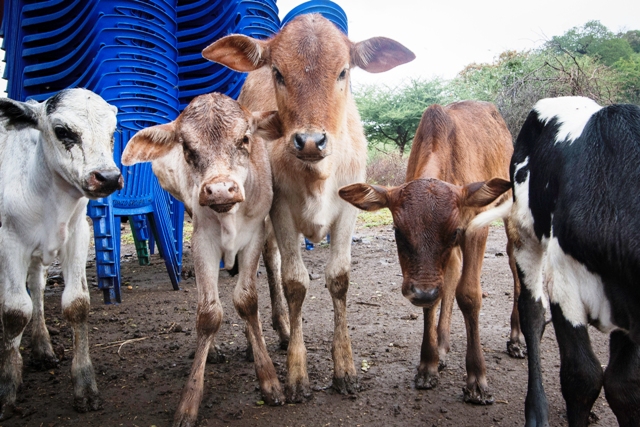
Digodigo group collected a lot of the capital themselves, adding to the ICSEE funds. They decided to start their collective business with cattle instead of goats because of cattle’s stronger resistance to illness, and the men’s experience with cattle. The new business is now off to a great start with the purchase of young bulls to fatten for the food supply chain.
Kenya provides a particularly strong consumer market for meat, and with
Digodigo close to the Kenyan border, we expect their business to do well. We will stay close to them and look forward to sharing their reports with you.
|
|
Monduli Pastoralist Women's Organization News
|
|
The rural Maasai are keeping their lives going as normally as they can during this pandemic. Their local markets are open, and they are trying to keep small individual market-based businesses going.
But the general state of the Tanzanian and East African economy does have an impact.
The Monduli Pastoralist Women’s Organization
(MPWO) grew out of the stove installation teams. It is still going strong, now with178 members. They have their cow-fattening business that ICSEE helped launch. Each year they sell some of their herd and distribute the profits to members.
|
|
Several years ago, ICSEE started two cornflour mills and hired women to grind corn at the markets in
Monduli Juu and
Mto wa Mbu. Instead of the ICSEE running both these businesses, we turned one over to the MPWO and moved it to
Selela for them. They continue to employ two women and use the income to meet general costs, while distributing the profits to the rest of the members.
The MPWO recently sold eight cows, leaving them with 19, and were about to distribute the proceeds. Kisioki and I advised that it would not be good for them to deplete their herd at this time, Instead, they invested the proceeds in a small group of new healthy bulls to fatten.
|
|
To provide some extra money to help at this difficult time, the ICSEE distributed a grant to the MPWO with 50,000 shillings ($22) for each member.This year's harvest was good and bean and corn prices are low now. The grant would cover the cost for each member to buy 100 kg of corn. The members could store it for their families, as a hedge against rising prices. Or they might choose to spend some of their grant to boost their individual businesses.
|
|
We are delighted to announce that
Lake Manyara Animal Feed, our new fodder brand, will soon go into production at the factory.
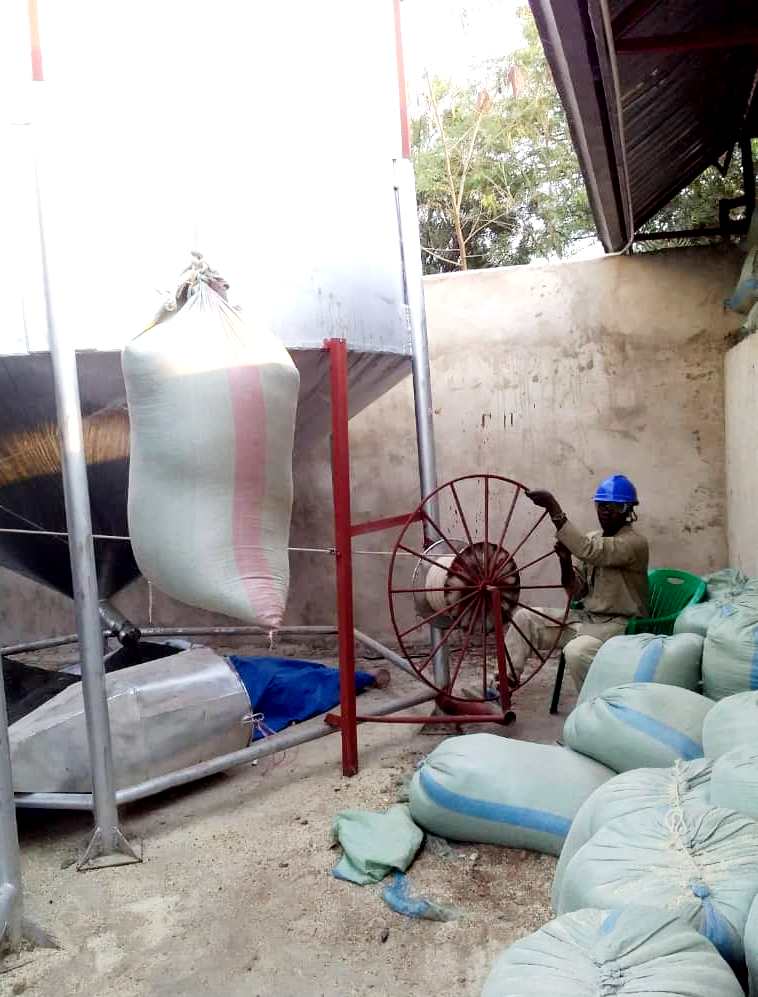
In the photo at the right, a factory worker is hoisting a bag of maize bran into the storage bin.
The raw materials are stored and ready for grinding and mixing.Permitting and licensing is nearly complete and we are right on the threshold of production.
For the early production cycles we’ll leave out the corncobs. Kenya is the source of the silage compound we use to enhance their digestibility, and commerce between the two countries is not flowing easily now.
|
|
|
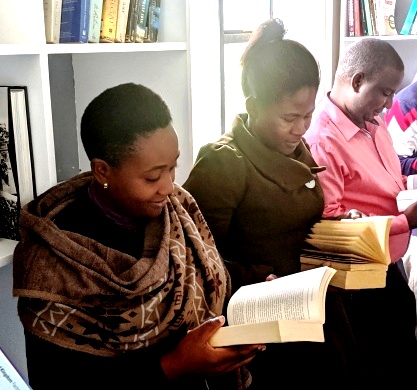
Teachers in the library at Cypress Hill
|
|
Mesha and Kisioki are about to enjoy a shopping spree for
Cypress Hill. The restaurant is ready for cooking appliances and dining room furniture. We plan to purchase $3000 of curriculum-matched books and materials for the library, that students and teachers need, Two teachers will help choose the books to buy and will join the upcoming visit to the educational book supply houses in
Arusha.
|
|
We are very happy to bring you the news of wonderful activities, and the great joy the people experience as they respond, without hesitation, to new opportunities through the International Collaborative. This is bringing a more exciting and rewarding life for all of us.
|
|
Thank you to Philip Lange,and Kisioki Moitiko for photography.
|
|
|
|
Support this award-winning work.
Joyful participation
|
|
For a better life for rural Africans, and a cleaner environment for all
Office of Programs and Development
International Collaborative, Maasai Stoves & Solar Project
705 Americana Drive, Unit 5A
Annapolis, MD 21403 USA
1-508-735-9176
|
|
|
|
|
|
|