|
Dear Business Law Section Members,
As we continue building momentum for the year ahead, I encourage you to take advantage of the many resources and opportunities highlighted in this newsletter. From new CLE programming and legislative updates to insightful member articles, pro bono initiatives and financial literacy programs, our Section continues to provide valuable tools to help our members stay informed, engaged, and equipped to better serve our
community.
I also hope you'll join us for our annual Labor Day Retreat, taking place September 4–7 at The Ritz-Carlton, Naples. A separate email with registration information is being sent, and I encourage you to reserve your spot early. It promises to be a memorable weekend of outstanding CLEs, networking, and Southern hospitality.
I look forward to seeing many of you there.
Sincerely,
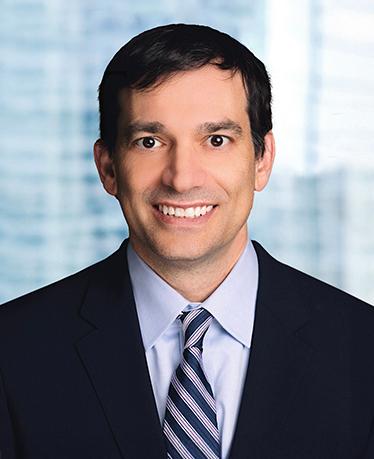
Peter F. Valori
Damian | Valori | Culmo
| | | |
On June 29, 2026, Governor Ron DeSantis signed the Fiscal Year 2026-2027 State Budget (HB 5001E), totaling $117.6 billion following nearly $810 million in line-item vetoes. As a reminder, the Legislature passed the final budget on May 29 after a budget stalemate during the Regular Session led to Special Session E.
July 1 marked the deadline for final action on legislation passed during the 2026 Legislative Session. In total, Governor DeSantis signed 228 bills and vetoed eight bills. The Business Law Section worked closely with legislators to advance the following two pieces of legislation, both of which were signed into law:
-
HB 797 – Nonprofit Corporations by Representative Kaylee Tuck (R-Sebring) and Senator Mack Bernard (D-West Palm Beach)
- Signed by the Governor on June 25, 2026, and effective July 1, 2026.
-
HB 679 – Registration of Trademarks by Representative Sam Greco (R-Palm Coast) and Senator Jonathan Martin (R-Fort Myers)
- Signed by the Governor on April 14, 2026, and effective July 1, 2026.
Newly elected legislators will return to Tallahassee on November 17, 2026, for Organization Session to prepare for the 2027 Legislative Session. Interim committee meetings are expected to begin in December/January and continue through February. The 60-day Regular Session will begin on March 2, 2027, and conclude on April 30, 2027.
| | |
Published by the Journal of Technology Law & Policy, University of Florida Levin College of Law The Coming Use and Misuse of Artificial Intelligence in the Courtroom: A Judicial Perspective and Proposal
By Judge William Matthewman
While attorneys, litigants, and judges have always had to be vigilant for the attempted introduction of improperly enhanced or fabricated evidence in court proceedings, the rise of Artificial Intelligence (AI) and its subset, Generative Artificial Intelligence (GAI), has substantially
increased the stakes. The task of identifying and exposing such fake or improperly enhanced AI evidence has become significantly more challenging. The current Federal Rules of Evidence and the Federal Rules of Civil and Criminal Procedure are insufficient to effectively address the
coming advance of AI-generated or AI-enhanced evidence. The rules must be amended, in certain respects, to provide attorneys, litigants, and judges with the necessary tools and guardrails to handle issues arising during pretrial and trial proceedings concerning deepfakes and AI- generated or AI-enhanced evidence.
Read on
| |
A Compliance Roadmap for Florida Employers: Addressing Identity-Based Harassment at Work
By Deedee Bitran
Employers often hesitate to intervene when workplace conflict involves politically charged language, but that can be a mistake. At City College of San Francisco (“CCSF”), a union leader publicly berated Jewish professor Abigail Bornstein, calling her a “colonizer” and mocking her Jewish sounding last name. The case, in which StandWithUs and the Louis D. Brandeis Center represented Professor Bornstein pro bono, establishes a critical principle for employers everywhere: identity-based harassment, even when repackaged as “mere” political advocacy, can violate workplace policies.
Read on
| | Pro Bono Best Practices Guide updated for 2026 | |
In 2015 the BLS Pro Bono Committee issued its Best Practices Guide for a Law Firm Pro Bono Policy. The Best Practices Guide has been revised twice, most recently this past June. As noted in the Best Practices Guide –
The Pro Bono Committee of the Business Law Section of The Florida Bar has developed this Best Practices Guide to encourage you to adopt a formal pro bono policy in your firm, or, if you have a policy in place, to review that policy and determine whether you wish to make changes in accordance with these suggestions. The Guide is set up to provide you with a general checklist of recommended procedures followed by detailed commentary that provides in-depth analysis, where necessary, of the checklist.
The Committee wishes to thank the many volunteers who helped draft the initial Best Practices Guide and worked on the revisions. However, we are always open to comments and additional suggestions. Please feel free to send those comments to the current Chairs of the Business Law Section Pro Bono Committee; contact information for the Chairs is available on the Section’s website here.
Get the Best Practices Guide here.
| | |
Senior$mart$ is an engaging program developed by the Financial Literacy Task Force designed to teach seniors to avoid scams.
Interested in getting involved? Do you know of an organization that would like a presentation? Let us know!
Learn more here.
| CLE Spotlight, programs from The Florida Bar Convention Now Available On Demand | |
PRESIDENTIAL SHOWCASE CLE: Introduction to the New Florida Protected Series LLC Legislation
Order now
“Introduction to the New Florida Protected Series LLC Legislation,” will provide an overview of legislation signed into law on June 20, 2025, with an effective date of July 1, 2026. The law amends the Florida Revised Limited Liability Company Act to authorize Protected Series LLCs, allowing a single LLC to create separate series with distinct members, assets, and liabilities while maintaining liability protection between them. It also establishes rules governing both Florida and foreign series LLCs doing business in the state, an area previously unaddressed in Florida law. The program will provide timely guidance ahead of the law’s implementation and feature members of the Florida Bar Drafting Committee who worked directly on the legislation.
E-DISCOVER AND DIGITAL EVIDENCE COMMITTEE CLE: Generative AI
Order now
Generative AI is transforming legal practice—but it comes with real risks and responsibilities.
This program explores how attorneys are using AI for drafting, research, and evidence enhancement, while highlighting critical limitations, including unreliable summaries and AI “hallucinations.” Learn best practices for tools and where caution is essential.
The course also covers key ethical obligations, including verifying AI-generated content, preventing fabricated evidence, and properly overseeing client materials. Attendees will gain insight into recent judicial responses, including emerging disclosure requirements, sanctions, and developments in the State.
The program includes an overview of AI tools for detection and safeguards, and concludes with a judicial panel sharing real-world perspectives from the bench.
| |
| |
BLS Email Lists
Are you getting the committee emails you want? You can check your subscriptions here.
CLE on Demand
Need CLE? Miss a program? Many of our past programs are available on demand.
Planning a CLE
Do you have an idea for a great CLE? Learn more here.
| | | Why Sponsor the Business Law Section of The Florida Bar? | | |
Florida isn’t just a state—it’s a global economic powerhouse. If it were an independent nation, Florida would rank among the top 15 largest economies in the world, boasting a GDP that rivals many major countries. The Business Law Section of The Florida Bar plays a critical role in shaping the commercial legal landscape of this economic titan. Our members are not only top-tier business lawyers—they’re the very individuals Florida legislators turn to when drafting or revising key commercial statutes. Sponsoring Business Law Section events like the Labor Day Retreat puts your organization directly in front of the thought leaders, power brokers, and policy shapers who influence business law and practice statewide—and often nationally.
This is more than a networking opportunity. It’s your chance to engage with the legal professionals guiding Florida’s economic future. In addition to the Labor Day Retreat, there are plenty of other sponsorship opportunities that provide year-round exposure through our Section’s ongoing programming, communications, and events. If your brand wants to be seen, respected, and remembered by the attorneys who help write the laws that govern business in one of the world’s most dynamic markets, this is where you need to be.
Please reach out to Will Blair and Bob Charbonneau for sponsorship opportunities.
| | | | |