IBANYS Weekly E-Newsletter | | |
Welcome to 2026 — a new year filled with new opportunities, challenges, initiatives and working together to make a better future for our member banks, the communities & customers you serve, our partners, and our industry! We hope you enjoyed a happy, healthy holiday season, and return recharged and reenergized. As we begin the new year, there are a few developments, events and opportunities I wanted to share with you this morning.
. . . . .
IBANYS’ State Legislative Counsel Bill Crowell – a fixture in IBANYS, our community banking industry and the halls of the State Capitol – has announced he is retiring from the law firm of Dickinson & Avella and from private practice. Bill’s distinguished career included serving in key positions under former longtime Senate Majority Leader Warren Anderson (R-Binghamton) and continued in the private sector as he established a well-deserved reputation of integrity and outstanding client representation. We at IBANYS have been very fortunate to have benefitted from Bill’s expertise and banking industry institutional memory for decades. He has successfully championed the causes and protected the interests of independent community banks and helped achieved countless hard-fought victories in New York’s legislative and regulatory arenas. As Bill begins his next chapter, please join us in thanking him for all that he has done for IBANYS and New York’s community banks throughout the years, and wish him the very best in the future. He will be missed! We will have an announcement in the very near future regarding IBANYS’ new legislative representation.
. . . . .
There will be other changes in 2026 for all of member banks, associate members and preferred partners. IBANYS is rolling out our new CRM called Jumbl -- designed to: 1) Enhance our communication to our members; 2) Improve registration for meetings, webinars and events -- including “pay on-line” registration; 3) Generate additional resources for our banks, including white papers, articles and business partner information, and 4) Government Relations communication on active bills at the state and federal level. We look forward to providing more support for our members, banks and business partners. The Onboarding Process will be distributed in a few weeks.
. . . . .
PLEASE SAVE THESE DATES FOR 2026 IBANYS CONFERENCES —
AND SHARE THEM WITH YOUR SENIOR MANAGEMENT TEAMS & DIRECTORS:
-
Virtual Compliance Meeting — February 3rd, 2026: Agenda and registration are coming out soon. Please look to register for these important meetings and interact with our regulatory agencies and business partners with important tips for 2026 exam cycle.
- Virtual Director’s Meeting — March 3rd, 2026: Bank Directors update from subject matter experts on what to look for in 2026. The landscape of community banking and the changes that may be ahead for financial institutions.
-
50th Annual Convention & Trade Show at Resorts World Catskills in Monticello, New York June 8-10, 2026 -- a New Date & Location, but still our same Premier Event. Mark Your Calendars. and please share the news with your officers and management teams!
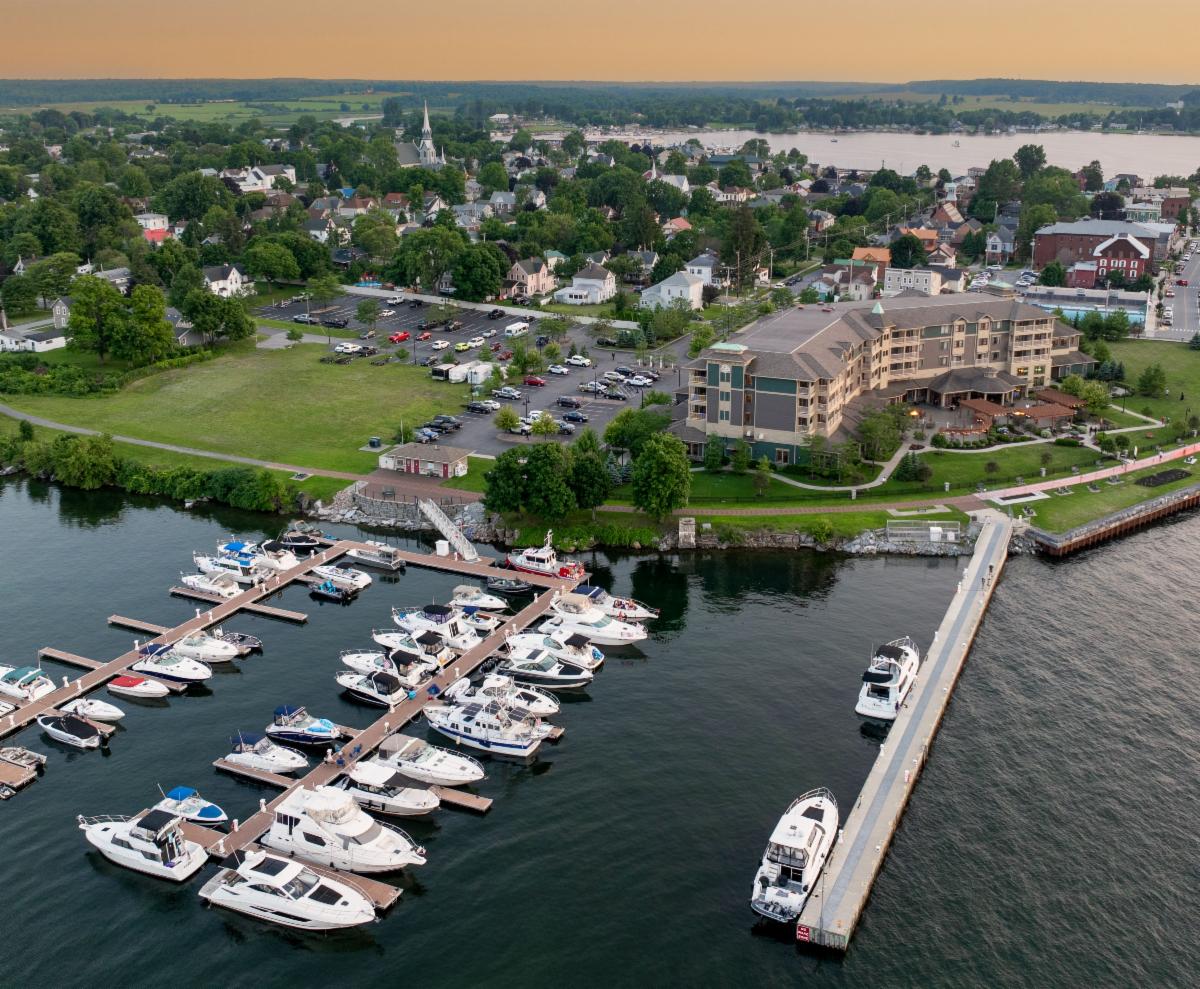
- 2026 Executive Leadership Symposium October 5-7, 2026 at 1000 Harbor Hotel in Clayton, New York.
. . .Stay tuned! As future meeting agendas are finalized, details and registration information will be shared via email, on IBANYS website (ibanys.net/meetings-schedule), and in Updates and e-newsletters.
. . . . .
IBANYS is partnering with the Empire State Development (ESD) on a new $50 million Loan Guarantee Program designed for community banks in New York State. It was created to help community banks with a flexible, low-cost credit enhancement to support and expand lending to eligible small businesses — particularly in distressed and rural communities across the state — and can help community banks grow their small business portfolios and support the businesses that anchor New York’s local economies. Contact me (johnw@ibanys.net) or ESD’s Ray Salaberrios (212) 803-3219/Rafael.Salaberrios@esd.ny.gov.) with questions.
Latest On Credit Unions
Once-rare credit union acquisitions of community banks are becoming routine and a defining feature of consolidation in U.S. finance. As reported by Tyfone: 1) A growing pace of these acquisitions in Florida and Illinois is part of a national shift, with a historically high 16 deals announced last year following 2024’s record 22; 2) As these deals proliferate, community bank opposition led by ICBA is focusing on inequitable tax policy and credit union mission creep; 3) More Media Scrutiny: The article continues a series of articles scrutinizing credit union policies, including: 4) A December Open Banker op-ed from ICBA breaking down its data analysis on how credit union acquisitions harm consumers and local communities .5) An American Prospect article detailing how some credit unions are taking advantage of their industry’s tax and regulatory exemptions to stray from their roots and acquire tax-paying competition. 6) A Tyfone op-ed from ICBA Past Chairman Brad Bolton and ICBA leadership community banker Ken Hale spotlights why policymakers should examine credit union acquisitions of community banks.
| | Stay tuned! As meeting agendas are finalized, details and registration information will be shared via email, the IBANYS website (ibanys.net/meetings-schedule), and in upcoming e-newsletters. | | | |
Regulatory Compliance Update
Tuesday, February 3, 2026
9:00 a.m. – 3:00 p.m.
Live Webinar – Zoom
| | | |
2026 Bank Directors Conference
Tuesday, March 3, 2026
8:45 a.m. – 3:30 p.m.
Live Webinar – Zoom
| | | |
Virtual Spring Meeting
April 14-15, 2026
9:00 a.m. - 2:30 p.m.
Live Webinar - Zoom
| | | | |
2026 Annual Convnetion
IBANYS’ 50th Annual Trade Show & Convention is headed to Resorts World Catskills!
Mark your calendars and save the date—June 8-10, 2026.
We look forward to celebrating this milestone event with you!
| | | | |
Executive Leadership Symposium
October 5-7, 2026
1000 Harbor Hotel
Clayton, NY
| | ASSOCIATE & PREFERRED PARTNERS | | | |
Accounting Standards Updates: Newly Issued & Newly Effective
Two important changes are on the horizon. ASU 2024-08, which streamlines accounting for purchased loans with a practical, proactive transition approach, and ASU 2023-09 which enhances income tax disclosures for greater clarity. This overview explains what’s changing and how institutions can prepare now to enter the new year with confidence.
Read Article
| | |
THE WEEK OF JANUARY 5, 2026
The Municipal Market Monitor is a weekly overview covering key themes of the general municipal market. The update includes the AAA yield curve, municipal to treasuries ratio, fund flows, expected issuance volume and Piper Sandler’s weekly calendar, along with brief commentary, designed to provide issuers and investors insight into current market conditions.
| | |
Basic Information:
Cost: $1495/team for a virtual one-day session
Dates: January 22 / March 12 - choose preferred date on registration page
Session Structure: 6.5 hours, including intro and ratio review, followed by 3 years of balance sheet management and interest rate decisions
Schedule: 9:00am-3:30pm CST / 10:00am-4:30pm EST
Audience: Bank Execs, Division Heads, Bank Trainers, Directors/Trustees, Management Teams...or any banker wanting to take a swing at bank sim.
Ideal Team Structure: 3 to 5 members (although bank could include extra observers)
| Check out the video below to learn more: | | |
How's This Going To Work?
Up to 12 teams of 3-5 participants will compete virtually against banks from all over the country for bragging rights. You will immerse yourself in this one-day event simulating three years of interest rate, balance sheet management, and strategic banking decisions.
What are the logistics for each bank, you ask? Although teams could remain individually virtually corralled within a team Zoom room, we think it is optimal that you gather in a conference room setting for your effort (this also allows for some “observers” if you want training to extend a little further). We’ll need your attention for the full day, but you’ll be able to remain flexible enough to sign that stray wire transfer form or put out any of the daily mini-fires while your team carries on.
Ahead of the event, we’ll need to set up
Smartsheet access for your team (just one shared username and password) and do a Zoom-room shake-down cruise with one of your team members 15 minutes before showtime. Challenge your team – heck, challenge the bank across town! Let’s do this!
| | |
May 17-22, 2026
Barret Graduate School
Our three year graduate program. Annual one-week residency session.
Barret Graduate School Curriculum in Brief
One week per year for three years • 130+ hours of core classroom study • Nine on-campus case studies• Eight home study problems.
Over the three year graduate program, participants will have access to 200+ hours of training.
| | | |
Registration is open for ICBA LIVE 2026
Registration is now open for ICBA LIVE 2026, the world’s largest gathering of community bankers.
Details: Set for March 6-9 at the San Diego Convention Center, ICBA LIVE is where ICBA members connect with peers, are inspired by new ideas, and gain practical insights to stay competitive.
Theme: The theme for ICBA LIVE 2026 is Anchored in Purpose to recognize community bankers as the anchors of their communities—providing stability and support during turbulent economic times—and ICBA as an anchor for community banks.
More: ICBA LIVE features industry-leading speakers, education opportunities for community bankers, a lively expo floor, and more.
LEARN MORE AND REGISTER
| |
Community Banks Poised for a Strong 2026
Community banks enter 2026 with strong momentum, supported by solid credit quality, steady loan demand, improving net interest margins, and a more favorable interest rate environment. In this article, Jim Reber of ICBA Securities highlights how legislative progress, higher portfolio yields, easing funding costs, and a steeper yield curve are creating opportunities for profitability and strategic balance sheet management. Reber also outlines how bond portfolio strategies, including loss-earnback swaps, can further enhance performance in the year ahead.
The full article by Jim Reber is attached for your review.
Read Article
| | |
2026 State Legislative Session Opens Today
-
The 2026 New York State legislative session begins today. For your convenience, here's the 2026 New York State Legislative Session Calendar. Gov. Hochul will deliver her “State of the State” address next Tuesday, Jan. 13 to outline her priorities and agenda for the coming session. That will be followed soon thereafter by her proposed executive budget for FY 2026-27 spelling out the details of her proposals. This year's legislative session will unfold in the shadow of the election year, with all 211 state legislative seats and all statewide elected officials on the ballot. Hochul is previewing some of her State of the State priorities in the coming week, citing plans for middle-class tax cuts, increases to the child tax credit, and a rise in the state minimum wage for 2026.
-
The minimum wage issue will be part of the discussion this year -- in 2026, the minimum wage will rise by 50 cents to $17 an hour in New York City, Long Island and Westchester. Across the rest of the state, the rate will jump to $16 from $15.50. The increase is part of a broader plan to link the minimum wage to broader market conditions. After falling behind other states, the rate will start increasing in 2027 based on a three-year average of the region’s Consumer Price Index. https://www.nytimes.com/2026/01/02/nyregion/2026-new-laws-new-york-state.html?smid=nytcore-ios-share.
-
The chapter amendment for the FAIR Act has been formally introduced. Please see attached for the chapter amendment. (A.9444): “AN ACT to amend the general business law, in relation to the attorney general's ability to protect New Yorkers from unfair, deceptive and abusive business practices; and to repeal certain provisions of such law relating thereto. https://legiscan.com/NY/text/A09444/2025
-
The State Department of Financial Services published a Notice of Adoption of a rule relating to complying with Banking Law Section 28-bb -- Effective Date: 2026-01-07. The regulation implements the mandate of Banking Law, section 28-bb Substance of final rule. DFS provides a summary of new Part 120 of Title 3 of the New York Codes, Rules and Regulations in accordance with State Administrative Procedure Act § 202(5)(c)(ii). Full text of the new rule: www.dfs.ny.gov/industry_guidance/regulations/final_adoptions_banking. This implements New York Banking Law (“BL”) § 28-bb, which mandates that the Superintendent of Financial Services evaluate the record of performance of certain mortgage bankers licensed under BL § 591 in helping to meet the credit needs of their communities, consistent with their safe and sound operation.
Political, Economic & Demographic Items
-
Governor Hochul announced a special election will be held on Tuesday, February 3, 2026 to fill the vacancies in the 47th and 61st State Senate Districts, and the 36th State Assembly District. The vacancies were created by the resignations of former Democratic State Senator Hoylman-Sigal (D), former Democratic State Senator Ryan and former Democratic Assemblymember Mamdani, respectively, who have all departed the Legislature and now hold other offices. Governor Hochul issued the proclamation on January 2.
-
By the end of 2024, New York State posted the lowest homeownership rate in the country with just 51.3% of residents owning their homes, according to a new analysis based on US Census Bureau data. The report places New York at the bottom of a national ranking. The study by Stage Properties Brokers LLC tracked quarterly homeownership trends across all 50 states throughout 2024, using the most recent full year of available data. The Northeast accounted for a disproportionate share of states at the bottom of the rankings, with Massachusetts, New Jersey and Rhode Island also landing among the 10 lowest. https://nypost.com/2026/01/05/real-estate/new-york-has-the-lowest-homeownership-rate-in-the-us/
-
New York City Mayor Zohran Mamdani said he will take action against businesses that charge misleading fees and engage in deceptive business practices – a pledge that shows the continued influence of Lina Khan, the former Federal Trade Commission chair, Crain’s New York Business reports.
| |
|
Congress Is Back In Session
-
The 2nd Session of the 119th Congress convened this week. For your convenience, here's the 2026 Combined Calendar that shows when the House, Senate or both chambers are in session.
-
CRYPTO: The Senate is facing an election-year scramble to pass a major overhaul of cryptocurrency regulations. Senate Banking Chair Scott (R-SC) has scheduled a markup of landmark crypto market structure legislation next Thursday without the clear-cut support of key Democrats and Republicans. “Without significant breakthroughs in the next few days, the effort to incorporate digital assets into the regulated financial system could die in committee.” Time is running out before midterm season lands on the Capitol. The goal remains a bipartisan deal with Senate Democrats to get 60 votes on the floor, but it has been complicated by GOP infighting. Politically, the hardest issue to resolve may now be the legal treatment of stablecoin yield among third parties like crypto exchanges. Banks are mounting an all-out lobbying blitz to effectively halt the practice. Crypto disagrees. Key Republicans said addressing stablecoin yield specifically was crucial. “It’s important,” Kennedy said of yield policy. “The bill’s in jeopardy if we don’t work something out.”wants to hold a vote this month to advance a crypto “market structure” bill that would divide up oversight of digital assets between the SEC and the CFTC. The Senate Agriculture Committee, with jurisdiction over the CFTC, also plans a markup in January. It’s unclear if Scott will be able to build bipartisan support to meet the timeline. Negotiations between Senate Banking Republicans and a group of crypto-friendly Senate Democrats continue and several key sticking points remain.
-
With the Senate markup of crypto market structure legislation expected next week, ICBA is calling on community bankers to urge their lawmakers to ensure the measure bars all digital assets market participants from offering yield, interest, or rewards on payment stablecoins. Community bankers can use a customizable message on ICBA’s Be Heard grassroots action center to tell their lawmakers to minimize risks to the banking system and local economies by extending the prohibition to crypto exchanges and other third parties. ICBA last month released an analysis that says allowing crypto third parties to continue paying yield or interest on payment stablecoin holdings would reduce community bank lending by $850 billion due to a $1.3 trillion reduction in the industry’s deposits.
-
HOUSING: The House GOP want to pass a bipartisan housing policy revamp early this year to boost the supply of affordable homes. The bill, backed by both House Financial Services Chair Hill (R-ARK) and Ranking Democrat Waters (D-CA), faces uncertainty. The Senate has unanimously approved its own, larger bipartisan housing package with over 20 provisions not in the House plan. Chair Hill said the committee may have another markup in early 2026 on housing and community banking issues.
-
With just 43 weeks until Election Day, House Speaker Johnson (R-LA) and Senate Majority Leader Thune (R-SD) are facing “a daunting legislative and political climate” – beginning with federal government funding: A partial government shutdown is just 28 days away if Congress can’t come together on an FY2026 funding deal. https://punchbowl.news/archive/1226-am/. Meanwhile, GOP Representatives, frustrated with a dysfunctional Congress, are heading for the exits, according to The Hill.
-
The sudden passing of GOP Congressman LaMalfa (R-CA) and the resignation of Rep. Marjorie Taylor Greene (R-GA) has reduced the GOP's House majority to 218. Democrats will soon have 212 members, once Rep. Abigail Spanberger (D) is sworn in as Virginia’s governor next week. Republicans will only be able to lose two votes to pass partisan bills if all Democrats are present and voting. House GOP leadership is also reportedly watching carefully to see if Reps. Stefanik (R-North Country), Mills (R-FL.) or Bacon (R-NE) may decide to leave before their terms are up. Stefanik and Bacon are retiring, and Mills is facing a lengthy list of ethics and legal issues. https://punchbowl.news/archive/1226-am/
Regulatory Matters
-
ACRE Tax Exemption. ICBA is urging agricultural lenders to submit comment letters by Tuesday, Jan. 20, on IRS guidance regarding the ACRE tax exemption for interest earned on ag real estate loans. The One Big Beautiful Bill Act included the ACRE provision as an amendment to Section 139L of the Internal Revenue Code. The guidance is a precursor to the IRS issuance of a proposed rule. Community bankers can comment on the guidance by addressing the points made in ICBA’s ACRE Act summary.
-
ICBA signaled support for a proposed rule regarding unsafe or unsound practices and matters requiring attention, but called on regulators to ensure supervision is consistent across the banking agencies. In a letter to the FDIC and OCC, ICBA: 1) Said it is supportive of the agencies’ efforts to bring greater transparency and accountability to the supervisory process; 2) Recommended clarifying definitions and standards for key concepts to provide a more consistent understanding of the terms; 3) Said the agencies should guard against unintended constraints on matters requiring attention, or MRAs, by maintaining the agencies' abilities to address emerging risks; 4) Said the OCC and FDIC should ensure consistency across community bank supervision by coordinating with the Federal Reserve.
-
Federal regulators announced the 2025 updated asset-size thresholds used to define "small banks" and "intermediate small banks" under their current CRA regulations. Effective Jan. 1: 1) “Small bank” means an institution that had assets of less than $1.649 billion as of Dec. 31 of either of the prior two calendar years; 2) “Intermediate small bank” means a small institution with assets of at least $412 million as of Dec. 31 of both of the prior two calendar years and less than $1.649 billion as of Dec. 31 of either of the prior two calendar years.
-
The OCC proposed issuing a preemption determination saying that federal law preempts state laws that eliminate OCC-regulated banks’ flexibility in paying interest or assessing fees on funds placed in real estate escrow accounts. The OCC said: 1)The proposed preemption determination would conclude that the National Bank Act preempts New York’s Gen. Oblig. Law section 5-601, the state’s interest-on-escrow law. 2) Eleven other states have laws with substantively equivalent terms, and these laws would also be preempted. 3) The proposed determination would complement the OCC’s notice of proposed rulemaking to codify national banks’ longstanding escrow accounts power, which the agency is concurrently issuing. Comments on the proposal are due 30 days after it is published in the Federal Register. ICBA will be submitting comments.
-
The FHFA issued a final rule that establishes new affordable housing goals for the loan purchases of Fannie Mae and Freddie Mac over the next three years. The housing goals introduce 2026-2028 annual benchmarks for the enterprises’ acquisitions to support low-income families and families in low-income areas. The rule also includes technical changes and removes the measurement buffers. ICBA has long supported housing goals for the enterprises provided that they do not impair the enterprises’ safety and soundness, especially as they work to recapitalize.
-
ICBA expressed support for a proposed rule to prohibit the use of reputation risk by regulatory agencies and urged the agencies to finalize it promptly. In a letter to the OCC and FDIC, ICBA said: 1) The elimination of reputation risk from supervisory frameworks will improve the objectivity, consistency, and predictability of bank supervision while reducing unnecessary compliance burdens on community banks; 2) Credit risk, liquidity risk, and internal rate of return are quantified through established metrics, but reputation risk lacks any consistent definition or measurable criteria; 3) By codifying these prohibitions in regulation rather than relying on guidance alone, the agencies will provide durable legal protections that will remain in effect across future administrations and leadership changes. The FDIC and OCC in October proposed rules to prohibit the use of reputation risk by regulators and to revise the supervisory framework for “unsafe or unsound” banking practices. In a national news release ICBA commended the agencies and said prioritizing material financial risks facilitates a tailored regulatory framework that allows community banks to meet the needs of their communities.
-
The CFPB reminded financial institutions about Home Mortgage Disclosure Act data filing deadlines and announced a change to its average prime offer rates resources. The CFPB said an upgrade to the HMDA Platform was performed and the fixed, adjustable, and survey table APOR file paths have changed. It added that the old APOR file paths will be removed and inaccessible as of Jan. 20. The filing period for HMDA data collected in 2025 opened on Jan. 1. The CFPB said submissions will be considered timely if received on or before Monday, March 2. The HMDA Platform allows financial institutions to determine whether their loan-application register data comply with reporting requirements outlined in the 2025 Filing Instructions Guide.
-
ICBA signaled support for a proposed rule regarding unsafe or unsound practices and matters requiring attention, but called on regulators to ensure supervision is consistent across the banking agencies. In a letter to the FDIC and OCC, ICBA: 1) Said it is supportive of the agencies’ efforts to bring greater transparency and accountability to the supervisory process; 2) Recommended clarifying definitions and standards for key concepts to provide a more consistent understanding of the terms; 3) Said the agencies should guard against unintended constraints on matters requiring attention, or MRAs, by maintaining the agencies' abilities to address emerging risks; 4) Said the OCC and FDIC should ensure consistency across community bank supervision by coordinating with the Federal Reserve. ICBA previously commended the FDIC and OCC for issuing a joint proposal to prohibit the use of reputation risk by regulators and to revise the supervisory framework for “unsafe or unsound” banking practices.
| | | | |