|
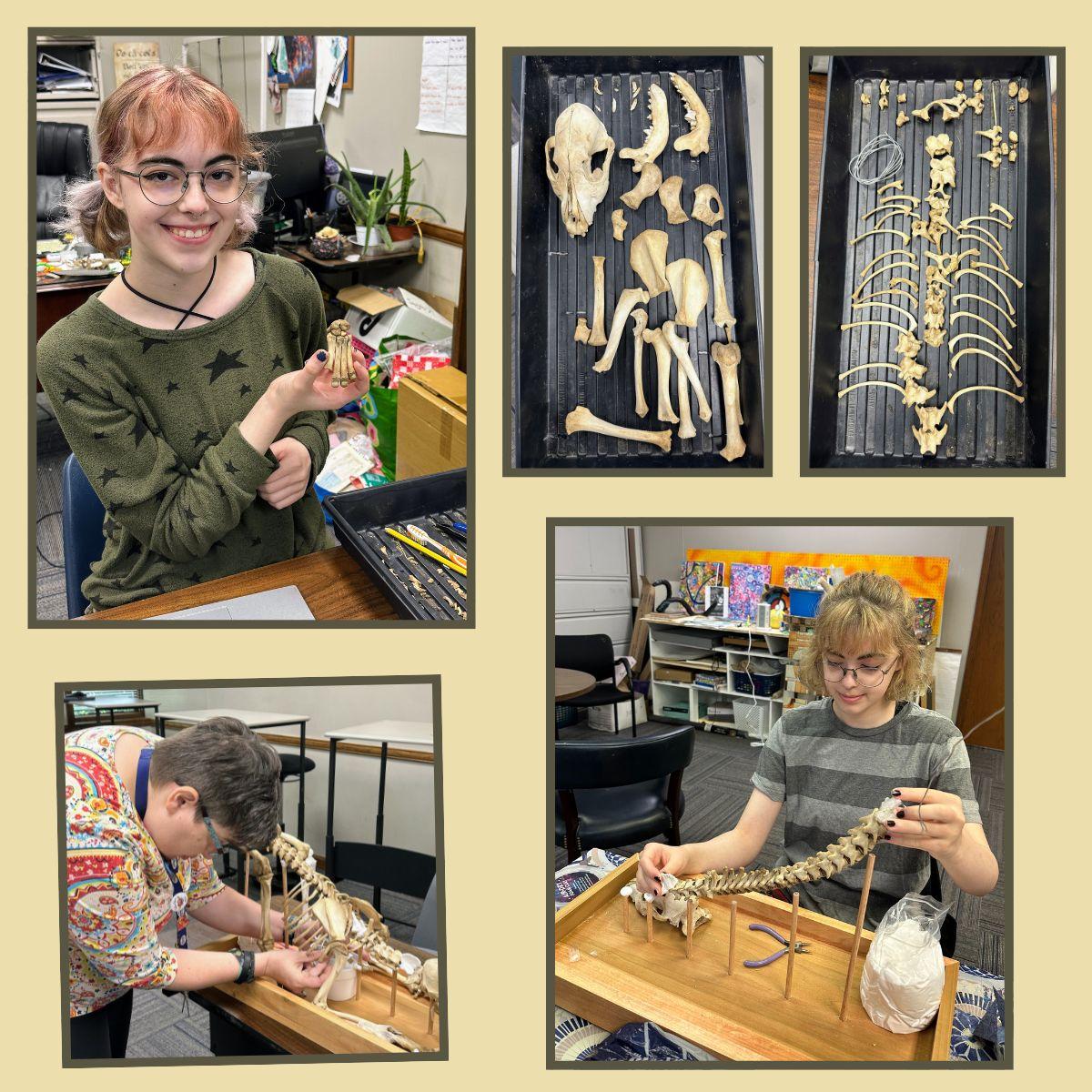
Zoë's project required many skills, including research, 3D printing, clay modeling and ingenuity. Some of the major steps included:
- conducting a search of the site;
- cleaning the bones of debris and sanitizing them;
- identifying the bones and determining which ones were missing from the skeleton;
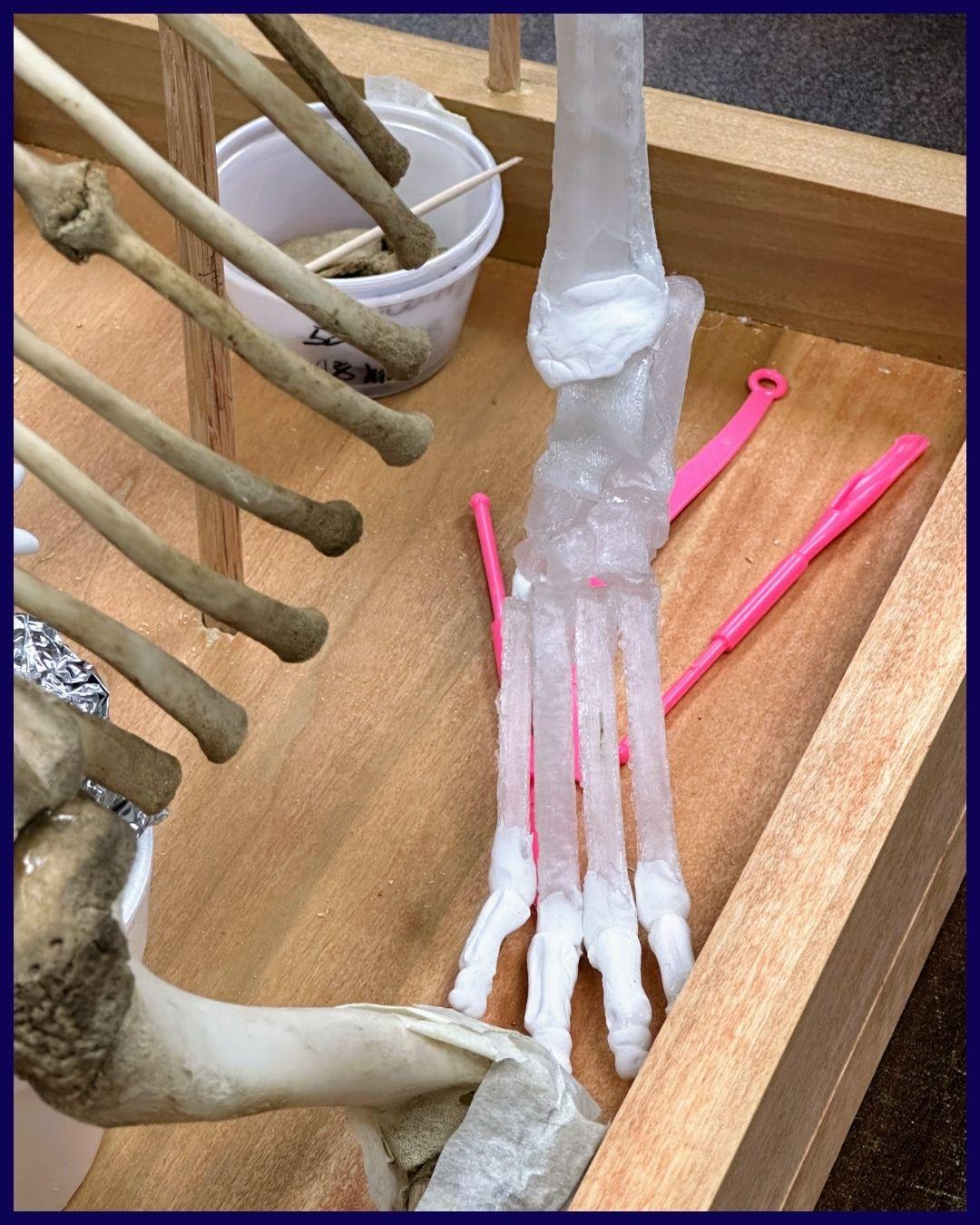
- using a 3D printer to make missing bones, when printer files could be found (see the clear bones in the photo to right);
- using clay to make the remaining missing bones (see the white bones in the photo to right);
- arranging the bones in their proper place; and
- fastening the bones together using items like wire, glue and pins.
"This project was unexpected, but unforgettable," related Liz. "Every day students in every grade would stop by to check on the progress and Zoë would tell them the newest things she had learned. This humble dog taught anatomy and physiology to an entire school."
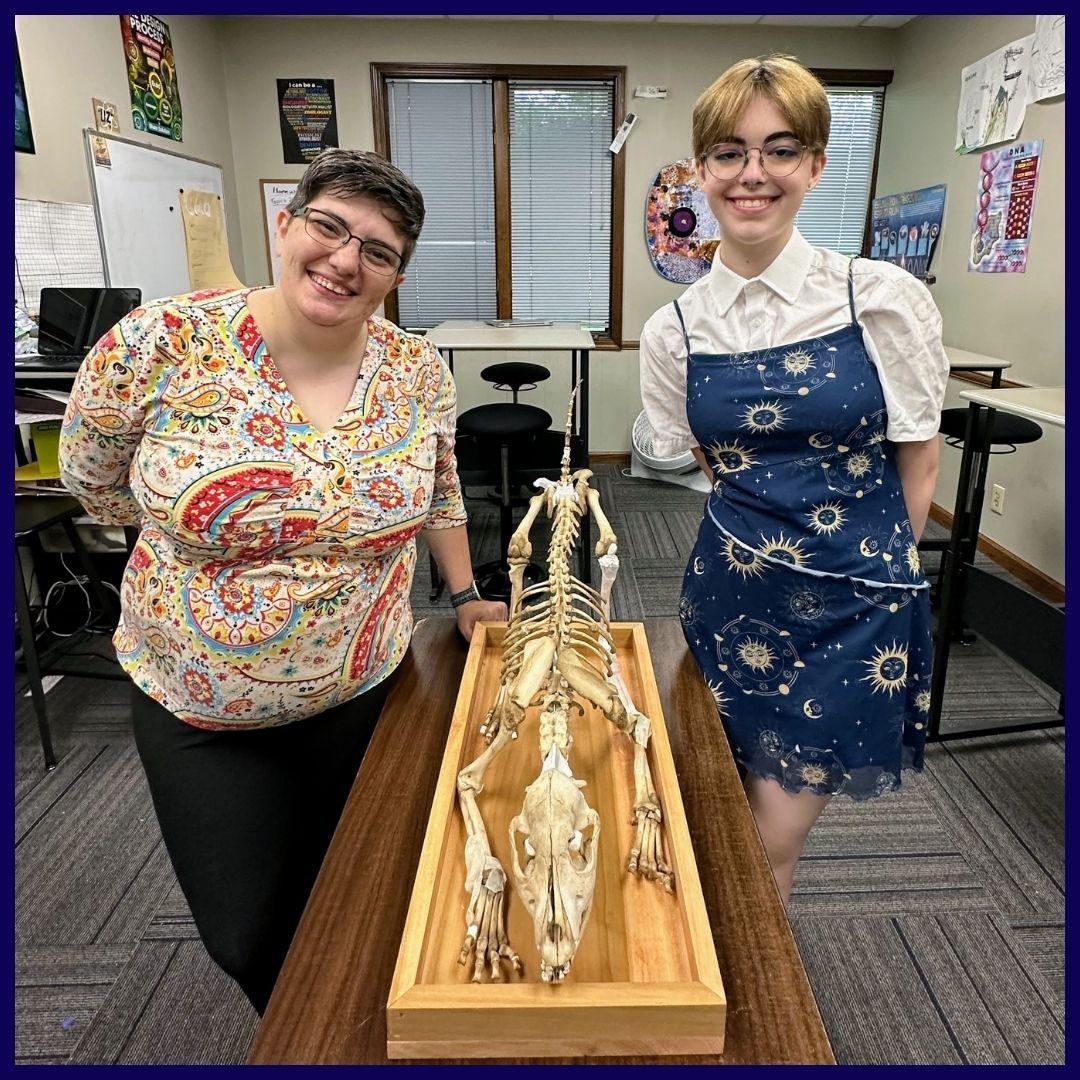
Zoë completed the dog skeleton, which had been named Winston, on the last day of school. Although the skeleton went home with her for the summer, Zoë plans to return it to Liz's classroom, where it can inspire future science students at ASOP.
|