|
BHIPP Bulletin
Volume 12, Issue 3
September 2026
| | This month's BHIPP Bulletin is a contribution from Rheanna Platt, MD, MPH, Associate Professor in the Department of Psychiatry and Behavioral Sciences at Johns Hopkins University School of Medicine and BHIPP Consultant for Maryland BHIPP. | | |
This month’s newsletter will focus on social anxiety disorder (SAD) in youth, including its prevalence and presentation, assessment, and management. Given recent recommendations by the American Academy of Pediatrics (AAP)1 and US Preventive Services Task Force (USPSTF) related to screening for anxiety disorders in youth (ages 8-18),2 SAD and other anxiety disorders may be increasingly identified in primary care settings. Regular screening for mental health needs such as social anxiety is consistent with recommendations from the Maryland Healthy Kids Preventative Health Schedule (EPSDT). Of note, the Generalized Anxiety Disorder 7-item scale (GAD-7), a commonly used screener for youth anxiety, may not detect social anxiety symptoms since it is focused on assessing symptoms of Generalized Anxiety Disorder. While its 41-item length is more substantial, the Screen for Child Anxiety Related Disorders (SCARED) questionnaire may be a better tool beyond the GAD-7 to detect SAD along with other anxiety disorders in youth.3 Other screening tools include the Preschool Anxiety Scale, a validated anxiety screener for children ages 3-6, and the Revised Child Anxiety and Depression Scale (RCADS), which provides a more detailed report of child anxiety symptoms; it is appropriate for use in children ages 8-18.
The DSM-5 criteria for SAD include:
- Marked fear/anxiety about one or more social situations (e.g., having a conversation with others, being observed) in which the individual is exposed to ‘possible scrutiny’ by others
- Fear of acting in a way that will be negatively evaluated by others
-
Social situations nearly always provoke intense fear or anxiety (Note: younger children may have difficulty verbalizing fears and may present with behavioral symptoms, such as tantrums, in the context of exposure to feared stimuli/social situations)
- Social situations are either avoided or endured with intense fear or anxiety
- As with other anxiety disorders, the fear/response is persistent (e.g., 6 months or more), out of proportion to the actual threat, causes functional impairment, and is not attributable to another factor (e.g., medication, medical or mental health condition)
- Social anxiety may be more general, or limited to “performance only” (e.g., speaking in public)
SAD is relatively common. In the National Comorbidity Survey-Adolescent Supplement — a large national epidemiological survey designed to estimate the prevalence and course of disorders in youth — the estimated lifetime prevalence of SAD was 15.5% in females and 11.1% in males.4 In addition, this disorder is more common among adolescents relative to younger children. Of note, this survey was conducted between 2001-2004, and there is evidence that the prevalence of anxiety disorders in youth has increased substantially since that time.5
Once social anxiety is identified, several factors may influence next steps or decisions about management, including severity of symptoms, degree of functional impairment, patient age, degree of parental accommodation for anxiety symptoms, and joint patient-family preferences for treatment.
For more mild cases with less functional impairment (e.g., the patient is able to engage in most activities), psychoeducation about anxiety may be a good first step. Education may include providing information about the prevalence of anxiety disorders in youth and the role that avoidance may play in perpetuating symptoms of anxiety. There are several freely available patient and family education materials listed at the end of this newsletter to facilitate education. For younger children, much of the education may be provided to parents.
More formal treatment is recommended for patients with greater impairment, such as those who substantially limit their engagement in developmentally normative activities (e.g., school attendance) due to social anxiety.
| | |
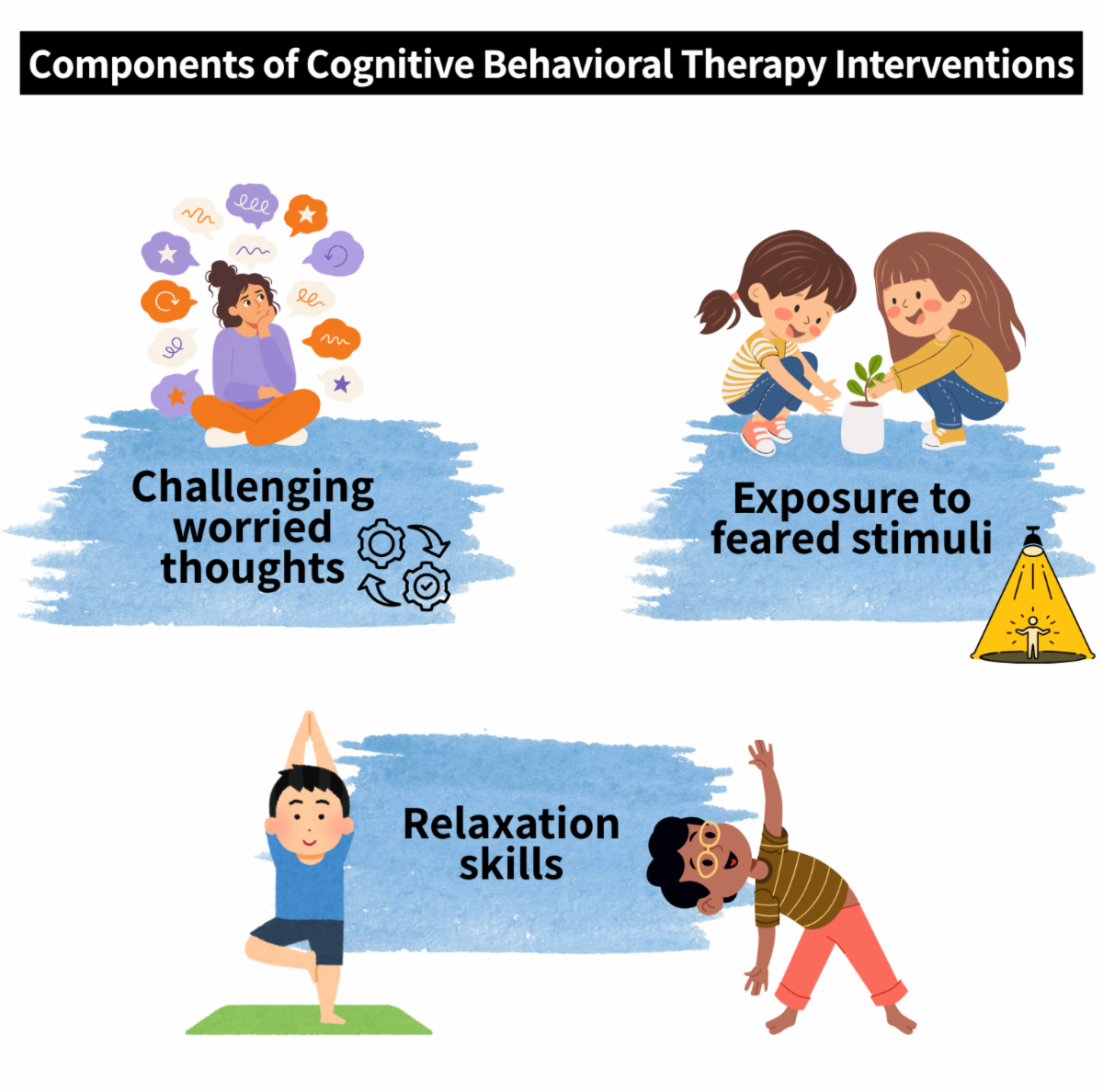
A ‘gold standard’ treatment for anxiety disorders, including social anxiety, is Cognitive Behavioral Therapy (CBT).
CBT typically includes interventions related to:
- Anxious cognitions
- E.g., challenging cognitions, worried thoughts, or assumptions about social situations and social performance
- Exposure
- E.g., developing a plan for gradual exposure to feared stimuli, such as social or performance situations in order to break the cycle of avoidance
- Relaxation skills
- E.g., addressing physiological arousal symptoms, such as muscle tension, and managing distress related to exposures
| |
For younger children, particularly those ages 6 and under, working closely with parents is critical, as parents may inadvertently reinforce youth anxiety by allowing the youth to avoid situations in an effort to decrease their distress, particularly if parental anxiety is also present. For more severe cases, such as social anxiety leading to school avoidance, combination treatment (e.g., CBT plus SSRI) may be considered and is endorsed by the American Academy of Child and Adolescent Psychiatry based on evidence from large trials, including the Child Anxiety Multimodal Study.6
For many patients, coordination with the school may be an important part of treatment, given that impairment in school settings (e.g., social situations, speaking in class) may figure prominently with social anxiety. Thus, coordinating with the school by communicating about the patient’s diagnosis and/or advocating for development of a 504 or IEP may be warranted. For example, school may be an important location to practice being exposed to fearful situations. For further information on 504s and IEPs, please see the July 2024 BHIPP Bulletin.
| |
Additional resources on SAD that may be helpful to families are listed below:
| | |
As always, if you have questions about the behavioral health needs of your patients, we encourage you to call the BHIPP consultation line at
855-MD-BHIPP (632-4477), open 9am-5pm Monday-Friday, for resource/referral networking or consultation support.
We will keep you informed about all our services and training events through our website (www.mdbhipp.org) and monthly e-newsletters. Additionally, BHIPP is on LinkedIn, Facebook, and Instagram. We invite you to follow us there to stay up-to-date on upcoming training events, pediatric mental health research, and resources for providers, families and children.
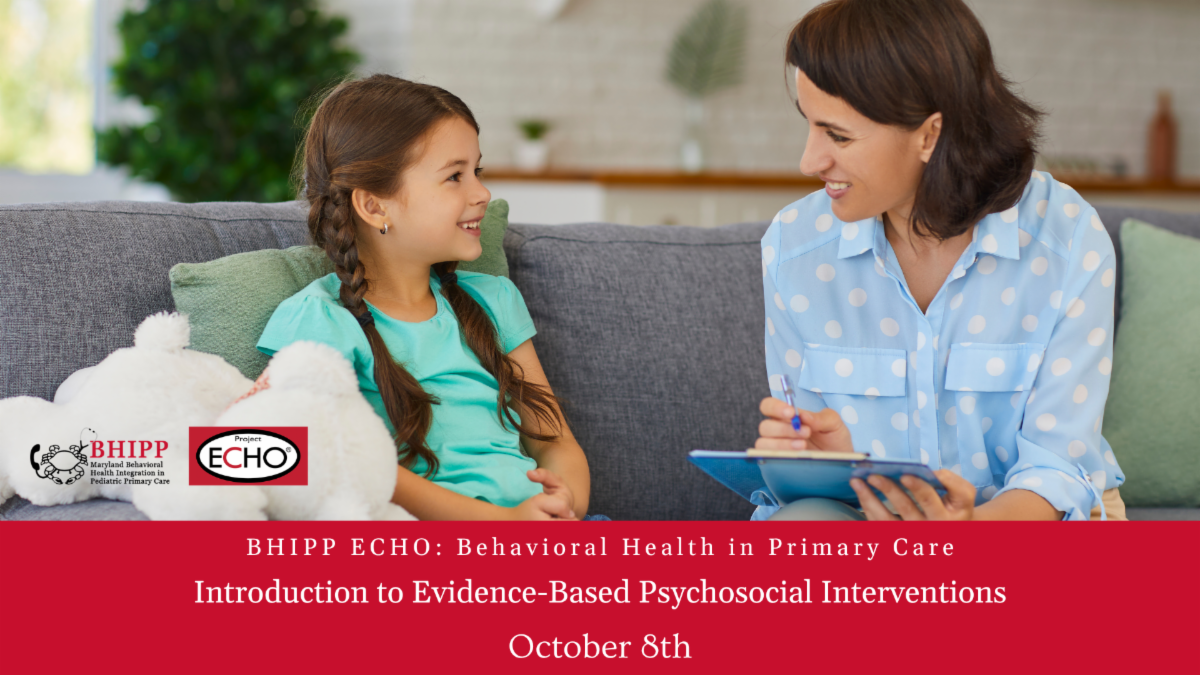
| | New BHIPP ECHO PMHNP Series Starting in October 2026! | | A new BHIPP ECHO Enhanced Behavioral Health Training for PMHNPs series is starting in October! This series is designed for Maryland Psychiatric-Mental Health Nurse Practitioners (PMHNPs) who want to deepen their knowledge of child and adolescent mental health. | | New BHIPP ECHO for Pediatric Primary Care Providers Series Starting in October 2026! | | A new BHIPP ECHO for Pediatric Primary Care Providers series is starting in October! This series is great for providers who want to improve their knowledge of child mental health and develop skills. | |
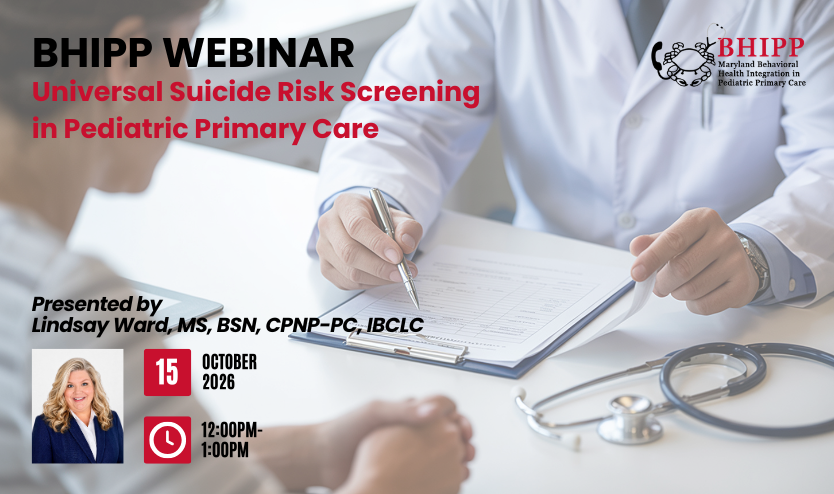
Register for the next BHIPP Webinar! | Register for the next BHIPP Webinar on October at 12:00pm! BHIPP Webinars are a series of interactive, web-based learning sessions that are a virtual space for pediatric primary care, emergency medicine, and behavioral health providers to connect, learn and share about strategies, practices and resources to promote mental health and resilience among children and families as well as providers. Free CME and CEU credit is available for participation! | | The University of Maryland School of Medicine is offering a free virtual training! | | |
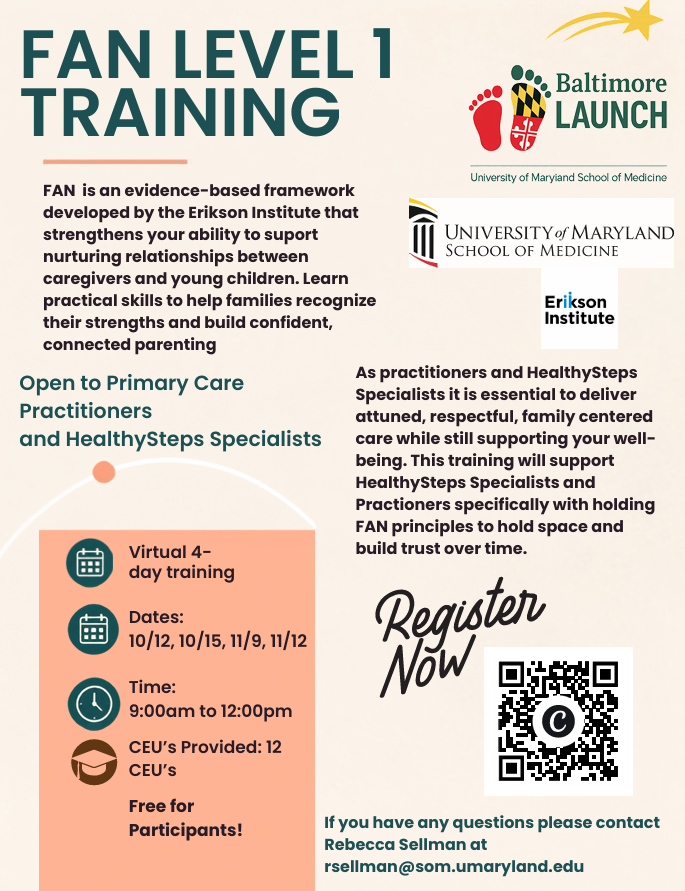
Pediatric healthcare providers, join the University of Maryland School of Medicine for a virtual training on the evidence-based Facilitating Attuned Interactions (FAN) framework, developed by the Erikson Institute! Free CEU credit is available for participation.
The training will be held on October 12th, October 15th, November 9th, and November 12th from 9:00am to 12:00pm. To register, click the button below.
| | Follow BHIPP on Instagram! | | Follow BHIPP on Instagram @marylandbhipp for behavioral health resources, continuing education and training opportunities, clinical tools, and updates to support pediatric primary care, emergency medicine, and mental health providers across Maryland in managing their patients' mental health concerns. | | |
BHIPP is supported by funding from the Maryland Department of Health, Behavioral Health Administration and operates as a collaboration between the University of Maryland School of Medicine, the Johns Hopkins University School of Medicine, and Salisbury University.
BHIPP and this newsletter are also supported by the Health Resources and Services Administration (HRSA) of the U.S. Department of Health and Human Services (HHS) as part of an award totaling $1,379,327 with approximately 20% financed by non-governmental sources. The contents of this newsletter are those of the author(s) and do not necessarily represent the official views of, nor an endorsement, by HRSA, HHS or the U.S. Government. For more information, visit www.hrsa.gov.
Copyright © 2021 Maryland Behavioral Health Integration in Pediatric Primary Care (BHIPP), All rights reserved.
| | | | |