Participate and Present
Your Abstract at PAG
| Register today so you don't miss a chance to present your research, and network with leaders of the global plant and animal genomics community | |
The Abstract Submission Deadline is August 25
All Full Conference registered attendees are invited to submit a poster abstract.
At the meeting there will be an area where posters can be viewed and two Poster Sessions on Thursday of the conference, when authors are expected to stand near their poster to answer any questions and discuss their research.
You must register to attend the meeting prior to submitting an abstract.
| |
|
|
International Plant and Animal Genome Conference / PAG Australia
20-22 September, 2023 at the Westin Perth, Australia
| |
Featured Plenary Speakers | |
|
|
|
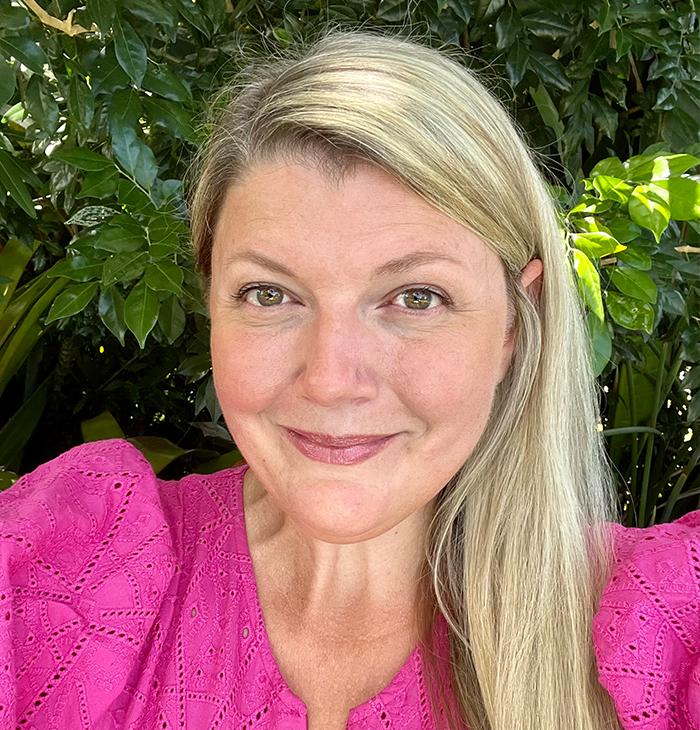
Senior Research Scientist, Uppsala University, Sweden
Talk Title: “Leveraging Base Pair Constraint from 240 Mammals to Understandt Genetic Variation and Disease”
Jennifer Meadows is a senior research scientist and group leader in comparative genomics at Uppsala University, Sweden. Her research involves the evaluation of genome homology, composition, organisation and function, both within and across the species border, and her research team leverages these analyses to dissect and functionally characterise the natural variation in genome structure and regulation that lead to heritable complex disease. Jennifer has a particular interest in disease that impacts the innate and acquired immune systems, and believes that all species can act as model organisms for each other. Success in this field requires the development and integration of new technologies and novel data sets. Most recently, Jennifer has been a driver within the Zoonomia Consortium, an international initiative to whole genome sequence, align and extract base-pair resolution metrics from 240 diverse mammals, from the human down to bumblebee bats. Read More
Jennifer Meadows will be presenting at PAG Australia, Friday, September 22, at 8:45 AM
| | | |
|
|
|
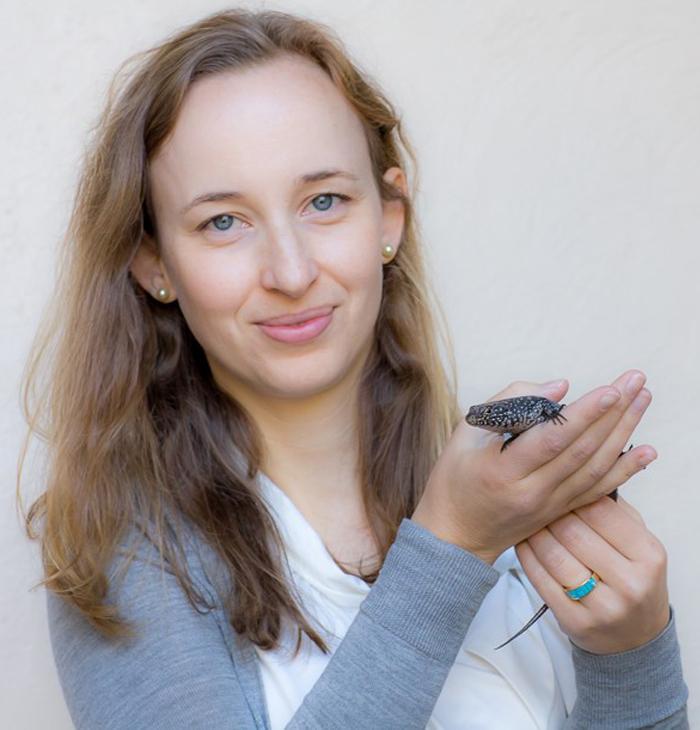
Senior Lecturer, University of Sydney, Australia
Talk Title: “Convergent Evolution of Vertebrate Pregnancy and the Placenta”
Camilla Whittington completed her PhD, focused on the genomic investigation of platypus venom, at the Faculty of Veterinary Science at the University of Sydney in 2011. She was also a Fulbright Fellow at the University of Washington. After postdoctoral research at the University of Zurich, she focused on seahorse reproductive biology, and received a University of Sydney Mabs Melville Research Fellowship to work on pregnancy in lizards and marsupials. She was appointed as a Senior Lecturer at the University of Sydney in 2019. Her research now focuses on the biology and evolution of pregnancy, birth, and the placenta, using Australian lizards, seahorses, sharks, and marsupials as models. Camilla and her team use genomic, histological and physiological techniques to achieve their research goals. She was a L’Oreal Unesco For Women in Science Fellow in 2019, and received the 2021 Genetics Society of AustralAsia Ross Crozier Medal for outstanding contributions to the field of genetics research. Her research is currently funded by the Australian Research Council and a Sydney Research Accelerator (SOAR) prize.
Camilla Whittington will be presenting at PAG Australia, Friday, September 22, at 9:30
| | | |
Featured Workshop Speaker / Correction | |
In the previous newsletter, we listed the workshop in which Olga Dudchenko is a Workshop Organizer when we had intended to feature the workshop in which she is a speaker, which is listed below. | |
|
|
|
Assistant Professor, Baylor College of Medicine , USA
Workshop Title: "3D Genome Architecture Persists in a 52,000-Year-Old Woolly Mammoth Skin Sample/DNA Zoo"
We develop PaleoHi-C and use it to map chromatin contacts in a woolly mammoth (Mammuthus primigenius) skin sample preserved in permafrost for ~52,000 years. We use this data to generate a reference-assisted 3D genome assembly for the woolly mammoth with twenty-eight chromosome-length scaffolds. The resulting contact maps reveal that the woolly mammoth genome exhibited chromosome territories, compartments, domains, and loops. Notably, the active/A and inactive/B genome compartments in mammoth skin more closely resemble those in Asian elephant skin than other Asian elephant tissues; differences reveal sequences with potentially altered transcription. Thus, epigenetic and transcriptional information can be preserved in ancient samples, in the form of DNA geometry, and de novo genome assembly may be possible for extinct species. Read More
Biography:
I am an applied mathematician and physicist focusing on biological applications. The projects I have been involved with throughout my training span multiple fields including those of physiology, biological self-organization, telemedicine and genetics. The primary emphasis of my work has been on data analysis and modeling of biological phenomena. Read More
| | | |
for information on our plenary and workshop speakers
| |
Important Dates and Deadlines | |
25 August
Submission Deadline
for Poster Abstracts
Learn More
| |
12 September
Editing Deadline
for Poster Abstracts
Learn More
| |
Please forward this email and encourage colleagues to sign up to the PAG mailing list. | | | | |