Bright Spot
 

BRIGHT SPOTS


Franklin County Children Services is piloting a program to help kinship caregivers with child care costs.


QUOTABLE & NOTABLE

“In practice, a constitutional right to child care would likely mean that every child in the state would be entitled to — and guaranteed access to — a child care slot. There would be protections in place to ensure that right. For example, every state has a constitutional right to some form of public education, so if a resident’s local public school district refuses to enroll a child, or tries to charge a fee for enrollment, a parent or guardian can take the district to court — and will likely win. It’s important to note that a hypothetical right to child care does not necessarily mean child care services must be government run, merely government funded; an amendment could be written in a way that maintains a mixed-delivery system including a variety of center- and home-based settings.”

Who:

Elliot Haspel

Where:

“What if States Made Child Care a Constitutional Right?” — opinion piece in The 74


FACT OF THE WEEK

 
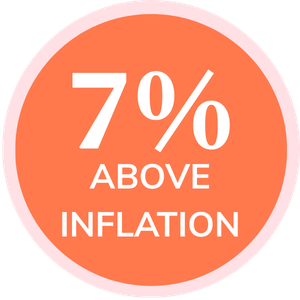
7 percent above inflation

A piece published by The New Republic discusses the child care affordability crisis and its prominence as a key issue in the Democratic Party platform. One researcher quoted in the piece said that child care affordability has risen to prominence as a “kitchen-table” [political] issue because of how sharply costs have risen. According to Child Care Aware of America’s annual child care supply and price analysis last year, the price of child care rose 7 percent above inflation between 2020 to 2024. That is, while overall consumer prices increased by a whopping 22% during that time period, child care prices rose by 29%.


POLICY RADAR

Ohio

Key to Ohio’s focus on the science of reading is a requirement that all teachers and key staff take training on it. Cleveland.com discusses the requirement, including that teachers must take refresher trainings every five years. The transition to science of reading, which began in 2023, has not shown tangible results in state reading scores yet. But as Patrick O’Donnell lays out, statewide implementation of new requirements in training, curriculum, and reading interventions do take time.

On a somewhat related note, a bill in the Ohio Senate would require schools to provide targeted support to students scoring in the lowest tier on Ohio assessments (“limited” proficiency) whether via tutoring or additional instruction or interventions. Cleveland.com outlines the proposal (SB 19), as well as data on just how many students currently score in the limited proficiency score band. Across all K-12 students tested last year, 21% scored limited on the English test, while 30% scored limited in math.


FYI

The Prenatal-to-3 Policy Impact Center tracks state legislation related to children and families in their weekly Legislative Trends newsletter. You can sign up to receive these updates here.


BEYOND THE BUCKEYE STATE

Kansas is the latest state to change its early childhood governance, streamlining and consolidating programs that serve young children so that they are managed by a single state agency. The Kansas Office of Early Childhood was established by state law, with goals of the program consolidation including simplifying access for families, reducing burdens for child care providers, and strengthening accountability for public investments.

San Francisco recently announced that the city will offer free child care for families making less than $230,000 annually, and a 50% subsidy for families making up to $310,000. The city will use $550 million in unspent tax dollars from a 2018 proposition to fund the initiative.


WHAT WE’RE READING

In an opinion piece published in the Ohio Capital Journal, the author asks that greater attention be paid to preventing gun deaths, especially among Ohio children and youth. Ohio currently does not have a comprehensive safe storage law governing firearms. The author also suggests that parents and caregivers abide by best practices in prevention as outlined through the Brady’s ASK campaign — asking whether there are unlocked guns in a house before their child visits someone’s home.

New America describes the impact of child care subsidies for student parents — and the effects of losing that funding — through a story about a family affected by changes to federal Child Care Access Means Parents in School (CCAMPIS). Funding pauses and uncertainty for the CCAMPIS program create hurdles for parents who are trying to finish their degrees and who have relied on it for child care support.


This edition was written by Jamie O’Leary and Janelle Williamson.

If you like this newsletter, forward to a friend! Subscribe here.


crane.osu.edu

X  LinkedIn