Please see our website for more information. For Gmail users, to view entire message, click view entire message at the bottom of this email. | |
|
Maggie Super Church
Director of Policies and Programs, Massachusetts Climate Bank
| |
State Senator Mike Barrett | |
|
MONTHLY CHAPTER MEETING
TUESDAY, JUNE 11
Noon - 2 PM On Zoom
Join at 11:45 if you want to socialize
| |
Meeting ID: 735 454 252
Passcode: 223189 (You may have to try more than once)
| |
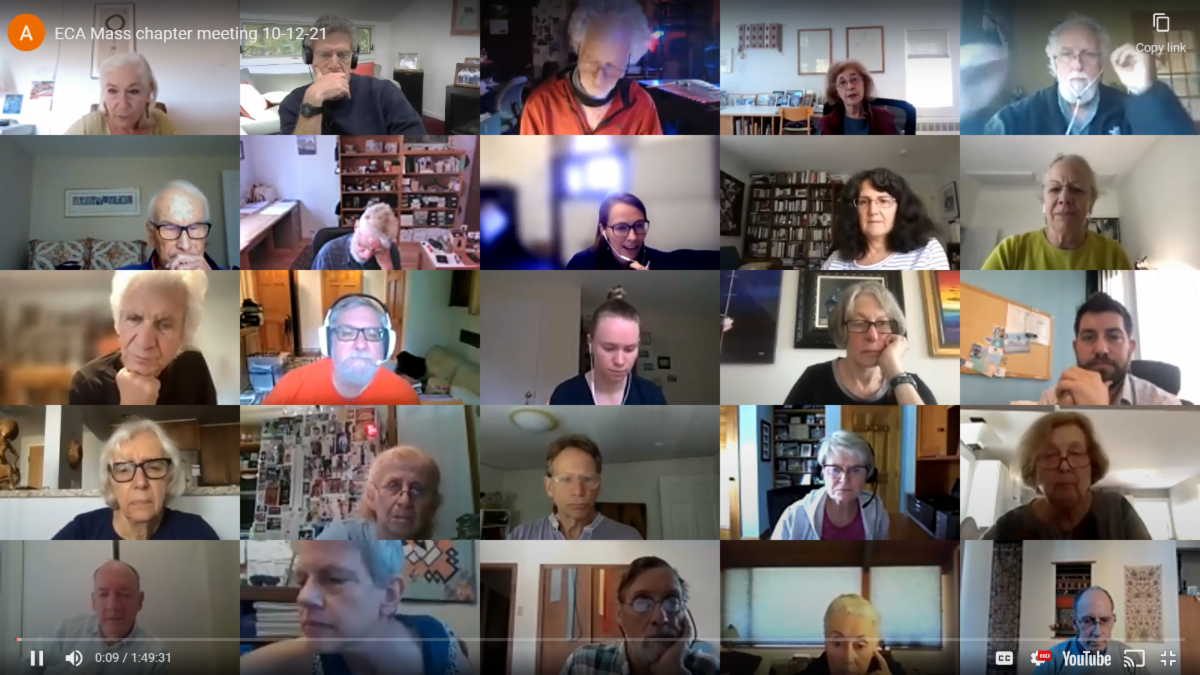
We will hear from Maggie Super Church, who is the Director of Policies and Programs for the Massachusetts Community Climate Bank (MCCB). In this role, she is responsible for leading the development and implementation of financing solutions for single-family and multifamily housing that advance the Commonwealth's building sector decarbonization goals. Prior to joining MCCB, Maggie was a Visiting Scholar at the Federal Reserve Bank of New York where she contributed to a forthcoming book on climate and community development co-published by LISC and Enterprise Community Partners. She previously served as Vice President for Healthy and Resilient Communities at the Conservation Law Foundation and co-led the creation of multi-investor funds for healthy neighborhoods in partnership with the Massachusetts Housing Investment Corporation.
After her presentation and Q&A, we will welcome Senator Mike Barrett, hopefully with an update on an omnibus climate bill, followed by discussion of what we can do to move this forward.
Our CHOICES and our VOICES make a difference and WE can change what we do AND what happens.
We look forward to seeing you on Zoom!
YES! We do record our meetings and they’re usually posted on our website within a few days here.
Maiyim Baron
| |
|
DEEP DIALOGUE
MONDAY, JUNE 24
4 - 5:30 PM On Zoom
| | |
This month, our Natural Solutions working team has invited us to welcome Keith Zaltzberg-Drezdahl, the Managing Director and Head of Planning at Regenerative Design Group (RDG) in Greenfield, MA. Keith will inform us about the state's Healthy Soils Action Plan.
One focus of RDG's work is climate resilience + nature-based solutions.
They work with nonprofits, municipalities, and regional governments to plan and manage resilient landscapes. Keith's team specializes in assessing the unique soil health values of forests, wetlands, farmland, and turf and ornamental landscapes. These assessments help clients make land-use planning decisions that build healthy soils, improve water quality, reduce flooding, cool local temperatures, enhance open space, and support biodiversity.
The great majority of Keith’s work on the Healthy Soils Action Plan (a component of the Massachusetts Clean Energy and Climate Plan) and subsequent projects has focused on the impact of land conversion and management on soil organic carbon and carbon dioxide.
Keith will address many aspects of soil carbon sequestration - bring your questions and join in a spirited dialogue on using natural solutions to mitigate and even solve aspects of the climate crisis.
Maiyim Baron
| |
|
NEW MEMBER ORIENTATION
MONDAY, JUNE 24
12:30 - 1:30 PM
| |
|
Come join us to meet your Leadership Team and the facilitators of our Research, Legislative, Membership, Communications, and Education Teams, as well as our Natural Solutions group. You'll have a chance to explore where you want to fit your talents and experience into ECA's work.
We'll also give you tools to facilitate your using our web site and other media, to stay up to date with current campaigns and connected with our members. Please plan to join us for at least a brief time to say hello on June 24th.
Maiyim Baron
| |
|
Use Your Voice to Oppose
Hanscom Expansion
| |
|
The Airport of the Future?
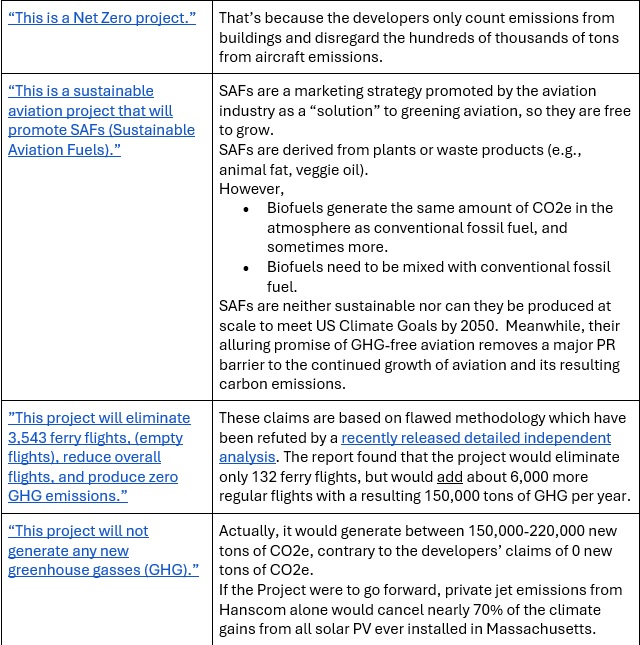
Private developers, North Airfield Ventures LLC and Runway Realty Ventures LLC, held the final public hearing on their plan to expand Hanscom Airfield in Bedford. This plan is currently under MEPA review through the Executive Office of Energy and Environmental Affairs. According to the developers, a key aim of the North Airfield expansion plan is to “create the airfield of the future” by expanding the airfield to house 17 new hangars intended to house private jets – the most polluting form of transportation that exists today.
In a last minute call by the developers, the hearing, originally planned to be both in person and virtual, was changed to virtual only. Concern about “public safety” due to protestors was cited for the reason, in addition to “graduation related” activities near the venue. No graduation activities were listed in the Bedford School calendar for that day.
The developers make several claims critical to their project that have been shown to be false. The following information was copied from Stop Private Jets Expansion at Hanscom and Anywhere, the lead organization dedicated to stopping this expansion, meant to benefit a few of the wealthiest individuals at great cost to the public. Truly a luxury that our climate cannot afford.
|  | |
The final date for public comment on this project is Friday, June 14th. The MEPA review is slated to end a week later, resulting in either issuance of “a scope for the final environmental impact report [essentially permission for the project to proceed] or for a supplemental draft report, indicating inadequacies in the current proposal that need addressing.” (Quote is from this article in the Bedford Citizen.) It is the second outcome, a requirement for a supplemental draft report, that opponents of the project are working for.
For a deeper dive into this project, go here.
For a toolkit about how you can share your concerns by signing a petition to Governor Healey – the only person who can stop this project - and/or submitting a comment during the public comment period, go here.
Launa Zimmaro
| |
It's Crunch Time in the Legislature | |
|
With the House and Senate versions of the budget now being reconciled in secret in a conference committee, it is time for our legislators to cobble together the final versions of bills that may have a chance of making it past the July 31 finish line. Two months is not a lot of time to deal with about 1200 bills sitting in the Senate and House Ways and Means Committee. Only a tiny fraction of those bills will ever come to a vote, although some, including several climate bills, will be mashed up into omnibus bills.
Is a Climate Bill/s in Our Future?
We expect that some form of a climate bill has a reasonable chance of getting to the governor’s desk given President Spilka’s public commitment to a bill and Rep. Roy’s strong interest in getting something done to accelerate decarbonization of the electric grid, but the content of a bill or bills remains unclear at this time.
We may see some language from a permitting bill and a Senate climate bill soon. The Legislative Team is closely monitoring developments in the Senate and House Ways and Means Committees and coordinating with allies to advocate for our priority policies. Once the final text of a bill is released, there are often only 72 hours or less to prepare and submit amendments to be offered at the time of the final debates in both chambers. Be on the watch for Action Alerts with quick turnarounds in the coming weeks.
ECA Mass Priorities Still in the Running
Despite the challenges of satisfying multiple stakeholders with conflicting opinions, we are optimistic that we will see electric infrastructure siting and permitting legislation that will ensure we can green the grid at a rapid pace while protecting environmental justice (EJ) and rural communities from any inequitable harms related to these projects. We also hope to see passage of bills that will accelerate the phase out of the gas system, promote urban tree planting, advance the decarbonization of large buildings, fund green tech development, ensure equitable siting of solar fields, electrify commuter rail and school buses, promote adoption of EVs, and ensure that housing funds are used for climate friendly projects.
Mass Save Three-Year Plan Progress
An ECA Mass team and some of our allies met with Mass Save program administrators to pitch some proposals for Mass Save reform and get their feedback. We learned that it is going to be challenging to get Mass Save to pay much, if any, attention to phasing out the gas system unless there is significant electric and gas rate reform that would save money on utility bills for gas customers switching to electric heat pumps. The focus of Mass Save likely will be decarbonizing buildings heated with oil and propane where building owners will save money switching to heat pumps. We did get more positive responses to our suggestions about providing residents with detailed financial information on proposed projects, improving customer access to assessments of contractor performance to help them choose contractors, and a number of equity concerns.
The Mass Save team will be preparing written testimony to be submitted to the Energy Efficiency Advisory Council, which in turn will advise Mass Save on revisions to be made to the draft plan. A revised plan will then be developed and be ready for review in late summer.
If you would like to learn more about what the Legislative Team is doing, or offer some of your time and talents to our effort, contact Roger Luckmann (roger.luckmann@umassmed.edu) or Tina Grosowsky (tgrosowsky@gmail.com).
Roger Luckmann
| |
|
ECA Mass joins climate champions
at the MA State House
| |
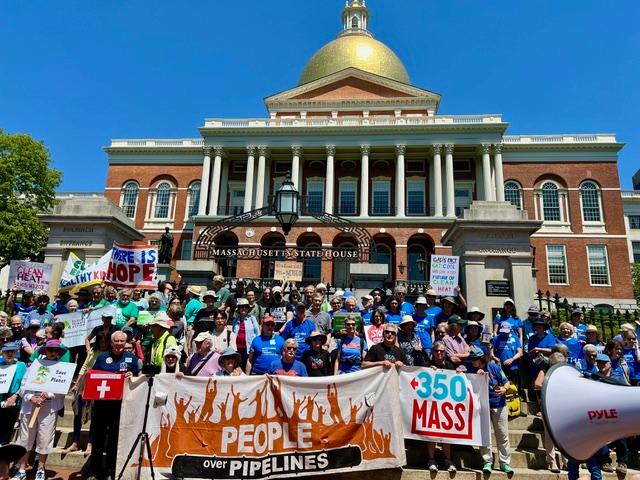
Photo credit: ECA Mass member Stan Eichner | Tina Grosowsky speaks at 3:15 | |
On Tuesday June 4, over 20 ECA Mass members joined 350MA, Mothers Out Front and Third Act Mass to sponsor a climate rally for the Future of Clean Heat bill. Highlighting the theme “It’s A Climate Emergency,” over 200 activists gathered at the State House to encourage legislators to pass the bill and act courageously to move the state to transition off gas!
Activists delivered climate emergency kits to all legislators and met with their staff to provide education on the bill and the importance of passing it this session.
Tina Grosowsky
| |
|
It's Gonna be Hot -
New Heat Forecasting Tool
| |
|
Earlier this month, The Boston Globe highlighted a new HeatRisk Forecast Tool developed by the National Oceanic and Atmospheric Administration (NOAA) in collaboration with the Centers for Disease Control and Prevention (CDC) which provides detailed heat forecasts and health guidance ahead of what is expected to be a particularly hot summer. The tool predicts heat-related risks up to seven days in advance, using a color-coded scale from green (no risk) to magenta (extreme risk). It integrates temperature forecasts with health data to assess potential impacts on vulnerable populations, including the elderly, children and those with pre-existing health conditions. Users can input their zip code on the tool's website to receive personalized heat forecasts and safety tips for their specific location.
Climate change is intensifying the frequency and severity of heatwaves, leading to increased risks for heat-related illnesses and deaths. Massachusetts, like many other states, is experiencing these effects, with rising temperatures posing significant health risks. This tool aims to help residents and health officials in Massachusetts and across the U.S. prepare for extreme heat events and mitigate their health impacts. It also provides information on air quality and advice on how to stay safe during periods of high heat.
(Reprinted with permission from Cape Cod Climate Collaborative newsletter.)
Tina Grosowsky
| |
Help Shape What's Next for EAN | |
 | |
The Massachusetts chapter of Elders Climate Action (ECA) is part of the national ECA organization. ECA is a program of Elders Action Network (EAN). EAN’s mission is to build a movement of elders to address the social, environmental, and governance crises of our time. EAN is home to a variety of teams, campaigns, and educational offerings that community members have initiated over the last ten years. In addition to ECA, you may be engaged with such groups as Elders for Sound Democracy (ESD), Elders for Social Justice (ESJ), or Elders for Regenerative Living (ERL). EAN is now planning for it’s next phase and needs your input.
To involve you in planning for EAN’s future, we invite you to take this short member survey. Your feedback is invaluable as we navigate through a strategic transition at Elders Action Network (EAN). The insights you provide will help us better understand our members' needs, aspirations, and how we can serve you better. With the benefit of your perspective, EAN will be better able to accomplish its mission and serve you. Thank you.
Diana Shoemaker
Executive Director, Elders Action Network
| |
What's it like to take a road trip in an EV? | |
|
EV is the Way to Go
When my wife and I decided to plan a 2500 mile Southern road trip in our new all electric 2023 Hyundai Ioniq this past April, our original thought was to bring along our dog Maggie as well. We were doing okay finding accommodations which both had EV chargers and allowed pets, but we began to have second thoughts. Weren’t we going to want to have some leisurely dinners out? Hear some music perhaps? We love you Maggie, but three weeks on the road with you would have caused too much strain. And since we were in simplification mode, maybe we could drop the EV plan too, and drive my 2014 Mazda instead? NO! After all, I am a climate change activist. If I wasn’t willing to take a chance, who would? For the sake of the movement – no pun intended – we set out in mid-April prepared to explore the brave new world of EVs, and to share our story afterward.
It turns out, EV touring is neither brave nor new, and we were able to charge the car without any major inconvenience, even in the South. But we did do quite a bit of planning to ease the journey, and so should you if you are planning any long-ish trip.
Preparation is Key
The first order of preparation is to find hotels/inns where you can charge overnight, as we were able to do in Richmond, VA; Greenville, SC; Asheville, NC; and Steele Tavern, VA. All of these spots had level 2 chargers, which allow your car to fully charge in about 8 hours. (Many EV owners have these types of chargers in their home garages.) None of the inns charged us for the convenience, but one hotel did. We weren’t able to find hotels with chargers in Charleston or Savannah, but just outside both of those cities we were able to find public fast (Level 3) chargers, as described below.
All About Charging
Most new EVs can plug into public fast-charging stations, which are increasingly plentiful along major highways since the IRA created incentives for expanding the network, which is critical to overcoming consumer doubts about EVs. Teslas have their own network of fast chargers, which account for over 60% of the total. (Tesla chargers are now available to Ford and Chevy owners, and should open up to most EVs next year, greatly improving availability.) Fast charging allowed our Hyundai battery to charge from 25 miles of range to 200 miles, which is about 80% capacity – in about 20 minutes. That’s not much longer than a gasoline plus bathroom/snack stop, and after driving about 3 hours, most older tourists could certainly take advantage of that interlude! The key is to plan your charging stops when and where you can take care of those other items of business. And since many charging stations are in Target or Walmart parking lots, you can even mix in a little retail therapy.
Still, you need to plan your stops carefully so as not to get caught short of charge. There were a few days when we needed to charge more than once to reach our destination. Fortunately, there are several apps for charging locations that you can download to your smartphone to supplement the one that comes with the EV’s navigation system. Try PlugShare or Google Maps. The apps specify the number and level of available chargers. Of course, this isn’t a guarantee that you’ll have an open spot when you arrive, so you will want to choose stations with multiple chargers to improve your chances. We needed to wait a couple of times to plug in, adding about another 15 minutes to our stop.
Try it!
If you are at all hesitant about purchasing an EV due to concerns about their range, or if you already own an EV but hesitate to take it on a long trip, rest assured. The infrastructure is catching up and we can begin to put range anxiety into our rearview mirror.
Seth Evans
| |
|
As the climate crisis causes ever-increasing losses of life and property, the question of who pays for the damage is rising to the forefront on an ever-increasing number of political stages. The Vermont legislature has gone farthest toward making polluters pay by passing legislation at the end of May (which Republican Governor Scott allowed into law without signing on May 30), requiring fossil fuel companies to pay a share of the damage caused by climate change after the state suffered catastrophic summer flooding and damage from other extreme weather.
The law is sure to face formidable challenges from the fossil fuel industry, but there are several factors that give Vermont’s David a fair chance against the industry Goliath. First, the strategy is based on a tried and true formula applied in other environmental damage cases: the “polluter pays” principle which says that industries that produce pollution should have to pay for the costs to public health and the environment that arise as a consequence of their pollution.
The Vermont bill is also predicated on the rapid advancements in attribution science over the last several years. This allows scientists to attribute how likely specific extreme weather events would have been in non-climate change and climate change scenarios. Attribution science also addresses what emission sources are contributing most to climate change. Studies now can explain how much climate change makes a heatwave hotter or a hurricane-related downpour more intense, as well as where the emissions came from. This allows damage estimates to be “charged” to climate polluters in the form of legal damages or superfunds set up to help communities rebuild or reconfigure infrastructure to prevent future damage. Without this calculation, the burden falls completely onto taxpayers, while polluters escape responsibility despite historic profits.
While Vermont is the first to pass such a law, other states – Massachusetts, Maryland, and New York – are considering similar measures. In Massachusetts, H.872, An Act establishing a climate change superfund and promoting polluter responsibility, was introduced this session by Representative Steve Owens (29th Middlesex) and co-sponsored by Sen. Jamie Eldridge (Middlesex and Worcester), to establish a superfund to pay for the costs associated with carbon pollution. The bill was sent to committee for further study.
At the national level, Massachusetts Senators Warren and Markey, among others, are pushing a plan in Congress: The Polluters Pay Climate Fund Act. While not introduced yet as standalone legislation, the senators are looking for an opportunity to attach the plan to other legislation.
As the The Polluters Pay Climate Fund Act states, “Fossil fuel companies have never been held to account for the societal costs of their emissions. Instead, they have profited for generations from a damaging business model and have benefited from federal subsidies for their operations. It’s time for them to contribute to the climate response.”
Seth Evans
| |
|
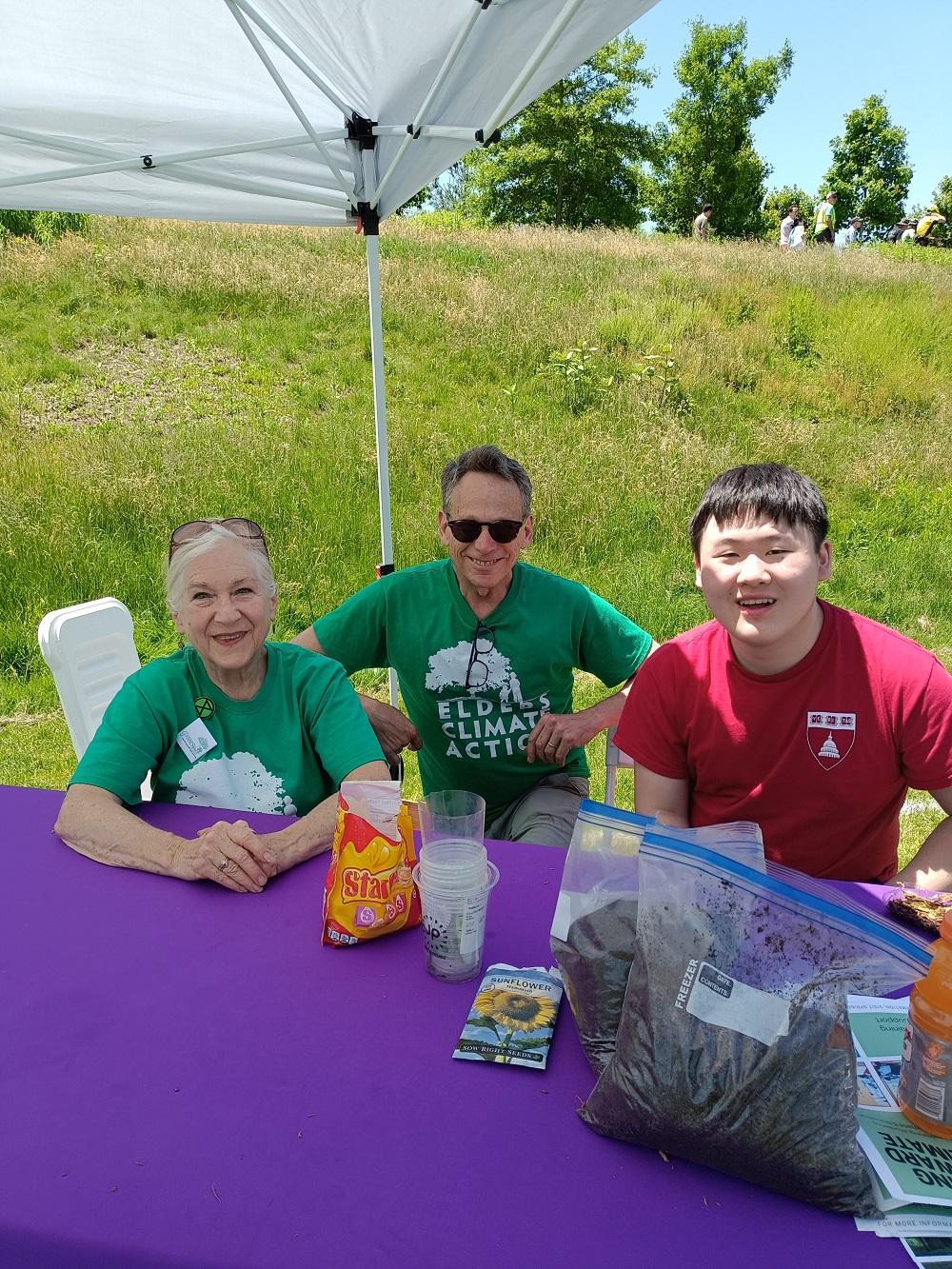
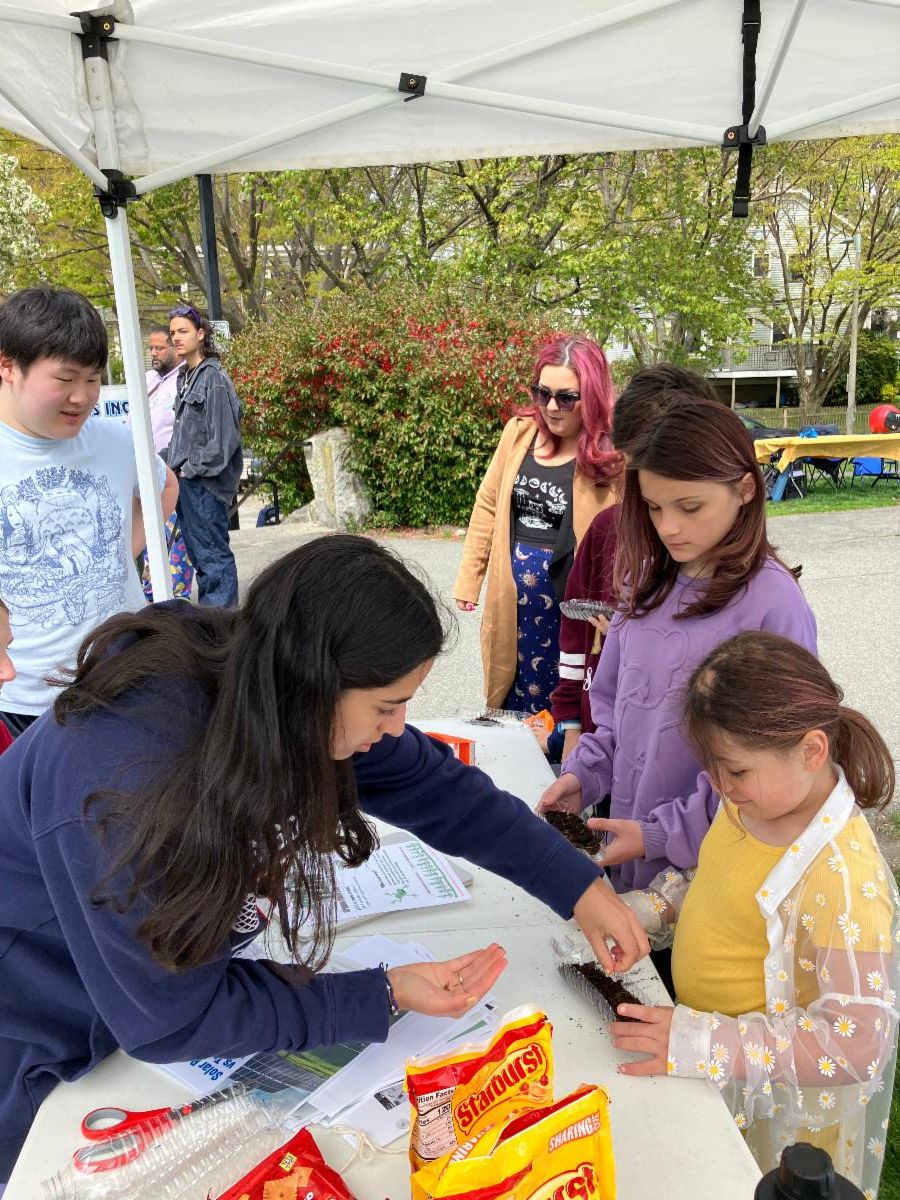
Tabling at community events is a great way to sign up new members and increase the visibility of our ECA Chapter. Recently, several of the neighborhood festivals we loved participating in before have asked for us to provide activities for kids to gain our entry. ECA Mass has gotten to know Spring Forward, a local group of high schoolers who have developed curricula and presented programs on climate change to hundreds of local elementary and middle school students.
The students at Spring Forward created an activity using cut up plastic water bottles to plant with ecosystem-supporting seeds like sunflowers. This activity was popular at the "Wake Up The Earth" festival on May 4th. We all had such a good time doing this together, we partnered up again for the Town of Brookline's "Spring Fest" a month later on June 1. This activity fits right in with others making wildflower seed balls and learning about pollinators, as our local town works in building pollinator pathways. It's great working with the dynamic and concerned youngers in Spring Forward, and helping get the word out to local students and educators about their unique approach to climate education - while ECA members talk with the parents and grandparents at the festival, reaching all the generations.
Maiyim Baron
| |
|
We send announcements of our meetings and Action Alerts to eca-mass@googlegroups.com, which includes all those on our active list.
Please contact Dawn Edell if you want to confirm you are on our active list.
Maiyim Baron
| |
Did you miss a past meeting? | |
Did you miss an ECA Mass chapter meeting or deep dialogue? Or do you want to share one with friends and family?
We have you covered! Videos of past chapter meetings are here and videos of past deep dialogues are here.
| |
WHAT ARE YOU READING?
Would you like to review a book for our newsletter?
| | |
|
|
Join over 1300 ECA Mass members who have been following us on Facebook. Our Facebook page features listings of upcoming events (in-person and Zoom), news about climate change solutions, carbon saving ideas, and links to other organizations’ events, and more.
Visit the ECA Mass Facebook page and click the like button!
| |
|
This Newsletter is Published for Members and Friends of
Elders Climate Action - Massachusetts Chapter
ECA Massachusetts is a chapter of the national Elders Climate Action. We are a movement of elders committed to making our voices heard to change our nation's policies while there is still time to avoid catastrophic changes in the Earth's climate. Visit the ECA Massachusetts website, event calendar, and Facebook page to learn more about our chapter's activities and climate news. JOIN ECA MASSACHUSETTS AND STAY CONNECTED! Subscribe to our monthly newsletter, and for more active participation, sign up to receive Action Alerts and meeting announcements. Fill out our subscription form.
| | | | |