|
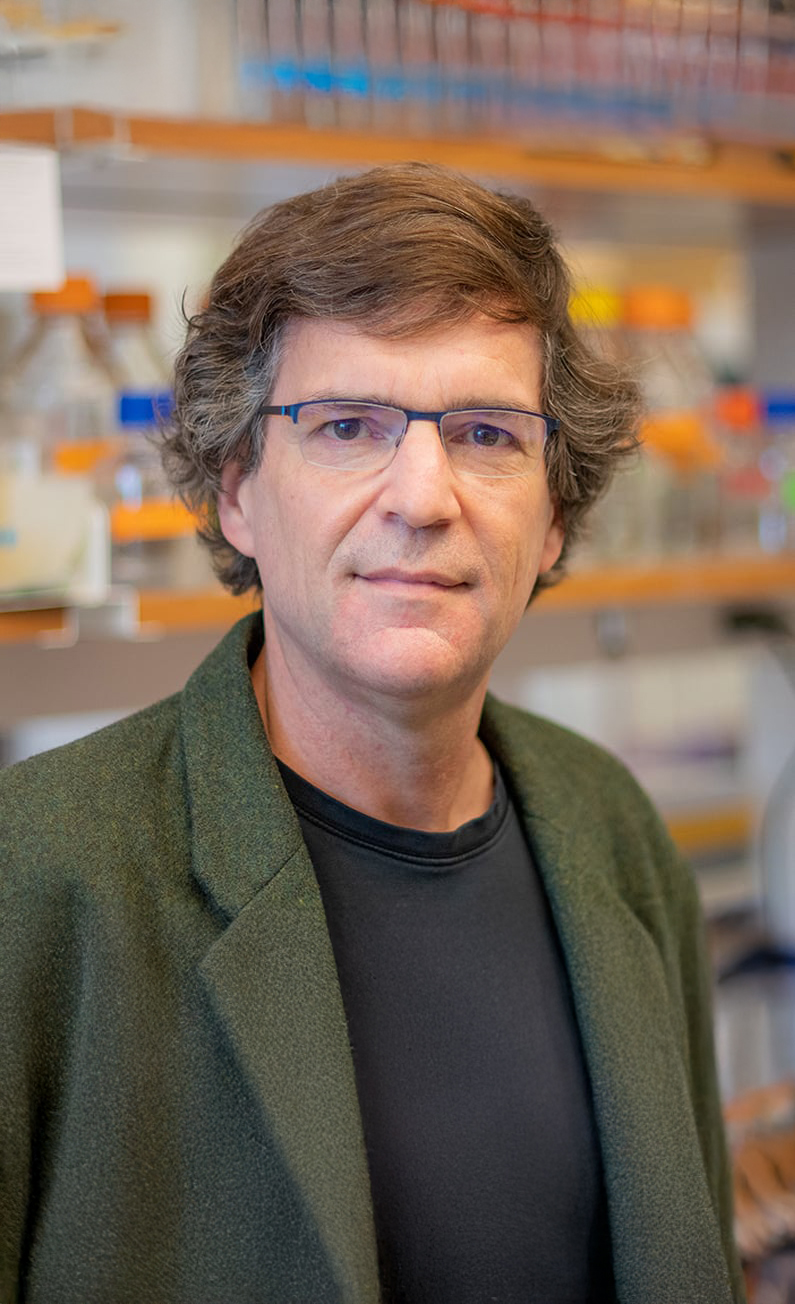
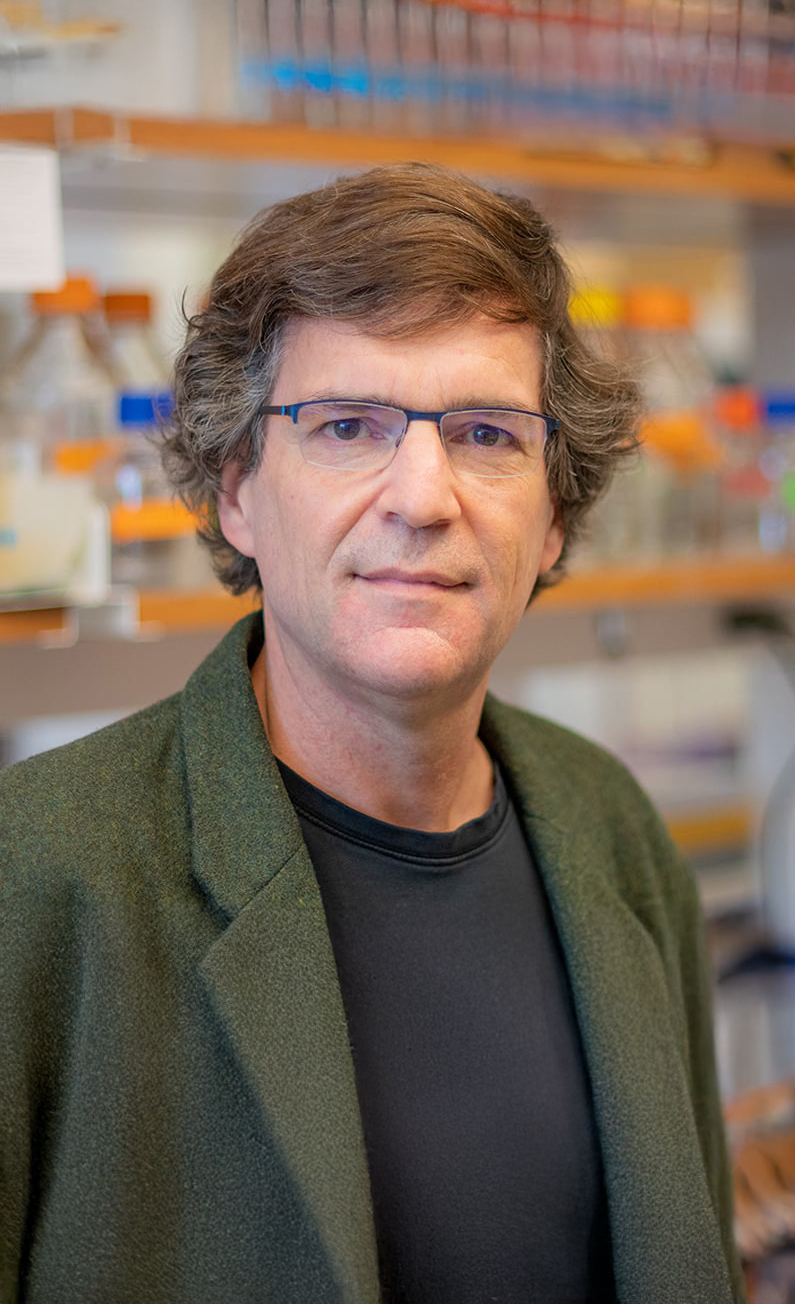
Erik Sontheimer, Ph.D.
Professor and Vice Chair, RNA Therapeutics Institute, Pillar Chair in Biomedical Research, UMass Chan Medical School
Talk Title: “Prime Assembly with Linear DNA Donors Enables Large Genomic Insertions”
Abstract:
Many diseases are caused by diverse mutations across various loci, necessitating precise therapeutic strategies. However, current genome editing approaches struggle to insert or replace large DNA fragments. This has made it difficult to develop editing approaches that can address most or all mutations among a diverse patient population. As a result, separate editing strategies must often be pursued allele by allele, which is slow, arduous, and expensive. Targeted insertion of large DNA fragments holds great promise for overcoming these limitations of CRISPR engineering. Strategies employing recombinases or integrases increase the already substantial complexity and delivery challenges associated with prime editing (PE). We have developed Prime Assembly (PA) for the insertion of large DNAs whose ends overlap with the 3’ flaps generated by PE. We used PA to insert DNA fragments up to 11 kilobase pairs. Either single-stranded or double-stranded DNA donors can support PA. PA relies on DNA templates that are easily produced, and it does not require co-delivery of exogenous DNA-dependent DNA polymerases, recombinases, or integrases. PA proceeds in non-cycling cells, suggesting independence from homology-directed repair (HDR) pathways. In summary, PA can initiate “Gibson-like” assembly in mammalian cells to generate gene insertions without dsDNA breaks, recombinases, or HDR.
Biography
Erik J. Sontheimer, Ph.D., is the Pillar Chair in Biomedical Research and Professor at the University of Massachusetts Chan Medical School, where he is also Vice Chair of the RNA Therapeutics Institute (RTI). He earned his Ph.D. from Yale University in 1992, having completed his thesis in the laboratory of Joan Steitz. He conducted postdoctoral research as a Jane Coffin Childs Fund Fellow with Joe Piccirilli at the University of Chicago. He then joined the faculty at Northwestern University where he continued his work on the roles of RNA molecules in gene expression, including pre-mRNA splicing mechanisms, RNA interference pathways, and CRISPR immune systems in pathogenic bacteria. Among other advances, in 2008 his group reported that CRISPR systems can function via DNA destruction, and they first described CRISPR’s potential for RNA-guided genome engineering. He has received a CAREER Award from the National Science Foundation, a New Investigator Award in the Basic Pharmacological Sciences from the Burroughs Wellcome Fund, a Basil O’Conner Award from the March of Dimes, a Scholar Award from the American Cancer Society, a Distinguished Teaching Award from the Weinberg College of Arts and Sciences at Northwestern, the Nestlé Award from the American Society for Microbiology, the Mid-Career Award from the RNA Society, and election to the American Academy of Microbiology. In 2014 he co-founded Intellia Therapeutics, Inc. for the development of clinical applications of CRISPR gene editing. That same year he also moved to the RTI at UMass Chan Medical School, where he is continuing his research on the uses of RNA molecules in biomedical research and the treatment of human disease. From 2021-2023 he co-chaired the Board of Scientific Counselors at the National Cancer Institute, and he currently serves as a member of the Scientific Advisory Board at Tessera Therapeutics.
|