| |
Biden-Harris Administration Announces $27.5 Million in Funding Opportunities Enhancing Women’s Behavioral Health
On Monday, the U.S. Department of Health and Human Services (HHS), through the Substance Abuse and Mental Health Services Administration (SAMHSA), announced notices of funding opportunities aimed at improving women’s behavioral health across the United States. With a combined total of $27.5 million, this funding underscores the Administration’s commitment to addressing the unique mental health and substance use treatment needs of women. SAMHSA additionally announced nearly $1 million in grant awards for two grant recipients as a part of the Services Program for Residential Treatment for Pregnant and Postpartum Women. The Notices of Funding opportunities, made possible with funding from President Biden’s American Rescue Plan, will support women’s behavioral health by expanding access to services and enhancing the capacity of providers to identify and address mental health conditions, substance use, and gender-based violence. Read more here.
|  | |
Governor Hochul Announces $45 Million Awarded to Create 227 Units of Permanent Supportive Housing Across New York State
Governor Kathy Hochul recently announced $45 million has been awarded to six projects across New York State that will create 227 units of permanent supportive housing in Erie, Tompkins, Oneida, St. Lawrence, and Kings counties for families and individuals who have experienced homelessness. The grants — awarded through a competitive process by the Office of Temporary and Disability Assistance’s (OTDA) Homeless Housing and Assistance (HHAP) Program — are an important component of Governor Hochul's $25 billion comprehensive Housing Plan that will help create or preserve 100,000 affordable homes across New York State, including 10,000 with support services for vulnerable populations. The six projects awarded funding will provide housing with on-site support services for families and individuals who have experienced homelessness, including domestic violence survivors, youth aging out of foster care, pregnant/ parenting teens, and individuals living with serious mental illness and/or substance use disorders and their families. Read more here.
|  | |
A Warm Welcome to OPWDD Acting Commissioner, Willow Baer
As of July 1, Executive Deputy Commissioner Willow Baer has assumed the role of Acting Commissioner of OPWDD. Having served as the second in command at the agency for the last year after returning to OPWDD from an interim position as Assistant Counsel to the Governor and from her role as Deputy Commissioner and General Counsel at the New York State Office of Children and Family Services, Willow Baer is well prepared to lead the agency as it meets the stated goals of its Strategic Plan. Prior to working with OCFS, Willow spent six years at OPWDD, most recently serving as Deputy Commissioner and General Counsel. Willow initially joined OPWDD in 2015 as an Associate Counsel after serving as General Counsel at the NYS Justice Center. Willow has spent much of her career working to ensure that people with developmental disabilities and their families are afforded the best service system possible. Welcome, Acting Commissioner Baer!
|  | |
New York State Department of Health Acknowledges Prescribers In New York for Reducing New High-risk Exposures to Opioid Prescriptions
The New York State Department of Health recently released a new data report showing opioid prescribing practices are improving in New York State. The Data to Action Report on Opioid Prescribing in New York State shows that New York State providers continue to make strides in practice improvements and implementing new preventive measures to reduce the risks of overdose and substance use disorder within their communities. Overuse and overprescribing of opioids beginning in the 1990s contributed to their misuse and abuse and has had a significant impact on the current state of the opioid crisis today. Historically, overdose deaths involving opioids in New York State reached an all-time high in 2022 with 5,388 opioid-related overdose deaths that year. Read more here.
|  | |
7 Deaths, 5 Hours: Drug Overdoses Surge in Western New York
The first 911 call came at 8:18 a.m. from the city of Buffalo. Not long after, there was another in neighboring Tonawanda, and then another from Lackawanna, just to the south. Eight minutes after that, a second call from Buffalo, just before another one from Tonawanda. Seven deaths in less than five hours, all drug overdoses, and all within Erie County, the biggest population center in Western New York and the home of a surging and intractable drug problem. The spate of deaths, on June 17, pushed the county’s tally of overdose deaths this year past 200, putting it on track to match or surpass the grim record of 435 set last year even as the United States saw a slight decline in such deaths. The crisis knows no bounds, officials say. Read more here.
|  | |
ED Boarding Didn't Always Lead to Psychiatric Inpatient Stay for Youths
Almost half of youths who boarded in the emergency department awaiting inpatient psychiatric care were never admitted to such a facility, according to a cross-sectional study from Massachusetts. Of 4,942 episodes of youth boarding in the ED for 3 or more midnights, just 56% resulted in inpatient admission, and certain groups were less likely to get to that point, Lindsay Overhage, an MD/PhD student at Harvard University, and colleagues reported in JAMA Pediatrics. "There are just a lot of kids who were boarding for a really long time," Overhage told MedPage Today. "That's kind of unique in psychiatry from other areas of medicine. If you're the sickest person with an infection, you're going to be the first person to go to a medical floor [or] the [intensive care unit]. It's kind of the opposite in psychiatry, where if you have some of the worst symptoms, you're actually waiting the longest for a bed." Read more here.
|  | |
NYSAC County Conversations Podcast Features DCS from Schoharie County
The latest episode of NYSAC's County Conversations podcast features a conversation on providing mental health services in a rural community. NYSAC’s Multimedia Specialist Kate Pierce-Nimz is joined by Sarah Nies, , Director of the Schoharie County Office of Community Services, and Co-Chair of CLMHD's Mental Health Committee. Click here to listen to the podcast.
|  | |
Misconceptions About Opioid Treatment in Primary Care Remain Persistent Problem
Primary care providers have increasingly offered patients medications for opioid use disorder (MOUD) since the Drug Addiction Treatment Act (DATA) of 2000 allowed certain physicians outside of the psychiatry field to prescribe these medications. Low-barrier access to MOUDs, including naltrexone and buprenorphine, can play a meaningful role in combating the opioid use epidemic, which resulted in almost 82,000 deaths in 2022, according to the National Institute on Drug Abuse. But most people either do not know that primary care physicians can prescribe MOUDs or incorrectly believe that these physicians cannot prescribe these medications, a new study funded by the National Institutes of Health (NIH) and published in JAMA Network Open found. Read more here.
|  | |
Zero Returns to Homelessness Initiative Launches Nationally, with Pennsylvania Leading the Way
In April 2024, The Council of State Governments (CSG) Justice Center and the Bureau of Justice Assistance (BJA), a component of the Department of Justice’s Office of Justice Programs, launched a national initiative with a bold vision: securing housing for every person returning to their community from incarceration. Zero Returns to Homelessness is a multi-agency effort designed to support states and communities as they work to prevent and end homelessness for people returning from incarceration. Held on the final day of Second Chance Month 2024, the Zero Returns to Homelessness launch event broke new ground in the world of reentry housing. It also highlighted the pioneering efforts of Pennsylvania state officials, reentry housing and service providers, and people with lived experience to expand housing access for people reentering their communities. Read more here.
|  | |
Building a Collaborative Care Model: Lessons from Integrating Behavioral Health into Primary Care
As the national crisis in behavioral and mental health care continues to worsen, providers have tested innovative ways to bring services to children and adults in need. One approach to enhance service delivery is the integration of behavioral and mental health services into the primary care setting. Collaboration between primary care providers and specialized mental health care providers allows services that were historically delivered separately to be delivered in the same setting and ensures a patient’s “whole-person” health needs are met during care delivery. The Collaborative Care Model (CoCM), a team-based model of care delivery, is a promising integration model with a substantial evidence base. This newsletter summarizes key elements of CoCM and lessons learned from provider implementation in North Carolina. Read more here.
| 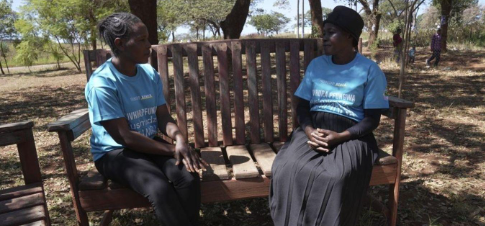 | |
A Bench and a Grandmother's Ear: Zimbabwe’s Novel Mental Health Therapy Spreads Overseas
HARARE, Zimbabwe -- After her son, the family’s shining light and only breadwinner, was arrested last year, Tambudzai Tembo went into meltdown. In Zimbabwe, where clinical mental health services are scarce, her chances of getting professional help were next to zero. She contemplated suicide. “I didn’t want to live anymore. People who saw me would think everything was okay. But inside, my head was spinning,” the 57-year-old said. “I was on my own.” A wooden bench and an empathetic grandmother saved her. Older people are at the center of a homegrown form of mental health therapy in Zimbabwe that is now being adopted in places like the United States. Read more here.
|  | |
Automation To Empower The Workforce
“AI won’t replace humans—but humans with AI will replace humans without AI,” said Chris Yakscoe, Senior. Director and General Manager, AI from Netsmart quoting Karim Lakhani, a Harvard Business School Professor and AI expert during the session Intelligent Automation More Than Just AI. That has been true of new scientific discoveries throughout human history—from the printing press to telegraph and more. As health and human service executive teams grapple with chronic staff shortages, technology can mitigate some of those challenges. This workforce technology leverage effect will be primarily realized through automation. Read more here.
| |
 |  |  | |
UPCOMING EVENTS & TRAININGS
988 Collaboration with Mobile Crisis Teams
July 11, 1 - 2 pm, Vibrant
CCBHC’s Synergies with Crisis System
July 12, 1:30 - 3 pm, National Council for Mental Wellbeing
Exploring Community Specific Courses: Enhancing Your MHFA Certification
July 15, 2 - 3 pm, National Council for Mental Wellbeing
Continuous and Collaborative: Best Practices for Family Treatment Court Screening and Assessment
July 16, 1:30 - 3 pm, SAMHSA's GAINS Center
Evidence Meets Innovation: The Crucial Role of Clinical Research in AI Development for Behavioral Health
July 16, 2 - 3 pm, National Council for Mental Wellbeing
The Intentional SUD Clinical Supervisor
July 17, 3 - 4:30 pm, NAADAC
Youth Mental Health and Social Media: From Posting to Influencing
July 17, 3:30 - 4:30 pm, National Council for Mental Wellbeing
What’s Happening With 988? Insights on Government, Advocate and Public Action and Awareness After Two Years
July 17, 4 - 5 pm, NAMI
Promoting Social Equity for Underrepresented Individuals in the Workforce
July 18, 12 - 1 pm, National Council for Mental Wellbeing
Understanding the Adolescent Behavioral Health Crisis
July 18, 1 - 2 pm, United Hospital Fund
SafeSide Prevention: Workforce education for suicide prevention (Zero Suicide) - ONLINE
June 20, July 25, August 1, or August 15 12 - 3:30 pm, UR Medicine Recovery Center of Excellence, HRSA
Improving Quality Of Life, Functioning & Well-being In Individuals Living With Bipolar Disorder
July 25, 12 - 1 pm, PsychU
Navigating Concerns on Youth Crime, Violence, and Behavioral Health: What Does the Data Say?
July 29, 12 - 1 pm, CSG Justice Center
Clinical Community Partnerships to Support Behavioral Health in Service Members, Veterans and their Families
July 30, 1 - 2:30 pm, SAMHSA
Navigating the Suicidal Crisis with your Outpatient Client
August 8, 2 - 3 pm, National Council for Mental Wellbeing
Learn the Law About Service and Support Animals
August 13, 10 - 11 am, Disability Rights New York
What Is Harm Reduction for Alcohol?
August 14, 3 - 4 pm, NAADAC
Ask the Expert: Collaborative Approaches to Providing Mental Health and Law Enforcement Services
August 20, 2 - 3:30 pm, CSG Justice Center
Barriers to Care: Solutions for Mental Health and Substance Use Treatment Provision in Rural Communities
August 21, 12 - 1 pm, National Council for Mental Wellbeing
Peer Recovery Support Series: Passionate Professionals; Dispassionate Practice — Ethical Boundaries in Non-Clinical Roles
August 22, 12 - 1:30 pm, NAADAC
Increasing Accessibility of Mental Health Services for Unhoused Populations in Rural and Urban Communities
September 18, 12 - 1 pm, National Council for Mental Wellbeing
Ask the Expert: Family-Centered Reentry Programming
September 25, 2 - 3:30 pm, CSG Justice Center
| |
CLMHD CALENDAR
JULY
Addiction Services & Supports (ASR) Committee Meeting
July 11: 11 am - 12 pm
Developmental Disabilities Committee Meeting
July 11: 1 - 2:30 pm
Mental Health Committee Meeting
July 11: 3 - 4 pm
Children & Families Committee Meeting
July 16: 11:30 am - 1 pm
Membership Call
July 17: 9 - 10:30 am
AUGUST
Quarterly LGU Billing Staff Call
August 6: 11 am - 12 pm
Executive Committee Meeting
August 7: 8 - 9 am
Addiction Services & Supports (ASR) Committee Meeting
August 8: 11 am - 12 pm
Developmental Disabilities Committee Meeting
August 8: 1 - 2:30 pm
Mental Health Committee Meeting
August 8: 3 - 4 pm
LGU Clinic Operators Meeting
August 13: 10 - 11:00 am
Children & Families Committee Meeting
August 20: 11:30 am - 1 pm
Membership Call
August 21: 9 - 10:30 am
CLMHD Office Closed - Juneteenth
June 19
Mental Hygiene Planning Committee Meeting
June 20: 1 - 3 pm
| |