|
Dear Presidents’ Alliance Member,
As we look ahead, we reaffirm our commitment to support you and your campuses. Read our statement here on the potential impact of the new Administration’s executive orders on higher education, our campuses, and communities. See more details below.
In this week’s Member Update:
- Fifth Circuit Appeals Court Decision on DACA: What You Need to Know
- The First Executive Orders on Immigration: Implications for Higher Education Institutions and Communities
- Happening Today: Webinar on Enrolling and Supporting Resettled Refugee Students
- New Resources! The Family Educational Rights and Privacy Act (FERPA): Guidance on Student Privacy and Outgoing ED Guidance
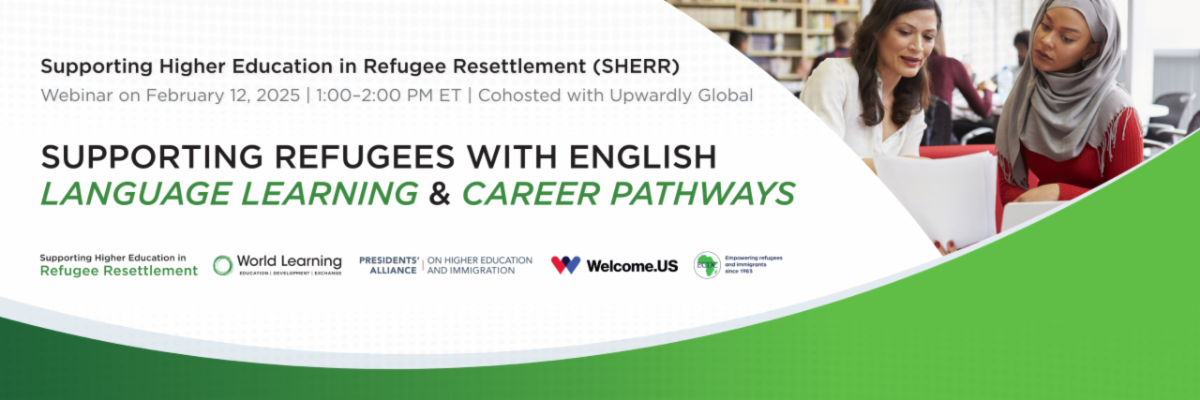
- Register Now: Webinar on Supporting Refugees with English Language Learning and Career Pathways
- Immigration in Brief
- Calendar of Events
- Top Reads
| |
Fifth Circuit Appeals Court Decision on DACA: What You Need to Know | |
|
On January 17, 2025, the U.S. Court of Appeals for the Fifth Circuit issued a decision finding major parts of the Biden Administration’s DACA rule unlawful. The court found that Texas had standing to challenge the program and that the court had authority to review DACA. The court narrowed the scope of the injunction to Texas. Importantly, the court preserved the stay for existing DACA recipients, recognizing “the immense reliance interests that DACA has created.” The decision is stayed (on hold) pending further action from the Fifth Circuit or the U.S. Supreme Court. Therefore, existing DACA recipients can continue to renew their deferred action and work authorization for the time being. To learn more about the decision and its implications, see our DACA Update: What You Need to Know.
| |
|
The First Executive Orders on Immigration: Implications for Higher Education Institutions and Communities
On his first day back in office, President Trump signed a series of executive orders focused on immigration, signaling a shift in policy that could have significant implications for higher education institutions and communities. Key measures include:
-
Suspension of Refugee Resettlement: An indefinite halt on refugee admissions, subject to review every 90 days.
-
Rescission of Parole Programs: Termination of humanitarian programs for Cubans, Haitians, Nicaraguans, Venezuelans, Afghans, and Ukrainians, alongside limiting Temporary Protected Status (TPS).
-
Rescission of DHS Guidance on Protected Areas: Repeal of 2021 memo that clarified and restricted immigration enforcement in “protected areas,” such as K-12 schools, colleges and universities, churches, and hospitals.
-
Attempt to End Birthright Citizenship: A move to deny citizenship to children born in the U.S. to undocumented parents and those on lawful non-immigrant status, including F-1, H-1B, or J-1 visas. Under this proposal, any child born in the U.S. after February 20, 2025, would need at least one parent who is a U.S. citizen or lawful permanent resident. This has already prompted lawsuits from the ACLU and attorneys general from 22 states.
-
Denial of Public Benefits: A proposal to bar undocumented immigrants from accessing public benefits, which could point to future actions targeting education.
-
Targeting Sanctuary Jurisdictions: A threat to withhold federal funding from states and cities with sanctuary policies, alongside steps to ensure information sharing with state and local governments for immigration law enforcement.
-
Enhanced Vetting and Screening: A review of vetting procedures that could lead to a full suspension of admissions from certain countries, with concerns that it could disproportionately impact Muslim and Arab countries. Additionally, provisions within this executive order could allow the Department of Homeland Security or the State Department to take actions against non-citizens involved in protest activities
It may take a few weeks to fully grasp the scope and long-term impact of these policies.
For more details on potential future actions, refer to our policy primer, Immigration Priorities of the Incoming Trump Administration and Implications for Higher Education.
Also, read our statement on the broader implications for higher education, Presidents’ Alliance Reacts to Harmful Impact of New Administration's Executive Orders.
| |
|
Happening Today: Webinar on Enrolling and Supporting Resettled Refugee Students
Join the Supporting Higher Education in Refugee Resettlement (SHERR) Program and Switchboard for a one-hour webinar titled Enrolling and Supporting Resettled Refugee Students today, Wednesday, January 22nd, at 1:00 PM ET. This webinar will highlight examples of partnerships between refugee-serving organizations and higher education institutions that build education pathways for resettled refugees. It will include efforts to inform and prepare refugees for higher education, supporting refugee students on campus, and transitioning refugee students to the workforce.
Find more information and register here.
| |
For more details, please refer to the series flyer here. For questions about SHERR or this webinar, contact our Director of Refugee Student Initiatives, Laura Wagner, at laura@presidentsalliance.org. | |
New Resources! The Family Educational Rights and Privacy Act (FERPA): Guidance on Student Privacy and Outgoing ED Guidance | |
|
The Presidents’ Alliance collaborated with a law firm to publish guidance on the Family Educational Rights and Privacy Act (FERPA) for student privacy in higher education. FERPA broadly prohibits schools from disclosing personally identifiable information from a students’ education records without the consent of the student. An exception to FERPA exists when an institution discloses information pursuant to a lawfully issued subpoena. A distinction can be made between judicial subpoenas, which generally demand compliance, and administrative subpoenas, which are not enforceable absent a court order compelling compliance. Subpoenas can also be challenged on a variety of grounds, such as benign overbroad, having an improper purpose, or imposing an undue burden on the recipient. You can read the guidance here.
For additional information on protecting student data, visit the Rights & Protections Hub on the Higher Ed Immigration Portal.
| |
|
In related news, the Department of Education recently released a new resource with answers to frequently asked questions about personally identifiable information collected as part of the FAFSA. You can download the resource here.
For additional information on this topic, visit the FAFSA Resource Hub on the Higher Ed Immigration Portal, including the Data Protections Overview and Messaging Guide for schools and organizations.
| |
|
Register Now: Webinar on Supporting Refugees with English Language Learning and Career Pathways
Join the Supporting Higher Education in Refugee Resettlement (SHERR) Program and Upwardly Global for a one-hour webinar titled Supporting Refugees with English Language Learning and Career Pathways on Wednesday, February 12th, at 1:00 PM ET. This webinar will showcase programs that integrate language training with workforce development pathways for refugees. Speakers will highlight a variety of program models hosted by community colleges and universities in partnership with resettlement organizations and community partners.
Find more information and register here.
| |
|
Immigration in Brief
-
On January 13, 2025, the Oregon legislature introduced H.B.2586, which would allow asylum seekers and refugees to qualify for in-state tuition at Oregon public universities.
-
The Indiana State Legislature recently introduced a series of bills (H.B. 1222, H.B.1071, S.B.0168) aimed at repealing the current restriction on tuition equity to allow certain high school graduates to qualify for resident tuition rates, regardless of their immigration status.
-
On January 7, 2025, Massachusetts Representative Marc Lombardo introduced H.D.261. This bill would remove access to in-state tuition for undocumented students by repealing the high school completers law in Massachusetts.
-
New Mexico's Representative Eleanor Chavez introduced H.B. 64. If enacted, this bill would further expand in-state tuition and financial aid eligibility for all individuals meeting specific criteria, regardless of immigration status.
-
If you need to track immigration policies, bookmark the Immigration Policy Tracking Project, which is a comprehensive compilation of all Trump 1.0 and 2.0 immigration policies; and if you are looking to track regulatory and executive actions impacting international students, bookmark NAFSA’s new resource page.
-
The NYTs provides a useful overview of the immigrant populations who may be targeted for deportation under the new administration.
-
NAKASEC has developed a Know Your Rights (KYR) app for download, and it is available in 16 languages, including many Asian languages, Spanish, Haitian Creole, and Russian.
| |
|
Calendar of Events
-
January 22, 2025 | Enrolling and Supporting Resettled Refugee Students | Register Here
-
February 12, 2025 | Supporting Refugees with English Language Learning and Career Pathways | Register Here
| |
|
Thank you for your support and engagement.
The Presidents’ Alliance Team
| | | | |