New to the Annual Meeting Schedule: |
|
You're Invited to Join Us for Our
25th Anniversary Luncheon!
|
|
Reserve your hotel room by
February 22 for the best rate!
|
|
ASIPP has been actively addressing recent coverage issues through letter correspondence to various agencies. The issues and letters include the following:
AIM published new guidelines effective 04/09/2023. Owned by Anthem, Inc (ANTM), the AIM guidelines are utilized by multiple insurers. ASIPP has addressed the guidelines with a comment letter on the guidelines for Appropriate Use Criteria: Interventional Pain Management. Our comments were related to paravertebral facet joint injection/medial branch nerve block/neurolysis/therapeutic facet joint interventions.
We are requesting LCD reconsideration requests to all of the Medicare Contractors for the LCD covering Facet Joint Interventions for Pain Management.
ASIPP immediate past president, Amol Soin, sent a letter to Cigna on February 7 addressing their Medical Policy Update on Peripheral Nerve Block Procedures (for trigeminal and occipital neuralgia) which considering them experimental, investigational, or unproven, with an efficacy date of April 18th, 2023. In the letter, we ask that the policy update restricting the use of peripheral nerve blocks be re-evaluated and modified. We recommended that these procedures continue to be covered and we find the characterization of these procedures to be experimental or investigational to be inaccurate.
|
|
Novitas and First Coast Services have not issued their policies nor have they participated in multijurisdictional committee and have not issued a policy.
You can use this algorithmic approach whenever you see your patients by utilizing these checklists for each patient prior to performing epidural steroid injections and facet joint interventions.
|
|
Attention All Residents and Fellows
ASIPP is Offering this virtual, COMPLIMENTARY
Educational Webinar Series on February 27
|
|
A new study has found that opioid tapering was associated with an approximately 50% increased incidence of overdose or withdrawal and a mental health crisis, compared with the period before.
“Previously, we published results showing that opioid tapering after long-term stable dosing was connected to overdose and mental health crisis events during a one-year follow-up period,” said principal investigator Joshua Fenton, MD, MPH, a professor and the vice chair of research in family and community medicine at the University of California, Davis. “We hypothesized that in the longer run, opioid dose reduction might actually be associated with reduced risks as patients grow accustomed to lower opioid doses. We therefore extended the follow-up on the patients who tapered in our original cohort study to examine associated risks up to two years after taper initiation.”
|
|
ABIPP Part I; ABIPP Path - Combined DCCPM/CSM virtual exam; ABIPP Competency Exam in IPM; ABIPP Competency Exam in Regenerative Medicine
ABIPP Part II; ABIPP Competency Exam - Practical Portion; ABIPP Regenerative Medicine Competency Exam - Practical Portion
|
|
The recent diagnoses of pancreatic cancer in three of my anesthesia colleagues have both saddened me and piqued my interest as to the potential causes of this cluster. All three are (or were) male colleagues in their 50s and early 60s, and all of them have been exposed to the physical environment of anesthesia for more than three decades. Two of the said individuals are in treatment now, and one, sadly, passed away. This unfortunate and tragic state of affairs got me to thinking about the risks we in healthcare in general and in anesthesia specifically must endure when we practice what we do. And unlike other professions, there really is no substantial “hazardous duty pay” when it comes to delivering the care we render.
The COVID-19 pandemic has thrown a particularly bright light on the hazards we face and brought no small degree of stress to our lives. Such risks come in three basic forms: physical, emotional and mental. The emotional and mental are well known to us. They come in the form of substance abuse, depression, stress, anxiety, sleep deprivation, burnout and negatively affected personal relationships. The physical risks are also well known, and exact no less of a toll. Decades ago, the main fears were the contracting of communicable diseases from our patients, be they infectious hepatitis, HIV or tuberculosis. Radiation exposure in the environments where we practice has been a consistent threat, as has the inhalation of vaporized virus particles from procedures where aerosolized viral particles permeate the OR and other procedural environments. Even something as simple and basic as wearing a heavy lead apron for hours on end can do a number on your neck and back.
|
|
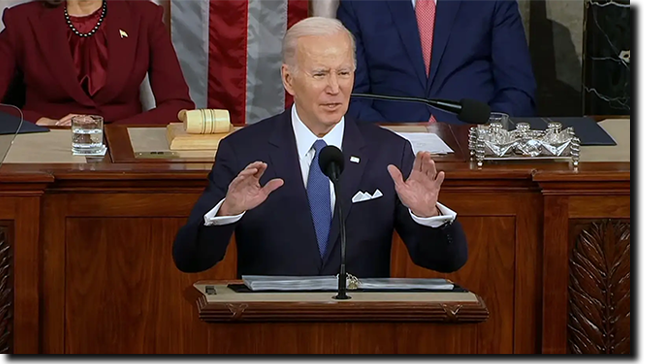
Healthcare featured prominently in president's State of the Union address
President Biden's 2023 State of the Union address on Tuesday night contained at least one healthcare surprise, according to an expert -- a pledge to extend the solvency of the Medicare program.
During a section of the speech dealing with addressing the debt ceiling, Biden said that "instead of making the wealthy pay their fair share, some Republicans want Medicare and Social Security to sunset." He was referring to a proposal by Sen. Rick Scott (R-Fla.) to sunset all government regulations -- including those establishing Medicare and Social Security -- every 5 years unless Congress reauthorizes them.
|
|
Resident/Fellow News and Updates |
|
Deadline to apply is February 20 - APPLY TODAY!
A limited number of qualifying residents/fellows will receive a travel scholarship to attend the ASIPP 25th Annual Meeting, March 16-18, 2023 at the Gaylord National Harbor, MD.
Recipients of this scholarship will receive reimbursement for up to three nights' stay at the host hotel at the official ASIPP single-occupancy room block rate. This includes room, tax, and resort fees.
Qualification Requirements:
• Residents and Fellows must register for the meeting to be eligible for reimbursement. (The meeting fee is only $25 for Residents and Fellows.) Click here to register for the meeting.
• Residents and Fellows must be active participants in their fellowship or residency programs during the meeting dates.
• Residents and Fellows must be active ASIPP members.
• A letter of recommendation from the (non-industry) residency or fellowship program director must include:
- Proof that the resident or fellow is an active participant in the program during the meeting dates.
- A statement verifying that no other travel scholarships for the ASIPP 2023 Annual
- Meeting have been or will be awarded.
• Must be willing to share your email with sponsoring company of the scholarship program.
|
|
|
|
Limited number of scholarships available.
|
|
|
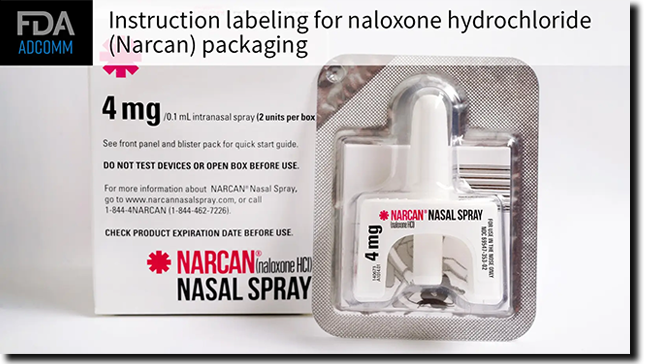
In emergency setting, proper use and administration by consumer is "essential," says agency staff
Ahead of an advisory committee meeting, FDA staff highlighted ongoing concerns about labeling for what could possibly be the first naloxone (Narcan) product approved for over-the-counter (OTC) use, labeling it "essential" in the emergency setting of an overdose.
At a joint meeting of the Nonprescription Drug Advisory Committee and Anesthetic and Analgesic Drug Products Advisory Committee on Wednesday, Emergent BioSolutions will present data and newly developed labeling for an OTC form of its nasal naloxone spray, which is already approved in prescription form. Advisors will be asked whether the risk-benefit profile supports the single-dose product's nonprescription use, or whether further data are needed.
The new instructions are aimed to quickly inform individuals without any healthcare training how to properly administer the emergency treatment, but FDA reviewers cited various issues, ranging from user errors like dialing 911 first (rather than administering a dose) to the possibility that each blister packaging may need to contain instructions as well, should users discard the box.
|
|
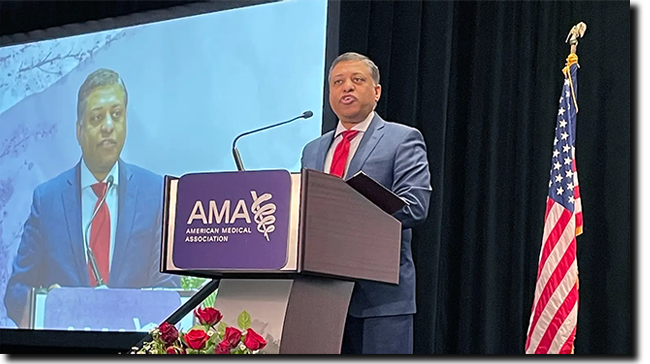
Become part of the addiction treatment system, Gupta urges AMA members
The Biden administration's drug czar has a challenge for America's doctors, especially members of the American Medical Association (AMA): help figure out the best way to treat substance use disorder (SUD) patients.
"While the Biden administration has improved access to care for millions of people with OUD [opioid use disorder], we've got a lot more work to do," Rahul Gupta, MD, director of the White House Office of National Drug Control Policy, said Tuesday at the AMA's National Advocacy Conference here. "This is where we need your help. We need more docs screening and case-finding for SUD across all subspecialties. We need more curriculum on SUD because I can tell you, if we're not taught something, we're not interested in it ... and that has a lot of consequences."
"We really need more folks across our profession to help figure out how to treat patients with SUD," he continued. "I don't think it's any different than diabetes or hypertension or heart disease; it's another thing we can do for our patients. And we can't do that without your help. My ask is, let's help ourselves build an addiction infrastructure that we need by becoming a part of it."
|
|
- ASIPP Members Only Site Information - |
|
-
To log in for the first time you will need to click “forgot password” at the bottom of the login window.
- Check your email and then log in as directed.
-
If you have problems logging into your account, click here.
|
|
Unintended consequences of the recommendation need to be evaluated, experts maintain
Buprenorphine, rather than a full agonist opioid, should be used for patients taking daily opioids for chronic pain, given its lower risk for overdose or misuse, new guidelines from the Department of Veterans Affairs (VA) and Department of Defense (DoD) recommended.
But "the guideline development group does not recommend use of opioid analgesics in the daily management of chronic pain," wrote James Sall, PhD, of the VA in New Braunfels, Texas, and co-authors in Annals of Internal Medicine.
"The benefits that opioids can provide are small and are outweighed by the risks to the patient," they continued. "If the decision is made to use long-term opioid therapy for a patient, then buprenorphine should be considered because of its lower risk profile."
|
|
WHO announced that Equatorial Guinea confirmed its first outbreak of the rare disease
The World Health Organization announced that Equatorial Guinea confirmed its first outbreak of Marburg virus disease, after one sample tested positive. Nine deaths and 16 suspected cases have also been linked to the outbreak.
There have previously been sporadic outbreaks of the virus throughout sub-Saharan Africa, and the rare case in travelers, mostly returning from African countries.
Currently, there is no vaccine or antiviral treatment for this hemorrhagic fever, which can cause severe illness and death.
|
|
Pain Medicine Case Reports (PMCR) and Editor-in-Chief Alaa Abd-Elsayed, MD, PhD would like to invite you to submit case reports and case series to the PMCR journal. Your article will be published free of charge.
Open access journals are freely available online for immediate worldwide open access to the full text of published articles. There is no subscription fee for open access journals. Open access journals are no different from traditional subscription-based journals: they undergo the same peer-review and quality control as any other scholarly journal.
Interested in becoming a member of the PMCR Editorial Board?
Editorial board members are asked to review 2-6 manuscripts per year. Please submit your most up-to-date CV to sgold@asipp.org for consideration.
For more information or to submit your articles, click here.
|
|
| CASE REPORT |
J. Lance LaFleur, MD
Abstract
BACKGROUND: Peripheral neuropathy is a difficult-to-treat condition. Peripheral nerve stimulation has shown to be an effective option but systems with an implantable battery are inappropriate due to its form factor. Complications and cosmetic concerns need to be considered when using conventional systems. Instead, externally powered peripheral nerve stimulation technology should be considered.
CASE REPORT: A 62-year-old woman presented with pain in the right posterior superior iliac spine (PSIS) and the right upper buttock, radiating into the right posterior thigh. In addition, she began experiencing pain in the right lateral hip and the right inguinal crease and groin. The patient was diagnosed with right ilioinguinal and superior gluteal mononeuropathy and was offered a trial of an externally powered peripheral nerve stimulator.
CONCLUSION: The patient had a successful trial and opted to have a permanent neurostimulator (electrode array and separate receiver). At 4 months after the permanent implant, the patient is reporting approximately 100% pain relief with improved quality of life. Peripheral nerve stimulation was a successful treatment option for a patient suffering from chronic, debilitating hip and groin pain.
KEY WORDS: Groin, hip, ilioinguinal, mononeuropathy, peripheral nerve stimulation, PNS, posterior superior iliac spine, superior gluteal, thigh
|
|
| QUALITATIVE ANALYSIS |
Monroe McKay, BS, Margaret M. Gorvine, PhD, Nickolas Zaller, PhD, Vinita Singh, MD, and Johnathan Goree, MD
Abstract
Background: With increased hospitalizations and deaths related to opioid use disorder, there is an impetus for federal and private insurance companies to provide coverage for integrative treatments that address pain. The Centers for Disease Control and Prevention (CDC) and the current literature recommend that nonpharmacological and nonopioid treatments must be considered for chronic pain management. The continued examination of potential coverage and cost-effectiveness for opioid-sparing alternatives with proven efficacy is critical for physicians who treat chronic pain.
Study design: Qualitative analysis of coverage policies for 10 alternative chronic back pain therapies was completed using the most up-to-date publicly available information from federal and state databases until September 2021.
Objectives: To determine coverage for opioid-sparing treatments for chronic back pain across federal and state healthcare systems.
Methods: We selected the alternative therapies from the National Institute of Health's National Center for Complementary and Integrative Health (NCCIH) (www.nccih.nih.gov). We then collected and analyzed coverage policies for federal and state healthcare plans, including Medicare, Veterans Health Administration (VHA), Indian Health Services (IHS), and Medicaid, by accessing federal databases and state policy databases via the department of health and human services (HHS).
Results: The 2 most commonly covered nonpharmacologic therapies for chronic back pain are physical therapy and cognitive behavioral therapy. Other more novel therapies have a heterogenous distribution among federal and state healthcare coverage. Assessment of regional differences determined that the median number of treatments in the Northeast and Midwest was 3, while in the South and West, it was 2.
Limitations: Several provider manuals included varying degrees of information regarding their services. Some states included all pertinent information, such as the definition of treatment, the exact number of service visits allowed annually, and whether prior authorization was necessary. Many manuals provided less information than this. Each state's Medicaid document contained inherent variability, especially with respect to when they were updated or published. Some states had updated information available for 2021, while the most updated policies for other states included documents that were last updated in 2008.
Conclusions: Integrative treatments for chronic back pain are currently available, yet coverage varies widely depending on the patient's Medicare or Medicaid status. Different states cover different therapies, which may lead to unequal healthcare outcomes for patients with chronic pain.
Keywords: Medicare/Medicaid coverage; health policy.; integrative therapies; opioid sparing treatments; Chronic pain.
|
|
| SYSTEMATIC REVIEW |
Ajay Antony, MD, John Stevenson, MD, Troy Trimble, DO, and Jon Block, PhD
Abstract
Background: Newly-introduced minimally invasive interventions have filled a gap between conservative care and open surgical procedures in the treatment and management of lumbar spinal stenosis (LSS), allowing expanded access to patient care. This spectrum of care involves an important interplay between advanced practice providers, interventional pain physicians, and spine surgeons.
Objectives: Using an integrated team approach starting with history taking; static and dynamic imaging; and conservative care, we developed a simple, understandable clinical algorithm that serves as a foundation for physicians to confidently make objective decisions regarding diagnosing and treating LSS throughout the entire clinical course of the condition. We believe this could potentially lead to more efficient and effective care for patients suffering from LSS with neurogenic claudication.
Methods: A decision tree approach was utilized with "either/or" choices at each branch or node in the algorithm. Activities are divided into examination procedures and corresponding treatment interventions. Symptom and radiographic severity grading as well as assessing clinical status employed published validated standards. Commensurate treatment choices were selected based on published LSS-specific clinical practice guidelines and/or meta-analyses.
Results: This algorithm recommends a systematic rule set for LSS diagnostic and treatment options. Initially, LSS symptom severity is graded based on the patient's pain relief with spinal flexion. This is correlated with radiographic severity assessment graded as mild, moderate, or severe. Radiographic severity combined with dynamic imaging prescribes a choice of treatment options and a risk/benefit discussion with the patient. These options include conservative management, minimally invasive methods such as interspinous process decompression, and more invasive surgical procedures such as laminectomy for increasing grades of radiographic severity.
Limitations: Understanding that each patient with LSS is managed on a case-by-case basis, the treatment options recommended by this algorithm should be considered "soft guidance." As such, integrated team/patient consultation is recommended to ensure maximum clinical benefit. A risk/benefit assessment and discussion should be performed with each individual patient.
Conclusions: Our proposed algorithm offers an easy-to-use clinical tool and general foundation for identifying, evaluating, and treating patients with intermittent neurogenic claudication associated with LSS.
Keywords: algorithm; decompression; interspinous spacer; minimally invasive; neurogenic claudication; Lumbar spinal stenosis
|
|
ASIPP is now in collaboration with Curi Medical Liability Program
Since this malpractice insurance program officially launched in November 2018, ASIPP has signed up hundreds of providers with an average savings of 30%. This is professional liability insurance tailored to our specialty and will stand up for us and defend our practices.
Curi is a full-service advisory firm that serves physicians and their practices. Their valued advice is grounded in your priorities and elevated in your outcomes. They are driven by a deep understanding of your specific circumstances in medicine, business, and life. To read a few important points to keep in mind about the program, including discounts, administrative defense, cyber coverage, aggressive claims handling, and complimentary risk management CME activities, visit our website.
|
|
ASIPP® has formed a partnership with Henry Schein and PedsPal, a national GPO that has a successful history of negotiating better prices on medical supplies and creating value-added services for independent physicians. Working with MedAssets, PedsPal provides excellent pricing on products like contrast media that alleviate some of the financial pressures you experience today.
|
|
ASIPP® is now offering our members the benefit of a unique revenue cycle management/ billing service.
We have received a tremendous amount of interest in the ASIPP® billing and coding program.
Click here to learn more about the negotiated rate for practices and more!
|
|
|
up-to-date news related to you, your practice, and your patients!
|
|
|
|
|
|
|