|
Amboseli Trust for Elephants
January - March 2025
| |
31st March 2025 | Newsletter | |
Note from our Director
Dear Cynthia,
Here in Kenya and in beautiful, peaceful Amboseli, we are not unaware of the tragedies that are occurring in many parts of the world. Our hearts go out to the people who are suffering.
While we feel helpless to fix any of these situations directly, we must not give in to despair. We try looking at the bigger picture, and in our case that means looking ahead to the future of elephants in Africa. There are so many factors working against that future, but we at ATE and our colleagues and friends in other conservation organizations, are determined to find the space, security, and co-existence necessary to conserve elephants across Africa.
In the face of the chaos in the world today, it is also our hope that in our social media posts and in this newsletter, we are able to provide little moments of distraction when we report on the activities of well-known, individual elephants in Amboseli.
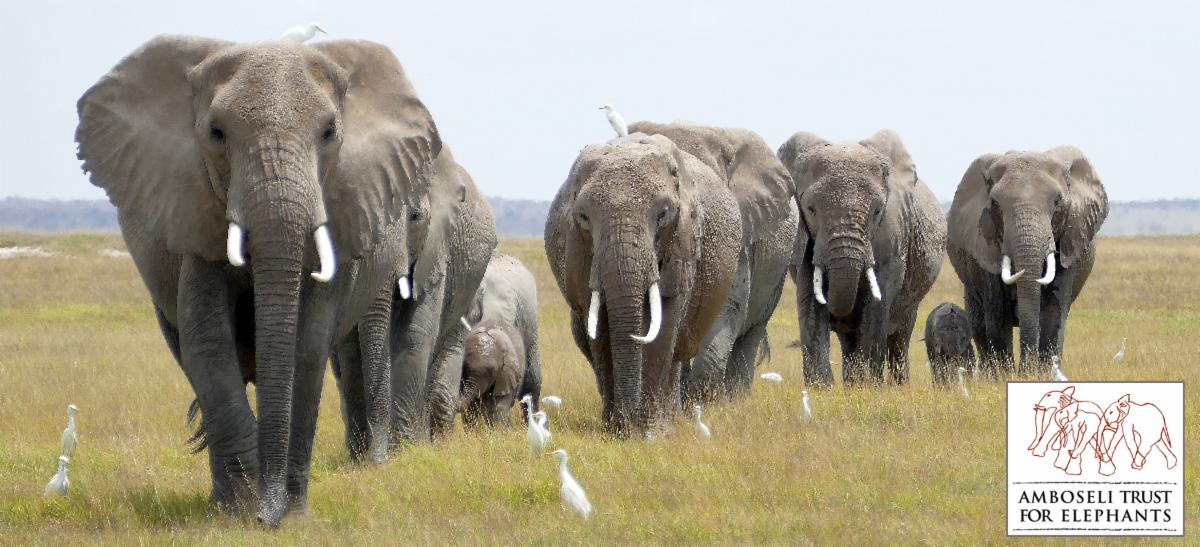
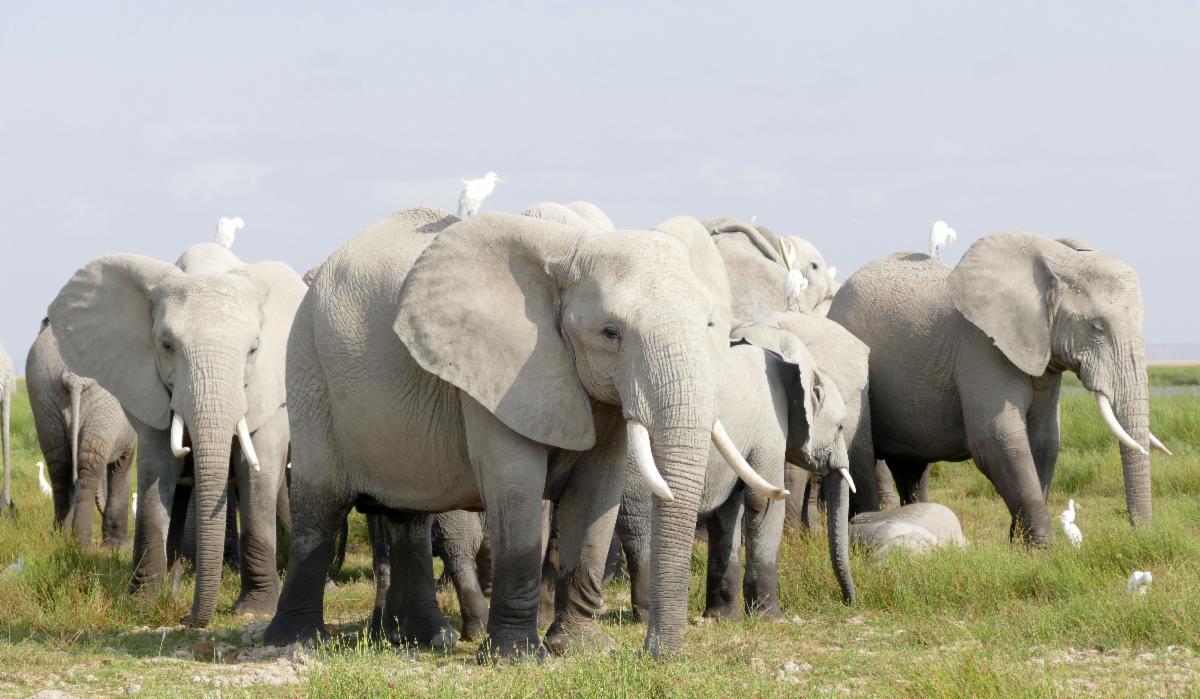
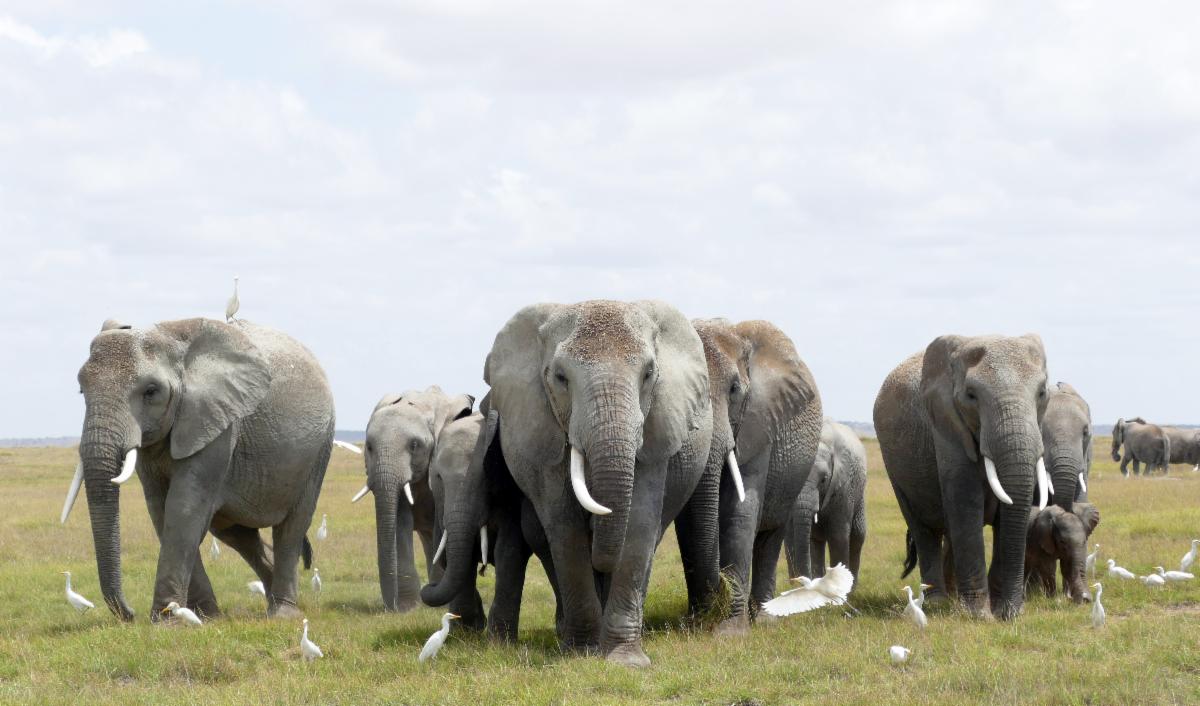
In the banner picture above is a part of the EB family with two new calves born in February to Edwina and Europa. That brought us joy.
Cynthia Moss
Director
| | | | |
Elephant Baby Booms
by Prof. Phyllis Lee
| | |
Elephants, like many living organisms, reproduce at high rates when times are good. By “good”, biologists tend to mean that more energy is available than just that required for growing and living. Famously, lemmings, voles, and even fig trees all have periods when exceptional numbers of offspring are produced all at once in a baby boom. It makes sense for small creatures to produce as many babies as possible, for trees to invest abundant energy into fruits, or for the swamping of predators with mass production of offspring all at a single time.
Elephants, despite their size and their twenty-two-month gestation period, can respond to energy abundance by increasing the rate at which individuals get pregnant, which results in elephant baby booms. In 1979, the first of the AERP’s baby booms was predicted by Cynthia. She noted that more than half the calves born in 1976 died in a severe drought and the females stopped reproductive cycling. When good conditions returned in 1977 there were many adult females available to conceive. Twenty-two months later the baby boom of 1979 began.
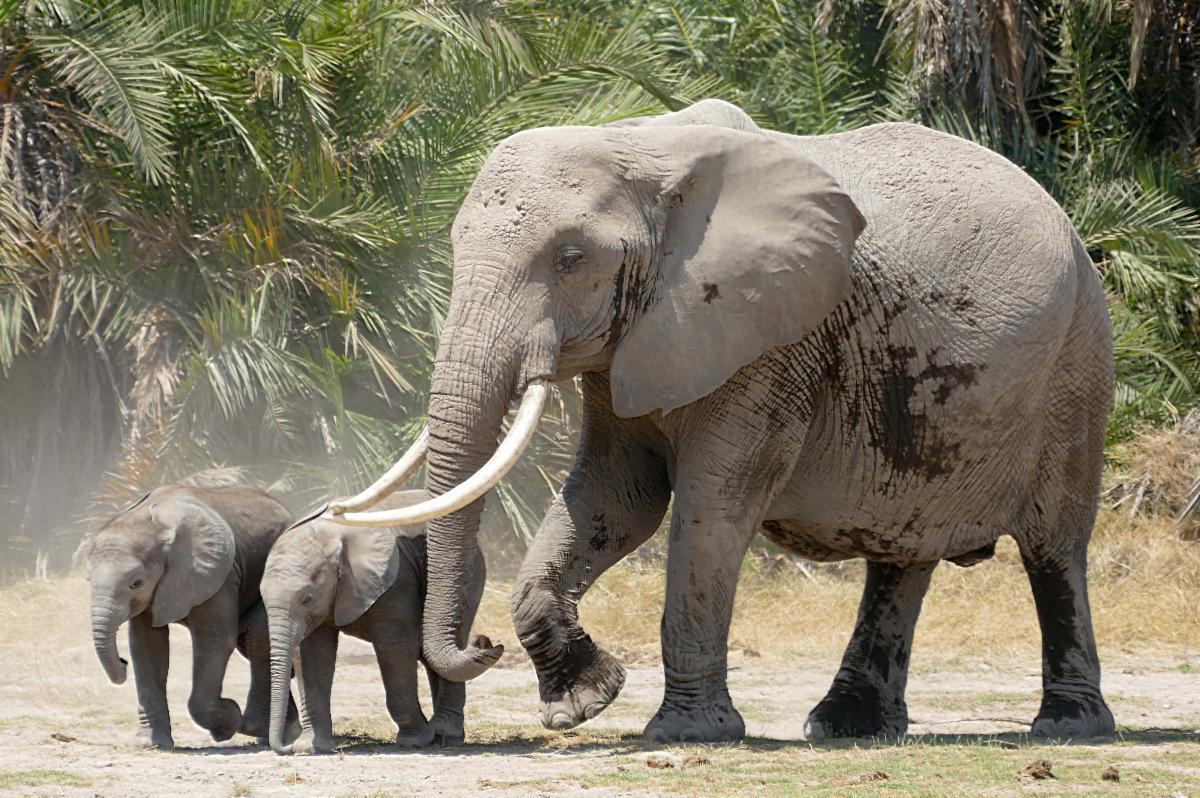
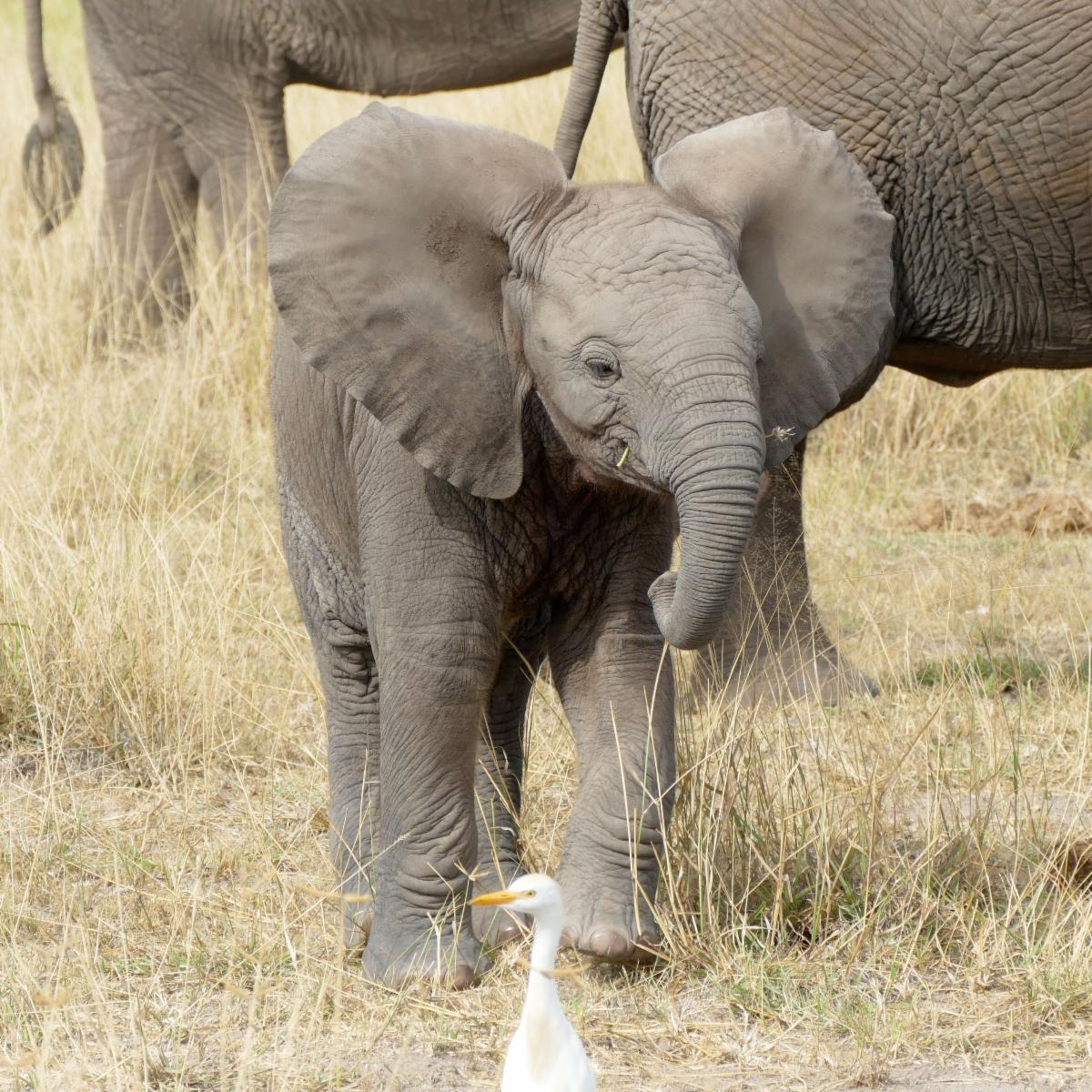
| Two of the calves born in the 2020 baby boom: Eliot's son and grandson | |
We saw a similar birth peak in the late 1990s, and two birth surges in the 2000s. Some peaks clearly follow a drought-related drop in females conceiving due to poor condition, which several years later leads to a pulse in births. Other highs also follow an upsurge in the numbers of females maturing. When both factors coincide, then a huge number of calves can be produced. The 2012 birth surge (201 calves) followed a prolonged period of intense drought and deaths among calves. The largest boom so far occurred in 2020 with the birth of 258 calves. Now we are expecting even more calves in 2025.
There was a very severe drought in 2022 and up to March 2023. Many calves died and again females stopped reproductive activity. In 2024 only 31 calves were born to more than 600 adult females. Among these females, there were more than 100 newly matured females who were unable to become pregnant in the drought years, so they remained ready to produce a calf as soon as conditions improved. And conditions did improve greatly with higher than average rainfall for the rest of 2023 and all through 2024, bringing up abundant and nutritious vegetation. The elephants recovered and it appears that many of the females are pregnant and thus we are expecting a another baby boom.
Baby booms have been seen elsewhere in savannah elephants, such as Tarangire in Tanzania and Addo in South Africa. Baby booms (and busts) may be a regular feature of elephant life, and as such provide fascinating insights into elephant biology and population dynamics.
| | |
Testing Fence-breaker Deterrents
by Dr Lydia Tiller
January marked the launch of Phase 2 of our Elephant Fence Breaker Study, conducted in collaboration with Big Life Foundation. This phase builds on last year’s efforts to better understand elephant fence-breaking behaviour. In Phase 1, we installed 32 camera traps to identify individual fence-breaking elephants, observe their tactics, and investigate how this behaviour spreads among elephants. With data analysis ongoing, stay tuned for results later this year. Phase 2 is now focusing on testing a range of deterrent methods alongside early warning detection systems, to evaluate which approaches are most effective while also assessing their long-term sustainability in terms of cost, effort, and scalability.
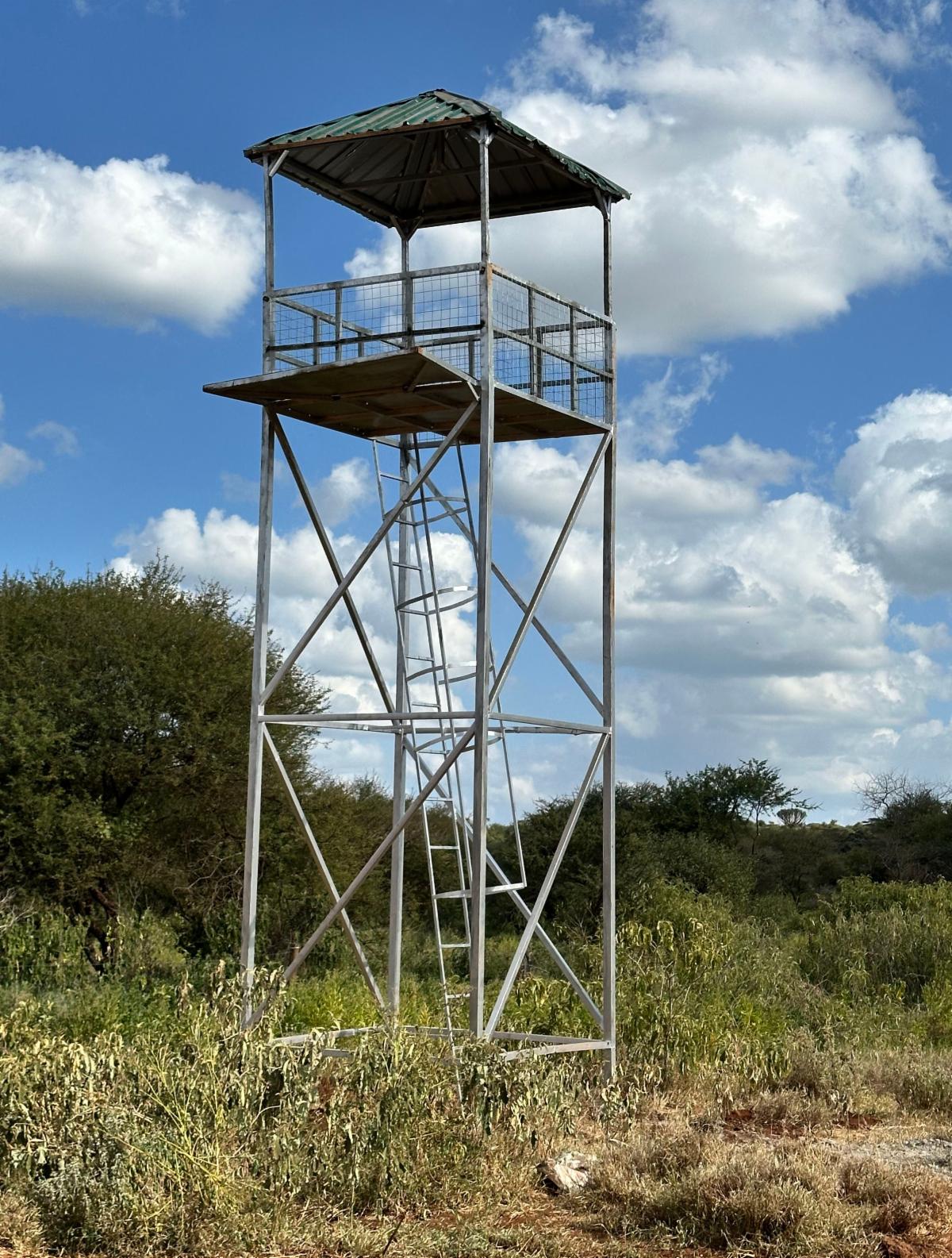
We are currently trialling five deterrent methods along Big Life’s 100-km electric fence: flashing lights, three versions of smelly elephant repellent (V1, V2.0, and V2.1), and a watchtower equipped with a drone. Each method has shown promise in other regions and is featured in Save the Elephants’ HEC Toolbox. Flashing lights, for example, were successfully tested in Botswana, where they significantly reduced elephant incursions around farms. The smelly elephant repellent, originally developed by WildAid, is now being tested in partnership with both WildAid and Kapi Limited. Alongside the original formula, we are trialling two new iterations, V2.0 and V2.1, designed by Kapi Limited to be more cost-effective and easier to produce at scale, while maintaining the effectiveness of the original blend. Each version is being tested at multiple sites to evaluate its performance under local conditions.
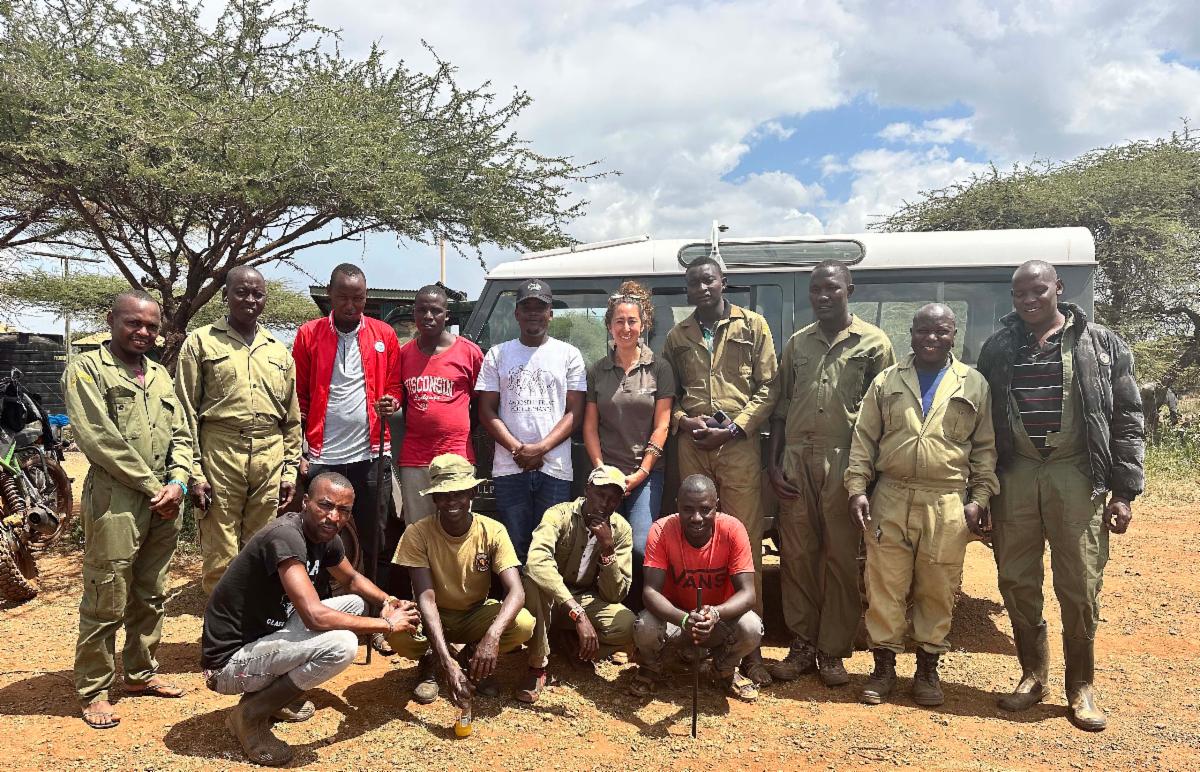
| | | | The ATE and Big Life teams working together to promote human-elephant co-existence | | In addition to repellents and lights, we’re testing a watchtower, combined with drone deployment. This method aims to detect elephants early and deter them before they break the fence. Each technique is strategically placed at known fence break hotspots, monitored by camera traps to observe how elephants interact around the deterrents. As this phase progresses, we are interested to see which methods perform best, and ultimately, if any of these solutions can be scaled up to protect both elephants and the Amboseli community more effectively. | | The History of the D Families - Updated | | Part of the DB family today - Donna, Dorcas and Dahlia | | |
The ‘D’ females and the families they make up have always been something of a mystery. In fact, the Ds have a history of doing things elephants are “not supposed to do". In the beginning the Ds were thought to be one family. What was eventually designated the DA family was photographed on the very first day of the study on September 1, 1972. Two adult females were present: a large old matriarch whom we named Dorothy and a much younger female we called Dinah. The next time this family was seen on August 4, 1973 there was a third adult female present and she was photographed and named Delia. Over the next few months other females were seen in association with the D females but always in a variety of odd combinations. One female was seen only once and then disappeared. She is simply referred to as the "D" female.
It was not until 1974 that I had some idea of who belonged to the family. It looked like this:
| |
Dorothy
3-4-year-old
6-7-year-old female
Adolescent male ±10
Dinah
2-year-old male
Delia
Adolescent male ±12
Deborah
Diana
Daphne
"D female"
Male—±15
| | We greatly appreciate all the donors who contributed during the past six months. Your support is very important to us. With it we can continue to follow the Amboseli elephant families and the independent males, learning more about them every year. We particularly want to thank four anonymous donors and the following: | | |
Doug Aja
Charlotte Philips Avila
Pradeep Bansal
Jane Beckwith
Bonner Family Foundation
Nancy Camp
Estate of Kate Coleman
George and Leslie Conant
Thomas Cornwell
Michael Dobbs
Fair Play Foundation
Fay Forman
Frederica Gamble
Garland Family Foundation
Helen Grube Gifford
Dr. Cathy Grellet
Neill Heath
John and Kathryn Heminway
Katherine Herzog
Willa Kahn
Cora Kammerman
| |  | |
March to the Top
John and Beth Miller
Oakland Zoo
Joyce Poole
Reed Bohannon Gift Fund
Rogers Family Foundation
Rolf and Elizabeth Rosenthal
Family Foundation
Joan Russo
Carl Safina
Deryl Santosuosso
John Schaake
Spyridakis Family Charitable Foundation
Jay Trivedi
Steven Turner in honour of Elizabeth Beck
Velmans Charitable Foundation
Wagmore Foundation
Karen Washburn
Dr. Richard Weiskopf
Maxine Weinstein
Michele Yanko
| | Kitty and her calf, born in 2022, are members of the KB2 family, which is the latest family to join our Elatia program. You can follow Kitty and her family or any of the five other families by joining the program. You will receive regular updates, which include photos and videos and news of what is going on in the family. To learn more about Elatia go to: this link or contact us directly on: info@elephanttrust.org | | | This calf will soon be needing a name. In our naming program you could follow her and her family's lives for many years to come. The name you give "your calf" forms a part of the Amboseli dataset for all time. For more information write to us at: info@elephanttrust.org | | | Give a Gift that Lasts Forever | |
The MA family, led by Marigold, spends most of its time outside the Park. It is crucial that we keep their range safe. You can help us by designating ATE as a beneficiary of your will, individual retirement account, or life insurance policy. To learn more about planned giving, contact Betsy Swart: eswart@elephanttrust.org
Tel: +1-508-783-8308
| | | Born in 1993, Thelonious is 32 years old, and regularly coming into musth. He is growing rapidly and he's tall for his age. Soon he could be a prime target of hunters across the border. One way to keep him safe is to support ATE by making your online purchases through iGive. If you sign up the Amboseli Trust for Elephants as your recipient organization, we will get a small percentage of the sale. www.igive.com | | |
Make a Donation
We use a secure online system on which you can make your donation with a credit or debit card. All donations exclusively support our not-for-profit organization.
| | | | |