The Institute for Health Equity Research, Evaluation & Policy | |
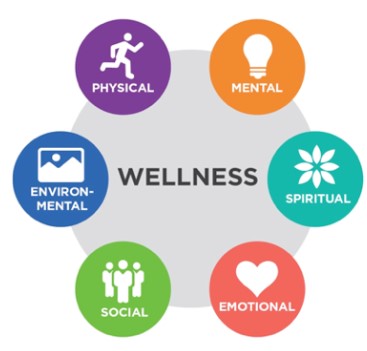
IHE promotes wellness in 2025 | |
Achieve Wellness with Community Health Centers in 2025 | |
As we continue into the new year, IHE’s Dr. Cheryl Clark interviewed Karen Gardner of Community Health Center of Cape Cod (CHC) and Charles L. Anderson MD of The Dimock Center about the critical role of community health centers in advancing health equity.
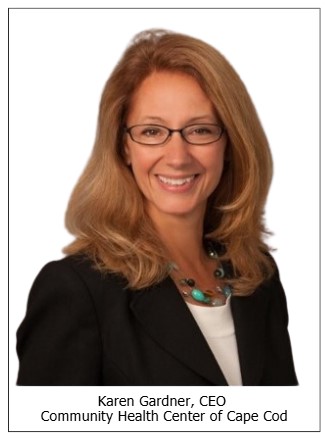
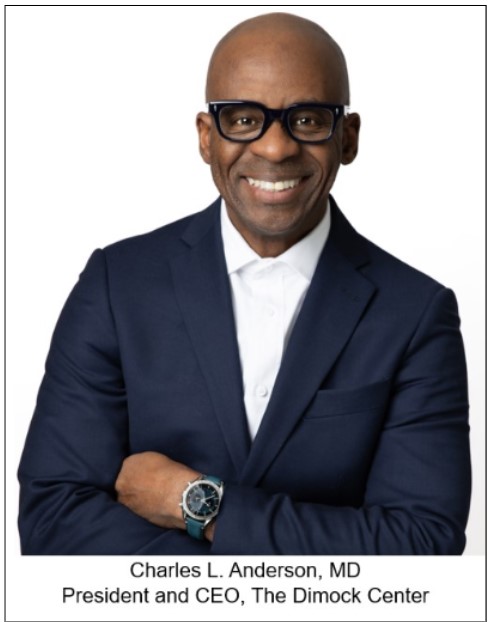
Karen Gardner, Chief Executive Officer of CHC, has been with the organization for 21 years, transforming it from a free clinic into a multi-specialty practice that now serves 25,000 residents across multiple locations. Dr. Charles Anderson, President and CEO of The Dimock Center in Roxbury, MA, brings over 25 years of experience in the Boston-area healthcare community. Under his leadership, Dimock operates the country’s most comprehensive, integrated community health, substance use disorder, emergency shelter, and early education and care program on a single campus.
Each is a renowned advocate for community health who drives strategic, operational, and community-focused initiatives to improve care access and outcomes.
Their conversation offers an in-depth look at how community health centers across Massachusetts are addressing social determinants of health and promoting overall wellness.
Read the full discussion below and on our LinkedIn page.
| |
Community health centers across Massachusetts are addressing social determinants of health and promoting overall wellness. | |
Addressing Social Determinants and Promoting Wellness
with The Dimock Center and CHC of Cape Cod
| Dr. Cheryl Clark (IHE): What programs does your community health center offer to support social determinants of health and promote overall wellness? | |
Karen Gardner: Community Health Center of Cape Cod (CHC), like many of our fellow health centers, was founded on the principle that everyone deserves access to high quality, integrated, culturally sensitive and equitable health care, regardless of the ability to pay. This, along with our health center vision to provide a health care home of choice which reflects community need, eliminates barriers and empowers all individuals toward lifelong wellness, drives us to continuously improve evaluate social determinants of health.
Over the last several years, CHC has developed programming to support social determinants of health and in so doing, improve the health of our community overall. In terms of promoting wellness, there are four impactful initiatives we have put in place to better support our communities: supportive workforce and student housing, digital literacy programming, care management and patient navigation, and the strategic use of technology.
Additionally, CHC has embraced innovative technological solutions to ensure no one is left behind, employing a digital navigator and offering tools like remote healthcare supplies to improve outcomes for seniors, disabled individuals, and non-native English speakers. Through these efforts, CHC continues to elevate health equity and reduce disparities across its service areas.
| |
|
Charles L. Anderson MD: When I speak to people locally and nationally about The Dimock Center, they often know that we operate a full-service Community Health Center on our 160-year-old, 9-acre campus, but what they don’t know is that we are one of the few community health centers that also operates a Head Start and Early Head Start program.
The reality is that both the Neighborhood Health Center movement and the Head Start Program share a common origin in the country’s “war on poverty.” It was acknowledged then and later documented in several studies that an early education program with comprehensive family engagement and support targeting issues like housing instability, parental employment, food insecurity, nutrition, and access to healthcare improves health outcomes and strengthens communities. At The Dimock Center, we serve over 400 families.
Dr. Clark: In your eyes, why is it important to offer programs like these as a provider?
Karen Gardner: As a Federally Qualified Community Health Center, of course, we ground programming based on needs identified within the communities we serve. Ensuring staff are trained, reminded, and supported in identifying the root causes of health, as well as underlying culture and narratives is always part of our work and is foundational to improved health. Following the murder of George Floyd, and in the post COVID environment, we have again been challenged to recognize how disparities in poverty, ageism, racism, distribution of resources and other factors are so critical to life and wellness. It is our duty as a provider, a public health provider, to continuously offer programming such as those cited.
| Dr. Anderson: Offering a comprehensive early education program as part of The Dimock Center allows us to uniquely and tangibly “connect the dots” for families between education and health. As a full-service community resource every encounter through any of our doors is a portal into a holistic approach that crosses silos and decreases the fragmentation in a system that can be challenging to navigate. | |
Dr. Clark: What excites you the most about your wellness programs?
Karen Gardner: The dedication of health center staff, volunteers, partners and the community are without a doubt inspirational and motivate me (and each other) to continuously develop and improve wellness programming.
Our programs such as those mentioned and others, including CHC’s evidenced based Lifestyle Medicine Program, have demonstrated improved health outcomes and reduced disparities, particularly within our hypertensive and diabetic/pre-diabetic populations. The wellness programming has also facilitated our “within budget” total cost of care at year end. This means that we can continue to invest in wellness programming and provides us all hope that we have the ability to truly meet our mission and “do good” by improving the health of our community. For example, successes to date have led to expanded community partnerships, including the YMCA of Cape Cod. Next Spring, we will break ground for a new YMCA in Falmouth and are building a satellite health center focused on wellness programming within the Y!
| |
Dr. Anderson: As we are now officially in Heart Health Month, what excites me most is the opportunity to improve cardiovascular health across generations on a campus like ours. Heart disease is the leading cause of death world-wide, and the incidence continues to rise in the US. It is estimated that almost half of adults have hypertension. According to the American Heart Association, as many as 1 in 7 children and teens either have hypertension or are heading towards being hypertensive. The “hypertension monster” is attacking families and therefore it only makes sense that the solution is a family solution. A review of family-based approaches to cardiovascular health published in the Journal of the American College of Cardiology in 2016, suggests that engaging the family encourages household communication, promotes the adjustment of structural and environmental conditions, and is more likely to result in building an atmosphere of continuous health promotion. By creating a targeted program to increase the family units understanding of cardiovascular disease that also leverages the resources in our health center to reinforce these messages, we can “take down hypertension.”
Dr. Clark: What should other providers learn from your experience?
Karen Gardner: I think we would all agree, the work of a community health center is challenging, overwhelming at times. We face tremendous need within the populations we serve and will likely never have enough resources to meet the need and accomplish all we would like to achieve. We need our friends. 100% of our wellness programming has been accomplished in partnership with others – funders, fellow human service providers, faith-based organizations and each other. We and our communities can thrive by working together, knowing the data, and always listening and learning.
Dr. Anderson: Let’s continue to realize that complex problems often require complex solutions while strengthening our belief that for every problem there is always a solution!
| |
Both Karen Gardner and Dr. Charles L. Anderson exemplify the innovative, solution-oriented approaches necessary to tackle health disparities and promote overall wellness in their communities. Their leadership underscores the power of comprehensive, collaborative efforts in changing health narratives for the better.
To learn more about Community Health Center of Cape Cod, please visit: https://chcofcapecod.org/.
To learn more about The Dimock Center, please visit: https://dimock.org/.
|
|
|
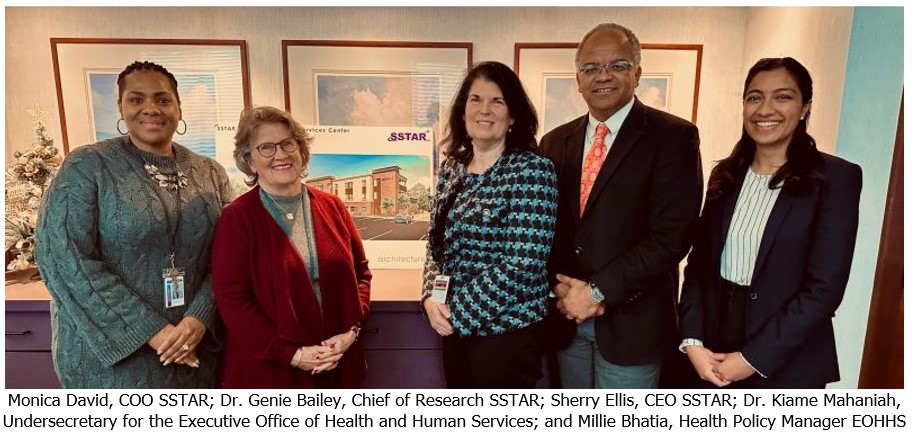
EOHHS Undersecretary Mahaniah visits SSTAR,
learns about the CHC's integrated system of healthcare
| |
|
After reading IHE's October 2024 Substance Use Prevention Q&A, which featured SSTAR's Genie Bailey, Dr. Kiame Mahaniah, Undersecretary for the Executive Office of Health and Human Services (EOHHS), reached out to The Family Health Center at SSTAR to learn more about the services they provide. In January, the undersecretary visited SSTAR along with Millie Bhatia, Health Policy Manager at EOHHS. They met with program directors and senior staff to hear about the health center's integrated system of healthcare.
SSTAR is a Federally Qualified Health Center and Mental Health Center offering a full continuum of services including primary care in 3 locations and mobile van services; substance use disorder services including: inpatient, outpatient, intensive outpatient, OBOT, Bridge, and an Opioid Treatment Program; and mental health services including a rapid access program.
Learn more about SSTAR.
| |
Martin Luther King, Jr., Day: January 20
| | |
|
|
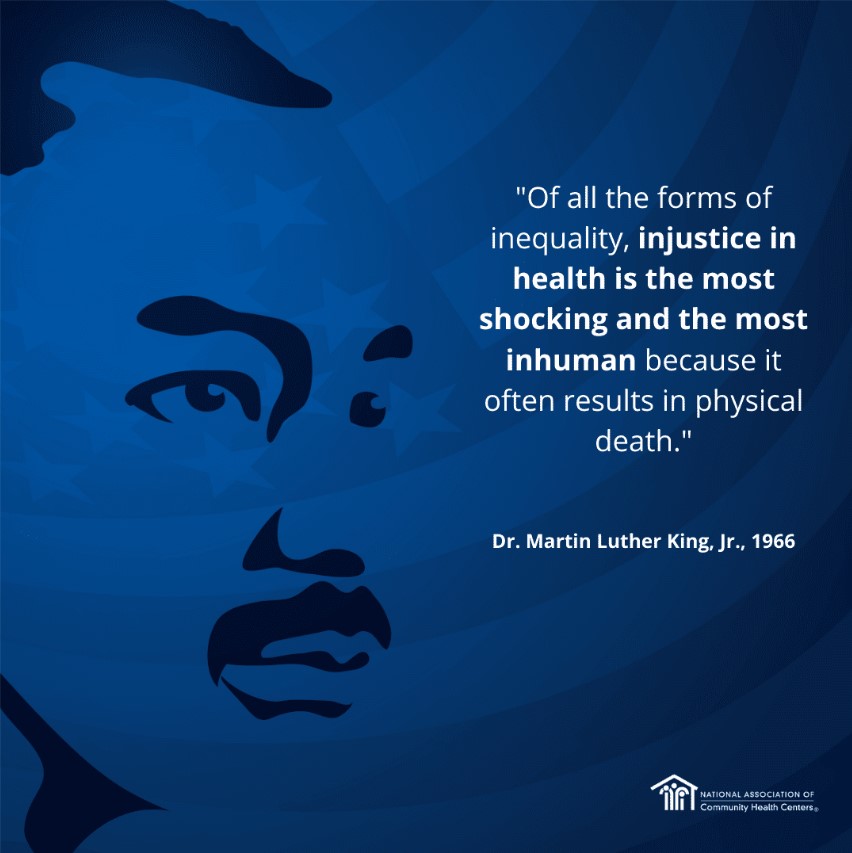
IHE honors the life and legacy of Dr. Martin Luther King Jr., whose dedication to justice and equality continues to inspire action. His vision reminds us that achieving health equity is not only a medical issue but also a moral imperative.
At the Institute for Health Equity Research, Evaluation & Policy, we are proud to carry forward Dr. King’s mission by empowering community health centers with the tools and resources to address systemic health disparities. Through health center-led science, we work to dismantle barriers and create a more just and equitable future for underserved populations.
See the full post on our LinkedIn page.
| | |
National Pharmacist Day: January 12 | |
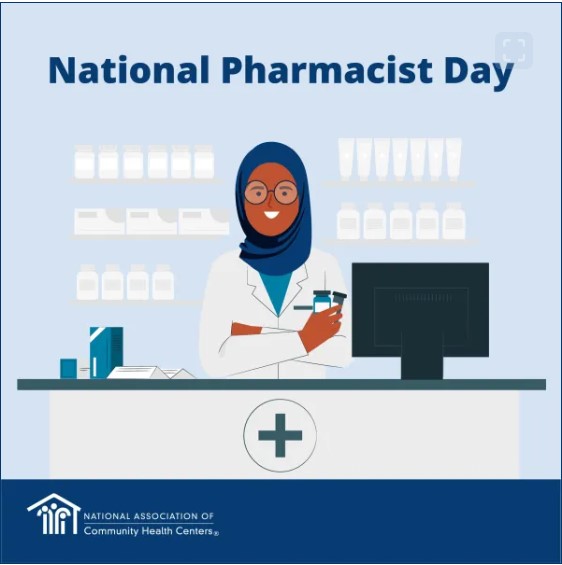
Pharmacists are essential to community health centers and the services they provide, as more than half (52%) of CHCs provide pharmacy services. Pharmacists play a vital role in ensuring their communities have access to critical health services and resources. These dedicated professionals go far beyond dispensing medications—they’re trusted advisors to patients and health care teams, delivering immunization, therapy management, disease education, and preventive care services.
We'd like to thank CHC pharmacists for their tireless commitment to advancing health equity. Your work ensures CHCs remain a cornerstone of care for those who need it most.
Visit Massachusetts League of Community Health Centers to find a CHC near you to learn more about your center's pharmacy offerings.
|
|
The Institute for Health Equity Research, Evaluation, and Policy | |
In 2023, The Massachusetts League of Community Health Centers (Mass League) created the Institute for Health Equity Research, Evaluation, and Policy, Inc. (IHE), a 501(c)(3) non-profit organization designed to support Health Center-led Science driven by community health centers.
IHE convenes communities and supports the scientific infrastructure, implementation, program evaluation and training needed to identify and sustain the most effective strategies for attaining equity in health and healthcare, as defined by those with lived experience of health inequities.
Learn more about IHE on our webpage of the Mass League website and on our LinkedIn page.
| | | | |