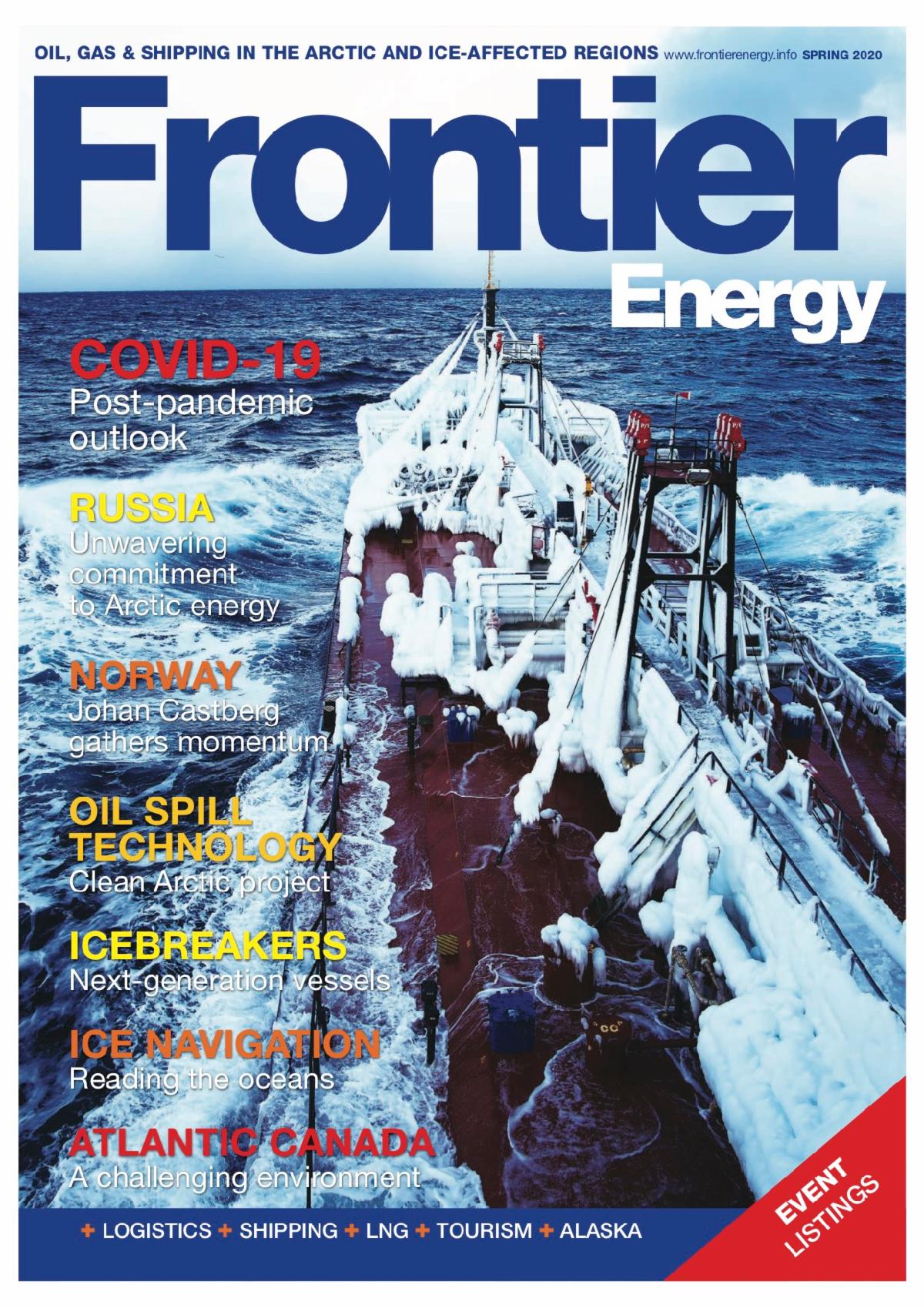
NEW ISSUE SPRING 2020
Unique news and features including
* COVID 19 - Post pandemic outlook
* RUSSIA - Commitment to the Arctic
* ICEBREAKERS - Next gen vessels
* NORWAY - Johan Castberg
* ICE NAVIGATION - Reading the oceans
* ATLANTIC CANADA - Challenging
Click HERE to read the latest issue
of Frontier Energy magazine!
In the light of the Covid-19 pandemic, our industry is facing unprecedented challenges. We will continue to report on events and wish that you, your families and work colleagues stay well and healthy.
|
|
OIL, GAS & SHIPPING IN ARCTIC & ICE-AFFECTED WATERS |
|
NEWS FROM ACROSS THE ARCTIC REGION |
|
 |
Swiss financial giant UBS says it has tightened its financing criteria for those involved in coal-fired power generation and mining, Arctic oil and tar sands, and would lay out a more detailed climate action plan later this year.
UBS was one of a number of banks to sign a new global initiative UN climate envoy Mark Carney aiming to accelerate efforts by the financial services sector to help decarbonise the global economy.
As part of its efforts to get to net zero carbon emissions across its business by 2050, the bank said it would further limit the lending it offers to companies involved in the most-contentious areas of the fossil fuel industry.
|
|
|
|
US Secretary of State Antony Blinken is set to visit Iceland on May 19-20 to participate in a meeting of the Arctic Council.
Russia's president Vladimir Putin instructed the Government and the Russian Union of Industrialists and Entrepreneurs to consider the possibility of continuing offshore reloading of the liquefied natural gas (LNG) produced in the Russian Arctic.
Shareholders of Russia's Novatek have approved external financing of $11 billion for the Arctic LNG 2 project, which is expected to start production of liquefied natural gas in 2023.
|
|
|
|
Partners to develop Askeladd Vest in Barents Sea |
|
Norway's Equinor and its partners Petoro, Total, Neptune and Wintershall Dea have decided to develop Askeladd Vest, which is in the southern Barents Sea. The investment is close to NOK 3.2 billion, (Eur 360 million), said the company.
“It is important to Equinor and its partners to utilise the resources and existing infrastructure in the area in the best possible way. The Askeladd Vest development is a profitable development and will provide 134 million barrels of oil equivalent. These volumes are valuable to the owners and society,” says Geir Tungesvik, Equinor’s senior vice president for project development.
As part of the multi-phased Snøhvit development, Askeladd Vest will extend plateau production at the Hammerfest LNG plant by a good two years. Plans call for production start in the first half of 2024. Askeladd Vest is operated by the Snøhvit organisation located in Hammerfest and Harstad.
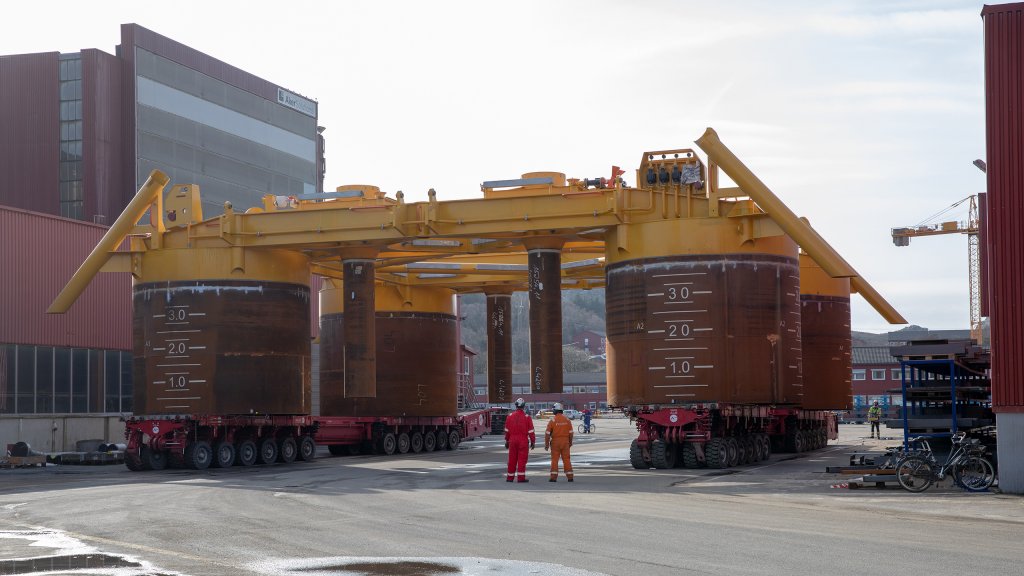
Askeladd template load out from the Aker Solutions production hall in Egersund in 2019. (Photo: Ørjan Richardsen and Espen Rønnevik).
|
|
Tommy Beaudreau selected new US interior chief |
|
Tommy Beaudreau, a veteran of the US Interior Department who charted new restrictions for Arctic oil drilling under former President Barack Obama, is being tapped to return to the agency as its No. 2 official, reports Bloomberg.
President Joe Biden is slated to nominate Beaudreau to be the deputy Interior secretary, according to two people familiar with the matter who asked not to be named before a formal announcement expected later this week.
Beaudreau, a lawyer, rose to prominence for his role amid the disastrous Deepwater Horizon oil spill in the Gulf of Mexico in 2010, when he was responsible for helping to turn around the Interior Department’s oversight of offshore oil development.
As the first director of Interior’s then-newly created Bureau of Ocean Energy Management, he spearheaded reforms in offshore oil and gas leasing and propelled efforts to advance the development of wind farms along the nation’s coastlines.
He also led a review of Shell Oil Co.’s mishap-plagued 2012 Arctic drilling program after its rig ran aground off the Alaska coast.
|
|
Canada promises two new Arctic ice breakers |
|
Canada's government has promised to build two Arctic ice breakers and create hundreds of jobs in two politically influential provinces that will help decide an election considered likely this year, reports Reuters.
The ruling Liberal party, citing the need to boost Canada's Arctic footprint as global warming opens up the region, said at least one ship would be ready by 2030 when Canada's sole existing ice breaker capable of operating throughout the Arctic will be 62 years old.
"As northern waterways become more accessible, some countries are trying to encroach on our sovereignty by signalling their economic interest in a region that is rich in untapped natural resources," Environment Minister Jonathan Wilkinson said.
|
|
Revised start-up date for Hammerfest LNG |
|
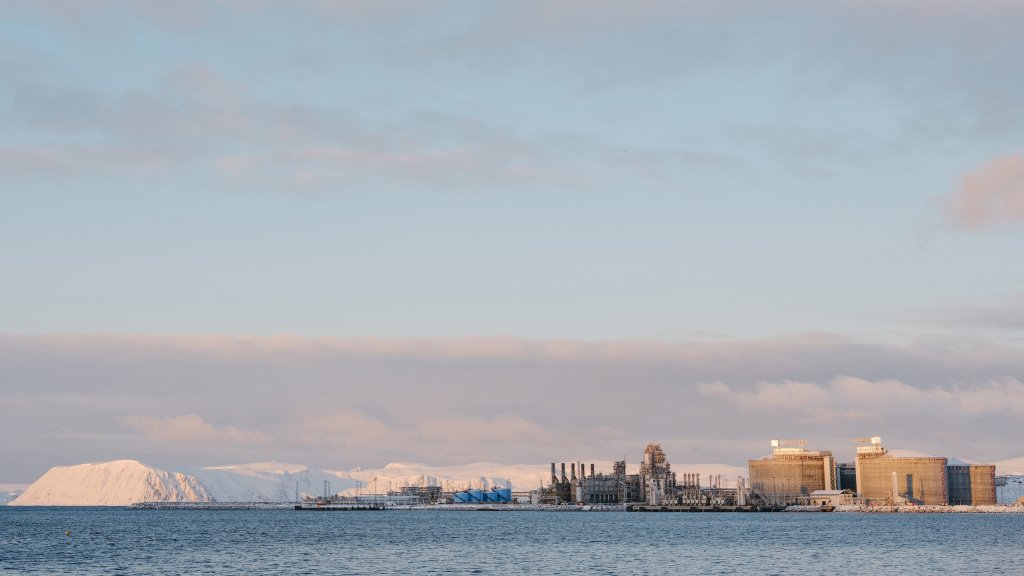
Based on extensive analyses and mapping of damages, Equinor has updated the schedule for repair and start-up of the LNG plant on Melkøya (picturted right, Photo: Ole Jørgen Bratland) after the fire on 28 September 2020. Due to the comprehensive scope of work and Covid-19 restrictions, the revised estimated start-up date is set to 31 March 2022, announced the company.
Even though the fire in September 2020 was limited to the air intake of one of the plant’s five big gas turbines, the fire and firefighting caused substantial damage to the plant.
“We have worked systematically on getting an overview of the damages and scope of work to bring the plant’s technical condition back to the required standard. There is still some uncertainty related to the scope of work, however our best start-up estimate is 31 March 2022, based on current knowledge. Safety is our top priority, and we will not start the plant before it can be done safely,” says Grete B. Haaland, Equinor’s senior vice president for onshore plants.
Equinor’s internal investigations following the fires at Hammerfest LNG and Tjeldbergodden have now been concluded and results submitted to the Petroleum Safety Authority.
|
|
Arctic Council group reports on Northwest Passage |
The Arctic Council’s Working Group on the Protection of the Arctic Marine Environment (PAME) has issued its third Arctic Shipping Status Report – Shipping in the Northwest Passage: Comparing 2013 with 2019.
The council’s Protection of the Arctic Marine Environment Working Group (PAME) releases regular Arctic Shipping Status Reports that illustrate interesting topics related to Arctic shipping. All reports use data from PAME’s Arctic Ship Traffic Database. PAME developed the database, which includes data starting in 2013, in response to a growing need to collect and distribute accurate, reliable and up-to-date information on shipping activities in the Arctic.
The first two Arctic Shipping Status reports, which focus on shipping trends and heavy fuel oil respectively, can be found here.
The third Arctic Shipping Status Report compares ship traffic in the Northwest Passage in 2013 and 2019. It reveals an increase in the number of ships entering the area, and an even larger increase in the distance sailed. The Northwest Passage refers to various marine routes between the Atlantic and Pacific oceans along the northern coast of North America that span the Canadian Arctic Archipelago. Because there is no official definition of the Northwest Passage, PAME’s report uses the definition of Arctic Waters set out under Canada’s Arctic Waters Pollution Prevention Act.
|
|
|
|
Russian Arctic activity 'does not pose threat' |
|
Russia’s activity in the Arctic complies with international law and does not contradict it; tensions in the region are mounting due to US actions, said Russian Foreign Ministry spokeswoman Maria Zakharova (pictured right).
“Russia does not do anything in the Arctic that runs counter to international law or poses a threat to other countries. As for potential sources of tensions in the region, it would be logical to consider the military activity of the US and its allies in the Arctic, as well as the belligerent rhetoric,” Zakharova said at a briefing.
In particular, she commented on the statements by Western media that Russia is building up military bases and resources north of the Arctic Circle in order to impose Russian rules on the Northern Sea Route and force its own power on the region.
|
|
Events Calendar : Conferences, Forums, Meetings |
|
EVENT: Arctic Development Expo
June 15 - 16
Inuvik, Northwest Canada (online)
The Arctic Development Expo typically takes place in Inuvik, Northwest Territories, Canada as we strive to make knowledgeable decisions to enhance circumpolar life and create innovative solutions for our northern realities. We look to develop the Arctic through sustainable means and will do so by concentrating on the following four themes: Natural & Renewable Resources, Climate and Energy Innovations, Indigenous Leadership and Circumpolar Governance and Knowledge Economy.
Click here for more information.
EVENT: International Conference on Polar Engineering and Infrastructure Development
July 18 - 19
Toronto, Canada (online)
This conference is a federated organisation dedicated to bringing together a significant number of diverse scholarly events for presentation within the conference program. Events will run over a span of time during the conference depending on the number and length of the presentations. With its high quality, it provides an exceptional value for students, academics and industry researchers.
Click here for more information.
|
|
|
|
|
|
|