Sasakawa USA Newsletter December 6, 2022 | |
|
Included in this issue of the newsletter:
- Message from Sasakawa USA's Chairman Satohiro Akimoto
November Activities
- Pacific Islands Maritime Domain Awareness Program: Roundtable in Washington, D.C.
- US-Japan NEXT Alliance Initiative: Fall 2022 Conference
- Sasakawa USA Emerging Experts Delegation (SEED): Research Briefing Provided to Embassy of Japan
- Japan US Military Program (JUMP): JUMP Honolulu
- Japan US Military Program (JUMP): JUMP Commemorates Japan Self-Defense Forces Day
- Washington Kenkyu Group: Discussion with U.S. Association of Former Members of Congress (FMC)
- USJETAA: Mentorship Program
- Dr. Satohiro Akimoto Honolulu Business Trip
External Events
- Mr. James Schoff Speaks at “Economic Security in the Indo-Pacific: Implications for US-Japan Relations” event at The Brookings Institution
Publications
- Commentary & Analysis: U.S.-European Cooperation is at a Crossroads in the Indo-Pacific (Mr. Bergmann)
- Sasakawa USA Emerging Experts Delegation (SEED): 2022 SEED Trip Reports (Ms. Evans, CAPT Perdue, and Dr. Knust)
- The Japan Times: Can Japan at Last Do Away With Its "Postwar" Mindset? (Dr. Akimoto)
Upcoming Activities
- US-Japan NEXT Alliance Initiative: US-Japan Task Force on Command Relationships for New Challenges
- Japan US Military Program (JUMP): JUMP Pensacola
Announcements
- Congressional Program on U.S.-Japan Relations and the Indo-Pacific: Now Accepting Applications
- Sasakawa USA Holiday Dinner
| |
Message from Sasakawa USA's Chairman Satohiro Akimoto | |
|
The Japan US Military Program (JUMP) is one of the major activities of Sasakawa Peace Foundation USA (Sasakawa USA). It was launched in 2015 as a partnership between Sasakawa USA, the Embassy of Japan, and the National Association of Japan America Societies. Since its inception, over 40 JUMP events have been held around the country in places like Honolulu, Seattle, San Diego, Colorado Springs, New Orleans, Norfolk, Quantico, and Washington, D.C. We are thankful to our partners including local Japan America Societies, Consul Generals, and distinguished speakers, who have made tremendous contributions to the U.S.-Japan security alliance.
The purpose of JUMP is twofold. First, JUMP would like to reinforce the importance of the U.S.-Japan Security Alliance among U.S. military veteran and current service men and women. The U.S. and Japan are natural and logical allies as the two nations share the same values that support the foundation of our respective societies such as democracy, freedom, rule of law, free enterprise, and transparency. JUMP would like to assist U.S. military veterans and current service men and women to continue to support the U.S.-Japan security alliance together with their counterparts in Japan.
Second, JUMP would like to recognize the tremendous contributions of the military service of Americans in terms of great friendship between the two countries. The U.S. military creates the critical foundation of people to people ties between the two countries, which in turn becomes a grassroot foundation for bilateral relations. U.S. military service members and their families are by far the largest group of Americans living in Japan. After their time there, they come back to the states with warm memories of Japan and a desire to stay connected to Japan and their experiences there.
JUMP is important more than ever as the U.S. and Japan are facing a transformative time in history. The Russian invasion of Ukraine without provocation from Ukraine clearly reminded us that we are living in a very dangerous world. China is closely watching the situation in Ukraine, and the U.S. and Japan must not let Russia succeed in its brutal aggression and should be jointly prepared for contingencies in the Indo-Pacific region.
The current geopolitical situation presents much impact on Japan, because Japanese political leaders and the public have begun to seriously examine prevailing pacifism and the Yoshida doctrine of focusing on economy over security for the first time in the postwar period. We have much to expect from the revision of Japan’s National Security Strategy, which is scheduled to be completed by the end of the year, and a visit by Prime Minister Kishida, reportedly early next year.
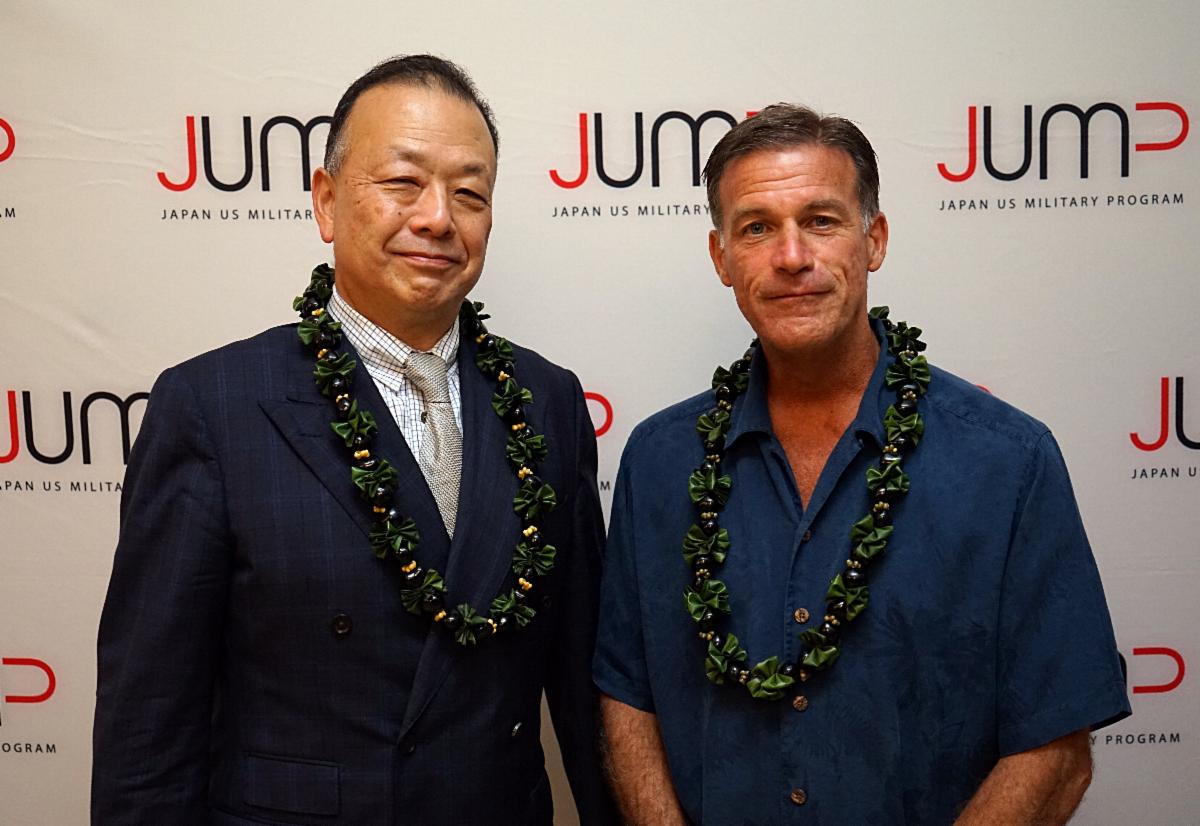
The recent JUMP event in Honolulu held on November 14 was a great success. It was held in-person for the first time in three years due to COVID-19. Roughly 200 people attended the event at Consul General Aoki’s beautiful residence. I would like to offer sincere appreciation to Admiral John C. Aquilino, Commander of the United States Indo-Pacific Command, for delivering a keynote speech that pointed out the importance of continuously strengthening the bilateral security alliance to meet challenges of common threats to the two nations.
Photo: Dr. Satohiro Akimoto and ADM John C. Aquilino
| |
Pacific Islands Maritime Domain Awareness Program: Roundtable in Washington, D.C. | |
|
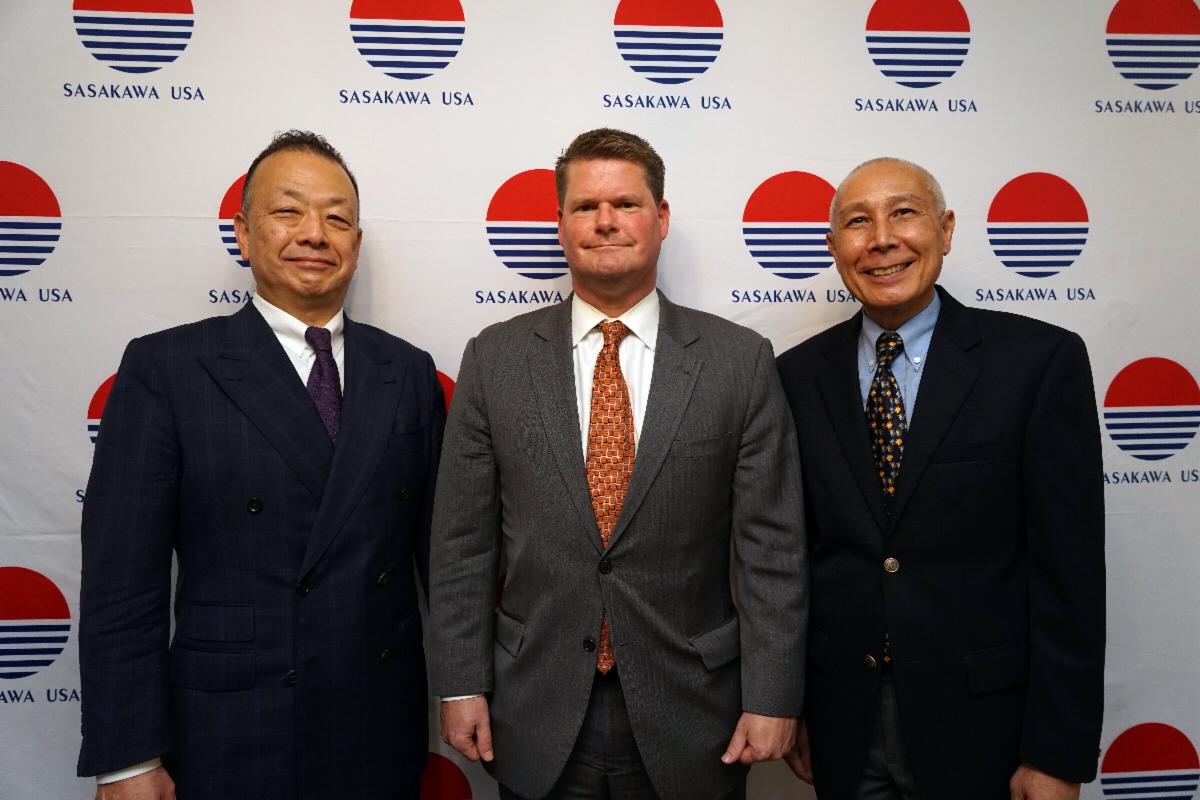
On November 1, Sasakawa USA held its Pacific Islands Maritime Domain Awareness (MDA) roundtable dialogue in Washington, D.C., led by the Hon. Randall G. Schriver, Director of the Pacific Islands MDA Program and Advisory Committee Member of Sasakawa USA, and Chairman of the Board at the Project 2049 Institute. The dialogue welcomed 40 participants from various public and private sectors from the U.S., Japan, and the Pacific Islands. The Hon. Schriver and Dr. Alfred Oehlers, Adviser of the Pacific Islands MDA Program at Sasakawa USA, moderated the day’s engaging discussions which covered topics such as challenges in the Pacific and toolkits available for the Pacific Island countries. This was the first of two roundtable dialogues to be held, with the next in Honolulu in early 2023. A policy recommendation report will be published following the two roundtables.
The Pacific Islands MDA Program was borne out of a strong conviction that the Freely Associated States (FAS) are critical allies and partners to the United States and Japan, vital to ensuring a regional liberal order rooted in universal values such as freedom, democracy, and the rule of law in the Pacific. The program aims to make policy recommendations to the U.S. and Japan on MDA and related issues vis-à-vis the FAS.
Photo: Dr. Satohiro Akimoto, the Hon. Randall G. Schriver, and Dr. Alfred Oehlers
| |
US-Japan NEXT Alliance Initiative: Fall 2022 Conference | |
|
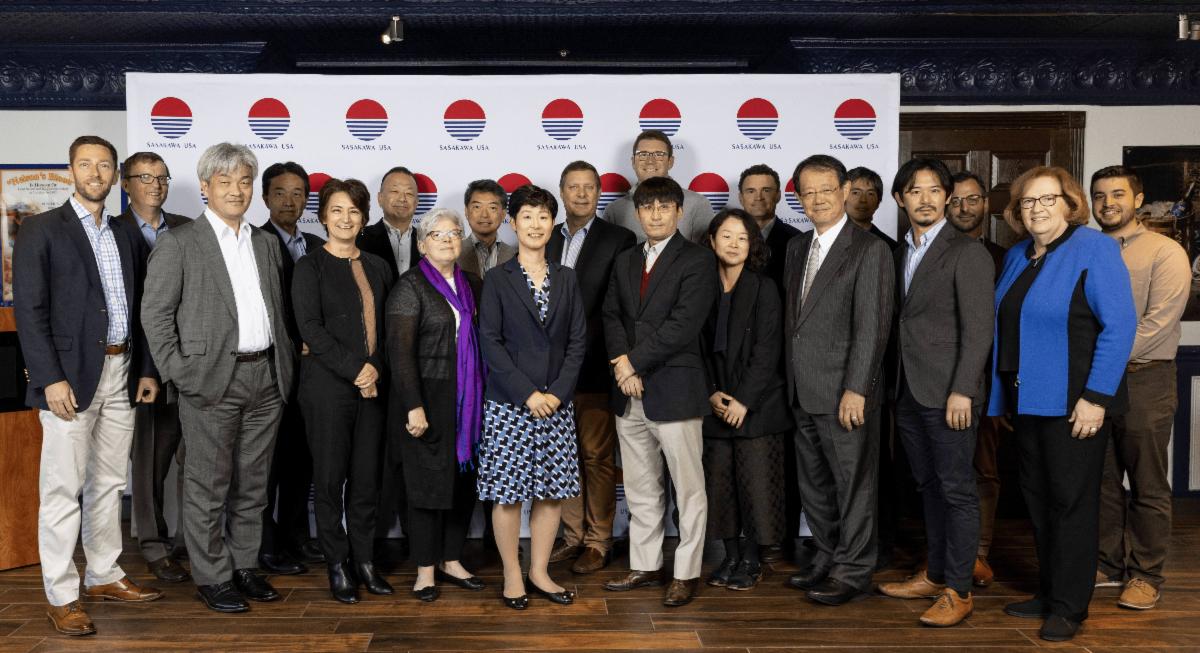
The inaugural NEXT Alliance Conference was held in Washington, D.C. and Annapolis, MD from November 4 to 7. Its focus was economic security policy coordination. The U.S. and Japanese delegations began a long weekend of discussions with briefings from U.S. government officials on different economic security topics, and then traveled to Annapolis for a two-day bilateral workshop that dove deeper into each policy area. Participants included scholars, private sector representatives, and government officials. Sasakawa USA Senior Director James Schoff would like to extend his deepest thanks to all participants for their meaningful contributions to the conference. The NEXT team will release participants’ published works on a dedicated web page later this year and is already planning the next conference in Tokyo in the coming spring.
| |
Sasakawa USA Emerging Experts Delegation (SEED): Research Briefing Provided to Embassy of Japan | |
|
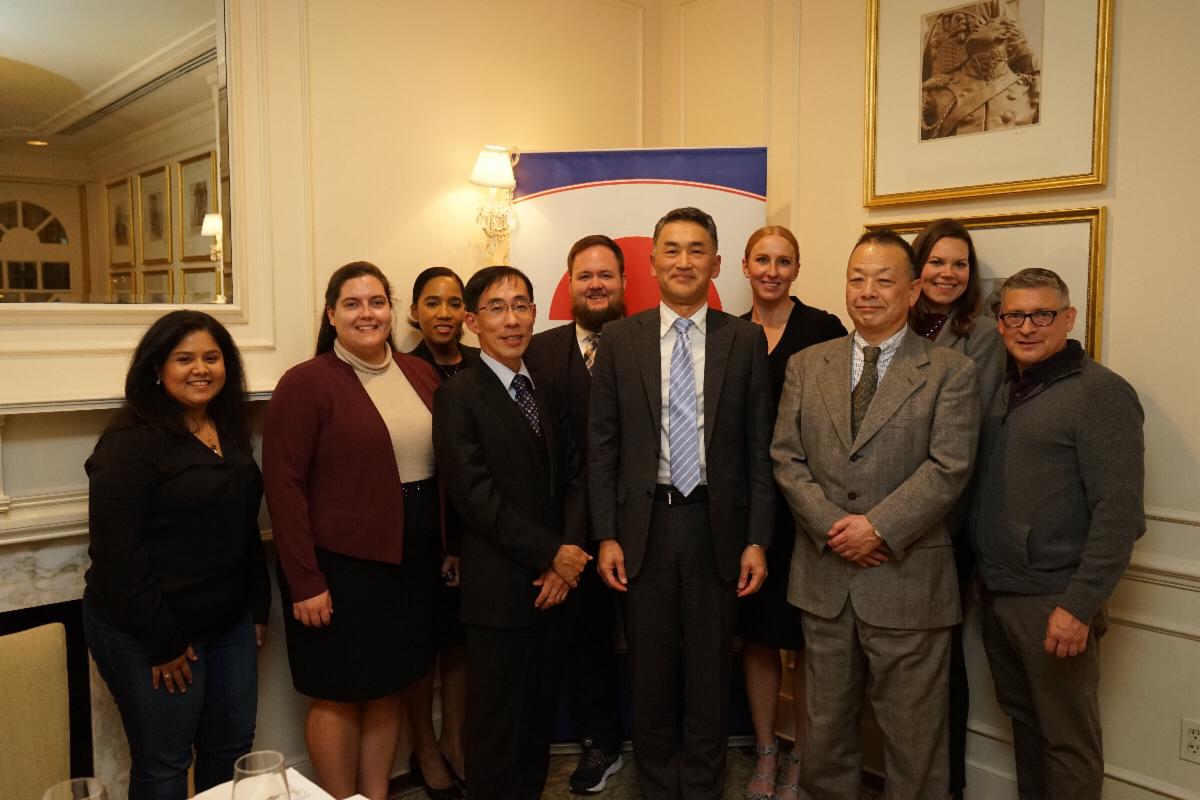
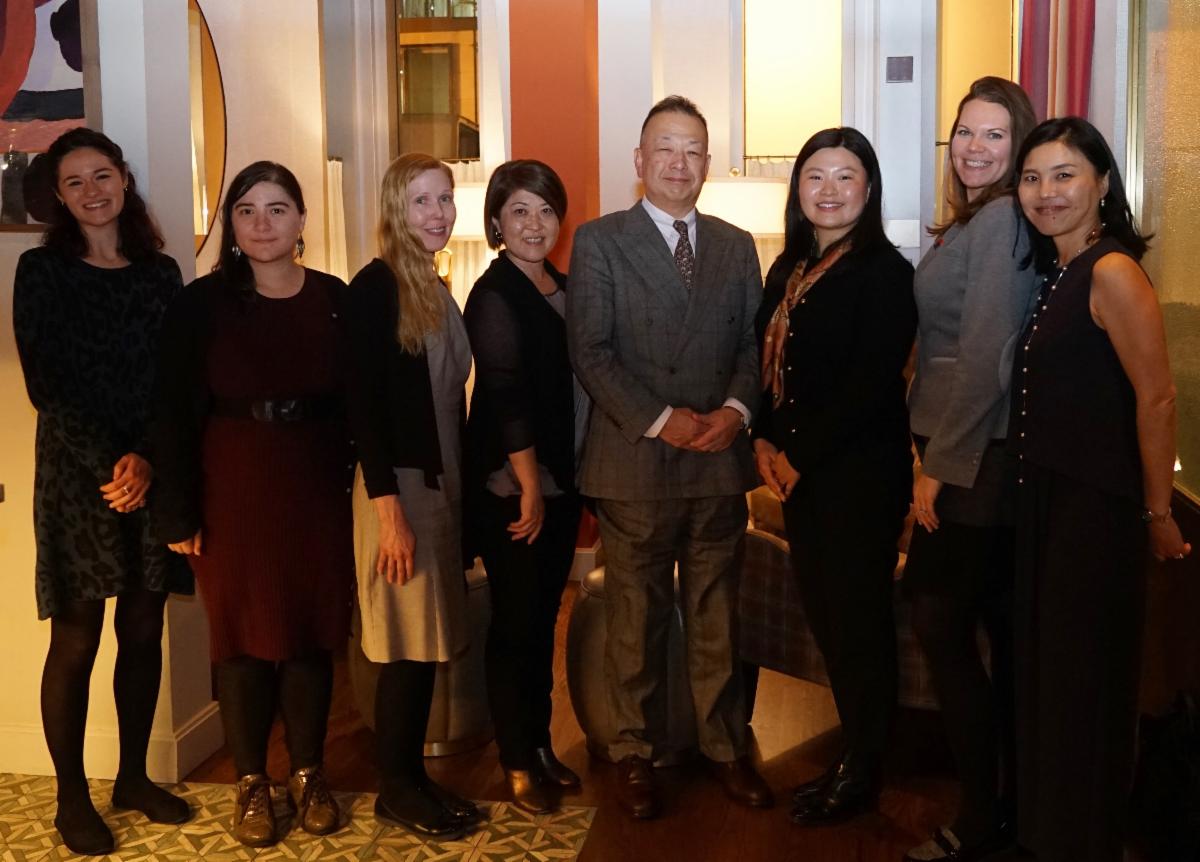
On November 9, Sasakawa USA hosted a dinner for senior officials from the Embassy of Japan and members of the public health-focused 2022 SEED. The SEED delegates provided their key takeaways from their week-long study trip in Tokyo to Ambassador Tamaki Tsukada, Deputy Chief of Mission, and Minister Tomoaki Ishigaki, Minister for Congressional Affairs at the Embassy of Japan. Ambassador Tsukada provided short remarks on the importance of public health in the context of the international order. He also recounted his responsibilities, when serving as the Director General for Global Issues in the Ministry of Foreign Affairs in 2020 when the COVID-19 pandemic first emerged. The SEED dinner continued with a lively discussion among all guests, sharing their wisdom and analyses of each nation's COVID-19 response. To learn about the 2022 SEED program, please read more here.
| |
Japan US Military Program (JUMP): JUMP Honolulu | |
|
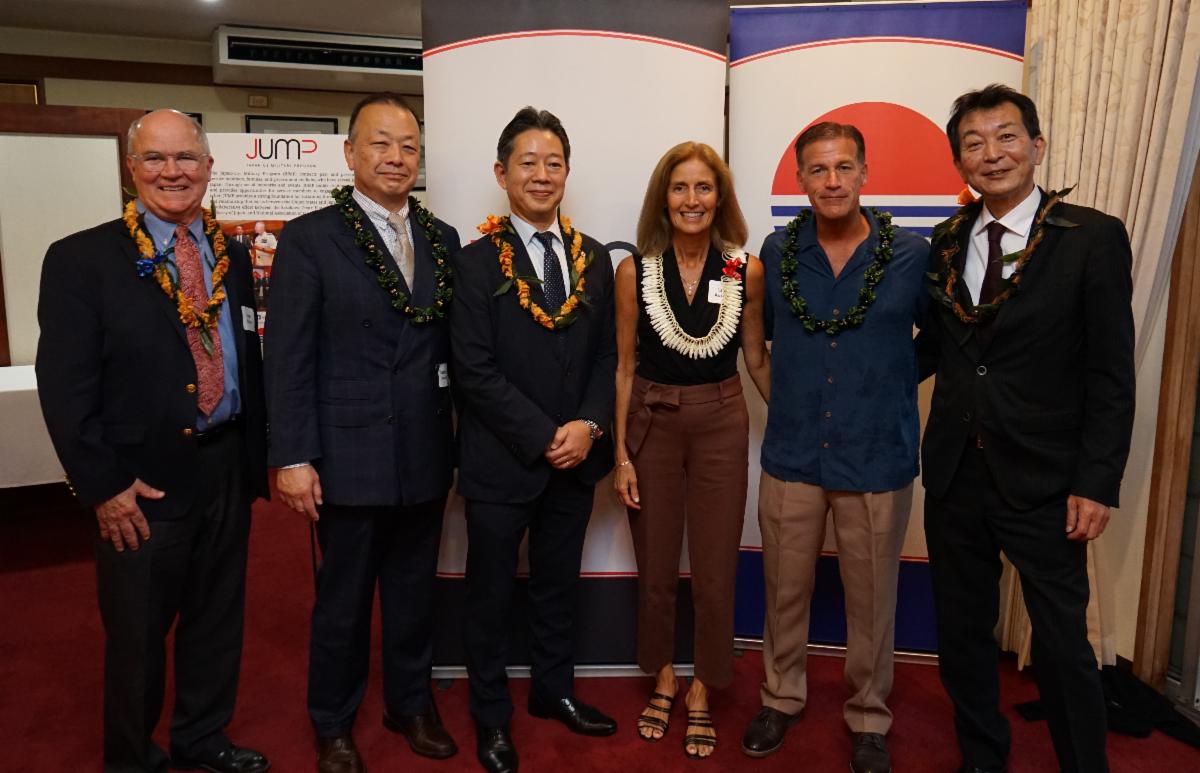
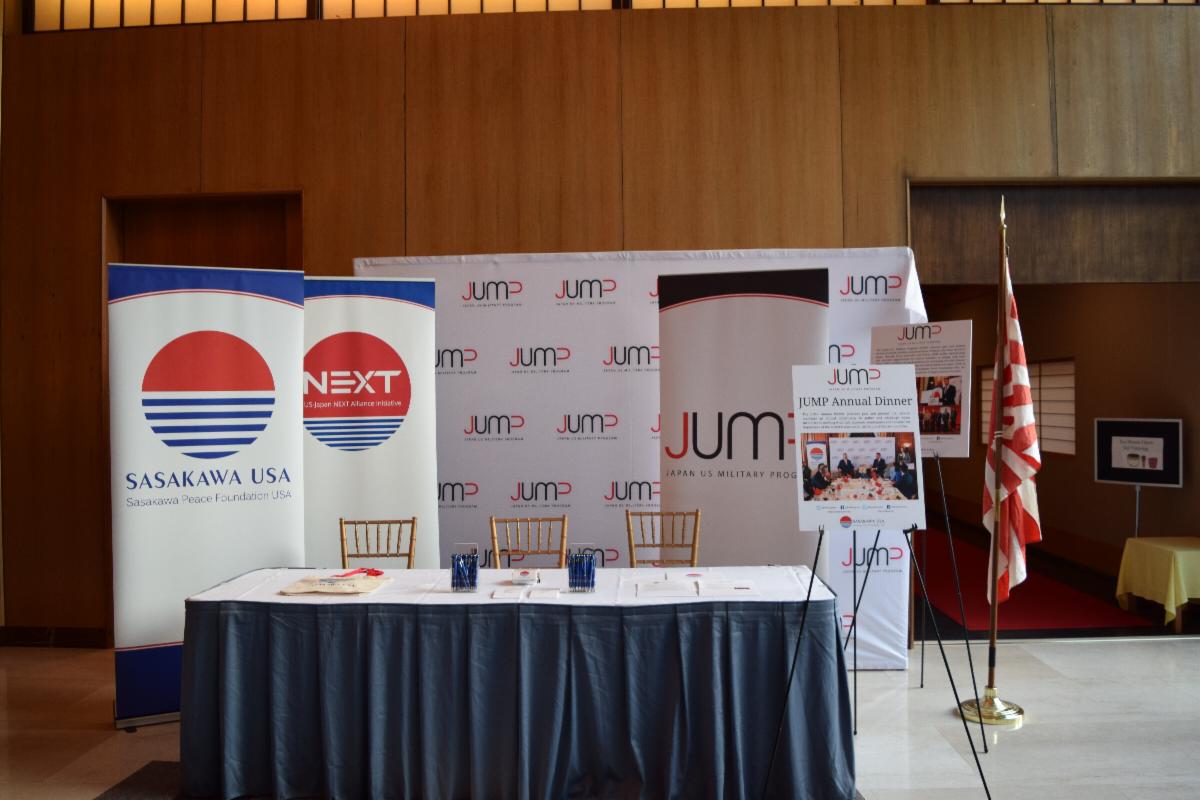
On November 14, Sasakawa USA’s Japan US Military Program (JUMP) held an event in Honolulu, HI in partnership with the Japan-America Society of Hawaii, the National Association of Japan-America Societies, the Consulate-General of Japan in Honolulu, and the Embassy of Japan. This event featured remarks by ADM John C. Aquilino, Commander of the United States Indo-Pacific Command, and Minister Motosada Matano, Minister of Political Affairs Section at the Embassy of Japan in Washington, D.C. about the increasing challenges in the Indo-Pacific and its implications for the U.S.-Japan security alliance.
Photo: (L-R) Mr. Peter Kelley, Dr. Satohiro Akimoto, Min. Motosada Matano, Mrs. Aquilino, ADM John C. Aquilino, and Consul General Yutaka Aoki
| |
Japan US Military Program (JUMP): JUMP Commemorates Japan Self-Defense Forces Day | |
|
On November 1, the Embassy of Japan in Washington, D.C. held an evening reception to commemorate the 68th anniversary of the Japan Self-Defense Forces (JSDF), where JUMP showcased its program and activities to reception guests. These guests consisted primarily of U.S. service members, members of the JSDF, and members of the military from alliance nations. The reception featured remarks from Ambassador Koji Tomita and Vice Admiral (U.S. Navy) Jon Hill, Director of the Missile Defense Agency. JUMP continues to serve as a national program to connect past and present service members, families, and government civilians who have served in Japan through social networks and grassroots events. JUMP is the only national program to do so, providing a powerful foundation for sustaining the alliance between the United States and Japan.
| |
Washington Kenkyu Group: Discussion with U.S. Association of Former Members of Congress (FMC) | |
|
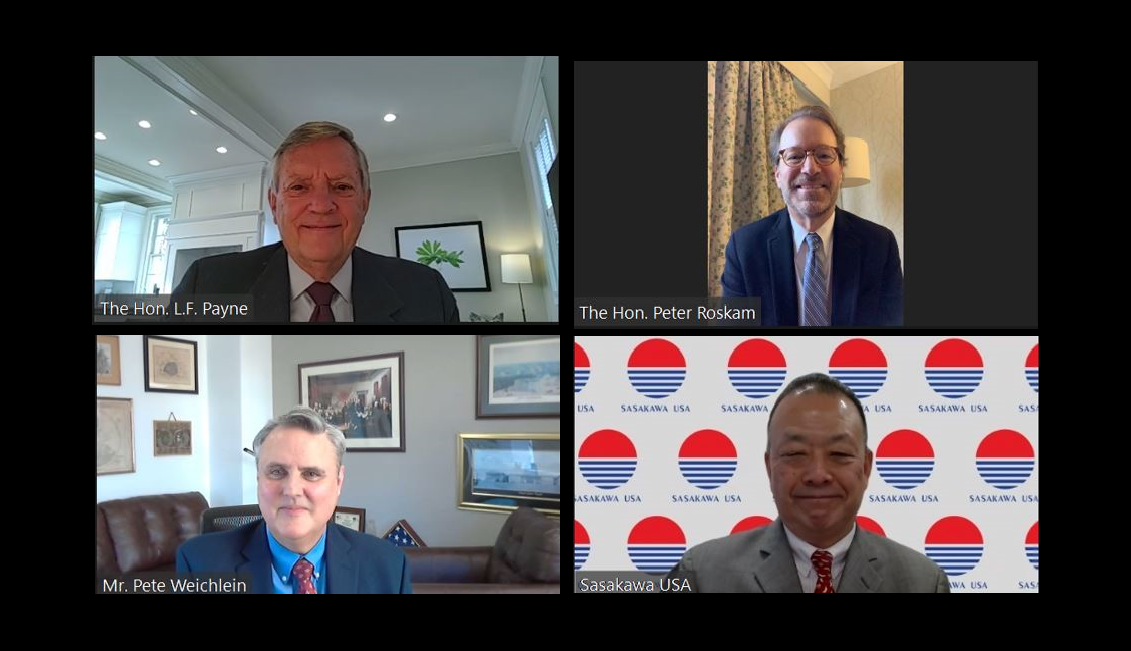
On November 10, Washington Kenkyu Group welcomed the Hon. L.F. Payne (D-VA 1988-1997, President of FMC), the Hon. Peter Roskam (R-IL 2007-2019, Sustaining Member of FMC), and Mr. Pete Weichlein (CEO of FMC). The three speakers gave remarks on the outcome of the U.S. midterm elections and discussed the implications of these results for U.S. foreign policy, the domestic policy agenda, and each party’s strategy for the 2024 presidential election. Their remarks were followed by an engaging Q&A discussion with attending Japanese representatives from the private sector, media, think tanks, academia, and government.
Photo: (Clockwise from top left) The Hon. L.F. Payne, the Hon. Peter Roskam, Dr. Satohiro Akimoto, Mr. Pete Weichlein
| |
USJETAA: Mentorship Program | |
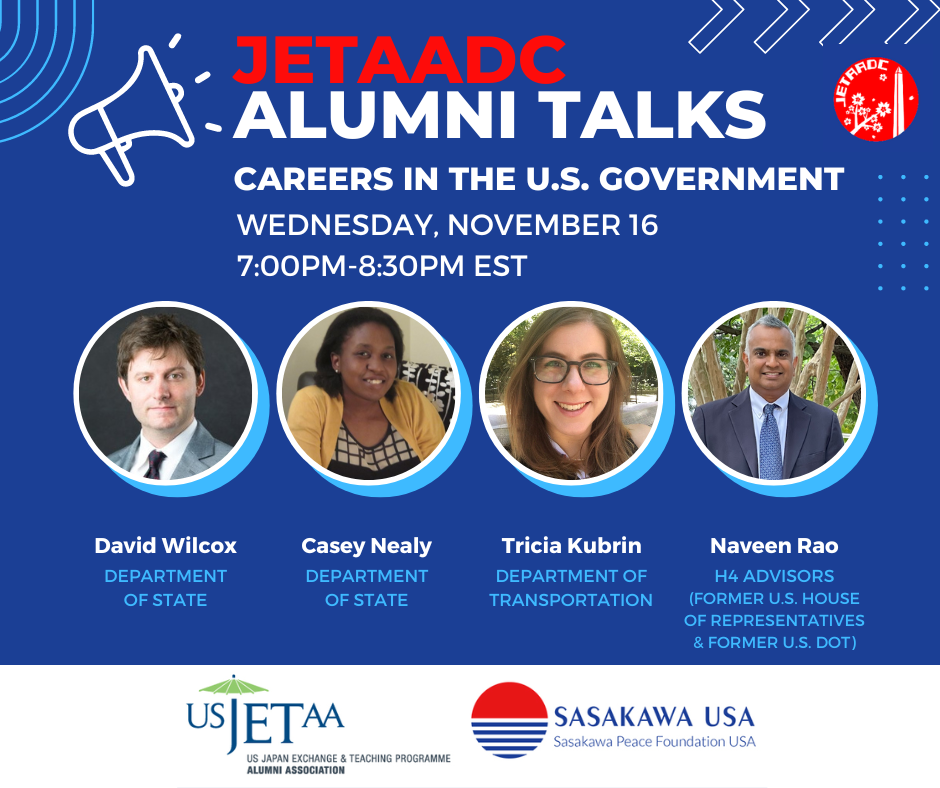
In October, the JET Alumni Association of Washington, D.C. launched the third year of its Mentorship Program for recently returned JET Alumni residing in or with plans to relocate to the DMV area. This program is funded through the Sasakawa USA-USJETAA Mini-Grant Program for JETAA Chapters and Subchapters in the United States, which provides funding and support to JETAA Chapters to deepen and expand U.S.-Japan relations in their local community. As part of the 2022-2023 Mentorship Program, JETAADC hosted a virtual discussion on November 16, “Alumni Talks: Careers in U.S. Government,” featuring a panel of experienced JET Alumni with careers in government agencies who each spoke about their career trajectory from JET to their current position. The panel included Mr. David Wilcox, Foreign Service Officer, Department of State; Ms. Casey Nealy, Program Coordinator, Department of State; Ms. Tricia Kubrin, International Aviation Negotiator, Department of Transportation; and Naveen Rao, Principal, H4 Advisors (formerly with Department of Transportation and U.S. House of Representatives). USJETAA will continue to solicit applications from JETAA Chapters for Mini-Grant projects while funding remains; for application requirements, chapter leaders can visit USJETAA’s website or reach out to contact@usjetaa.org.
| |
Dr. Satohiro Akimoto Honolulu Business Trip | |
|
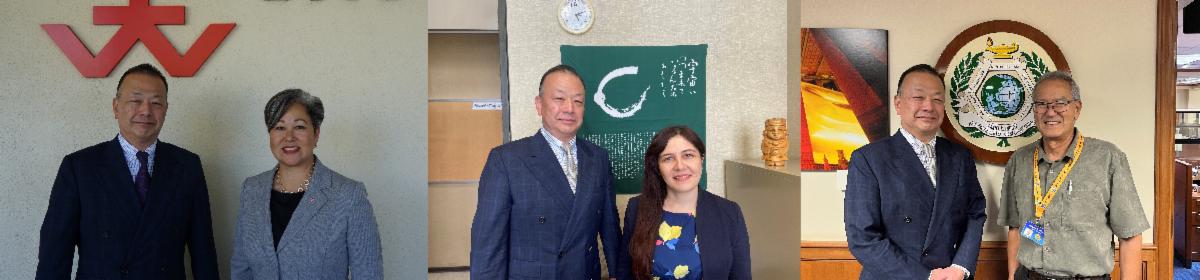
Dr. Satohiro Akimoto, Chairman and President of Sasakawa USA, visited Hawaii to co-host JUMP Honolulu in early November. During the trip, he paid visits to our partnering organizations, such as East-West Center (EWC). Sasakawa Peace Foundation supports EWC to publish “Japan Matters for America/America Matters for Japan” and Sasakawa USA supports EWC to administer the Congressional Program on U.S.-Japan Relations and the Indo-Pacific with EWC in Washington. In addition to Ms. Suzanne P. Vares-Lum, President of EWC, he met with Dr. Kristi Govella, Director of the newly established Center for Indo-Pacific Affairs, University of Hawaii; BG (Ret.) James T. Hirai, Deputy Director, and Dr. Alfred Oehlers, Professor of the Daniel K. Inoue Asia-Pacific Center for Security Studies to discuss future possible collaborations. Dr. Akimoto will visit Honolulu in February next year and looks forward to meeting them again.
Photo: With Ms. Suzanne P. Vares-Lum, Dr. Kristi Govella, and BG (Ret.) James T. Hirai
| |
Mr. James Schoff Speaks at the "Economic Security in the Indo-Pacific: Implications for US-Japan Relations” event at The Brookings Institution | |
|
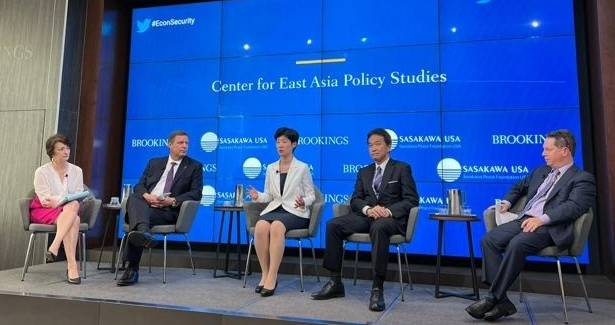
The final component of the NEXT Alliance Conference was a public facing event organized in cooperation with the Center for East Asia Policy Studies at The Brookings Institution to share conference insights and cover new ground. Senior Director James Schoff spoke alongside host Dr. Mireya Solís of The Brookings Institution, Ms. Mihoko Matsubara of NTT, Mr. Jun Kazeki of the National Graduate Institute for Policy Studies, and Dr. Scott Kennedy of CSIS. The panelists discussed the drivers and implications of the rise of economic security policies in the Indo-Pacific. They assessed how concerns with overdependence on China and China’s growing ambitions to lead in high-tech sectors have influenced economic security policies of the U.S., Japan and other regional actors. In addition, the discussion covered developments in export control policy, cybersecurity, and industrial promotion measures.
Photo: (L-R) Dr. Mireya Solís, Mr. James Schoff, Ms. Mihoko Matsubara, Mr. Jun Kazeki, and Dr. Scott Kennedy
| |
Commentary & Analysis: U.S.-European Cooperation is at a Crossroads in the Indo-Pacific (Mr. Bergmann) | |
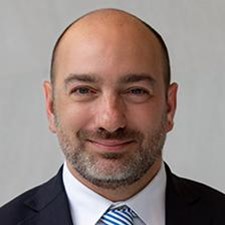
Sasakawa USA published its eighth paper in the Commentary & Analysis series on Europe’s evolving strategic vision for the Indo-Pacific. Mr. Max Bergmann, Director of the Europe Program and Stuart Center at the CSIS, authored “U.S.-European Cooperation is at a Crossroads in the Indo-Pacific” which looks at the great potential for transatlantic collaboration. Mr. Bergmann suggests leveraging the EU’s strengths such as its openness to trade; regulatory prowess; diplomatic channels; and commitment to climate, human rights and democracy. In his paper, Mr. Bergmann outlines five next steps for the U.S.-EU on economic alignment, climate, trade, diplomatic engagement plus regional security cooperation, as well as defense and security. While conflicting forces are at play for Europe, especially now with the war in Ukraine, Mr. Bergmann indicates U.S.-EU cooperation in the Indo-Pacific would shape the global economy and world order. You can read Mr. Bergmann’s paper here.
Photo: Mr. Max Bergmann
| |
Sasakawa USA Emerging Experts Delegation (SEED): 2022 SEED Trip Reports (Ms. Evans, CAPT Perdue, and Dr. Knust) | |
From July 31 to August 6, nine American public health professionals traveled to Tokyo on SEED to deepen their understanding of Japanese perspectives on the COVID-19 response and the principles and goals behind the Japanese government and medical community’s handling of the pandemic. You may find more details of their study trip here.
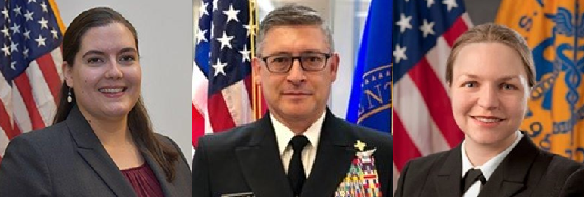
Following their engagement in Tokyo, Sasakawa USA is publishing a series of reports written by the SEED delegates on their observations and analyses of Japan’s response to COVID-19. Ms. Catherine Evans, Interdisciplinary Scientist at the Office of Strategy, Policy, Planning, and Requirements, Division of Requirements of ASPR-HHS, wrote the fourth report of the series titled, “A Capability Discussion of the Japanese and U.S. Emergency Responses to COVID-19.” The fifth report of the series, “Perspectives on Japan’s Response to COVID-19: A Report following the SEED Study Trip to Japan on August 1-5, 2022” was written by CAPT (USA) Christopher Perdue, Senior Policy Analyst at the Administration for Strategic Preparedness and Response at the U.S. Department of Health and Human Services. Dr. Barbara Knust, Asia Field Program Director for the Division of Global Migration at the Centers for Disease Control and Prevention, wrote the sixth report of the series titled, “SEED Experience Essay,” detailing her takeaways from the SEED study trip.
Photo: Ms. Catherine Evans, CAPT Christopher Perdue, and Dr. Barbara Knust
| |
The Japan Times: Can Japan at Last Do Away With Its "Postwar" Mindset? (Dr. Akimoto) | |
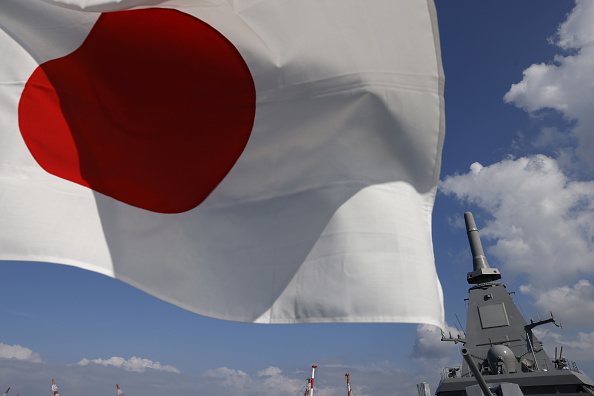
In a recent commentary in The Japan Times, “Can Japan at last do away with its 'postwar' mindset?,” Dr. Satohiro Akimoto, Chairman and President of Sasakawa USA, analyzes Japan’s current security situation in the context of rising threats in East Asia, the Russian invasion of Ukraine, and the forthcoming release of a new National Security Strategy by the end of 2022. Dr. Akimoto argues that the time is right for Japan to make drastic changes to its security policies to effectively meet new security challenges by moving away from its traditional “postwar” security mindset. He believes that Prime Minister Fumio Kishida has an opportunity to make a historic mark on Japanese foreign policy by establishing a farsighted strategic doctrine to replace the Yoshida Doctrine. You can read Dr. Akimoto’s commentary here.
Photo by REUTERS/Kim Kyung-Hoon/POOL/Anadolu Agency via Getty Images
| |
US-Japan NEXT Alliance Initiative: US-Japan Task Force on Command Relationships for New Challenges | |
|
The NEXT Alliance Initiative will host a hybrid roundtable dialogue on command relationships for new challenges facing the U.S.-Japan alliance on December 1. The event will feature U.S. Army COL Steven Barry of the National War College alongside 18 other U.S. military and non-military participants from government and think tanks. Sasakawa USA asked COL Barry to research various command and control (C2) models that the United States utilizes with different allies, so that the U.S.-Japan alliance can consider ways to adapt effectively to evolving regional threats, new military technology, and anticipated Japanese defense reforms. COL Barry will present the results from his initial research, and the group will discuss possible merits of applying some aspects of these models for a modernized version of current U.S.-Japan C2 structures. The goal is to develop ideas and useful background information to share with Japanese colleagues at a follow-on bilateral meeting. This bilateral task force will grow in size over time, culminating in a Tokyo workshop in March 2023.
| |
Japan US Military Program (JUMP): JUMP Pensacola | |
|
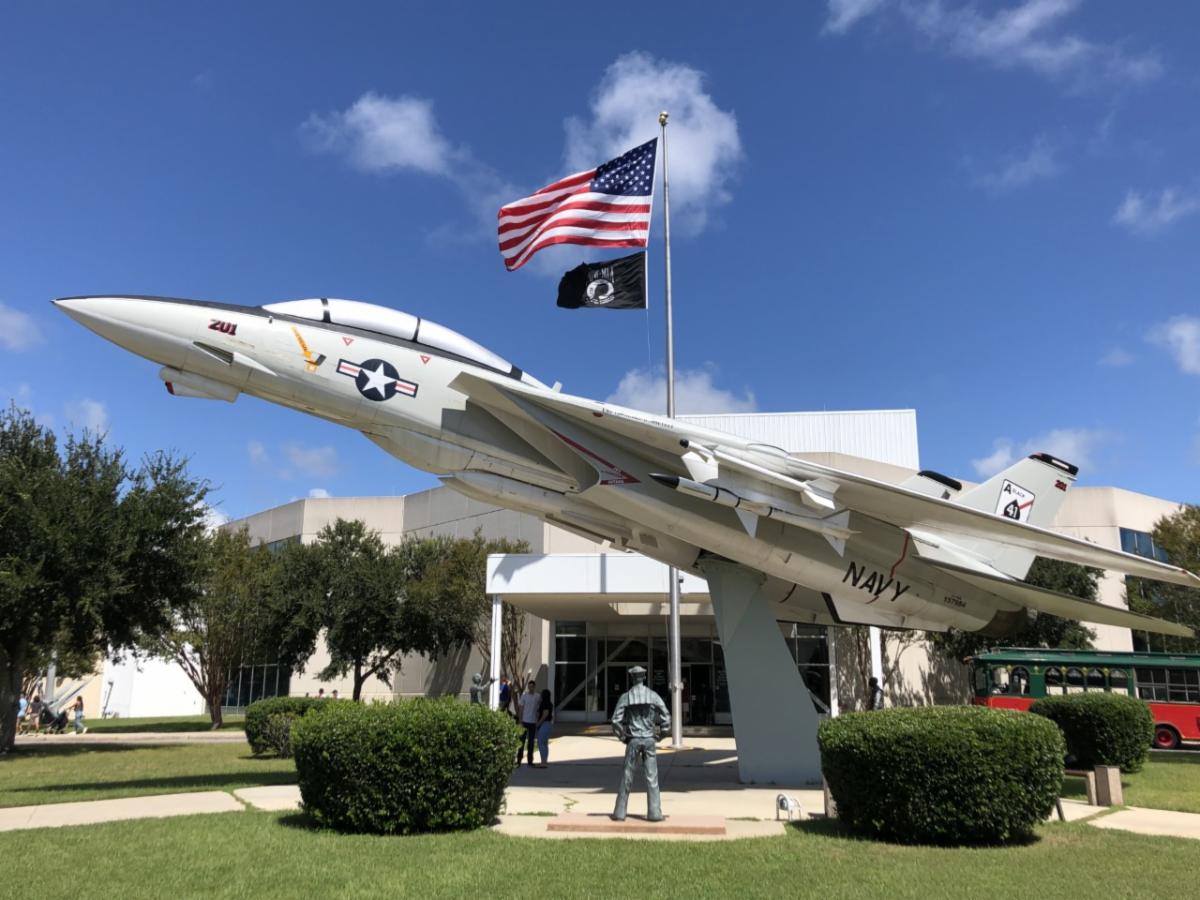
On December 3, Sasakawa USA’s Japan US Military Program (JUMP) will hold an event, "The Eighth Annual Japan US Military Program: U.S.-Japan, A Strategic Alliance for Ensuring Regional Peace and Security," in Pensacola, FL in partnership with the Japan-America Society of Northwest Florida, the National Association of Japan-America Societies, and the Embassy of Japan. This event will include featured remarks on the U.S.-Japan security alliance from Vice Admiral John Bird (USN, Ret.), Rear Admiral Kyle Cozad (USN, Ret.), Captain Hiroyuki Sano (JMSDF), and the Hon. Kazuhiro Nakai, CG of Japan in Miami, as well as a cultural performance.
| |
Congressional Program on U.S.-Japan Relations and the Indo-Pacific (CPUSJ): Now Accepting Applications | |
|
Applications for the Winter 2023 CPUSJ are now open! In partnership with the East-West Center (EWC) in Washington, this program engages Congressional staff in a series of seven interactive discussions held bi-weekly on the Hill. Speakers will come from government agencies, think tanks, universities, and other policy institutions. Session topics are set to include: The U.S.-Japan Alliance as the Cornerstone of Indo-Pacific Peace, Security, and Stability; U.S.-Japan Technological Partnership and Competition; Economic Challenges & Areas of Cooperation; U.S.-Japan Frontier Defense and Technology Cooperation; Japanese Politics; U.S.-Japan Engagement with ASEAN; as well as Great Power Competition. The program runs from February to March 2023. For additional program details and application, visit here. Applications will be considered on a rolling basis through 11:59 PM EST on January 9, 2023.
| |
Sasakawa USA Holiday Dinner | |
|
Like other organizations, 2022 has been quite a year for Sasakawa USA. Although many challenges were presented, Sasakawa USA remained positive and in good spirits. To thank the team for their hard work throughout 2022 and to celebrate the holiday season, Sasakawa USA hosted a holiday dinner. Staff gathered and enjoyed fun conversations over a delicious meal. Cheers from our team to all of you, our friends - Dr. Satohiro Akimoto, Ms. Misa Imanaka-Miller, Mr. James Schoff, Ms. Shanti Shoji, Ms. Kathryn Bubolz, Ms. Isabelle Burke, Mr. Erim Gulum, Ms. Eliya Harnood, Mr. Naritada Miura, Ms. Izumi Swarts, Ms. Yoshiko Takahashi, Ms. Abigail Williams, and Ms. Chie Zuniga.
| |
|
Sasakawa Peace Foundation USA
1819 L Street, NW
Suite 300
Washington DC 20036
202.296.6694
www.spfusa.org
| | | | |