Lea nuestro boletín en español

Make a Valentine's Day Sensory Bin

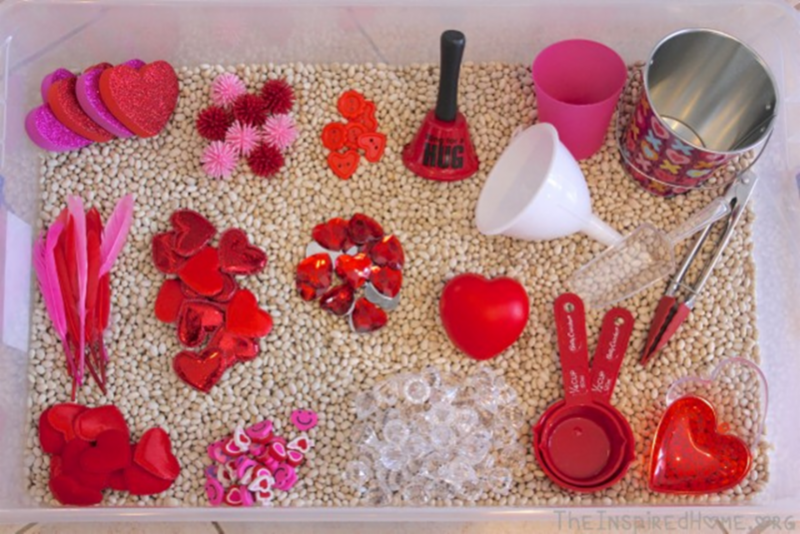
How do you explain the color red to a child who is blind or has low vision, so it has meaning? You and your child can explore a Valentine’s Day sensory bin, filled with objects that are the color red.


A sensory bin is a storage tub or dish pan filled with objects you can touch, smell, listen to, or even taste. Cover the bottom of the pan with dried white beans or rice to provide contrast and a smooth texture to run your hands through. To experience the bin, encourage your child to touch the objects in the bin, pick them up, and together, talk about their color, their weight, or their texture.


As you explore the bin together, take turns between letting your child explore quietly on their own and talking to them about what they’re doing. “You found the bumpy ball! You’re holding the red heart – it’s so soft. Bang, bang, bang on the bowl – that’s a loud sound! You put the cups IN the bowl!”


Learn how to make a Valentine’s Day sensory bin HERE. 


Bake Mini Jam Heart Pies

These adorable pies will warm little hearts and hands on Valentine’s Day! Rolling, patting, and crimping store-bought pie dough will help your child build fine motor skills. With the leftover dough you can cut out pie-crust hearts with cookie cutters, sprinkle them with cinnamon and sugar, and bake them in the oven. Count the number of hearts you’ve made. Are there enough for everyone in your family? Click HERE for the recipe.


Ask the Expert -- How Do I Explain Colors to My Child?

Valentine’s Day is almost here, and you might be seeing a lot of red! Hearts are red and so are many Valentine’s Day cards and candy at the grocery store. In fact, every holiday seems to have its own color. Pink and yellow for Easter, red and green for Christmas. And it’s not just seasonal. Colors are everywhere in the sighted world. How do you explain colors to a child who is blind or has low vision, so they have meaning? Here are five tips from Deborah Kent with the National Braille Press.


1. Never Be Afraid to Talk About Colors.

Talking about color is not upsetting to your child, even though it may be troubling to you at first. If your child has never seen color, they don’t miss it — but your child is bound to be curious. Encourage that curiosity!


2. Refer to Color in Everyday Conversation.

Help your child understand that color is an aspect of nearly every object and substance in the world. You can say: "Here's a nice red apple," or "Put on your pretty green wool mittens." When you ask, "What color is your coat," your child will proudly say, "It's blue!"


3. Think About Color as Information.

"Roses are red, violets are blue . . ." Even though a child who has never seen cannot understand color in the same way, they can learn what color objects are in the world. On Halloween, your child can easily learn that pumpkins are orange. But don't go crazy! Knowing what color every toy in their toy box would be boring!


4. Attach Emotions and Feelings to Color.

Help your child understand color by relating it to their other senses. You might describe red as a hot, loud color; white as smooth and quiet; black as shiny; or blue as the notes of a saxophone. A blind blogger once wrote, “Yellow is buttery and rich, like sunshine on your face.”


5. Save the Subtleties of Color for Later.

Explain the subtleties of color when the child is older. Apples can be green as well as red; the sky can be blue or gray, depending on the weather; the water in a glass is colorless (clear), but the ocean "looks" blue.

Have a Seat!

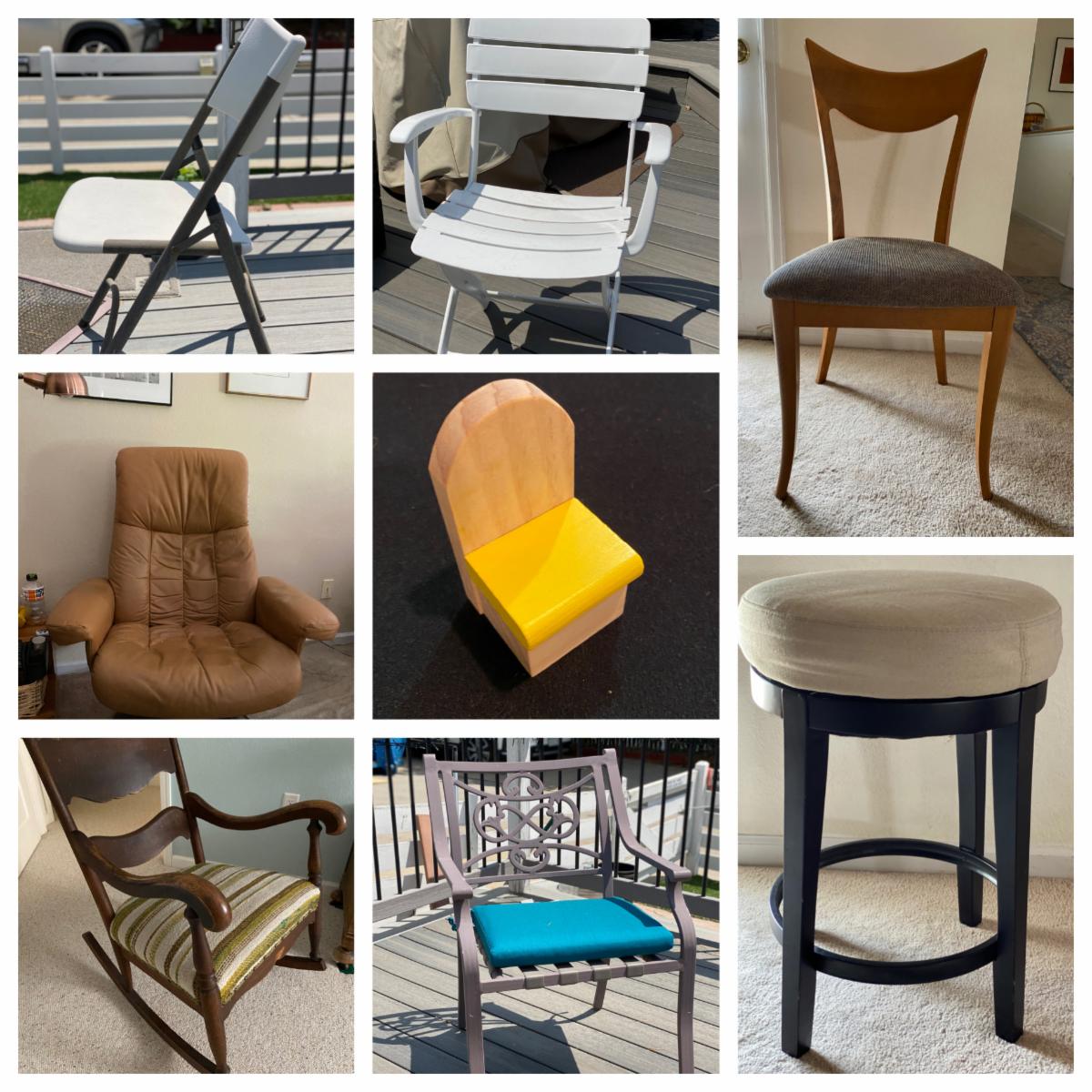
Different kinds of chairs can be found all around the house. But what makes a chair a chair? They can be used to teach your child who is blind or has low vision about many concepts besides how they’re used as seats.


There are chairs with backs, chairs with arms, stools with no backs or arms, chairs that rock, chairs that roll, and even chairs that mold to your body. Chairs are made with a variety of materials and even make a sound when you tap them or sit in a squishy seat.


With this learning experience, you’ll explore chairs in your home and like Goldilocks maybe find one that’s “just right.” Learn more HERE.


Try this concept development activity with other everyday objects in your home such as brushes, spoons, or balls. HERE are more fun ideas from Paths to Literacy.


Support A Shared Vision While You Shop for Groceries

Donating to A Shared Vision is as easy as…grocery shopping! When you link your King Soopers or City Market loyalty card to A Shared Vision, the store will donate a percentage of your grocery purchases to A Shared Vision at no cost to you.


In 2025, more than $1,000 was raised because of the families who linked their King Soopers or City Market loyalty card to A Shared Vision.


Learn how to sign up for this program HERE and support Colorado’s children who are blind or have low vision.

A Shared Vision is a 501(c)(3) nonprofit and the leading provider of in-home and community early intervention vision services in Colorado. We inspire and empower families to nurture the development of their very young children who are blind or visually impaired so that all children may discover their brightest future.
Share this email:
Facebook  Twitter  Instagram