|
GACA, The Georgia Association for Addiction Professionals
Rooted in Legacy, Growing in Hope:
46 Years of Progress in Addiction Recovery!
Professional Development Workshop
| | |
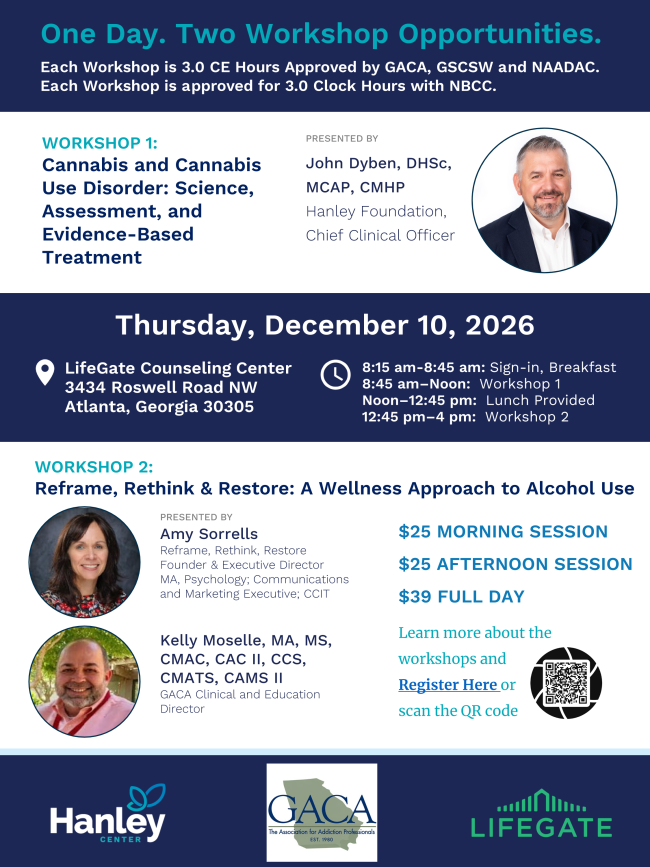
Cannabis and Cannabis Use Disorder — Science, Assessment, and Evidence-Based Treatment
Thursday, December 10, 2026
In-Person Only
3.0 CE/Clock Hours approved by GACA, GSCSW, NAADAC and NBCC.
8:15 AM Check-In, Light Breakfast and Networking
8:45 AM Workshop Begins
12:00 PM Workshop Ends/Lunch Provided
Location: LifeGate Counseling 3434 Roswell Road, Atlanta, GA 30305
Description:
This presentation examines cannabis and cannabis use disorder from the plant to the clinic. We begin with cannabis pharmacology, how rising THC potency and modern products like concentrates have changed the drug, and the endocannabinoid system that THC hijacks. Because that system guides synaptic pruning, adolescent exposure poses particular risk to a brain that does not mature until the late 20s. We review national epidemiology from the 2024 NSDUH, and the DSM-5-TR criteria and withdrawal syndrome that define the disorder. We then address cannabis and mental health, including the strengthening link to psychosis with high-potency products, before turning to what works in treatment: CBT, motivational enhancement, and contingency management. We close with screening, the treatment gap, and special populations, leaving clinicians with a current, evidence-based framework for assessment and care.
Learning objectives:
By the end of this session, participants will be able to:
- Understand the pharmacology of cannabis and the endocannabinoid system.
- Describe how cannabis affects the developing brain.
- Identify current prevalence data and DSM-5-TR criteria for cannabis use disorder.
- Apply evidence-based treatment approaches for cannabis use disorder.
| |
| |
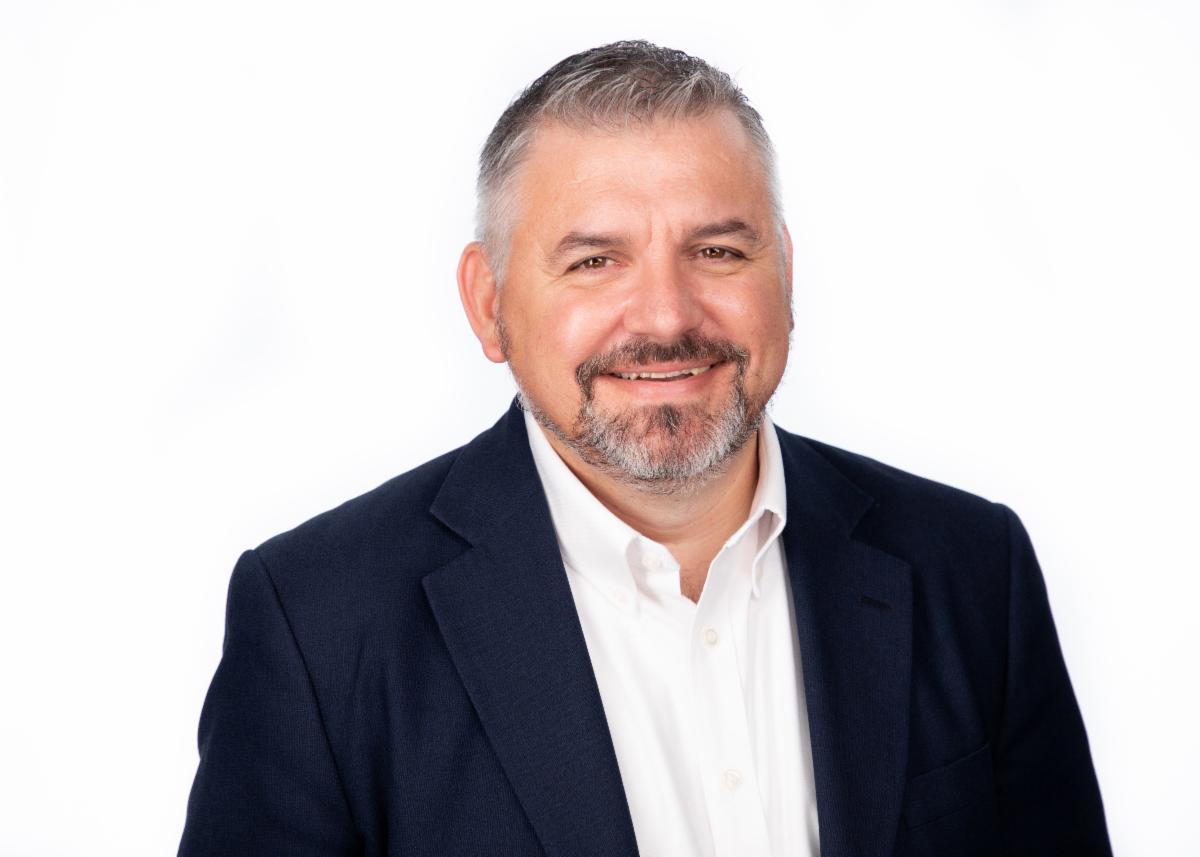
Presenter: Dr. John Dyben, DHSC, MCAP, CMHP
As Chief Clinical Officer, Dr. John Dyben oversees all Hanley Center and Headwaters clinical programs. In this role, he strategically guides program evolution, ensuring the organization continues to deliver excellence in care and the highest quality patient experience. John continually builds upon his academic expertise through research and nationwide speaking engagements on health science, spirituality, clinical ethics, and related topics.
Dr. Dyben’s academic training includes a Bachelor of Science in Psychology, a Master of Arts in Marriage and Family Therapy, a Master of Arts in Conflict Management, a Master of Science in Management, a Doctor of Health Science, and postgraduate studies in psychology, philosophy, and religion. Dr. Dyben is a Master Certified Addictions Professional and a Certified Mental Health Professional in Florida. He is an Internationally Certified Alcohol and Drug Counselor and a Substance Abuse Professional meeting all Federal DOT qualifications. Dr. Dyben is also a musician, writer, and private pilot, and he enjoys spending time with his family.
| | | | |
Reframe, Rethink and Restore: A Wellness Approach to Alcohol Use
Thursday, December 10, 2026
In-Person Only
3.0 CE/Clock Hours approved by GACA, GSCSW, NAADAC and NBCC.
12:00 PM Check-In, Lunch and Networking
12:45 PM Workshop Begins
4:00 PM Workshop Ends
Location: LifeGate Counseling 3434 Roswell Road, Atlanta, GA 30305
Description:
Encouraged and normalized by society and deeply engrained cultural norms, excessive drinking is a growing health concern, with over one-third of adults drinking excessively, prompting the CDC to call it a global health crisis. This pattern is often overlooked as moderate or social drinking, distancing it from alcoholic drinking. But according to research, upwards of 75% of adult drinkers would register as mild or moderate on the Alcohol Use Disorder (AUD) scale and never know or seek treatment. Contrary to societal views that celebrate alcohol as integral to a fulfilling, social, and healthy lifestyle, emerging research paints a different picture. The latest research reveals that drinking, even in moderation, is contributing to mental health issues such as anxiety and depression, as well as seven types of cancer. What is needed is a public awareness campaign focused on the latest psychological science, health/wellness research, and cultural trends—and not solely on addiction—to shift social norms and influence an alternative narrative around alcohol, which can change misinformed mindsets, decrease drinking behaviors, and thereby increase overall mental and physical health.
Learning objectives:
By the end of this session, participants will be able to:
- Learn how highly engrained cultural “norms” are encouraging unhealthy drinking habits and adding to a global health epidemic (CDC)
- Learn the latest science/research about the damaging impacts even moderate drinking has on mental health and physical health
- Learn best practices and resources to introduce harm reduction and wellness into your counseling practices.
| | |
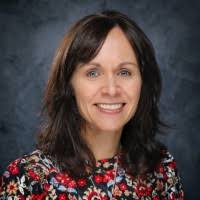
Presenter: Amy Sorrells, MA
Amy Sorrells is a communications professional with more than 25 years of digital communications, content creation, public relations, and marcomms experience spanning numerous industries including technology, healthcare, sports, and media. She currently leads global communications and marketing for Oracle’s efforts focused supporting life sciences research and technology. She joined Oracle in May of 2012, as part of an acquisition of technology startup Vitrue. Prior to Oracle, she was a long-time communications consultant, working with numerous technology, healthcare and media clients. She also served in communications roles with Fox Cable Networks, CNN, Turner Sports, and USA Track & Field. Amy received her bachelor’s degree from Auburn University and her master’s in psychology from the University of Arizona global campus. She currently resides in Atlanta with her husband and two boys.
| |  | |
Presenter: Kelly Michael Moselle, MA, MS, CAC II, CMAC, CCS, CAAC, CMATS, CAMS II
Kelly Michael Moselle, a Certified Addiction Counselor, currently serves as the Director of Training and Education for Georgia Addiction Counselors Association. Kelly formerly served as Director of Administration at LPCA of GA. During his previous experiences facilitating innovative programs in higher education for over 16 years, he oriented students to learning outside the traditional classroom, building civic and social responsibility, and overall development. He brings this same passion to working with clients in early recovery. For the past several years, he has worked in the residential recovery field and helped many college students discover their path in sobriety. He currently serves on the Board of Directors for the Frayed Edges Foundation and the Georgia School of Addiction Studies. Additionally, he is the Clinical Director for the non-profit "Reframe, Rethink, Restore, provides clinical supervision for addiction counselors and is the Chair for the Southeastern Professional Liaison Association. Whether supervising professional staff, building recovery coalitions, or working directly with individual clients or students, his dedication is the creation of an optimal experience for positive growth and recovery.
| | | |
The Association for Addiction Professionals (NAADAC) represents the professional interests of more than 100,000 addiction counselors, educators, and other addiction-focused health care professionals.
| | | |
Georgia Addiction Counselors Association has been approved by NBCC as an Approved Continuing Education Provider, ACEP No. 7302. Programs that do not qualify for NBCC credit are clearly identified. Georgia Addiction Counselors Association is solely responsible for all aspects of the program.
| | |
CE Provider Approvals for CORE Hours:
GACA Addiction Counselors: Georgia Addiction Counselors Association
National Addiction Counselors: NAADAC, The Association for Addiction Professionals
Licensed Professional Counselors: National Board for Certified Counselors
Marriage and Family Therapists: Georgia Association of Marriage and Family Therapists
Social Workers: Georgia Society of Clinical Social Workers
| | GACA, the Georgia Association for Addiction Professionals, is a not-for-profit member association that provides credentialing, training, education, advocacy and support for addiction-focused professionals in Georgia and surrounding states. Founded in 1980, GACA is a statewide association for addiction counselors and other professionals interested in addiction, prevention, treatment and recovery. | | | | |