Elmo Peeler Note-for-Note Piano Transcriptions
|
|
|
Today is the first day of February and time again for my monthly newsletter, to keep you informed of recent transcriptions and other news of the last month.
|
|
 |
Wildfire & Michael Martin Murphey
|
|
What do you get when you combine a pony, a blizzard, a young woman, and a great jazz pianist? A hit record about a ghost pony named "Wildfire", if you're Michael Martin Murphey.
Did you know that the hauntingly beautiful Piano Intro & Outro were inspired by a Scriabin Prelude?
This month we'll take a very close look at that legendary piano part in the long version of "Wildfire".
And, have you ever seen a rhythmic keyboardist who seems to play drums on a piano (or organ)? A new exercise will show you how to do it.
Plus, this month there's also a new exercise to help you better understand how to add "twang" to your playing.
BTW, to make sure that my email doesn't end up in your Spam folder, please add me to your Contact list and/or mark my email as "Not Spam".
Note that every Title Heading is clickable.
|
|
|
ALL of the Sheet Music listed on my website has been personally transcribed by me, and guaranteed to be note-for-note perfect.
Whether you:
-
have a cover band and want to get your keyboard parts exactly correct,
-
are a professional who wants to study the styles of rock's greatest keyboard players, or
-
are a hobbyist that wants to learn how to play pop/rock and great piano music,
...these note-for-note transcriptions will prove extremely helpful.
And as always, if you ever need any help, just drop me a note at: elmo@manymidi.com
|
One of Rock's Most Hauntingly Beautiful Piano Parts
|
|
|
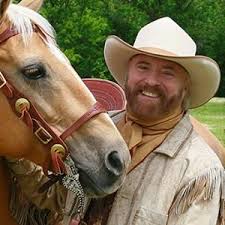
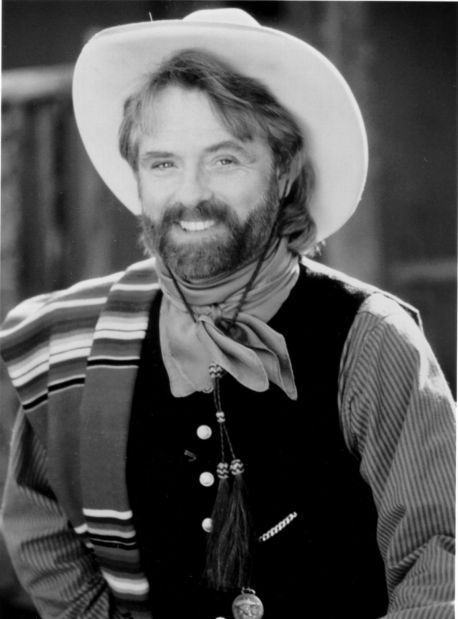
Michael Martin Murphey
|
|
Michael Martin Murphey was born in Dallas, TX in 1945, and began riding horses on his grandfather's and uncle's ranches at age six. He would sleep on his grandfather's porch under the stars, listening to his cowboy songs and stories, one of which was a Native American legend about a ghost horse rescuing people in the desert.
During these early years, he developed a special love for cowboy songs and stories. He was also an avid reader, especially drawn to the books of Mark Twain and William Faulkner. As a youth, he enjoyed writing poetry and loved listening to his uncle's old 78-RPM records, particularly the music of country and folk artists such as Hank Williams and Woody Guthrie.
In junior high school he began performing as an amateur. At the age of seventeen, he took his first "professional" music job, playing western songs around a campfire at a Texas ranch. By the early 1960s, Murphey was playing the clubs in Dallas with his own band.
After graduating from high school, Murphey briefly studied Greek at the University of North Texas, and then moved to California, where at UCLA he studied classical literature, and medieval and Renaissance history and literature, with an emphasis on poetry and creative writing. He remained almost completely self-taught as a musician.
|
|
|
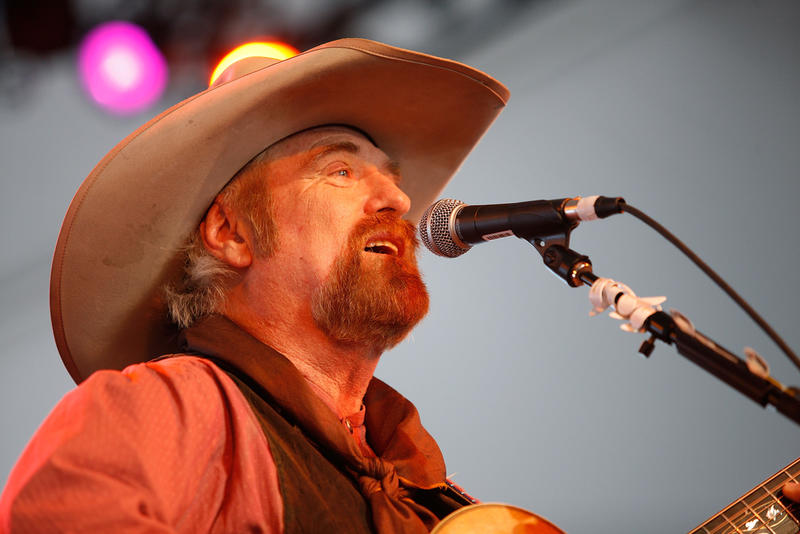
Michael Martin Murphey singing "Wildfire"
|
Soon he had made a name for himself in the Los Angeles folk music scene, and by 1964 formed a musical group with an old Texas friend, Michael Nesmith, under the name the Trinity River Boys.
Murphey's first big break came through Nesmith, who had become part of the popular television musical group, The Monkees. Nesmith asked Murphey to write them a song for the next Monkees album, and Murphey composed "What Am I Doing Hangin' Round". The album sold over five million copies.
In 1971 Murphey signed with A&M Records and released his first album, of which Rolling Stone magazine said, "On the strength of his first album alone, Michael Murphey is the best new songwriter in the country".
"Wildfire" was written
|
|
|
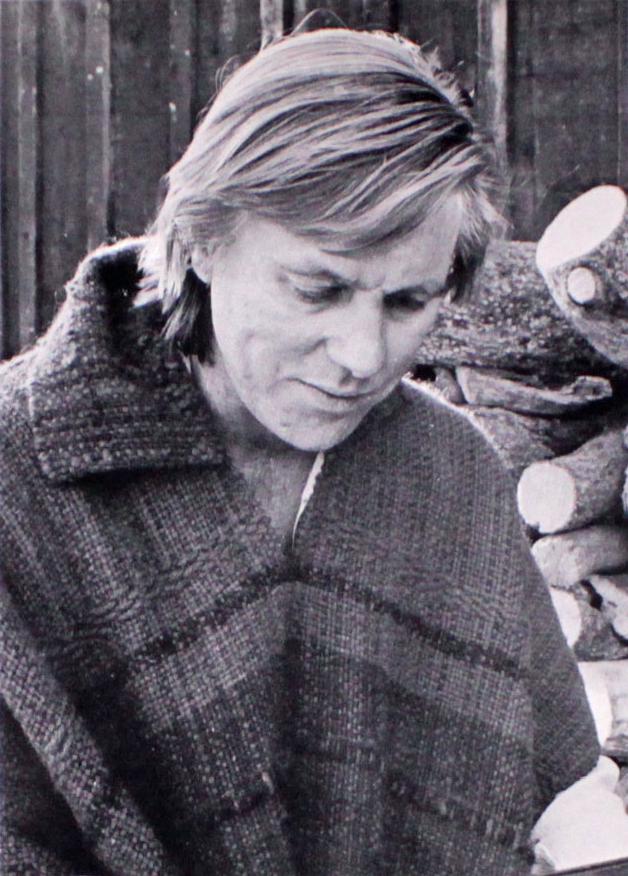
Jac Murphy, pianist on "Wildfire"
|
|
in 1972. I was working on a concept album called
The Ballad of Calico for Kenny Rogers with my friend Larry Cansler. I was in my third year of college at UCLA, but I was living in the mountains in California. I would drive down to Larry's apartment in Los Angeles and sleep on his floor, because we would work, sometimes, 22 hours a day on the album. The night "Wildfire" came to me, Larry went to bed, and I went to sleep in a sleeping bag on the floor. I dreamed the song in its entirety. I woke up and pounded on Larry's door and said, "Can you come down and help me with this song?" His wife got up and made us coffee, and we finished it in two or three hours.
"The song came from deep down in my subconsciousness: My grandfather told me a story when I was a little boy about a legendary ghost horse that the Indians talked about. In 1936, author J. Frank Dobie identified this ghost horse story as the most prominent one in the lore of the Southwest... We recorded the song at Caribou Ranch in Colorado, 10,000 feet up in the Rocky Mountains."
The haunting piano Intro and ending Coda were played by Jac Murphy, a talented Dallas jazz pianist whose Intro and Outro were inspired by Scriabin's Prelude in D-flat, Op. 11, No. 15. As Michael himself said, "It's not easy to find a pianist who can play like Jac Murphy! Jac Murphy, who had flying fingers and quick-witted improvisation, was like 'Bill Evans meets Bluegrass'."
My new Michael Martin Murphey transcription:
|
Note-for-Note Accuracy
Brand new this month is my note-for-note transcription of the Piano Intro & Outro from the long version of "Wildfire", precisely as they're played on the album release.
Michael Martin Murphey's 1975 classic hit had a beautiful, atmospheric extended piano solo Intro that set the tone for the poignant lyrics that followed. And then at the very end, the piano plays a Coda, similar (but not identical) to the Intro. The piano Intro is 32 seconds long, and the piano Outro is 38 seconds, for a total of 1:10 of hauntingly lovely solo piano.
Jac Murphy, the pianist on "Wildfire", had composed a piece of his own, "Prelude", that was 'inspired' by a Prelude by Russian Romantic-era composer Alexander Scriabin. He then used part of his own Prelude in "Wildfire" after Michael heard him playing it.
To best understand its evolution, here is the chronology of the "Wildfire" piano part (click to listen):
2) Jac Murphy composes
his own Prelude, inspired by Scriabin's piece written about 80 years earlier
3) Jac Murphy incorporates part of his own Prelude into
"Wildfire" in 1975
The Intro & Coda are long enough to be performed together as a 'miniature'. Sort of like a brief modern-day classical composition, complete with trills.
And the 16th-notes, which comprise much of it, are performed with alternating hands, Right-Left-Right-Left, making it a lot of fun to play, not just to hear.
|
February's New Exercises
- Play Drums on Piano + Twang #2
Make Your Keyboard Playing More Rhythmic
|
|
|
Learn To Play Drums on a Piano or Organ
|
|
We've all seen keyboard players that were exceptionally rhythmic, seeming almost as much a drummer as a keyboardist.
Many years ago my cousin went to a Cat Stevens' concert and raved afterward about Stevens' pianist, who, she said, "played drums on the piano".
And we've all heard Jon Lord's great rhythmic B-3 playing on Deep Purple's "Hush" and Nicky Hopkins' terrific rhythms propelling many Rolling Stone tracks.
Why is it that some keyboardists can turn their keys into rhythmic drums while many others can not?
It's simple - they understand the rhythms that a drummer plays. It's not mystical. Drummers practice rudiments (paradiddles) like pianists practice scales. And those rudiments are written down and can be learned by keyboard players.
My new "Playing Drums on the Piano" exercise takes a common drum paradiddle (LLRLRRLR) and applies it to the piano keyboard. Every single measure during the 14-bar pattern uses that particular drum rudiment to help the pianist ultimately become relaxed and comfortable with the Left-Right coordination required for very rhythmic keyboard playing.
The exercise is in three parts:
1) a 14-bar chord progression using basic triads and 7th-chords
2) the same 14-bar chord progression but harmonically richer (with 7th & 9th chords)
3) the same 14-bar chord progression (7th & 9th chords) but with a subtle difference on beat 3
Also new this month is an 11-bar exercise to further explore "twanging", the technique that Floyd Cramer introduced to Nashville during the 1950's, and the same technique used by every rock pianist from Nicky Hopkins to Billy Powell to Chuck Leavell to Paul Griffin.
Although the technique is simple, many players need just a little coaching to really understand the possibilities (3rds or 6ths twangs? what type accompaniment in the Left Hand?).
Performance Notes are included with both exercises. If you'd like to inject more rhythm into your playing, and get more comfortable playing 'twangs', these exercises will help.
(BTW, if you need other good, effective technical exercises, please check out
the other 58 exercises available.)
BTW, here are my other Paradiddle exercises, plus my other 'Twang" exercise:
|
What Recording Would You Like To See Transcribed?
'Custom' (to-order) transcriptions can be expensive because of the time required. And when a recording is particularly long and/or complex, the expense can be too much for one person.
if you'd like to help 'crowdfund' a transcription of the classic electric piano part in B.B. King's "The Thrill Is Gone", played by Paul Harris, the same pianist on Bob Seger's "Against the Wind". This is an historically important track that needs to be transcribed precisely. The goal is $595, of which $100 has already been pledged.
My 'CrowdFunded' transcriptions to-date:
|
When you hear a new song that you like, can you pick out the chord progression just by listening, without referencing a keyboard? When you hear old favorites with licks you've loved for years, do you know exactly what those licks are, and exactly how they're being played?
It's a pretty basic fact: the better one's ears are, the better one can play. The very best players often were born with perfect pitch, but one doesn't need perfect pitch, one just needs excellent relative pitch.
And relative pitch can be taught by a method of 'interval associations'. If you have $63,000 for a year at Eastman, you can get halfway there - it's a two-year course at Eastman.
If you don't have the time or money to spend a couple of years at a world-class conservatory, I'll be happy to help you develop essential hearing skills in the comfort of your own home via Skype lessons. We'll go at whatever speed is the very best for your needs.
I've had the good fortune to have
toured the world playing keyboards and arranging/conducting for these Rock and Roll Hall of Fame Artists:
- The Beach Boys
- Rod Stewart - All 'Unplugged' concerts
- Ricky Nelson - Stone Canyon Band
And I've also won classical piano competitions performing Beethoven,
Rubinstein a
nd
Saint-Saens' Piano Concerti. See me playing here. "Josie's Boogie" is quite the virtuoso dramatic mino
r-key showpiece; check out the ascending double-octave run at the ending... :)
Thanks to the internet, I can help you play piano better - rock or classical, by ear or by note.
Perhaps all you need is just an hour on Skype discussing rock keyboards.
If you'd like to improve, drop me a note
at
info@manymidi.com. Tell me three things:
1) Your musical background
2) Where you are currently, musically-speaking
3) Your musical goals
My students include members of:
- Weezer (Rivers & Brian)
- Vampire Weekend (Ezra & newest addition, Greta)
- Incubus (Mike)
- The Strokes (Nick)
- Rooney (Robert)
- Jason Schwartzman ("Mozart in the Jungle")
- Courteney Cox
|
|
|
|
|