|
In this edition:
- Government shutdown ends - what's next?
- Status of affordable housing and community development funding
- Continuum of Care funding threatened
- Housing reforms under consideration in Congress
- State policy updates
| | |
Government Shutdown Ends,
But Uncertainty Remains
| | |
After the longest government shutdown in history, Congress enacted legislation to open the government back up on November 12th. The bill signed into law by President Trump keeps all agencies open through January 30, 2026, and provides full-year funding for some agencies, including the U.S. Department of Agriculture (USDA)and its housing programs.
Critically, Congress also included language requiring agencies to rehire federal employees laid off during the shutdown and bars any Reductions in Force (RIF) through January 30th. As readers of Policy Pulse will know, the CDFI Fund’s entire staff had been laid off during the shutdown. They are now back to work.
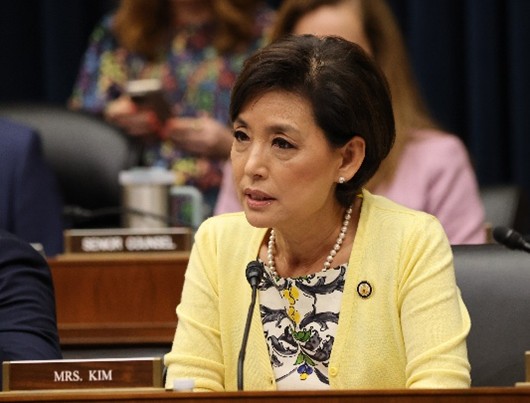
| | Rep. Young Kim (R-CA-40) and
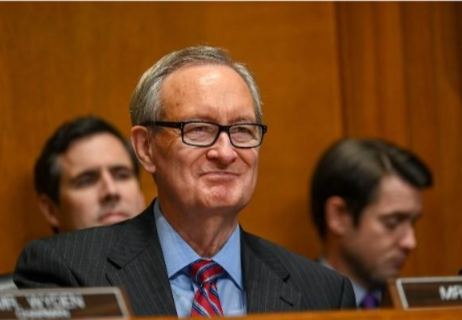
Sen. Mike Crapo (R-ID) | | |
It is worth noting the remarkable bipartisan support that emerged from Congress on behalf of CDFIs and the CDFI Fund in response to the RIFs. More than 100 Republicans from both the House of Representatives and the Senate sent a letter to Office of Management and Budget Director Russell Vought reaffirming broad Republican support of the CDFI Fund and urging the Administration to carry out its statutory obligations. Led by Senator Mike Crapo (R-ID) and Rep. Young Kim (R-CA), the letter noted the critical role of CDFIs in spurring affordable housing and how Capital Magnet Fund (CMF) dollars administered by the CDFI Fund often pair with Low-Income Housing Tax Credit (LIHTC) developments. Congressional Democrats also sent a letter urging an end to the RIFs.
| | Status of Affordable Housing and Community Development Funding | | |
While the majority of federal agencies are on another CR, the final legislation opening up the government included a three-bill “minibus” that funds agencies through Fiscal Year 2026 (ending Sept. 30, 2026), including the U.S. Department of Agriculture. That means that Supplemental Nutrition Assistance Program (SNAP) funds, the Special Supplemental Nutrition Program for Women, Infants, and Children (WIC), and rural development programs are funded for the rest of the Fiscal Year.
Congress funded USDA at roughly the same levels as the last fiscal year and significantly higher than the President’s budget request from earlier this year. The Section 515 Multifamily Housing Direct Loan Program will receive $50 million, $10 million or nearly 17 percent less than FY25, while the Section 521 Rental Assistance Program will receive nearly $1.715 billion, an increase of nearly seven percent, or more than $107 million, from FY25. This amount will be used to cover renewals of existing rental assistance contracts. The bill also authorizes USDA to continue decoupling rental assistance from Section 515/516 properties with expiring mortgages, increasing the number of maximum eligible units to 5,000 (up from 1,000 in FY25).
For more on USDA funding levels, check out NCSHA’s summary.
| | |
What's Next?
Congress has a packed agenda in December, including the ongoing debate on expiring Affordable Care Act (ACA) tax credits and the must-pass defense bill. Senate Majority Leader John Thune (R-SD) has also stated his desire to move another “minibus” appropriations package, but no agreement has been reached.
Congress has until January 30th to pass either full-year spending bills or another Continuing Resolution for the remaining funding bills.
A potential candidate for inclusion in the next minibus bill would be the Transportation-HUD (THUD) spending bill. The Senate Appropriations Committee’s THUD bill would retain level funding for the HOME program and provide higher funding levels than FY25 for rental assistance. The Senate’s bills would still need to be reconciled with the House’s bills, however. The House has already passed its funding bills.
It is less likely that Congress will move on the Financial Services and General Government (FSGG) bill, which funds the CDFI Fund. Last week, the Senate Appropriations Committee released its FSGG bill, which would provide level funding for the CDFI Fund. The House has already passed its bill, which would provide $276.6 million for the CDFI Fund.
| | Continuum of Care Funding Threatened | | |
HUD recently released a Notice of Funding Opportunity (NOFO) for the Continuum of Care (CoC) program that advocates warn will put more than 170,000 households at risk. The changes include a cap of 30 percent on permanent supportive housing (PSH), which currently accounts for 87 percent of all funding. CoC funds are important for many supportive housing developments financed by the Low-Income Housing Tax Credit program.
Advocates are pushing for language in the upcoming THUD appropriations bill to renew expiring grants. Some Republicans in Congress have expressed concern with the NOFO. Advocacy will continue in the weeks ahead.
| | Housing Reforms Under Consideration in Congress | | |
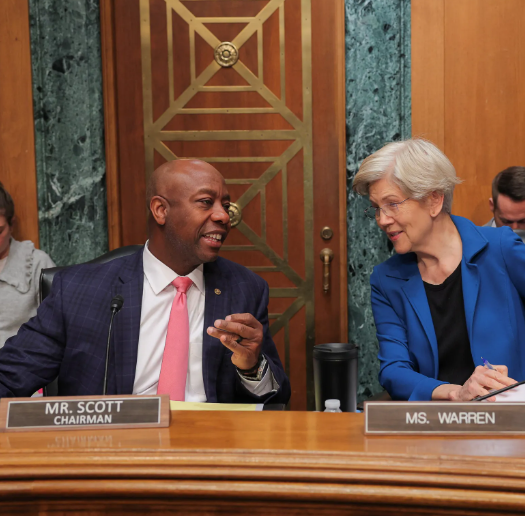
Although dysfunction is the norm in Washington, there has been bipartisan interest in moving legislation to address the housing crisis. Last month, the U.S. Senate passed the Renewing Opportunity in the American Dream (ROAD) to Housing Act, which was the first bipartisan housing bill to be approved by the Senate in more than a decade. The ROAD to Housing Act is a result of a bipartisan agreement reached by the leaders of the Senate Banking, Housing, and Urban Affairs Committee, Senators Tim Scott (R-SC) and Elizabeth Warren (D-MA). The legislative package includes a wide variety of measures aimed at increasing housing affordability, boosting supply, reducing regulatory barriers, and other factors contributing to our nation’s housing challenges.
Notably, ROAD to Housing includes several provisions that would be beneficial for developments supported by the Low-Income Housing Tax Credit:
- Includes the Community Investment and Prosperity Act, which raises the cap on banks’ public welfare investments (like affordable housing) from 15% to 20%.
- Permanently authorizes the HOME program, adds flexibility for localities, streamlines inspections, and expands nonprofit eligibility – provisions from the HOME Investment Partnerships Reauthorization and Improvement Act (S.948/H.R.2031)
- Removes the RAD cap and makes the program permanent, along with several reforms.
- Streamlines National Environmental Policy Act (NEPA) reviews for small and infill housing projects.
- Makes several changes to support development in rural areas, including permanent decoupling of USDA rental assistance from maturing mortgages and requiring USDA and HUD to work together to combine environmental reviews and inspections.
At the same time, the House Financial Services Committee's Subcommittee on Housing and Insurance, led by Reps. Mike Flood (R-NE) and Emanuel Cleaver (D-MO), has taken its own less comprehensive approach on housing, largely focusing on reauthorization of the HOME program. The House’s HOME Reform Act also includes several beneficial provisions, including an explicit exemption of HOME-supported projects from Build America, Buy America (BABA) requirements, streamlining of National Environmental Policy Act (NEPA) reviews, and other reforms.
The path forward for housing policy reforms is uncertain. The ROAD to Housing Act was included in the Senate’s defense bill, called the National Defense Authorization Act (NDAA). Reportedly, Republicans in the House and Senate are at odds over what financial policy provisions to include in the defense bill, which has to be enacted by the end of the year. That disagreement puts the fate of ROAD to Housing and some pro-CDFI amendments up in the air.
| | |
Michigan Budget Passed
The Michigan Legislature passed the state’s budget behind schedule this year, partially due to divided government and negotiations for road funding. As the fiscal year start date of October 1 approached, the legislature passed a one-week continuing resolution and passed a full budget that was signed into law October 8. The final budget was $5 billion below the Governor’s recommendation and $3 billion less than the previous budget. Cuts were made throughout the budget to make revenue-neutral investments in road funding.
Cinnaire and our partners in the Michigan and Detroit CDFI Coalitions advocated for continued investment in the state CDFI Fund and are pleased to see the state provided an additional $5 million appropriation to the program. The state’s Housing and Community Development Fund (HCDF) was targeted for elimination in early versions of the budget. Cinnaire and other organizations successfully advocated for the preservation of the $50 million appropriation to HCDF. The state did not provide any new funding for Missing Middle housing after providing $110 million in the previous budget.
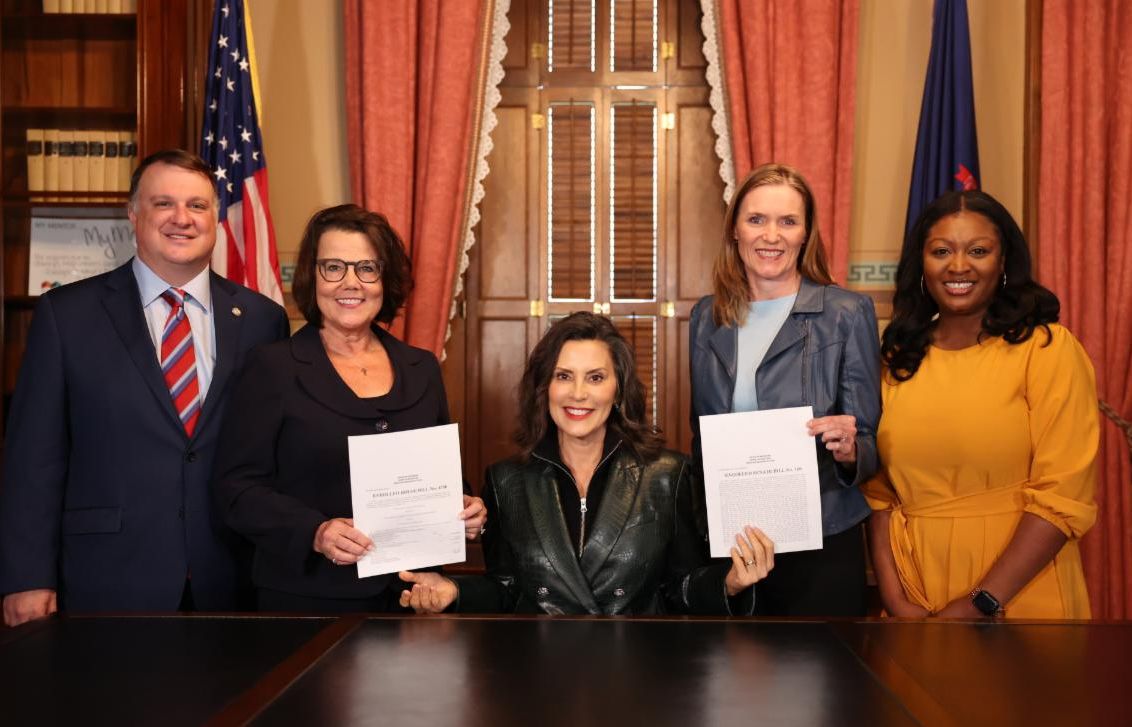
As part of the budget negotiation process, the state eliminated the SOAR program that was used to incentivize major economic development. In response, Governor Whitmer, Speaker Hall, and Senate Majority Leader Brinks are committed to working on economic development legislation moving forward.
| |
Delaware Budget Hearing
Cinnaire joined members of the Delaware Affordable Housing Coalition in urging the Delaware Office of Management and Budget to increase the Housing Development Fund in the Governor’s FY 2027 Recommended Budget to meet the affordable housing needs of the state and help projects weather a difficult environment. Cinnaire’s comments highlighted our partnership with the Delaware State Housing Authority on the Catalyst Fund, the growing challenges for affordable housing development to meet the housing needs of Delawareans, and the need for more capital sources to maximize the production of affordable housing.
| |
Michigan Economic Development Legislation Introduced
Michigan House Republicans introduced the Real Jobs Credit Act (RJCA) that will be a main component of the legislature's focus on economic development the remainder of the year and early next year. The RJCA provides a tax credit for new jobs created meeting certain criteria.
The heart of the plan is creation of a tax credit equal to 50% of the state income tax withheld by the qualifying jobs for up to 10 years. The new jobs would have to pay up to 150% of the regional median wage. The state would limit tax credits to $50 million a year and they would be divided by business size. It is still to be seen if any other areas of economic development will be considered as the legislature seeks to incentivize economic growth in the state.
| |
Indiana Legislative Special Session
On October 27, Governor Braun called a special session of the Indiana General Assembly to focus on redistricting and making changes to the state’s tax code to conform with the federal tax code updates of OBBBA. On November 14, the Senate President announced the chamber would not meet to consider redistricting. However, the chamber has reversed course after extreme political pressure including potential primary challenges for state Senators and threats of violence with some members being targeted with "swatting."
The Senate now plans to convene on December 8th to consider redrawing congressional districts to favor Republican candidates in all of the state's 9 congressional districts and potentially unseat the two Democrats representing the state in the U.S. House of Representatives. The Indiana House of Representatives plans to convene a week earlier on December 1st. Although both chambers are convening to consider redistricting, it remains to be seen if the state Senate has the votes to pass a new map. During internal party caucus meetings, the Senate Republican did not have the votes to redraw the state's congressional districts.
Both chambers of the legislature have held their regular Organization Day for the upcoming 2026 session. The state operates under a two-year budget, and the 2026 session will be focused on policy matters. Cinnaire recently participated in a meeting with Prosperity Indiana and hosted Representative Doug Miller who has been a champion of housing issues in recent years. He shared he is interested in introducing bills this session that would preempt localities and remove zoning restrictions. He would also like to codify a state building code to reduce burdens of complying with a building code standard that changes regularly.
| | Want to Stay Up-To-Date? Subscribe Here | |
Are you interested in regularly receiving policy updates? Click here to subscribe to stay up-to-date on the latest policy discussions in Washington.
Share Policy Pulse on social media
| | | | |