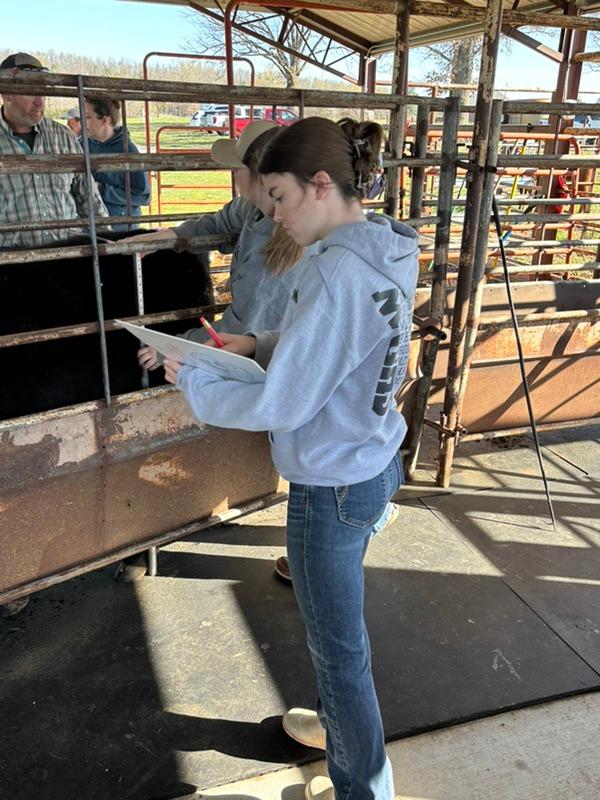
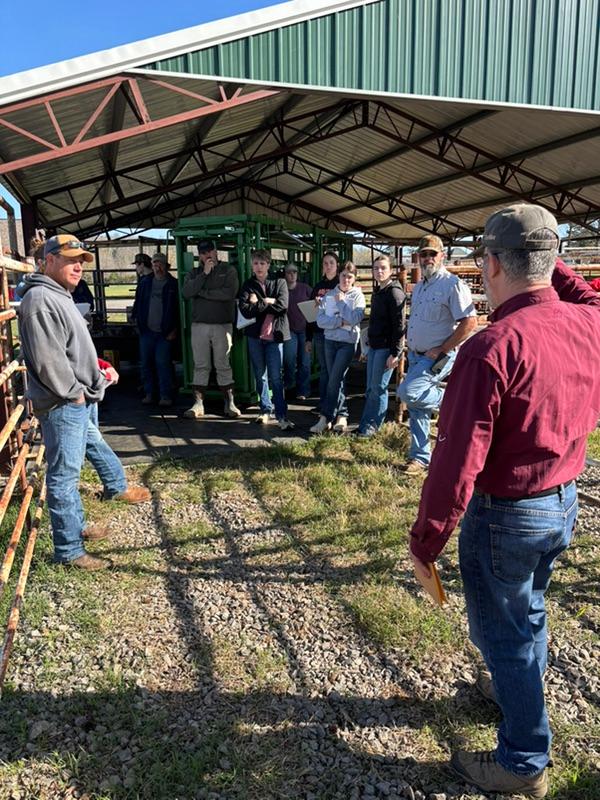
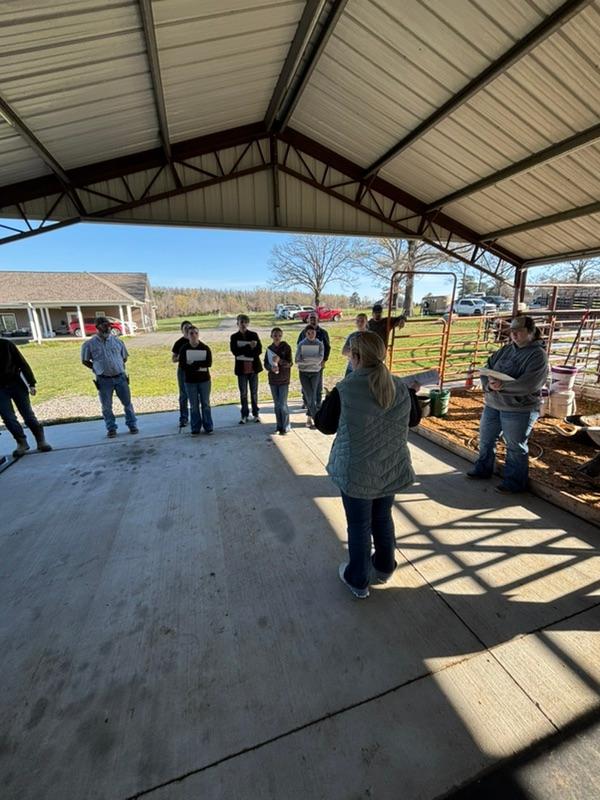
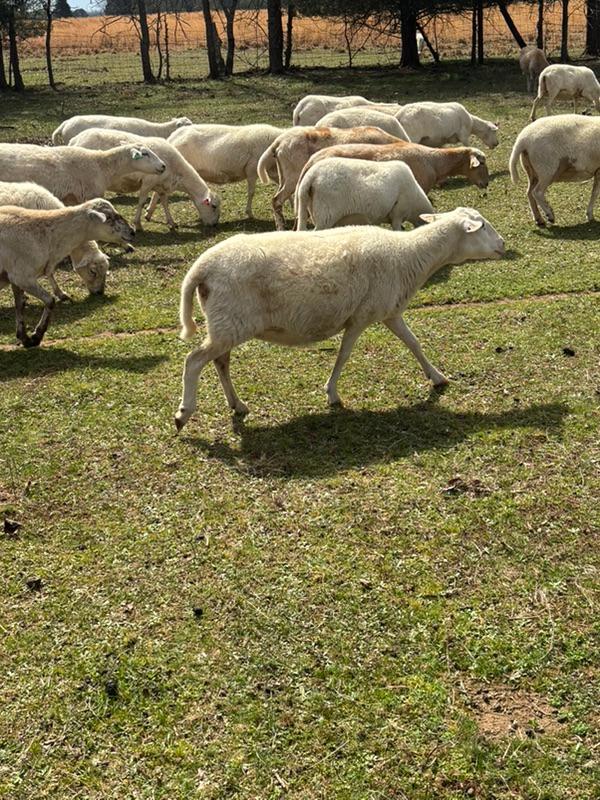
Photo by Jill Edwards - Tucker Farms | |
Faulkner County Agriculture Update
March 20, 2026
| | |
Weather
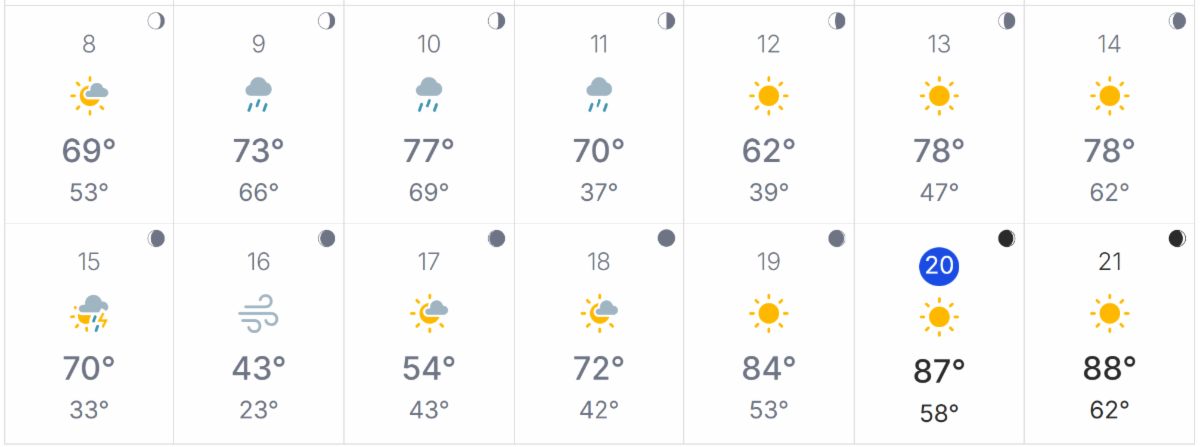
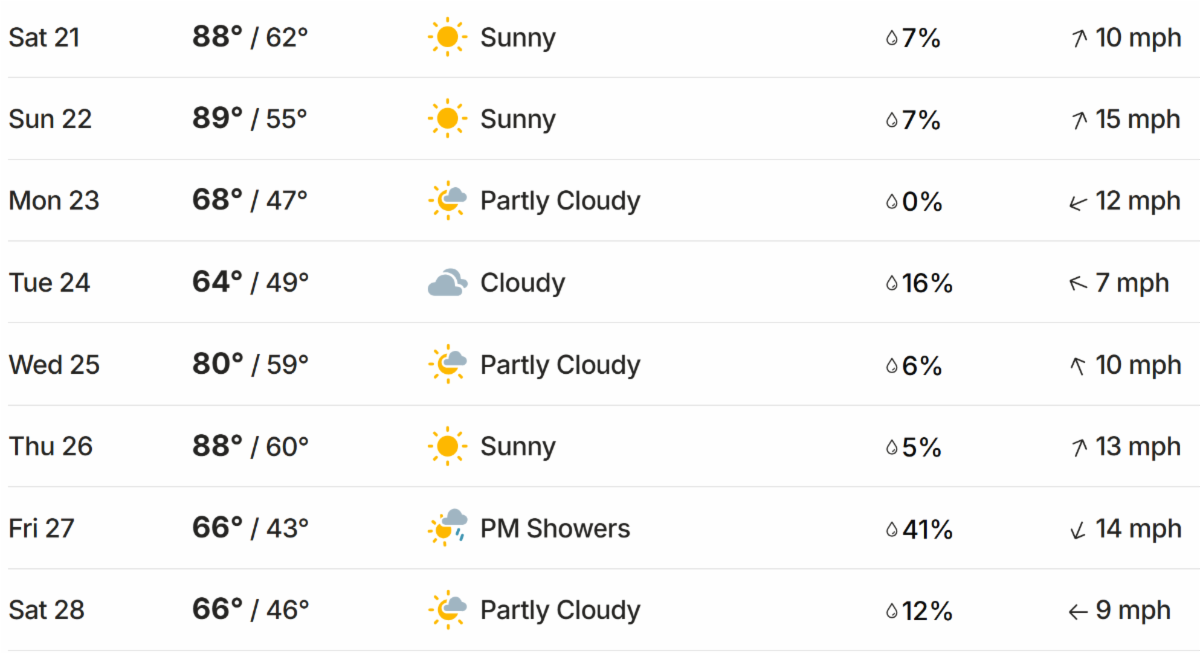
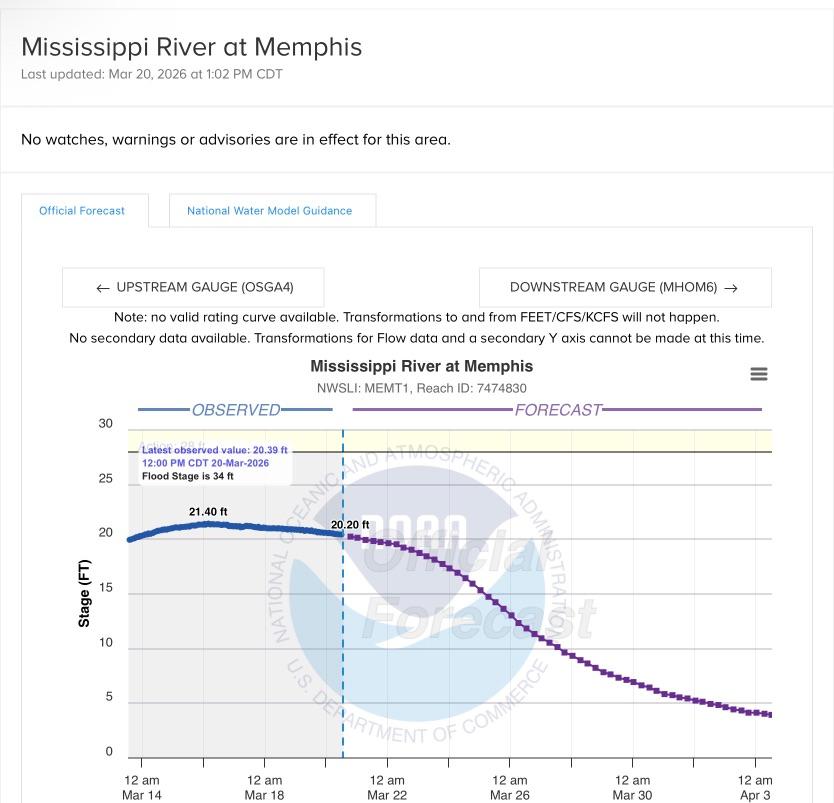
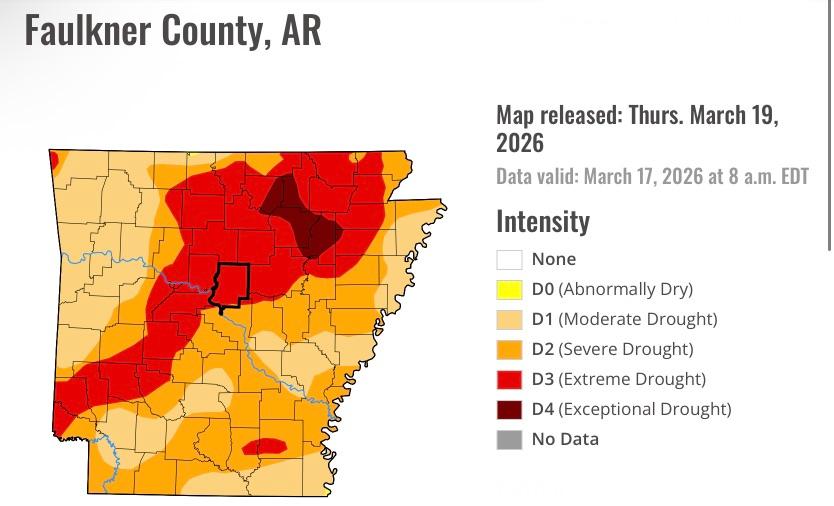
Saturday brought through some severe storms. Rain across the county averaged around 0.10 to 0.20 inches of rain. The storm didn't last long but as soon as it went through you could feel the temperatures drop. We got down to 23 on Monday but was back up to almost 90 today. Looks like the next best chance of rain is the end of next week.
| | Arkansas and Mississippi River | | |
Wheat
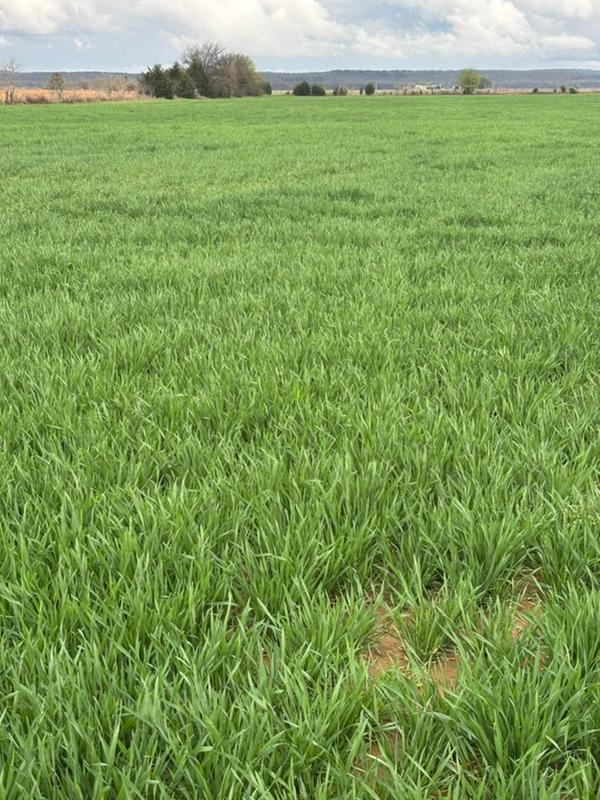
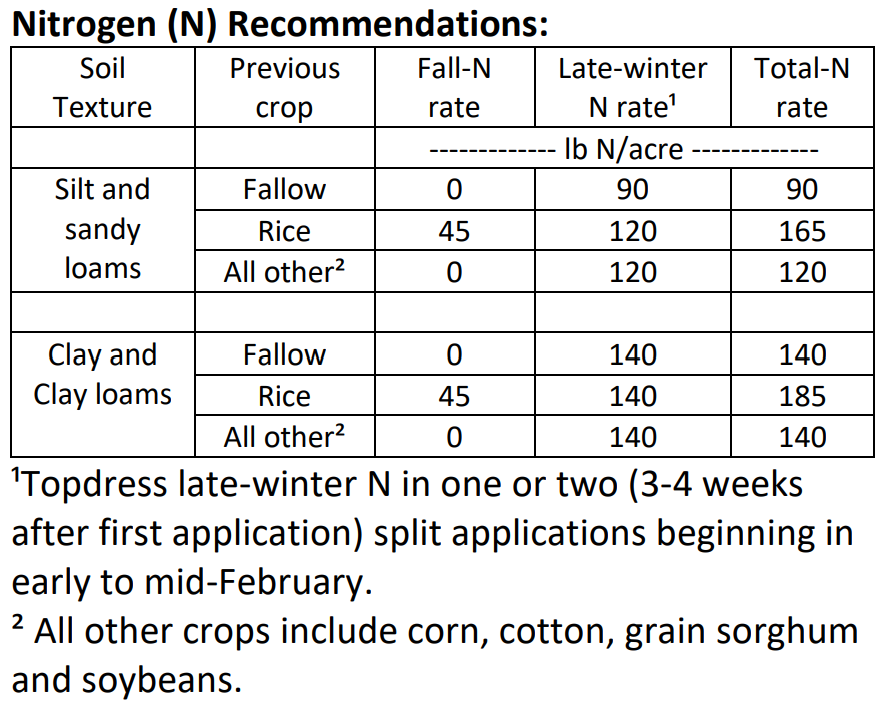
Wheat continues to grow and look good across the county. It is time to get out the next application of fertilizer. Usually applying in front of a rain isn't a big issue but we can't catch a break on rain this year. Hopefully we can get one at the end of next week and get this last application out.
| |
Corn
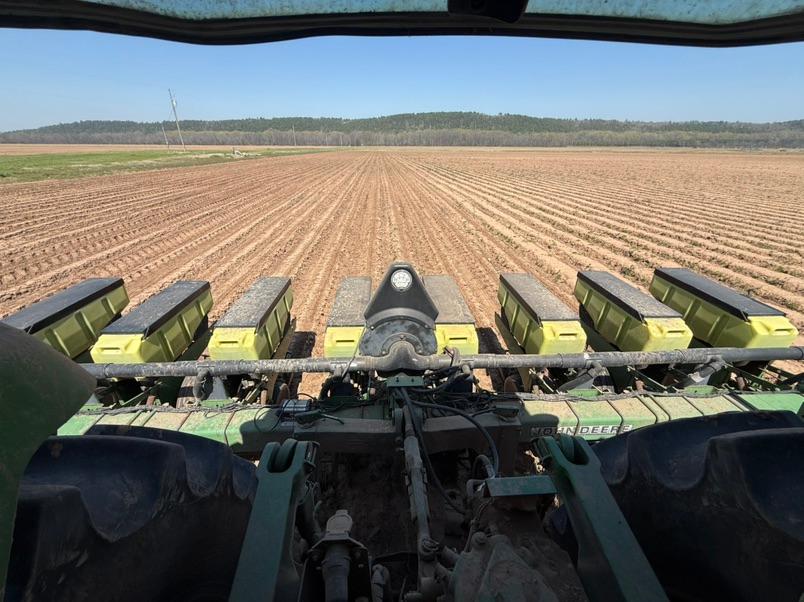
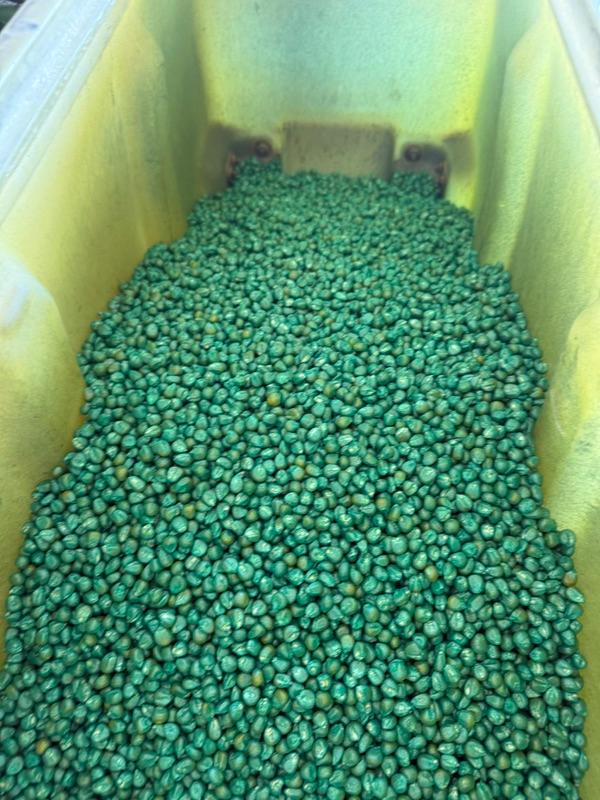
Corn planting started today in Faulkner County. Several producers are getting started today so we have officially started the row crop year.
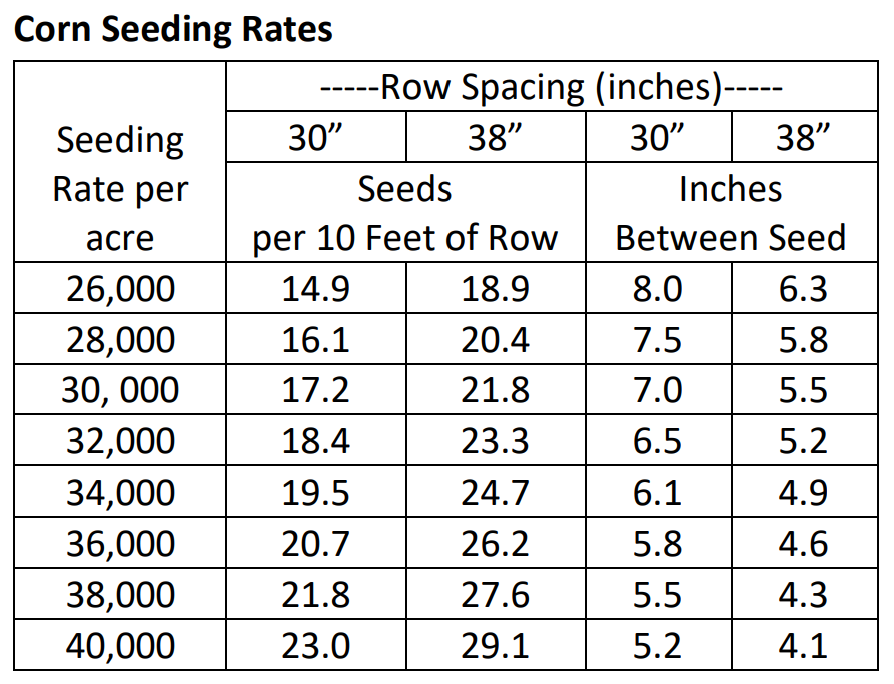
For Faulkner County I like being in that 32,000 to 34,000 seeds per acre seeding rate. There are a few hybrids that really respond to higher seeding rates, but on average those rates do the best for us.
I would also think about some metolachlor (Dual) behind the planter planting this early. Corn isn't going to be growing aggressively this early so this will give you some time on weed control.
| | |
Rice
Dr. Bob Scott has asked our producers to please fill out the following rice weed management survey. Please follow this link and take 10 minutes to help out our weed scientists.
| Below is the lates rice update from Dr. Jarrod Hardke. | | |
Crop Enterprise Budgets
Below is a link to the 2026 Crop Enterprise Budgets. If anyone needs assistance with these budgets please let me know.
| | |
Organic Field Crop Production Meeting
Join us for a full-day meeting focused on organic field crop production and marketing in Arkansas. This event brings together experts, researchers, buyers, and industry professionals to share valuable insights on transitioning to organic production, accessing organic grain markets, and optimizing organic operations.
Organic grains continue to far outpace conventional grains in both price and overall profits. With organic soybeans moving towards $25/bu and organic corn approaching $13/bu, it is an excellent time to consider transitioning to organic grain production. The Mid-South, including Arkansas, is an untapped resource for farmers who want to capture a much better price for their field crops. The no-till and tilled organic plots at the UA Vegetable Research Station in Kibler in 2025 were very successful with good weed control and soybean yields exceeding the state average.
| | |
2026 Farm Budget Implications of the Conflict in the Persian Gulf
Breana Watkins, Instructor and Crop Enterprise Budget Specialist, University of Arkansas
Hunter D. Biram, Assistant Professor and Extension Agricultural Economist, University of Arkansas
H. Scott Stiles, Program Associate, University of Arkansas
Introduction
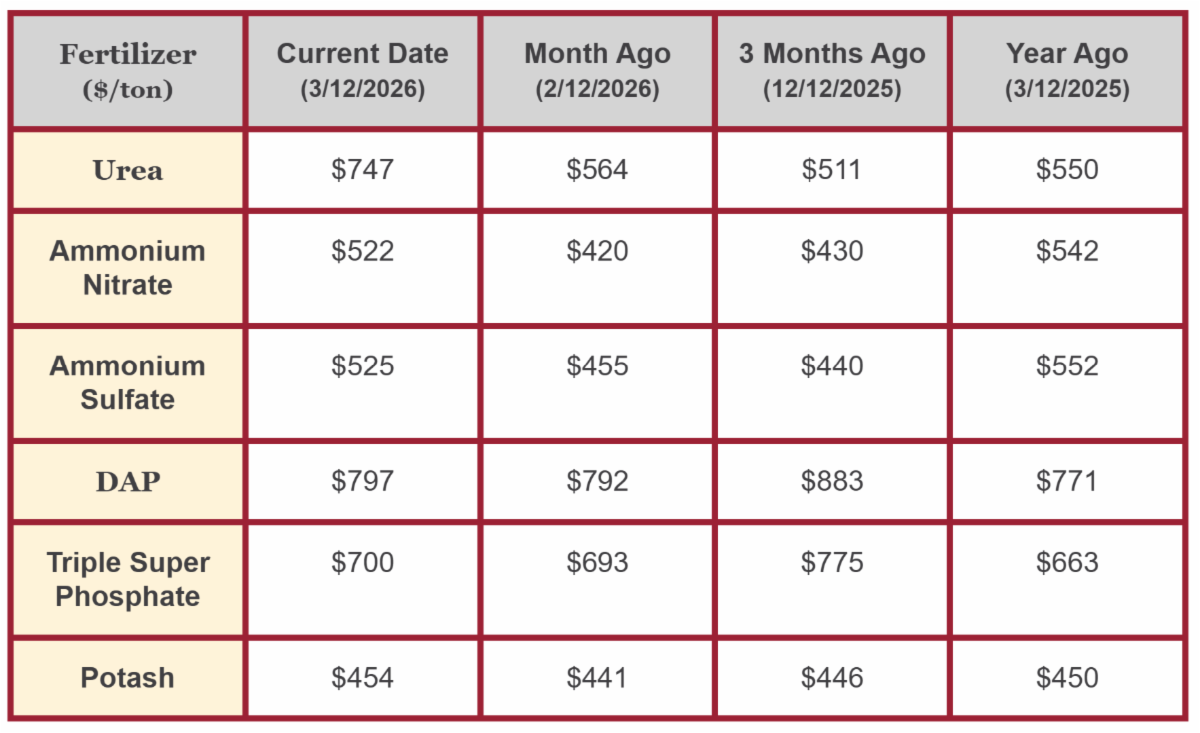
Recent military conflict involving Iran has increased volatility in global energy and fertilizer markets. A significant share of the world’s nitrogen fertilizer supply originates from the Persian Gulf region, with approximately 65% of global urea exports produced in or shipped through this region (Bloomberg Green Markets, 2026). Much of this fertilizer (and 20% of global crude oil) moves through the Strait of Hormuz, a critical shipping corridor connecting Gulf producers to international markets. Disruptions to energy production, shipping logistics, or maritime insurance in this region can quickly translate into higher fertilizer and fuel costs worldwide. As a result, geopolitical events abroad can directly influence the input costs faced by U.S. producers during the 2026 crop year.
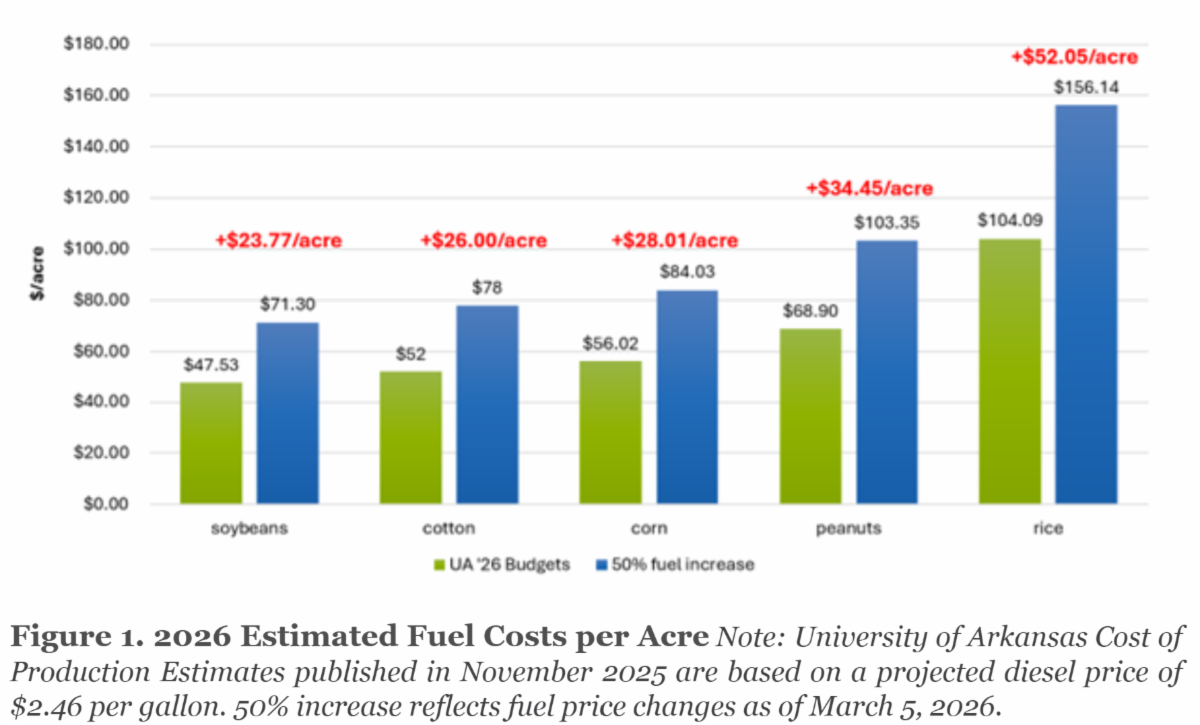
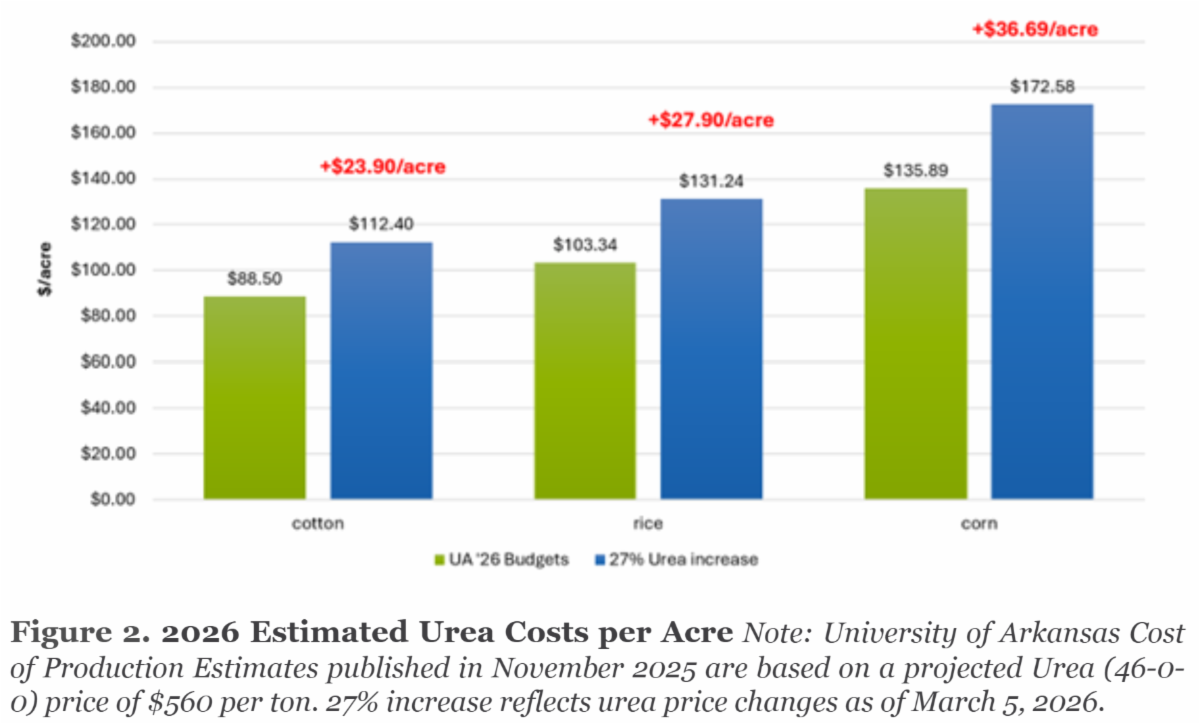
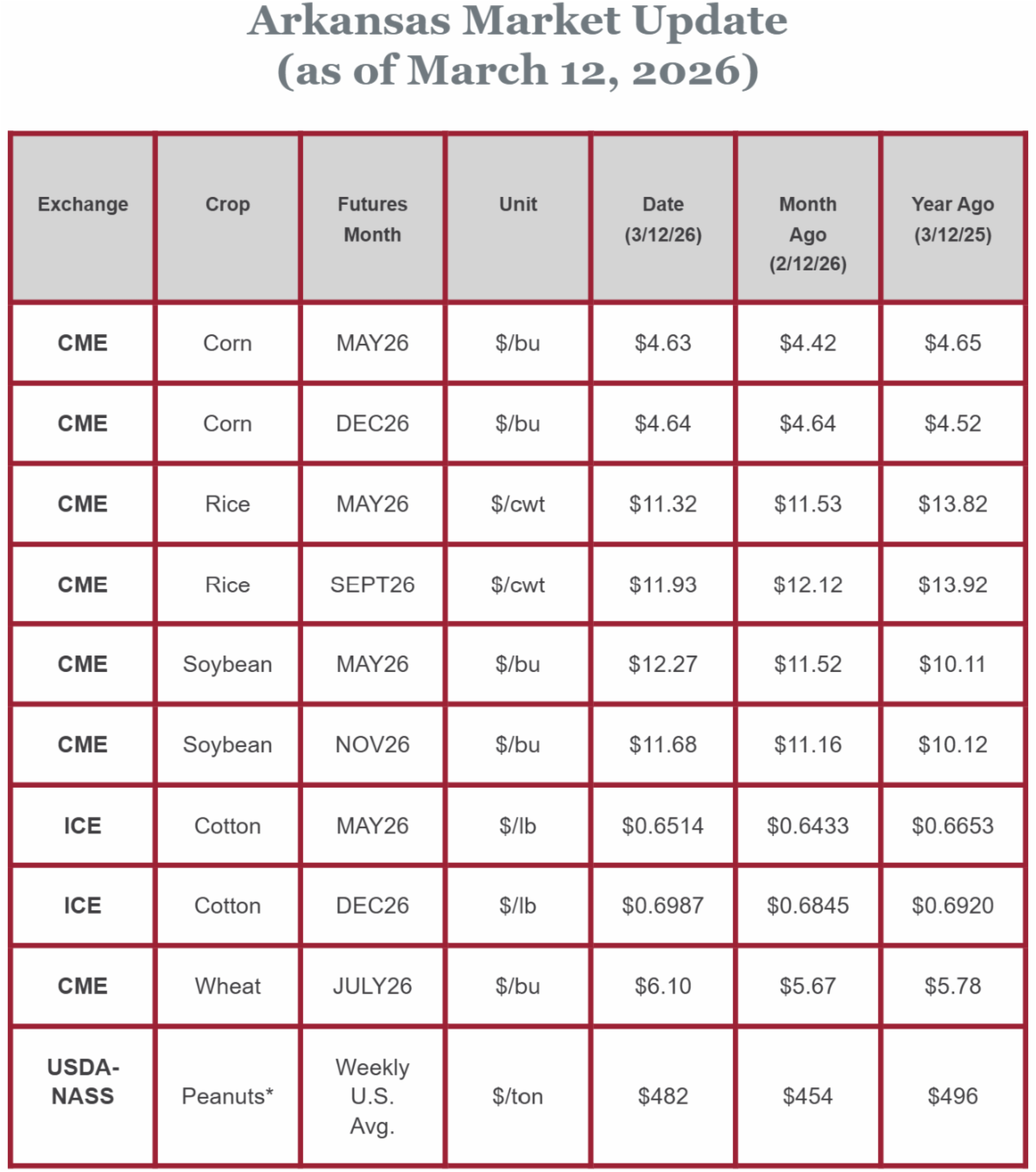
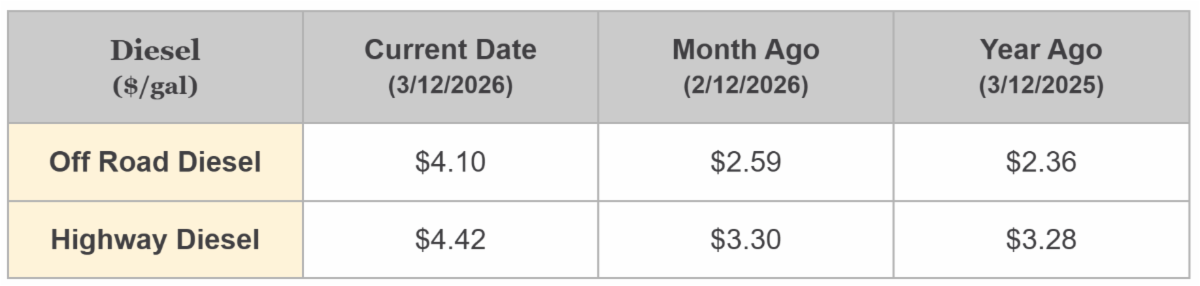
These increases in fertilizer and fuel prices have raised questions among producers about expected profitability for the 2026 crop year. Since fall 2025, both diesel fuel and nitrogen fertilizer prices have increased substantially, creating uncertainty around projected returns (see Figures 1 and 2). This update reviews how these changes affect expected returns for corn, rice, and soybean production using the University of Arkansas Cooperative Extension Service (CES) crop enterprise budgets. Understanding how changes in input costs and commodity prices influence returns above operating expenses is essential for evaluating cropping decisions and managing financial risk in the current environment.
| | |
When the CES crop budgets were initially developed in fall 2025 for the 2026 production season, key assumptions included:
· Diesel fuel: $2.46 per gallon
· Urea (46-0-0): $560 per ton
· Corn price: $4.50 per bushel
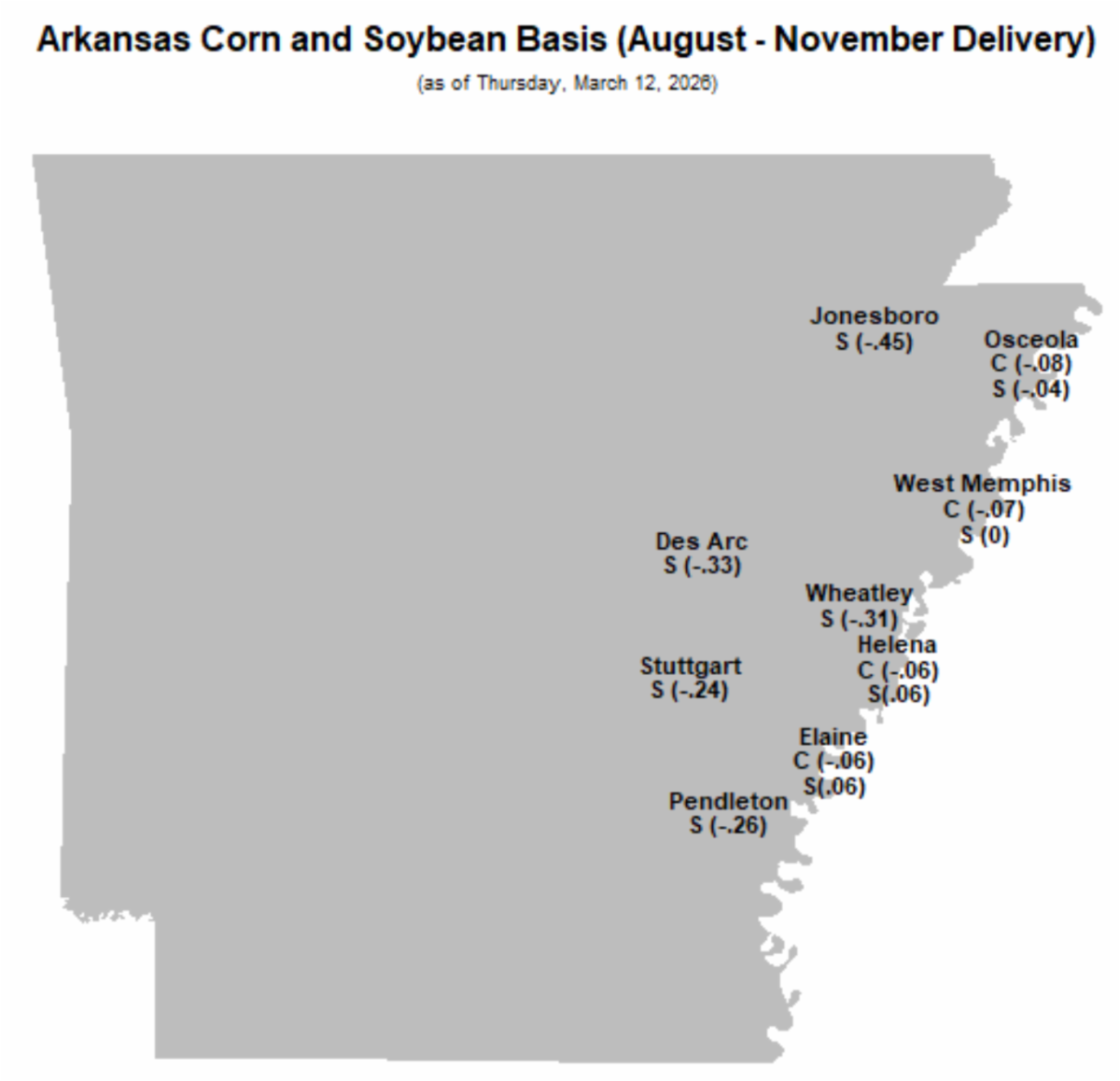
Since that time, input costs have increased significantly. Diesel prices have risen over $1 per gallon, and urea prices have increased by nearly $200 per ton. At the same time, corn and soybean market prices have strengthened modestly. As of March 8, 2026, new crop bids for Mississippi River terminals were:
Corn:
Harvest delivery: $4.69/bu
December delivery: $5.05/bu
Soybeans:
Harvest delivery: $11.55/bu
The current average corn bid for Fall 2026 delivery is approximately $4.87/bu, or about $0.37/bu higher than the $4.50/bu price assumption used when the budgets were released last November. Current Fall 2026 soybean bids are also well above last November's projected price of $10.25 per bushel.
Risk Management and Planning
Periods of volatility in fertilizer and fuel markets are not uncommon in production agriculture. Short-term spikes in input prices do not necessarily establish a new long-run price level, but they do require producers to closely monitor cost structures and margins. Several steps can help producers manage this uncertainty:
· Calculate farm-specific breakeven prices and yields
· Evaluate cropping decisions using enterprise budgets
· Maintain communication with lenders, crop consultants, and input suppliers
· Develop and follow a marketing and risk-management plan
Enterprise crop budgets are a useful tool for evaluating how changes in commodity prices, input costs, or yields affect expected returns. These budgets can be customized to reflect the conditions and cost structures of individual farming operations. Producers are encouraged to review the University of Arkansas CES crop enterprise budgets, and adjust the assumptions to match their operation. Additionally, we encourage readers to use the Arkansas Crop Profit/Loss Calculator (Crop Year 2026) to look at county-specific returns.
| | Beef, Small Ruminants, & Forages | | |
Freeze Update on Bermudagrass
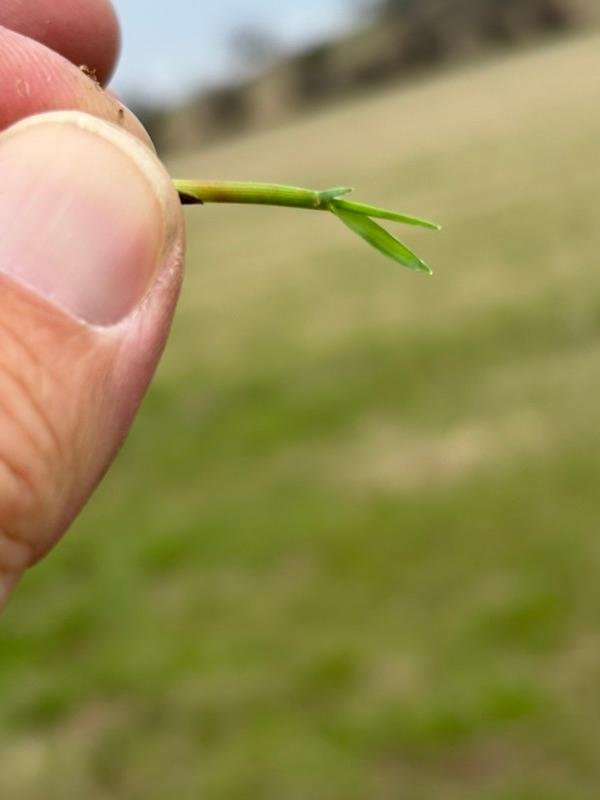
We did get down in the low 20's earlier this week. I am not sure how much damage was done to our forage crops though. On Tuesday we were finding a little damage on some sprigs but some looked like they were fine. Even though we got really cold, frost was spotty. I think this helped on our grass and I think we may have dodged some damage. Getting back up into the high 80's will help any damaged grass to recover.
| | |
Fertilizer Impacts on Warm-Season Hay Budgets
James Mitchell and Ryan Loy, University of Arkansas
The United States-Israel conflict with Iran that began on Saturday, February 28, comes at a challenging time for U.S. agriculture, with implications for farm input markets ahead of spring planting and cool- and warm-season forage production. Now in its third week at the time of this writing, the conflict has already disrupted energy markets and shipping routes through the Strait of Hormuz. More than 20% of global oil trade moves through the Strait of Hormuz, and Iran is a major exporter of urea fertilizer. These markets are global, and supply shocks of this scale can quickly affect the prices producers pay for key input such as fuel and fertilizer.
2026 Warm-Season Hay Budgets
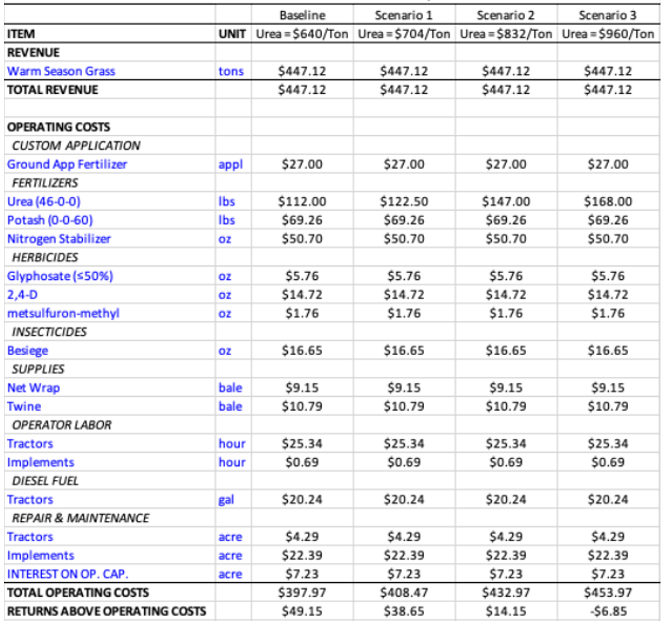
The table below presents a 2026 planning budget for warm-season hay production in Arkansas, based on data from the 2025 Arkansas Hay Verification Program. Each item in the budget reflects the per-acre cost for individual inputs and the per-acre revenue from hay sales, assuming the 2025 national average hay price.
Urea costs rise from $112 per acre in the baseline to $123, $147, and $168 per acre when prices increase to $704, $832, and $960 per ton, respectively. Total operating costs increase from $397.97 per acre in the baseline to $408.47, $432.97, and $453.97 per acre under the higher price scenarios. As a result, returns above operating costs fall from $49.15 per acre in the baseline to $38.65, $14.15, and -$6.85 per acre as urea prices increase.
Most row crop producers likely already booked their inputs before the Iran war began. Hay producers do not forward contract fertilizer and instead purchase it on an as-needed basis. Cool-season forage producers were already applying fertilizer, but if higher prices persist into the fall, they could face significantly higher costs. For warm-season forage producers, it is recommended to contact your input supplier to discuss fertilizer pricing options.
Note the analysis only considers changes to fertilizer prices. The Iran war impacts fuel and fertilizer prices. For example, scenarios such as a 50% increase in fuel and 30% increase in fertilizer should be considered in hay budgets.
| | |
4-H Pasture to Plate Project
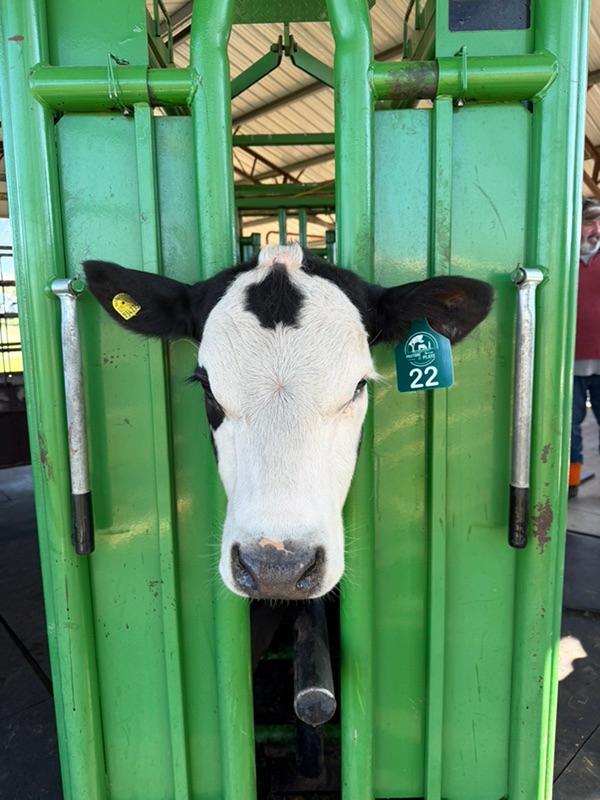
Saturday March 14 was our initial weigh in for our 2026 Pasture to Plate Project. We have 8 youth enrolled in the program with 10 steers.
The steers average 739 pounds and will be on feed for 189 days. Youth will take field trips to different farms throughout the year to learn more about growing beef in Faulkner County.
Youth participate in four areas: average daily gain, P2P show, carcass value, and record book/talk.
| | |
Arkansas Cattlemen's Area 7 Spring Area Conference
The Area 7 Conference of the Arkansas Cattlemen's Association will be on March 24, 2026 at the Conway Expo Center. The meeting starts at 5:00 pm.
| | |
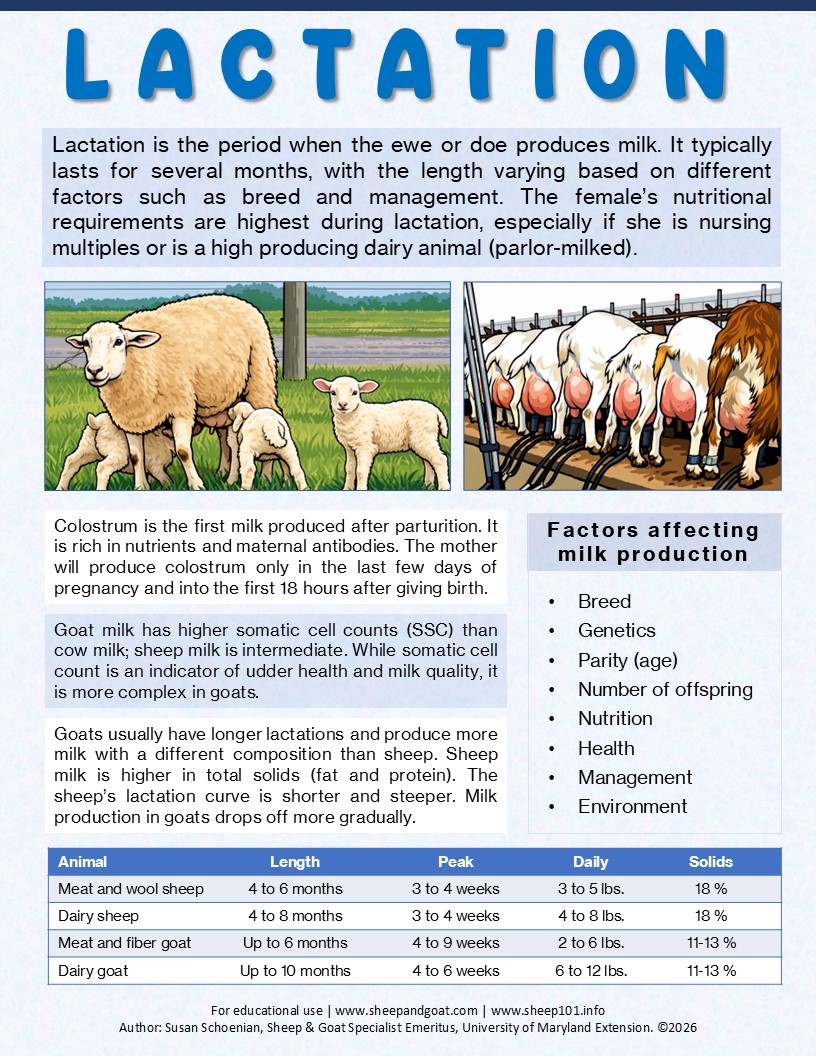
Seasonal supply squeeze drives sheep and goat prices higher
Premium lamb and goat prices at Texas sale barns recently exceeded $4 per pound and, in some cases, approached $5 per pound. Those are extremely strong prices for live animals, reflecting a time of year when supply is limited, but demand remains consistent. Most sheep and goat producers follow seasonal breeding patterns that naturally create fluctuations in supply. Most animals breed in the fall, so lambs and kids are born in the spring, increasing the number of animals available later in the year.
Most sheep and goat producers follow seasonal breeding patterns that naturally create fluctuations in supply. Most animals breed in the fall, so lambs and kids are born in the spring, increasing the number of animals available later in the year. Because of that cycle, fewer animals are typically available during late winter and early spring, which drives prices higher. Demand can also rise around cultural and religious holidays, including the Muslim observance of Ramadan, when consumption of lamb and goat meat increases.
You can read more from the Texas A&M AgriLife article link below:
| | |
Pesticide Applicator Trainings
In order to purchase restricted use pesticides (herbicides, insecticides, fungicides, etc) you must have a private applicators license. The license is good for 5 years.
To obtain a license you must first attend a certification training. Certification trainings are done in person by a County Extension Agent or you can go online and be certified. Below is a link to the online training.
In person trainings this year will all be at the Faulkner County Extension Office and will be on:
April 30 - 2:00 PM
A certification training costs $20 and is due the day of the training.
Once a producer is certified, they will go through the Arkansas Department of Agriculture to obtain the license which is $45.
Please call the Extension office at 501-329-8344 to sign up for one of these dates.
If you have a question about your license, please follow the License Search and Verification link below to find your license.
| | |
Livestock Market Report
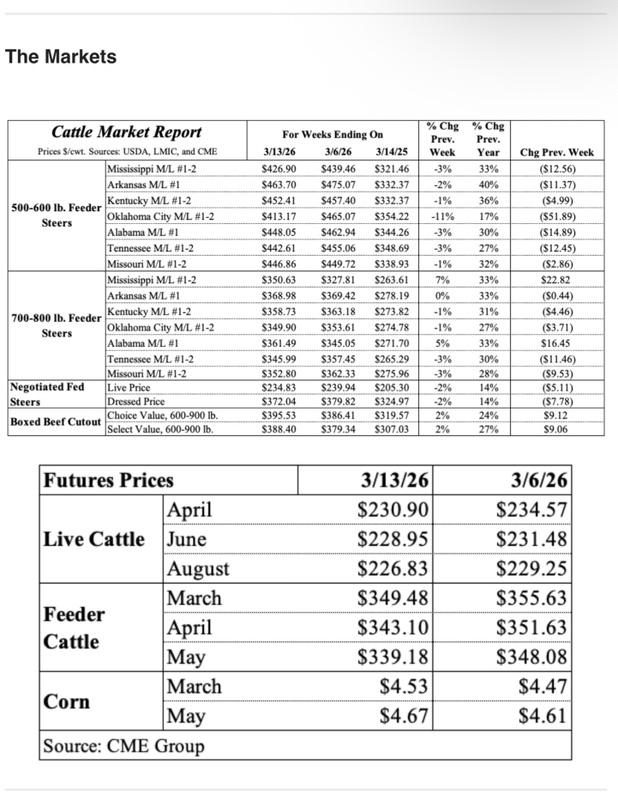
The following links are for the weekly livestock market report from the Arkansas Department of Agriculture website and the Livestock Auction Dashboard from USDA. Both sites have marketing data for all livestock sold at Arkansas Sale Barns.
| | |
2025 Faulkner County Agriculture Demonstration Summary
The 2025 Faulkner County Agriculture Demonstration Summary is now available at the link below.
The 2025 Faulkner County Demonstration Summary is a collection of on-site demonstration results conducted in Faulkner County by local County Agents. Demonstrations are the cornerstone of the University of Arkansas System Division of Agriculture Cooperative Extension Service’s mission which is:
“We strengthen agriculture, communities, and families by connecting trusted research to the adoption of best practices.”
On-site demonstrations allow producers and homeowners to see firsthand how Extension recommended varieties and best management practices work in their counties and surrounding area.
| | |
Sign up for Text Alerts
You can now sign up for text alerts from me throughout the year. I have two areas you can sign up for which includes Faulkner Livestock or Faulkner Ag (Row Crop Updates). To sign up you can follow one of these links or use the QR Codes below.
| | Pursuant to 7 CFR § 15.3, the University of Arkansas System Division of Agriculture offers all its Extension and Research programs and services (including employment) without regard to race, color, sex, national origin, religion, age, disability, marital or veteran status, genetic information, sexual preference, pregnancy or any other legally protected status, and is an equal opportunity institution. | | | | |