The News and Information Resource of

THE OHIO COUNCIL OF CHURCHES

JULY 2024

The Festival of Nonviolence and Peacemaking will take place July 19-21, 2024, across Northeast Ohio. It will be a celebration of nonviolence and peace through music and festivities. It will also provide nonviolence and peacemaking trainings, amplify the work of nonviolence being done in our cities, and conclude with a beautiful ceremony where we turn guns into garden tools.


We can flip the script on violence. But it takes all of us. For more information, click here. The Ohio Council of Churches is a co-sponsor of the Festival, and Dr. Sullivan will be participating in the event.

Episcopalians, United Methodists take another step closer to ‘full communion’


The Episcopal Church General Convention, which concluded June 28 in Louisville, KY, approved a resolution “affirming the goal of full communion between the Episcopal Church and the United Methodist Church.” Episcopal priests and United Methodist ministers may be just a few years away from full recognition in each others’ churches and the ability to swap pulpits. Read more here.

WHY YOUR VOTE MATTERS


One of the reasons some people do not vote is because they believe their vote doesn’t matter. After all, they say, it’s just one vote. Elections can be decided by the slimmest of margins, even one vote. The Middleton, MA, government website shares this historical perspective on the elections decided by one vote or very slim margins.


1800 – Thomas Jefferson was elected President by one vote in the House of Representatives after a tie in the Electoral College.

1824 – Andrew Jackson won the presidential popular vote but lost by one vote in the House of Representatives to John Quincy Adams after an Electoral College dead-lock.

1845 – The U.S. Senate passed the convention annexing Texas by two votes (27-25).

1846 – President James Polk’s request for a Declaration of War against Mexico passed by one vote.

1867 – The Alaska purchase was ratified in the Senate by two votes (37-2), paving the way for future statehood.

1868 – President Andrew Johnson was impeached but not convicted because the Senate was one vote shy of the necessary two thirds required.

1876 – Samuel Tilden won the presidential popular vote but came up one electoral vote shy and lost to Rutherford B. Hayes.

1941 – Congress amended the active-service component of the Selective Service Act from one year to two and a half years by one vote (203-202).

1948 – A Texas Convention voted for Lyndon B. Johnson over ex-Gov. Coke Steven in a contested Senatorial election.

1962 – Governors of Maine, Rhode Island and North Dakota were elected by an average of one vote per precinct.

1977 – Vermont State representative Sydney Nixon was seated as an apparent one-vote winner (570-569). Mr. Nixon resigned when the State House determined, after a recount, that he had actually lost to his opponent, Robert Emond, 572-571.

1989 – A Lansing, MI, School District millage proposition failed when the final recount produced a tie vote: 5,147 for and 5,147 against. On the original vote count, votes against the proposition were 10 more than those in favor. The result meant the school district had to reduce its budget by $2.5 million.

1994 – 1.1 votes per precinct in Alaska elected Tony Knowles as governor and Fran Ulmer as lieutenant governor out of 216,668 votes cast in the General Election.

1994 – Republican Randall Luthi and Independent Larry Call tied for a seat in the Wyoming House of Representatives from the Jackson Hole area with 1,941 votes each. A recount produced the same result. Mr. Luthi was finally declared the winner when, in a drawing before the State Canvassing Board, a ping pong ball bearing his name was pulled from the cowboy hat of Democratic Gov. Mike Sullivan.

1997 – Dakota Democrat John McIntyre led Republican Hal Wick 4,195-4,191 for the second seat in Legislative District 12 on election night. A subsequent recount showed Wick the winner at 4,192-4,191. The State Supreme Court however, ruled that one ballot counted for Wick was invalid due to an overvote. This left the race a tie. After hearing arguments from both sides, the State Legislature voted to seat Wick 46-20.

2000 – The Presidential election was decided by an extremely narrow margin. George W. Bush won the state of Florida by just 537 votes, making him the next President of the United States. Close to 6 million voters went to the polls in Florida. It might not have been by one vote, but certainly every vote counted.

2006 – Connecticut’s 2nd U.S. Congressional seat was won by Joe Courtney with 121,252 votes to Rob Simmons’ 121,158 – a difference of only 94 votes.

2008 – Stockton, CA: The Stockton Unified School Trustee Area No. 3 seat was won by one vote. Jose Morales received 2,302 votes while Anthony Silva received 2,301.

2008 – Minnesota voters cast 2.9 million votes in their U.S. Senate race that may be decided by as few as 200 votes (1/1000th of one percent)

2010 – In Nevada, the Nye County Primary contest for County Commissioner District IV was a dead heat with both Butch Borasky and Carl Moore receiving 381 votes. In the Lincoln County Primary, the District Attorney race was decided by only 3 votes.

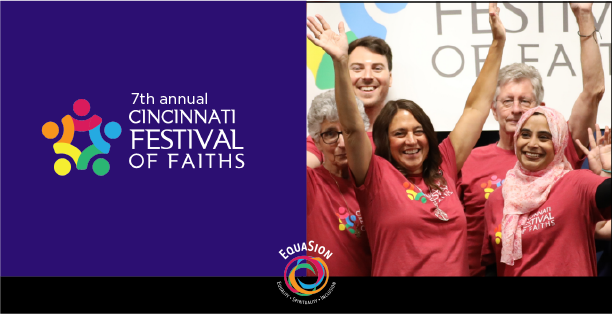
The 7th annual Cincinnati Festival of Faiths begins Sunday, Aug. 25 at the Cintas Center at Xavier University. It continues with online programming and culminates with a Peace Walk on Aug. 29 from 6-8 p.m. The festival is a celebration of all faiths where we can have fun and learn from one another.


MAIN EXHIBITION

Sunday, Aug. 25, 12-5 p.m.

Xavier University’s Cintas Center


ONLINE PROGRAMMING

TBA


INTERFAITH PEACE WALK

Thursday, Aug. 29, 6-8 p.m.

Ault Park


THE 2024 HONORARY CO-CHAIRS


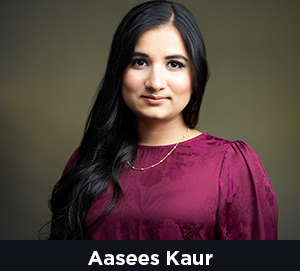
In addition to being an EquaSion board member, Aasees serves on the Riaan Research Initiative board and as the Co-Founder of CHAATRIK Architecture & Urban Design. Aasees was introduced to EquaSion around the time of the first Festival of Faiths through her late husband, Jaipal Singh. Aasees holds a simple belief: “We are all One. We all share the same Divine Light – making us innately equal and deserving of dignity.” While Sikhi remains at her core and drives her to do better by all of humanity every day, EquaSion’s programs help the community realize we are one human family.

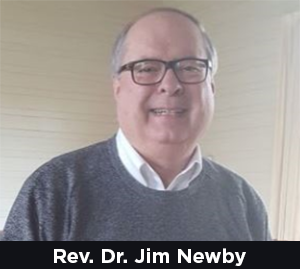
James R. (Jim) Newby is the Minister and Public Friend at Cincinnati Friends Meeting. He began his second tenure here in April 2016, having served here previously from 1975-1980. He has been the editor of Quaker Life magazine and served on the faculty of the Earlham School of Religion in Richmond, IN, for 10 years. Jim holds degrees from Princeton Theological Seminary (Doctor of Ministry), William Penn College (Doctor of Divinity), Earlham School of Religion (Master of Divinity), and Friends University (Bachelor of Arts). He has written numerous books and articles on religious and spiritual subjects, primarily dealing with renewal. Jim is the leader of the international Yokefellow Movement and President of the D. Elton Trueblood Yokefellow Academy Endowment, Inc.

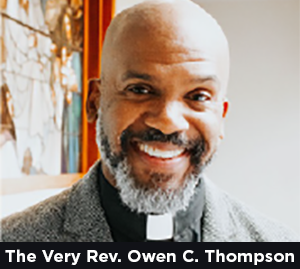
The Very Rev. Owen C. Thompson was ordained to the priesthood in 2003 at Christ Church Cathedral and spent 22 years in parish ministry in the Diocese of Long Island, NY. In 2021, he was called to serve in the Diocese of Southern Ohio as the Dean of Christ Church Cathedral in downtown Cincinnati. He received his Master of Divinity degree from The General Theological Seminary, New York, NY, and holds a Masters in Educational Communications and Technology from New York University’s School of Education, a Bachelor of Arts in English, and a Minor in Performing Arts from Hobart College, Geneva, NY. In addition to his life and work in the Church, Dean Owen is also a community activist who is dedicated to works/causes that focus on reconciliation, peace, justice, equality, equity, food insecurity, homelessness, undoing racism, gun violence prevention, and creation care.


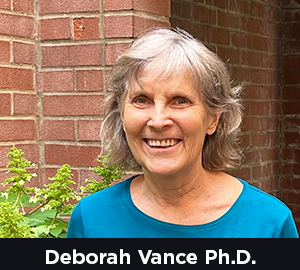
A member of the Baha'i Faith since 1970, Deborah Clark Vance earned a Ph.D. from Howard University in Intercultural Communication and was Associate Professor and Chair of the Department of Communication and Cinema at McDaniel College until retiring from academia. She is now an independent researcher and writer. In Baltimore County, MD, she was on the Board of the Baltimore Interfaith Hospitality Network. Here in Cincinnati she has been active in EquaSion, starting with the planning of the first Festival of Faiths in 2018. She is married to Steve Vance and has three children and five grandchildren.


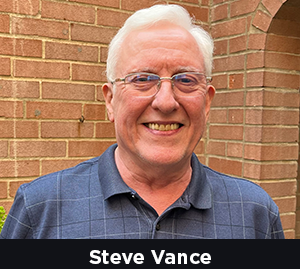
Steve grew up in Central Illinois and has been a member of the Baha’i Faith since 1971. He earned a computer science degree from Illinois State University, worked in private industry and then joined the Veterans Administration in 1983. He advanced to the rank of Chief of Field Development for 32 East Coast VA hospitals. He retired from that office based in Washington, D.C., in 2016. He and his wife, Deborah Clark Vance, have been married since 2001. They moved to Cincinnati in 2016, where they soon became involved in local interfaith gatherings and served on the Cincinnati Baha’i Assembly.

LEARN MORE HERE.

Ohioans to Stop Executions (OTSE), a state-wide non-profit organization working to end the death penalty in Ohio, seeks to hire an Executive Director to lead our organization at a time of tremendous momentum and opportunity. We are currently focused on passing bipartisan repeal legislation in the Ohio State Legislature through the multifaceted, strategic No Death Penalty Ohio campaign.


To read more about the position and to download a full description, please click here.

SAVE THE DATE

Ohio Council of Churches’ 4th Annual

ANTI-RACISM SUNDAY

OCT. 20, 2024


We join once again in Christ’s love and with a shared vision of unity and progress toward justice on this 4th annual Anti-Racism Sunday.


As in prior years, there are two tracks: Worship in our house or your house.


Worship in Our House: All member churches are invited to attend and participate via Facebook in the Council's virtual worship experience on Oct. 20. There will be music, as well as an Adult and Children’s Sermon.


Worship in Your House: Again, all member churches are invited, but we are looking for commitments from at least 12 congregations from different parts of the state to fully engage and create their own Anti-Racism Sunday experience on Oct. 20, 2024.


This year’s focus for Anti-Racism Sunday is

"Dismantling Racism—Building Community." 


The Ohio Council of Churches will provide suggestions for an adult sermon, biblical readings, and Sunday school lessons and activities for different age groups that speak to this focus.


To let us know if you’re interested in the online worship experience, click here.


To commit to fully participate in Anti-Racism Sunday in your church on October 20, 2024, please click here.


Ohio congregations can move this state towards an Ohio that faces racism and its devastation and works on its dismantling. Please join us!  

VISIT OUR WEBSITE
FOLLOW US ON FACEBOOK