Weekly Digest December 20th, 2022 - Week #51 |
|
Welcome to the RWU Rail & Labor News! This news bulletin is produced and emailed out each Tuesday morning. We hope you find each week's news and information useful. If so, please share with co-workers, friends, and colleagues. If you like, you can sign them up to get all the news from RWU HERE. Or forward them the link. Note: If you read over this news bulletin each week, you will be sure to never miss the important news of what is going on in the railroad world from a worker's perspective!
|
|
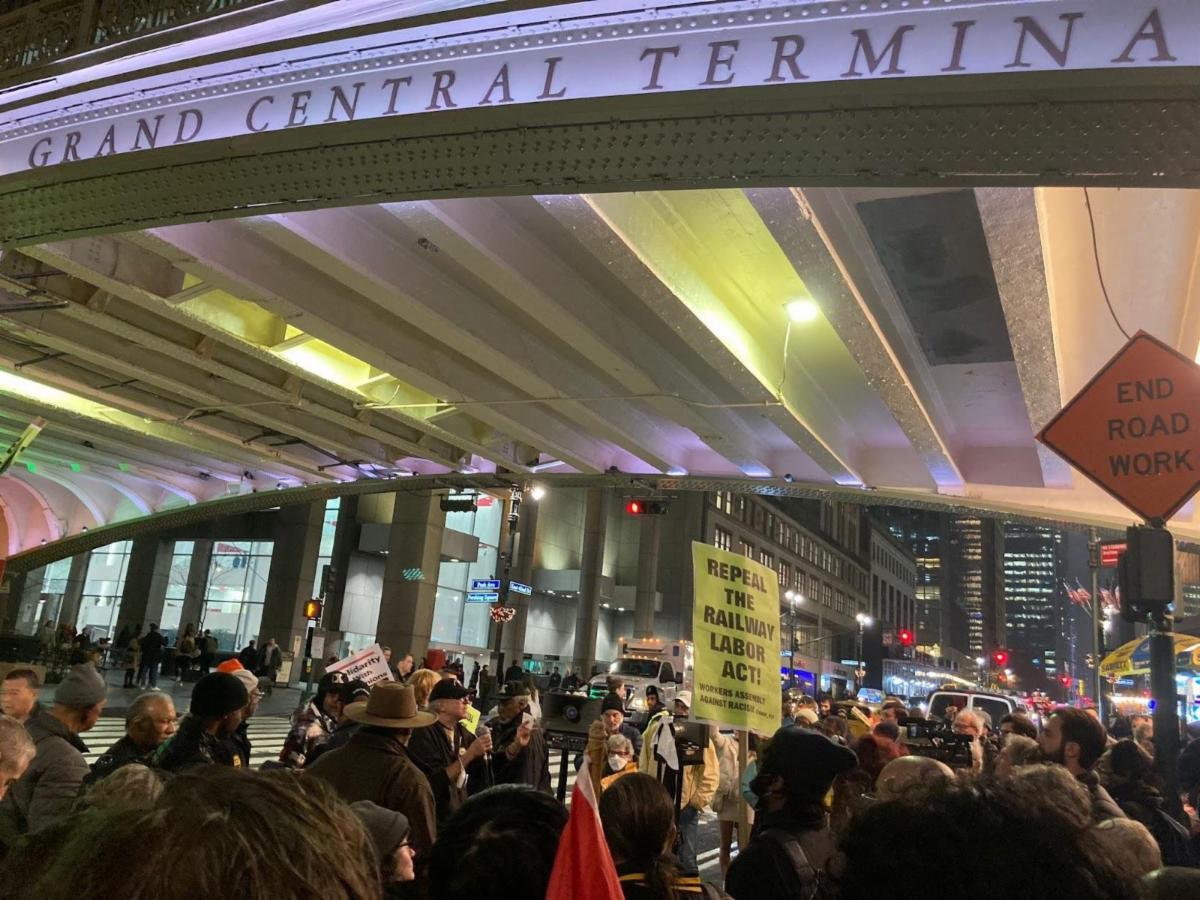
(Editor's Note: Prior to the SMART-TD officially sponsored rallies on December 13th, rail workers and allies spontaneously - and in many cases with the aid and assistance of Railroad Workers United - began to organize rallies and pickets around the country including this one in NYC. The union "leadership" is being pushed forward by a disgruntled membership that wants action.) |
|
Workers Are Standing Up Against Railway Unions’ Raw Deal
Biden forced railway workers to accept an agreement that lacked paid sick days; now rallies against the deal have spread across the country.
|
|
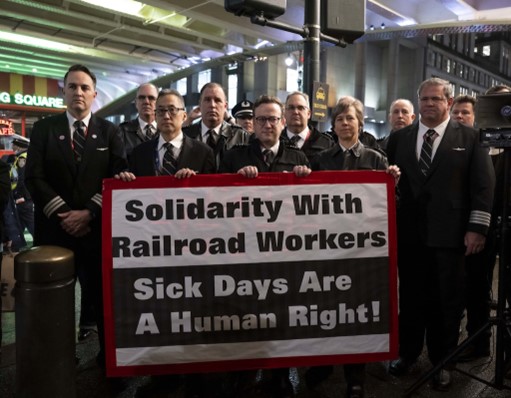
On December 7, outside of New York City’s Grand Central Terminal, a crowd of more than 100 Metro-North Railroad workers, airline pilots, construction workers, teachers, and activists held a solidarity rally in support of railway unions.
The rally is the latest in a string of protests that have taken place across the country after President Joe Biden and the U.S. Congress imposed a tentative agreement on Class I freight rail workers, an agreement that had been voted down the membership of four rail unions representing a total of around 60,000 workers. The agreement grants only one additional day of paid sick leave, which was a major concern for the rail workers, many of whom are on call virtually 24/7.
Five days before the Grand Central rally, on December 2, about 200 protesters held a demonstration outside of Boston’s JFK Museum, while Biden was visiting. They called the President a “scab” and a “strikebreaker,” chanting “striking is a human right,” and demanding sick leave for all. On December 5, around 30 people demonstrated outside of the Brooklyn home of Democratic Senator Chuck Schumer. Schumer had voted for the tentative agreement.
On December 6, a small protest was held at the University of California, Berkeley, where striking UC Grad Workers spoke about how their struggle was connected to that of the rail workers. The next day, a group of twenty-five union members and activists in Baltimore, Maryland, gathered with similar demands.
At the Grand Central rally, which was partly coordinated by the December 12th Movement, a Black human rights organization based in New York City, organizer Omowale Clay echoed the feeling of betrayal by the Democratic establishment that’s been driving these outpourings of solidarity: “To take away the right of our brothers and sisters to strike is a violation of their human rights. To take away their right to be sick so that they can speed up and exploit us more is a violation of their human rights.”
Justine Medina, a worker organizing with the Amazon Labor Union added, “We won our election on April 1, eight months ago, and the bosses refused to recognize Amazon Labor Union, refused to come to the table to negotiate a contract, just like the railroad workers.”
Similar messages of support were echoed by teachers, construction workers, and others during the protest. A member of Railroad Workers United, a cross-union solidarity caucus of railroad workers, spoke of how the conditions in the job deteriorated especially over the past few years.
|
|
(Editor's Note: Mainstream media - in this case The Guardian - have printed endless articles in recent weeks about the rail labor situation. Often their coverage is slanted towards the AAR and the rail industry, but nevertheless, railroaders have finally been able to get our point of view before the American people. Hats off to the RWU Media Committee of more than a dozen working rails who have tirelessly conducted hundreds of interviews with radio, TV, magazine, and online outlets both large and small in the past three months or so.) |
|
Railroad Workers Pressure Congress and Biden to Address Working Conditions
Workers and labor activists criticize Congress after it blocked a strike by voting to impose a contract agreement
|
|
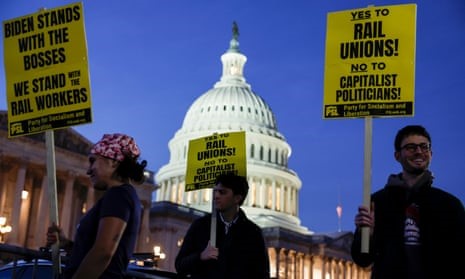
Railroad workers and unions are ramping up pressure on the US Congress and Joe Biden to address poor working conditions in the wake of the recent move to block a strike when Congress voted to impose a contract agreement.
Workers and labor activists in America have criticized that action for undermining the collective bargaining process in the US and workers’ right to strike.
Twelve labor unions representing about 115,000 railroad workers across the US had been negotiating with railway carriers since 2019 on a new union contract. By September the prospect of a strike threatened to shut down down the US railroads and hit the US economy to an estimated $2bn a day. That eventually prompted Congress – backed by the president – to impose the settlement.
“You always knew that this was the culmination of the process, you knew that Congress was going to push you back to work, you just didn’t know when and under what conditions that you’d be put back to work,” said Ross Grooters, a locomotive engineer based in Iowa and co-chair of Railroad Workers United.
Railroad workers had pushed for paid sick days to provide relief for grueling schedules caused by of labor cuts, with many workers on call 24/7 every day of the year, often having to work while sick or forgo doctor’s appointments because of their scheduling demands and strict disciplinary policies around attendance.
As conditions have worsened, railroad carriers have made record profits and spent billions of dollars on stock buybacks and dividends to shareholders. Meanwhile, US railroad jobs have declined significantly in recent years, from 1m in the 1950s to fewer than 150,000 in 2022, with drastic recent losses as the industry experienced a reduction of 40,000 workers between November 2018 and December 2020.
Now the imposed contract provides just one extra day of personal time off, with no days allotted for illnesses, and three days a year for doctor appointments with stipulations.
“The fight to guarantee paid sick leave for rail workers is not over and we will not back down until we win,” said the Transportation Trades Department of AFL-CIO in a statement. “We are committed to aggressively pursuing further action.”
|
|
(Editor's Note: One more example where industry mouthpieces and other institutions are proclaiming their discontent with the rail industry's antics.) |
|
Rail Industry Must Overcome Strained Labor Relations in Order to Survive |
|
The drama about whether union members would go on strike has passed, with Congress passing legislation and President Joe Biden signing that legislation requiring all unions to ratify the labor agreement that union and railroad negotiators reached in September.
But the battle scars still remain and those scars must be healed in order for the rail industry not only to fully restore service levels but also to thrive and assume the role as a vital and necessary freight transportation mode.
“If railroads want to be serious about addressing these issues that the members so vocally stated were a problem during these past three years, that would be a welcome change. … If they want to start to build employee morale, they should proactively reach out,” said Greg Regan, president of the Transportation Trades Department, which is affiliated with the AFL-CIO.
How can the railroads and the unions move on? They can do so through local negotiations and through changing railroad culture. But both endeavors will have challenges.
Why contract negotiations went differently this time around
The unions undergo collective bargaining for a new agreement every several years, and there has been a cultural expectation within the industry that both sides would give and take without significant noise.
But this negotiation round, which started in January 2020, was different for several reasons. One was because of the headcount reductions that had occurred in recent years, with some arguing that the railroads slashed their workforce levels as they sought to implement precision scheduled railroading (PSR). PSR is a way to streamline operations, but others contend it’s merely a means to cut costs and increase shareholder value.
The COVID-19 pandemic and quarantine orders also exacerbated staffing shortages, which in turn influenced how this latest bargaining round proceeded. It became harder to take sick leave because of attendance policies that discouraged taking time off. These policies were put into place to ensure there were enough workers on hand — especially since the railroads’ headcount numbers dropped significantly in recent years because of workforce cuts.
|
|
(Editor's Note: This article helps to disclose why the rail workers strike was able to catapult into the spotlight so quickly and achieve such popular support. It is a shame the authors were not aware of the fight waged against the BNSF and SMART-GO1 in 2014, when RWU helped to galvanize a massive NO vote that defeated that attempt to run trains with one crew member, invigorating the rank and file and putting the idea of a "VOTE NO" effort on the map.) |
|
THE RAILROAD FIGHT WAS THE PRODUCT OF EIGHT YEARS OF MILITANT RANK-AND-FILE ORGANIZING |
|
DEVEN MANTZ GRADUATED from Minot High School in western North Dakota with his class of 2009, and worked home construction in the first few years of the Great Recession. Looking for something with more stability, or something that came with a bigger payday, he explored the two most promising options facing people in his area. “It was either go to the oil fields, or go to the railroad, so I kind of had to make a choice,” Mantz said.
Each had attractive elements. The working and living conditions in the oil fields were tough, but the money in those heady days was enticing, with six-figure annual payouts on offer. The railroads, meanwhile, offered solid pay, much better benefits — if, notoriously, no sick days — and far more stability.
By 2011, the Warren Buffet-owned BNSF Railway was hiring in earnest. The policy known as precision scheduled railroading, which aimed to drive staffing down to the bare minimum and leave trains idle for as little time as possible, had the expected effect of burning through the workforce. So even as the company was purposely shedding workers, it was also hiring at a rapid clip. Mantz went with the railroads, and in June 2011, he started as a sectionman: a basic laborer, tasked with doing whatever was needed to fix the tracks well enough so that trains could run over them. “I got in at a pretty good time. They started hiring right then and then they didn’t stop hiring after that, so I got a lot of people beat on seniority,” Mantz said. “A lot of people on the oilfield got laid off.”
Becoming a sectionman meant he was now a member of the Brotherhood of Maintenance of Way Employes Division of the International Brotherhood of Teamsters, or BMWED. It not only introduced him to his affiliated trade unions — who sometimes derisively refer to them as “maintenance in the way” for holding up their trains — but it also made him part of the next chapter of a roughly 150-year history that is reflected in the weird spelling of “Employes” in the craft union’s name.
The union was founded in the 1880s as a life insurance company that sold policies to the foremen: white men who oversaw largely Black workers, giving themselves the title of “track master.” The life insurance collective evolved into a union that negotiated pay with the carriers, and the foremen recognized they’d have more power united with those they oversaw. Black workers continued to be treated deplorably, though, until the Congress of Industrial Organizations, a radical industrial union federation, began encroaching on their territory. The pressure from the CIO forced the BMWED to become just inclusionary enough to retain its members, though the title “track master” remains.
From the time the first tracks were laid in the United States, the railroads have been the scene of some of labor’s bloodiest and most pivotal struggles, with strikes inevitably crushed by local and/or federal police and military power. In 1926, in order to enforce peace between capital and the railroad workers, Congress passed the Railway Labor Act, which now also includes airline workers. The law allows Congress and the president to force an agreement on the two parties whether they have collectively reached a contract or not, and has been deployed largely as a weapon against workers. In exchange, the law also gives unions legal recognition. It’s a recipe for labor power atrophy: With the hammer of Congress always in the wings, bosses have little incentive to negotiate in good faith. And with workers legally locked into a panoply of sprawling unions, labor leaders have felt little pressure to deliver for workers. The last railroad strike — actually a lockout — came in 1992 and lasted just two days.
When Mantz arrived at work, there was no sign of the union. He hunted for a copy of the union contract, but nobody could tell him where he might find one. A hundred years of atrophy had left the union a hollow shell. Yet in July 2015, an organizer named Carey Dall traveled to Minot to meet with workers interested in becoming more active in the union, one of the first such trainings Dall had done in an unusual and experimental new role.
Curious, Mantz showed up. What he heard that day changed his life.
|
|
(Editor's Note: Could it be that capitalism itself is responsible for the rail labor crisis?) |
|
The Averted National Rail Strike Is a Parable of Contemporary American Capitalism
Railroads are prioritizing payments to Wall Street stockholders over everything else, including serving the public interest.
|
|
In our click-driven world, the threatened strike at America’s freight railroads, and President Biden’s intervention to prevent it, represents last week’s news. But there are two groups for which the averted strike is still very much front and center: the hundred and fifteen thousand rail workers who will be forced to work under the terms of the contract agreement that the White House and Congress imposed upon them after some rail unions rebuffed a deal mediated by the Administration, and the managers and owners of the railroads, who will get back to running what, these days, is an immensely lucrative, and suspiciously monopolistic, business.
Much of the news coverage of the contract dispute focussed on the railroads’ refusal to grant their workers paid sick leave. But this intransigence was only one aspect of a larger parable of modern American capitalism. Unfolding in one of the country’s oldest and most far-flung industries, it is a story of deregulation, consolidation, downsizing, under-investment, and intensification of work practices. Most of all, though, it is a story of financialization, and of prioritizing payments to wealthy stockholders over everything else, including serving the public interest.
During the lockdowns early in the coronavirus pandemic, the railroads accelerated their job cuts and capacity reductions. When demand rebounded last year, many shippers faced chronic delays, cancellations, and, in one case, a temporary suspension of service on key routes between the West Coast and Chicago. “Freight-railroad service is abysmal,” Representative Peter DeFazio, the chair of the House Committee on Transportation and Infrastructure, complained, at a hearing earlier this year. “This appalling service is forcing shippers to recoup their extra costs downstream, and Americans are paying for it—with increased food costs and at the gas pump.”
The modern rail-freight industry dates back to 1980, when Congress partially dismantled a strict system of regulation that had been introduced in the late nineteenth century following a catalogue of abuses by the companies of the original railroad barons, men like Jay Gould, James Hill, and Edward Henry Harriman. The Staggers Rail Act of 1980—named after the Democratic congressman Harley O. Staggers, Sr.—gave the railroads much more freedom to run their operations, including closing down unprofitable lines and setting their own freight rates, which the federal government had previously determined through the Interstate Commerce Commission. For a time, deregulation appeared to work as planned. Thanks to healthy competition in many areas, prices fell and shipments increased. After decades of losing out to trucking, the rail industry started to win back market share, which was good news for its workers and owners, and for the environment. (Rail transportation is much less carbon-intensive than trucking.)
Similarly to what happened in the decades after the Carter Administration deregulated the airline industry, the era of vigorous rail competition gradually gave way to consolidation and tacit collusion. After a long series of mergers, there are now just seven large, or Class I, railroads, compared with thirty-three in 1980, and between them they control more than eighty per cent of the freight market. “CSX and Norfolk Southern have a duopoly on traffic east of Chicago, while Union Pacific and BNSF have a duopoly on traffic west of Chicago,” Matthew Jinoo Buck, a senior fellow at the American Economic Liberties Project, pointed out, in an illuminating article for The American Prospect earlier this year. “Canadian Pacific, Canadian National, and Kansas City Southern run much traffic going north-south through the Midwest.”
|
|
(Editor's Note: Cities and states have long fought the rail industry over this question of blocked crossings with little success. Now a new comprehensive study hopes to facilitate a collective effort to combat the problem, one that might ultimately lead to federal action to stop once and for all this menace to trackside communities across the U.S.) |
|
Do Blocked Railroad Crossings Endanger Your Community? Tell Us More
We want to understand what stationary and long trains mean for EMS, firefighters, police and families across the country.
|
|
In communities across America, trains come to a stop at railroad crossings, sometimes blocking traffic for hours. The federal government has amassed tens of thousands of reports of such incidents in the past year alone from nearly every state.
This is more than an inconvenience: Our reporters have heard from emergency medical workers and patients about trains blocking crossings in ways that have kept ambulances and those in need of assistance from hospitals, and members of fire and police departments have told us about delayed responses to calls. We have witnessed people climbing through or over the cars of stationary trains, including students trying to get to school.
We’d like to understand how these safety issues are experienced by as many communities as possible. Insights from EMS, firefighters, police, parents, educators and others will help us tell the most impactful stories possible.
We appreciate you sharing your story and we take your privacy seriously. We are gathering these stories for the purposes of our reporting and will contact you if we wish to publish any part of your story.
|
|
Train Conductor Trainee Killed in Bessemer, AL Railway Incident |
|
BESSEMER, Ala. (WBRC) - One person was killed Tuesday morning in a railway accident in Bessemer, according to officials.
It happened just before 1 a.m. on 32nd Street and Carolina Avenue. The Jefferson County Coroner’s Office has identified the victim as Walter James Griffin, III of Hueytown. He was 43.
Bessemer police say Griffin was a train conductor trainee with Norfolk Southern. They say it appears two trains passed around the same time. A long metal object could be seen sticking out of the front of the train cab.
Norfolk Southern released the following statement Tuesday morning:
“Norfolk Southern is grieving the loss of a member of our team today. Our hearts go out to his loved ones during this extremely difficult time, and we are working to provide grief counsellors to his colleagues at our nearby facilities. An investigation is underway and company leadership is on-site to provide support.”
The cause and circumstances surrounding the death are being investigated by Norfolk Southern and the Bessemer Police Department.
|
|
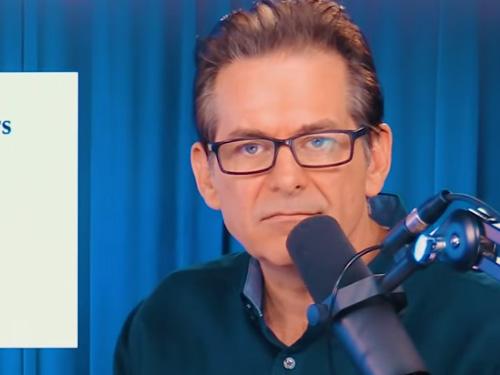
Jimmy Dore Show Hosts RWU Organizer |
|
On the one hand, the tale of the recent agreement compelled on the railroad workers that included zero paid sick days is a story of betrayal of workers by the Democratic Party. But as Railroad Workers United organizer Ron Kaminkow explains, it’s also just the latest chapter in a long story of struggle between railroad workers and the rail companies that have dominated the industry since the Gilded Age.
In this interview Kaminkow explains the “blunders” he feels the railroad workers’ unions made and how those same workers can come together to improve their lot in the future.
|
|
(Editor's Note: This ill-fated train that runs across the Union Pacific's old SP Sunset Route from LA to New Orleans has suffered chronic delays for decades, made worse of course in recent years by PSR. This will be an important test case for Amtrak. If the carrier is victorious, then a lot of things may start to change.) |
|
Amtrak Asks STB to Investigate UP's Impact on Sunset Limited OTP |
|
In a complaint filed Dec. 8, Amtrak asks the STB to investigate UP steps, policies and strategies that impact Sunset Limited trains’ OTP, which Amtrak describes as “abysmal.” The national intercity passenger railroad is also seeking damages and relief from UP as a result of its practices.
The Sunset Limited is a long-distance passenger-rail service that runs three times weekly between New Orleans and Los Angeles. Sunset Limited trains travel over UP track for most of the route.
Amtrak identifies the Sunset Limited as its “worst-performing” route in terms of on-time arrival. Amtrak wants the board to investigate whether and how certain UP corporate strategies and objectives drive substandard service on the route.
For example, Amtrak asked the board to look into how UP dispatchers are trained, directed and paid; how UP dispatching algorithms are programmed; how UP trains and dispatching centers are staffed; how UP seeks to ensure that Amtrak’s statutory right to preference is effectuated; and how UP has reconciled its decision to implement precision scheduled railroading (PSR) with its obligations to host intercity passenger trains over the UP network.
Amtrak wants the STB to make recommendations to improve OTP on the Sunset Limited, as well as identify steps UP and other host railroads must take to prevent delay of Sunset Limited and other Amtrak trains traveling on host railroad networks.
Amtrak is seeking an investigation and relief under federal law that requires host railroads to give preference to Amtrak trains over freight traffic on the hosts’ networks. In 2020, the Federal Railroad Administration set metrics and standards to ensure that at least 80% of all riders on an Amtrak train arrive at their destination no more than 15 minutes after their scheduled arrival time.
Amtrak’s complaint is filed in two parts, which can be read here and here.
|
|
(Editor's Note: "The common carrier" definition has always been vague, but in the past was not as important. Now that railroads are actively turning away freight customers, and even embargoing and metering existing ones, the question looms large: Just what is the private rail carriers' obligations to the public?) |
|
Shippers Tell STB Railroads Aren’t Fulfilling Common Carrier Obligation
Surface Transportation Board conducting 2-day hearing on big jump in embargoes
|
|
Several shippers told federal regulators Tuesday that they don’t believe the railroads are meeting the common carrier obligation because of the service issues they’ve encountered in the past year, including an increased use of embargoes as a means to control congestion.
Per federal regulations, the common carrier obligation binds railroads to carry freight, provided that the tendered agreement has reasonable terms and conditions.
Shippers told the Surface Transportation Board at a public hearing that one of the challenges with the Class I railroads placing embargoes is that shippers don’t know how long the embargo might last, which causes uncertainty when planning the logistics of a shipment.
That, coupled with limited freight transportation options, are among the reasons why they felt the railroads were not meeting the common carrier obligation.
“To answer ‘do I think they’re fulfilling the common carrier obligation with embargoes?’ No, I don’t think they are,” said Don Boostra, a business director at Canadian company Chemtrade Logistics. Chemtrade operates 60 chemical facilities across North America, producing chemicals such as aluminum sulfate and chlorine that serve as raw materials for manufacturing.
“I don’t know the solution. I’m not going to try to tell them how to run their railroad, but it sure seems to me when we have industries like ours and others that are trying to grow and capacity’s going down, that no, I don’t believe they’re fulfilling their obligation,” Bootstra continued.
Gregory Twist, senior vice president of transportation for Ag Processing Inc., said: “I echo the comments. I do not feel that they’re fulfilling the common carrier obligation. I think it’s been explained to us that a large amount of the service issues relate to lack of labor or lack of power. And I can see embargoes having a place in unexpected things, like a surge in traffic or a weather event or something else like that. But this seems like it’s a capacity issue.”
Shippers made these comments before STB, which was holding a two-day hearing Tuesday and Wednesday on why Union Pacific’s (NYSE: UNP) use of embargoes rose significantly in the last five years. According to STB’s calculations, the vast majority of UP’s embargoes in 2022 have been a result of congestion.
|
|
(Editor's Note: More questions about the Class One freight carriers antics vis-a-vis shippers and customers.) |
|
Just What Does STB Consider ‘Reasonable’? |
|
Union Pacific and Sanimax are currently engaged in an interesting bit of litigation. It’s not a rate case or anything I worked on in my more than 15 years at the Surface Transportation Board. The question is whether UP has violated its “common carrier obligation.”
Freight railroads in the U.S. are defined as common carriers by U.S. law. That designation has a long legacy in English common law and it sets railroads aside with special responsibilities, including a “common carrier obligation.” U.S. law and regulation require railroads to provide “service upon reasonable request” to fulfill their common carrier obligation (CCO).
“Service upon reasonable request” turns on the meaning of “reasonable.” The late Justice William Brennan famously opined that he could tell “pornography” when he saw it, but I wonder how he’d do with telling us what was “reasonable.”
Clearly some items are not “reasonable.” The common carrier obligation does not require railroads to ship wild animals. Containers of tigers are not part of the CCO.
If a railroad is not providing service commensurate with its CCO, then the affected shipper can lodge a practice complaint with STB. Sanimax has done so in this case.
If STB finds that a carrier has neglected its CCO, to address the service failure, the agency STB can issue:
- Cease and desist orders.
- Service orders.
- Temporary access orders.
The recent spate of service failures has led shippers to file practice cases and has gotten STB to take an active interest in investigating railroad service problems. Railway Age Capitol Hill Contributing Editor Frank N. Wilner highlighted this discontent in his December column (“Will Bureaucrats Invade the C-Suite?”). So, how did the Sanimax case evolve?
Sanimax receives animal by-products and processes them into biofuels, pet and livestock feed and other items. UP provides Sanimax outbound service, delivering Sanimax products to its customers. Sanimax receives its raw materials by truck but has insufficient storage, so it must continuously process output—otherwise it will have decaying and odorous materials building up in its facilities.
UP originally provided Sanimax with five days per week serv
|
|
(Editor's Note: Even the Harvard Business Review, a bastion of conservative pro-capitalist thought weighs in critically of the rail industry.) |
|
U.S. Railroads and the Pitfalls of Systematic Understaffing |
|
The potential strike that the federal government just outlawed does not mean U.S. railroads’ labor problems are over. The root cause is their wrongheaded belief that minimizing staffing is good for their business. The authors’ research and work with service companies shows that firms that operate with some overstaffing and create an operating system that allows workers to do their best are more successful than those who focus on minimizing their labor costs.
U.S. railroad companies’ refusal to grant paid sick leave to their workers has exposed a startling vulnerability in the American economy: Rail staffing levels are not high enough to allow employees to take time off when they are ill. While Congress has intervened to block a strike, the underlying cause of the labor dispute — systemic understaffing — will persist. It’s the product of the companies’ years-long obsession with increasing efficiency and lowering costs, which has resulted in their slashing their payrolls by tens of thousands. And it’s yet another example of a misguided belief that is prevalent in other sectors, including manufacturing, health care (e.g., hospitals, nursing homes, pharmacies), and retailing.
This “bad jobs” system is not just bad for workers; it’s also bad for customers and companies that adopt it. In the case of railroads, it poses risks to workers’ health, the safety of passengers and their communities, and the quality of customer service. Our organization, the Good Jobs Institute, helps companies adopt a different operating system, the “good jobs strategy,” that allows workers to excel in serving customers. One of its fundamental elements is operating with slack.
Our research demonstrates that companies that design their operations in such a way generate strong customer satisfaction and sales growth, are more profitable, and continuously improve.
The Costs of Understaffing
When employees don’t have enough time to complete their work, mistakes and shortcuts are inevitable. This manifests itself in the form of poor execution — including service failures and delays, misplaced inventory, waste, long checkout lines, and a lack of bandwidth to solve customer problems. These deficiencies reduce sales and increase costs. Workers and managers can’t take time off and are subject to burnout — all of which contribute to higher employee turnover. In a system with high turnover, understaffing, and poor operational execution, frontline managers are constantly fighting fires. They have no time to hire the right people and train them well, which then creates more problems.
|
|
(Editor's Note: Kansas City Star jumps into the effort to publicize and do something about the scourge of blocked railroad crossings in communities across the U.S., a safety hazards that has increased dramatically with the rise of PSR.) |
|
How American Rail Companies’ Pursuit of Profit Puts Lives in Danger |
|
When an Amtrak train barreled into a dump truck in rural Missouri this summer, the death and devastation underscored the dangers that can lie on America’s often forgotten rails. The high-speed collision killed four people and injured more than 150 at an isolated rail crossing that locals long ago identified as dangerous. But those Missourians, like countless other people across the country, learned how difficult — and sometimes impossible — it is to force the powerful railroad companies to act. And when their pleas are ignored, the consequences can be devastating. In a monthslong investigation that began after that deadly June 27 crash, The Star found: DANGEROUS CROSSINGS ACROSS U.S. What happened near Mendon, Missouri, is not unique. Hundreds of unprotected crossings across the country have raised the fears of residents and been put on lists for safety improvements that, tragically, sometimes come too late. We talked to the families of some of the victims who died at those crossings. You can read that story here. BLOCKED CROSSINGS COST LIVES Trains don’t have to be in motion to cause deaths. States can’t limit how long a train can block motor vehicle and pedestrian traffic at public crossings, the courts have said. The results have been deadly for people like Gene Byrd, who died after a train blocked EMTs’ access to his Oklahoma house. The problem, as we report here, is only getting worse. WORKERS ENDANGERED ON THE JOB Railroad workers, in the news lately because of a possible strike, worry that changes in the industry are making their jobs even more dangerous. Companies have slashed their work forces and in their pursuit of profits have cut back on safety training and, employees say, equipment maintenance. Trains have gotten longer and crews smaller. Employees share their stories here. COMMUNITIES WORRY ABOUT RAIL COMPANIES MERGER In towns up and down rail lines where a merged Kansas City Southern-Canadian Pacific would operate, residents fear the increased traffic and longer trains the deal would bring. The merger, which could come early next year, could disrupt commuter rail in suburban Chicago, officials fear. And it could forever change the way of life in small towns like Camanche, Iowa, along the Mississippi River, which you can read about here.
|
|
(Editor's Note: Good work done here by the Kansas City Star, who RWU Organizer Ron Kaminkow worked closely with over the course of the past month.) |
|
‘Screaming into the Bullhorn for Help’: Railroads Pick Profit Over Safety, Workers Say |
|
Like he had done countless times before, conductor Paul Payne hung off the side of a railcar as his engineer backed up the train into a northwest Ohio yard in the fall of 2020. In the dark of the early morning, Payne had only his handheld lantern to see as the train moved down the satellite yard in the small town of Fostoria. During the maneuver, he was fatally impaled by a tree limb hanging into the railroad right of way. His death was entirely preventable, according to Payne’s coworkers, attorney and union leaders. Other employees had reported the issue of vegetation growing into the path of trains to managers at his employer, CSX railroad. “This is a case where the railroad dropped the ball,” said Alabama attorney James Wettermark, who is representing Payne’s widow. “A safety issue came up, it was brought to their attention. It was probably a very little thing in the railroad world, but it wasn’t dealt with properly. And that’s the problem.” The seven Class I freight carriers — the country’s largest and best known railroads — all espouse safety as top priorities. But in the last few years, new business models have intensified railroads’ efforts to boost profits. And that has led to deep cuts to staffing and deteriorated relationships with employees, who only averted a national rail strike this month by an act of Congress. Many of those employees told The Star that railroads have reduced important employee training, cut back on safety in rail yards and in some cases skipped preventive maintenance measures on railroad equipment. Get unlimited digital access Try 1 month for $1 CLAIM OFFER
As part of a months long investigation, The Star reviewed public records and spoke with dozens of employees, union leaders and industry experts. When accidents occur, they said, employees often get the blame. Wettermark, who has represented railroad workers for 40 years, views Payne’s death as a classic example of what’s wrong with American freight railroads. He sees example after example of employees losing limb and life because the railroads won’t spend enough time or money on safety. “The list just goes on and on and on,” he said. “There is a significant discrepancy between the railroads’ talk, their mantras, their platitudes about safety and the way safety is actually implemented in the field.” Railroading has always been dangerous work. It involves huge, heavy equipment and employees work at dangerous heights and move hazardous materials. And even the slowest trains are difficult to stop. Jason Hayden, the Missouri legislative director for SMART Transportation Division, the nation’s largest railroad union, said there’s an old adage among rail workers about their employers’ attitudes: “Safety is fine until it costs a dime.” “They love to preach safety,” he said. “They love to enforce safety, but when it comes down to spending company money to do much about it, they shy away.”
|
|
(Editor's Note: It is wonderful to see a major rail union come out publicly, unequivocally against PSR. Railroad Workers United has been sounding the alarm on PSR since the Hunter Harrison takeover of CP nearly a decade ago. See our Resolution in Opposition to Precision Scheduled Railroading from nearly 4 years ago, and our full Campaign Against PSR on our website. Hopefully the other rail unions will agree and throw their full weight into opposing this scourge that has caused so much harm and damage.)
|
|
Precision Scheduled Railroading (PSR) Must End Immediately |
|
For the better part of two days in D.C. this week, testimony after testimony before the Surface Transportation Board, ranging from Labor Union presentations (including the BMWED) to trade associations to the rail customers themselves, has dragged Union Pacific’s operations strategy worse than a dangling E.O.T. device, thoroughly decimating the greed and short-sightedness that has led to U.P.’s utter ineptitude.
Any company worth its share price would feel complete shame and embarrassment for conduct that has led to U.P. issuing over 1,000 embargoes in 2022 – a practice where trade is stopped to clear up congestion and backlog – due to woefully insufficient workforce staffing driven by their version of “precision scheduled railroading,” which “Uncle Pete” comically calls “Unified Plan 2020.”
What PSR or UP 2020 or whatever you want to call it has done to their service is destroy it. U.P.’s customers are in the lurch, betrayed by a foolish strategy wrecked even more expeditiously by the Covid pandemic, where lean operating ratios and record profits were fixations rather than adequate and reliable service and dedication to fulfilling their shippers’ expectations.
What it has done to U.P.’s employees is a fundamental failure that hasn’t been seen to this degree in decades, if not a century. Just on the maintenance of way side, 22 percent of Union Pacific’s total trackage, 7,239 cumulative miles, is currently under slow order due almost entirely to the carrier’s decision to reduce manpower in the track department. As BMWED spokesperson Brother Rich Edelman told the STB Tuesday, that is the equivalent of 11-man football team intentionally inflicting two injuries to its on-field roster. It’s stupid.
In October 2021, U.P. had 6,123 MOW employees and claimed it was in the throes of a hiring spree spurred by recognition of its manpower-trimming misstep. Yet, in September 2022, the railroad has only 5,954 MOW employees, a REDUCTION from an already woefully inadequate number the year prior. And those employment numbers don’t even reflect the loss of workforce prior to the pandemic, which is an even more egregious precipitation.
Rail workers from every craft across the board can relay similar stories. Operating crafts are so egregiously undermanned that trains sit for weeks, causing the consternation for shippers that has been well-documented this week. U.P. regularly constructs trains in upwards of 13,000 feet when sidings are only 9 to 10,000 feet long, leaving dispatchers nowhere to divert passing locomotives. Circuitous routing that takes trains hundreds of miles away from desired destinations to evade further traffic congestion creates further on-time service delays. The entire wrath of the PSR model is eroding at warp speed and leaving both labor and customers at wit’s end.
Clearly, the railroads – not only U.P. but the entire Class I lot who have chosen PSR at the behest of Wall Street and the almighty dollar – must be penalized for their greed and incompetence. If the STB does not have the will or the teeth to hold them accountable, Congress should step in. The current operating and management system of America’s biggest rail carriers is beyond untenable – it is now obscene. Things must improve. The treatment of their employees must get better. The expectations of their customers must be met. The demands of their shareholders must finally take a back seat to the people who create their profits.
The travesty of Precision Scheduled Railroading must come to an end immediately.
|
|
(Editor's Note: In certain staged tests, the "expediter" might just be able to service the train quicker than an on-board conductor. But in remote, hard to access territory? In inclement weather? In locations where the disabled train is hard to access from the highway or even a county dirt road? And we know that once implemented, the carrier will cut back on the number of "expediters" available, expanding the territory they protect in order to cut costs. So the tests will actually prove nothing without FRA mandating a certain level of staffing. But even then, the application of this ground based employee is no substitute for all of the other important safety and efficiency functions of the on-board conductor.) |
|
Union Pacific Details Plans to Test Feasibility of Ground-Based Conductors
‘Expediters’ would be able to respond to problems faster and more safely than conductors based in locomotive cabs, railroad tells Federal Railroad Administration hearing
|
|
WASHINGTON — Union Pacific is ready to launch pilot programs that will test the feasibility of redeploying conductors from locomotive cabs to ground-based positions, the railroad told the Federal Railroad Administration today during a hearing on the agency’s proposed two-person crew rule.
UP believes that ground-based conductors — which the railroad dubs expediters — would be able to more safely and more efficiently play the role conductors do today from the locomotive cab, Rod Doerr, UP’s vice president of crew management services and interline operations, told the FRA.
Positive train control has significantly reduced the conductor’s tasks out on the main line, Doerr says, and an expediter would be better able to handle troubleshooting and fixing mechanical problems en route.
“This job will be much better served by a truck-based approach, responding to planned or unplanned events dispatched from a central location around the railroad network. Union Pacific envisions a role where the expediter receives a call for service from an en route train, drives to that train in a truck, performs the requested service, and drives back to the … base of operations,” Doerr says. “Our data suggests in most cases this will take less time than having the on-board conductor attempt the same tasks.”
The railroad is currently negotiating with labor unions regarding a pilot program that would be run in four phases, starting in Nebraska before being expanded to UP routes in Colorado, the Pacific Northwest, and Kansas.
The tests, all in territory protected by positive train control, will compare the response times of conductors and expediters. Each phase of the pilot program will increase operational complexity, Doerr says.
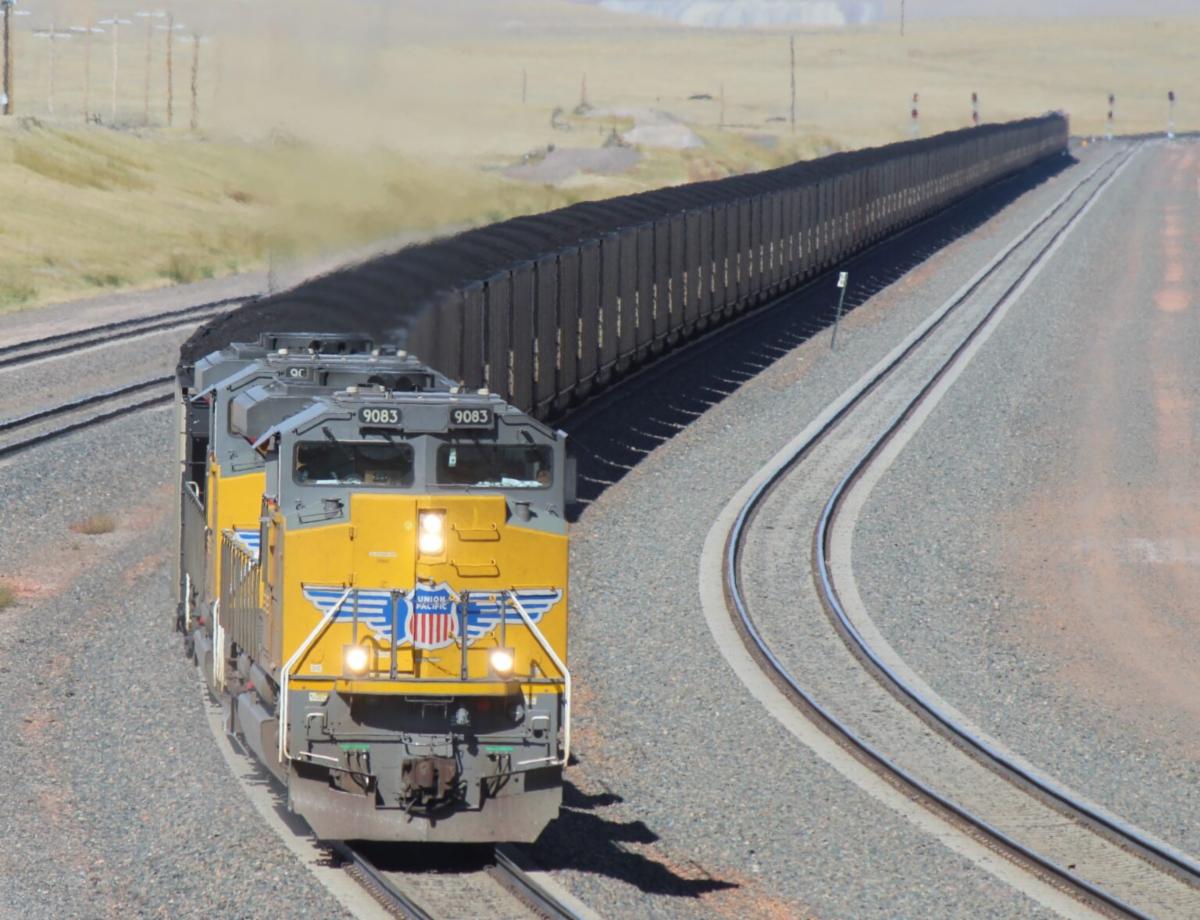
The first phase will begin on the South Morrill Subdivision, UP’s coal-hauling route across western Nebraska that is paralleled by a state highway. The double-track line carries an average of 26 trains per day, according to a recent regulatory filing regarding the railroad’s Powder River Basin coal volume.
The second phase would run on UP’s single-track Greeley Subdivision, which links Denver and Speer Junction, Wyo. The line handles locals, unit trains, and intermodal trains, some of which have work events en route.
|
|
Additional Reading
There has been unprecedented media coverage from all sorts of outlets in recent weeks and months. Normally, the Weekly Rail and Labor News captures the most important dozen articles/issues. But there are endless articles flooding the news. Here are some that are worth the read...
|
|
|
|
|
|
|