| |
|
News & Updates
October 2025 Edition, Issue 94
| | Welcome to another edition of the CARTA monthly updates. Read on to keep abreast with what is new. |
|
|
◘ Program News
◘ Partner News
◘ Fellows News
◘ Publications
◘ Opportunities
◘ Resources
| *Click on 'view entire email' should all content not be displayed in a single email* | | | | CARTA Engages with Society | | In October, CARTA deepened its engagement with society through several strategic events across Africa, connecting research, policy, and practice to advance evidence-informed change. From shaping conversations on sustaining support for early-career researchers at PERKA II stakeholders convening to showcasing digital innovations at the 2025 RedCap Symposium, CARTA demonstrated its commitment to building strong research ecosystems that drive societal impact. | PERKA II Stakeholders Convening | |
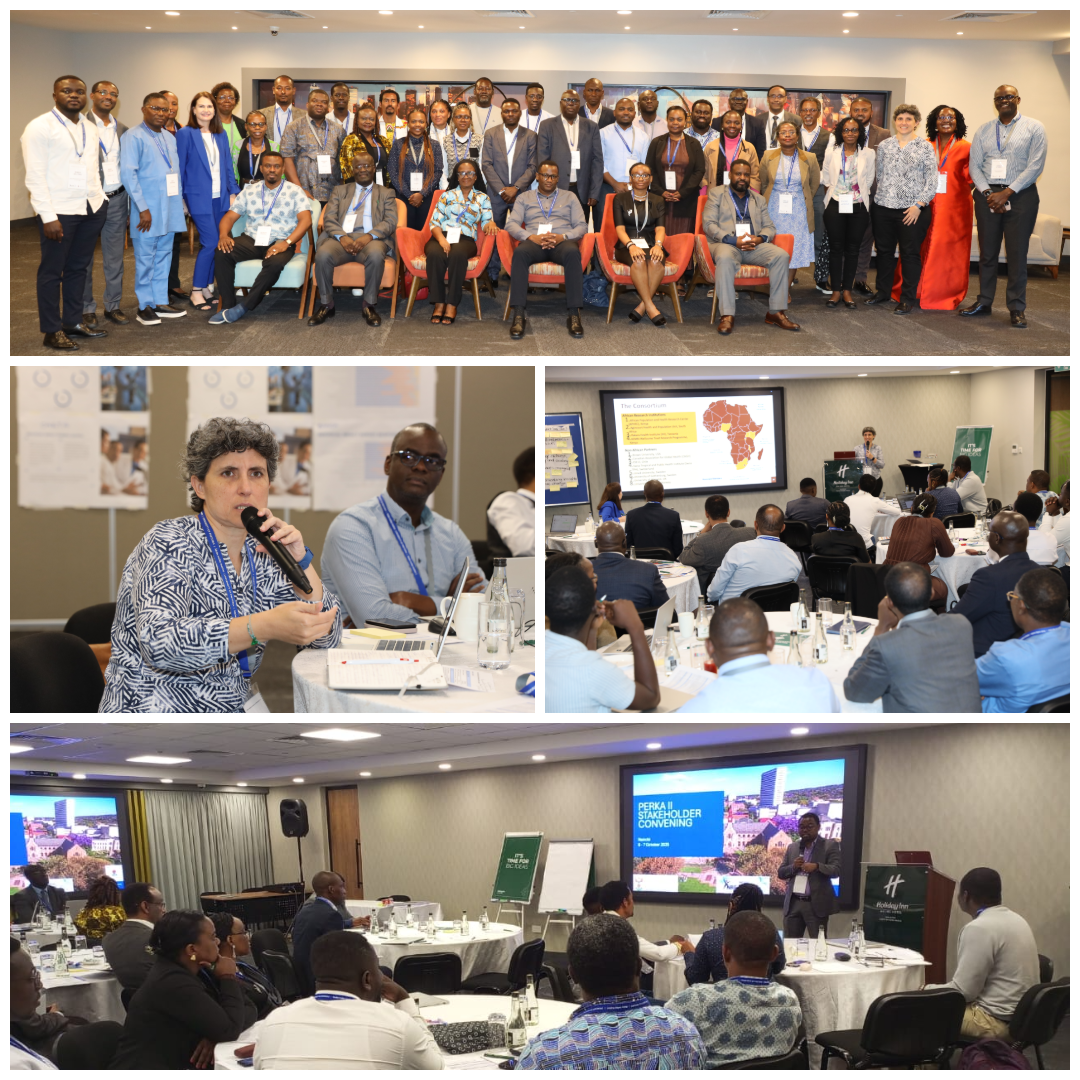
CARTA participated in the Peer Learning for Emerging Researchers’ Knowledge and Advancement (PERKA) II Stakeholders Convening, held in Nairobi, Kenya, from October 6–9, 2025. Supported by the Carnegie Corporation of New York and the National Research Foundation of South Africa (NRF), the convening brought together partners to co-create strategies for strengthening and sustaining support for Early Career Researchers (ECRs) across Africa.
Now in its second phase, PERKA aims to deepen regional collaboration and engage African institutions and funders in taking ownership of postdoctoral support, a vision that aligns with CARTA’s goal to create and sustain African research-intensive universities that maintain a pipeline of high-quality, multidisciplinary Early Career Researchers in public and population health across sub-Saharan Africa.
The PERKA II researchers shared examples of CARTA’s post-PhD support impact across individual, institutional, and societal levels. We look forward to seeing the full report in 2026.
| | Showcasing Digital Innovations at REDCap Africa Symposium | | |
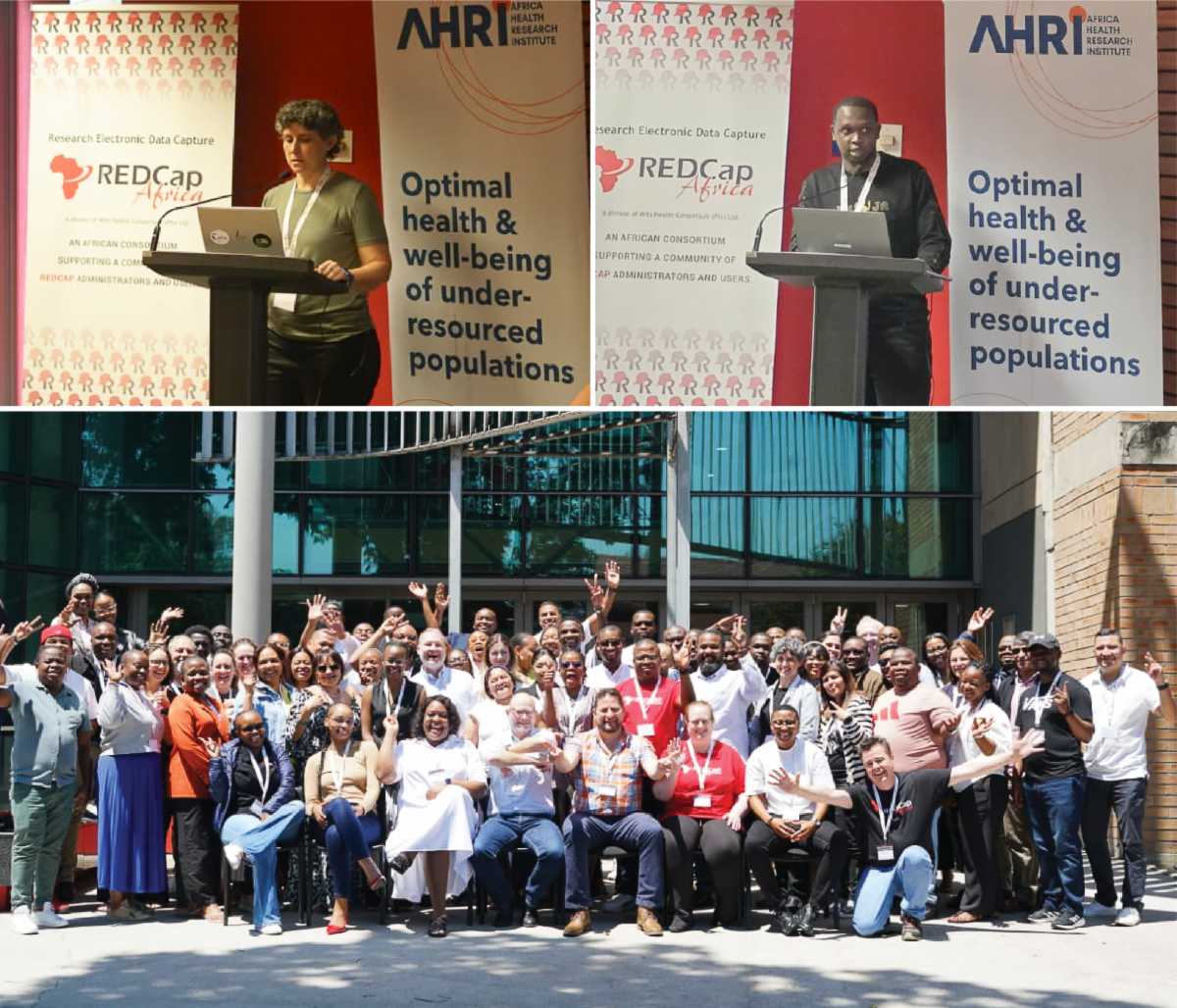
CARTA’s Marta Vicente-Crespo and Gideon Kiprotich presented examples of how the CARTA Secretariat uses REDCap to enhance the program's data systems and evidence-driven decision-making in capacity-strengthening programs at the 2025 REDCap Africa Symposium hosted by the Africa Health Research Institute (AHRI) in Durban, South Africa, on October 22–23.
The annual symposium brought together REDCap administrators, developers, and researchers from across the globe to exchange best practices and explore advancements in research data management and health informatics.
During the event, Marta Vicente-Crespo, CARTA Program Manager, delivered a presentation on Leveraging REDCap as the Operational Backbone for Research and Related Capacity Strengthening, highlighting how the platform supports Monitoring and Evaluation, Administrative, and Operational processes in CARTA. Gideon Kiprotich, our Web Developer, presented on End-to-End Automation of Reviewer Management and Feedback through REDCap and Google Workspace, a process that draws from the numerous application processes that the CARTA Secretariat manages and that demonstrates how digital integration can simplify and enhance review processes. After the Symposium, Gideon also participated in the REDcap Administrators training. His upskilling will enhance CARTA’s own capacity to collect and manage data through the platform.
Their participation underscored CARTA’s commitment to advancing research management efficiency and fostering systems that strengthen research capacity across Africa and facilitate programmatic decision-making.
| Contributing to Education and Research Dialogues at ADEA Triennale | |
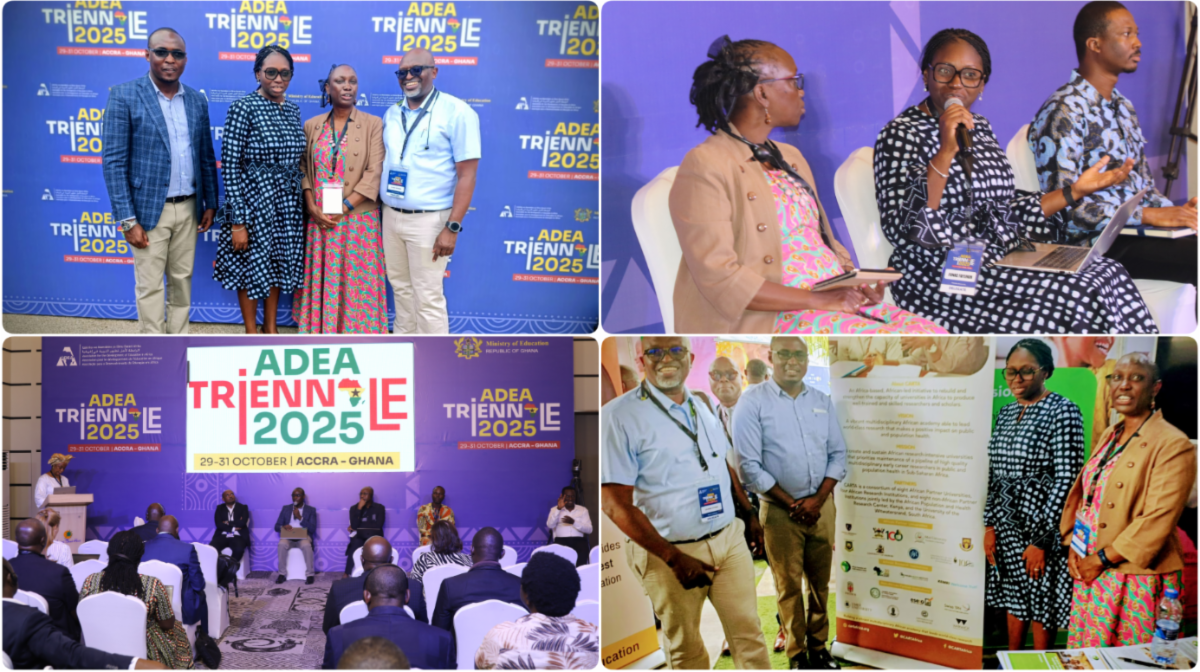
CARTA engaged in continental conversations on how research can shape education, policy, and social progress in Africa at the ADEA Triennale on Education and Skills Development, held in Accra, Ghana, on October 29–31, 2025. The Triennale is one of Africa’s most influential forums on education and skills development, bringing together policymakers, researchers, and partners to reflect on the future of education and research on the continent.
Florah Karimi, CARTA Program Manager, participated in a panel discussion on “African Excellence in Action: Scientific Research, Innovations and Strategic Partnerships. She highlighted CARTA’s role in advancing research excellence across Africa and showcased how strategic collaborations are driving innovation and institutional capacity strengthening. Funke Fayehun, CARTA co-focal person at the University of Ibadan, also shared insights on fostering research relevance, promoting sustainable partnerships, and enhancing the contribution of African scholars to global knowledge production.
At the exhibition booth, CARTA showcased its impactful work in building research capacity, strengthening institutions, and amplifying the visibility of African-led research. CARTA’s engagement highlighted the crucial connection between research, education, and policy in advancing Africa’s development agenda, reinforcing its commitment to connecting research with society and policy for greater impact.
| CARTA Hosts First Grant Writing Retreat | |
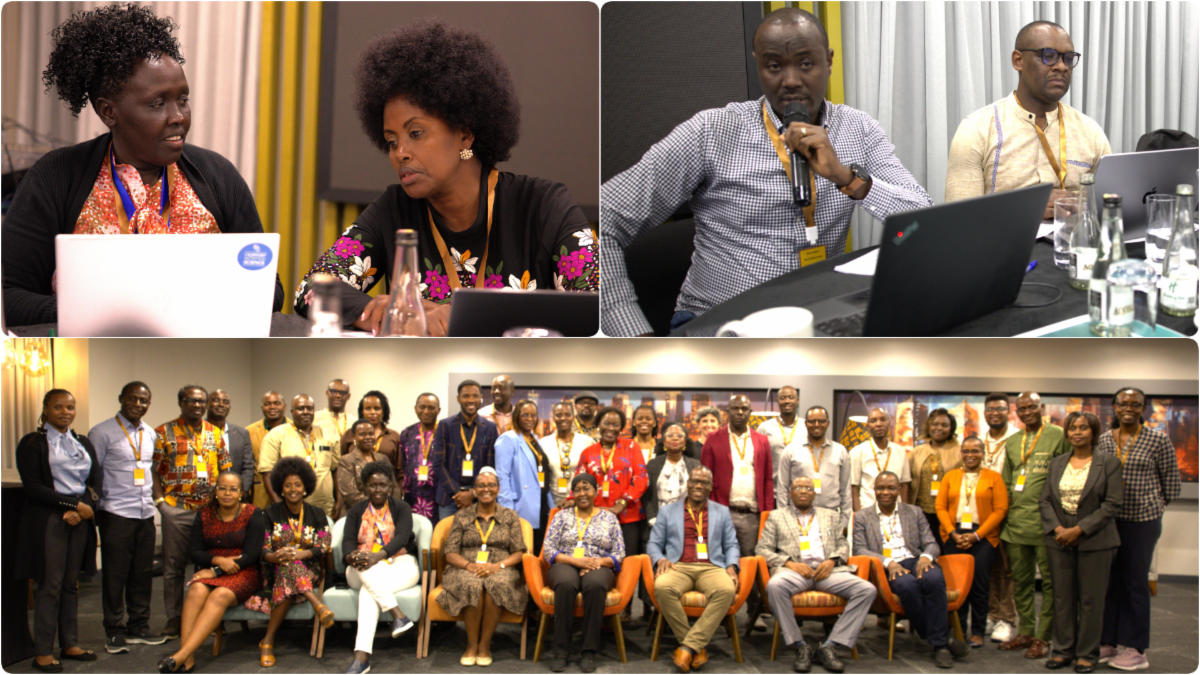
In keeping with our commitment to enhance training that nudges Early Career Researchers (ECRs) into research leadership, and to strengthen the CARTA community’s engagement with society by building ECRs’ competencies in science communication, policy engagement, and knowledge translation, CARTA held a Grant Writing Retreat on October 27–29, 2025 in Nairobi, Kenya, bringing together selected graduates, their colleagues, and mentors for an intensive in-residence writing experience.
This was the first event of this kind organized by CARTA, and it provided a focused and supportive environment that allowed participants to dedicate uninterrupted time to developing competitive, collaborative grant proposals.
The retreat offered CARTA graduates and their colleagues an opportunity to advance grant proposals, refine ideas for active grant calls, and strengthen collaborations that build on CARTA-supported research capacity. Mentors played a central role by guiding teams in setting daily writing goals, tracking progress, and ensuring alignment with each team’s objectives.
Through this innovative approach, CARTA strengthened its commitment to equipping researchers with the skills and support needed to secure funding for impactful, collaborative research across Africa.
| |
|
CARTA is committed to sharing its experiences and insights. Over the past few years, we have published several papers documenting key outcomes and lessons learned from our work. We look forward to producing more knowledge products as resources allow.
To explore our publications, visit our article list on Semantic Scholar
| | | | CARTA Partners Lead Conversations on Advancing Research Translation into Policy and Practice | | |
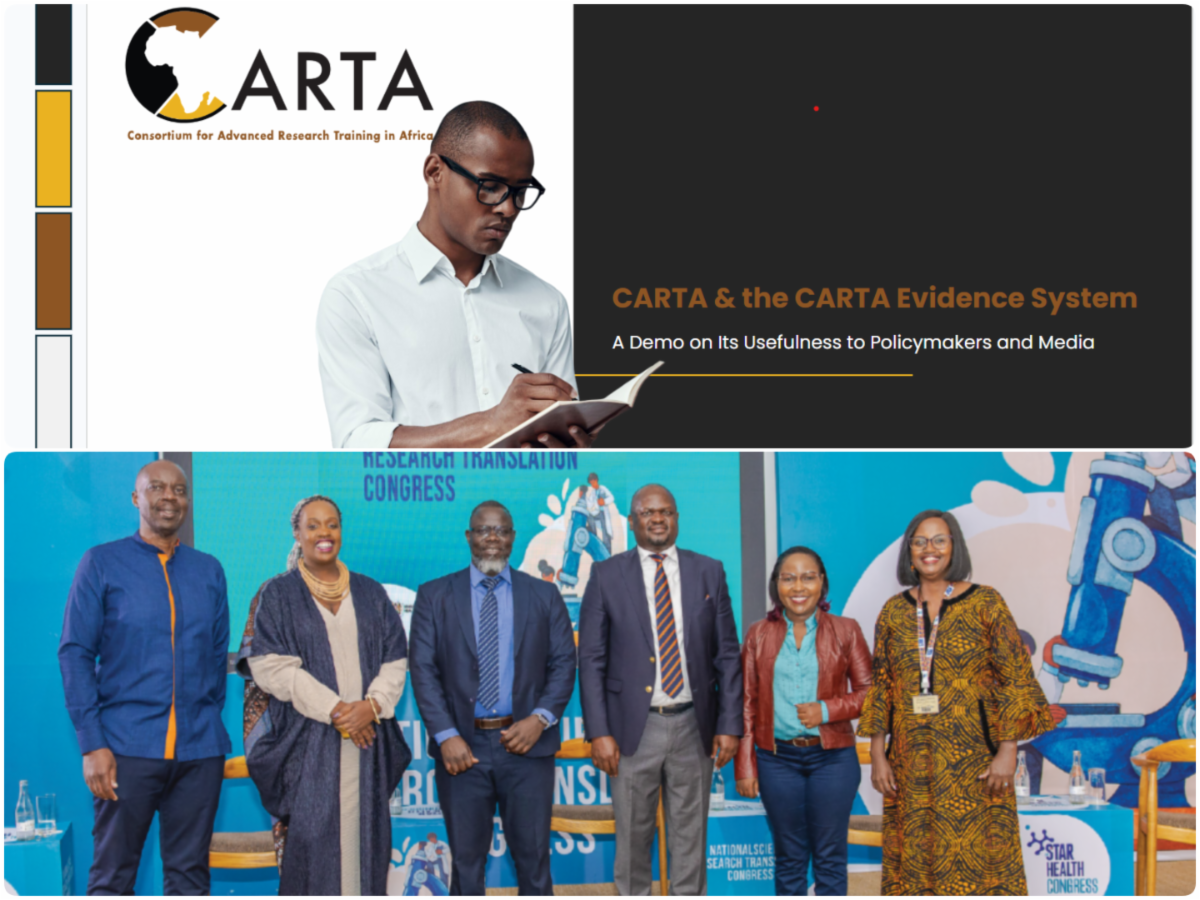
On October 22, The Star Kenya, in collaboration with the African Population and Health Research Center (APHRC), hosted the Star Health National Congress in Nairobi. The event, officiated by Dr. Patrick Amoth, Director General for Health at Kenya’s Ministry of Health, brought together scientists, policymakers, and communicators to strengthen collaboration and bridge the gap between research and policy.
Jude Igumbor, CARTA co-focal person at the University of the Witwatersrand, showcased the CARTA Evidence, demonstrating how the platform collates, analyzes, and amplifies the visibility of research evidence for policymakers, media, and researchers across Africa. The engagement underscores CARTA’s commitment to connecting research with society by sharing knowledge, strengthening partnerships, and fostering the uptake of evidence across the continent.
The opportunity was facilitated by Violet Naanyu, a faculty member of Moi University and a valuable member of the CARTA network, often contributing to the program's training and mentorship activities. Violet, who is also the Behavioral and Social Science Lead at AMPATH, underscored the importance of building trust and transparency between researchers and the media. She highlighted how early engagement and clear communication are essential for effectively translating scientific evidence into policy and public understanding.
| CARTA Partners Contribute to Climate and Health Dialogue at Pan-African Conference | |
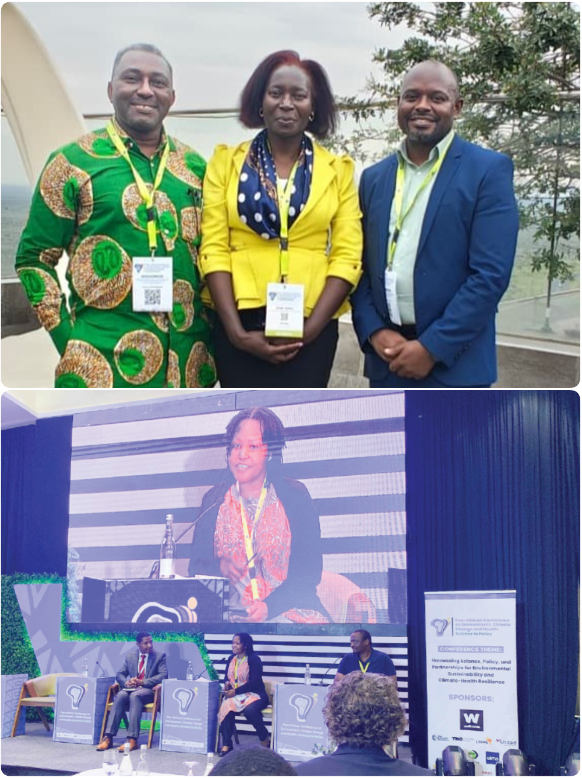
APHRC, through its Food and Nutrition Unit, Godson Rowland Ana, faculty member at the University of Ibadan, who has supervised several CARTA fellows and often supports CARTA training events, and John Bosco Isunju, CARTA co-focal Person, Makerere University, participated in the Pan-African Conference on Environment, Climate Change and Health: Science to Policy, held in Nairobi, Kenya, on October 21 - 23, 2025.
Godson shared insights on strengthening climate and health education in Africa during a session that explored innovations, gaps, and collaboration in climate and planetary health training within public health education systems. John Bosco shared insights on strengthening capacity for climate and health financing and developing responsive policy frameworks. APHRC contributed to several sessions, including a panel discussion on Climate and Health Hubs in Africa, and also showcased the Center's portfolio on climate and health.
The conference provided a valuable platform for sharing knowledge, strengthening partnerships, and promoting evidence-based solutions at the intersection of climate, environment, and health in Africa.
| Makerere Hosts 2025 ARUA Conference on Research, Innovation, and AI | | |
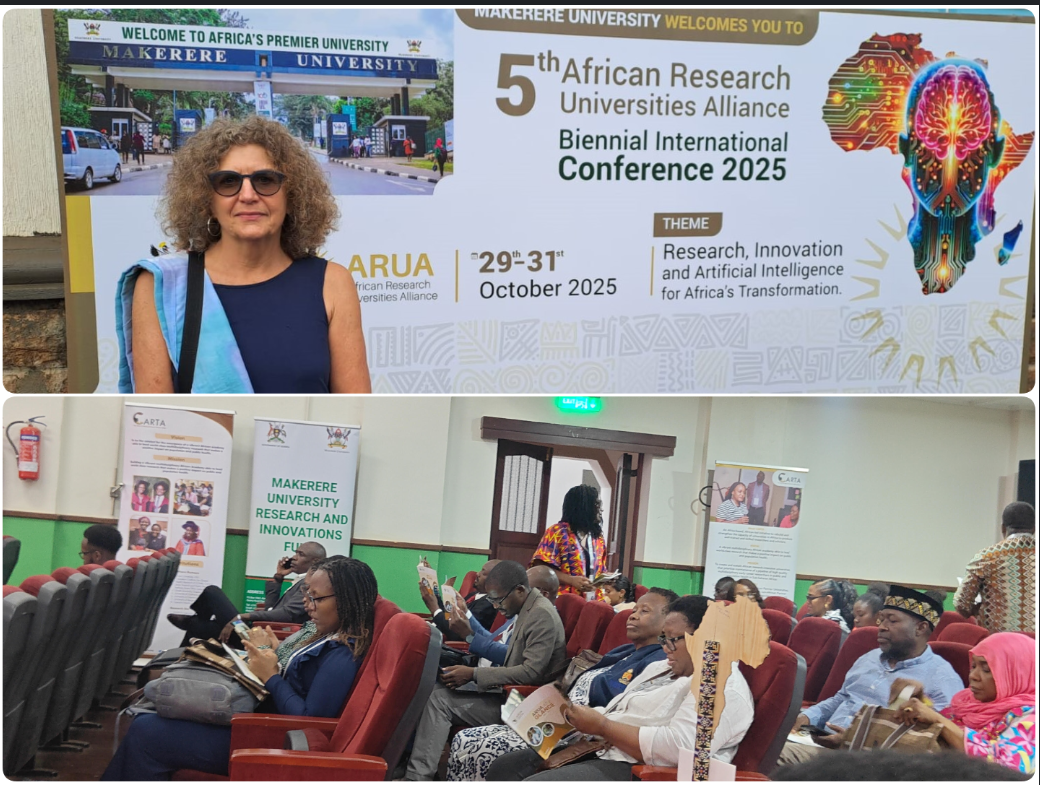
On October 29 - 31, 2025, Makerere University hosted the 5th African Research Universities Alliance (ARUA) Biennial International Conference under the theme “Research, Innovation, and Artificial Intelligence for Africa’s Transformation.”
The conference brought together researchers, policymakers, and development partners to explore how African universities can leverage artificial intelligence (AI) and innovation to drive inclusive growth and sustainable development.
CARTA co-focal person at Makerere University, Robert Wamala, was the Chair of the Local Organizing Committee and led the coordination of the event. John Bosco Isunju, the other co-focal person at Makerere, chaired a session on “Building AI Capacity and Talents in African Higher Education Institutions.”
During the event, CARTA Co-Director Sharon Fonn, was part of a panel discussion on “Collaboration of Networks: Promoting Collaborative Research and Innovation Networks in AI in Africa,” emphasizing the importance of partnerships in advancing AI-driven research for societal impact. Jude Igumbor, CARTA co-focal person at the University of the Witwatersrand, was scheduled to present on how CARTA is using AI to drive research capacity strengthening through CARTA Evidence. Unfortunately, due to problems with his visa processing, he had to cancel his participation.
CARTA’s participation underscored its commitment to fostering collaborative research, innovation, and institutional capacity to harness AI for Africa’s transformation.
| | |
Noel Korukire, cohort 9, graduated with a PhD in Public Health on October 17, 2025, from the School of Public Health, University of Rwanda, College of Medicine and Health.
| | Early Career Researchers in Action | | |
Alice Muhayimana, cohort 10, University of Rwanda, was awarded a Postgraduate Certificate in Learning and Teaching in Higher Education (PGCLTHE) during a congregation ceremony held at the University of Rwanda on October 17, 2025. The certification recognizes her commitment to enhancing teaching excellence and promoting innovative learning approaches in higher education.
| | |
Lilian Njagi, cohort 9, currently at KEMRI, completed a 3.5-month research visit at the University of Washington, where she gained skills in TB immunology and bioinformatics, and received mentorship in developing a career development award proposal. The visit was supported by the TB HIV Training Program in Kenya and the Afrique Research Support Hub (ARSH) Program at APHRC, which builds on the CARTA Graduate Grant Writing Workshop to support post-PhD EMCRs across the continent to develop competitive proposals.
| |
Hellen Jepngetich, cohort 5, Moi University, received a seed grant from the Columbia Global Consortium on Climate and Health Education to support an initiative on health education for ecosystem health. The one-year project aims to address training gaps in planetary and One Health concepts to promote ecosystem resilience and sustainable management. Hellen is grateful for CARTA’s Grant Writing Workshops, particularly the sessions on what makes a strong application, for equipping her with the skills that contributed to her successful proposal.
| |
Ochuko Orherhe, cohort 11, Obafemi Awolowo University, was awarded the American Society for Clinical Pharmacology & Therapeutics (ASCPT) Low-to-Middle Income (LMIC) Accelerator Program for 2025–2026, which includes monthly one-on-one mentorship sessions and a one-time travel grant to attend the ASCPT 2026 Annual Meeting in March 2026. She also attended the Digital Health Africa Conference on September 3–4, 2025, and the Pharmacometrics Africa Conference on September 5, 2025, both held at the Infectious Disease Institute, Makerere University, Kampala, Uganda. The Pharmacometrics Africa Conference focused on “Celebrating a New Era for Pharmacometrics in Africa: Building on Global Momentum.”
| |
Omotade Ijarotimi, cohort 10, Obafemi Awolowo University, participated in the 25th World Congress of Gynecology and Obstetrics, held at the Cape Town International Convention Center, South Africa, from October 5 – 9, 2025. At this biennial gathering of obstetricians and gynecologists from around the world, she presented her abstract titled “The Effect of Antenatal Family Planning Counseling for Male Partners on Postpartum Modern Contraception Use by Delivered Mothers in Ile-Ife, Nigeria,” which was selected as part of a moderated poster tour. The conference provided her with the opportunity to network with international professionals, exchange ideas in her area of research, and receive valuable feedback on her PhD work. Omotade is grateful to CARTA for supporting her participation and enabling her to share her findings with a global community of experts.
| |
Céline Niwemahoro, cohort 1, University of Rwanda, participated in the 28th Annual Conference on Global Economic Analysis, organized by the Global Trade Analysis Project (GTAP), held in Kigali, Rwanda, from June 25–27, 2025. At the conference, she presented on “Experience on Data Compilation for GTAP Database: Focus on Mauritius.”
| | |
Our Reads
&
Watch this Month
| | | |
Funding: Cancer Research UK – Therapeutic Catalyst
Cancer Research UK invites applications for its Therapeutic Catalyst scheme, which supports early-stage drug discovery projects with the potential to deliver novel therapeutics for cancer. The initiative provides funding and support to de-risk early projects, positioning them for further research, investment, or partnership. Funding amount up to £250K per project. Researchers will receive guidance from the Therapeutic Innovation team throughout proposal development. The scheme encourages collaborative applications that leverage both applicants’ expertise and Cancer Research Horizons' drug discovery laboratories. Details
Deadline: February 6, 2026
| |
|
Funding: Workplace Innovation Now (WIN) Challenge
The WIN Challenge, launched by Aspen Digital and supported by Pivotal, invites applications for innovative solutions that help women thrive and create better workplaces for all. The initiative offers $60 million in funding across three focus areas: Culture & Practices, AI, and Narrative, supporting scalable approaches to improve workplace culture, harness AI responsibly, and shape empowering narratives for women. Each pillar will award up to eight projects, with grants of $2.5 million or $5 million per awardee. Details
Deadline: Rolling
| |
Fellowship: Sub-Saharan Africa Health Research and Innovation (SAHRI) Program
The SAHRI Fellowship invites applications from mid-career biomedical and clinical researchers from sub-Saharan Africa. The three-year program provides structured training, including a Master of Science in Tropical Medicine at the Institute of Tropical Medicine Antwerp, internships at BioNTech in Germany, and hands-on research placements at leading African research centres. Fellows will also implement a research project in their home country, with opportunities to pursue a PhD and contribute to sustainable impact in their institutions and communities. Details
Deadline: February 1, 2026
| |
Fellowship: 2026 – 2027 Harvard LEAD Fellowship
The Harvard Global Health Institute (HGHI), in collaboration with the Department of Global Health and Population at the Harvard T.H. Chan School of Public Health, invites applications for the 2026 – 2027 LEAD Fellowship. This one-year program is designed to advance leadership skills for individuals from low and middle-income countries. Fellows will participate in a 12-month virtual curriculum and a six-week in-person experience in Spring 2027, engaging in one-on-one leadership coaching, mentorship, executive education courses, masterclasses, and networking opportunities with global health leaders. Details
Deadline: November 30, 2025
| |
Fellowship: Climate Change and Human Health Postdoctoral
The Wits School of Public Health (SPH) and Global Change Institute (GCI), through the DELTAS Africa SSACAB program, invite applications for a one-year postdoctoral fellowship on the impact of climate change on human health using spatio-temporal statistical methods. The fellowship includes mentorship, research development, and opportunities for publication.
Eligibility: PhD in statistics, mathematics, demography, climate modeling, or related quantitative fields; prior knowledge of spatial statistics; Sub-Saharan African nationals under 55 years. Inquiries and applications should be submitted to: Dr Yolandi Ernst ( yolandi.ernst@wits.ac.za ) and Prof Ngianga-Bakwin Kandala (ngianga-bakwin.kandala@wits.ac.za). Please copy tobias.chirwa@wits.ac.za and caroline.vika@wits.ac.za.
Deadline: Open until filled
| |
Fellowship: Global Fellows Program in Demography
The Population Studies and Training Center (PSTC) at Brown University invites early- and mid-career demographers from around the world, with priority given to scholars from low- and middle-income countries, to apply for its Global Fellows Program in Demography. The fellowship offers a one-month residency at Brown, during which fellows receive office space, computing support, access to PSTC faculty and resources, and support for travel, housing, and per diem. The program is open to applicants holding a PhD (or equivalent) with a clear research plan aligned with PSTC’s core research areas. Applications are competitive and assessed on the relevance of the candidate’s research, their commitment to demography, and how their work will contribute to the wider academic community. Details
Deadline: Rolling basis
| |
Master’s and PhD Scholarships: DAAD In-Country/In-Region Program
Deutscher Akademischer Austauschdienst (DAAD) is offering In-Country/In-Region Scholarships for students from Sub-Saharan African countries to pursue Master’s and PhD programmes at selected institutions across a wide range of disciplines, including Engineering, Natural Sciences, Public and Environmental Health, Agricultural Sciences, and Social Sciences. The scholarships provide financial support covering tuition and other study-related costs, enabling students to advance their education and research within the region. Details
Deadline: November 27, 2025
| | |
Master's Scholarship: Mastercard Foundation Scholars Program at UGHE
The University of Global Health Equity (UGHE), in partnership with the Mastercard Foundation, offers fully-funded scholarships for African youth pursuing Master's degrees in Global Health Delivery (MGHD) and Health Professions Education (MHPE). The program targets young women, refugees, displaced youth, and persons with disabilities, providing tuition, housing, meals, a monthly allowance, mentorship, and leadership development. Eligibility: African citizens under 35 years with an undergraduate degree. Details
Deadline: November 30, 2025
| | |
Call for Abstracts: Evidence to Impact Symposium 2026
The Population Council, in partnership with the African Population and Health Research Center (APHRC), African Institute for Development Policy (AFIDEP), and the National Council for Population and Development (NCPD), invites abstracts for the Evidence to Impact Symposium: Shaping Adolescent-Centered Policies and Programs in Eastern and Southern Africa, scheduled on June 9–11, 2026, in Nairobi, Kenya. The symposium aims to bridge the gap between research evidence, policy, and program implementation to improve adolescent well-being, particularly for girls, across the region. Researchers, policymakers, civil society, youth organizations, and funders are encouraged to submit abstracts exploring how evidence can drive impact in areas such as adolescent health, education, skills development, digital inclusion, and resilience in the face of social, environmental, and digital changes. Details
Deadline: November 30, 2025
| | |
Scholarships and Grants: SAMRC Research Capacity Development Opportunities 2025/2026
The South African Medical Research Council (SAMRC) has released the 2025/2026 Request for Applications (RFA) calendar through its Division of Research Capacity Development (RCD). The calendar highlights key opening and closing dates for scholarship and grant opportunities, as well as upcoming RCD events and workshops aimed at strengthening health research capacity in South Africa. Application dates are subject to change; updated versions will be posted on the Research Capacity Development website. Details
| | |
Access a wide range of opportunities related to the National Institute for Health and Care Research here:
latest-NIHR-funding-opportunities
Disclaimer:
The opportunities CARTA shares are mostly from external parties. Linking to an external site does not constitute endorsement by CARTA.
| | |
Navigating the Competitive Research Funding Landscape
A recent article from Nature delves into the escalating competition for research funding in Europe, revealing that success rates for leading grants have declined to single percentage points. The analysis underscores the challenges faced by early-career researchers in securing funding amidst a surge in applications. This insight is valuable for fellows seeking to understand and strategize within the increasingly competitive research funding environment. Details
| | |
Bridging the Research–Policy Gap for Sustainable Development: A Handbook for Policy Engagement and Impact in the Global South
A practical open-access guide by the Environment for Development Initiative (EfD) that walks researchers through linking their work with policy and societal impact in low- and middle-income settings. The handbook draws on examples from Africa, Latin America, and Asia, and offers frameworks, tools, and strategies for engaging policymakers, civil society, and other stakeholders. Details
| | |
Using Research Evidence in Policy
Explore Transforming Evidence’s project on what influences the use of research evidence in policymaking. The study analyzes over 2,000 cases to identify key factors that support or hinder evidence use, offering practical insights for research impact and policy engagement.
| |
Climate-Resilient Health Systems
Explore how health systems in Senegal and Uganda are being strengthened to address climate change impacts through a $1.4 million initiative by the Rockefeller Foundation and IDRC. The case study highlights strategies for climate-health governance, evidence generation, and investment planning, with APHRC and the Centre de Suivi Ecologique supporting Senegal, and CHAI and Makerere University supporting Uganda’s Health National Adaptation Plan (H-NAP) 2025–2030. Details
| |
The Lancet Regional Health – Africa
A new open-access platform for publishing high-quality research that advances health outcomes across Africa. The journal provides an opportunity for African scholars and collaborators to disseminate impactful, regionally relevant findings and contribute to global health dialogue. Details
| |
Safeguarding Adolescent Sexual and Reproductive Health Webinar Series
The African Population and Health Research Center (APHRC) and partners are hosting a webinar series addressing the impact of recent funding cuts on adolescent sexual and reproductive health (ASRH) in low- and middle-income countries. The series brings together experts from government, health policy, research, and civil society to discuss the funding crisis, its implications, and strategies for building equitable partnerships to sustain ASRH services. Upcoming webinar: From Crisis to Opportunity: Wednesday, November 12, 2025 | 1700–1800 EAT | Register here.
| Master the art of grant writing: Register for the Afrique Research Support Hub (ARSH) program’s Grant Writing Course, designed to strengthen your skills in proposal development, budgeting, ethics, and grant resubmissions. The course is available in English and French. | | WE WOULD LOVE TO HEAR FROM YOU | | |
To be featured in the next CARTA Monthly, share with us your news and updates
via email to cartacomms@cartafrica.org on or before November 25, 2025.
Submissions should include but are not limited to:
Upcoming events, meetings, story ideas, new collaborations, new trials/updates, upcoming and published papers, policy briefs, community engagement activities, scholarships, what you are reading, if you won a grant, attending or about an upcoming conference, a call for applications/funding/papers, etc.
| | | | |