Oklahoma Department of Corrections / Associated Press |
|
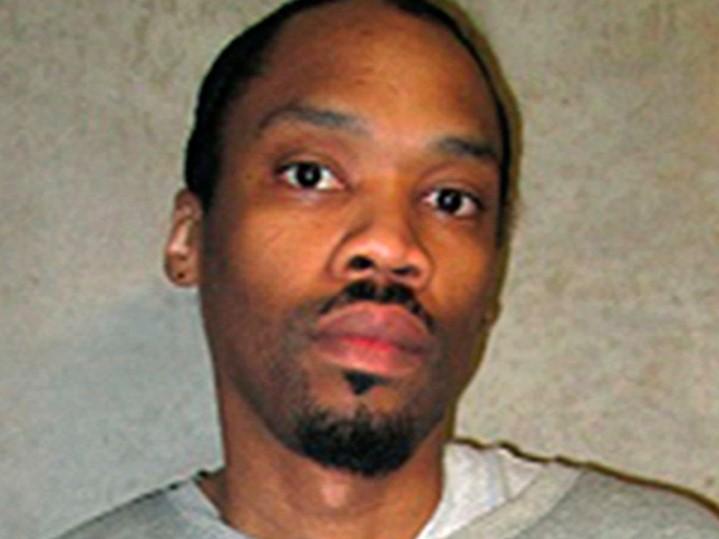
Julius Jones received clemency just hours before his scheduled execution on November 18th. Jones was convicted of murder in 1999 and subsequently placed on death row in the state of Oklahoma. However, Jones and his many supporters have fought for over two decades to prove his innocence and wrongful imprisonment. After months of pleas for clemency, Oklahoma Governor Kevin Stitt finally responded by a statement on Twitter that he decided to grant clemency after "prayerful consideration and reviewing materials presented by all sides of this case." Stitt gave Jones a life sentence without the possibility of parole, much to the dismay of those that still seek his eventual freedom. Supporters for Jones, including his sister Antoinette Jones, remain hopefully motivated as they "still have to get his freedom" and "gotta keep pressing forward to correct the different ways that have hindered Julius from true justice."
|
|
Deborah Griffin / Associated Press |
|
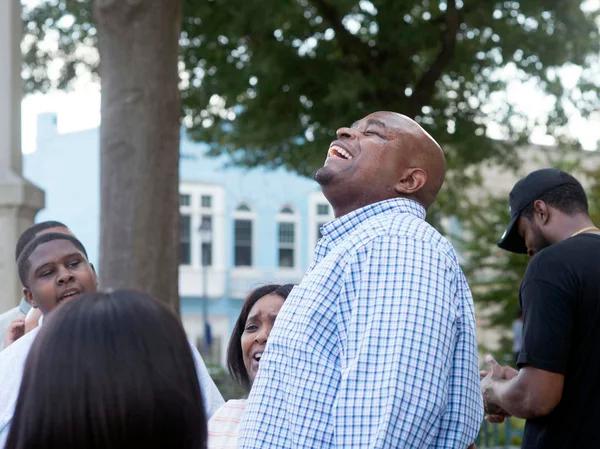
Dontae Sharpe spent twenty-four years in prison for a murder that he continued to claim he did not commit. Sharpe’s claim of innocence led him to deny multiple plea deals for shorter sentences. It was not until years later that the state reexamined the case due to new evidence of a false witness testimony. According to the Associated Press, the witness “who claimed Sharpe kill[ed] Radcliffe (murder victim) but later recanted and said she wasn’t present at the time of the shooting. She later said her claims were made up, based on what investigators told her.” In light of the evidence, North Carolina Governor Roy Cooper pardoned Sharpe and stated, “Mr. Sharpe and others who have been wrongly convicted deserve to have that injustice fully and publicly acknowledged.” Sharpe is now eligible to apply for compensation of up to $750,000 for the wrongful conviction. Sharpe explains that this is not a victory as “my freedom is still incomplete as long as there’s still people going to prison wrongfully, if there’s still people in prison wrongfully and there’s still people that are waiting on pardons.”
|
|
Leah Nash / New York Times |
|
Professor Julie Green produced 1,000 painted plates to commemorate “The Last Supper” wishes of death row prisoners. Green believed that the choices for their last meal portrayed a human element in the face of the inhumane practices of capital punishment. Some people on death row chose food that Green had associated with celebration, but these same meals took on an entirely different meaning. In contrast, others attached no particular meaning to the meal or denied a final request entirely. Still, the attachment to food represented a humanizing similarity for those on death row and those released from prison. In recent years, Green started a new series known as “First Meals” that captured the first meal of freedom for those wrongfully convicted. According to Penelope Green, Professor Green “planned to paint the meals until capital punishment was abolished, or until she made 1,000 plates, whichever came first.” Green painted the 1,000th plate in September of 2021, a few weeks before her passing. The current exhibition of “The Last Supper” contains 800 plates and is at the Bellevue Arts Museum in Washington until January 23rd.
|
|
Brandon Bell / Getty Images |
|
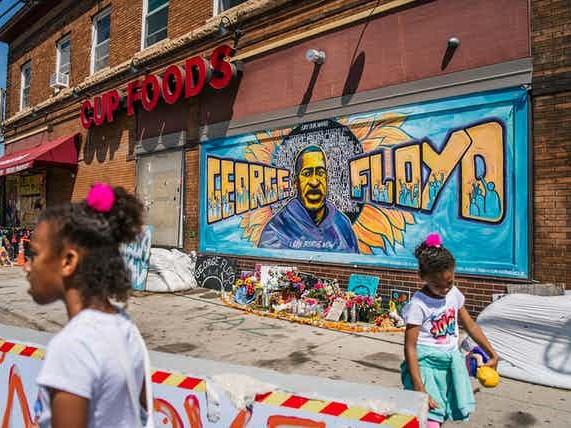
Recent plans to replace the Minneapolis Police Department with a new Department for Public Safety lost by a 56% to 44% margin. Michelle Phelps of the University of Minnesota explains that these results have a few takeaways for the city’s future and the turning tides towards reform or abolition. Phelps stated that “the proposed amendment itself didn’t require police numbers to be reduced, but it removed a barrier to defunding” by eliminating the requirement for a police force to be proportional to the population of their community. In fact, the police budget has not increased dramatically from the year prior; the number of officers has decreased due to department transfers or mental health issues. Phelps reports that Minneapolis has also continued “to onboard new mental health professionals to respond to some 911 calls,” which signals that the core of the amendment “could return in some form.” Taken together, although the amendment failed to pass, proponents of the legislature believe that the 44% in favor of the change represent a significant growth in the momentum to address concerns about policing.
|
|
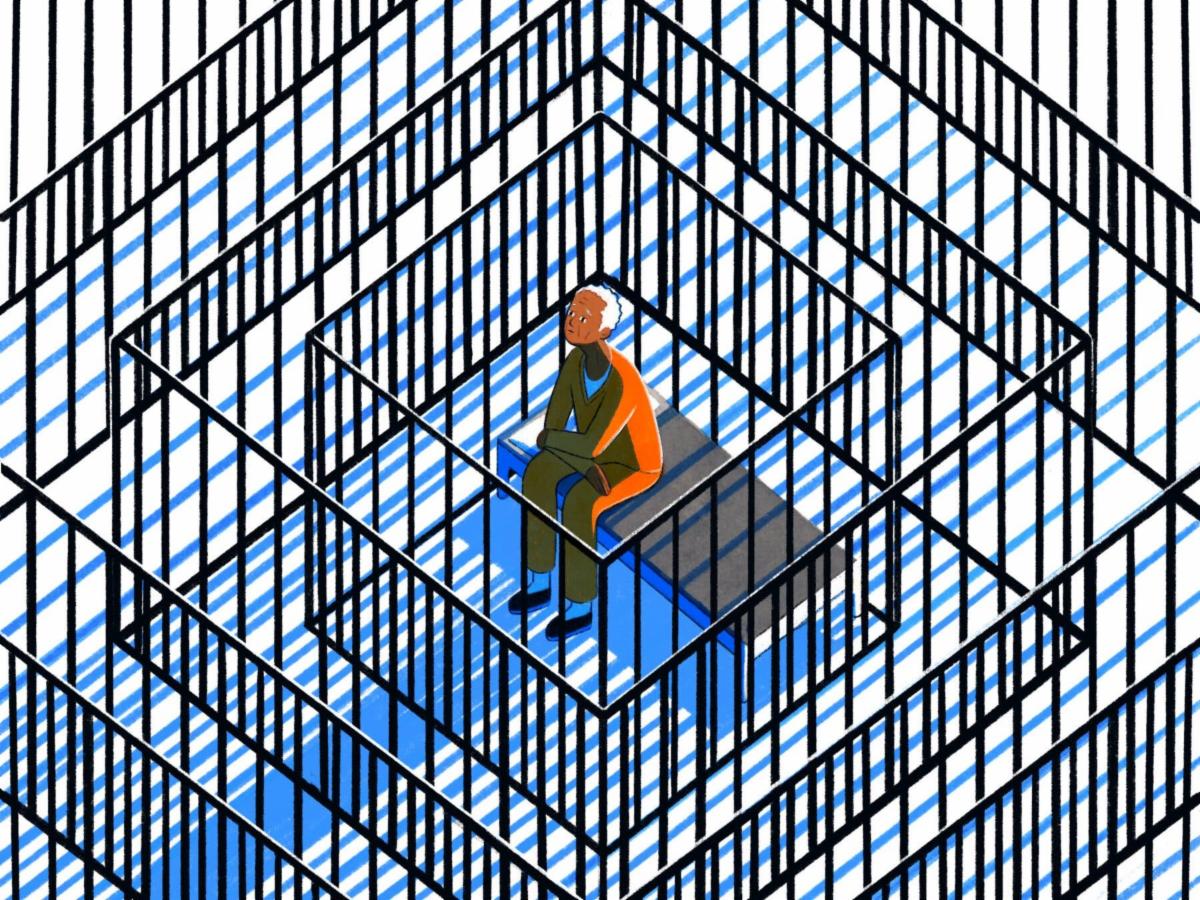
In 2018, a debate team from the Stateville Correctional Center argued for the reinstatement of parole in Illinois. According to Ben Austen and Khalil Gibran Muhammad, the team sought to challenge the current law in Illinois, which had “abolished discretionary parole in 1978 for all future offenders.” Raul Dorado, one of the debaters serving a life sentence, explained to politicians that long-term sentences for people from ages 16 to 26 run counter to the findings that “people simply age out of crime.” Austen and Muhammad confirm this finding as “arrest rates for both violent and nonviolent crimes generally peak when people in their late teens and early 20s, and from there criminal behavior drops steadily.” Oscar Parham, a fellow debate member, stated that “just as prisoners must change and reform, so must the system.” Although the prison disbanded the Stateville team and barred the coach on claims that they violated safety and security practices, the debaters later drafted a bill for parole review. The group subsequently formed into “Parole Illinois,” which supported Senate Bill 2333 for the parole review of people imprisoned in the state who have served at least 20 years. Joseph Dole, policy director of Parole Illinois who has served 23 years of a life sentence, explained the significance of the debate was less about what they had said and more about their “demonstrat[ion] to the lawmakers in attendance that they were real people with intelligence, ambitions and valid concerns.”
|
|
Please share recent research you would like to see featured, including your own!
Send it to carceralstudies@ou.edu
|
|
ABSTRACT: This study tested relationships between racial inequalities in the school system—specifically, the disproportionate punishment of Black students—and life outcomes for Black youths, along with moderating psychological factors. In an 18-year longitudinal study of 261 Black youths (ages 11–29), we investigated whether adult life outcomes varied as a function of adolescent self-control and academic achievement. We tested whether relationships were moderated by the racial climates of the high schools that youths attended, using administrative data on relative punishment rates of Black and White students. Among Black youths who attended schools that disproportionately punished Black students, high self-control in early adolescence presaged higher academic orientation in late adolescence, which in turn predicted higher educational attainment, higher income, and better mental health in adulthood. However, among these same youths, higher academic orientation forecasted higher adult insulin resistance, a key process in cardiometabolic disease. These findings suggest that achieving successes in life in the face of racial inequalities may come at a physical health cost for Black youths.
|
|
ABSTRACT: Problems with data collection - and an unfortunate tendency to group Native Americans together with other ethnic and racial groups in data publications - have made it hard to understand the effect of mass incarceration on Native people.
|
|
ABSTRACT: This paper analyses policy documents and interviews conducted in federal prisons to trace the emergence and early effects of Canada’s recent wave of groundbreaking trans correctional reforms. I show that prison authorities were forced to adopt more inclusive policies due to the legal, financial, and reputational risks generated by new trans rights protections. Yet, by examining what rights both enabled and foreclosed once they materialized in the everyday of prison life, I argue that reform’s implementation was fraught with ambivalence. Namely, this ambivalence was felt by the correctional administrators tasked with translating nebulous policy principles into concrete guidelines; by staff, whose front-line duty involved weighing rights against risks; and by trans prisoners, who grappled with how to balance their new entitlements with risks and uncertainties. What trans correctional reforms reveal, then, is that rights and risks are caught in an ambivalent and co-constitutive relationship in Canada’s regime of prison governance.
|
|
ABSTRACT: In recent decades, the share of U.S. adults with felony-level criminal records has risen and the growth in the employment rate has slowed. Sociological theories of labeling and stigmatization, as well as economic theories of statistical discrimination, suggest a possible causal connection between the two phenomena. Surveys of employers have shown increasing reliance on criminal background checks, for example, and audit studies reveal explicit discrimination against people with felony-level criminal records. This paper draws on novel, state-level annual measures of individuals with felony-level records to estimate pooled cross-sectional, panel models predicting changes in aggregate employment rates. Estimates from these models indicate that a 1 percentage point increase in the share of a state’s adult population with a felony history is associated with 0.3 percentage point increase in non-employment (being unemployed or not in the labor force) among those aged 18 to 54. Subgroup analysis shows that effects are stronger for women and whites. These results suggest that the stigma of a felony record may play an important part in aggregate employment rates as well as in individual hiring practices.
|
|
Updates, Events & Opportunities |
|
New Carceral Studies Board Members
The Carceral Studies Consortium is pleased to welcome our newest board members:
|
|
|
CFE-DISC Community-University Event on Housing and Homelessness
CFE-DISC and the United Way will be partnering on a second community-university brainstorming session with community partners and faculty around the theme of overcoming challenges in housing and homelessness through data science and community research. The session will take place entirely via zoom on December 9th from 12-1:30PM.
|
|
|
Abolitionist Organization HEARD Seeks Advocate
HEARD is a cross-disability abolitionist organization that unites across identities, communities, movements, and borders to end ableism, racism, capitalism, and all other forms of oppression and violence. The Advocate’s primary responsibility is to advocate for deaf/disabled incarcerated people who communicate their legal issues to HEARD.
|
|
|
OU Libraries and Carceral Studies Consortium Assemble “Racial Capitalism” Library Guide
In a collaborative effort between OU Libraries and the Carceral Studies Consortium, a library guide on “Racial Capitalism” is now available for all students, staff, and faculty. Racial capitalism contends that racist oppression is central to how capitalism operates. Racial subjugation is not one specific manifestation of a larger capitalist system, but rather, capitalism itself is a racial system. The guide includes resources (written, audiovisual, and contacts) for information about the carceral state, crimmigration, and race and labor.
|
|
|
OU PolicyMap Trial
OU Libraries is currently offering a trial subscription to the program PolicyMap until November 23, 2021. PolicyMap enables users to interact with data and mapping tools with indicators that include demographics, jobs, housing, crime, quality of life, education, socioeconomic factors, and much more. Some data sources include the Census Bureau, Department of Homeland Security, and Center for Disease Control Behavioral Risk Factor Surveillance Survey. If you would like to see OU subscribe to this program, it is important to try it out and respond to the feedback survey as soon as possible.
|
|
|
Call for Papers: 2022 Conference - "Perspectives on Carcerality" hosted by DePaul Philosophy Graduate Students
DePaul University at the University of Illinois, Chicago invites papers for their virtual and in-person graduate student conference. The conference, titled Perspectives on Carcerality, Surveillance, Policing, and Abolition, “aims to explore critical approaches to these technologies as well as the practices of subversion that allow us to both imagine and create a post-carceral society.” Interested parties can submit abstracts and panel proposals to depaulgradcon2022@gmail.com. The deadline for submissions is November 28th, 2021.
|
|
|
Join the Consortium for "Prison Lands,"
a Film/Discussion Series
The OU Carceral Studies Consortium is pleased to host its Fall 2021 documentary series, in partnership with the WGS Center for Social Justice and Poetic Justice, on the theme "Prison Lands." Each screening will be followed by a group discussion facilitated by scholars. The final film remaining in the series is The Prison in Twelve Landscapes (Weds., Dec. 1, 6pm). Please pre-register at the link below.
|
|
|
2021-2022 Carceral Studies Consortium Student Work Prize
The Carceral Studies Consortium is inviting original student essays or creative works developed as part of any course in any discipline during the 2021-2022 academic year that engages the topic of Carceral Studies, broadly conceived. Submissions are not limited to essays, but may be in any creative or scholarly format, including but not limited to art in any medium, story maps, and more.
|
|
|
ABOUT
The Consortium Newsletter will offer a roundup of a few selected articles that reflect today’s news, organizing, and thinking related to the carceral state. We understand that freedom work is built on education and engagement. Education requires an understanding of contemporary issues informed by their historical context. We hope that these curated articles will help you analyze the issues that we face and understand the community that we strive to construct.
Join the conversation!
We encourage feedback, suggestions, and article suggestions. Please reach out to carceralstudies@ou.edu with any ideas, thoughts, or recommendations.
If anyone you know is interested in receiving this newsletter and other information from the Carceral Studies Consortium, please forward them this email and they may click this link to subscribe.
|
|
Land Acknowledgment
The University of Oklahoma is on the traditional lands of the Caddo Nation and the Wichita & Affiliated Tribes. This land was also once part of the Muscogee Creek and Seminole nations. It also served as a hunting ground, trade exchange point, and migration route for the Apache, Cheyenne, Comanche, Kiowa, and Osage nations. Today, 39 federally-recognized Tribal nations dwell in what is now the State of Oklahoma as a result of settler colonial policies designed to confine and forcefully assimilate Indigenous peoples.
|
|
The University of Oklahoma is an equal opportunity institution. ou.edu/eoo |
|
|
|
|
|
|