|
The Independent Mind Digest: November 2025
| | |
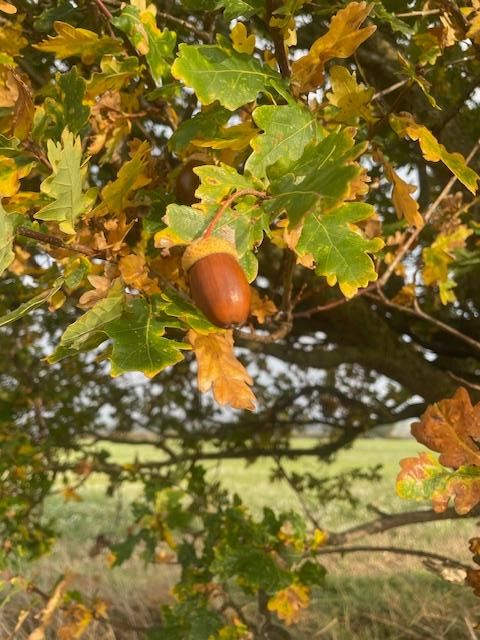
"The creation of a thousand forests is in one acorn"
Ralph Waldo Emerson, "History" in Essays, First Series (1841)
| |
Welcome to November's edition
-
Econarratives & Ethical Leadership: a new free online Ecolinguistics course
-
Roots of Resilence: Join my popular 1-day workshop on 14 November
-
Coffee in an Online Thinking Environment: Join us, free, next on 17 Nov
-
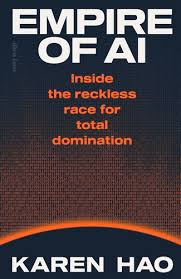
The Empire of AI: Karen Hao's new book exposes the AI industry - chilling
-
Group Supervision for Coaches, Facilitators & Consultants: Starts 20 Jan
| | |
Econarratives & Ethical Leadership - New Free Course
Have you ever wondered why nature is sometimes described as an enemy to be fought or tamed, or why a large number of animals in their natural habitat is sometimes described as infested (e.g. shark-infested waters), or noticed the huge rise in phrases like eco or green to imply environmental benefits and promote sales?
Ecolinguistics studies how language shapes and is shaped by our assumptions and perceptions of the natural world, reveals metaphors and hidden stories, and questions whether those stories - narratives - encourage us to protect or destroy the ecosystems that life depends on. Think of car adverts - promising us freedom - driving at speed through spectacular, unspoilt landscapes - belying the environmental damage along the supply chain, or politicians promoting endless economic growth only as positive, or nature portrayed as a resource from which we can extract with impunity.
These econarratives are everywhere.
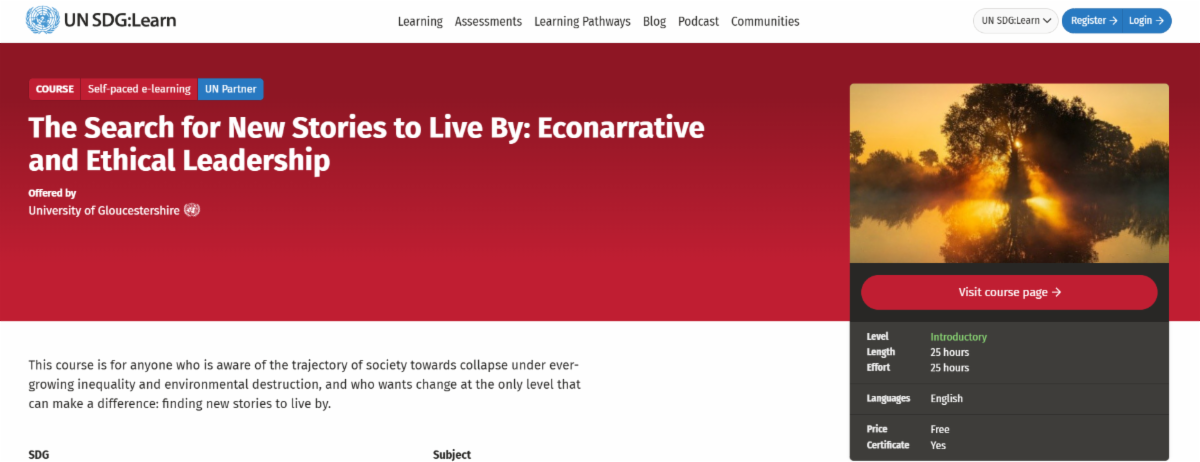
A few years ago I met Arran Stibbe and studied his Ecolinguistics course Stories we Live By which was fascinating, eye opening and impactful; so I was delighted when he told me of his new course: The Search for New Stories to Live By: Econarrative and Ethical Leadership.
It's a free, open to all, self-paced course from Arran and colleagues at the University of Gloucestershire as part an international project called CLADES (Critical Language Awareness, Democratic Engagement and Sustainability), and it's been adopted by the United Nations as part of the SDG:learn programme.
If you do the course, I would love to hear about its impact on you.
| | |
For more information, click on the image below
| | |
Roots of Resilience: An Active Hope Workshop
| | |
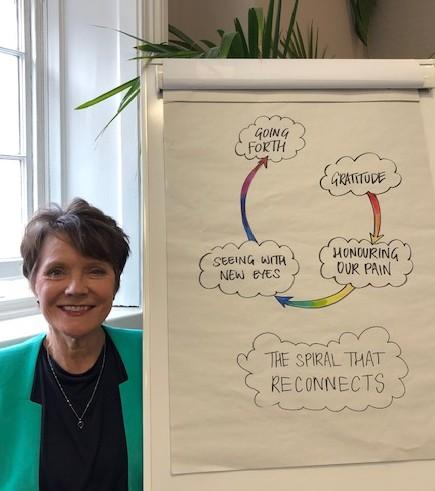
Roots of Resilience is my one day workshop exploring resilience as a living web of connections that sustains us.
Drawing on Active Hope and The Work That Reconnects, the workshop invites participants to move beyond the idea of resilience as “bouncing back alone” and instead cultivate practices of collective courage, mutual support, and shared meaning, because together we are stronger.
We will also explore 5 key factors that help teams to thrive, and how you can apply these in your own team or group setting as you navigate uncertainty, change and complexity together.
You will leave with new insights, frameworks and tools you can use, every day, and in many ways, bringing you greater clarity, purpose, and a deeper realisation that in this, we all matter.
We may not know the outcome of our efforts, but we can build stronger bridges as we walk.
| | |
When? 14 November, on Zoom, 09.30-5.00pm GMT
| | Free: Coffee in an Online Thinking Environment - next session on 17 November, 09.30 am GMT | | |
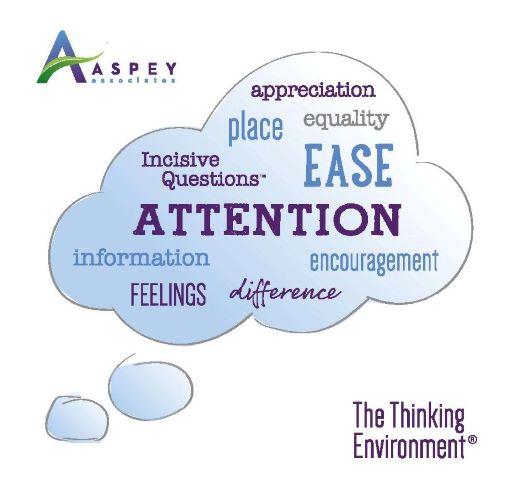
Every other month I facilitate a session for people to come along to develop their skills and capacity for independent thinking, meet others and create a Thinking Environment.
Some have been coming along for years, others come for the first time, and often return. All you need is a little understanding of the Thinking Environment, a desire to think for yourself, a good internet connection and a private space.
It's completely free.
When? 09.30am to 10.45am GMT, every other month on a Monday, with the next one being 17th November.
| | |
Empire of AI, by Karen Hao
| |
When journalist Karen Hao began covering OpenAI, the firm seemed a noble experiment — a nonprofit promising safe, ethical AI. But the reality she uncovered about this massively disruptive sector is far darker. In her book, Empire of AI: Inside the reckless race for domination, she shares her findings.
Building AI demands immense resources: the compute-power of scarce, high-end chips, low-paid labour across the Global South where people are forced to clean up toxic, harmful content, and ever-soaring energy and water use, often at the expense of indigenous people, nature and lands. Hao reveals a hidden empire of extraction, exploitation and control, where a small handful of billionaire corporations now shape not only economies but the very conditions of living, thought and knowledge.
Of course, like any tool, the impact of AI depends on how it's used, for what and by whom. For example, it's making education more widely accessible, it's advancing health research and health care, and much more. However, for many of us, it's simply a time- saving, labour-saving luxury, for which someone or something else is paying the price.
Hao doesn’t particularly focus on the impact of AI on our capacity to think for ourselves - which neuroscientist and writer Celia Ford has called "outsourcing our mental labour" - or on our mental health, but elsewhere there's growing concern that it has some serious downsides - including attempted and actual suicide - see Howard Yu's blog piece on the Assembly Line in the Sky.
I believe that everyone should understand these impacts, because AI is increasingly being woven into the systems guiding our daily lives, often without our informed consent. And I have been surprised, on my travels, at how very few yet usually well-informed people know about the impacts beyond the vague idea that "it uses a lot of water". That's hardly surprising - because those with vested interests don't want us to know and only send positive messages!
Another example of the power of narratives.
We may not want to, or be able to resist it all, but when there is choice, we can decide if, when, how, and under what conditions we will use it and when we will not. We can join the voices putting pressure on for better regulation, and we can challenge our colleagues and ourselves when we use ChatGPT, Claude and other Large Language Models - mindlessly!
| |
Monthly Supervision Group for Coaches, Facilitators and Consultants - starts 20 January 2026
| | |
Are you a coach, facilitator or development practitioner working with complexity? Do you value time with others to explore your work, learn from others, and keep developing?
If so you might like to join the next cohort of my Supervision group:
- A co-created, confidential closed group of just 4 people, meeting monthly for 3 hours (including a break) for in-depth conversations for 6-12 months;
- A boundaried and enriching environment for listening, sharing, thinking, getting feedback, new ideas and insights;
- A place where you gain a sense of renewal, so you leave feeling refreshed and more resilient.
My groups are for those who are interested in how what's happening in the world impacts us and our clients, to thinking deeply about complex systems, and who are ready to take their presence and practices to new levels.
When? Third Tuesday of the month, 11.00am to 14.00pm GMT, starting 20 January 2026
| | |
If you would like to explore how I could help you, your team or your organisation, with this or any other subject, with coaching, facilitation, keynote speaking, short talks, workshops, listening circles, assemblies, trainings, conversation groups or anything else, please get in touch.
| | |
I publish around 6-8 Digests a year, each one dedicated to sharing free resources and insights alongside select paid offerings.
I hope you find them useful for yourself or to share, but if you don't, please unsubscribe below.
NB We've recently merged our subscription lists from various sources - if you previously unsubscribed and have been added back in error, please unsubscribe and accept my apologies.
| | Or to follow me on social media: | | | | |