|
May 2026
PASS Project Reflections
| | |
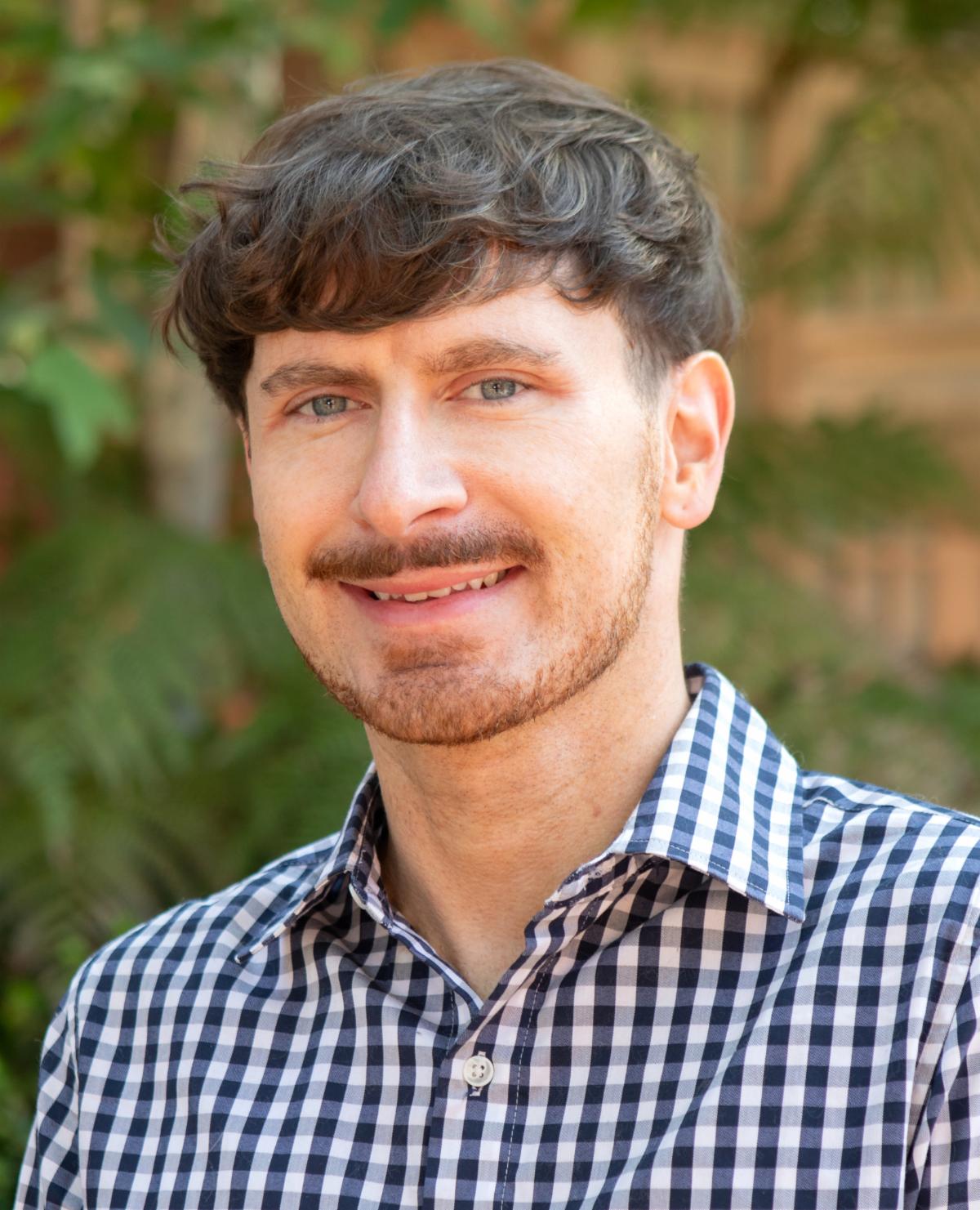
Guest Editor Dr. Joseph Kitchen, Associate Research Professor
Dear Colleagues,
As another academic year comes to an end, I am called to reflect on a decade of work I have had the great privilege to be a part of – the Promoting At-Promise Student Success (PASS) project. Leading work as part of the PASS project to change how we think about and approach supporting college student success has been immensely rewarding both personally and professionally. I have learned so much alongside students, faculty, staff and fellow scholars over the last 10 years of the project. So much of why I chose to pursue my own career path was driven by a desire to inform meaningful, evidence-based change in the field and on the ground. It has been heartening to see the work my PASS colleagues and I have poured our time, heart and energy into help shape the conversation in higher education scholarship and influence tangible changes in how university leaders, faculty and staff are supporting college student success. I am so grateful for my time as part of the project, the support of my many PASS colleagues over the years, and the inspiring leadership of both Adrianna Kezar and Zoë Corwin.
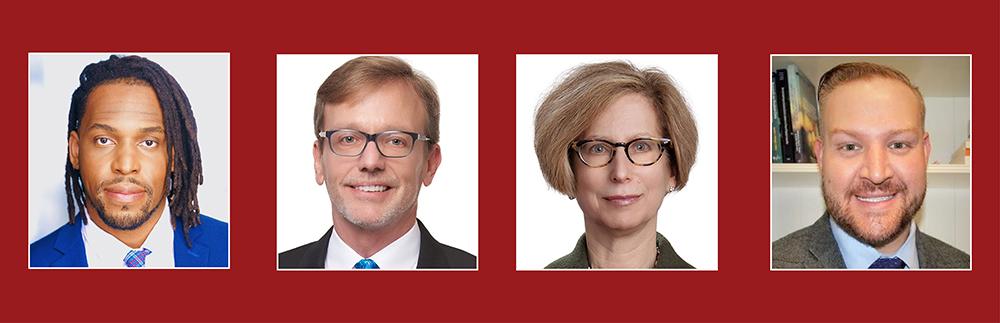
As the project draws to a close and I look ahead to the next chapter of my career, I wanted to highlight the impact of PASS. To that end, this newsletter features commentary from (a) eminent scholar Kris Renn on how PASS has influenced the field of higher education and student affairs; (b) university leader and professor Amy Goodburn on how PASS work has informed meaningful changes in student support practices; and (c) former and current graduate students who contributed to PASS and whose brilliance will go on to help shape the future of the field. Stay tuned for more research, practical insights, and resources from the PASS Project focused on advancing students’ career development and success in the coming months.
Cordially,
| | | |
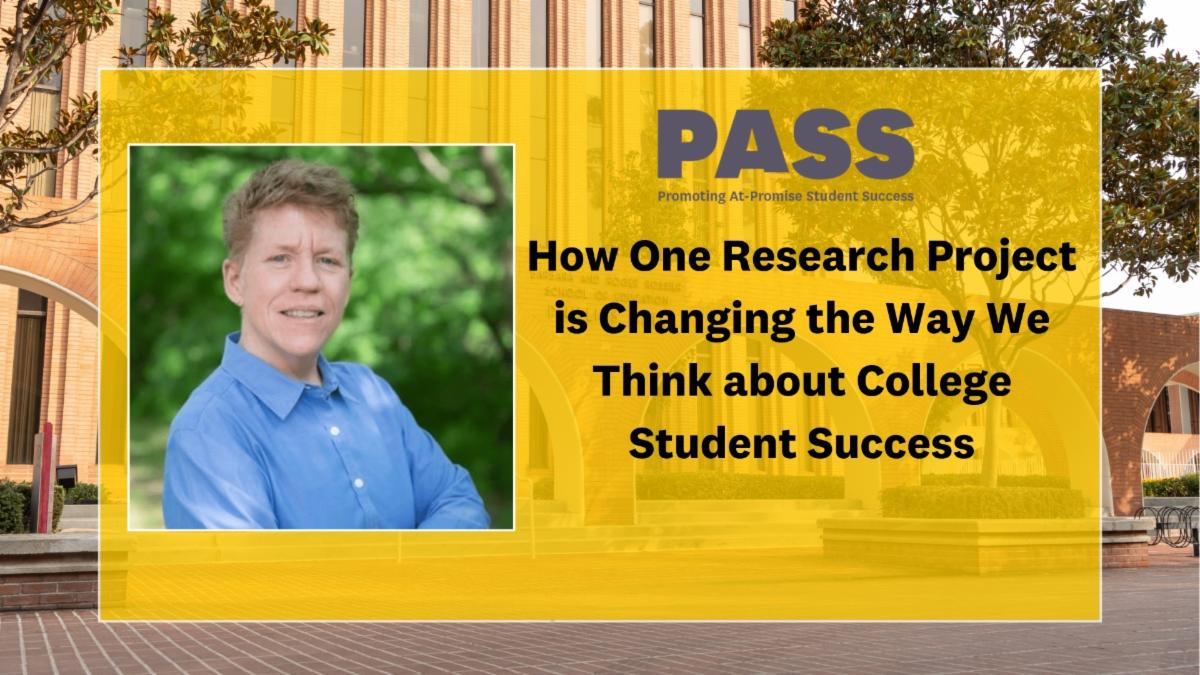
How One Research Project is Changing the Way We Think about College Student Success
By Kristen A. Renn, Ph.D.
University Distinguished Scholar of Higher, Adult, and Lifelong Education
Michigan State University
As a longtime member of the Promoting At-Promise Student Success (PASS) Advisory Board, I’ve had a front row seat to one of the most ambitious and exciting research projects in higher education and student affairs. I’ve watched as the knowledge and theory generated through the project have shaped the contours of the field and contributed substantively to the intellectual base of the student success movement. PASS offers the rare example of a longitudinal study that entails sophisticated methods across paradigms and theories at institutional, intra-organizational, and individual levels.
Read More
| | |
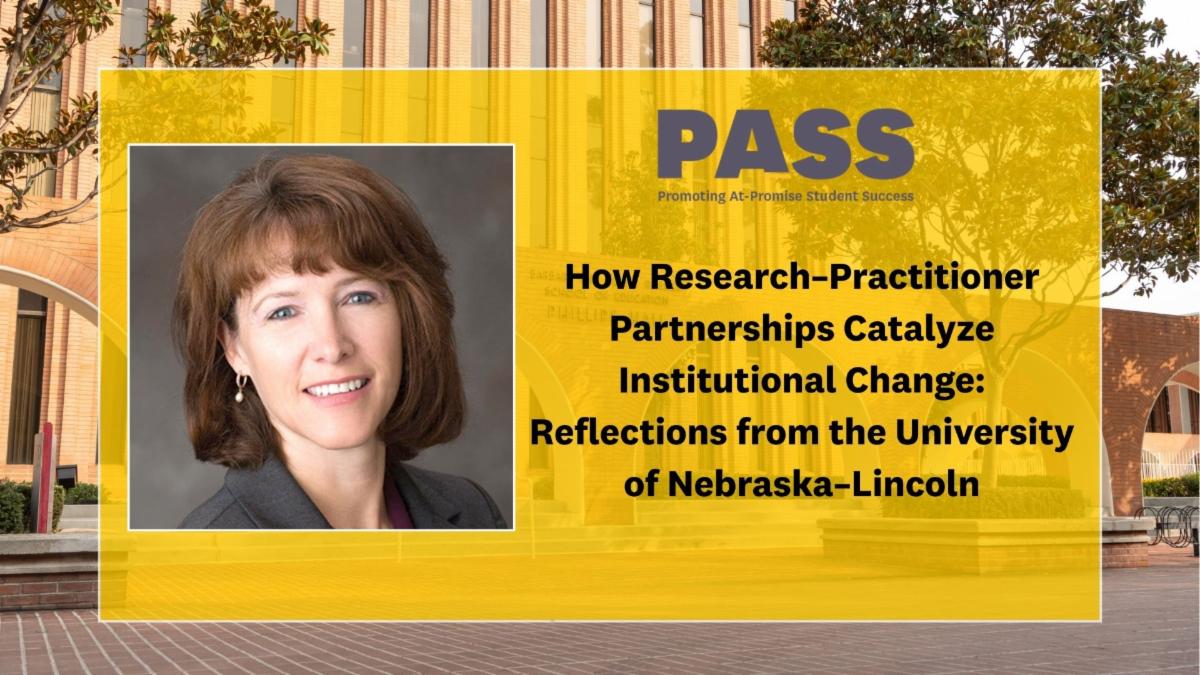
How Research–Practitioner Partnerships Catalyze Institutional Change:
Reflections from the University of Nebraska–Lincoln
By Amy Goodburn
Senior Associate Vice Chancellor & Dean, Undergraduate Education, Professor of English
University of Nebraska—Lincoln
As the Senior Associate Vice Chancellor and Dean of Undergraduate Education at the University of Nebraska–Lincoln (UNL), my work centers on creating a campus culture that enables all undergraduates to thrive and earn their degrees. Over the past decade, my engagement with the Promoting At-Promise Student Success (PASS) research–practitioner partnership has been instrumental in advancing this mission. The PASS partnership has provided collaborative thought leadership and sustained space for learning that informs how I approach institutional culture change work at UNL.
Read More
| |
Reflections from Rising Higher Education Scholars & Professionals
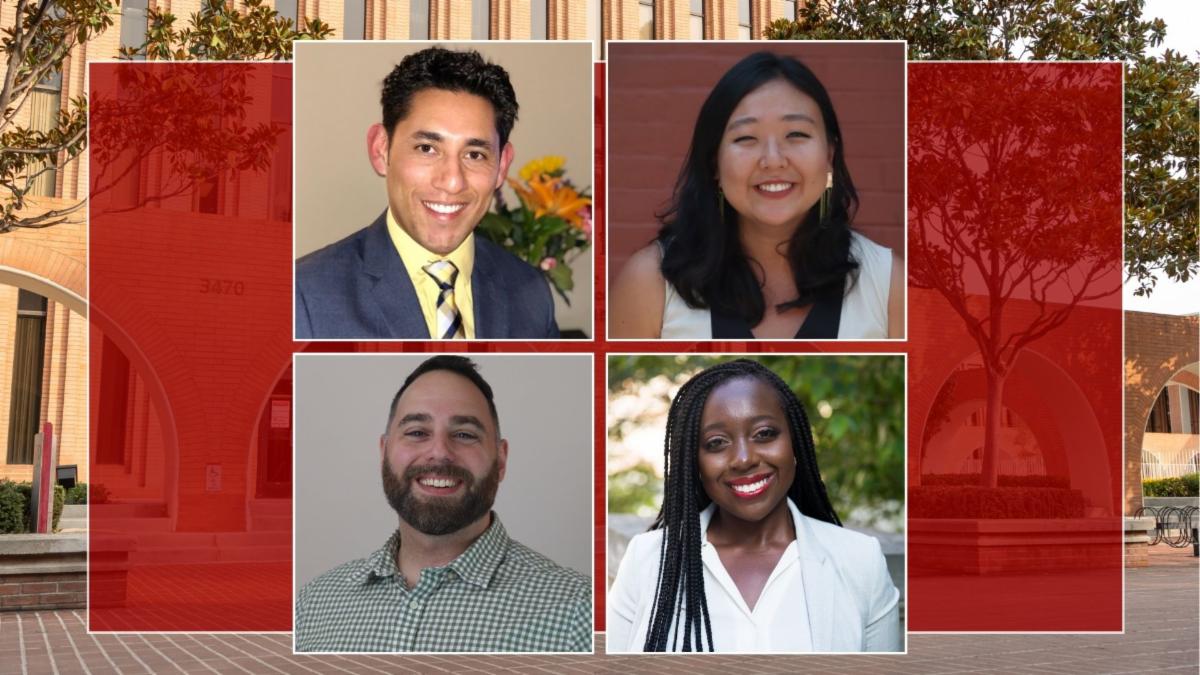
By Raúl Gamez, Angie Kim, Ricky Urgo, Amber Williams
As research assistants who joined the Promoting At-promise Student Success (PASS) team at various points over the years, our roles have each looked a little different. We conducted student interviews, on-site observations, performed data analysis, and wrote evaluation reports. A few even traveled to the University of Southern California for a PASS summer retreat. However, the beauty of a longitudinal, multi-institution project like PASS is that it created opportunities for all of us to contribute meaningfully, whenever we arrived. In celebration of its 10+ years, we reflected through a dialogue on key takeaways, lessons that we have carried into our own research endeavors.
Read More
| |
2026 Pullias Center Graduates Look to the Future
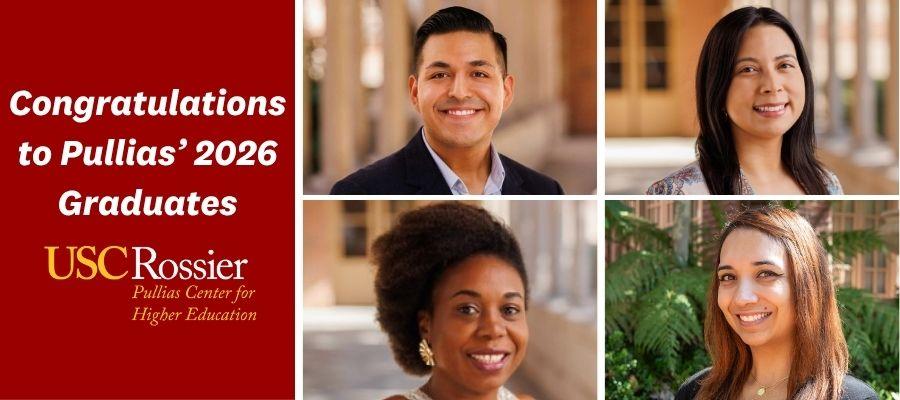
This May, the Pullias Center is proud to have three of our hard-working PhD students — Jimmy Aguilar, Leila Carranza and Glenda Palacios Quejada — graduating from the Rossier School of Education, as well as staff member Christine Rocha graduating from Rossier with her Ed.D. Please join us in offering our sincerest congratulations to all! Read more about our graduates' experience at Rossier and the Pullias Center and learn what's next for them professionally.
Read More
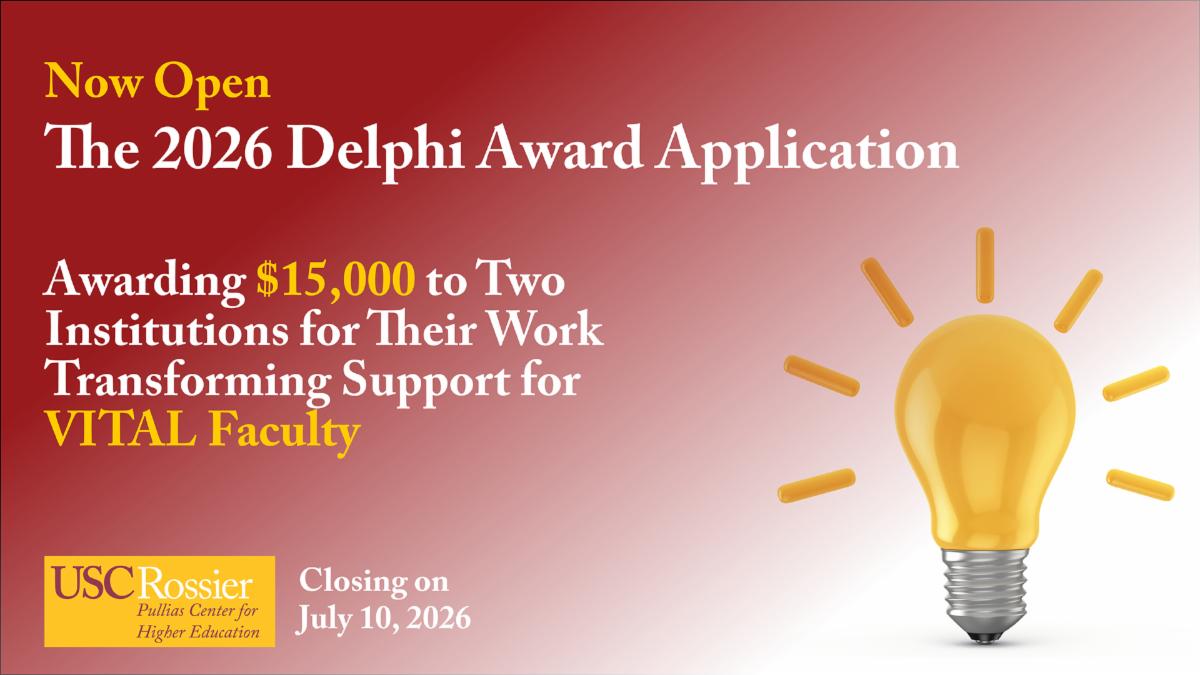
| Delphi Award Applications for $15,000 Awards Close July 10 | |
The Delphi Award: Rewarding Scaleable, Institutionalized Support for VITAL/Contingent Faculty
The purpose of the Delphi Award — an annual award given by the USC Pullias Center and AAC&U — is to support policies, practices and programs that ameliorate the issues facing contingent, non-tenure-track and adjunct — also known as VITAL — faculty.
Not sure if your program is eligible, or if your support of your campus' VITAL faculty is Delphi-Award worthy? Then, check out our comprehensive Delphi Award Application FAQ page. It's chock full of everything you'll need to know to prepare a successful Delphi Award application. You can also peruse the case studies from our past Delphi Award winners, including 2025 winners Florida Gulf Coast University and Montclair State University.
| | |
>> A Pullias Center Webinar
| | Leading organizational change today requires more than strong policy ideas — it requires careful attention to process, people and power. This session examines how leaders can navigate institutional politics and manage change in ways that sustain momentum rather than stall it. Of particular attention will be aligning one’s policy, politics and institutional context. This is our fifth and final webinar in this series. Produced in partnership with EducationCounsel and AAAS. | | |
>> A Joint Pullias Center/National Resource Center for the First Year Experience and Students in Transition Webinar
| | |
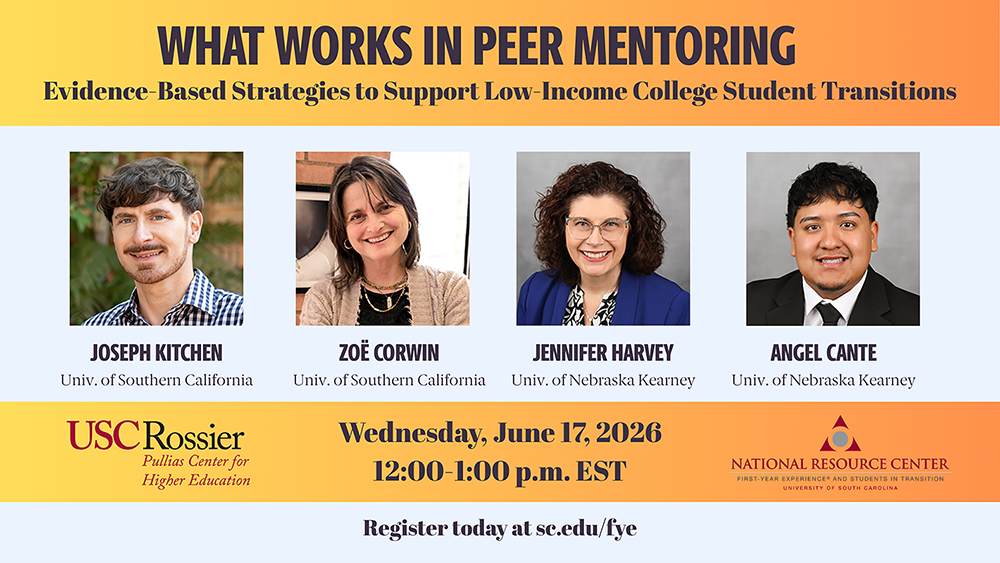
In this joint Pullias Center-National Resource Center for First Year Experience and Students in Transition webinar, discover how thoughtfully designed peer mentoring can be a game-changer for low-income students’ success as they transition to college. We'll share compelling mixed-methods evidence of an effective peer mentoring model that boosts students’ confidence, sense of belonging and clarity about their academic and career pathways. Learn how this high-impact peer mentoring program moves beyond basic check-ins to deliver proactive, validating and holistic support that meets students where they are and sets them on a path for success. Walk away with actionable strategies to design or strengthen peer mentoring initiatives that meaningfully expand students' support networks on your campus and promote a successful college transition.
Presenters:
Joseph Kitchen, PhD., Associate Research Professor, Pullias Center for Higher Education, University of Southern California
Zoe Corwin, PhD., Research Professor, Pullias Center for Higher Education, University of Southern California
Jennifer Harvey, Senior Director, Thompson Scholars Learning Community, University of Nebraska, Kearney
Angel Cante, Peer Mentor, Thompson Scholars Learning Community, University of Nebraska, Kearney
| | |
The 47th Pullias Lecture: Watch the Lecture Recording and Read the Article
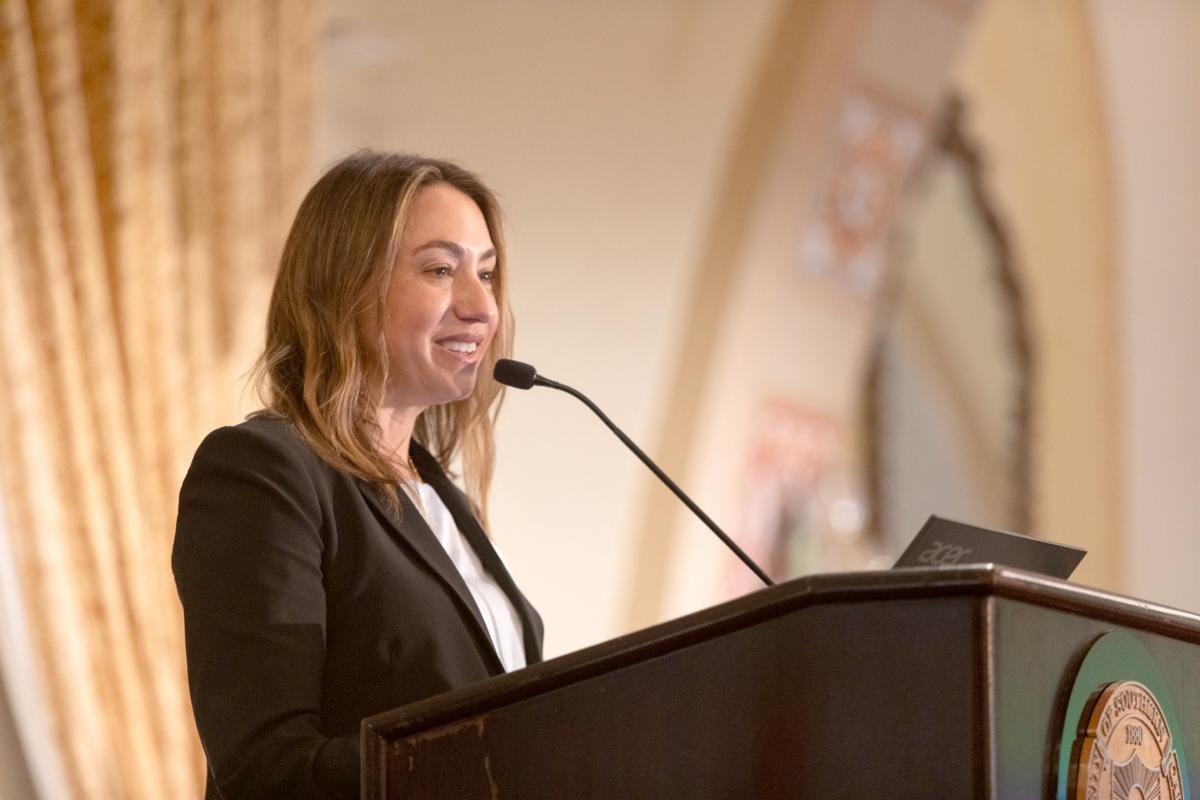
“I believe that philanthropy — strategic, patient, bold giving — has never been more important to the future of the research university than it is at this very moment,” Alfred P. Sloan's President and CEO Stacie Bloom gave an inspiring and informational talk at last month's Pullias Lecture at USC's Town and Gown ballroom on April 7.
Read More
| | |
NEW PUBLICATIONS
-
Lue, K., Desir, S., & Posselt, J. (2026). Characterizing rhetorical strategies in the crisis communications of disciplinary societies. Innovative Higher Education.
| | |
|
THE PULLIAS CENTER FOR
HIGHER EDUCATION
| | The World's Leading Research Center on Student Access and Success in Higher Education | | | | |