|
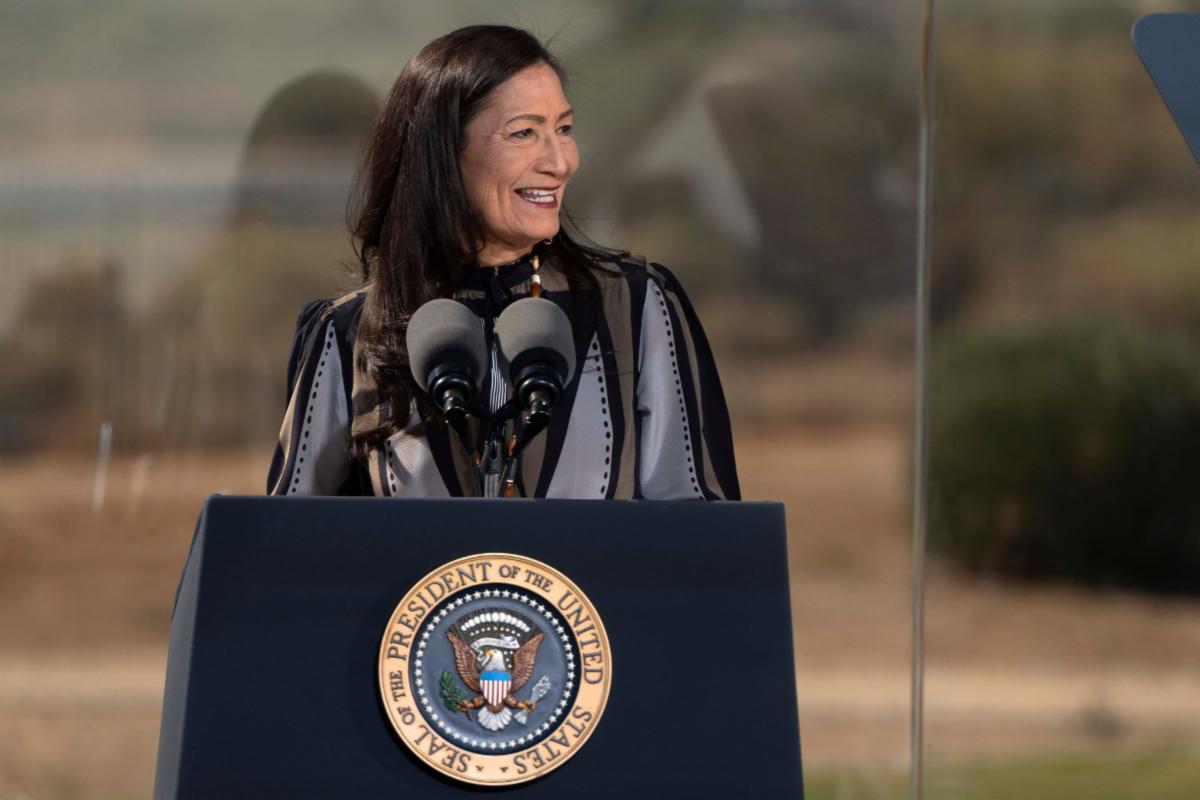
From Activist to Congresswoman to Historic Secretary of the Interior, A Lifelong Advocate for Indigenous Communities: Meet Deb Haaland
Deb Haaland made history in 2018 when she became one of the first two Native American women elected to the U.S. Congress. Her journey, fueled by her commitment to public service, environmental justice, and Native American rights, showcases her resilience and determination.
Deb Haaland was born on December 2, 1960, in Winslow, Arizona. She is a member of the Laguna Pueblo tribe in New Mexico and grew up with the values of her heritage instilled in her by her mother. Haaland faced challenges in her early life, including the impact of her parents' divorce, which led her family to rely on public assistance.
Haaland attended the University of New Mexico, where she earned a Bachelor of Arts degree in 1994. She later obtained a Juris Doctor from the University of New Mexico School of Law, which further solidified her commitment to serving her community.
Haaland's professional journey is marked by a diverse range of roles focused on community service and social justice. Before entering politics, she worked in various capacities, including as a small business owner, a political consultant, and in educational roles. Her career also included work with the New Mexico Democratic Party, where she served as the state party's chair.
In 2018, Haaland ran for New Mexico’s 1st congressional district and won a hard-fought campaign, becoming one of the first two Native American women elected to Congress alongside Sharice Davids. Her election was celebrated as a significant step toward greater representation of Indigenous peoples in government.
Once in Congress, Haaland quickly established herself as a strong advocate for environmental issues, healthcare, and Native American rights. She served on several committees, including the House Committee on Natural Resources, where she focused on issues such as public land management and climate change.
In 2020, she was a vocal opponent of the Trump administration’s policies that threatened the environment and Indigenous lands. Haaland co-sponsored the Green New Deal, emphasizing the importance of combating climate change while also addressing social inequities.
In March 2021, President Joe Biden nominated Deb Haaland as Secretary of the Interior, making her the first Native American to lead a major federal agency. This historic appointment signaled a commitment to addressing Indigenous rights and environmental policies at the national level.
As Secretary, Haaland has prioritized the restoration of land to Indigenous tribes, the protection of sacred sites, and the implementation of sustainable practices. She has also focused on tackling the climate crisis, promoting renewable energy projects, and increasing federal support for tribal communities.
Deb Haaland’s life story reflects her dedication to service and her passion for advocating for the rights of Indigenous peoples. Through her roles as a Congresswoman and Secretary of the Interior, she has not only broken barriers but has also inspired a new generation of leaders committed to equity and environmental stewardship. Her journey continues to be a testament to the resilience of the Indigenous community and the importance of representation in government.
Sources:
"Deb Haaland." U.S. Congress. www.congress.gov
"Deb Haaland: A Brief Biography." U.S. Department of the Interior. www.doi.gov
"Secretary Deb Haaland Has Made Historic Progress at the Department of the Interior." American Progress.
|