|
Weed Watch!
Colorado Weed Management Association
4th Quarter Newsletter 2025
| | The CWMA 2025 Winter Conference | |
 | | One of the greatest misconceptions about our profession is that the work stops as soon as the snow falls. While many of us have stowed away our equipment for the season, many others are continuing their late season push; treating invasive woody species, applying preemergents or perhaps targeting that stubborn Russian knapweed patch, while others are completing final grant reporting, EDDMaps uploads and submitting grant applications for the upcoming season. This time of season is not only for taking stock of the progress that we have made towards protecting our native landscapes, but also a time for sharing our experiences with others during the Annual CWMA Winter Conference. The camaraderie that exists within our organization is on full display during our annual gathering, with a diverse group of professionals from across the state gathering to not only learn from our exceptional lineup of speakers, but also from each other. Aside from the educational aspect of this annual gathering, it also provides a great deal of inspiration and positive reinforcement for folks in our industry that may feel isolated in their passionate pursuit.
In this issue we will be highlighting the contributions of an individual that truly embodies the best qualities that our organization has to offer; Steve Murdock, outgoing CWMA President. Steve has fostered the strong sense of community that so many of us value and has selflessly provided his keen insight and expertise, greatly advancing our cause. We hope you enjoy our content and take the time to speak with Steve during our upcoming conference. He has a unique ability to connect with people, leaving those that interact with him the feeling that even though he has a tremendous workload, you and your concerns are his primary focus. Steve is not only an asset to CWMA and Jefferson County, but our State as a whole.
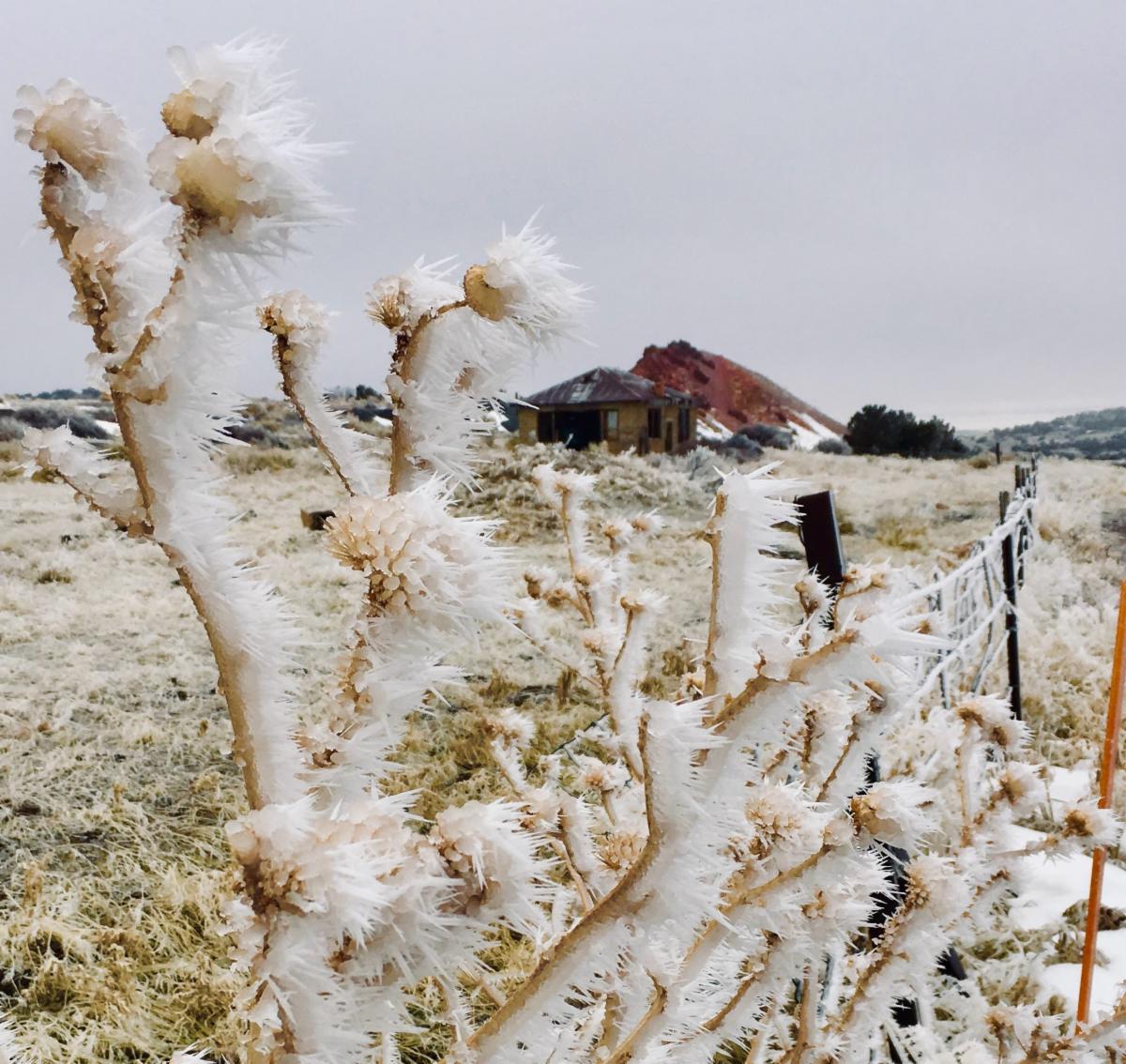
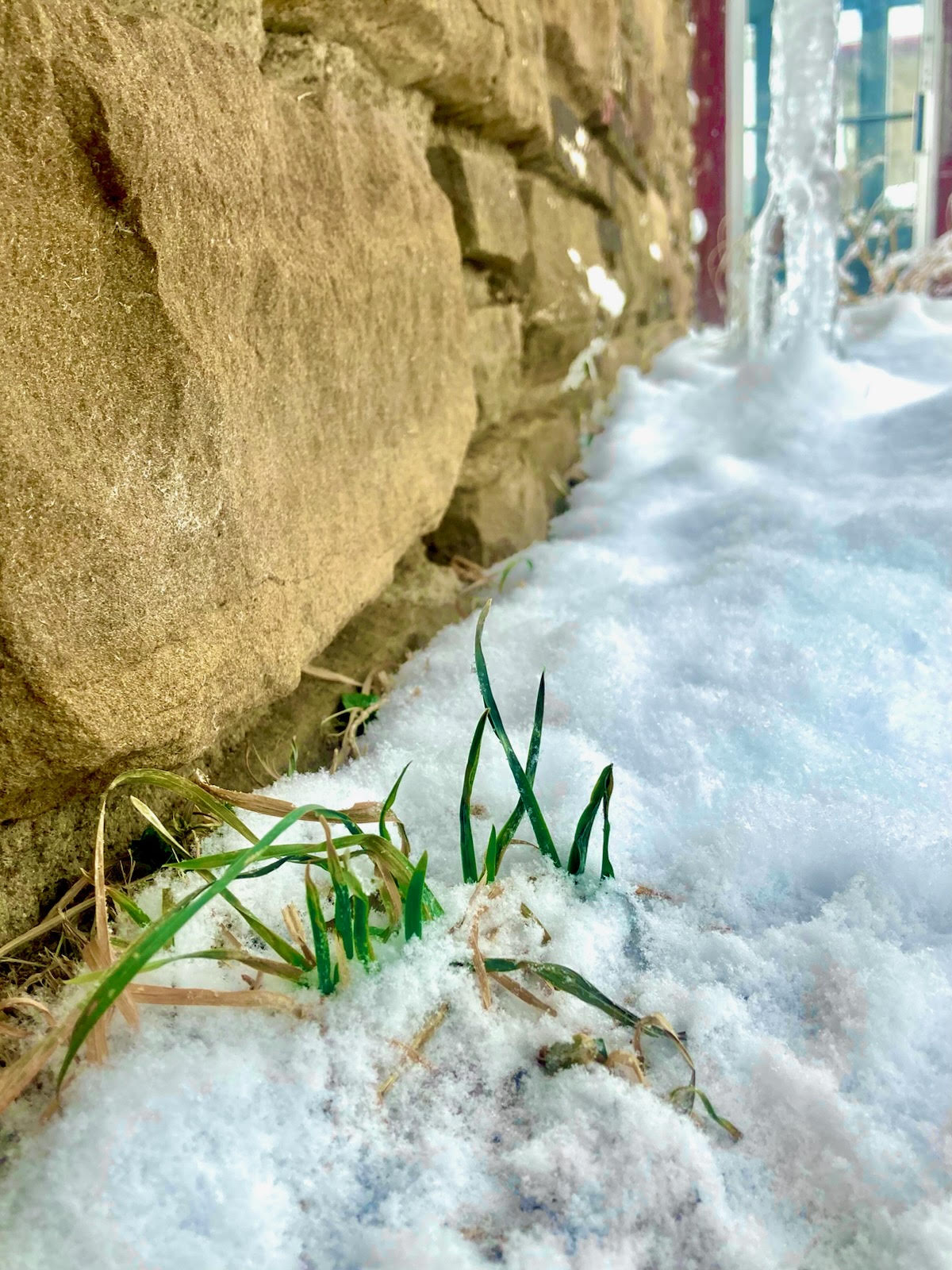
| Photo: Flash Freeze at Calumet Mine, Huerfano County | By: C. Bryant | | |
An Interview with Outgoing CWMA President Steve Murdock
By Charles Bryant, Huerfano County Noxious Weed Manager/CWMA Board Member
| | |
Finding a Path
Like many of us in the field of land conservation, Steve Murdock’s initial drive and passion was not entirely forged in the classroom. Rather, it was realized in the curiosity of childhood while spending countless hours basking in the grandeur of nature’s beauty during family camping trips. Hailing from the suburbs of Chicago, he found refuge in the tranquility of nature, something that the “hustle and bustle” of city life did not entirely allow. Early on he realized the tremendous restorative values of nature, especially those that he found in the vast open spaces of the west during his family’s many outings. While his venture into this profession was first cultivated in his cherished experiences of childhood, his future path was not fully realized until he attended the University of Iowa, initially intending to enter the medical field. Naturally gravitating towards ecology based electives\courses, Steve began to realize that while he found a tremendous amount of value in assisting others in the medical field, it did not compare to the value derived from being in nature. Steve initially took on what at the time he considered a “cool seasonal job” with a conservation district during summer break. As is common for many that have been introduced to this line of work through seasonal positions, Steve realized his true calling was in the wilds of nature, not the controlled office environment that he originally sought.
Making it Happen
The intoxicating allure of nature cultivated a strong desire to not only spend every opportunity he had in it, but to take the next step by relocating from his home state to the vast open spaces of Colorado. Having served as a restoration technician for the conservation district back in Illinois, Steve came to Colorado in the hopes of securing a position similar to that which he just left. While waiting to find his niche in the highly coveted land conservation-based occupations here in Colorado, Steve secured a seasonal position at Winter Park. As his seasonal position drew to a close, Steve happened to find an opening with Jefferson County Open Space and much to his delight, finally realized his goal of being fully immersed in the landscapes that had provided so much wonder and inspiration in his youth.
Assessing Difficulties
Having now served Jefferson County Open Space for about 15 years, his passion and dedication towards preserving our natural resources has only grown, sharpening his perspective as it relates to the role that each of us plays. In our discussion, Steve spoke of the disconnected trajectory that our society seems to be on, with it oftentimes being at odds towards what is best for our natural landscapes. He went on to discuss the collective impact that individual actions have and their compounding effects on the natural world. What may seem like an innocuous, singular action actually morphs into a universal problem as a “snowflake not blaming itself for the avalanche” scenario takes place. He noted the eroded sense of value and belonging that many modern-day individuals have towards nature as they are inundated with technology. Steve went on to discuss how this disconnection also plays a role in the diminished level of support that our efforts are provided by lawmakers, with invasive species concerns often taking a backseat to other societal issues.
The Power of Communication
To combat this unfortunate trend, Steve emphasizes the need to cultivate future stewards of our natural environment. Steve’s approach towards this development of future leaders is modeled after the collaborative approach that one of his early mentors took when he was employed as a seasonal restoration technician in college, essentially being that of openness, patience and robust communication. Having reaped the rewards of knowledge disseminated to him by his mentor, Steve feels that it is his duty to extend that benefit unto others so that they too might realize the same support that he recognizes as being so critically important for his own professional development.
When asked what advice he might have for newcomers to the industry, he related the crucial need for persistence and consistency, further elaborating that while invasive species management may not be as alluring as other biology-based fields, nearly all other efforts are for naught if the threat of invasive species is not properly addressed. He also described how invasive species management can serve as a strong foundation and launch pad for delving into other conservation based disciplines as one gains their footing and status in the trade.
Maintaining Momentum
Given Steve’s exceptional leadership style as CWMA President, he was asked how our organization can maintain the positive trajectory that he has carried forward. True to his management style, Steve emphasized the need for open minded dialogue and the welcoming of new ideas; rather than being bogged down with the unnecessary weight of a “this is how we have always done it” approach. Discussion turned to what obstacles and opportunities that he foresees concerning the organization and our collective efforts. Of his greatest concerns are the ongoing fiscal issues that Colorado faces along with the lack of concern from decision makers as it relates to dedicating resources towards invasive species management. In line with his collaborative leadership style, he sees great opportunity through educating the public and lawmakers alike. By being champions of our cause, he feels that we can help the public realize the importance of our work through communicating that: “Invasive species management work is critical. Without that, all the things we’re trying to do with ecological restoration just can’t happen”.
A Bright Future
As our discussion drew to a close, Steve was asked about what things he was most looking forward to in his personal and professional life. Of greatest importance was family, with him and his wife just recently purchasing a home and looking very much forward to parenthood. On the professional side, he looks forward to continuing to lend his energy towards the growth of JeffCo Parks & Open Space, praising the tremendous resources and funding that are available for his entity. He went on to describe the gratitude that he has for being able to serve as a steward for some of the most exceptional parks and open spaces in Colorado and how he realizes that he and his team’s area of operations is many people’s first impression of Colorado. Steve sees great opportunity through educating the public and lawmakers alike. He emphasized that without a strong commitment to invasive species management at the state level, the substantial investments being made to protect and enhance Colorado’s diverse ecosystems will be undermined.
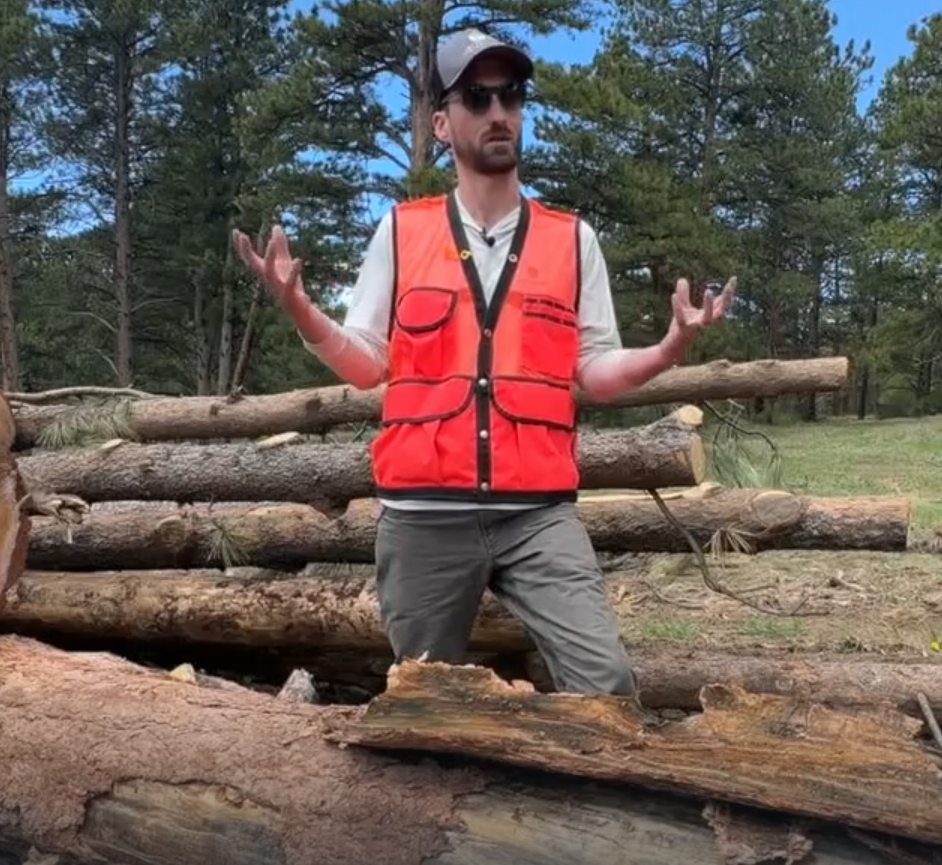
| | Photo: Steve Murdock discusses pine beetles and forest health | Source: Denver 7 News | | |
Turning the Russian Olive Obstacle into an Opportunity
By: C. Bryant, Huerfano County Noxious Weed Manager/CWMA Board Member
| |
A Never Ending Chore
As the days shorten and a subtle hint of coolness greets us in the morning, many in our area start warily eyeing their firewood stack. Many will spend the final weekends of summer and fall solely focused on securing their winter wood supply, as evidenced by the numerous pickups and trailers loaded to capacity on our county roads and town streets. Many will either seek out a vendor or site that offers their preferred wood of choice, with pin᷉on, aspen, cedar, scrub oak and ponderosa pine usually being the most common and desired in our area. A considerable amount of mileage, effort and money will be exhausted in the pursuit of securing the independence and peace of mind that only a wood stove can offer.
A Huge Problem
What if you could not only secure your winter wood supply, but also aid in the conservation of our finite water resources, wildlife habitat and reduce the threats of flooding and wildfires? Enter Russian olive. This highly invasive woody species has taken over hundreds of thousands of riparian acres in the west since it was first introduced over a century ago for erosion control, windbreaks and as a near bulletproof ornamental. Ranging in size from a small shrub to medium sized tree, Russian olive tends to stand out in the landscape with its unique bluish-green foliage and often times corkscrew like trunk that seems to despise the typical vertical growth pattern of more reputable tree species. Originating from Europe and western Asia, Russian olive has compromised the health of our native ecosystems through the displacement of native species and its insatiable thirst for water. Both biodiversity and water levels are lowered when Russian olives become the dominant species within a site. One need only look at most stream corridors below 7,000 feet within most areas of our state to see just how prolific this species is.
An Overlooked Resource
While this writer could easily exhaust the limited space left relaying the woes associated with the species, let us circle back to the original point of this article, which is, turning an obstacle into an opportunity. Oftentimes regarded as a “trash wood”, Russian olive actually possesses a BTU rating higher than some of the most desirable firewood species that most western state folks could only dream of having, namely, cherry, black walnut, green ash and red maple, while being comparable to red oak and sugar maple. The average Russian olive BTU rating of 23 and its obscurity as a fuel wood is somewhat astonishing given the fact that the locally popular ponderosa pine, cottonwood and aspen only possesses BTU ratings of around 14-15, while pin᷉on rates slightly higher at 19-21.
Folks that burn Russian olive will notice a considerable reduction in the accumulation of creosote within the firebox and stove flue given the fact that there is virtually no sap\pitch like we are so accustomed to our pine species having. They will also notice that Russian olive provides usable coals much longer than other species, especially when compared to our common native species. This lends itself to a much more consistent overnight temperature in your home, sparing the uncomfortable task of lighting a cold stove at dawn. Opinions are mixed regarding the aroma of the smoke produced by Russian olive, with most that dislike it having been victims of smelling the acrid smoke of improperly cured logs. A fair description of the aroma of properly cured Russian olive was best related by a Huerfano County newspaper writer who described it as being similar to “granddad’s pipe tobacco”.
Practical Considerations
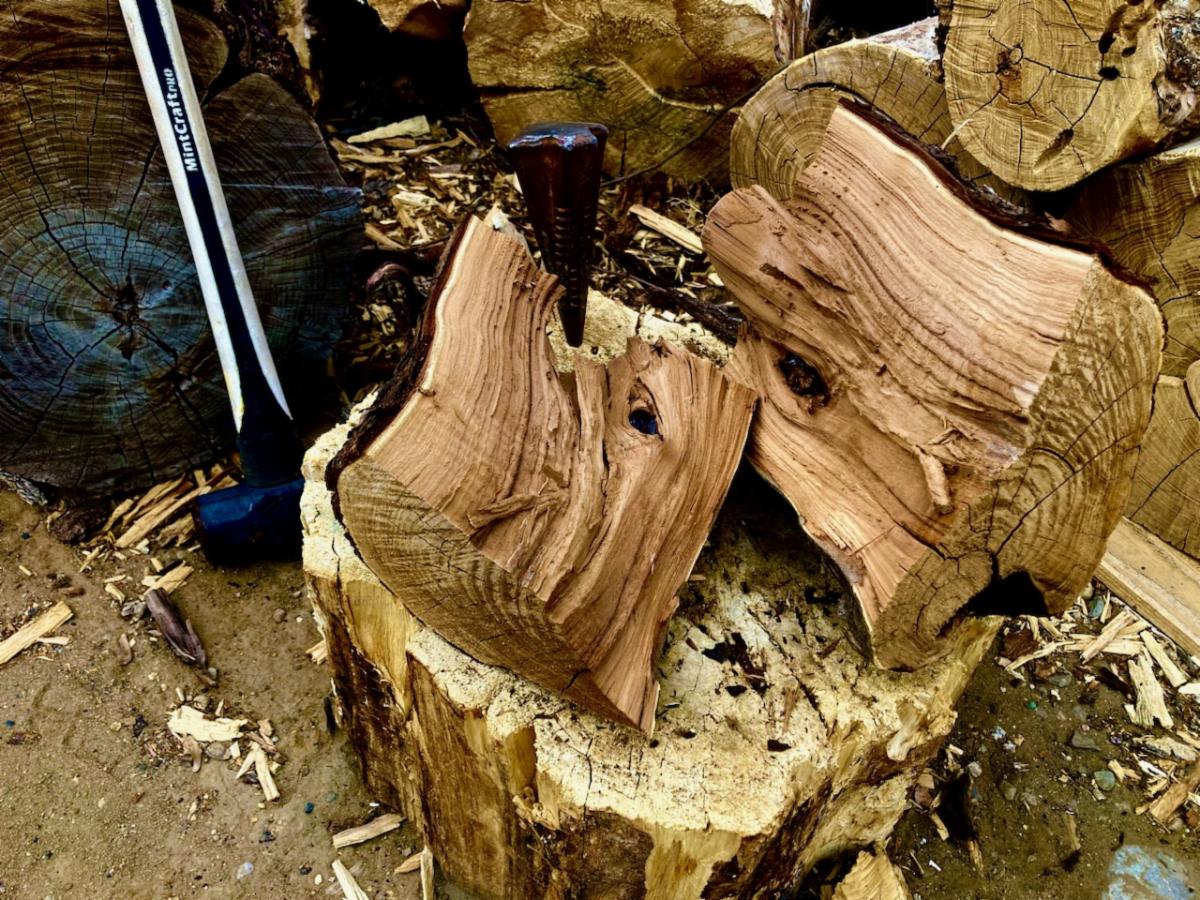
Like any fuel wood, proper seasoning is of the greatest importance. Even in our dry climate, Russian olive and other firewood species should be cut, split, stacked and covered for a minimum of one year before use. If feasible, two years of seasoning is ideal for Russian olive that is harvested green as its water content can be exceptionally high, being comparable to green-cut cottonwood. Be forewarned though, large green Russian olive logs can be nearly impossible to split without the aid of a hydraulic splitter. The process becomes much easier if the logs are somewhat dry prior to spitting. Limbs and smaller diameter vertical growing trunks are oftentimes fairly straight grained with a texture similar to cedar, while larger diameter trunks and “corkscrew” horizontal growth can often have a somewhat tangled\burled grain. Those cutting live Russian olive should also be aware that it will come back with a vengeance if the freshly cut surfaces are not treated with an appropriate herbicide. Performing a simple cut-stump herbicide application will prevent hundreds of thorny shoots from sprouting around the crown of the stump.
Russian Olive: A Renewable Energy Resource
In closing, please consider the usefulness of this invasive species as a firewood source and the exceptional benefits of utilizing it. Those that work for local units of government may be able to partner with state or locally ran low-income energy assistance programs as a way to equitably distribute saw-cut Russian olive fuel wood that may have been the byproduct of a publicly funded program. Oftentimes the reward of invasive species mitigation is not realized for years, even decades down the road and a return on investment can be somewhat abstract or obscure. It is not often that the invasive species itself can be turned into a nearly ever renewing commodity as the case is with Russian olive. The population density is so great and the control resources are so little, Russian olive will likely continue to be a problem well into the future. It is this writer’s hope that more people will realize the tremendous energy resource that this invasive species provides and take into account the following benefits when they move Russian olives from the stream bank to the firebox:
- Flooding potential and associated debris blockages will be lessened by removing this channel constricting species
- Fire potential\severity will be lessened due to a reduction of fine\ladder fuels
- Enhanced native plant species recruitment\establishment due to removal of excessive canopy enclosure and manipulated soil chemistry-results in higher biodiversity
- Improved access to waterways for humans, livestock and wildlife
- Increased agricultural productivity\usability of land
- Conservation of limited water resources
BTU Rating Source: https://www.wood-heating-solutions.com/wood-species-btu-values/
CDA Fact: https://ag.colorado.gov/conservation/noxious-weeds/noxious-weed-species-id/russian-olive
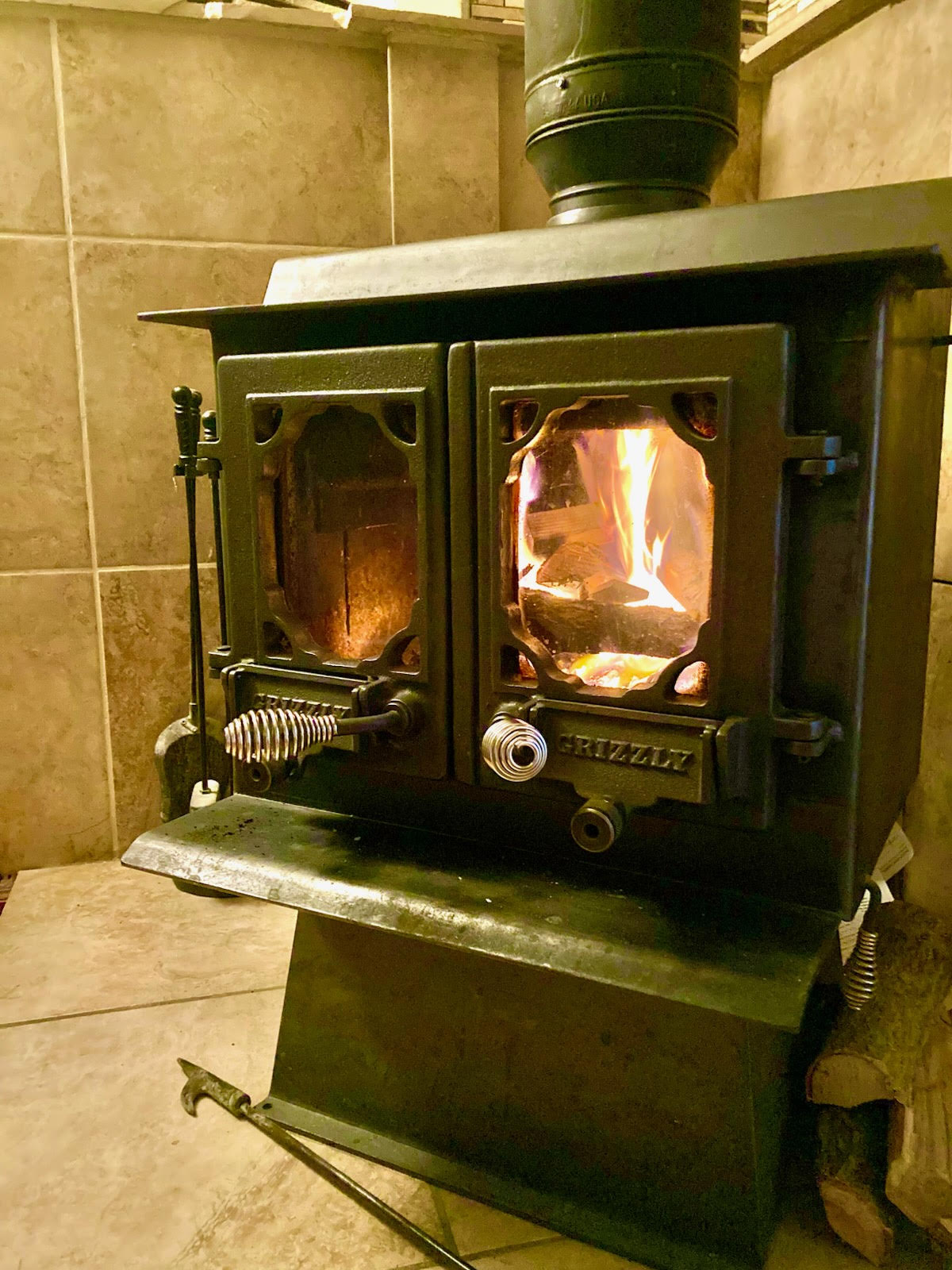
| | Photo: Stove-ready Russian olive | Photo Credits: C. Bryant (2025) | | |
On Winter Annuals & Frozen Dairy Treats
By: C. Bryant, Huerfano County Weed Manager/CWMA Board Member
| |
A Wintertime Miracle
During the frigid winter months I often take notice (and am actually in awe) of the few signs of green growth that can miraculously withstand subzero temperatures. When “green” growth is thought of during the winter months the image of a stately pine tree or some other coniferous species generally comes to mind. While our evergreen species certainly steal the limelight when it comes to plants that are universally known to withstand cold temperatures, our winter annual plant species tend to take a backseat or are outright ignored. These winter annual species lead lives that are counter to what most individuals understanding of what plant lifecycles are. Rather than emerging with the onset of longer days and favorable weather in the spring as most other annual and perennial species do, our hardy winter annuals prefer to begin their lives during the shortest, coldest and darkest days of winter.
Death by Osmosis?
Germinating in the fall and spending the bulk of the winter months as a seedling, it is a curious fact that these small underdeveloped plants can withstand temperatures that would prove deadly to other plants. We are all familiar with the symptoms associated with frost\freeze damage of tender vegetation. The curled over, withered and discolored appearance of frost stricken plants are actually the result of the cell membranes within the plant tissue rupturing due to the growth of ice crystals. As these ice crystals form and enlarge at the extracellular level, they not only work as a means of perforation, but they also desiccate the plants cells. The entrained water within the plant tissue cell is basically stolen through osmosis to provide the building material for the formation of ice crystals on the outer walls of the cell. This causes a collapse of the cell membrane resulting in cell lysis (death).
Built to Survive
Our winter annuals have developed a unique ability to combat the destructive effects of ice crystal formation at the cellular level. Their ability to withstand subzero temperatures is made possible by what are known as antifreeze proteins, also known as ice binding proteins (IBPs). Plant IBPs were only discovered about thirty years ago (Griffith et al., 1992), so we are somewhat at the beginning of our understanding. Rather than simply lowering the freezing point, these IBPs actually manipulate the shape and size of ice crystal formations. The IBPs adsorb to the extracellular ice crystals, exclusively on the basal and prism planes of the ice crystal. The presence of the IBP on these two planes inhibit the growth of sharp ice crystal formations that normally damage\perforate the apoplast of plant cells. Basically, the formation of sharp crystalline structures is prevented at the contact points between the cell and ice crystal.
The cell membrane of cold tolerant plant species is also specially adapted to withstand cold temperatures by having a higher composition of unsaturated lipids. In plants that contain cells with higher levels of saturated lipids (like warm weather species) the membrane formation is much more organized and rigid, causing greater fragility of the cell membrane. Cold tolerant plant species (whose cells predominately contain unsaturated lipids) form a membrane that has a more branched out, net like structure that freezes together at odd angles. These net-like unsaturated lipid formations in cold tolerant plant species allow much more flexibility of the cell membrane and compliment the protection provided by the ice binding proteins. A fitting visual comparison for the two differing frozen membrane structures would be that of a neatly stacked pile of frozen lumber (saturated lipids) vs. a pile of frozen tree branches (unsaturated lipids). The flexibility of an unsaturated lipid dominate membrane provides a much more resilient barrier than that of the rigid saturated lipid membrane.
Common Invasive Winter Annuals
So where can these impressive little organic antifreeze factories be found in Colorado? EVERYWHERE! Cheat grass is perhaps the winter annual species of greatest concern. It can be found this time of year growing everywhere from pastures to cracks in the sidewalk. That strange little tuft of reddish green grass observed in January or February is almost certainly cheat grass. The short-lived invasion of the either loved or hated blue mustard plant that fills the air with its pungent fragrance each spring is another widespread non-native. Redstem filaree (aka Stork’s Beak) is yet another common non-native plant species that bears pinkish purple flowers and that is common among a variety of sites in our state.
Nature's Antifreeze in Ice Cream
The next time you see that strange little patch of green growth in the winter, take a moment to appreciate the tenacious character of our often overlooked winter annuals and the science behind their survival. Perhaps pay homage by enjoying your favorite frozen dairy treat because believe it or not, there is a relation. The Food and Drug Administration has actually approved the use of IBPs in yogurt and ice cream products. Referred to as “ice structuring proteins” on food product labels, you have already likely consumed IBPs in one form or another. These IBPs found in dairy products are not derived from a plant source though, they are actually proteins isolated from coldwater fish that possess similar IBPs. Rather than harvesting these IBPs from fish, they are replicated on a larger scale using genetically modified yeast. As our understanding of IBPs develops we are likely to encounter their use in what can seem like unlikely areas. Who thought antifreeze (protein) could taste so good? ;)
|
| |
Weeds in the West News
*Arizona: The Bureau of Land Management reported in September that their multi-year efforts towards controlling buffelgrass in the Ironwood National Forest has seen great success, with many native grasses and the endangered Nichol Turk's Head Cactus showing strong signs of recovery upon being released from invasive plant competition.
(Source: https://www.blm.gov/programs/weeds-and-invasives/blm-control-strategies/arizona)
*California: In late September, the California Invasive Plant Council finalized and released their 5 year strategic plan. The Plan expands inventory of "watch list" species, including emerging threats like Uruguay water-primrose. The Plan also heavily focuses on the wildfire threats posed by invasive plant species.
(Source: https://www.cal-ipc.org/about/mission/strategic-plan/)
*Colorado: The Yampa River Leafy Spurge Project continues to expand their multi-year campaign. For 2025, over 126,875 leafy spurge biocontrol insects were released, being the greatest amount released in a single year so far within the project area.
(Source: https://www.yampariverleafyspurgeproject.com/biological-control/releases-narrative)
*Idaho: The Idaho Department of Agriculture has released a preliminary fall assessment concerning biological control activities across northern Idaho. The report indicates a considerable success rate utilizing Aphthona lacertosa within Bonner County, with anecdotal reports of leafy spurge densities being reduced by up to 68%. (Source: https://invasivespecies.idaho.gov/wp-content/uploads/2025/10/2025-Biocontrol-Summary-Prelim-Fall.pdf )
*Montana: On October 16th the Montana Invasive Species Council highlighted six priority invasives for early detection. Plant species include flowering rush, ventenata, sulfur cinquefoil, tamarisk and Palmer amaranth, accompanied by vertebrate species such as feral swine and bullfrogs.
(Source: https://invasivespecies.mt.gov/misc/meetings-schedule/2025-October-Meeting-Packet-Final.pdf)
*Nebraska: The Nebraska Department of Agriculture has partnered with the Norfolk Daily News in an effort to highlight the most problematic invasive plant species in the state. The monthly series highlights the threats that these speceis pose and encourages citizen reporting via the NDA hotline (402-471-6857) (Sourcehttps://norfolkdailynews.com/agriculture/learning-more-about-noxious-weeds/article_6f3d7bb5-284b-435c-bd36-ad6c20625777.html)
*Nevada: In September the USDA Forest Service Lake Tahoe Basin Management Unit announced that their ongoing invasive aquatic species control program on Taylor and Tallac Creeks have achieved over 90% control among infestations of curlyleaf pondweed and Eurasian watermilfoil within their 20 acre project area by using growth barriers placed upon the creek bottom. Native plant vegetation is planned for 2026.
(Source:https://eip.laketahoeinfo.org/Project/GenerateFactSheetPdf/01.02.01.0034)
*New Mexico: In September the Bureau of Land Management announced their plans to treat around 330 acres of cheatgrass infestations within the Cerro de la Olla burn scar using aerial drones. Doing so will reduce fine fuels within the wildland-urban interface. (Source: https://www.blm.gov/announcement/blm-new-mexico-combat-invasive-grasses-aerial-herbicide-treatments)
*Oregon: The Yamhill Soil & Water Conservation District is offering free treatment services for residents that may have infestations of garden yellow loosestrife, garlic mustard, knotweeds and mouse-ear hawkweed.
(Source: https://yamhillswcd.org/services/invasive-species)
*Washington: In September the WSDA issued a recall for birdseed that contains Palmer amaranth seeds. The seed was sold through Safeway, Albertson and Haggen grocery stores under the "Signature Pet Care" product lineup. Palmer amaranth is a species subject to quarantine in Washington state. (Source: https://www.pendoreillerivervalley.com/article/3678%2Cinvasive-weed-prompts-birdseed-recall-in-washington)
*Wyoming: According to an August 2025 legislative report, over 5.3 million acres within Wyoming are infested with with cheatgrass, with an additional 49.4 million acres threatened. (Source: https://wyoleg.gov/InterimCommittee/2025/05-202508282-02WWPCMaterials.pdf )
| |
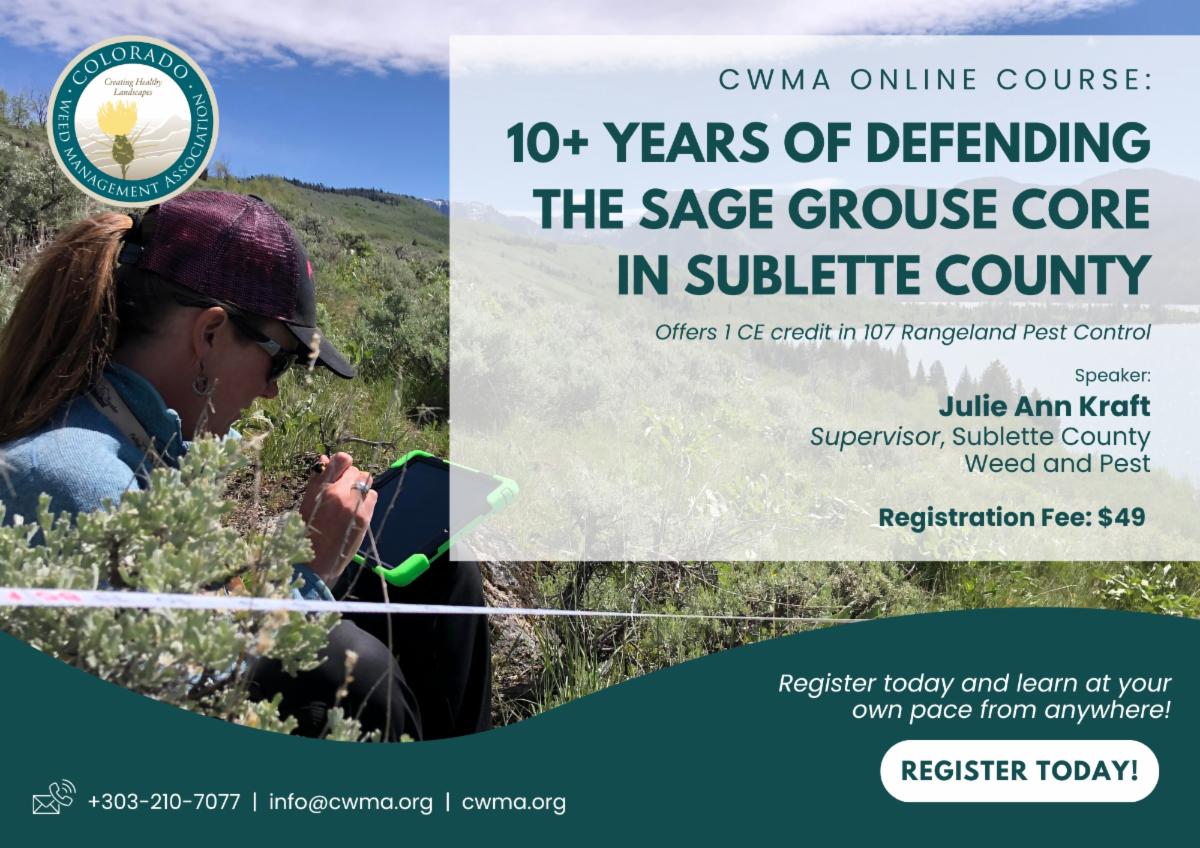
🌾 NEW CWMA Online Course Alert! 🌾
10+ Years of Defending the Sage Grouse Core in Sublette County (CEC 107)
| | |
Boost your knowledge and earn 1 CE credit in Rangeland and Pest Control (107) with this flexible online course taught by Julie Ann Krate from Sublette County! Discover how Sublette County Weed and Pest has tackled the challenge of managing invasive cheatgrass at a landscape scale since 2011—with more than 100,000 acres of aerial treatments.
🎓 Learn at your own pace from anywhere
💵 Registration: Only $49 (additional fees may apply)
🔗 Register Now:
Click here for the CE credit version
Click here for the non-credit version
Don’t miss this opportunity to gain insights on landscape-level invasive species management and how you can apply these lessons in your own region!
| | |
CWMA Online Training and Education for CE Credits: Easy to Use at Home or Work!
Need credits? CWMA has you covered year round with online education approved by the Colorado Department of Agriculture! Attend a live webinar or take an on-demand course that offer CEC’s, under $40 for CWMA members!
These courses give you on-demand access to credible, curated and convenient online training activities. We currently have two options: one for those seeking CE credits and one for people who are not. Here is the full list of courses and their registration links.
| | NOVEMBER WEED OF THE MONTH | |
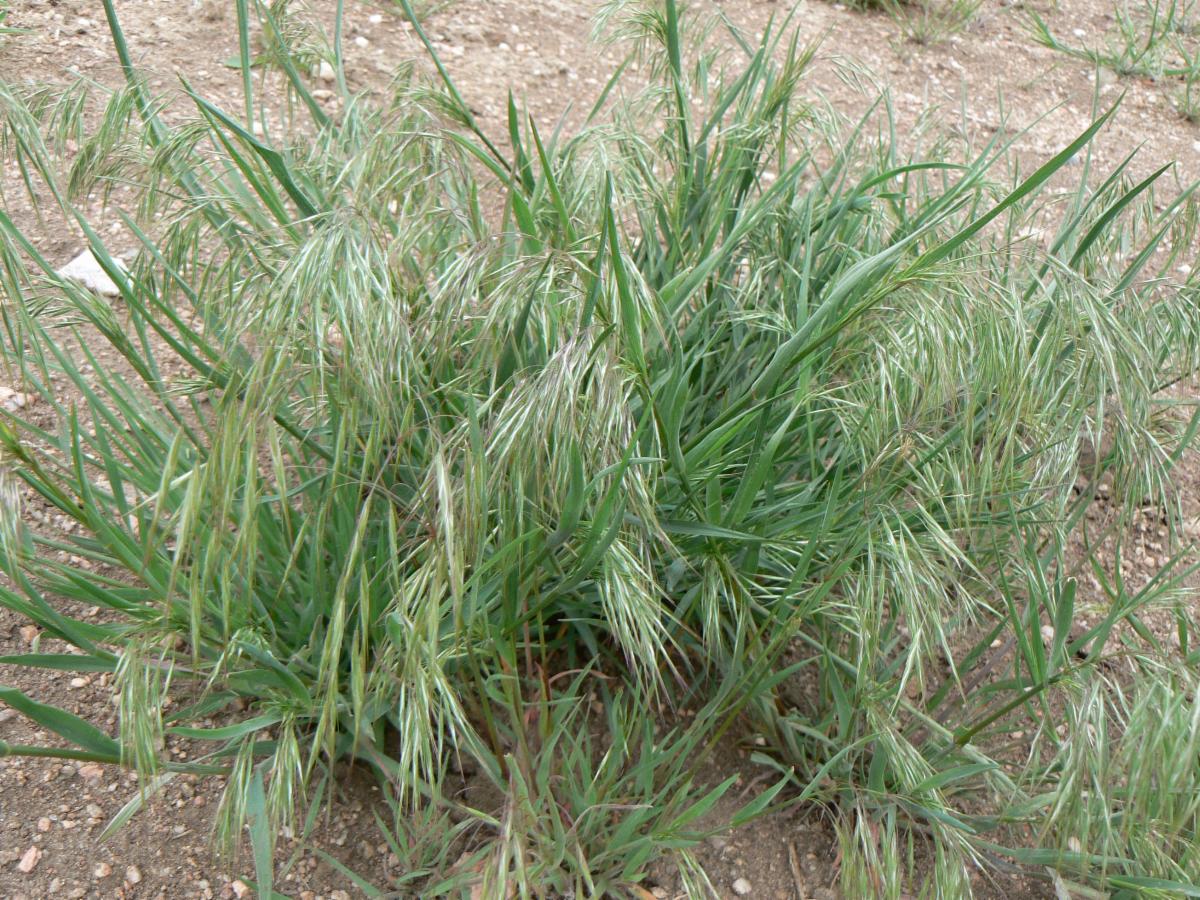
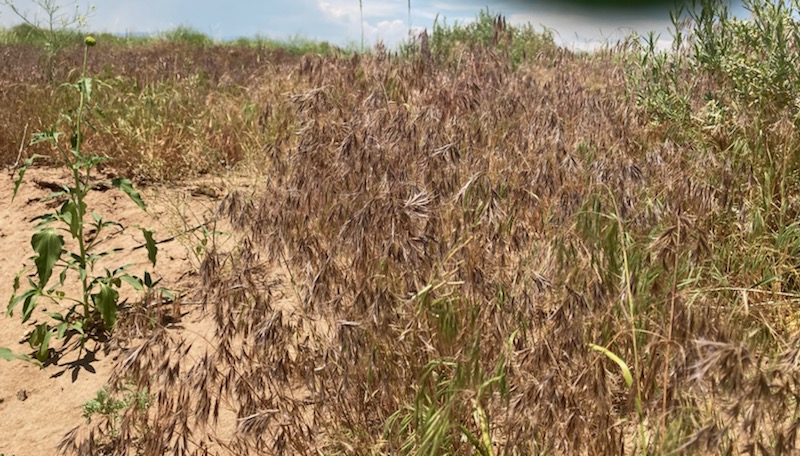
Downy Brome (Bromus Tectorum)
List C annual (Poaceae).
Originally from Europe, this aggressive annual species produces seedlings from autumn to early spring, easily displacing later emerging desirable species. Colloquially called "cheatgrass", each plant produces up to 300 seeds with a fairly short viability up to 2 years. Dense infestations create fine fuels, posing fire risks especially within wildland-urban interfaces. Native species recruitment is often greatly hampered by it's ability to shorten fire return intervals.
Photo Credits: C. Bryant
| |
Boxelder (Acer Negundo)
By: C. Bryant, Huerfano County Noxious Weed Manager/CWMA Board Member
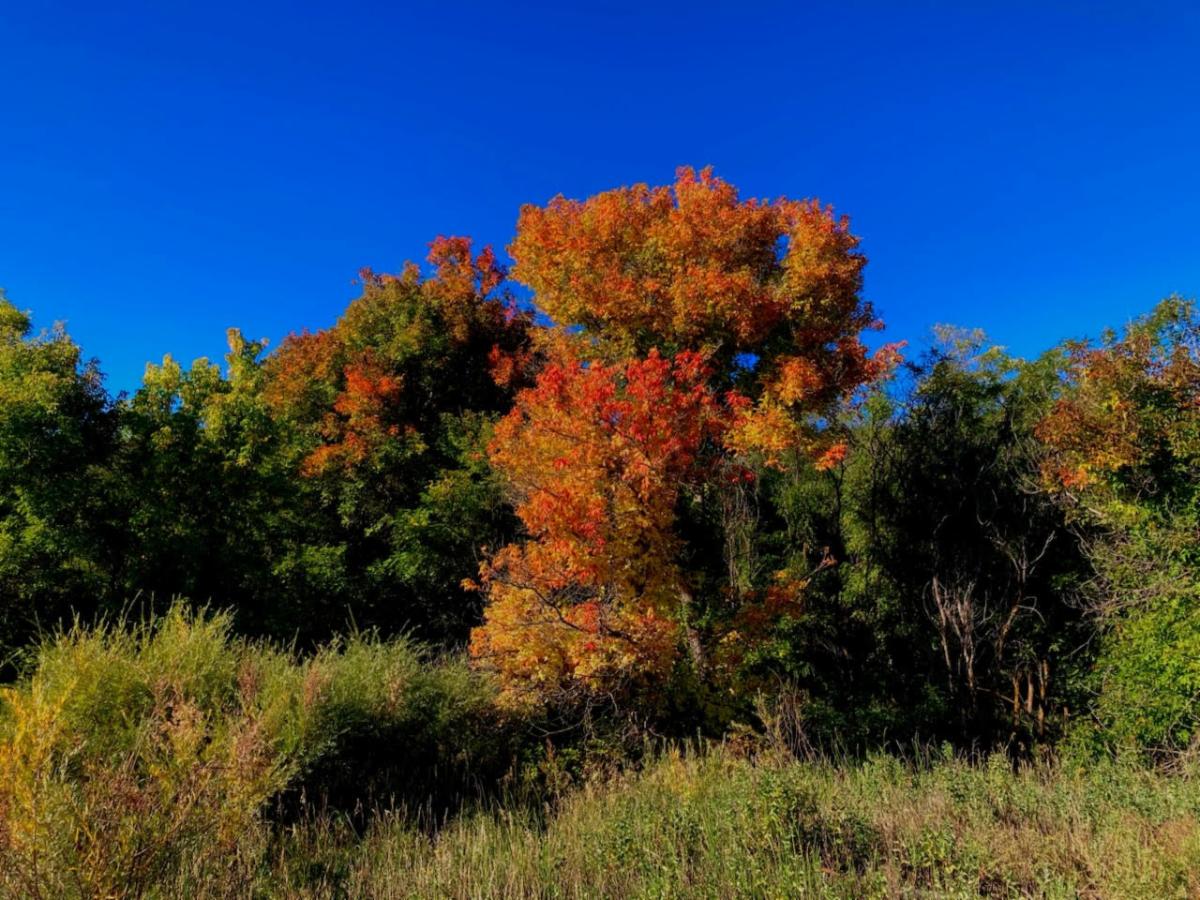
| | Photo (right): Boxelder in Full Autumn Glory | | |
In this segment of Native Plant Stories we will be taking a look at a native tree that goes by many names and that has largely fallen out of favor; the humble boxelder (Acer negundo). This maple species has a broad range stretching from Canada to as far south as Honduras and has even gained a foothold in Europe where it is considered an invasive species. Given its wide distribution, it is known by many other names such as: Manitoba maple, ash maple, three-leaf maple, or, if in Russia, American maple. While generally not being highly regarded during the modern age within the United States and abroad, it was once a marvel ornamental from the “New World” when it was introduced as such to Europe in the 1680s. Western settlers in the United States found it of great use for syrup production, though its sugar content was only 1%-2.5% compared to the eastern sugar maple at 2%-4%.
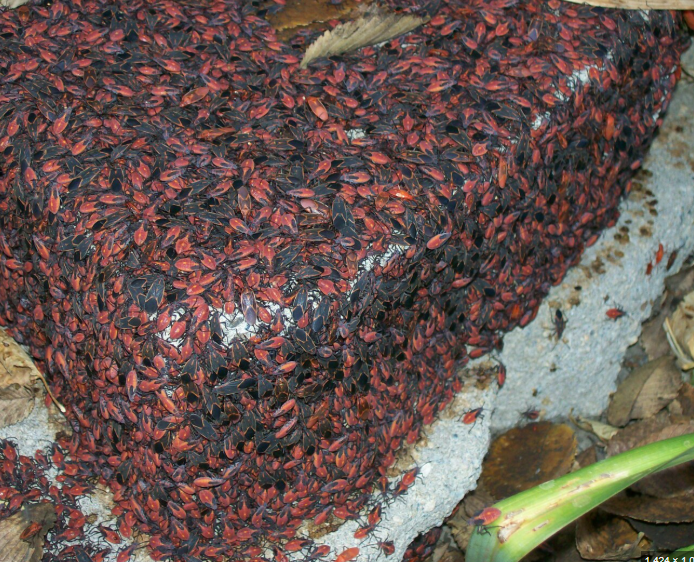
As civilized society became accustomed to boxelders, the most negative (though natural) aspects of the species came to light. In ornamental settings its profile was often deemed “unsightly” given its large burls and irregular growth. The tree also proved to be fairly weak when subjected to heavy winds or early season snows. Another issue that made it highly undesirable in ornamental settings was the fact that being fully dioecious, the female trees tend to attract hordes of box elder beetles (Boisea rubrolineata). Also known as “adobe bugs” in southern Colorado, these 1\4” long red to orange backed insects have a tendency to form dense mats upon foundations and other masonry surfaces before eventually overwintering within whatever structure they happen to be upon.
While these characteristics can be somewhat annoying in North America, in Europe and Australia it has become a serious ecological threat. One could perhaps argue that it is our answer to Russian olive, given its name as American maple in Russia and its invasive status there. While thankfully not spreading by root like the latter mentioned species, the wing shaped fruits of it are carried great distances and have an exceptionally high germination rate. Much like the woody invasive species that we are all too familiar with here, outside of their native range box elders displace native species\lower biodiversity, especially within riparian areas. Reports bemoaning its negative effects outside the United States can almost be directly overlaid those of our domestic Russian olive literature. Our counterparts in Europe are even researching their own biological control known as Phyllosticta negundinis, which is a host specific fungus that may help lower the species’ invasive potential.[i]
[i]https://www.researchgate.net/publication/335378717_A_global_systematic_review_of_publications_concerning_the_invasion_biology_of_four_tree_species?_tp=eyJjb250ZXh0Ijp7ImZpcnN0UGFnZSI6InB1YmxpY2F0aW9uIiwicGFnZSI6InB1YmxpY2F0aW9uIn19
Photo: Autumntime swarm of boxeleder beetles
| | |
The 15th Edition of the Noxious Weeds of Colorado Booklet is available for purchase.
Discover comprehensive updates to noxious weed profiles with detailed identification guides — all crafted for enthusiasts, professionals, and nature lovers. Don’t miss your chance to get your hands on this essential resource.
Please provide a USPS-compatible address, as all products will be shipped via USPS.
| | | | |
2025 CWMA Winter Training - Register Today!
Register now for the 2025 CWMA Winter Training, happening December 10-11th in
Pueblo, CO!
The following CE credits are offered and approved by CDA (Workshop #26039):
PS - Public Safety
UP - Use of Pesticides
109 - Industrial Right of Way
103 - Agricultural Weed Control
108 - Aquatic Pest Control
LR - Laws and Regulation (x2)
EP - Environmental Protection
AS - Applicator Safety
110 - Public Health Pest Control
107 - Rangeland Pest Control
| | | New Hotel Block Available - CWMA Winter Training | | |
Our original room block at the Courtyard by Marriott is now completely sold out. To ensure everyone has convenient lodging options, we’ve secured an additional group block at a nearby hotel. If you haven’t yet booked your accommodations, please use the information below to reserve your room as soon as possible.
SpringHill Suites by Marriott Pueblo Downtown
150 South Santa Fe Avenue, Pueblo, Colorado 81003
Rate: 99 USD per night before taxes
Last Day to Book: Friday, November 21, 2025
| |
Giant Weed Photo Contest - Submit Your Entry!
Think you captured the biggest noxious weed of the season? We will be sponsoring a photo contest at CWMA Winter Training this December 10-11.
We'll display all entries during the first day of the conference, and attendees will vote for their favorite. The winner will be announced at the close of the silent auction on December 10.
Please submit a high-quality photo of your entry, along with a brief description, to info@cwma.org by December 9.
| | |
Why Be A Member?
Simply put, we help you and your employer IDENTIFY and MANAGE invasive species and CONNECT you to the right resources and support. Membership gives you special access to:
- A network of peers for support, advice and solutions
- Science based research and training
- CE courses and events to help you maintain your license
- A library of curated resources
- Opportunities to advance your career and develop leadership skills
- Member discounts for events, webinars, and publications
- And more!
What else? CWMA fights for the industry by ensuring that rules and regulations at the state level help and not hurt your ability to perform your job. We increase environmental awareness among decision-makers and the broader public.
| | |
Sustaining Partners
Not a sustaining partner but want to be? Join here.
|
| |
How can CWMA work for you?
Do you want to make a difference with CWMA? Would you like to influence the direction that CWMA is leading? Join a committee by reaching out to the chairs and co-chairs.
Want to join a committee but don't know where to start? Contact us for more info!
| | |
Are You a Writer or Have a Story to Tell?
If you have a success story or event you'd love to share...we want to help!
Colorado Weed Management Association is always looking for new content, exciting stories in integrated management, and alerts on new weed species!
Send in an article, write up, or pictures and we can share them in our quarterly newsletter.
Email submissions to Communications Committee at info@cwma.org.
Please limit pieces to 500 words. All submissions are subject to review.
Newsletter contributors have to be CWMA members.
|
| | | |