|
Dear Presidents’ Alliance Member,
In this week’s Member Update:
- Presidents’ Alliance Brings Higher Education Leaders and Senators Together on the State of Dreamers
- Members and Partners Gather for Strategy Session on Immigration and Higher Education
- Presidents’ Alliance Recognizes Congressional Champions and Staff for Leadership on Bipartisan Immigration Solutions
- Federal Judge Strikes Down $100K Fee on H-1B Visa Petitions
- Federal Judge Orders USCIS to Resume Immigration Adjudications
- USCIS Releases Proposed Rule on Employment Authorization Documents (EADs)
- New Resource: Admissions and Financial Aid Policies for Undocumented Students at Private Colleges and Universities
- Immigration in Brief
- Calendar of Events
- Top Reads
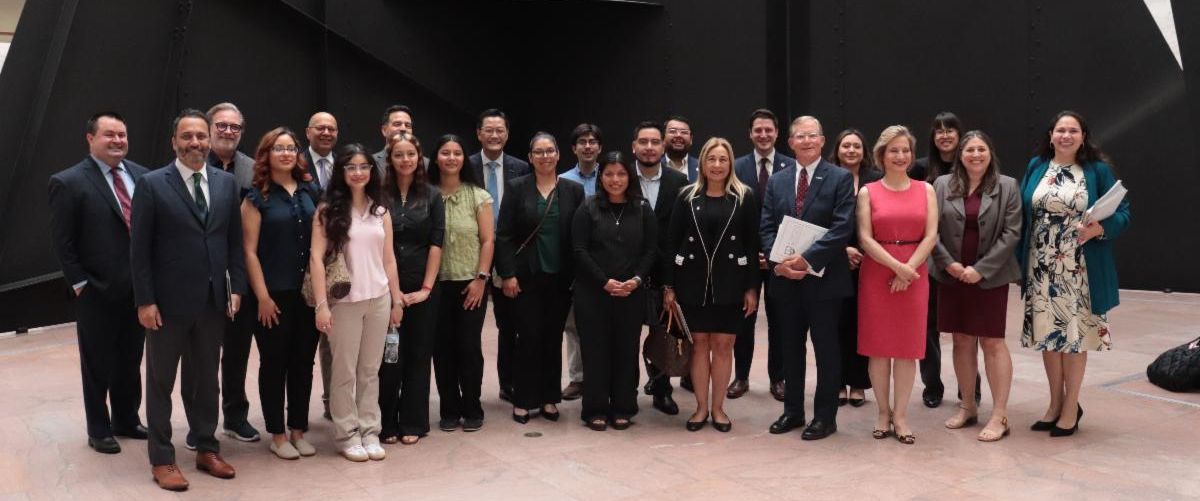
| | Presidents’ Alliance Brings Higher Education Leaders and Senators Together on the State of Dreamers | | Ahead of the 14th anniversary of DACA on June 15, the Presidents’ Alliance and TheDream.US co-hosted a Capitol Hill breakfast roundtable on the state of Dreamers with nearly 30 higher education leaders and members of the U.S. Senate, including Senator Dick Durbin and Senator Chris Coons. The conversation focused on Dreamers on college campuses, ongoing threats to DACA recipients and undocumented students, and the critical role college and university leaders can play in advancing permanent protections. Participants discussed the urgency of bipartisan action and the importance of higher education voices in making the case for durable solutions that support students, campuses, communities, and the nation’s workforce. | | Members and Partners Gather for Strategy Session on Immigration and Higher Education | | |
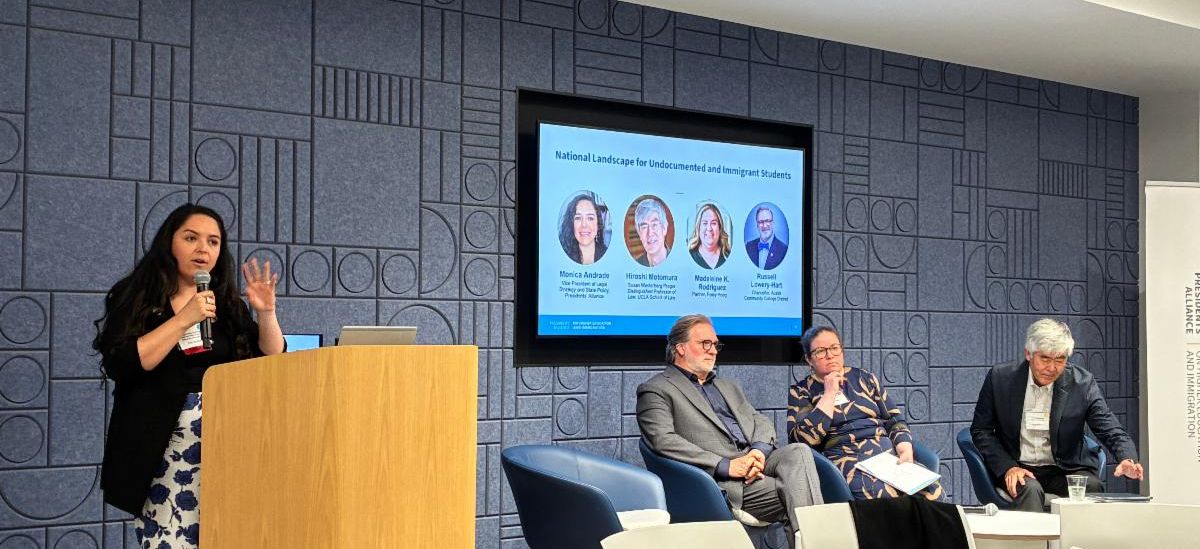
On June 9, the Presidents’ Alliance convened nearly 100 member institutions and partner organizations in Washington, D.C., for a day-long policy and legal strategy session focused on the challenges and opportunities facing higher education in a rapidly changing federal and state policy environment. The convening brought together higher education leaders, legal experts, and policy advocates to discuss how colleges and universities can support Dreamers, international students and scholars, and refugee and displaced students while advancing policies that strengthen U.S. higher education, the economy, and long-term competitiveness.
Participants engaged in productive strategic conversations on key litigation and regulatory developments, the broader federal policy outlook, and opportunities to advance bipartisan immigration solutions. The session generated valuable insights, strengthened relationships among members and partners, and helped identify shared priorities and strategies. Feedback and recommendations gathered throughout the day will help inform the Presidents’ Alliance’s advocacy, policy, legal, and member engagement efforts in the months ahead.
| | Presidents’ Alliance Recognizes Congressional Champions and Staff for Leadership on Bipartisan Immigration Solutions | | |
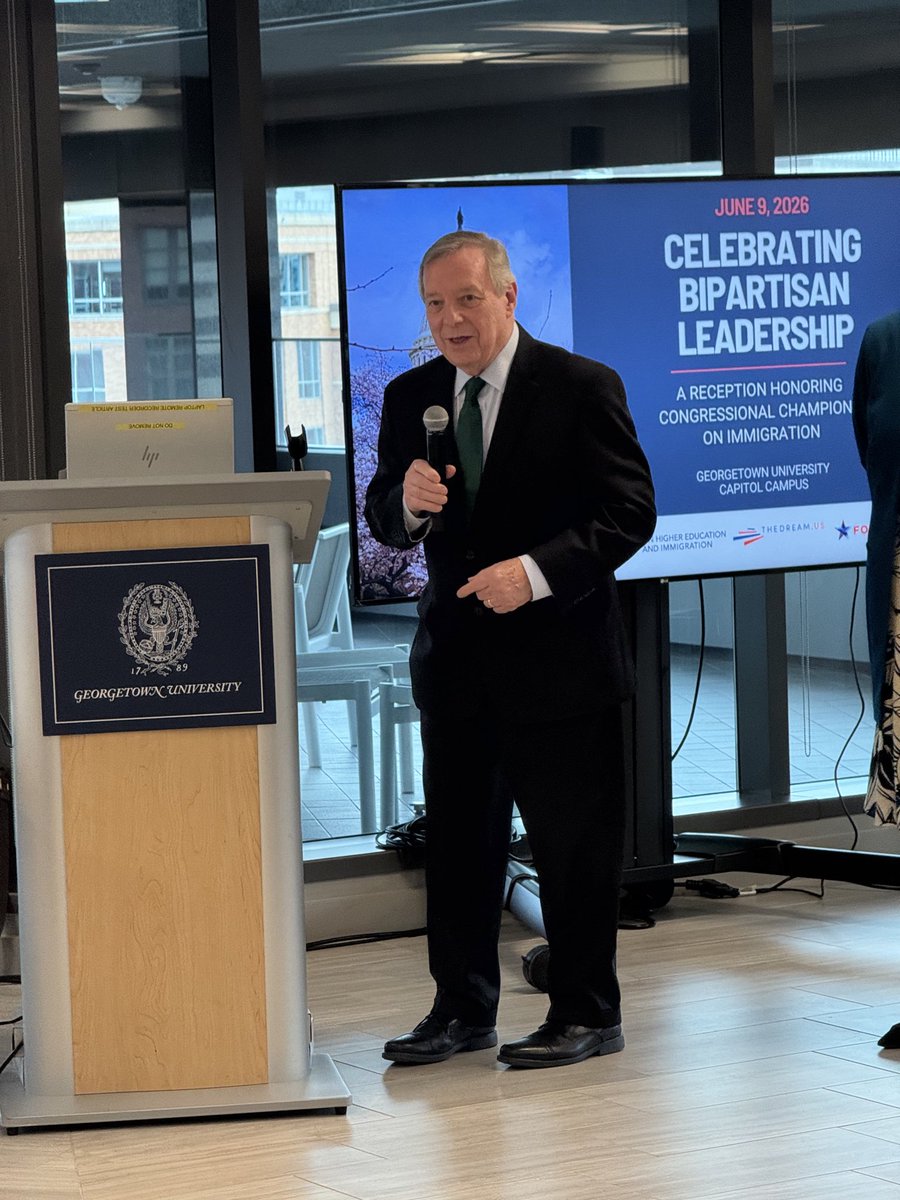
Following the strategy session on June 9, the Presidents’ Alliance, together with TheDream.US, the National Immigration Forum, and the Congressional Immigrants and Refugees Staff Association, hosted a reception honoring congressional champions who have advanced bipartisan solutions for undocumented, international, refugee, and displaced students and scholars.
During the reception, the Presidents’ Alliance recognized Senators Dick Durbin (D-IL) and Lisa Murkowski (R-AK), Representatives Sam Liccardo (D-CA) and Jay Obernolte (R-CA), as well as congressional staff leaders John-Mark Kolb, Deputy Chief of Staff to Representative María Elvira Salazar (R-FL), and Ivanley Noisette, Legislative Director to Representative Tom Suozzi (D-NY), in appreciation of their leadership, partnership, and commitment to pragmatic immigration solutions that support Dreamers, international students and scholars, and refugee and displaced students.
The event brought together higher education leaders, congressional staff, advocates, and partner organizations to celebrate bipartisan leadership and the role of higher education in advancing practical immigration solutions. The reception also highlighted the value of engaging colleges and universities in efforts to strengthen the nation's talent pipeline, economic competitiveness, and long-term prosperity.
| | |
Federal Judge Strikes Down $100K Fee on H-1B Visa Petitions
On June 8, a federal judge in Massachusetts struck down the Trump administration’s $100,000 fee on certain new H-1B visa petitions, with the ruling applying nationwide. U.S. District Court Judge Leo T. Sorokin granted summary judgment in favor of a coalition of 20 states, finding that the policy was unlawful and vacating it in its entirety. The fee had been imposed through a September 2025 presidential proclamation and raised significant concerns for employers, including colleges and universities, that rely on H-1B professionals. Plaintiffs argued that the fee exceeded the administration’s legal authority, violated the Administrative Procedure Act, and functioned as an unauthorized tax.
The ruling represents a significant victory for employers that rely on H-1B professionals and the international talent pipeline. Unless the decision is stayed pending appeal or overturned on appeal, employers will no longer be required to pay the $100,000 fee when petitioning for new H-1B workers. Two other cases also challenging the fee, including the case brought by the U.S. Chamber of Commerce and the Association of American Universities, continue in other courts.
| |
|
Federal Judge Orders USCIS to Resume Immigration Adjudications
On June 5, a federal judge blocked Trump administration policies that halted the processing of immigration applications and benefits for nationals from the 39 countries and the Palestinian territory impacted by the travel ban. Through policy memos in December 2025 and January 2026, the administration paused adjudications for a wide range of immigration benefits, including green card applications, work authorization requests, and other applications relied upon by many international students, scholars, and noncitizens, such as Optional Practical Training (OPT). The administration had also halted the processing of asylum claims and ordered a review of immigration benefits previously granted to individuals from the affected countries. Reports show that as many as 2 million applications may have been affected by the pause, including those of students, scholars, and employees at colleges and universities across the United States.
In his ruling, the federal judge found the policies unlawful and criticized the administration for disrupting the lives of individuals who had lawfully come to the United States. The decision requires immigration agencies to resume processing immigration benefits and applications for affected individuals and to move forward with naturalization ceremonies that had been delayed by the policy. The ruling marks a significant development for individuals from travel-ban countries who have faced months of uncertainty while awaiting decisions on immigration benefits, work authorization, and other status-related applications.
Prior to the ruling, the Presidents’ Alliance joined a letter led by ACE, calling on the administration to lift the adjudication pause and allow for processing of OPT, H-1B, and other work authorizations issued by the U.S. Citizenship and Immigration Services (USCIS) for international students from travel ban countries who currently hold valid status and are in the United States.
| | |
USCIS Releases Proposed Rule on Employment Authorization Documents (EADs)
The Department of Homeland Security (DHS) issued a notice of proposed rulemaking limiting access to employment authorization for humanitarian parolees and certain deferred action beneficiaries. The proposed rule would impose stricter eligibility criteria on EAD applicants and establish a one-year limit for (c)(14) EADs.
The changes would primarily impact immigrants on humanitarian parole, those with certain forms of deferred action (excluding DACA recipients), and individuals with final orders of removal. According to the NPRM, DACA recipients would be subject to some general requirements. To retain their employment authorization, they must submit biometric information, pass stringent reviews of their criminal history, and be free of allegations of gang or terrorist affiliation. However, DACA recipients would not be subjected to other changes outlined in the NPRM, including the one-year authorization period, revised discretionary standards, and new E-Verify employment requirements.
We will share resources with further analysis in the coming weeks.
| |
|
New Resource: Admissions and Financial Aid Policies for Undocumented Students at Private Colleges and Universities
Many undocumented students assume private colleges are financially out of reach. The reality is more nuanced: some private institutions offer substantial institutional aid and, in certain cases, can meet 100% of demonstrated financial need. At the same time, these opportunities are often concentrated at highly selective colleges, making the admissions and financial aid landscape difficult to navigate without clear guidance.
The blog post breaks down:
- How undocumented students may access institutional financial aid
- The difference between need-blind and need-aware admissions
-
Which private institutions may offer full funding opportunities (also see our private institutions tool on the Higher Ed Immigration Portal)
- Key considerations for students, families, counselors, and advisors
| | |
Immigration in Brief
-
Following months of delay, the U.S. Senate and House passed a nearly $70-billion budget reconciliation package to fund Immigration and Customs Enforcement (ICE) and Border Patrol operations through 2029. President Trump signed the bill on June 10.
-
Reports indicate the State Department plans to reduce the number of U.S. embassies and consulates in Africa that process visa applications by more than half (from nearly 50 to 20), with the changes expected to take effect in June. The move is part of the Trump administration’s broader effort to restrict both immigrant and nonimmigrant visa issuance and could further limit access to U.S. visas for prospective international students and scholars from across the continent.
-
Representative Andy Biggs (R-AZ) introduced a bill that would compel the Internal Revenue Service (IRS) to share private taxpayer information with DHS to aid in immigration enforcement efforts. The bill would require the IRS to share the name, address, and filing status of all ITIN users with DHS, along with information about their claimed dependents. Previous attempts to use taxpayer information for immigration enforcement have met with legal challenges, and experts warn that such actions could have a significant chilling effect on future tax payments. Historically, immigrant communities have filed taxes at high rates even though they are ineligible for a variety of taxpayer-funded public benefits.
| | |
Calendar of Events
-
June 25, 2026 | Refugee Student Voices on Access, Belonging, and Opportunity in Higher Education Webinar | Register Here
-
June 30, 2026 | College Corner Session 2: Preventing Summer Melt & Preparing for Application Season | Register Here
| | |
Thank you for your support and engagement.
The Presidents’ Alliance Team
| | | | |