WMU NEWSLETTER

07.03.2026

실천영성 "Spirituality in Praxis"

"Reading the Grain of the Word"

The Fullness of Grace and Truth in the Gospel

When we open the book of Ephesians, the first thing we encounter is not a greeting, but a hymn of praise. Before offering words of thanksgiving (1:15–23), Paul first pours out a poetic doxology directed toward God (1:3–14). This praise celebrates the abundant blessings that have been given to believers in Christ and through Christ. Before the foundation of the world was laid, we were already chosen in Christ (vv. 4–6); through Christ’s death, we received forgiveness of sins (vv. 7–10); and ultimately, we have received salvation (vv. 11–12). Therefore, both the original recipients of this letter and believers today stand on the path of salvation that has already begun in Christ (vv. 13–14).


When Paul uses the phrase “in the heavenly realms” (v. 3), he boldly portrays the spiritual position of the church before God. The existence of the church and its members rests entirely upon God’s gracious will. This will was established in Christ before creation, from eternity past—or more precisely, through Christ Himself (vv. 4–5; 3:9). From eternity, God appointed Christ as the Savior of the new humanity and chose the church, composed of both Jews and Gentiles, to receive salvation in Him. One significant point is that Ephesians speaks of election only in a positive sense. There is no mention of rejection or condemnation. The purpose of election is clear: God called us to live with Him and to become His children (see Rom. 8:28–30), and the ultimate goal of this election is the praise of the glory of His grace (v. 6).


This timeless will of God for salvation was realized within history—specifically through the singular event of Jesus’ death on the cross (“through his blood”). Based on that death, God rescued our lost lives from the depths of death (see Rom. 3:24–26; 2 Cor. 5:19). Paul explains that the abundance of this grace corresponds to an abundance of knowledge (“wisdom and understanding,” v. 8). The mystery of God’s redemptive plan revealed through the gospel is that, through the death of Jesus, even the powers of the universe have been reconciled and brought under the rule of the risen Lord (see Col. 1:20).


In verse 11, Paul does not literally say that believers “receive an inheritance.” Rather, he says that “we were chosen to become God’s inheritance according to His will.” In Old Testament terms, this means that we have received our portion within the promises and inheritance given to God’s people (see Col. 1:12; Num. 33:54). Here, the “we” most likely refers particularly to Jewish Christians. Paul himself, the author of this letter, belonged to this group. Therefore, verses 13–14 present a parallel contrast between the calling of Jewish believers and the calling of Gentile believers, who were the actual recipients of this letter.


The expression that believers have been “sealed” with the Holy Spirit (see 4:30) is legal language affirming that God has accepted us as His children. The Holy Spirit is the “down payment” of the salvation that is to come and the guarantee that we will ultimately be delivered from the destiny of sin and death. This sealing was likely symbolically expressed through the laying on of hands at baptism (see Acts 8:17; 9:17–18).


As we follow the opening section of Ephesians 1, we discover a clear and consistent movement. Beginning with election, continuing through forgiveness and salvation, and culminating in the sealing of the Holy Spirit, the entire process is rooted in God’s grace from beginning to end. In ministry settings, we often hold onto grace as a theological concept while being tempted to return to relying on works and achievements in our daily lives. However, the identity of the Christian as Paul describes it always begins with the reality of being “in Christ.” When our theology and our ministry do not forget the fullness of this grace, the gospel can finally stand as complete truth within our individual lives and within the church.


Remember WMU

A Beautiful Reunion of Alumni, Faculty, and New Graduates

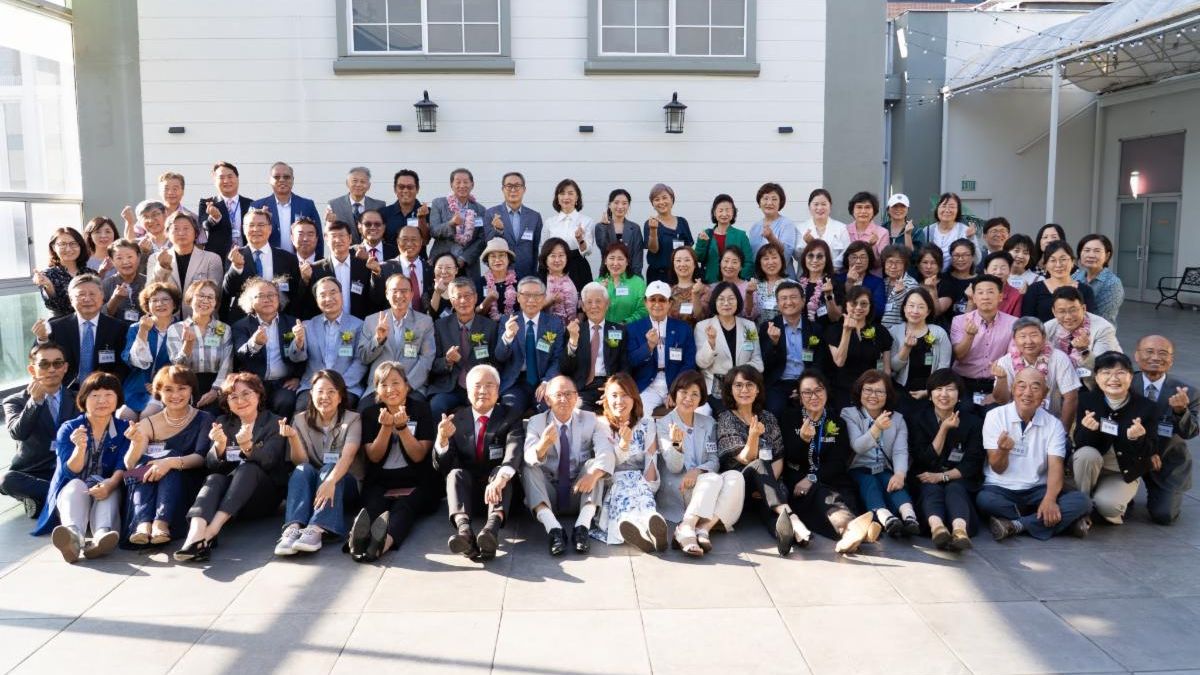
The World Mission University (WMU) Alumni Association held an alumni gathering on June 14, 2026, at Aroma Center in Los Angeles Koreatown under the theme “Remember WMU.” With approximately 100 alumni, faculty members, and new graduates in attendance, the event included worship, fellowship, and sharing of ministry experiences.


President Sung Jin Lim delivered a message titled “What We Build,” emphasizing the mission of building up the body of Christ. The gathering continued with ministry reports from alumni serving in Zimbabwe and Peru, as well as those involved in homeless and senior ministries. Special music performances, appreciation for faculty members, and welcoming moments for new alumni were also included.


The event concluded with the singing of the university hymn and a time of united prayer. Participants reaffirmed the unity of the WMU community formed through their shared journey and committed themselves to continuing the mission of the gospel in their respective places of ministry.


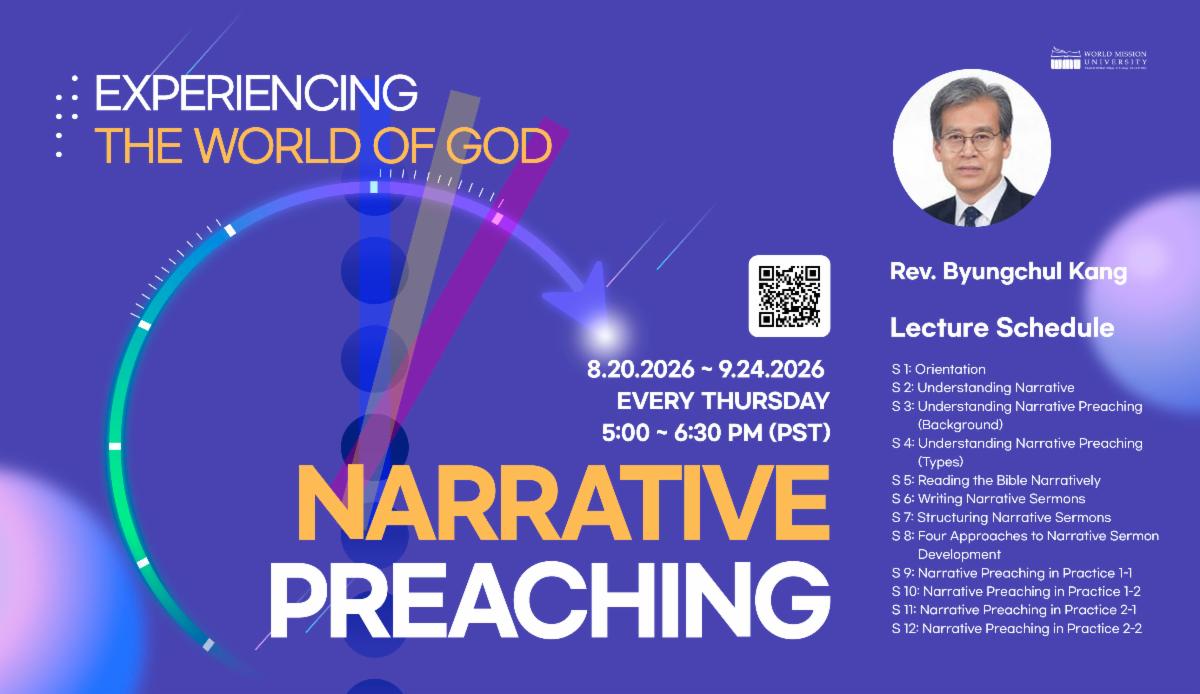
2026 Narrative Preaching Workshop

The crisis of the pulpit is the crisis of preaching itself. When the Word no longer becomes an event but remains merely the delivery of information, the congregation can no longer experience the world of God.


This workshop focuses on Narrative Preaching and systematically covers the entire process of narrative preaching—from understanding narrative, to reading Scripture through a narrative lens, to sermon preparation and delivery. This is not simply a study of preaching techniques, but a journey toward bringing the Word, which records God’s acts, to life again as an event in the pulpit so that listeners may experience God’s world.


Upon completion of this course, participants will develop the following three competencies:

  1. The ability to read Scripture narratively and experience the “event of God”
  2. The ability to structure that event as an “event within time”
  3. The ability to develop and deliver sermons that invite the audience to participate in that event


Instructor: Rev. Byung Chul Kang

  • Doctor of Theology in Ministry (ThD in Ministry), Presbyterian University and Theological Seminary
  • Major in Preaching and Liturgy
  • Senior Pastor (Installed Pastor) of Chodae Church
  • Adjunct Professor, Presbyterian University and Theological Seminary
  • Former Moderator of Seoul Nam Presbytery


Dates: August 20 – September 24, 2026 (Every Thursday)

Schedule:

  • Pacific Time (PDT): Thursday, 5:00–6:30 PM
  • Central Time (CDT): Thursday, 7:00–8:30 PM
  • Eastern Time (EDT): Thursday, 8:00–9:30 PM
  • Korea Standard Time (KST): Friday, 9:00–10:30 AM


We look forward to creating a time together when preaching once again becomes a living event.


Pastoral Spirituality Forum

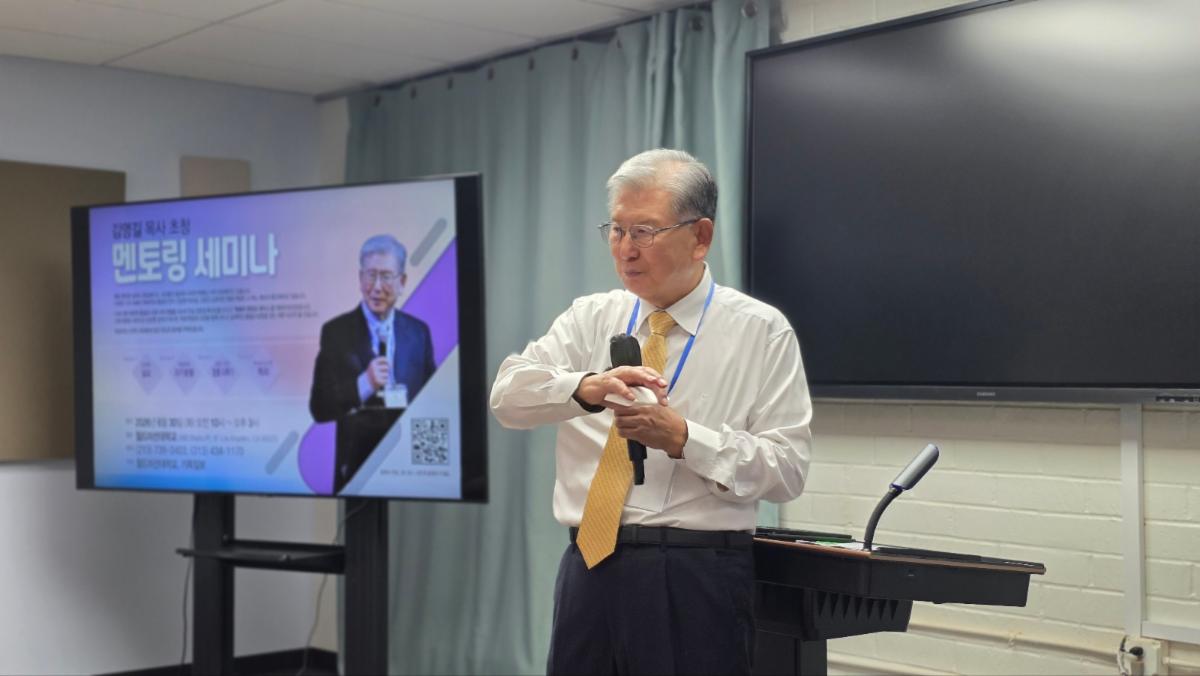
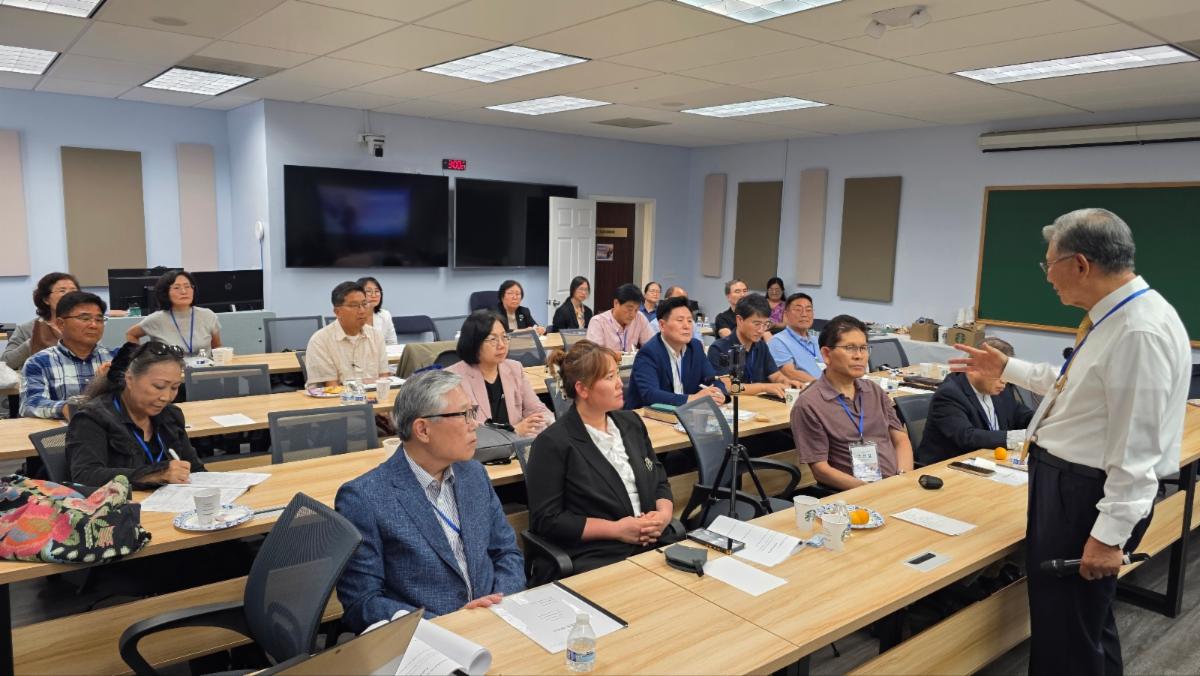
World Mission University, in collaboration with Christian Today, hosted a Pastoral Mentoring Seminar on June 30 (Tuesday), inviting Rev. Young Gil Kim as the guest speaker. During the seminar, Rev. Kim addressed the three essential elements of preaching—“Jijeongui” (knowledge, emotion, and will)—as well as pastors’ self-understanding and their calling within the church community, presenting a vision for healthy pastoral ministry.


Rev. Kim emphasized that pastors can build healthy ministries and communities only when they first honestly examine their own wounds and emotions before God and experience healing. He also encouraged pastors to remember that the gospel is the power of God that transforms lives, and that ministers are called to live as witnesses who embody that love through their lives.


This seminar provided a meaningful opportunity for participants to reflect once again on the essence of the gospel and the calling of pastoral ministry, while sharing renewed direction for ministry and spiritual restoration.


[Faculty Column] “Nursing Education in the United States”

Professor Young Sik Cho

The U.S. healthcare system is characterized by high medical costs and a complex, privately centered insurance structure. In addition, due to the ongoing shortage of nurses, there is a strong demand for highly trained nursing professionals with advanced competencies. Accordingly, the United States provides an environment in which Advanced Practice Registered Nurses (APRNs), including Nurse Practitioners (NPs), can independently provide diagnosis and prescribe treatments. World Mission University supports students in pursuing four-year nursing degrees and advanced clinical practice programs to prepare them for these professional opportunities.


Ministry and Educational Platfom

AASFC

Supporting spiritual formation and leadership development for the Asian American community.

PCCE

Providing Christian education seminars, workshops, and educational resources related to family ministry.

Compeling Preaching

A specialized educational program designed to strengthen preachers’ theological depth and communication skills.

SGMC

Providing customized training for small group ministry leadership and church growth.

DSLIM Foundation

Providing educational resources, seminar information, and community support programs related to disability ministry.

KACC

Offering educational programs in Christian counseling, parent education, seminars, and counseling ministry.

SAFE

Providing information on programs for supporting individuals with disabilities, advocacy resources, and community resources.

StoryOn

Offering leadership coaching programs and coaching education for personal growth and ministry development.