NACD's 76th Annual Meeting is only 4 days away! If you're registered, get excited for a week of educational and entertaining conservation opportunities. If you still want to join us, you can register on-site.
The meeting, hosted in partnership with the Association of Florida Conservation Districts, will be held in Orlando, Florida from February 12-16, 2022, at the Hilton Orlando Lake Buena Vista at Disney Springs Resort. The theme for this year's meeting is "Conservation Defined For All" and will be integrated into sessions and activities at the event!
|
NACD Annual Meeting Mobile App
This year we are excited to roll out a new mobile meeting app! In the app you can see the full event schedule, session descriptions, speaker profiles, and more right from your phone. By setting up a profile, you will be able to create a personalized schedule and message and network with other attendees. Scan or click the QR code, or download the Sched app (Apple) (Android) and search "NACD" to join the event.
|
Health and Safety Precautions
To make this in person event possible, this year’s Annual Meeting will have additional COVID-19 precautions and protocols in place for the well-being of attendees. In accordance with CDC guidelines, the Hilton Orlando Lake Buena Vista Resort requires all guests to wear a properly fitting mask or face covering in all public areas, which include our conference spaces. Hand sanitizer, sanitizing wipes, and face masks will be provided as additional precautionary measures throughout the event. More information regarding other COVID-19 precautions was sent to registrants last week. If you are registered and did not receive this email please let us know.
|
INFRASTRUCTURE INVESTMENT AND JOBS ACT FUNDING OPPORTUNITIES: HAZARD MITIGATION AND RESILIENCE |
The Infrastructure Investment and Jobs Act r ecently passed both chambers of Congress and was signed into law by President Biden. The infrastructure package includes billions of dollars in investments for resilience of natural systems. NACD’s Government Affairs Team will be releasing a series of blog posts to break down funding opportunities for districts through the infrastructure law as federal agencies such as the U.S. Department of Agriculture (USDA), the U.S. Department of the Interior (DOI), and others work to get this funding implemented on the ground. With this Act, there is funding designated for the Environmental Protection Agency (EPA), Federal Emergency Management Agency (FEMA), and the Army Corps of Engineer (ACOE).
Conservation districts are well positioned to be key partners in local hazard mitigation and resilience projects implemented through the funding available for these programs.
|
USDA CLIMATE-SMART AGRICULTURE AND
FORESTRY PROGRAMS
|
On February 7, Agriculture Secretary Tom Vilsack announced that the U.S. Department of Agriculture is delivering on its promise to expand markets by investing $1 billion in partnerships to support America’s climate-smart farmers, ranchers and forest landowners.
The new Partnerships for Climate-Smart Commodities opportunity will finance pilot projects that create market opportunities for U.S. agricultural and forestry products that use climate-smart practices and include innovative, cost-effective ways to measure and verify greenhouse gas benefits.
USDA is now accepting project applications for fiscal year 2022. Learn more here.
|
HOUSE AGRICULTURE COMMITTEE HOLDS HEARING TO REVIEW FARM BILL CONSERVATION PROGRAMS |
Over the past week, the U.S. House of Representatives Agriculture Committee has held two separate hearings to review farm policy and the progress of farm bill conservation programs. On Wednesday February 2, the House of Representatives Agriculture Subcommittee on Conservation and Forestry held a hearing to review Farm Bill Conservation Programs. This hearing will be the first of many that the committee will convene as they ramp up the process for the 2023 Farm Bill. On Tuesday, February 8, the Subcommittee on General Farm Commodities and Risk Management held a hearing to consider farm policy more broadly.
During the hearing on February 2, the committee heard testimony from Natural Resource Conservation Service (NRCS) Chief Terry Cosby and Farm Service Agency (FSA) Administrator Ducheneaux on the state of each agency’s conservation programs. In their opening statements, both witnesses discussed recent achievements and priorities for their agencies. In testimony as well as during questions, equity and climate were emphasized as points of focus for USDA. Additionally, Administrator Ducheneaux touted FSA’s efforts to increase participation in the Conservation Reserve Program (CRP) such as adjusted soil rental rates, increased payments for practice incentives, and increased payments for water quality practices. He reported an enrollment of 5.3 million acres through CRP sign-ups, which surpassed USDA’s 4-million-acre goal. Chief Cosby reported on NRCS’s continued work to serve customers through the struggles of the past year. This work resulted in the enrollment of 34,054 Environmental Quality Incentives Program (EQIP) contracts totaling $1.26 billion and 4,495 new Conservation Stewardship Program (CSP) contracts or $311 million on 5.8 million acres in fiscal year (FY) 2021. Written testimony for the witnesses can be found on the House Agriculture Committee’s website.
Several topics were at the forefront of committee member’s minds throughout testimony and questioning. Many members asked the witnesses to respond to concerns over low staffing levels and capacity at state offices. Representative Schrier of Washington referenced the key role that conservation districts play ensuring effective delivery of conservation program services. She explained that the interest is there from local producers to participate in these programs, but local offices that help farmers on the ground are simply not staffed and that it often means conservation districts are needed to fill in the gaps. Chief Cosby assured the subcommittee members that NRCS is taking an aggressive approach to filling staff vacancies and indicated the support that last year’s direct hiring authority gave to that process. The Chief also mentioned the importance of partnerships on the ground in supporting NRCS with implementation of programs.
“We know that we can’t do it all on our own and by ourselves,” Cosby said on the importance of working with partners. When asked how NRCS planned to implement future conservation program funding, the Chief said, “We have a lot of partners across the country that really help us with this, and we do agreements, and we have a lot of boots on the ground to help do this work. We believe that no matter what Congress appropriates, we can deliver.”
The Committee welcomed Undersecretary of Farm Production and Conservation Robert Bonnie to testify on Tuesday February 8. Bonnie’s testimony focused on the effects of extreme weather events of the past year and the efforts of the USDA to incentivize climate related agricultural practices. This comes after an announcement on Monday by USDA Secretary Vilsack that the agency is investing $1 billion in grants to increase the production of climate-smart commodities. In both hearings, members discussed concerns over agriculture investments in climate, especially as the committee prepares to draft the 2023 Farm Bill. Several members noted the need of Title II of the Farm Bill to remain the “conservation title” as opposed to a transition towards the “climate title.” During the Subcommittee on Forestry and Conservation’s hearing, Chairwoman Spanberger noted that conservation practices do reap countless benefits for the climate, and to continue their success the focus must remain on voluntary practices that create positive in on-the-ground outcomes for producers. During both hearings, there was also concern raised about public perception of producers in relation to climate, emphasizing the importance of showcasing how farmers and ranchers are “climate heroes.” Producers are the original stewards of the land and are already taking strides to promote soil health and promote on-farm resilience to disasters and extreme weather.
Farm Bill Conservation Programs are successful at improving soil health, water quality, and result in many other benefits for producers and the land. These programs are popular and over-subscribed, emphasizing the need to pair them with adequate technical assistance to implement these practices on the ground. Throughout the hearings, members and witnesses stressed the importance that these practices be voluntary and locally-led. Natural resource concerns differ across the country, and local leaders such as conservation districts are positioned to flexibly address the specific needs of the land and community. Continued investment in these programs and in technical assistance will allow farmers and ranchers to build on the work that has already been done to strengthen the health and resilience of the land.
|
UPCOMING: 'SOIL YOUR UNDIES' SOIL HEALTH EXPLORATION SERIES WEBINAR |
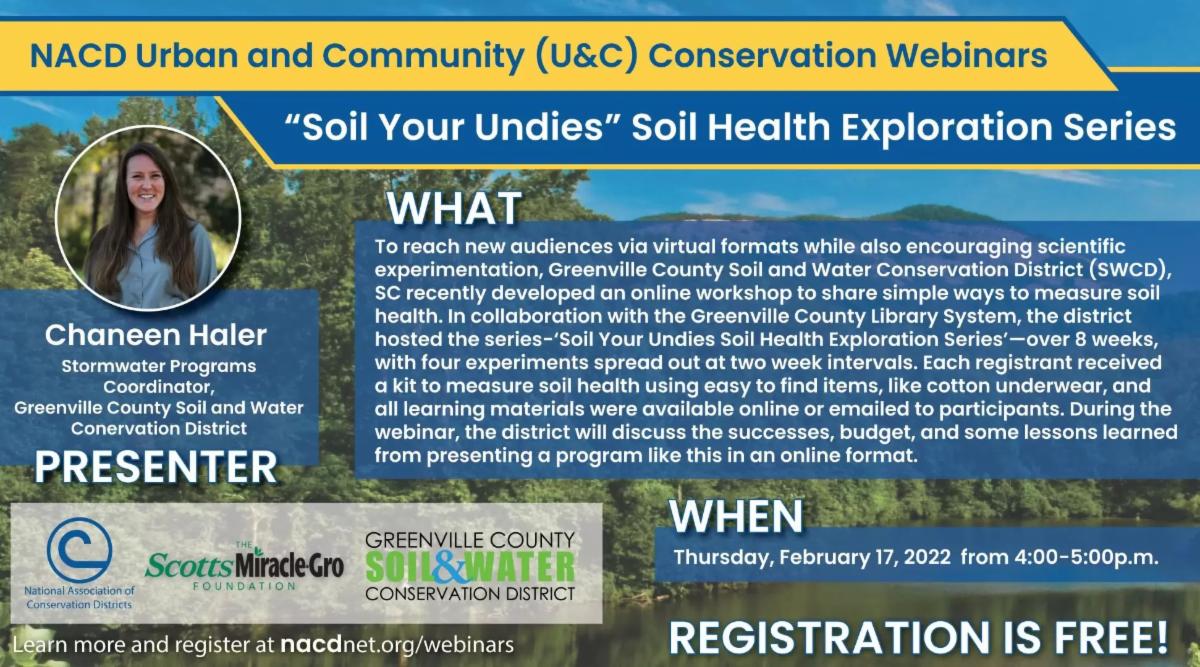
Join Chaneen Haler for February's Urban and Community (U&C) Conservation webinar on Thursday, February 17 at 4 p.m. Eastern. Haler, a stormwater programs manager with Greenville County Soil and Water Conservation District (SWCD), will discuss how to reach new audiences via virtual formats while also encouraging scientific experimentation through an online soil health workshop.
Learn more about this webinar, watch past U&C webinars, and submit a webinar proposal on our website. |
CARCD IMPLEMENTS NEW SET UP FOR ANNUAL CONFERENCE |
For the past several years, many conservation districts and state associations have sought out new ways to deliver content and networking opportunities to their clients and members safely and virtually.
The California Association of Resource Conservation Districts (CARCD) implemented a new strategy this year, separating the business meeting and learning portions of their annual meeting, with the business portions occurring first in the fall, and the learning portions for district staff and board members occurring January 11-February 4, 2022.
The conference theme, “Communities, Collaboration, and Climate: RCDs on the Cutting-Edge of Conservation,” brought together speakers from a variety of sectors from within and outside of California. Participants could register for a single track with a focus on one topic and always on the same day of the week. For example, sessions on water and watersheds always occurred on Wednesday afternoons. This strategy allowed busy district board members and staff to connect through a variety of sessions, without contributing to Zoom fatigue, and participants could register for the full conference or only select the tracts that are of interest.
The tracks covered the diversity of work conducted by conservation districts throughout California, including fire recovery and forest health, habitat restoration and pollinator biodiversity, and conservation in licensed cannabis farming. CARCD’s Justice, Equity, Diversity and Inclusion (JEDI) Committee also contributed prominently through the JEDI track, providing great examples of RCDs serving their whole communities.
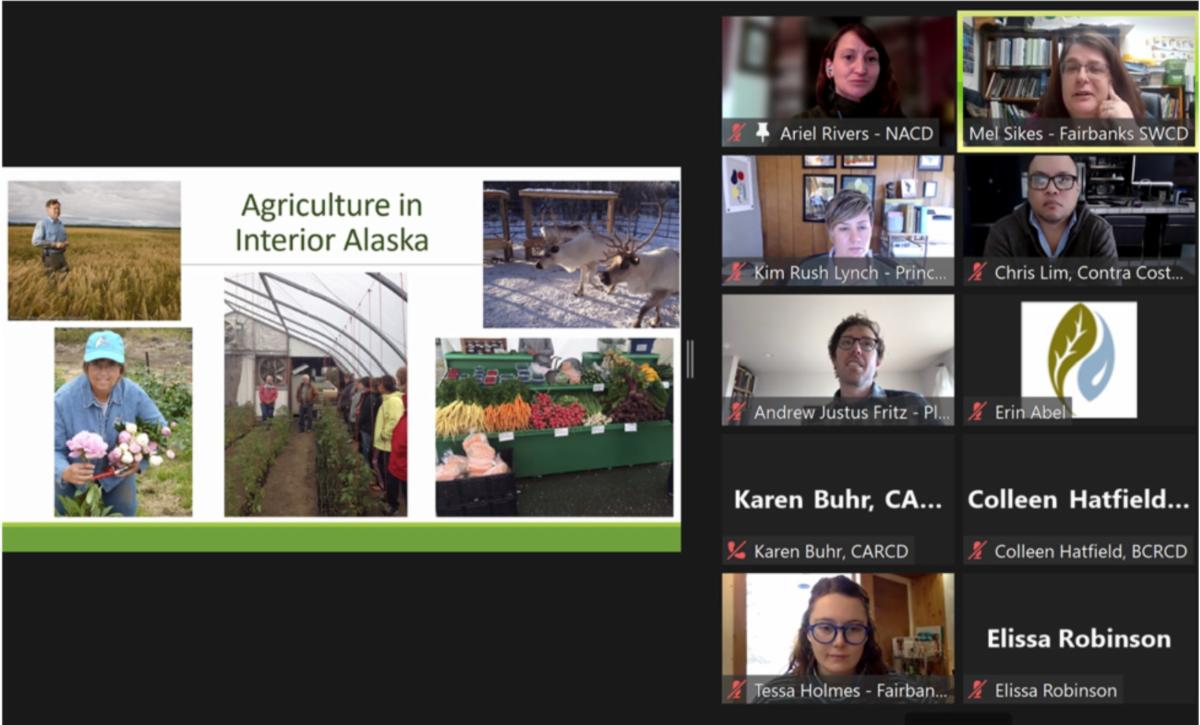
Multiple grantees through NACD’s Urban Agriculture (UAC) Grant Initiative participated in sessions through this track, sharing approaches that they have used to serve their unique communities within California, and also in Alaska, Kentucky, and Maryland.
“The work each of the NACD UAC grantees highlighted is amazing,” said CARCD Executive Director Karen Buhr. “I really appreciated all of our speakers who engaged with the JEDI topic and helped frame how we could think about equity differently in our own communities and ways we can add value to our work. It added so much to our conversation both in content and connecting us to the work that is happening in districts all over the country!”
During Black History month, it is especially important to encourage conservation district work related to engaging our whole communities and ensuring we are approaching all of our clients and members in a way that is equitable and culturally sensitive. Districts who may be new to this space can review NACD’s diversity, equity, and inclusion toolkit.
|
The joint NACD-NRCS Urban Agriculture Conservation (UAC) grant initiative has provided over five years of great examples of projects building community through agricultural conservation, and the Pierce Conservation District (CD) provides one of those many examples.
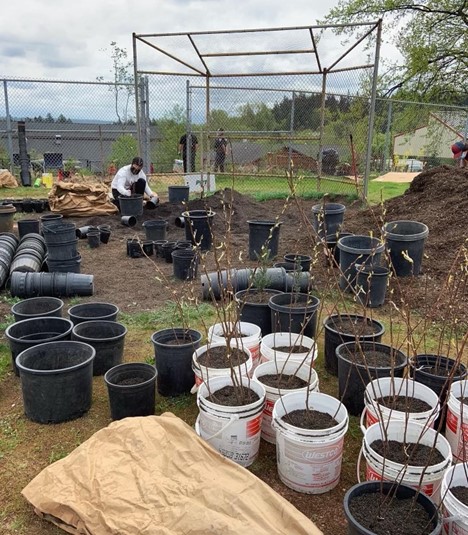
With their second UAC grant, Pierce CD in Washington, implemented a project that turned a site that was dangerous and inaccessible into a community gathering space that is inspirational and educational. While much work is still needed to fully realize the community vision, they have created a community garden, children’s garden, and multiple native planting areas, including some that have been inoculated with edible mushrooms.
While the COVID-19 pandemic made outreach difficult, they were able to build relationships in some creative ways. Pierce CD hired 200 goats to clear the site, which served to engage the community in a socially distant way. Bulletin boards were created and displayed on the fence of the site with information about the project, and people were encouraged to come visit the goats and contribute their ideas to the priority list for the site. The district gathered some important feedback and also demonstrated this ecologically friendly method of site management.
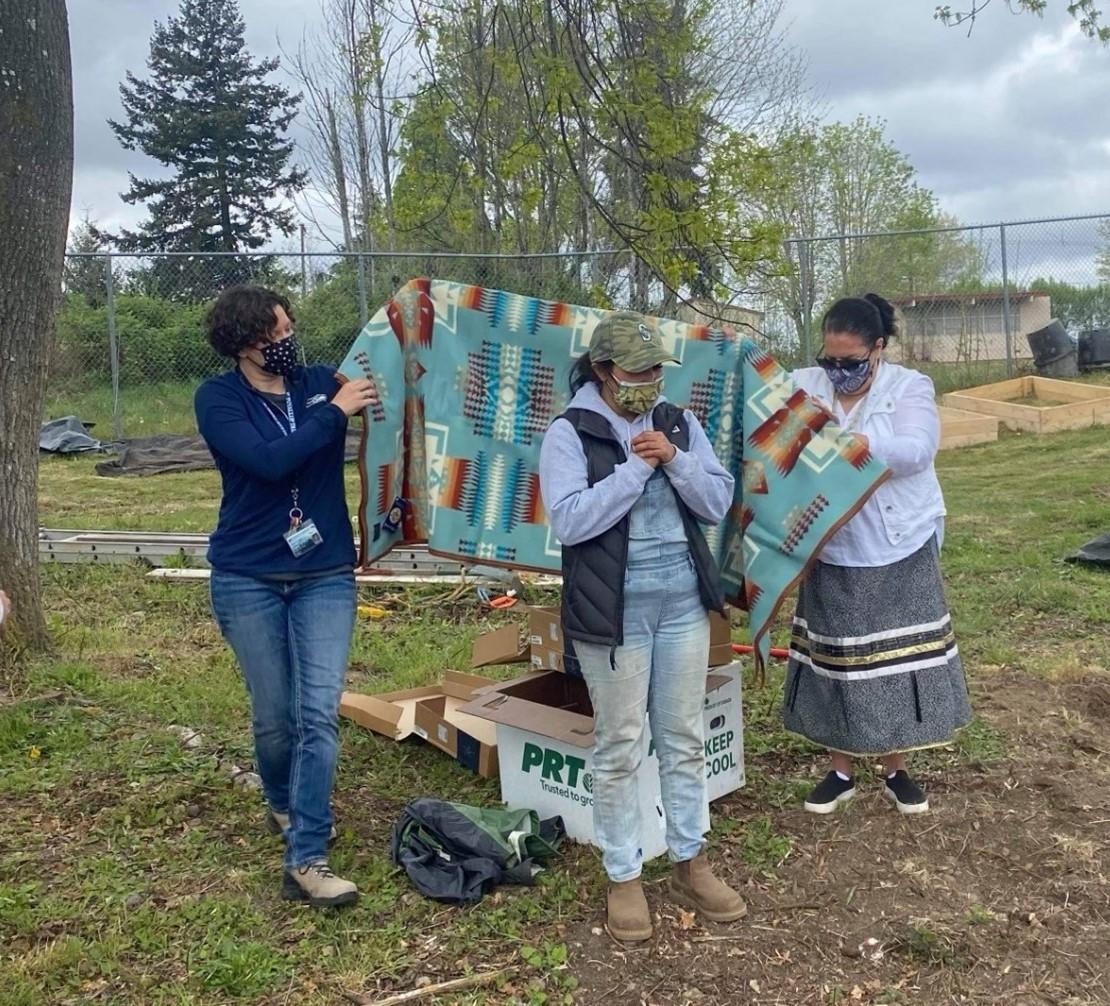
The Community Garden was established in early 2021 and several users have planted, centering on two communities: the P’urepecha indigenous community from Mexico and the Puyallup Tribe of Indians. The P’urepecha community is gardening in a traditional style, called a milpa, serving an important cultural connection and also demonstrating efficient ways to plant traditional crops. In addition, one of the first projects to be developed was a squash arch, another traditional planting technique in Mexico – this was a tremendous success, demonstrating culturally significant crops and helping to shade out some of the existing weeds, essentially preparing that site for future development and planting.
|
The site is adjacent to the Grandview Early Learning center of the Puyallup Tribe, and a garden has been created to serve the school’s children. One of the P’urepecha community members has partnered with the Center to design and build the children’s garden. Traditional/medicinal plants have been planted and the Puyallup Language (Lushootseed) will be displayed. The district is in the process of creating videos to educate about the native plants that will be educational for the children.
While the potential for the site to educate the community is just being realized, many important events have already taken place. For example, the district hosted a class series for indigenous community members to learn about the medicinal properties of our native plants (taught by a local native educator and translated into Spanish for the P’urepecha participants) and have also hosted several medicine giveaways as part of our outreach to the Puyallup Tribe.
Pierce CD also coordinated an Earth Day event in partnership with the tribe’s sustainability working group to plant the native ethnobotanical trail/children’s garden – 40 people came throughout the day
A mushroom cultivation workshop was held at the site in English and Spanish with 25 attendees.
Perhaps the most important benefits of the project to date have been the relationship and community-building aspects. Pierce CD has built trust and improved relationships with the Puyallup Tribe, involving staff from multiple departments in the planning and execution of the site development. In addition, they supported relationship building between two separate indigenous groups.
|
|
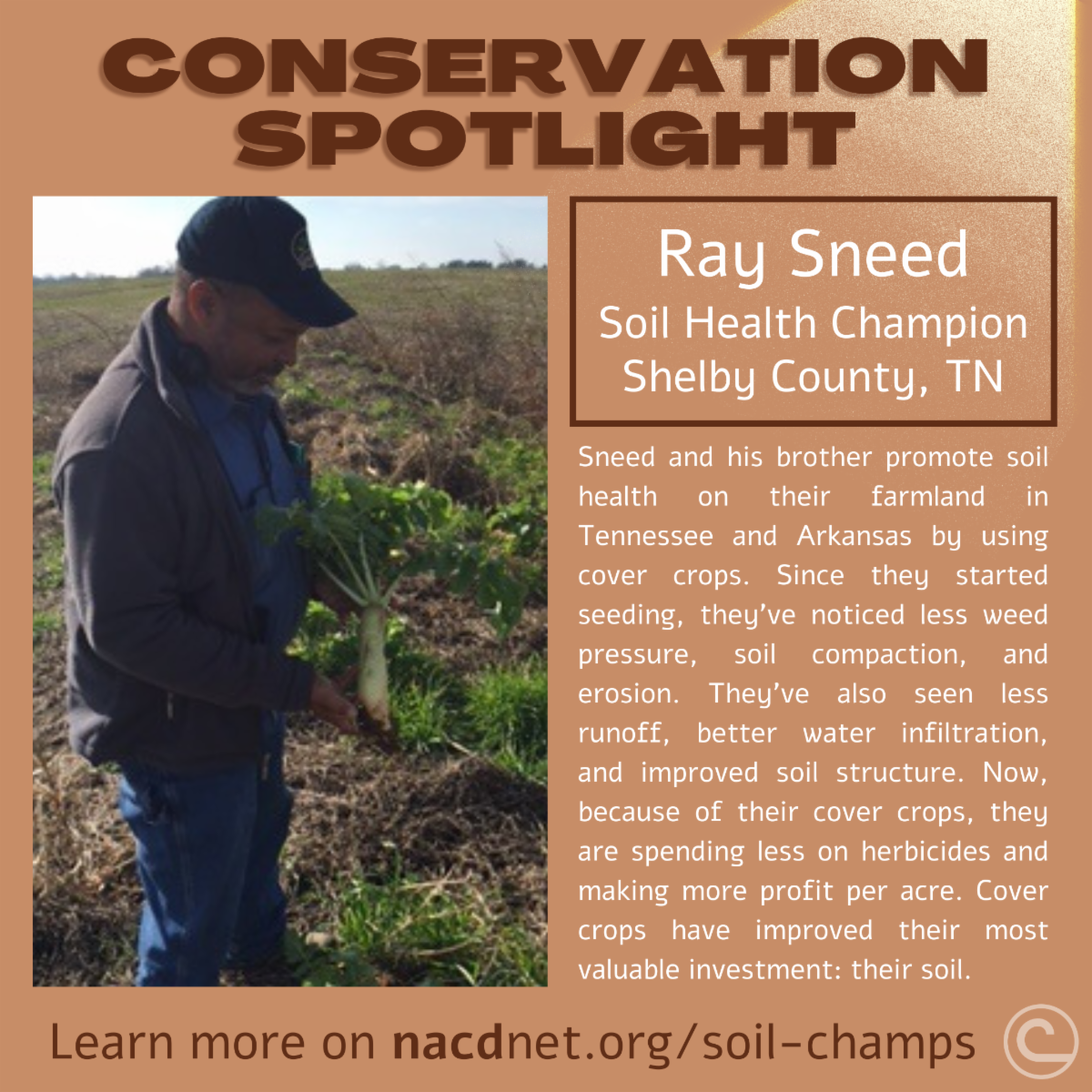
Check Out NACD's Conservation Spotlights |
We are excited to celebrate Black History Month with a weekly Conservation Spotlight, where each week we will be recognizing a conservationist and the work they are doing for soil and water. |
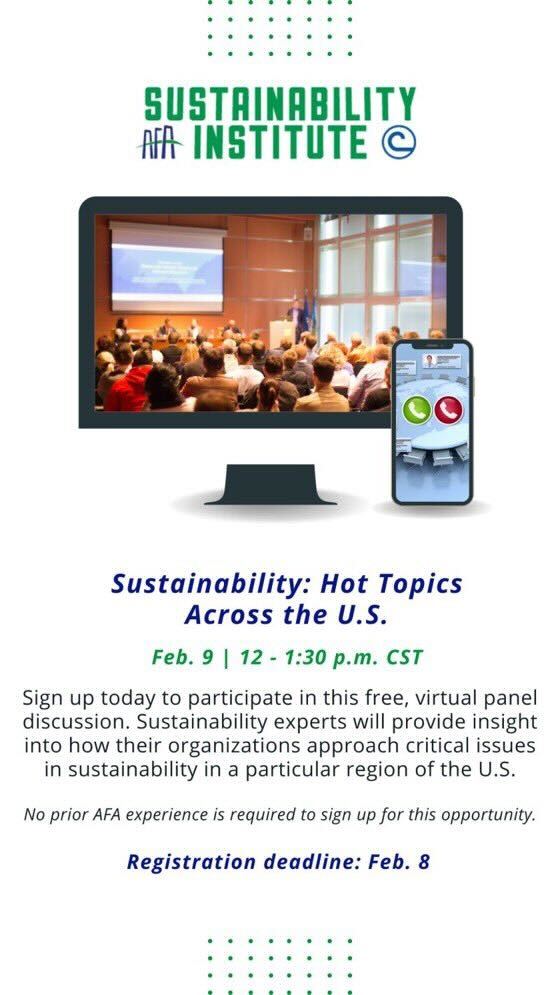
AFA+NACD Sustainability Institute Virtual Pannel |
Along with the AFA+NACD Sustainability Institute that is being held at the 2022 NACD Annual Meeting in Orlando, FL, AFA and NACD will host a Sustainability Institute Virtual Panel on February 9, 2022 from 12:00-1:30 p.m. CST. This is an exclusive opportunity for current college undergraduates to learn how experts in sustainability and conservation are addressing critical issues in their region of the United States. Panelists include professionals from NACD, Texas Agri-Life, the Association for International Agriculture and Rural Development, and Deveron. Following the panel there will be time for student participants to network with the experts and discuss careers in sustainability, conservation, and more. The registration deadline for the Sustainability Institute Virtual Panel is February 8, 2022.
Current undergraduates can register for the Virtual Careers Event here.
Learn more on the AFA+NACD Sustainability Institute here.
|
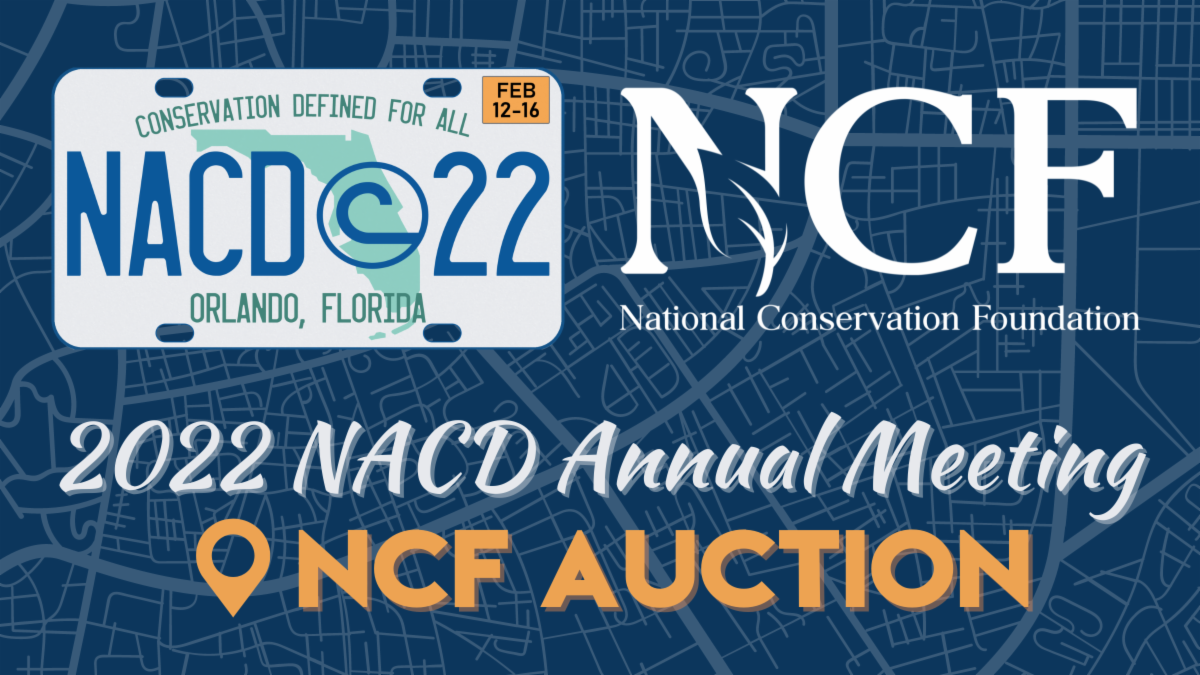
Bidding Open for NCF's Virtual/LIVE Auction |
The 2022 National Conservation Foundation (NCF) Virtual/LIVE Auction is now open and available for bidding and preview at http://bidpal.net/ncf2022.
NCF will host their auction during the NACD Annual Meeting to support Envirothon, the Next Generation Leadership Institute, and other conservation education programs. The auction, will be held live in-person and virtually on Monday, February 14 at 6:00 p.m.
The online auction is now open for virtual bidding and will run through 10:00 p.m. Eastern on February 14, 2022. All items will be up for bid virtually, and some items will also be auctioned live during the NCF Auction event. Live bidding on these items will open at the highest virtual bid and online bidders will be able to continue their bidding in real time during the live auction.
If you would like to donate an item to the 2022 NCF Virtual/LIVE Auction, it isn’t too late! Contact Keith Owen, NACD Director of Education at keith-owen@nacdnet.org. Include a description, good photo, who is donating the item, and an estimated value.
The NCF Virtual/LIVE Auction helps support and fund NCF's mission to identify and advance strategic programs and partnerships to deliver conservation solutions through locally-led conservation and to develop the next generation of conservation leaders.
Learn more about the auction here.
|
Biodiversity Conservation Grant Funding Available |
The National Environmental Education Foundation (NEEF) is excited to announce $200,000 in grant funding to support shovel-ready pollinator habitat enhancement projects on America’s public lands.
Habitat enhancement projects should directly support the creation, restoration, remediation, improvement, and/or protection of habitats for important pollinator species such as butterflies, bees, bats, and more. Additionally, projects should incorporate community outreach and engagement activities designed to educate and empower the public to help enhance pollinator habitats.
|
RAE Launches Inclusive Coasts Initiatives with Webinar Series |
Restore America’s Estuaries (RAE) has launched The Inclusive Coasts Initiative, with the help of the National Science Foundation, to improve diversity, equity, inclusion, and justice (DEIJ) in grantmaking, project design and implementation in the coastal sector. This initiative will provide opportunities for grantmakers, project implementers, educators, and members of the coastal community to engage in two series of workshops: one geared towards grantmakers and a second geared towards project implementors.
Registration is now open for the first webinar in their initial series designed to help grantmakers improve promotion and access to funding opportunities for traditionally underrepresented communities. They will offer two opportunities to join on February 24, 2022 - 12 p.m. and 6:00 p.m.
This event is free and open to the public, however, registration is limited to 100 individuals per event. Register for the 12 p.m. workshop here. Register for the 6:00 p.m. workshop here.
|
2022 Farmer Resilience Grant Applications Open |
Northeast Organic Farming Association of Vermont (NOFA-VT) has a pool of funds to distribute directly to farmers as up-front grants, up to $2,500 each, to fund projects that will improve longer term resilience on farms and in communities.
Project proposals should fit broadly around the mission of NOFA-VT: to promote organic practices to build an economically viable, ecologically sound, and socially just Vermont agricultural system that benefits all living things. In this grant application, applicants will define how these funds will be used to improve the resilience on your farm, in your community, and/or for your broader community, with a focus on the social, environmental, and economic impact of the project.
To be eligible, farmers must be (1) located in Vermont, (2) able to complete their project by December 31, 2022, and (3) cannot have received a Vermont Family Farmer of the Month award in 2021 or 2022.
Applications are due March 2, 2022. Learn more and submit an application on NOVA-VT's website.
|
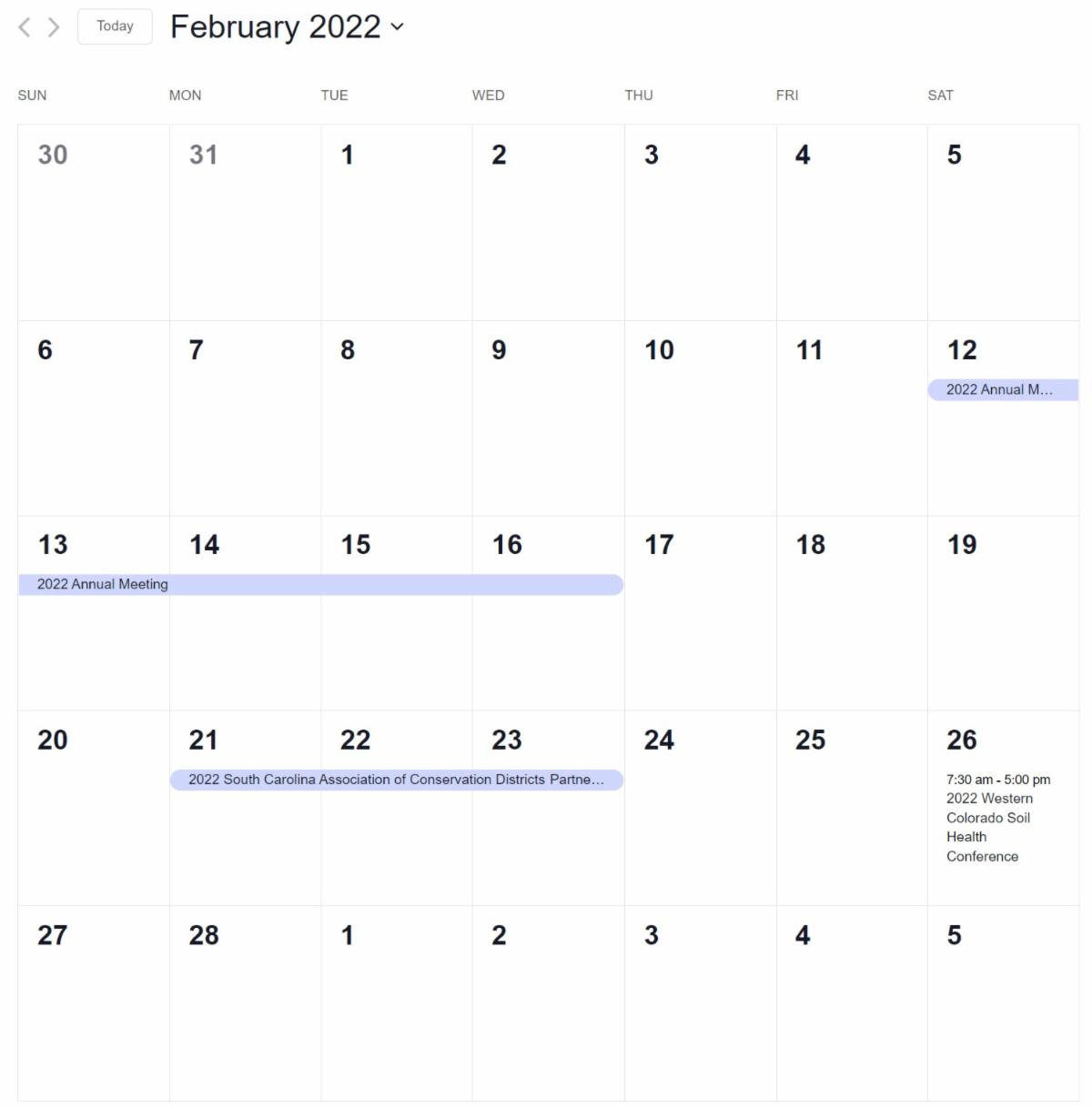
Promote your conservation district or state association's tree sale, annual meeting, webinar, field day, or other events on NACD's Calendar of Events!
|
|