|
|
This Week in Farm to School
December 16, 2021
|
|
Farm to school connects local agriculture, schools, and partners to benefit students, educators, farmers, families, and communities.
|
|
As 2021 comes to a close, the National Farm to School Network, as well as other national farm to school organizations, are asking for continued support from those who can engage in advocacy to get the Build Back Better Act across the finish line in Congress. Please refer to the policy section below if you’d like to learn more.
The Farm to School Coalition of North Carolina newsletter will resume in the New Year on January 6, 2022! We hope you have a safe and restful holiday season.
Happy Holidays and Stay Safe!
|
|
Local Food Purchase Assistance Cooperative Agreement Program
Today! December 16, 2021 // 2 pm EST
The U.S. Department of Agriculture’s (USDA) Agricultural Marketing Service (AMS) will hold an informational webinar for organizations interested in learning more about the Local Food Purchase Assistance Cooperative Agreement Program (LFPA). The webinar will provide an overview of the cooperative agreements and application requirements and give information on how to obtain support during the application process.
Building Native Agriculture Webinar Series: How Tribal Foods Tie into Feeding Programs
Today! December 16, 2021 // 3 pm EST
Join the Native American Agriculture Fund as they begin their webinar series designed to assist individuals and Tribes by sharing proven methods that can be used as building blocks for Indigenous agriculture systems, providing a road map to success. These presentations are intended to bolster Native farmers' and ranchers' ability to engage in production agriculture through a better understanding of how foodways, cultures, and needs tie into business plans, which will enhance self-determination and support traditional food systems of Native peoples.
Call for Session Proposals: National Children & Youth Garden Symposium
Deadline: January 7, 2022
The American Horticultural Society is pleased to announce their 30th annual National Children & Youth Garden Symposium (NCYGS), the only national professional development event of its kind where they are cultivating tomorrow's gardeners by energizing, inspiring, and training today's garden educators. Now's your chance to share your expertise with garden educators by presenting a session! Session presenters receive a discounted registration rate to attend the symposium. Please reference these tips and guidelines and submit your session proposal online by January 7, 2022.
2022 NC Child Hunger Leaders Conference
February 17, 2022 // 9:30 am - 4 pm
This year's conference is once again hosted by the Carolina Hunger Initiative, a part of the UNC Center for Health Promotion and Disease Prevention. The conference was started by No Kid Hungry NC, which is a partnership between UNC and Share Our Strength supported by the same team as Carolina Hunger Initiative. This conference will be a chance for North Carolinians to celebrate each other, share stories of their success and innovations, and look to what the future might be for Child Nutrition in our state.
|
|
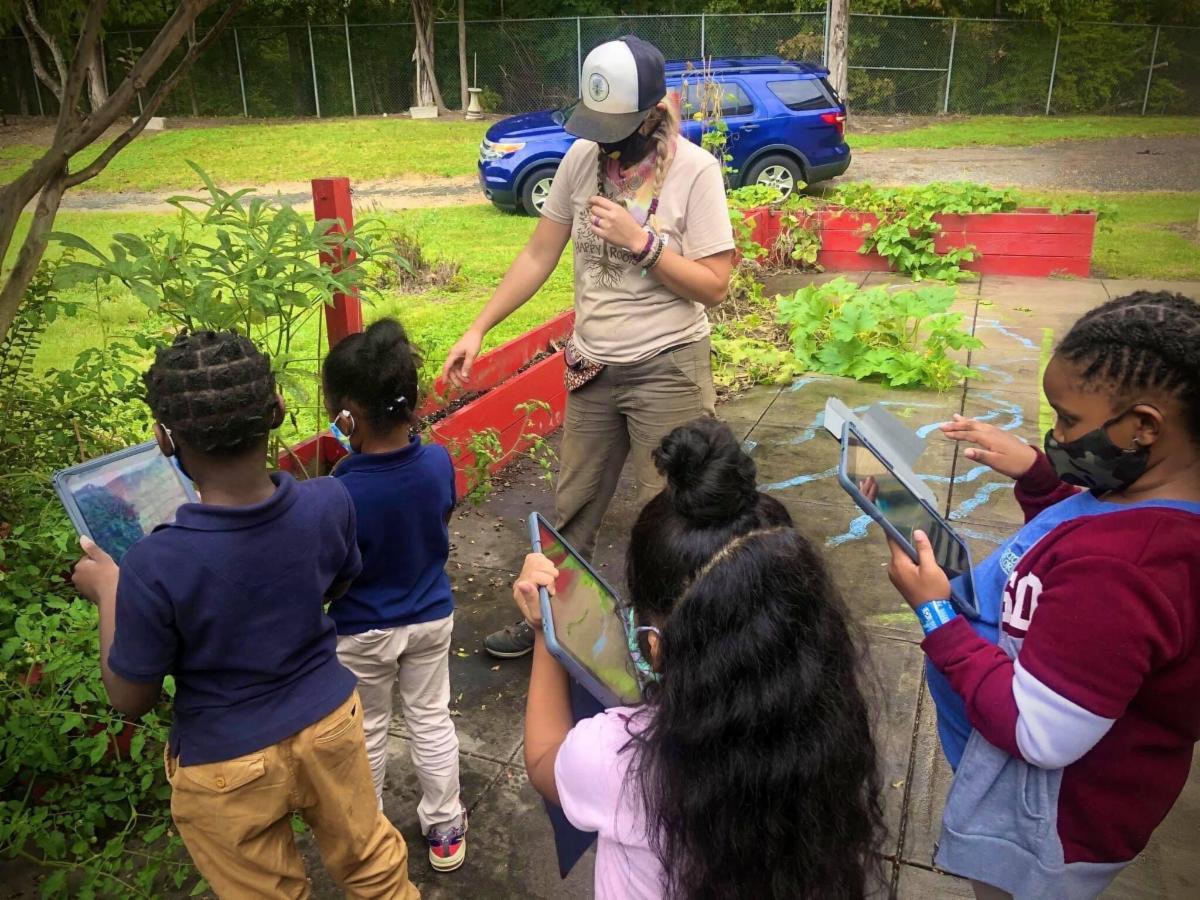
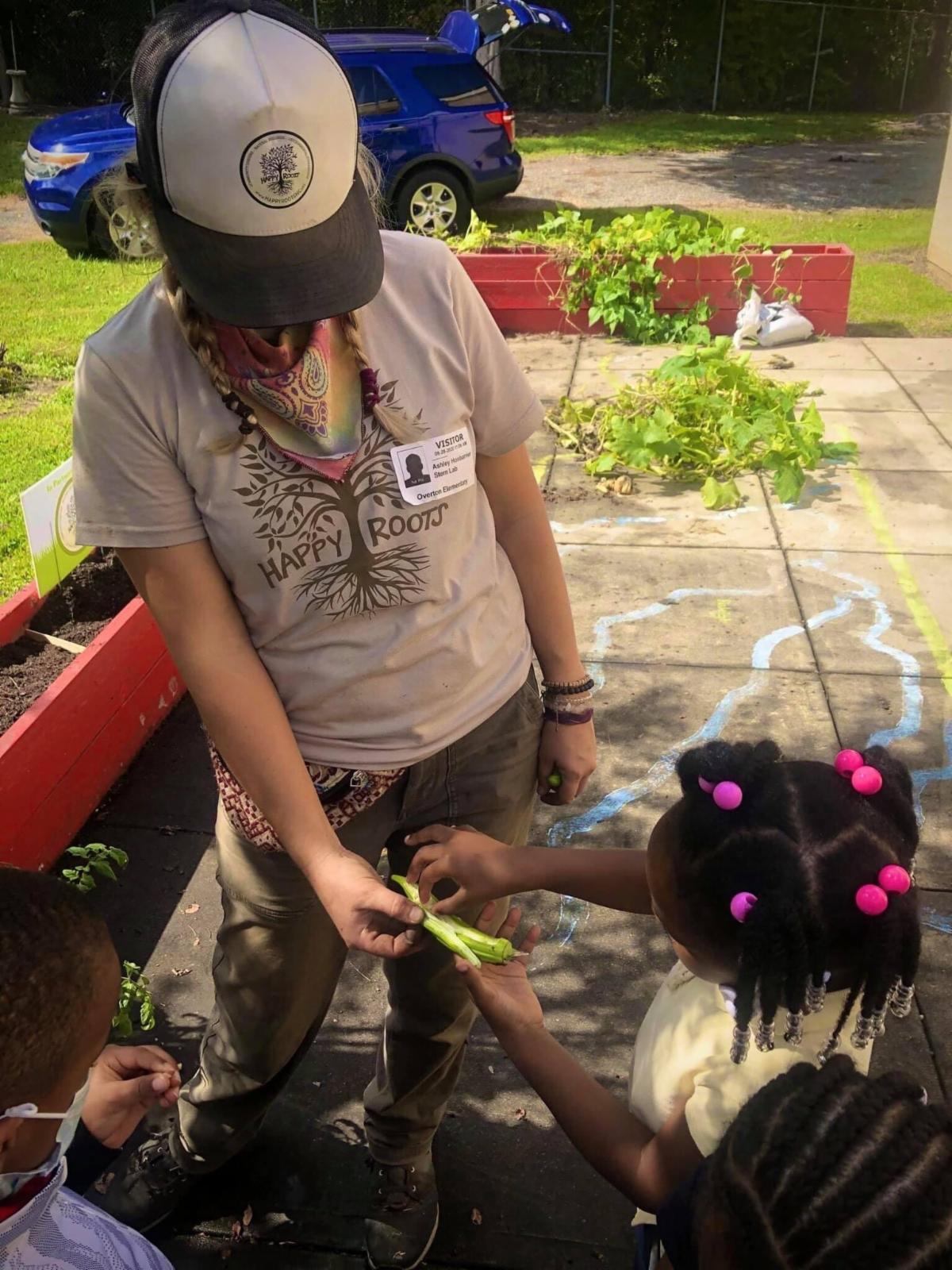
Q: How do you connect school gardens with classroom curriculum?
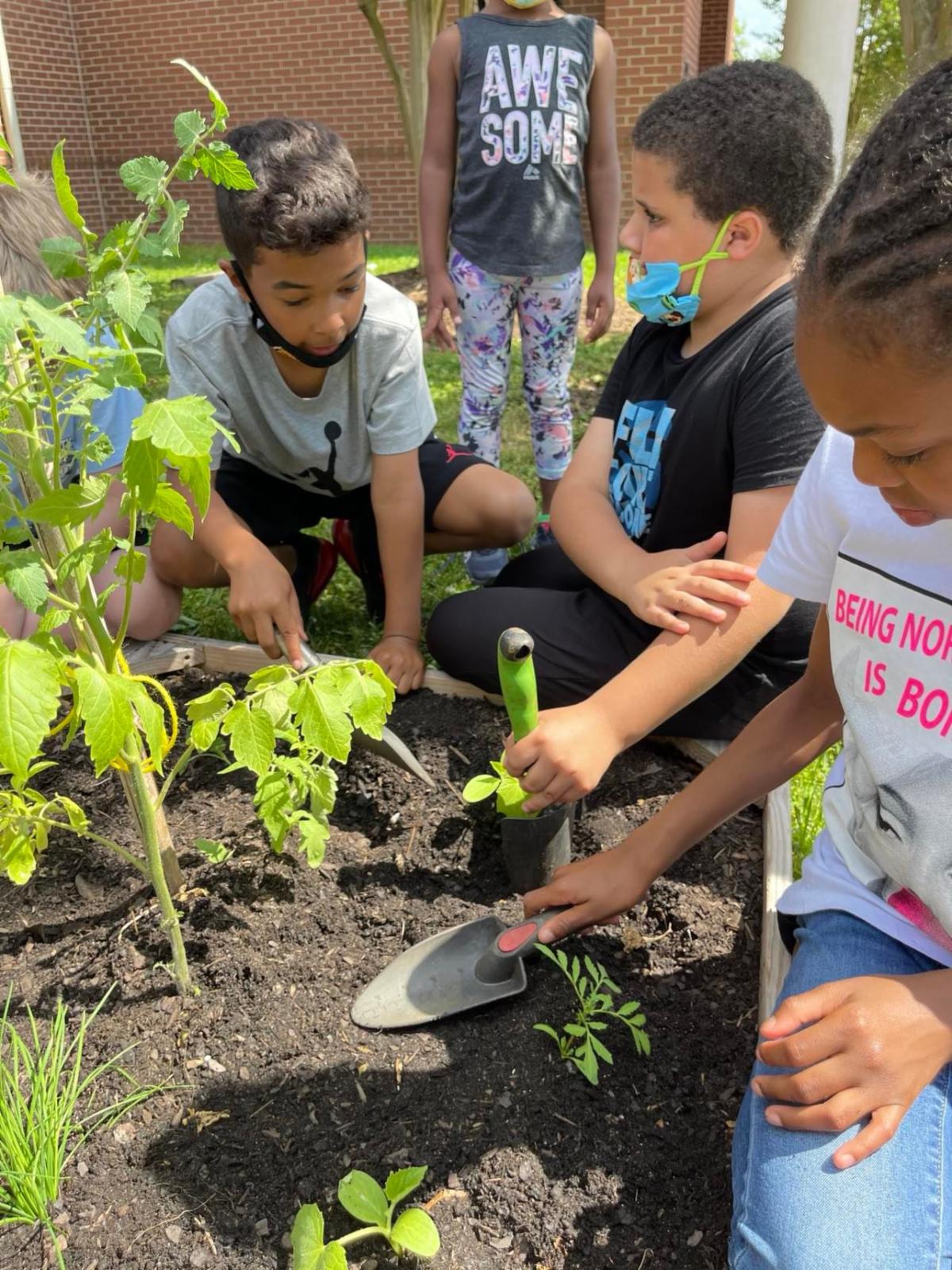
A: We are firm believers that any class can be taught out of the school garden... all areas of science obviously, and lots and lots of math! But when you get into social studies, history, and language arts, we can embrace diversity and build relationships through researching cultural differences in gardening practices, diets, and food consumption. Students could interview local farmers about agricultural history, create a map, or create and publish newsletters. The possibilities are endless. Life lessons are learned throughout the gardening seasons.
Q: How are you advocating for school gardens in Rowan County?
A: Yes, I will be presenting to our Board of Education next month advocating to fund these programs. Some counties are investing and funding this position already, and I believe, in the future, this will be everywhere. This work is necessary.
If you’d like to learn more about Happy Roots you can view their website and follow them on Facebook (@happyrootsnc). You can check out the rest of our Q&A with Happy Roots on our Facebook page (@F2SCoalitionNC) tomorrow, Friday, December 17.
|
|
School Nutrition - Roving Field Manager Trainer Job Opening
Rockingham County Schools is looking for a School Nutrition Roving Field Manager Trainer who will work under the supervision of the School Nutrition Supervisor. The Roving Field Manager Trainer trains and provides assistance to the School Nutrition Managers.
|
|
National Food Hub Survey
The Center for Regional Food Systems at Michigan State University, the Wallace Center at Winrock International, and the University of Michigan Program Evaluation Group are excited to launch the 2021 National Food Hub Survey! Food hubs and other organizations that aggregate and distribute regional food products are encouraged to participate in the survey. 2020 was a year like no other, and food hubs across the country have faced new challenges and unprecedented demand for products and services. Taking the survey today will help the sector better understand how food hubs adapted and the impact of those changes.
|
|
Growing School Food Gardens
Kids Gardening’s Growing School Food Gardens project will leverage the brand new Kids Garden Community to form a vibrant network devoted to growing school food gardens, cultivating support, and sharing resources that respond to the needs of garden educators across the country. This year-long project will encompass:
- The Growing School Food Gardens sub-community - facilitate peer-to-peer learning opportunities, mentorship programs, regional networking, and resource exchanges.
- Four coaching calls and 12 webinars based on relevant and requested topics of interest.
- A Growing School Food Gardens Toolkit - a comprehensive, free virtual resource created for youth educators and leaders to create, maintain, and cultivate sustainable school food gardens.
|
|
School Nutrition Association Awards
Recognize a School Nutrition colleague by nominating them for an SNA Award. Nominations are due by March 1, 2022! Review eligibility requirements, along with nomination criteria, via the link below.
|
|
National Seed Swap Day
Are you interested in participating in National Seed Swap Day? Rebekka Henriksen, a farm to school facilitator in New York, is looking to partner with other school gardens around the country to celebrate National Seed Swap Day on January 29, 2022. Partners from around the country will have a variety of vegetable, herb, and flower seeds available to exchange. Please contact Rebekka Henriksen if you are interested in participating!
|
|
Kids Gardening - Create a School Garden Planting Calendar Lesson Plan
Kids Gardening has created a lesson plan on how to create a school garden planting calendar. Creating a planting calendar for your school garden is an excellent way to help your students understand how weather and climate impact the life cycle of plants. If you are planting edibles, it also provides a glimpse into the complexities of our food system.
|
|
2022 Youth Garden Grant
Tomorrow! Deadline: December 17, 2021
A total of 50 programs will be awarded Youth Garden Grants in 2022. All winning programs will receive a check for $250 and materials to grow their garden program. Forty programs will receive packages worth $1,050, five programs will receive the base package plus a $1,000 tool grant from Corona Tools, and five programs will receive the base package plus two Garden Towers from Garden Tower Project! Any nonprofit organization, public or private school, or youth program in the United States or U.S. Territories planning a new garden program or expanding an established one that serves at least 15 youth between the ages of 3 and 18 is eligible to apply.
Community Food Projects (CFP) Competitive Grants Program
Deadline: December 20, 2021
The National Institute of Food and Agriculture Community Food Projects (CFP) funds two types of grants: (1) Community Food Projects (CFP) and (2) Planning Projects (PP). CFP supports the development of projects with a one-time infusion of federal dollars to make such projects self-sustaining. CFPs are designed to create community-based food projects with objectives, activities, and outcomes that are in alignment with Community Food Projects Competitive Grants Program (CFPCGP) primary goals. The purpose of a Planning Project (PP) is to complete a plan toward the improvement of community food security in keeping with the primary goals of the CFPCGP. Projects and plans are to focus on a defined community and describe in detail the activities and outcomes of the plan or project.
USDA Farm to School Grant Request for Application
Deadline: January 10, 2022
The United States Department of Agriculture Food and Nutrition Service (FNS) seeks to award up to $12 million this fiscal year. Eligible schools, institutions operating the Child and Adult Care Food Program and Summer Food Service Program, State and local agencies, Indian Tribal Organizations, small- to medium-sized agricultural producers or groups of small- to medium-sized agricultural producers, and non-profit organizations can apply for Farm to School grants. Priority scoring incentives return for applicants who meet certain criteria, including new priority consideration for organizations led by Black, Indigenous, and People of Color (BIPOC) and serving BIPOC communities, and organizations located in and serving rural areas.
WNC Farm to School Jumpstart Grant
Deadline: January 15, 2022
The Appalachian Sustainable Agriculture Project’s (ASAP) Growing Minds Jumpstart Grant is open! Eligible schools and organizations can apply for funding in the amount of $500 to $1,000 to support their farm to school project. Funding can be used to start new projects or to expand upon existing activities. Pre-k through 12 schools, homeschool groups, teacher and nutrition education programs, and community-based organizations serving children and families are eligible to apply. Schools/organizations must be located within the 23 westernmost counties of North Carolina (Alleghany, Ashe, Avery, Buncombe, Burke, Caldwell, Cherokee, Clay, Graham, Haywood, Henderson, Jackson, Macon, Madison, McDowell, Mitchell, Polk, Rutherford, Swain, Transylvania, Watauga, Wilkes, Yancey) or the Qualla Boundary.
School Nutrition Foundation Equipment Grants
Deadline: January 31, 2022
The School Nutrition Foundation is teaming up with industry partners to provide new kitchen equipment to deserving districts. Apply now for the 2022 SNF Equipment Grant Program, featuring applications for not one but FIVE grants! Eligible applicants have the opportunity to win equipment grants, each worth between $20,000 to $100,000 of equipment. Applications and photos must be submitted by a School Nutrition director. The recipients will be notified in late March. This year, only finalists will be asked to submit a 2-3-minute video.
|
|
The National Farm to School Network |
|
Thriving Schools Integrated Assessment
Healthier Generation and Kaiser Permanente's evidence-based tool helps schools and districts build learning environments that promote student achievement and support the well-being of kids, staff, and teachers. Schools and districts can use the Thriving Schools Integrated Assessment to quickly and easily identify strengths and areas of growth across a broad range of topics, like social-emotional health, food access, tobacco/vaping prevention, and staff well-being, so they can improve factors that impact health and learning such as attendance, discipline, and school climate. The National Farm to School Network did not develop this tool but this information is located in their resource section.
|
|
Build Back Better Act (BBBA)
The Build Back Better Act’s critical child nutrition provisions would:
- Expand the number of schools that would be able to offer free meals to all students through the Community Eligibility Provision, an expansion that would allow nearly 9 million more low-income students to access healthy meals in school;
- Give states the option to implement the Community Eligibility Provision statewide;
- Provide $30 million for school kitchen equipment;
- Provide $250 million for a Healthy School Meal Incentives demonstration project;
- Extend the Summer Electronic Benefit Transfer (EBT) program nationwide for 29 million students who receive free or reduced-price school meals; and
- Allow states, as well as Indian Tribal Organizations, that participate in the Special Supplemental Nutrition Program for Women, Infants, and Children (WIC) to provide Summer EBT.
For those who engage in advocacy work, please view the National Farm to School Network’s action alert to learn more about how to urge our Senators to pass the Build Back Better Act.
|
|
Understand Equity vs. Equality
The steps to achieving equity are different and unique from achieving equality.
Additional Racial Equity Resources
The Center for Environmental Farming Systems (CEFS), one of our Farm to School Coalition of NC partners, has created a document of current webinars as well as resources to facilitate engagement and learning around Racial Equity, both in general and especially as it relates to food systems and education.
|
|
|
|
|
|
|