|
|
The New Year:
Examining Our Lives
and
Building Our Dreams
through Books
by Tony Weller
|
|
|
It is hard to believe that we are two decades into this new millennium. And only barely became able to think of “the teens,” as the 2010s, the reference is so long associated with World War I, Edgar Rice Burroughs and Dada of the 20th century.
50 years after the publication of
Alvin Toffler’s
Future Shock
, I think we must admit that we are straddling the greatest cultural transition of the modern era. The lessons of history may inform us but their utility moving forward is limited by what the past didn’t know about the present. In some cases, today’s societal and environmental problems are direct results of yesterday’s flawed beliefs. We are wise to learn history but the future will be different. The challenges we face are complex and if there is any hope of saner and safer futures, it will be found within the collective knowledge of our people. So much is required of modern specialization that the discoveries we need now will likely be by the efforts of many. Exponential increases in knowledge and communication have spread human understanding wide and far, threatening traditional cultures once used to isolation. Cultures are disrupted and bent-out-of-shape the world over in this millennium. We are living the transition.
Looking past the conflicts, examining our plight through books, creative persons can envision cultures devoid of primitive violence that beleaguers us today. It is time for humanity to grow up. The cultures of the world have comported themselves like barbarians, mistaking bluster for reason and defending dogmas of our fathers. Maybe cultural pride wouldn’t be so toxic if the world weren’t such an entanglement of historic exploitation, subordination and war. Like proud fools we bungle the bounty of our experience and fight for our right to clumsy fear.
In a bookstore, the cultures share space. Whatever is less than perfect about our thinking, will improve as we gather humanity together. Each of the world’s religions and philosophies has embedded good precepts in their teachings. But people have fought throughout history over the creative dressing packed around the basics as cultures sought supernatural legitimacy, oppressing opponents and indoctrinating children.
So I am impatient and I believe my impatience is productive, and I hope contagious. We
have
the knowledge and the means to live sanely together on this planet without ruining it. It is the inertia of cultures that holds us back. The inflexibility of paradigms that depend on exclusivity for validity.
In books, we find humanity’s deepest and most profound thoughts. Humanities problems may be large and unwieldy, but our collective knowledge is adequate to our situation if we could only use it properly. I don’t know what it will take. A few things are sure. Opinions are not facts. Confidence should not be built on ignorance. No-one knows everything. Together we are stronger.
Last year I was motivated by assignment and delivered
Eight Tips for Getting More from Reading and Books
to
City Weekly
and the Weller Book Works Textblock. During the year, I copied these tips for several persons. They’re still good so I offer them again for 2020 without my former elaborations.
Here are eight ways to improve one’s relationships with books:
Ask the most impressive persons you know which books are most influential in their lives and read those books.
Read every day.
Browse in physical bookstores where serendipity can thwart your preferences.
Keep reading when you become confused.
Read hard books out loud.
Look up words you don’t understand.
Speed up when your mind wanders.
Permit what you read to influence your beliefs.
Wise citizens make better choices. Dream big, by extending the field of your hopes, you expand potential and protect yourself against bigotry. Fuel your dreams with great thoughts and ideas. Choose your influence from the whole of humanity, unlimited by time, distance and the unpredictable luck of birth. A bookstore can do these things for you. And no-one knows how the undiscovered might bring joy or sage guidance.
Happy New Year!
|
|
|
|
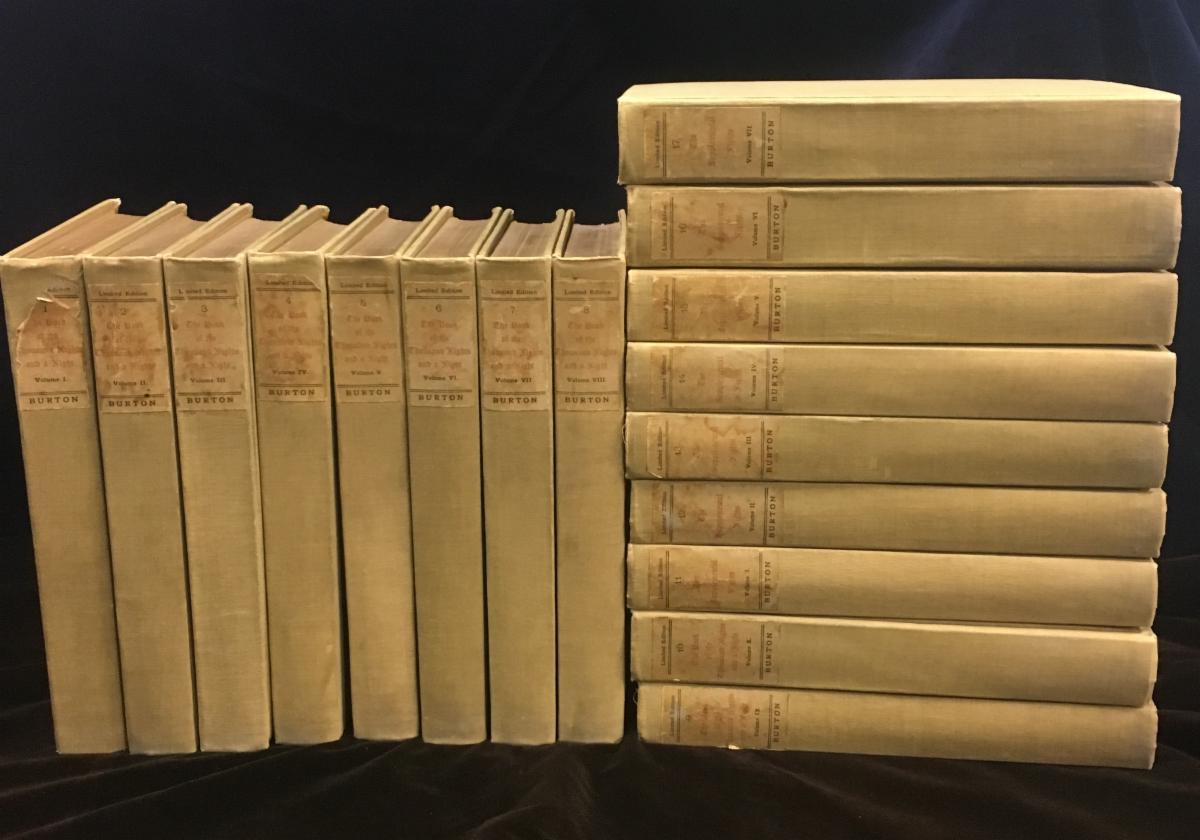
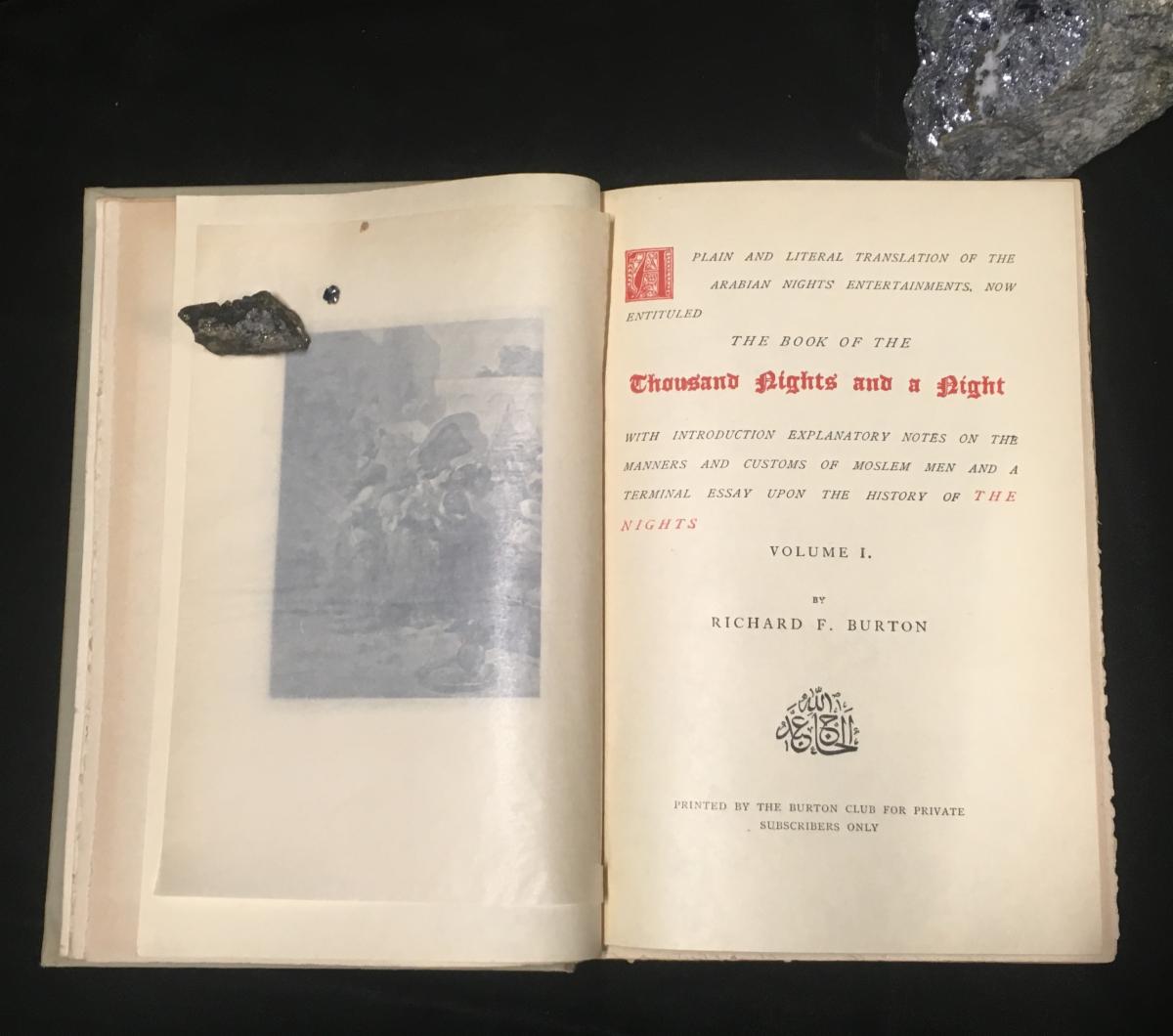
The Book of the Thousand Nights and a Night
.
The
17 volume set collected and translated by
Richard F. Burton.
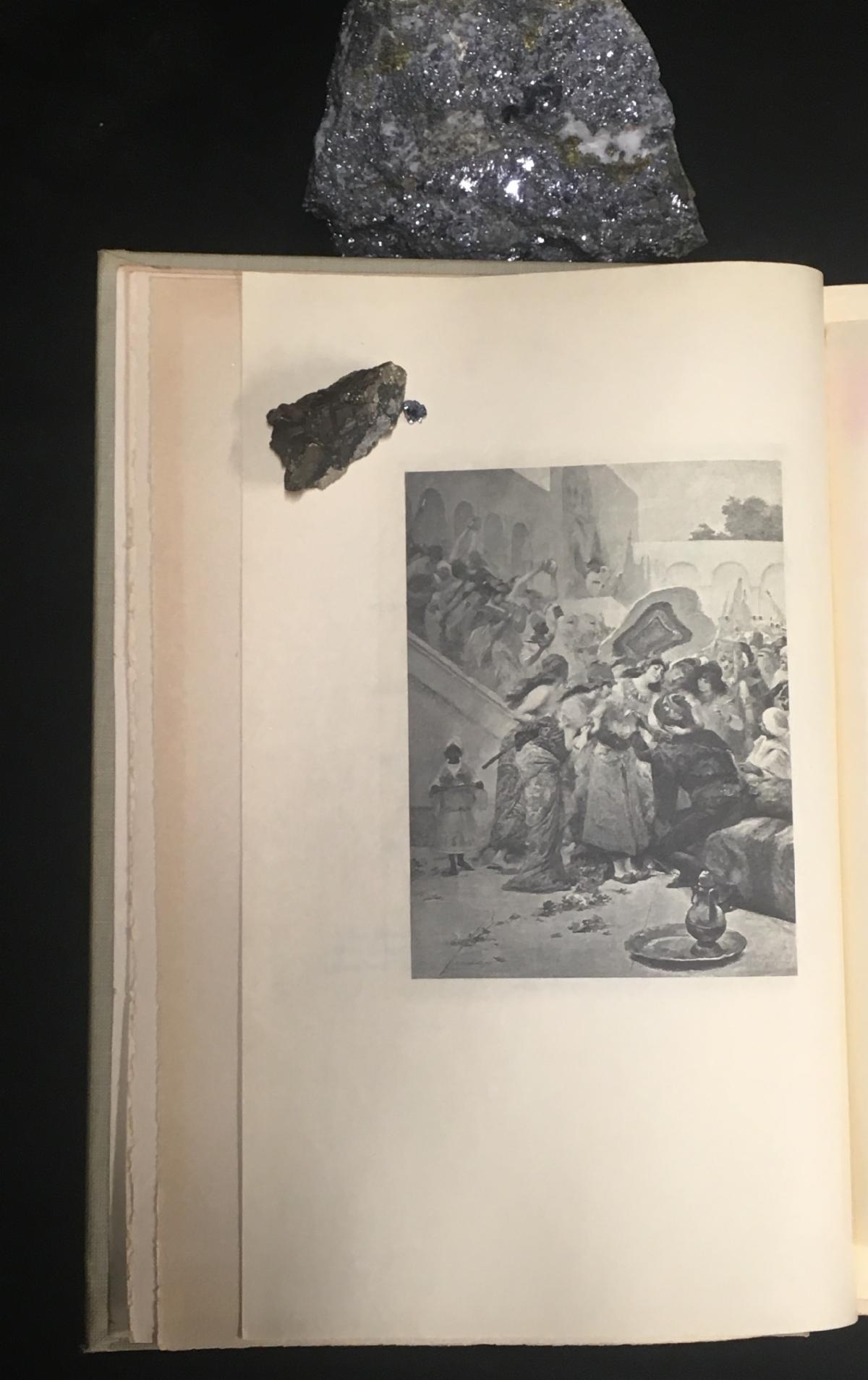
Bibliographically, The Burton’s Arabian Nights is difficult. Many sets and editions have been produced. The Burton Club printed the set many times and in their effort to inflate the sense of scarcity, they produced numerous so-called limited editions that were virtually identical but marketed under different names and without printing dates. We are here offering The Bassorah edition from circa 1910. Buff cloth with paper labels. Illustrated. In very good condition with chipped labels for
$750
. 1001 nights – that’s 75 cents a night!
|
|
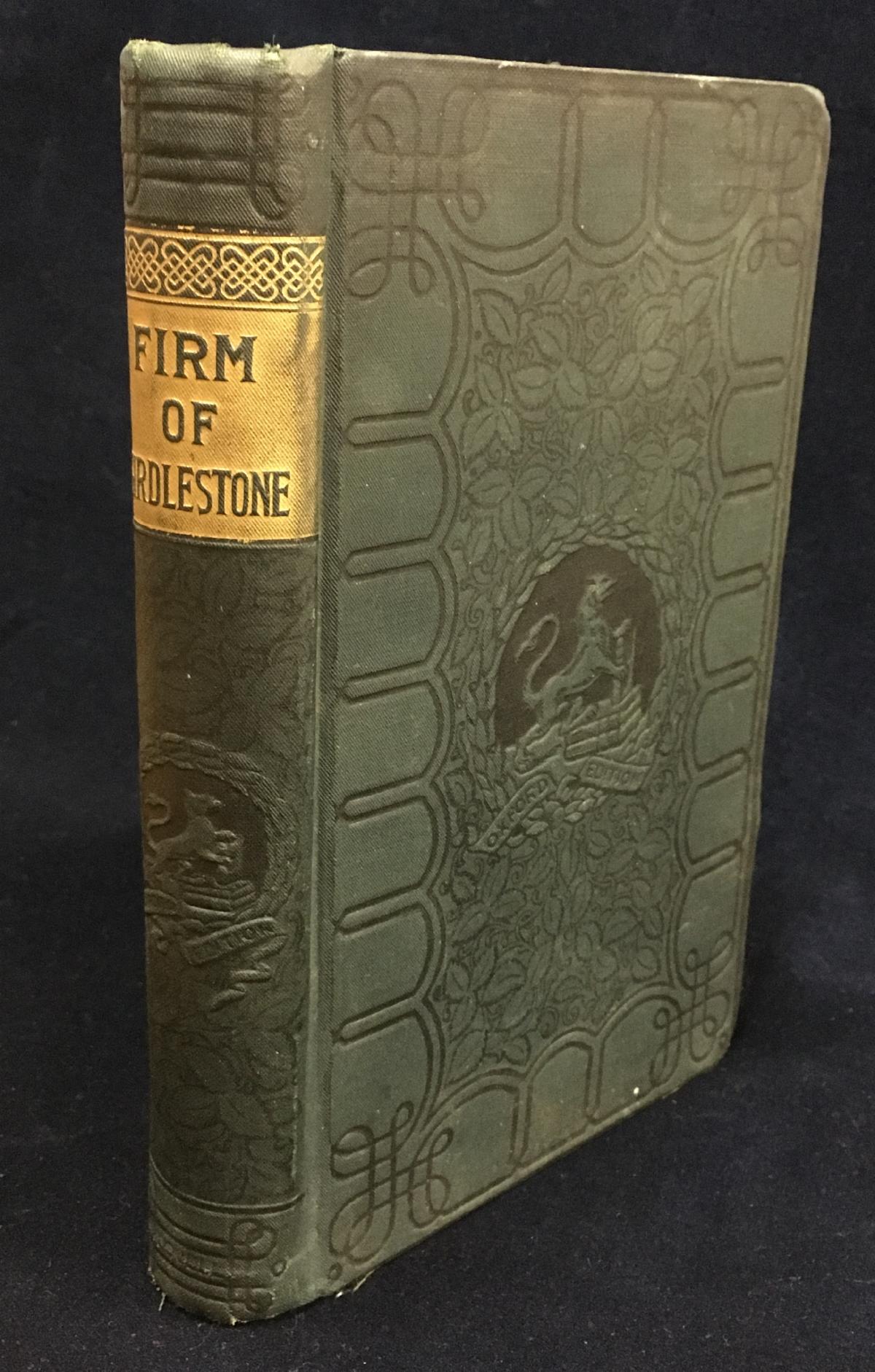
First edition, second issue of
A. Conan Doyle’s
Firm of Girdlestone: A Romance of the Unromantic
. New York: John W. Lovell, 1889. Green cloth 12mo with decorative embossing in black and gilt. Hinges are a bit soft.
$275
|
|
|
|
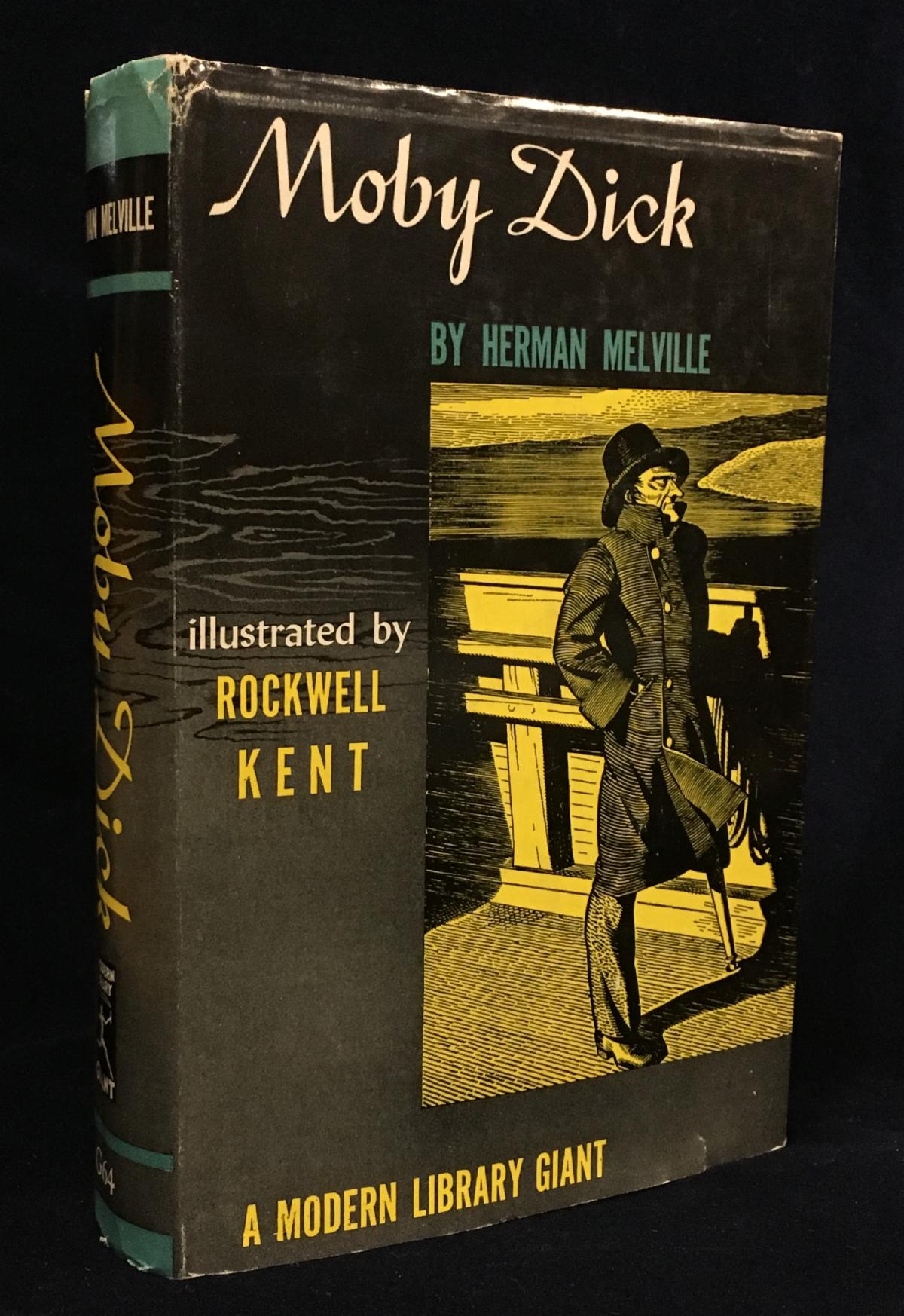
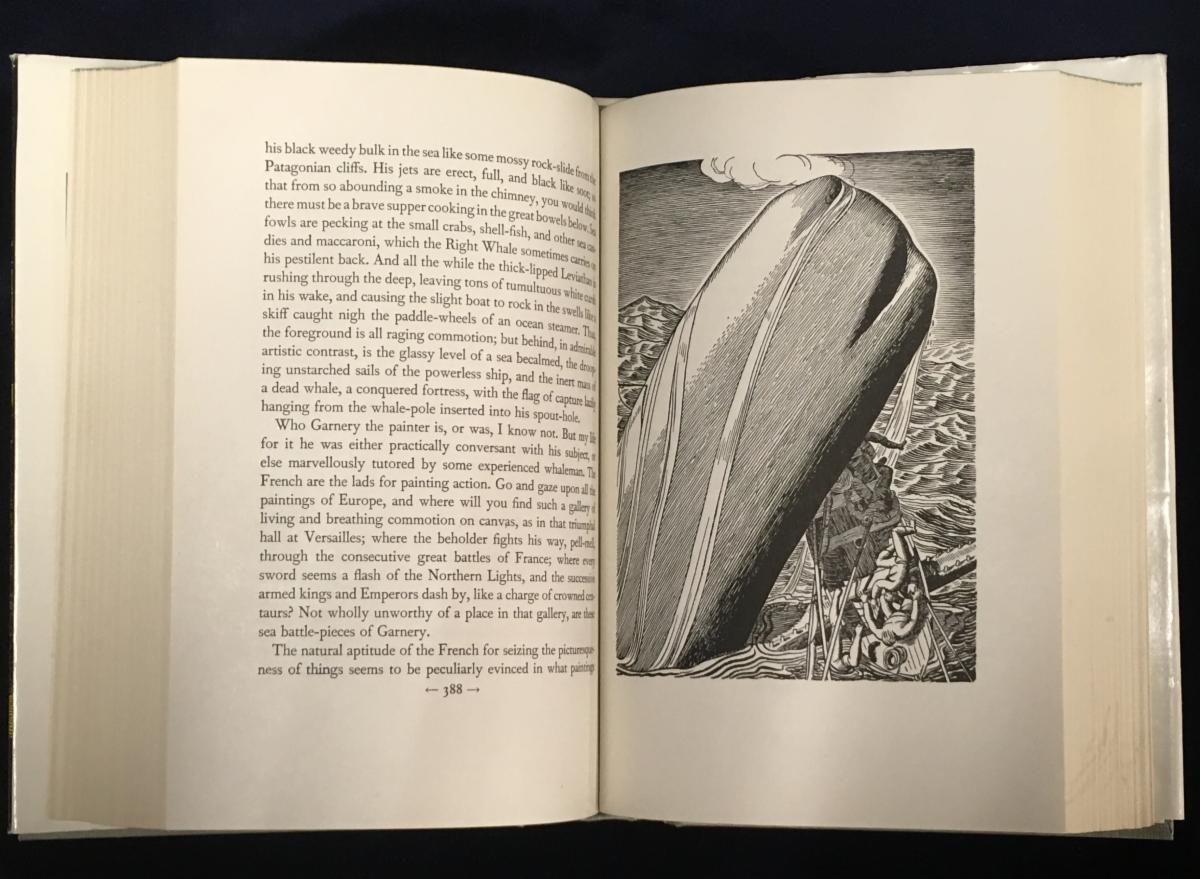
Right after recommending the
Rockwell Kent
illustrated edition of
Herman Melville’s
Moby Dick
for the holidays, we acquired a great 1950s vintage Modern Library Giant with the excellent Kent designed dust jacket. Tight and dry.
$150
|
|
|
|
|
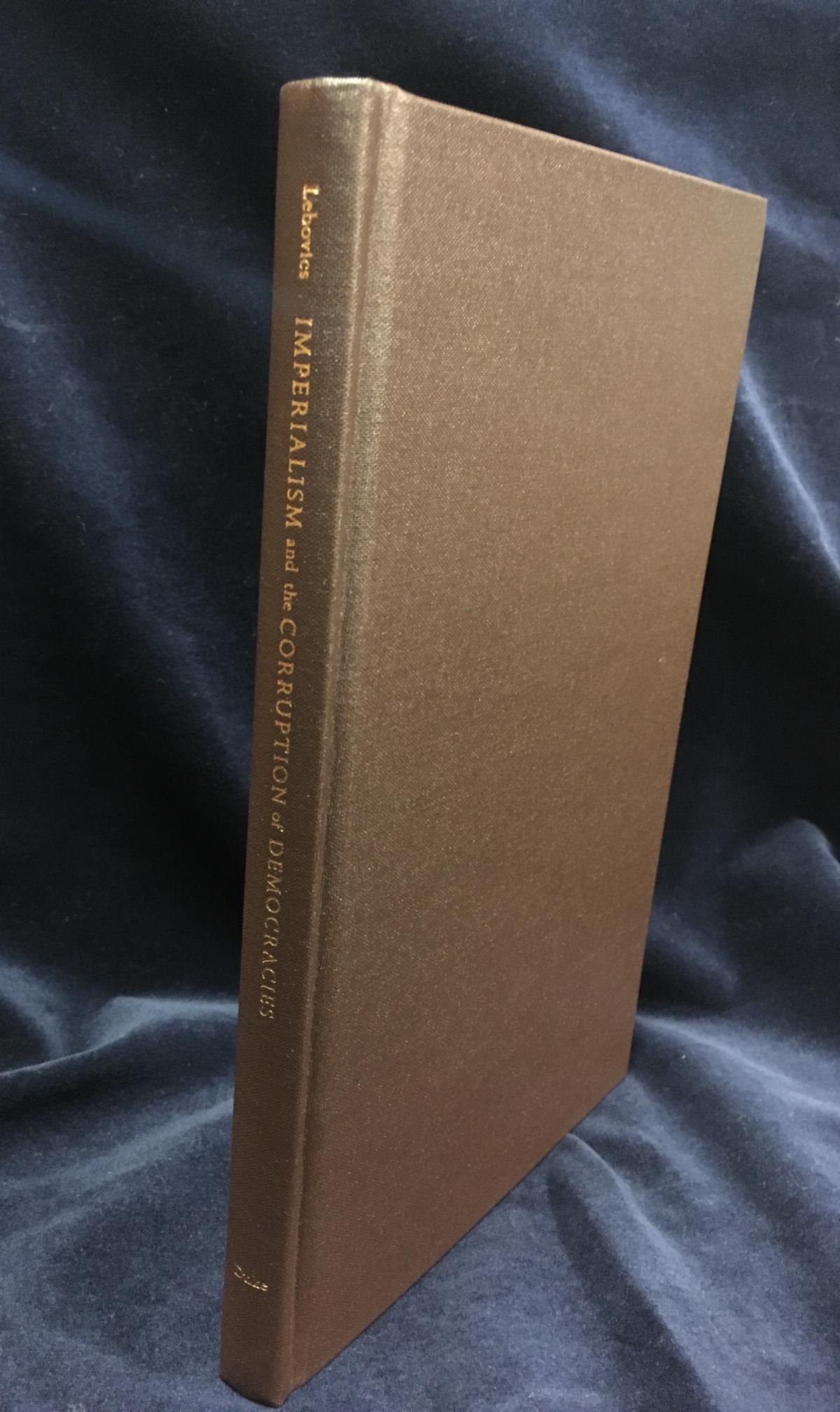
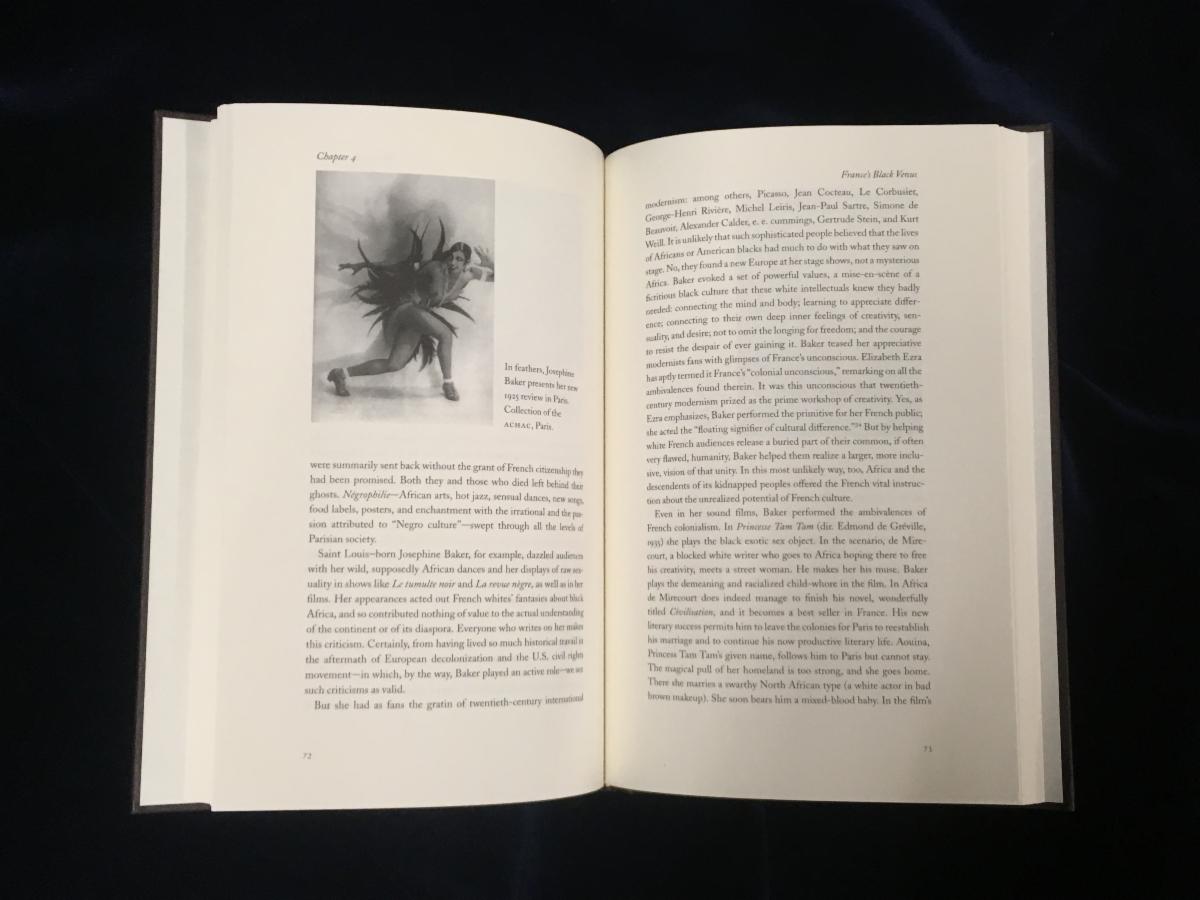
Fine copy of the scarce hardcover of
Herman Lebovics’
Imperialism and the Corruption of Democracies
. Duke University, 2006.
$75
|
|
|
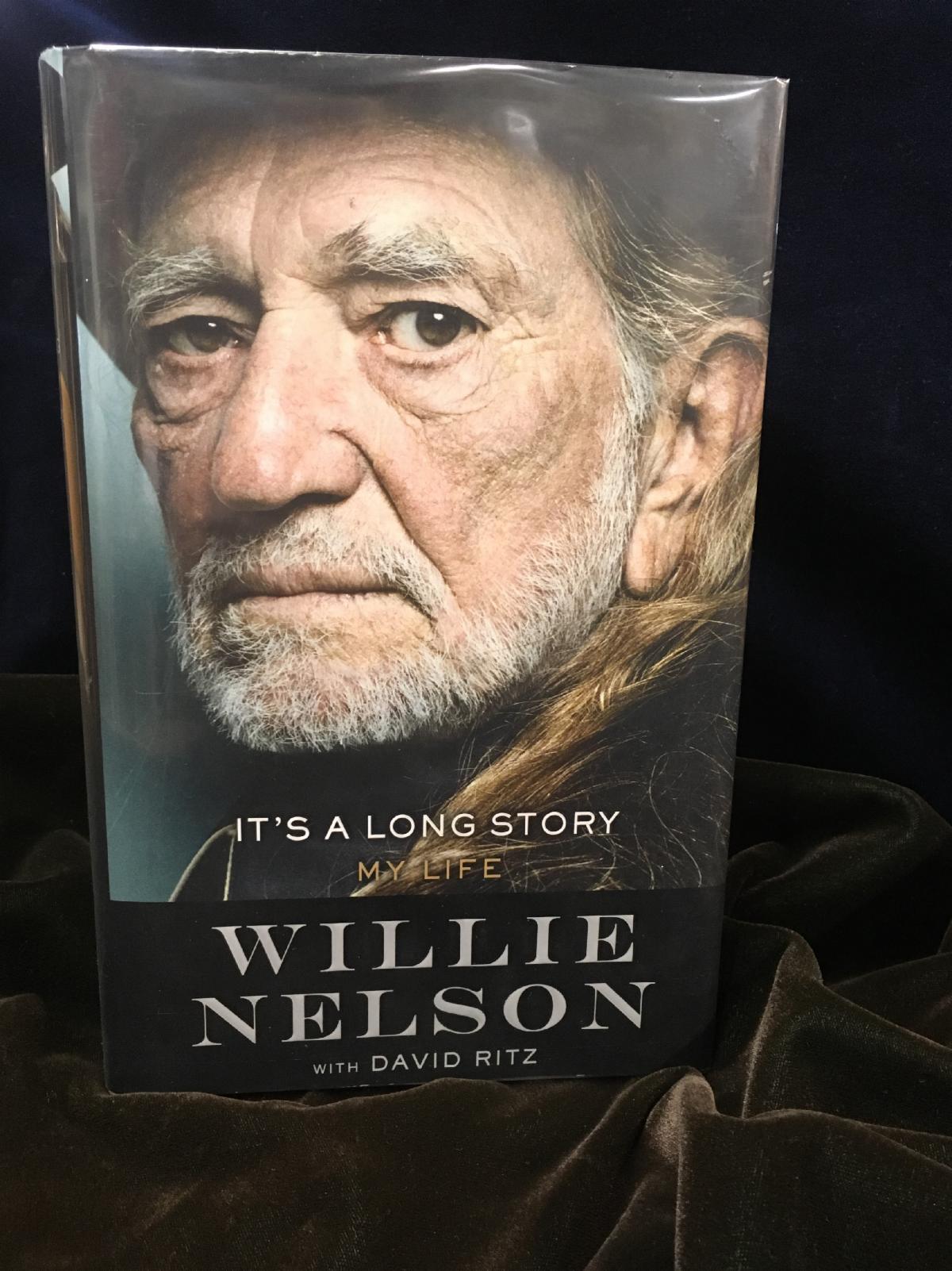
Signed 1
st
edition of
Willie Nelson’s
2015 autobiography,
It’s a Long Story: My Life
.
$125
|
|
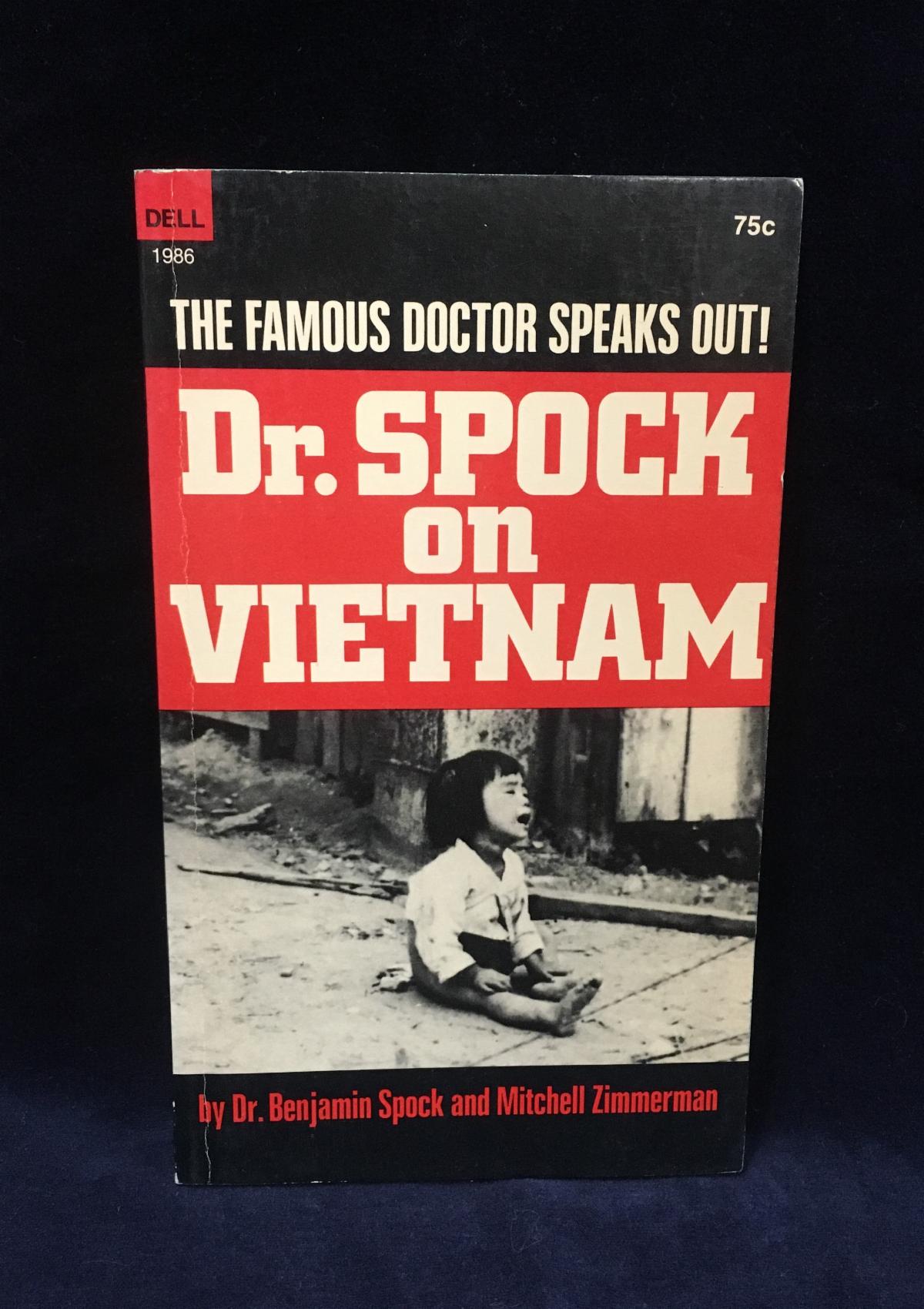
Dr. Benjamin Spock
was considered expert on children and babies. He observed that war is terrible for children. In 1968, he made his thoughts available in the Dell Paperback,
Dr. Spock on Vietnam
.
$7
|
|
|
|
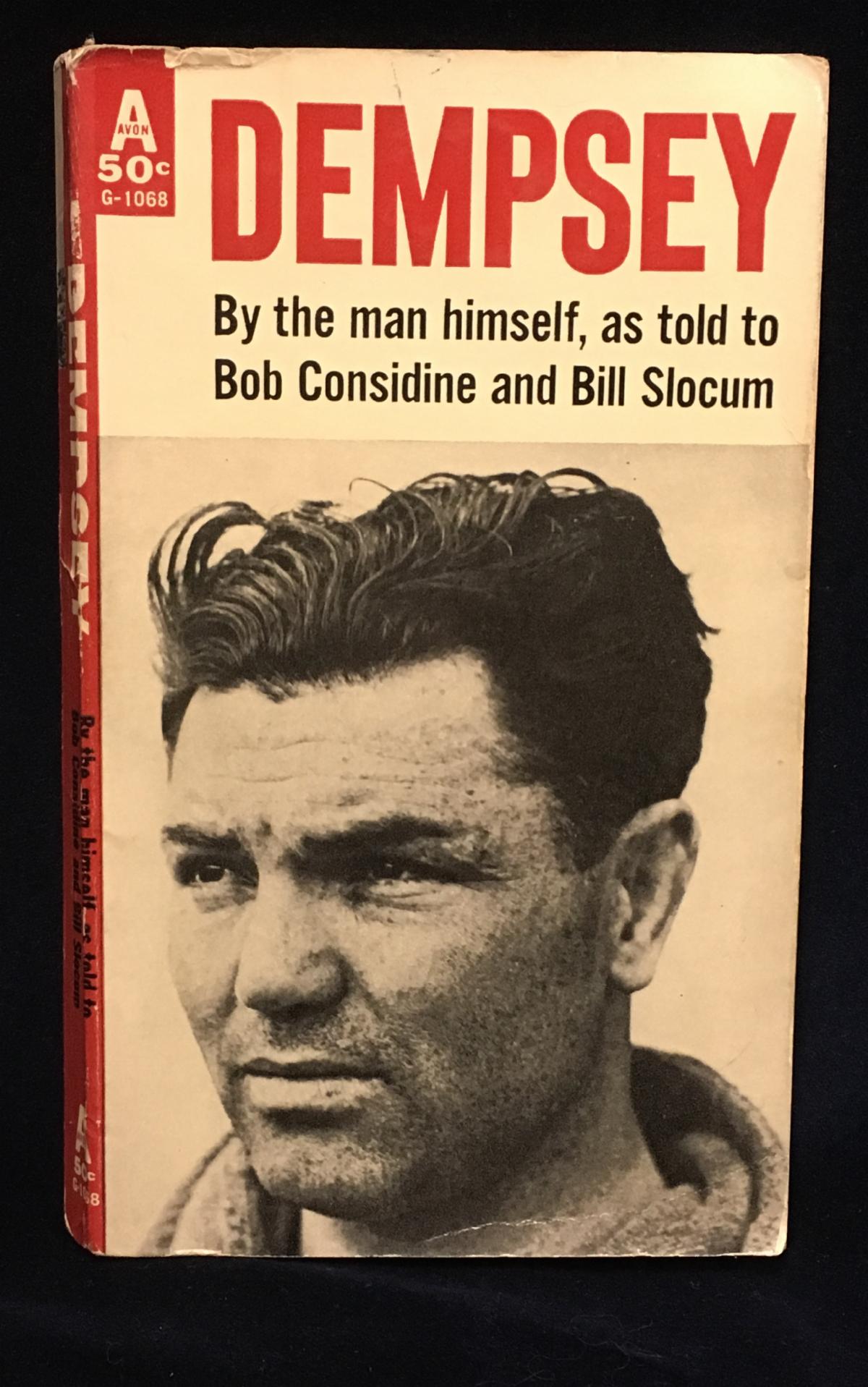
Dempsey, by the man himself
, his 1960 Avon autobiography, as told to Bob Constantine and Bill Slocum.
$10
|
|
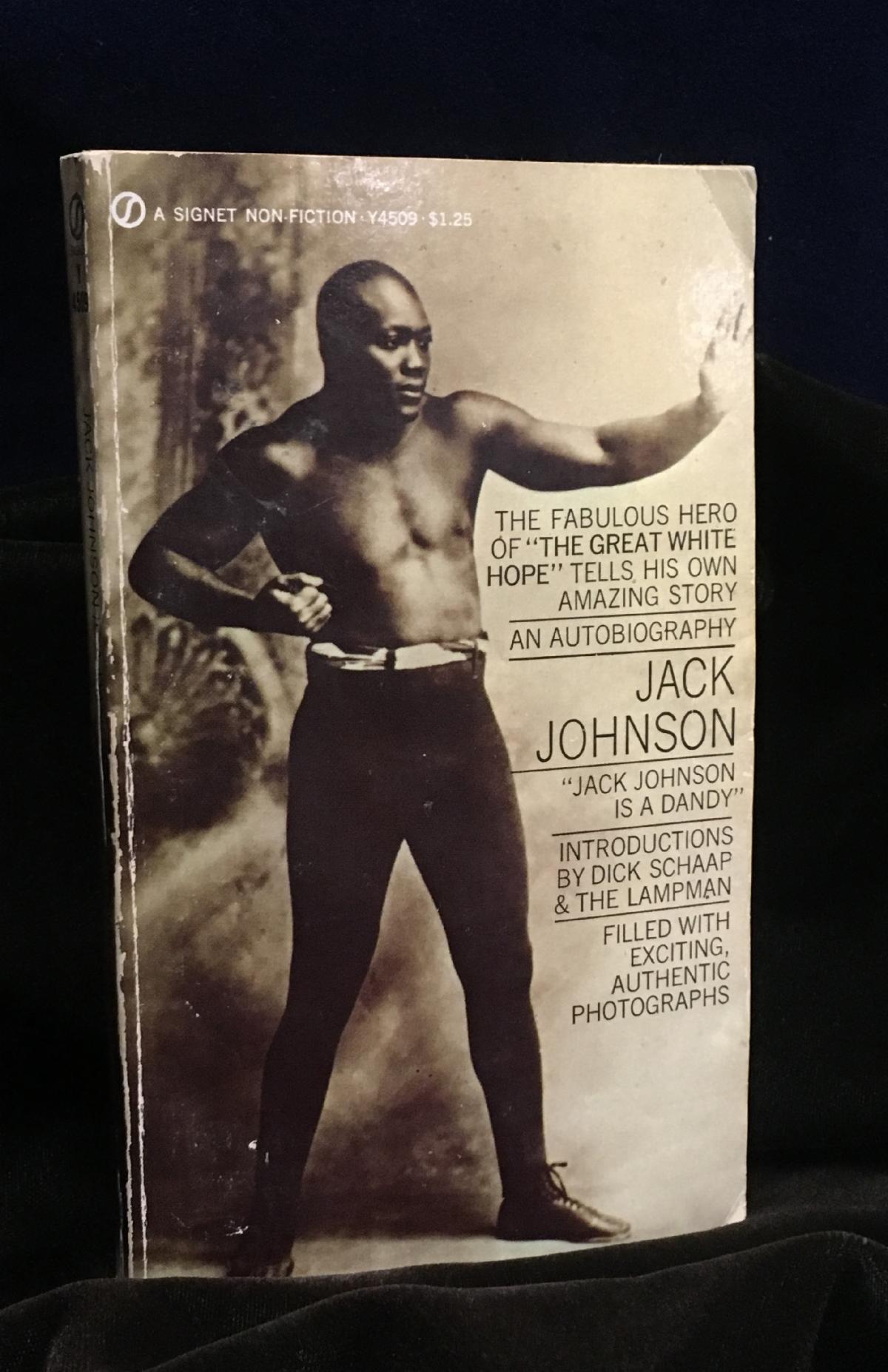
An Autobiography: Jack Johnson
the 1970 Signet paperback.
$10
|
|
|
|
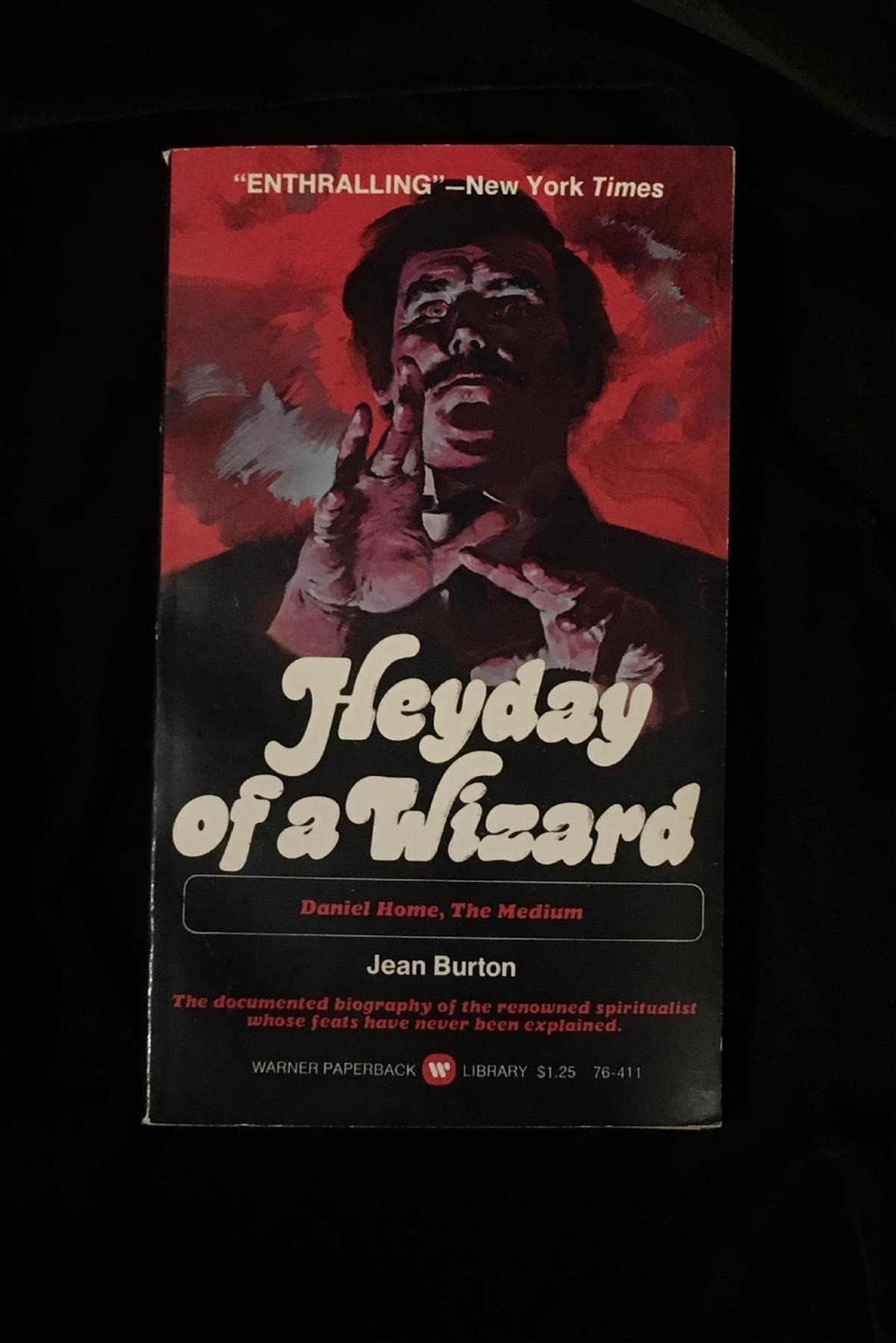
Heyday of a Wizard: Daniel Home, The Medium
, a 1974 Warner biography by
Jean Burton.
The documented biography of the renowned spiritualist whose feats have never been explained.
$10
|
|
Our
Best Weller's
pick is
|
|
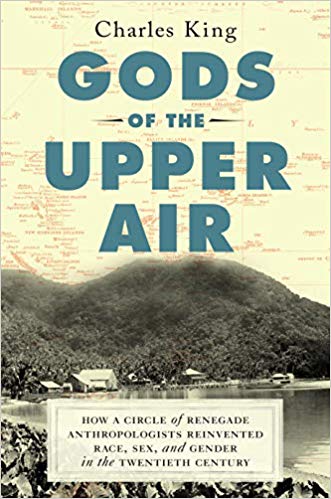
Gods of the Upper Air: How a Circle of Renegade Anthropologists Reinvented Race, Sex, and Gender in the Twentieth Century
by Charles King
Doubleday Books
9780385542197
Hardcover
List Price: $30.00
Our Price:
$24.00
Reviewed by
Frank
Gods of the Upper Air
is the fascinating history of the birth of Anthropology in the United States surrounding the career of Franz Boas against the backdrop of white supremacy, the fallacy of "superior" human cultures in juxtaposition to “primitive peoples”, and eugenics around the 1920’s spanning to its presence and arguable resurgence today.
Charles King
provides the background and let’s the subjects take over the narrative, not idealizing them, but showing their development in the academic world they lived in.
Franz Boas is the central subject. King shows his life in Germany, his studies on Baffin Island and his struggles to be accepted as a legitimate scientist in the United States. Setting off from Germany he studied the native peoples of Baffin Island. Upon landing in the US, he struggled to gain acceptance within academic circles; even a meeting with John Wesley Powell did not go well. He finally got a job with Frederic Ward Putnam assembling the Anthropology exhibit at Chicago’s World’s Fair. The Hall was less attended than others, and he became upset of the general acceptance of his displays and actual performances that were performed.
Boas took his work to the American Museum of Natural History and the Smithsonian. His displays antagonized many of those that were entrenched in these institutions. Finally He accepted a teaching position in the newly established Columbia University. This is where he became head of the Anthropology department and foster a circle of skilled anthropologists, many of whom were female. Among these were Ruth Benedict, Margaret Mead, and Zora Neale Huston.
The first part of
Gods of the Upper Air
is about Boas, then King delves into views that were being popularized at that time. Among the media influencing these views was a book called
The Passing of the Great Race
, authored by Madison Grant, which sounded alarm bells for white nationalists, and was studied by the Nazis in Germany to develop their ideas. This racism polluted the United States during the 1920’s, and 1930’s commissions were set up to study the effects of intermarriage and the influence of immigration. Shortly thereafter, the theory of Eugenics took hold. Franz Boas stood up against these ideas, ruffling many, never ceasing to shoot holes in their theories and teaching his students to dig out the facts in their field studies.
Charles King then follows the lives of the impressive students of Franz Boas and the effects they had on the growth of Anthropology in the United States. He delves into their personal lives, their methods of studies and the publications they produced, The chapters on Margaret Mead are particularly detailed and thoroughly researched. The parts on Zora Neale Hurston are very interesting, concerning her studies of southern African American life in Florida, she having grown up there herself.
Gods of the Upper Air
brings into view the
complexities of how anthropology was worked into the American scientific sphere and developed into what's considered a true science, with advanced methodologies and insights, much which can be ascribed to Franz Boas and the group of monumental female anthropologists with whom he worked.
|
|
|
|
Bookseller
Thoughts & Reviews
|
|
|
Frankissstein
Jeanette Winterson
978080212949-9
Grove Press
Hardcover/$27.00
Reviewed by
José
Jeanette Winterson's
arrival on the literary-genre battlefield of Science Fiction is with eyes wide, at full charge. And she isn't slumming like Ian McEwan, whose last novel,
Machines Like Me
, made him a posterboy for what author Michel Faber (
Book of Strange New Things, Under the Skin
) has called "institutional disrespect for the genre." Unlike McEwan, she isn't wearing her disdain for the field like cufflinks; she is conversant with the canon, and fully immersed. Hell, she's even updating, head-on, the ancestral novel of
all
Science Fiction: Mary Shelly's
Frankenstein
, to which any novel about artificial life and/or artificial intelligence is deeply in debt, including McEwan's
Machines Like Me
.
Half of Winterson's novel stars the classic, gothic cast present at
Frankenstein's
genesis at Lake Geneva, Mary and Percy Shelly, Lord Byron and his doctor Polidori. Brian Aldiss engaged this gathering of uncanny brilliance in his 1973 novel,
Frankenstein Unbound
(also made into a film in 1990). His perverse variation on this gothic theme was unbinding Victor Frankenstein and his Monster from Mary Shelly's imagination, releasing them into her
real
world. Winterson performs a similar mashup of factual and fictional characters: poor Victor Frankenstein is eventually incarcerated in the Bedlam asylum.
The other half of Winterson's
Frankissstein
, recounted in startling and often humorous leapfrog passages, provides modern doppelgängers of the original cast: the character previously known Mary is trans, chosen name Ry, and falls for charismatic Doctor Stein who is working on the ultimate A.I., while Ron Lord, a purveyor of sex bots, is a particularly shaming parody of egotistical Byron. Thankfully, Winterson's novel never completely collapses into farce—though the modern/future sections often teeter on its brink. Winterson is too skilled an author to lose her immaculate control of narrative, even as she presses the pedal to the floor. She also has a capacity for brilliance that puts snobs like McEwan to shame: Victor Stein to Ry, "The opposite of the past is the present. Anyone can live in a past that is gone or a future that does not exist. The opposite of either position is the present.
|
|
Open Borders: The Science and Ethics of Immigration
By
Bryan Caplan
9781250316967
First Second
Paperback / $19.99
Recommended by Josh
Until recently, the graphic novel was something that was dismissed rather easily. Despite my bias for the genre, this is not surprising as Batman and Robin is not necessarily something that might be seen as "high literature." I disagree, but I digress. The genre of the graphic novel seems to be on the rise, with famous narratives being adapted into graphic novels:
The Giver
and
Heart of Darkness
are just a couple examples of how this medium can be used to inform the masses on matters that remain matters of discourse.
Open Borders: The Science and Ethics of Immigration
is just such a book. The economist
Bryan Caplan
and the comic artist
Zach Weinersmith
form quite the duo, and have created something truly special. As the world we live in remains divided on matters such as immigration, it is necessary that we take opportunities to learn, from others and from contemporary sources. This text creates just that opportunity as it deconstructs the myths and consequences affiliated with open borders. I am by no means a student of the political sciences, nor an economist, yet this book is accessible while deep diving into the data and opening the conversation. Zach Weinersmith, whose career began with web comics, contributes an ensemble of artwork without which the book wouldn't possess the same appeal. O
pen Boarders
is
a must read for anyone looking to join the conversation, and learn about the broader picture of immigration.
|
|
Events
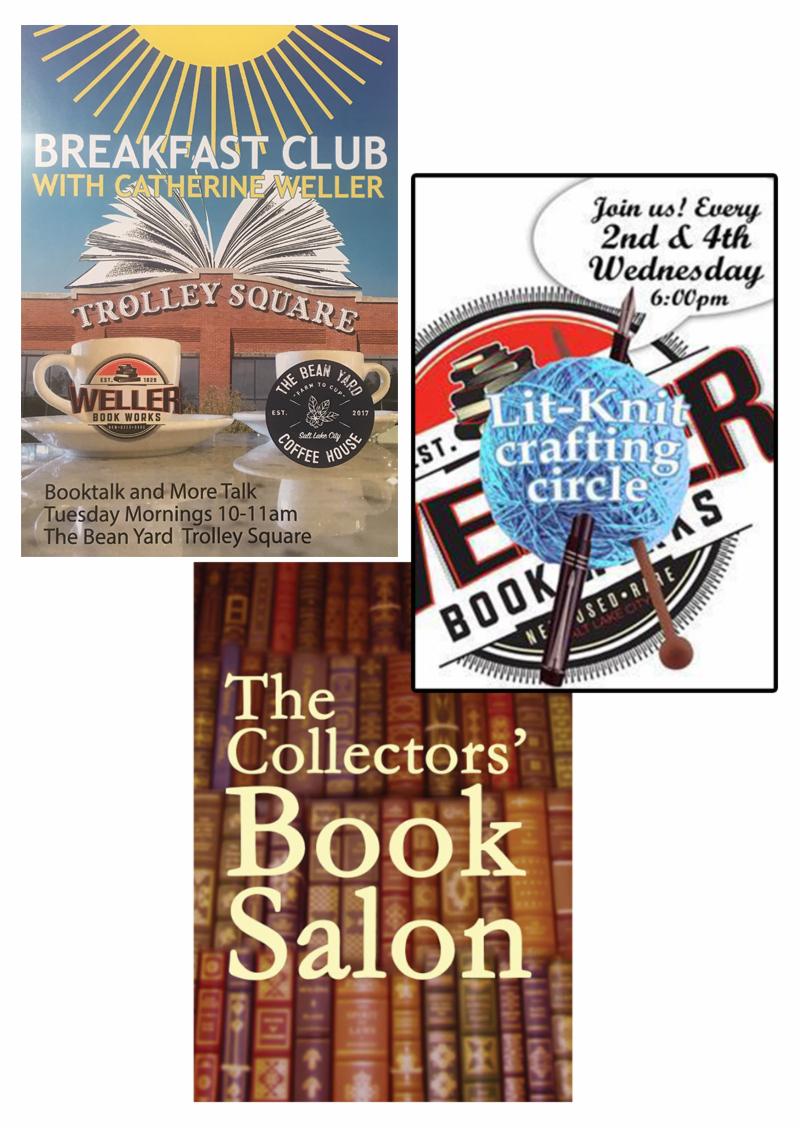
Join lead new book buyer Catherine Weller for an informal chat every Tuesday,
10:00 AM - 11:00 AM.
Craft with us every 2nd and 4th Wednesdays 6:00 PM - 8:00 PM!
Meet other smart readers every final Friday of the month, January - October. Glasses are filled and socializing begins at 6:30 PM.
|
|
ANNUAL STOREWIDE INVENTORY
We'll be closed
Monday January 6
-
Wednesday January 8
for our annual inventory.
We'll reopen Thursday January 9 at 11am as usual with our books freshly cataloged and organized.
|
|
The Collectors' Book Salons
by Tony Weller
FRIDAY, JANUARY 31
FRIDAY, FEBRUARY 28
6:30 PM
We were so active throughout the last few months that I barely had time to miss our monthly salons. Now we are in January I’m excited to resume these bookish affairs! When we began hosting monthly salons for rare book collectors and the insatiably curious, I didn’t know how much fun they’d be and how many acquaintances would grow into friendships. For the first few years, mostly known bibliophiles were to be found at the Weller Book Works Collectors’ Book Salons. The last few years, it has been fun meeting new collectors who learned about our evenings somehow or other. It was always my hope, after satisfying my own desire for smart conversations, that our salons would be occasions where readers would find friendship and expand their curiosity by exposure to other curious readers. We have made these bonds and we meet a new book collector at most salons now.
Since reading is a private activity and book collecting not much more social, book fetishists are often alone in their fascination. At least once annually we design a salon theme around a group event. It is customary for us to kick off the new season with a group event and 2020 will be no exception. For sympathetic glue we choose a theme and invite guests to bring a special valuable, collected, precious book to show and discuss with fellow guests. Like kindergarten show-and-tell, we take turns showing and telling about our special books. This is one of my favorite salons of the year because everyone becomes part of the conversation.
This month's theme for the Collectors’ Book Salon will be
Strange Books
. Is there a special book you own and fancy that is
Strange?
We want you to tell us about it. Join us for the Strange Book Salon on January, 31
st
, 2020 at 6:30 pm.
|
|
In February, we will be pleased to receive another Collector’s Chat from University of Utah Associate Professor of History, diligent reader, owner of many books and friend of ours,
John Reed.
In the late 1950s, John describes himself as a "husky," un-athletic pre-adolescent. Son of a WWII infantry veteran, he compensated for his lack of masculine swagger by voraciously consuming mass-market paperback histories and memoirs of the Second World War, including many volumes of the Ballantine War Books series, with titles ranging from the prosaic "Battle of the Bulge" to "Japanese Destroyer Captain." As he "matured" and the Vietnam War intensified, he drifted away from military interests into the general foolishness of the late 60s. Oddly, in 2007, as a mobilized Army reservist at the age of 55, he found himself in Baghdad, Iraq. John Reed’s Collectors, Chat will focus on this extensive Ballantine series, the role these books played in his life course, and thoughts about the many other gems that await purchase in used bookstores from sea to shining sea.
|
|
SATURDAY, FEBRUARY 1
7:00 PM
Lavender-Farming: Secrets from a Hard Row Hoed
by Lori Parr
Lavender Lori
got a second chance to start completely anew after 90% of her original crop was killed by one freak cold snap that she calls the Devastation. In the aftermath, she discovered and now implements a host of contingency plans toward more sustainable farming practices; the 'secrets' learned through tough experience. Never having farmed before, she learned it all from the ground up, mostly by trial and error. This is an organized, practical instruction manual on how to grow lavender–and what to do with your bountiful harvest. By following the step-by-step guide you will learn how to efficiently and successfully grow your own lavender whether it be by the thousands in a farm setting, a handful in your yard, or one in a pot. Lori also offers advice on planting, irrigation, the harvest, curing, storing, crafting and cooking with lavender as well as marketing and sharecropping.
|
|
THURSDAY, FEBRUARY 8
7:00 PM
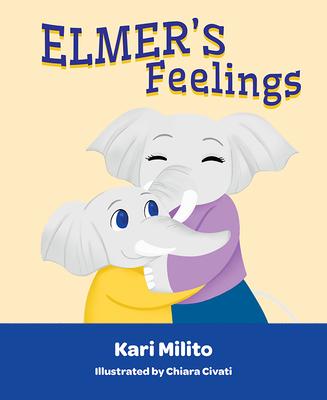
Elmer's Feelings
by Kari Milito
We're excited to have
Kari Milito
with us for a discussion and signing of
Elmer's Feelings.
Elmer’s excited and ready for his first day of school. But things don’t go at all like he imagined, and it’s causing lots of different feelings. Will he be able to sort through them all and find a way to have a better second day?
|
|
TUESDAY, FEBRUARY 11
6:30 PM
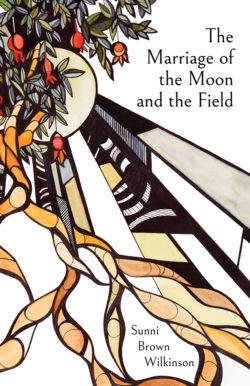
The Marriage of the Moon and the Field
by Sunni Brown Wilkinson
Sunni Brown Wilkinson
's poetry has been published or is forthcoming in
Crab Orchard Review
,
Sugar House Review
,
Ascent
,
Cimarron Review
,
Southern Indiana Review
and other journals and anthologies and has been nominated for two Pushcarts and a Best of the Net. Her first full length poetry collection,
The Marriage of the Moon and the Field
(Black Lawrence Press, 2019), was a 2017 finalist for the Hudson Prize. Wilkinson has an MFA from Eastern Washington University, teaches at Weber State University, and lives in Ogden, Utah with her husband and three young sons.
|
|
See something you like? Call 801-328-2586 and ask for the Rare Book department, or email rarebooks@wellerbookworks.com. We ship anywhere!
|
|
Thank you for supporting your local independent bookstore.
|
|
Weller Book Works | 801-328-2586 | books@wellerbookworks.com | wellerbookworks.com
Store hours: Monday-Thursday, 11 AM-8 PM | Friday-Saturday, 10 AM-9 PM | Sunday, 12 PM-5 PM
|
|
|
|
|
|
|