The Epitaph
Winter 2023 Newsletter
|
|
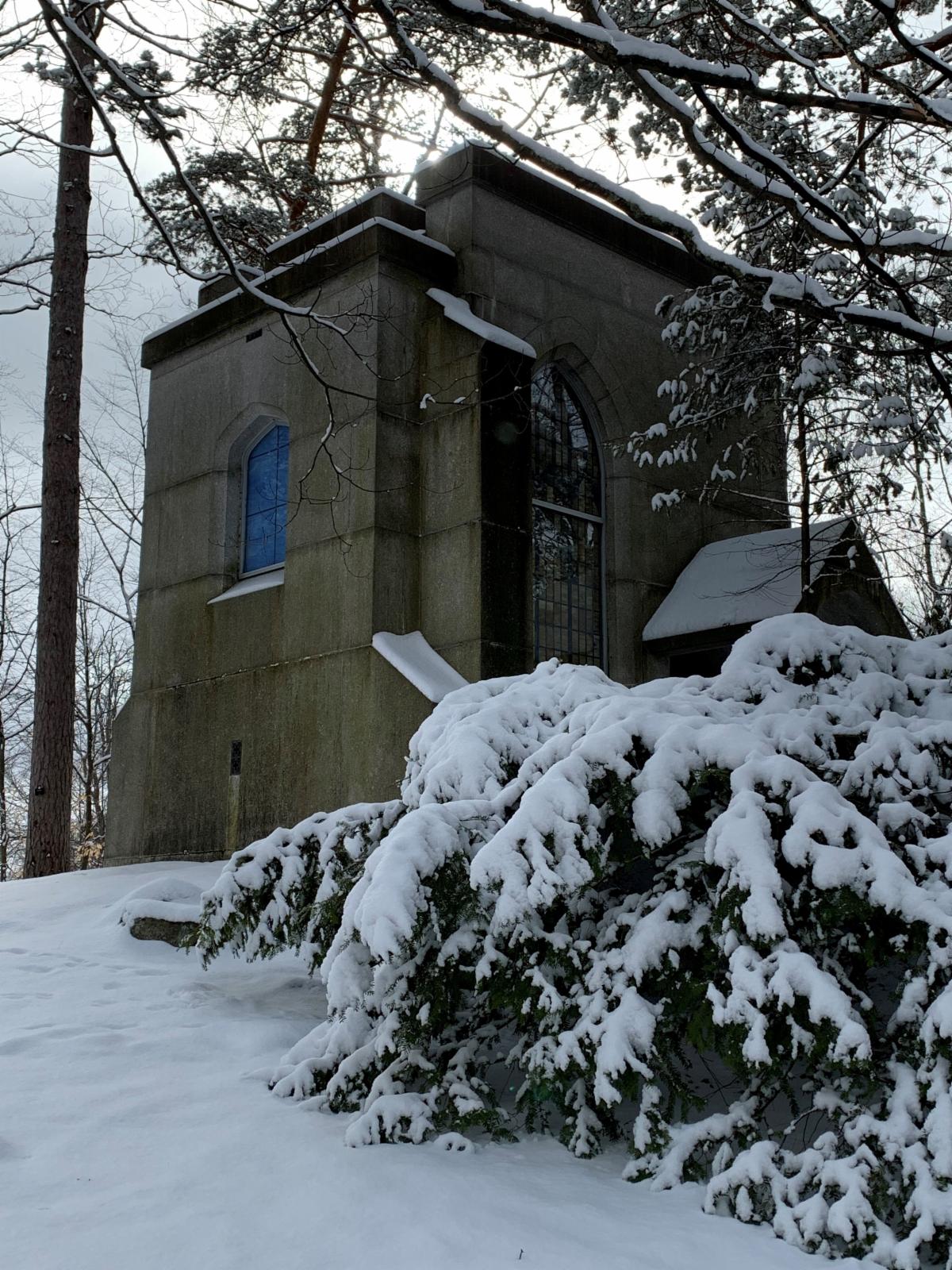
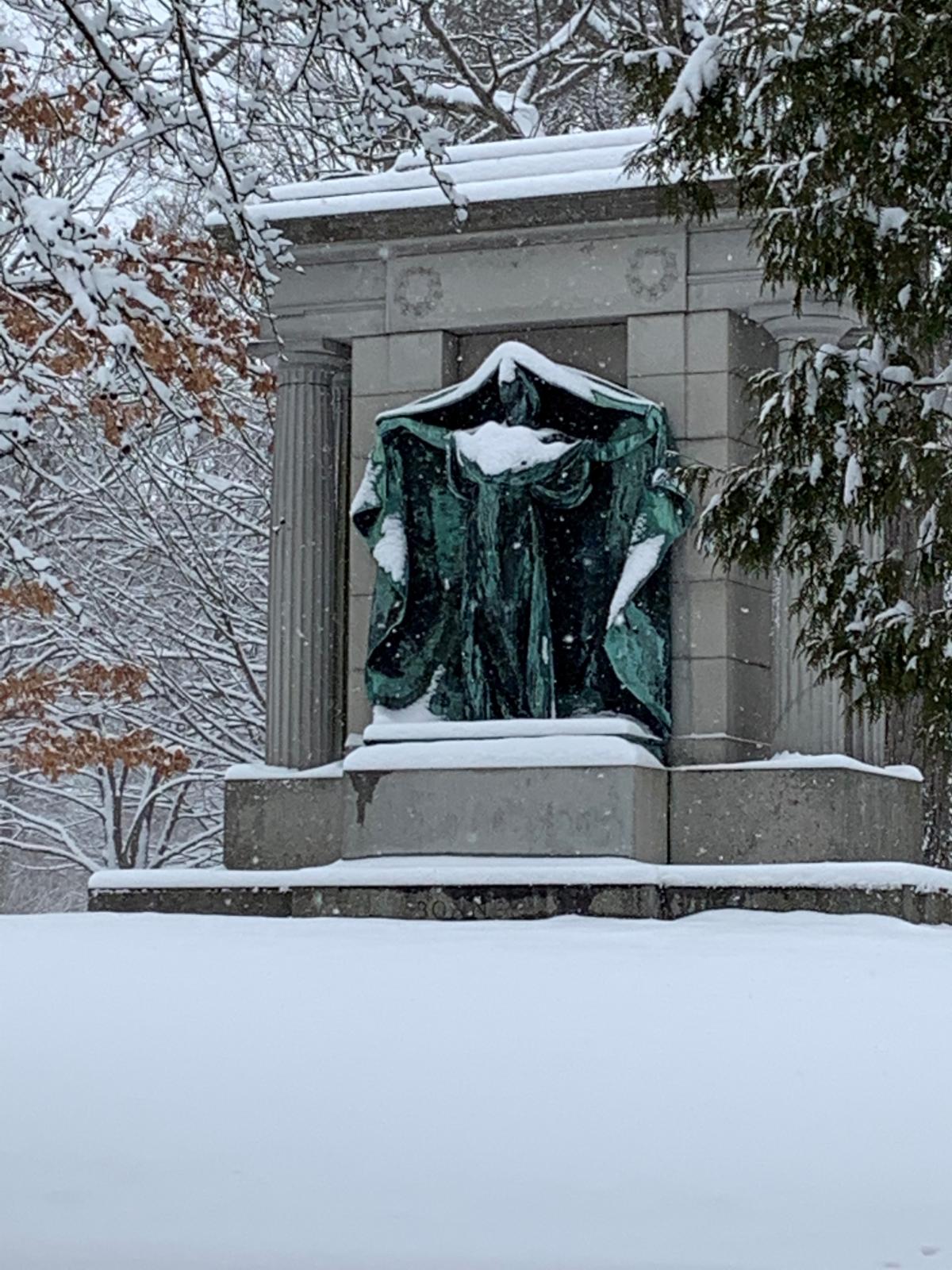
Photo Credit: Michael Lally, T.E. Parker Tomb |
|
AN ACTIVE BURIAL PLACE RICH IN HISTORY |
|
Greetings!
Happy New Year!
Anyone who visits the Lowell Cemetery knows that it is a wonderful place to walk in any season. But winter can offer a new take on our landscape. Whether you are a daily one-mile walker on Washington Ave or choose to wander the paths like Snowberry or Green Briar, there will be something to see.
If you’d rather be inside, this issue of Epitaph offers a mix of subjects from marine painters to stone carvers. On the bottom of some older headstones, you can see the name B. Day. After reading the article on this skilled craftsman, you’ll be able to pick out his style. Lowell’s thriving contemporary art scene had its beginnings in the mid-nineteenth century. A major figure in marine painting, Walter L. Dean, was a Lowell native. In this issue, learn about his training, travels, and where his paintings can be seen.
Please visit us, virtually or in-person, during the early months of 2023.
Robert S. McKittrick, President
Lowell Cemetery
|
|
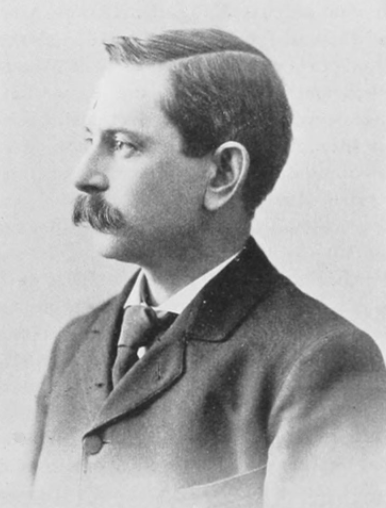
Walter Lofthouse Dean
(1854-1912)
|
|
Walter Lofthouse Dean was born in 1854 in Lowell, MA to the Honorable Benjamin Dean, a Boston lawyer and U.S. Congressman, and Mary French Dean, daughter of Lowell Mayor Josiah B. French. In many biographies, his artistic nature is attributed to his grandfather, Benjamin Dean, a noted textile engraver from Clitheroe, England, who was recruited in 1829 to work for the Merrimack Print Works of Lowell. Many notable names from Lowell’s history can trace their lineage back to Clitheroe, including Massachusetts Governor Thomas Greenhalgh. There is even a Clitheroe Street in the Belvidere section of the city.
Walter had no interest in working in the mills and decided to become an artist. His love for sailing became the basis for his art. After studying, and later teaching, at the Massachusetts State Normal Art School, he made his way to Europe to sail the coastlines to hone his artistic skills. He settled in Boston and served as Commodore of the Boston Yacht Club.
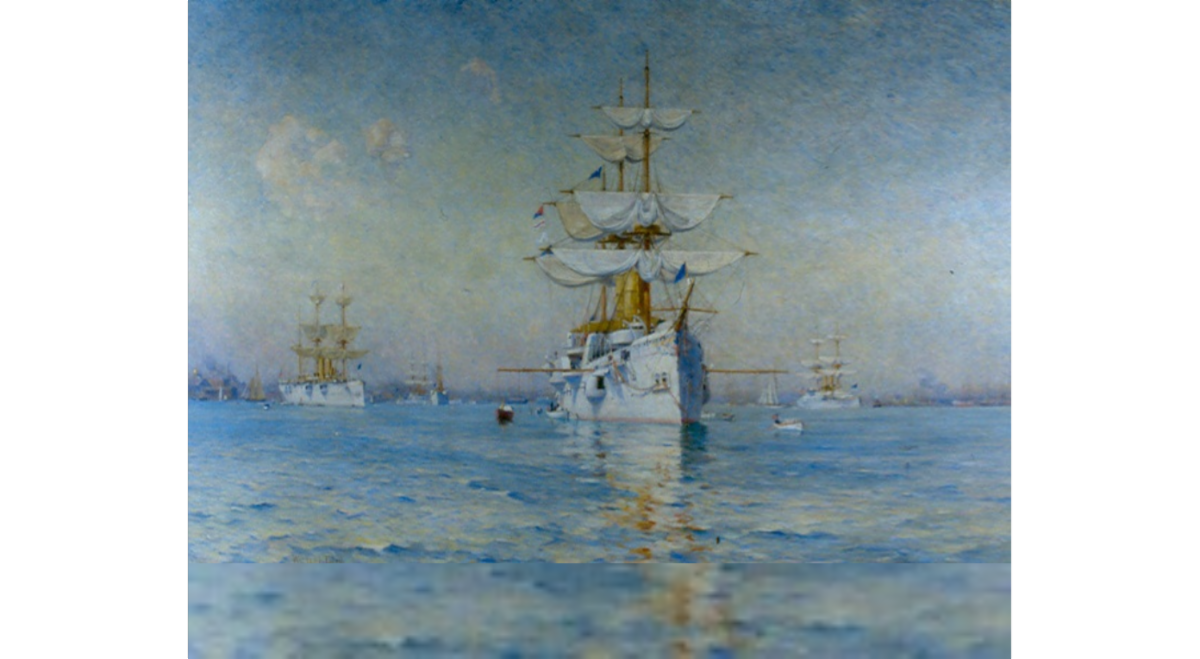
In 1891, Dean anchored his cat-boat Fannie in Boston Harbor and created one of his greatest works. His large marine painting —Peace: The White Squadron in Boston Harbor (1893)— measuring roughly six feet in height and nine feet in width, was exhibited at the 1892/1893 Chicago Exposition. It went on to be displayed in the Hearing Room of the U.S. House of Representatives’ Naval Affairs Committee at the U.S. Capitol.
The use of modern warships in art was novel. Peace captured the maiden voyage of these new steel-hulled war ships, representing a new prosperity after the Civil War. In 1900, U.S. House Resolution 5454 was introduced to purchase the painting. One notable reason this painting was so important was because it represented a time of peace. The theme of the other paintings displayed was wartime. Unfortunately, the price of the painting became an issue. Dean wanted $15,000, which was seen by some in Congress as excessive. It was finally bought in 1927, years after Dean’s death in 1912, at the more modest price of $5,000.
Shortly before his passing, Dean spent the summer onboard a New Bedford whaling ship bound for Cape Hatteras, North Carolina, a notoriously hazardous section of the Atlantic Coast. Since it was illegal to have passengers on a whaler ship, he was listed as the “ship’s carpenter.” His sketches of the operations of New England whalers proved to be important in the study of the industry by historians.
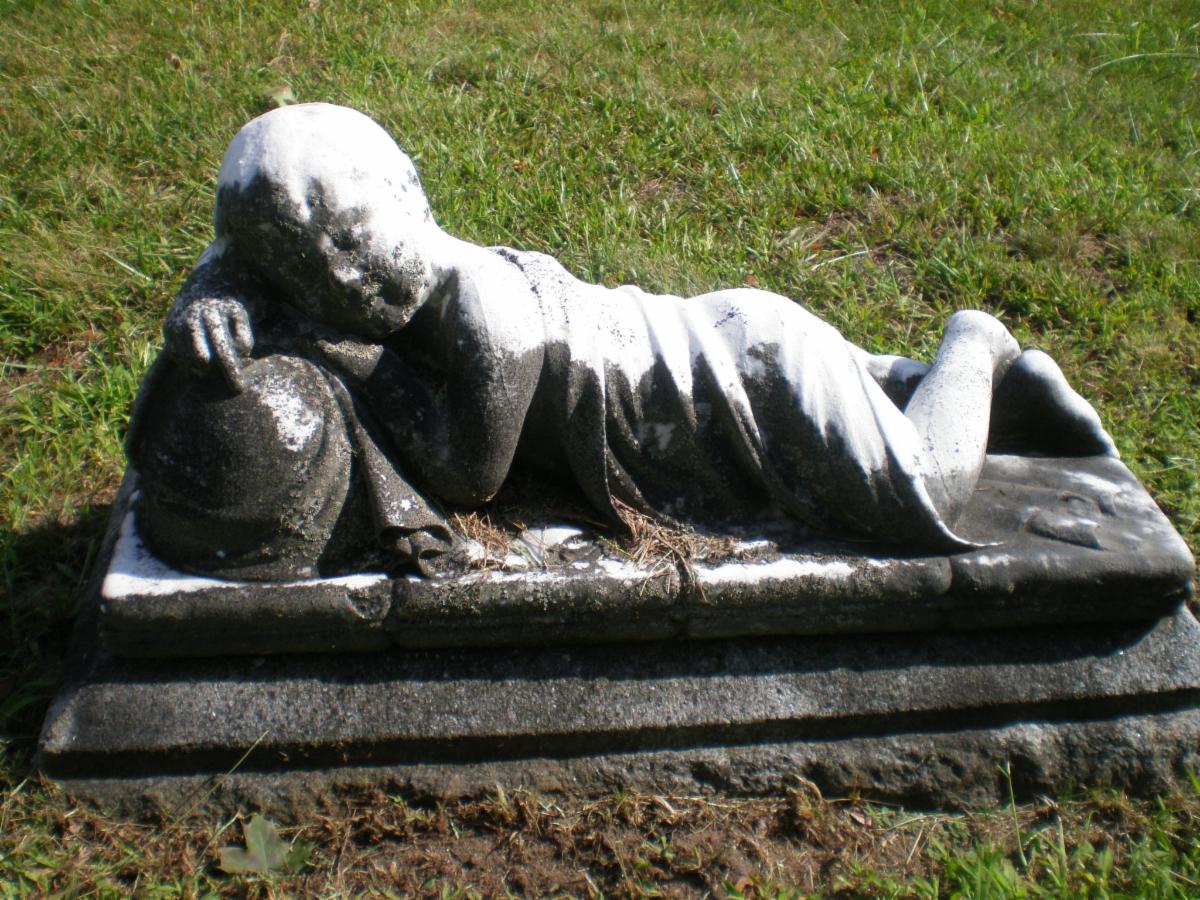
Dean is buried in the family lot on Washington Ave, alongside his parents. One of the smaller grave markers is that of a sleeping child, erected in memory of his infant brother Josiah French Dean (1849-1850). A large central monument bears his name and those of his parents, siblings, his wife Katharine, and his daughters May and Clitheroe. Examples of his paintings can be seen in Lowell’s Whistler House Museum of Art.
|
|
Peace
(the White Squadron in Boston Harbor)
Walter Lofthouse Dean
oil on canvas, 1893
Chicago, the largest ship, is in the foreground; behind her are the cruisers Atlanta, Boston, and Newark and the gunboat Yorktown. Other vessels and the city of Boston, including the Massachusetts State House dome and Bunker Hill Monument, appear in the distance.
|
|
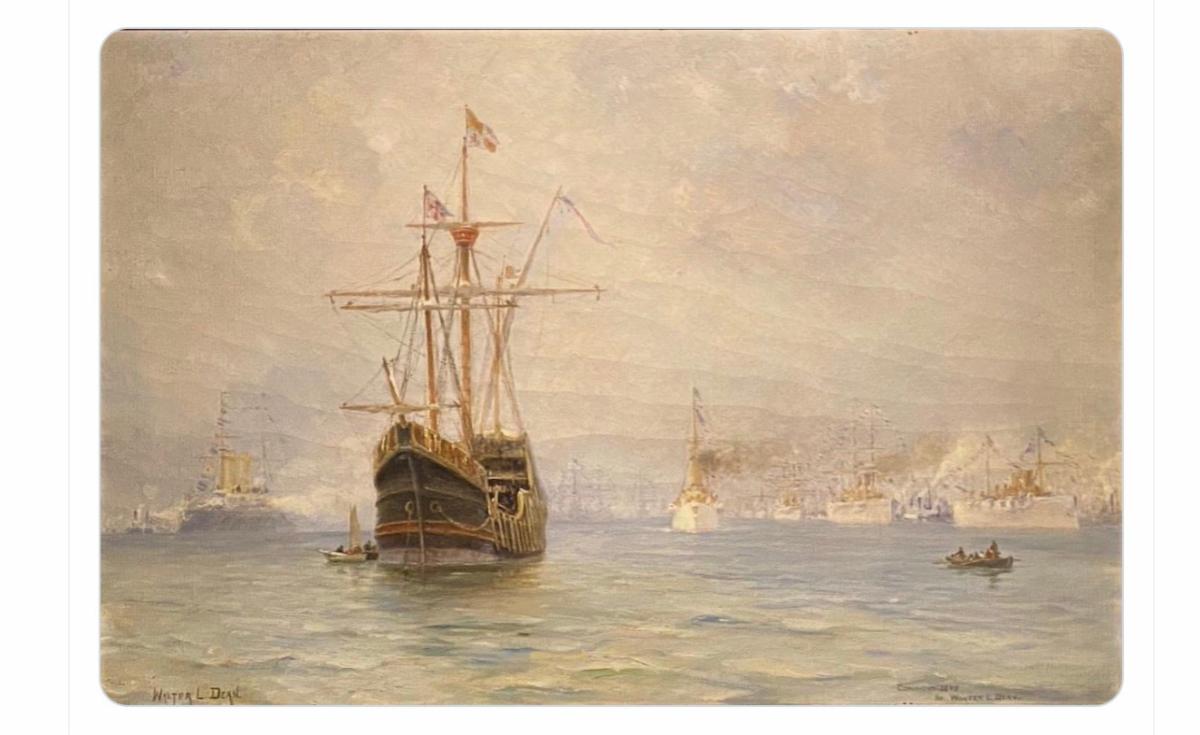
You can see art by Walter Lofthouse Dean in Lowell's own Whistler House Museum of Art. This stunning maritime painting Naval Review, New York (1893) is in the collection of the WHMA.
|
|
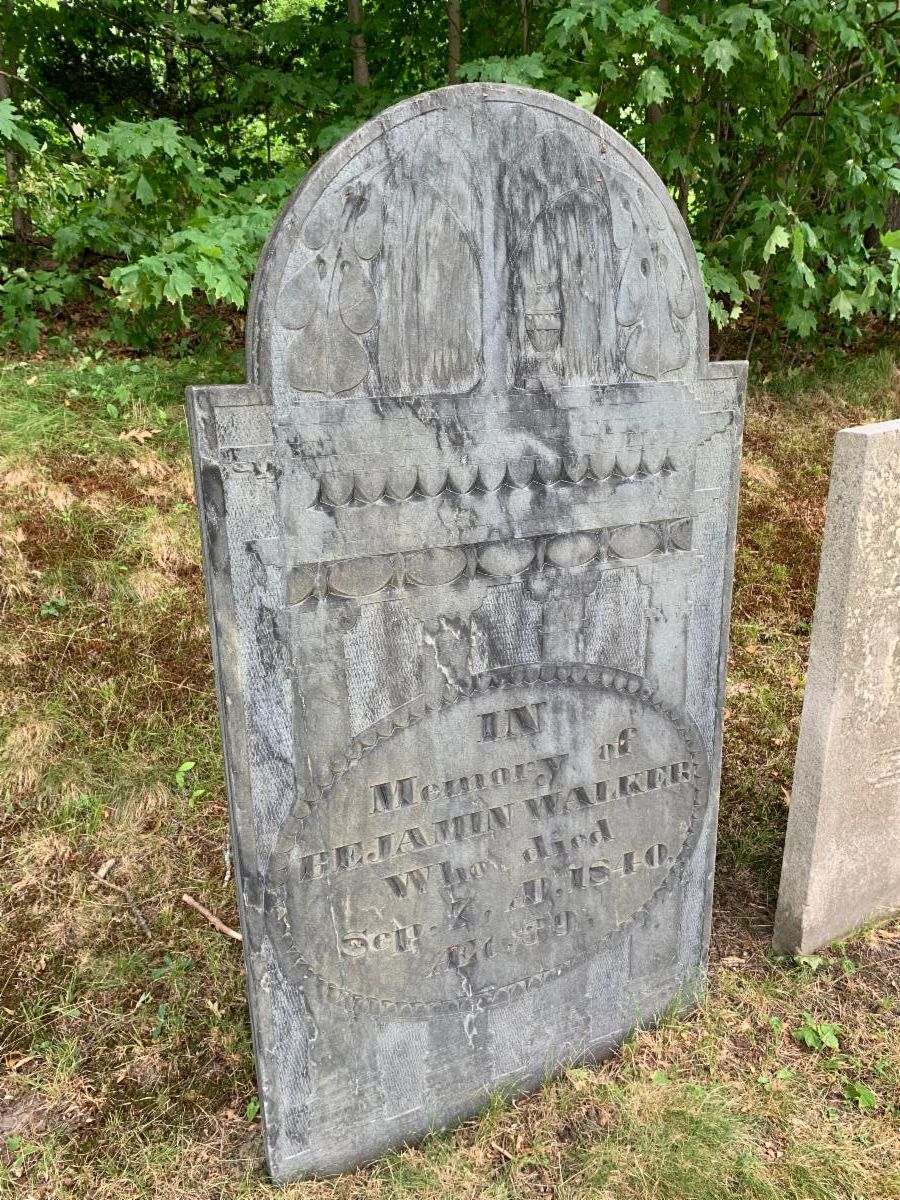
The Lowell Cemetery is the final resting place of one of the most prolific New England stone carvers of the 19th century, Benjamin Day. Nearly 400 slate stones and marble obelisks bear his signature, with many more thought to be his work yet unidentified. So how did this artist end up buried alone in an unmarked grave on Washington Avenue?
Benjamin Day was born in 1783 in Shirley, MA to Nathaniel Day, Jr. and Sarah (Chapman) Day. The family had strong ties to Salem, MA and by 1807, Benjamin Day and his brother Moses were working as stone cutters in that area. When Benjamin sold his shop and moved to Lowell in 1824, his wife Polly remained in Salem with their nine children.
While the Day family had ties to the Park family stone carvers of Groton (his brother Moses had married into the Park family), his style couldn’t have been more different. The Park family was known for the use of death heads and cherubs, but Benjamin Day had a more secular style, and he rarely deviated from his signature carving motif of the urn and willow.
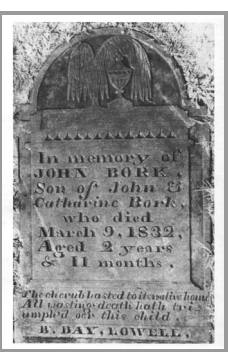
One of Benjamin’s earliest signed works in Lowell is the 1832 slate gravestone of John Bork in St. Patrick’s Cemetery (see below). Even without the oval cartouche, vertical pillars, and crosshatching he was later known for, you can see his touches in the small triangle carvings and, of course, his calling card: “B. Day, Lowell” carved along the bottom of the stone. Two slate stones in Little’s Station cemetery in South Nashua, NH (once Dunstable) are signed and date to 1829 and 1830. Carved for the Cutler family, they have his signature look and are in fine shape.
Benjamin mostly worked with slate, purchased from the Pin Hill Quarry in Harvard, MA. His slate gravestones can still be found in good condition, as he was known for his choice of quality stones. As a master carver, he would carve the gravestone’s artistic details in advance, often with an epitaph. Names and dates were added later. When marble became the preferred stone in the 1840s and 1850s, Benjamin used the softer stone but did not adopt the flowing script used by other carvers, like David Nichols. He preferred block letters. The quality of marble available at the time was an issue for many. However, this was not the case for Benjamin. He preferred to work with both American and the more costly Italian marble.
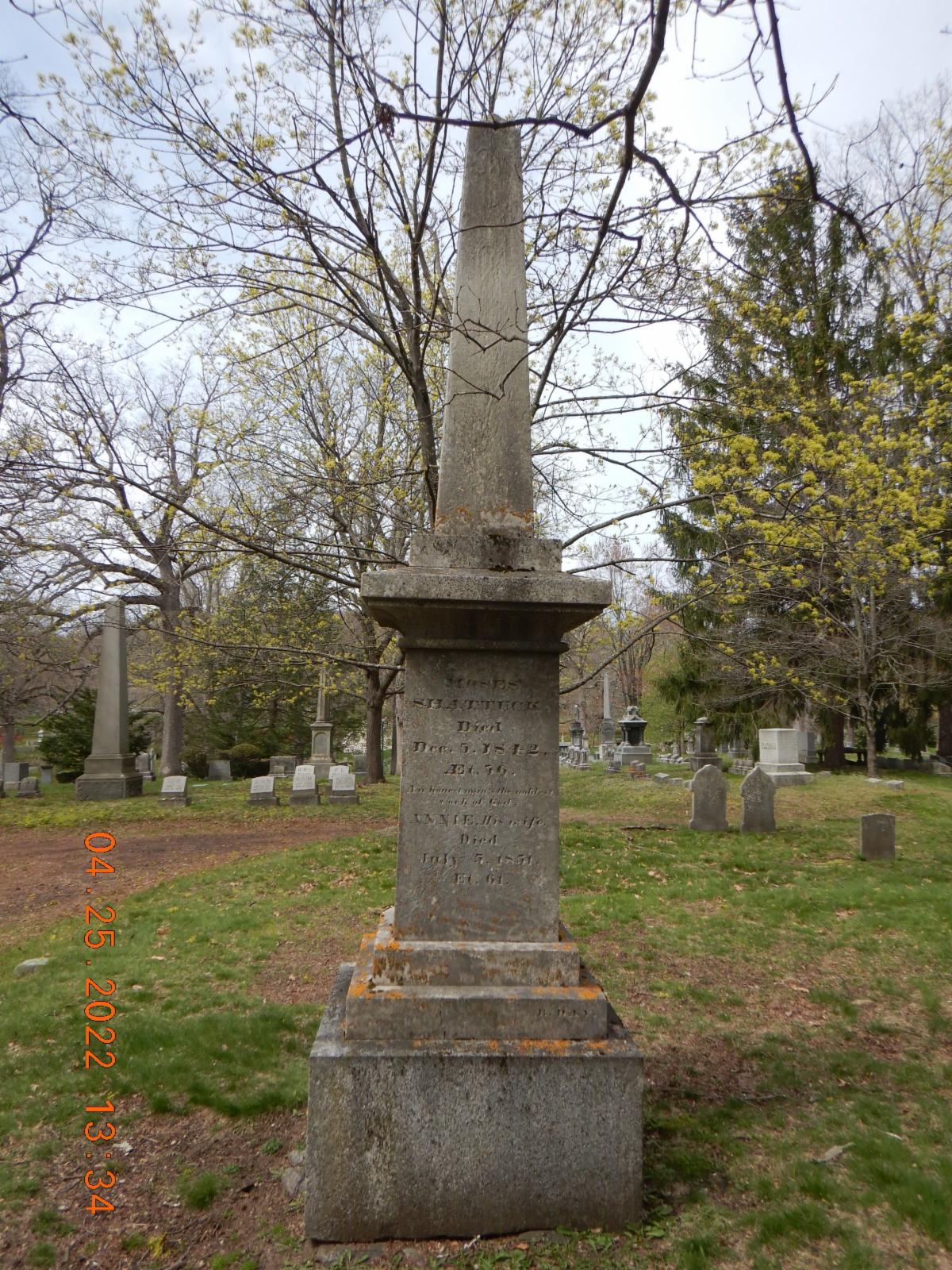
Benjamin was commissioned to carve a marble obelisk in Lowell Cemetery for Moses Shattuck and wife, who died in 1842 and 1854 respectively. There are less than 10 marble obelisks identified as his work with seven of them in Chelmsford, MA cemeteries.
Not long after the Lowell Cemetery opened in 1841, Benjamin purchased a 300-square foot lot on Washington Ave. and was buried there when he died on pneumonia in 1855. To this day, his is the only burial at this site. Benjamin’s parents and siblings are in Center Cemetery in Shirley, MA. At least one sibling, Mary Day (died in 1829), has a gravestone that bears his signature design. His wife is buried in Central Cemetery in Beverly, MA. in 1882 at the age of 91.
For more information on Benjamin Day including a list of stones by location please see the following link to his biography by Marilyn Day in the Hayes-Genoter History & Genealogy Library at the Pelham Historical Society:
|
|
 |
1832 Gravestone of John Bork at St. Patrick's Cemetery, Lowell.
Early use of "B. Day, Lowell"
Used with permission from
David McKean.
|
|
|
|
Moses Shattuck obelisk at Lowell Cemetery signed "B. Day"
photo credit: Denise at findagrave.com
ID # 46820671
|
|
|
|
Self-guided Tour of Veterans’ Graves: Civil War to the Gulf War
Saturday, May 20, 2023 (rain or shine)
Time: 10:00am - 12:00pm
Lowell Cemetery will host a free self-guided tour of selected graves of veterans. Participants may begin the tour at either cemetery entrance (Knapp Ave or Lawrence Street) where they will receive a tour map and then proceed at their own pace to the designated graves. Cemetery volunteers will be at each of the graves to tell the stories of the veteran buried there and to answer questions about the cemetery. As part of this event, the Lowell Historical Society will display within the cemetery military artifacts from its collection.
|
|
|
|
In Victorian times, the graves of children were often marked with a sleeping child to express the idea of an "eternal slumber." |
|
|
|
|
|
Private Tours of Lowell Cemetery
Private tours for school groups, garden clubs, historical societies, and social organizations can be arranged by contacting the Cemetery office at: staff@lowellcemetery.com
or by calling the Cemetery office at:
978-454-5191
|
|
The Lowell Cemetery is a private, non-municipal, non-denominational, garden-style cemetery located in Lowell, Massachusetts.
|
|
|
|
|
|
Address:
77 Knapp Avenue
Lowell, MA 01852
Phone:
978-454-5191
|
|
|
|
|
|
|
|