|
The February e-newsletter focused on federal actions and their impact, or likely impact on Oregon. Since then, numerous actions have affected Oregonians who have lost jobs or had their visa revoked; universities have shut down research projects and lost critical grant funding. One week, about a thousand families heard that their child's Head Start program would be closed the following Monday, so families scrambled to figure out how to find day care or alternative activity for their child while they were at work. Then a couple of days later the threat was removed. On-and-off tariffs have left some Oregon businesses with canceled contracts. The economic and social chaos is destabilizing and discouraging.
In Salem, we work on. In this e-news I'm including some short notes about what the House has been working on, status of my bills, a report on Oregon responses (so far) to federal actions, and a selection of meetings and office visitors described in Snapshots.
It may be too early to plant tomatoes, but on weekends I'll be out in my garden with the hummingbirds and ladybugs.
| | |
First week in April (April 1-5) the House passed 10 bills. Included in the group are these 5 headed to the Senate:
- If landlord gives a tenant notice about ending the fixed term agreement, the tenant can leave earlier, with 30 days notice. (It's hard to find a new place!) HB 2134 Passed 44-9.
- Non-profit universities can participate in the Higher Ed Coordinating Commission "direct admission" program where students are notified of their college acceptance without an application process (HB 2421) Passed 52-0.
- School boards must review and post their integrated pest management plan and list of pesticides, for example used on school grounds, gardens, etc. (HB 2684) Passed 51-0.
- State will publish a goal for statewide homeownership rate (at least 65.05% by 2030) and a public "dashboard" to track progress (HB 2698) Passed 42-8.
- Allow property owners and landlords to reclaim premises from squatters with 24 hour notice. (HB 3522) 55-0
| | |
For the week April 7-11 the House passed 42 bills. Here are a few of the consumer protection bills I was happy to support!
- For consumer protection: Unwanted sales call- closes texting loophole and limits solicitation to 3x a day, 9am-7pm (HB 3865, 35-16).
- Stop shady car sales practices and ripoffs (HB 3178).
- Car owners can opt out of personal data their car is collecting from being sold to other businesses (HB 3875, 57-0).
- Name, Image, Likeness: student athlete compensation and use of NIL (HB 3694, 46-9).
| | |
More consumer protection bills I was pleased to vote "yes" for:
- Similar to requirement that realtors be licensed, HB 2373 creates a timeshare sales agent license.
- Home solicitation and telephone solicitation sales would be subject to Unlawful Trade Practices Act regulations. (HB 3605)
| |
Government Efficiency Done Right
Background checks
Is there no limit to red tape? Can we cut some more? I passed a bill with unanimous bipartisan support to start cleaning up red-tape processes that result in duplicated background checks and big backlogs. People looking for work wait weeks and caregivers are delayed from seeing people in need. Let’s fix that.
Specifically, HB 3224 directs the Department of Human Services to review all rules and statutes regarding criminal background check requirements for occupations covered by the DHS background check unit (like jobs caring for children and adults) and report back to the legislature on options to consolidate and reduce the number of different background checks for similar purposes and programs. We want to improve government while preserving safety. Here's my floor speech.
| |
Personal bills making the first hurdle
Successes so far: bills still alive, surviving the April 9 legislative "first chamber" deadline.
Passed the House, waiting for hearing in Senate:
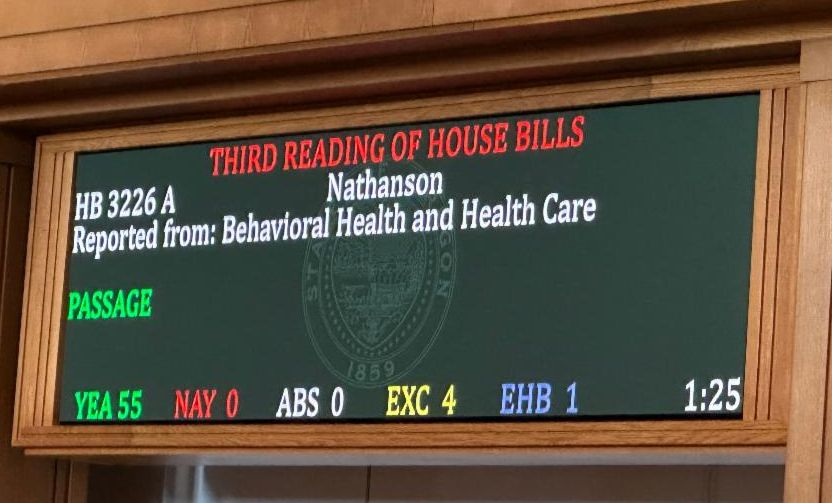
- A bill to protect pharmacies against onerous Pharmacy Benefit Manager (PBM) business practices (HB 3226) passed the House unanimously
- Background checks: see below.
- Directing ODOT to work with Washington, British Columbia, and other partners for joint plans and operations of passenger rail, and regional approaches to planning and applying for grants to support infrastructure benefiting freight and passenger trains. (HB 3233)
- Eugene's East Blair Housing Co-op needed a legislative fix so they can qualify for property tax exemption that supports affordable housing like other co-ops. We passed the bill! HB 3232
Passed out of committee, now waiting in Joint Ways and Means for funding:
- Urgent care centers regulation (HB 3221)
- Lessening regulatory burdens for behavioral health providers (HB 3229)
- Funding "Rap Back" to streamline background checks to reduce delays for providers (for example, counselors, therapists, and home care workers) and for people waiting for help (HB 3239)
- Oregon Hazards Lab (OHAZ) funding to support systems for earthquake early warning and wildfire smoke and fire detection (HB 3219)
| |
Health Care: Who's in Charge?
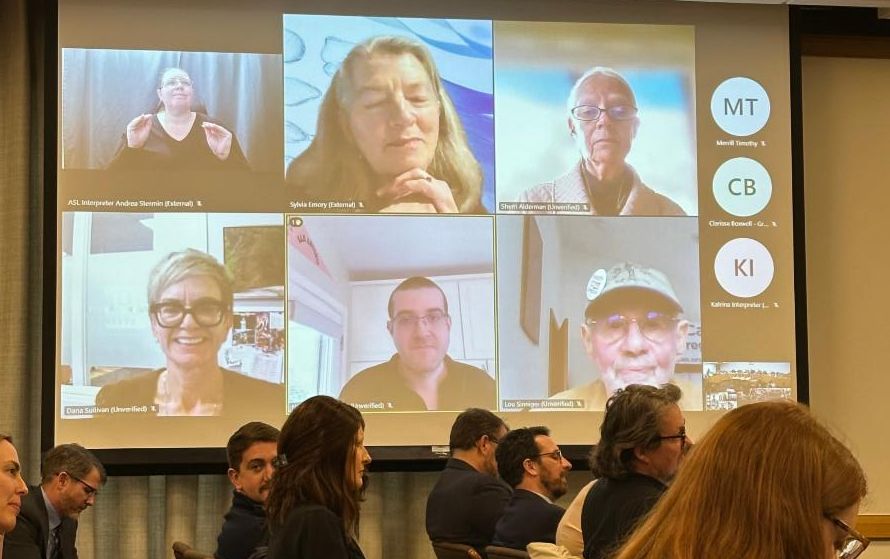
Gratitude for Eugene residents and medical professionals who spoke in favor of patients over profits, and giving the Attorney General authority to enforce laws related to Corporate Practice of Medicine. All these months working to improve access to health care … the legislative process is grueling. Many people continue to contact me supporting our efforts and sharing stories of lacking doctors and months-delayed appointments. (In this photo: some of the Eugene people who joined us at the committee hearing by remote connection.)
| | | |
One of the wins so far: Pharmacy Benefit Managers should have no excuse for not following the law. My bill was written to protect community pharmacies and ensure they are treated fairly, whether the pharmacy contracts directly with a PBM or through an administrator that contracts on their behalf. HB 3226 passed the House unanimously and now moves to the Senate. My floor speech.
In this photo: Dr. John Moorehead representing Oregon Chapter of American College of Emergency Physicians after speaking in the committee hearing to support HB 3227 to ban noncompete and other restrictive contracts for medical professionals. The bill didn't make it out of committee but I am collaborating with two senators as a chief co-sponsor of similar legislation on its way to the House.
| | | It pains me to report that a couple of the most important ones didn’t make it. I’m still fighting for patients over profits. Meanwhile: Health insurance industry reports net earnings nearly $25 billion for 2023, capital and surplus increased 6.5% | | Federal actions: what we know and what we're doing about it | | |
Stock Market Volatility
The stock market continues to react as new federal tariffs are announced and rescinded. Here is one example from April 7, as reported in CBS: Leading indexes fell sharply in the morning, briefly rebounded on a false report that President Trump was considering a 90-day tariff freeze for all countries except China, then rode the roller-coaster back down in the afternoon. "Could things get worse? Of course they could," said Nate Thooft, a senior portfolio manager at Manulife Investment Management. "We're not calling the all-clear at all, but when you have this type of volatility in the market, of course you're going to have back and forth" in markets.
State Economist Carl Riccadona told OPB, “Businesses do not like uncertainty. They do not like to be playing a game where the rules of the game are in flux, and they have to make these adjustments to supply chains and investment patterns, et cetera.”
| | |
Budget cuts: federal employees in Oregon
Several federal agencies employ Oregonians, nearly 30,000 in the state. How many jobs might be affected? For the first quarter of 2024, about 1,900 of those jobs were at field offices in Lane County. The largest employers in Eugene are: Veterans Administration (328), USPS (211), and U.S. District Court (51).
| | |
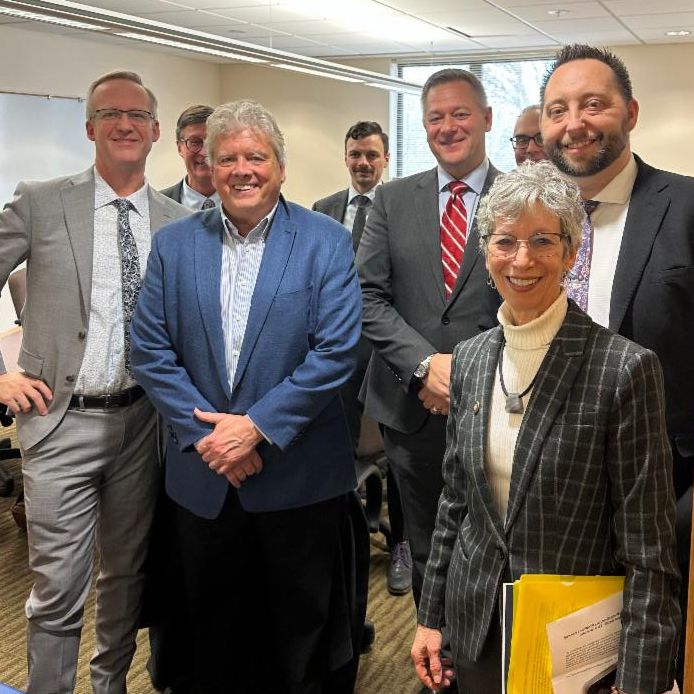
This photo was taken the day after Trump announced 25% tariffs on all imports from Canada and Mexico. I met with representatives from Washington, British Columbia, and Alberta to discuss shared regional issues related to economy and transportation and PNWER (Pacific Northwest Economic Region). The conversation was lively and cordial, sharing ideas for improving freight and passenger rail, and acknowledging our hope for continuing exporting both directions to benefit business and consumers dependent on global supply chains for manufacturing and agricultural exports.
Governor Kotek held a roundtable discussion at Chemeketa Community College on April 16 to discuss the impact of federal tariffs for Oregon. Some of the noteworthy points as reported here:
Wildfang, a Portland clothing company, said if there recent shipment from China had come just 48 later, it would have cost them nearly $180,000 extra because of Trump’s tariffs. The CEO said, “We believe manufacturers our size are going to go under.”
State Treasurer Elizabeth Steiner said that federal economists estimate Trump’s tariffs will cost the average U.S. household $3,800 more per year.
Oregon’s state economist, Carl Riccadonna, explained that the full impact of these tariffs on Oregon’s economy probably won’t be known until mid-summer. For context, he pointed out that before Trump’s 2018 tariffs on steel, aluminum and other imported materials, Oregon’s economy was growing about twice as fast as the national economy, and following the tariffs, Oregon’s economy almost immediately shrunk by about 2.5 percentage points.
A Canadian news outlet recently showed some U.S. products along with similar products from Canada, and labeled them "Buy" or "Bye." Pancake mix from the Oregon business Bob's Red Mill was marked "bye." Trey Winthrop, speaking for Bob’s Red Mill which has exported their products to Canada for 25 years, said “The message is very clear: Canadians should not be buying U.S. brands, and we’re seeing that impact,” he said. “I feel very strongly that once we have long-term clarity on the tariff situation, there will be lasting damage to our export market there, and we will not be able to sell products to the country.”
Orders for Oregon wine producers have been returned or terminated from Canadian sellers. Canadians are turning away from Oregon beers and the impact to Oregon will be noticeable; nearly 45% of Oregon beer exports go to Canada. Curtis Robinhold, Port of Portland executive director, said 88% of Oregon exports are from small and medium sized businesses like Bob’s Red Mill and craft breweries. Here's a news report.
I included a short section on this in my previous e-newsletter. A report from a Portland State University economist describes Oregon's export economy (14.5% of state Gross Domestic Product, compared to 10.3 % U.S. average, 2022) and warns that the proposed tariffs "would take the average tariff rate on all imports to highs not seem since the Great Depression," and "raise taxes for all income groups, with biggest hike on the poorest Americans." The report is posted here.
| | Oregon response to federal actions | | |
Community hearings
Oregon Attorney General Rayfield is convening a series of community hearings to hear from the public about the impact of federal firings and DOGE funding freezes across the country. The next forum in the series is planned for May 3 in Bend. More information is available here.
| |
Lawsuits
States vs. federal government
Attorney General Dan Rayfield has joined other states in a number of lawsuits related to federal actions. The lawsuits challenge executive orders, budget memos, and other actions.
- President's executive order revoking birthright citizenship
- Elon Musk's constitutional authority to exercise significant government powers as the head of DOGE without Senate confirmation pursuant to the constitution's Appoints Clause
- Office of Management and Budget funding freeze memo
- Treasury Department permission for DOGE-affiliated individuals to access sensitive personal and financial information
- Mass layoffs of federal probationary employees by numerous federal agencies. (In many agencies, many or most employees are probationary, for example in addition to new employees, anyone already working at the agency who is promoted will be on probation for 1 or 2 years or more.)
- Efforts to dismantle the U.S. Department of Education through planned reduction in workforce
- Health and Human Service termination of nearly $12 billion in public health grants to states. (See more info in the Lund Report.)
- National Institutes of Health grant terminations and delays, and removing NOFOs (Notice of Funding Opportunity)
- Executive Order regarding elections: makes sweeping changes including requiring votes sent by mail to arrive no later than Election Day to be counted, even though 18 states, including Washington and Oregon, accept ballots postmarked on or before Election Day.
- Executive Order restrictions on grant funding for medical institutions providing gender-affirming care and calling for enforcement against providers
- Executive Order gutting seven federal agencies including Institute of Museum and Library Services, Community Development Financial Institutions Fund, Minority Business Development Agency, and Federal Mediation and Conciliation Service.
- National Institutes of Health guidance on reimbursement for indirect costs of medical research
- Department of Education termination of funding for schools, teachers, and vulnerable students
- Four of President Donald Trump’s executive orders that claim the power to increase tariffs worldwide without congressional action.
| | |
Eugene School District 4J
A case brought by the American Federation of Teachers, AFT-Maryland, the American Sociological Association, and Eugene School District 4J in federal court in Maryland won a preliminary injunction against the Trump administration's attempts to halt federal funding for schools referencing race or racism and hosting DEI programming.
Eugene School District 4J Board Chair Jenny Jonak told me, "We are extremely pleased with the Court’s ruling. It protects our public schools while allowing us to focus on our mission: helping students learn.”
| |
Eugene School District 4J Budget
Eugene 4J is facing up to $25 million in budget reductions to balance the budget. The director of financial services has a video with additional information.
- March 11 through April 29: The District Budget Committee will review and refine the proposal and approve a budget for the Board to consider.
- May 7: School Board will hold a public hearing on the budget approved by the committee.
- May 21: School Board plans to adopt a final budget, with a required deadline of June 30.
| |
New affordable housing coming to River Road neighborhood
Cascade Housing Associates will receive funding from the state's Department of Housing and Community Services to add 48 units in Eugene. CHA is developing the River Road Apartments with 47 affordable units, three as Americans with Disabilities Act (ADA)-certified units. All 48 apartments will include energy-efficient appliances and heat pumps.
What's affordable housing? The project is targeted to serve low-income families in Eugene at 50-60% of Area Median Income (about $45,850 - $55,020 household income, based on Lane County's AMI of $91,700 in 2025).
The development will be located less than a mile from the Parkside Community Preschool, which offers affordable care and childcare services. It’s also close to several parks and recreational opportunities.
| | DMV swamped with last-minute ID applications | |
REAL ID: do you need a new ID?
Department of Motor Vehicles (DMV) offices throughout the state have been flooded with online appointments and walk-in visitors seeking a REAL ID, adding to the usual numbers for other business such drive tests and motorcycle permits.
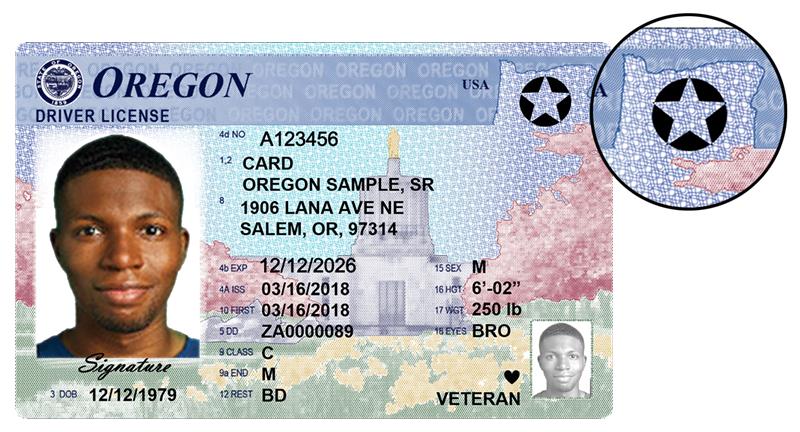
REAL ID is a federally accepted identification meeting certain minimum security standards necessary to board a federally regulated commercial aircraft and access certain federal facilities and nuclear power plants. To board an airplane after May 7 you will need a REAL ID or a passport or other federally-accepted alternative. A few important points:
- Maybe you already have a REAL ID. Look for a star in the upper right corner of your Oregon ID.
- If you don't plan to fly in the near future, your Oregon driver's license or ID is still okay, and you can wait to upgrade to REAL ID when it expires.
- You can take care of some DMV business entirely online, such as vehicle registration, replacing a driver license or ID, or changing your address. See this webpage.
- It can take about three weeks to get a REAL ID in the mail after your visit to DMV.
- DMV has been doing more with less for years with roughly the same number of staff it had a quarter century ago when Oregon's population was about one million less.
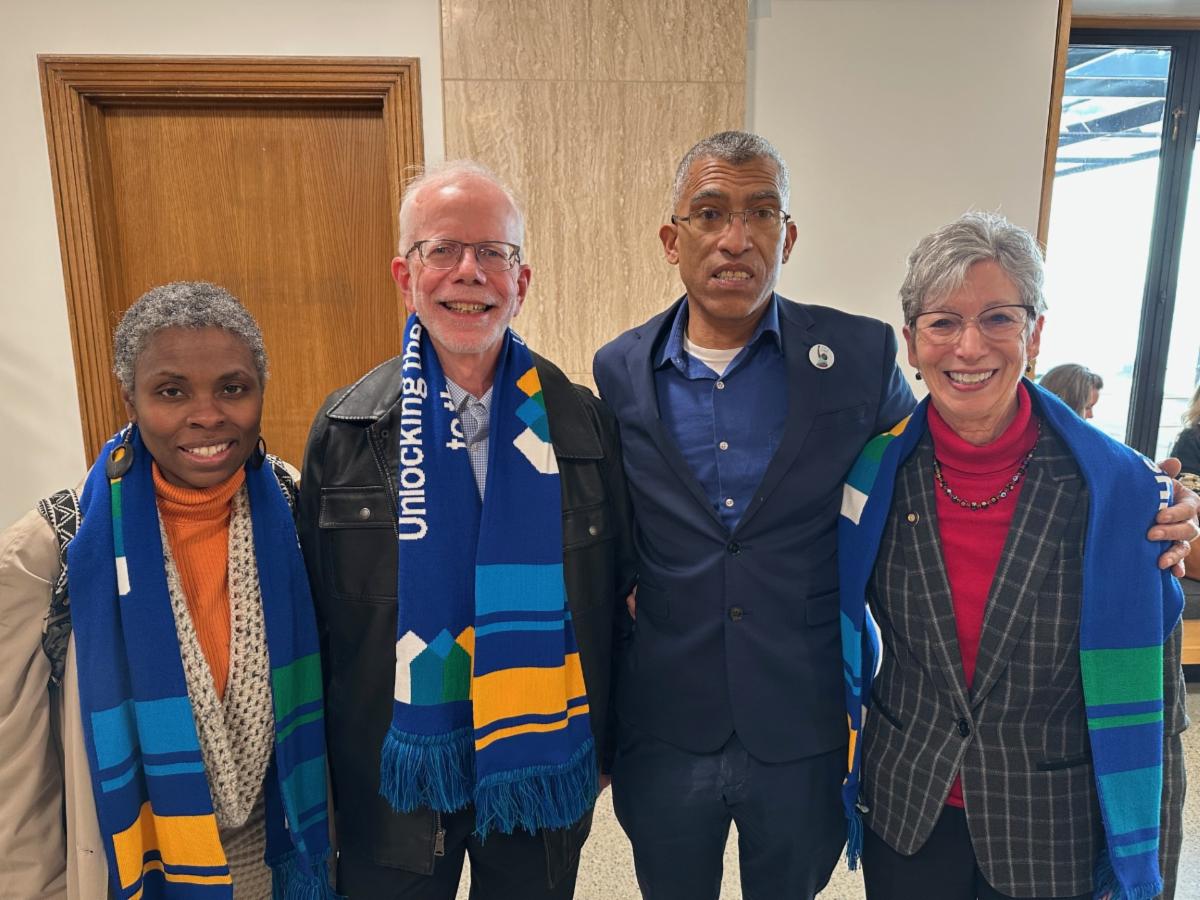
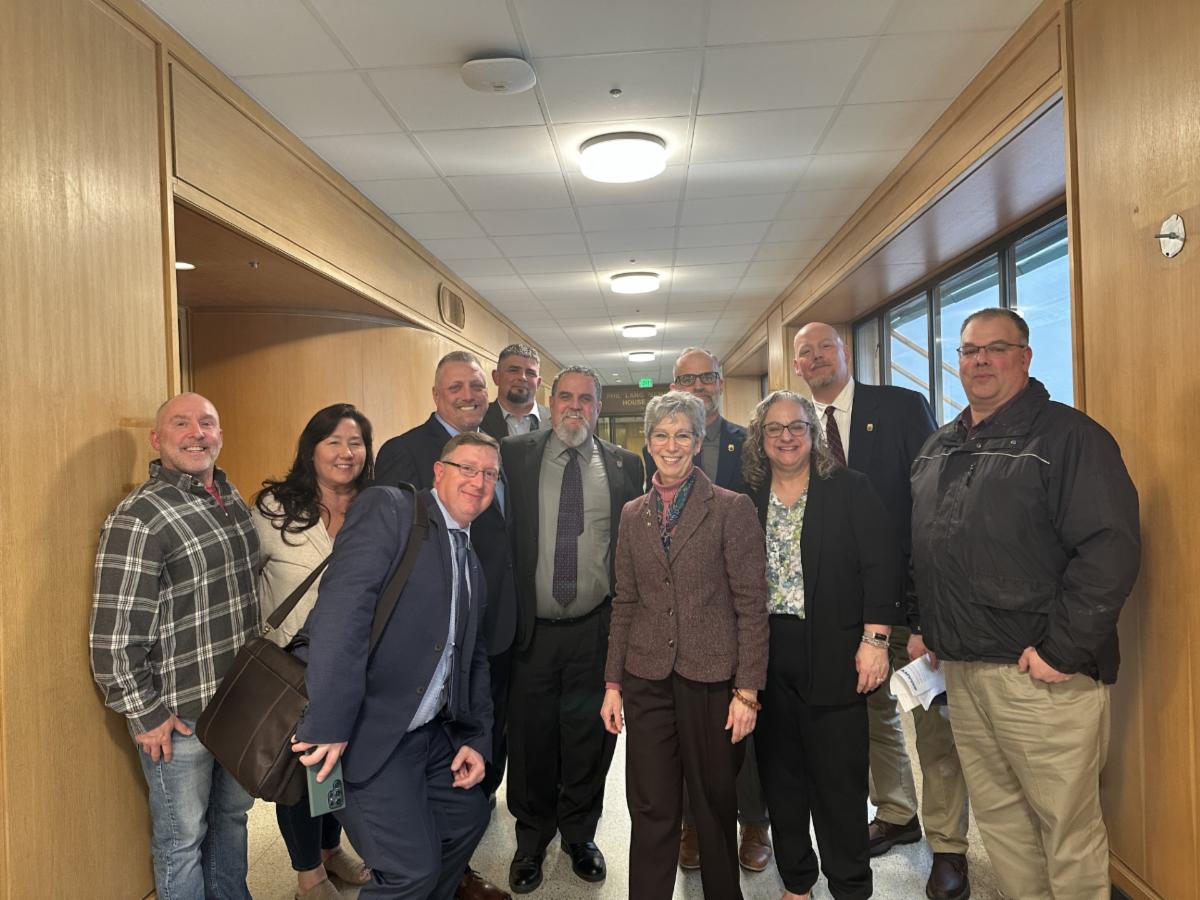
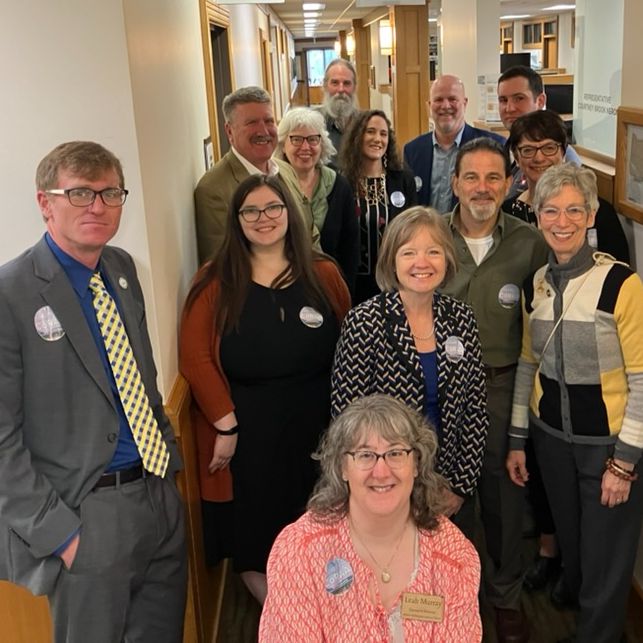
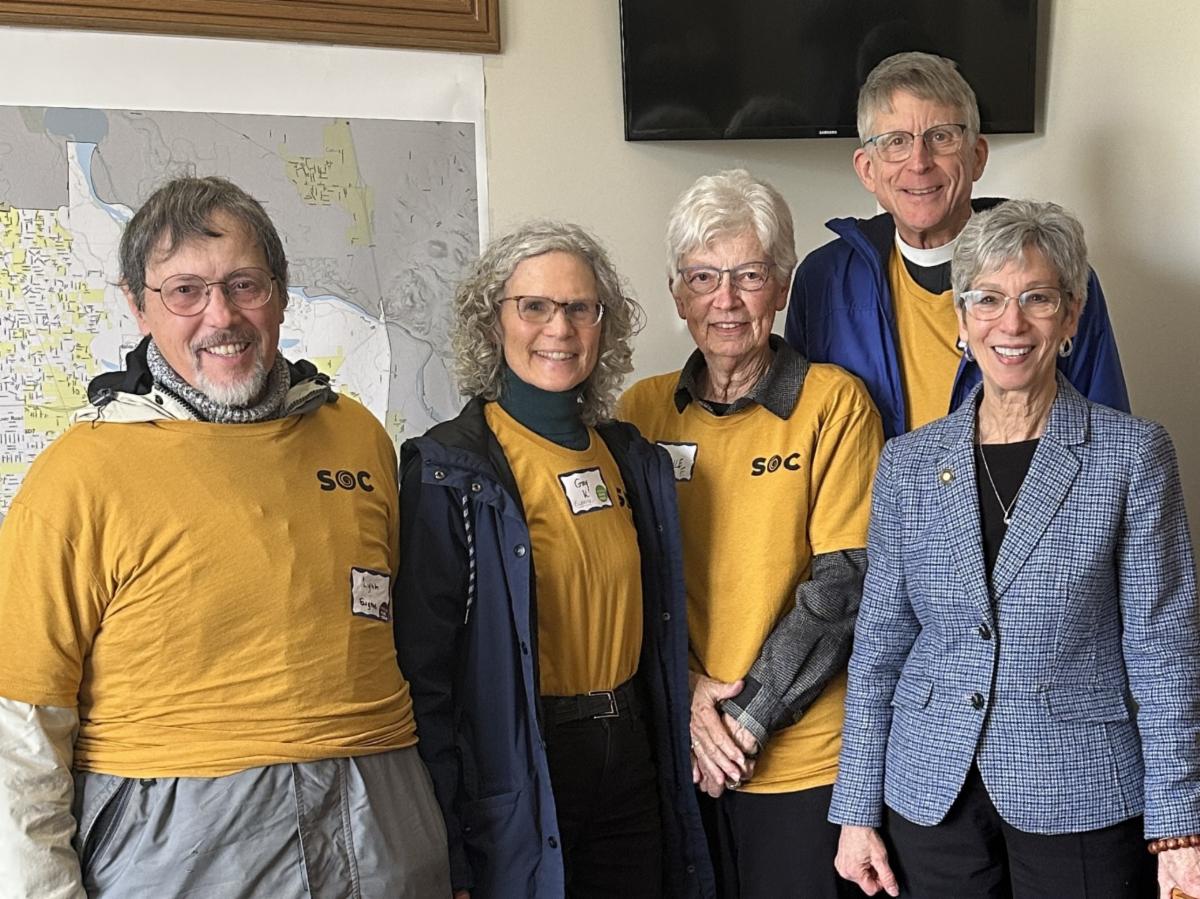
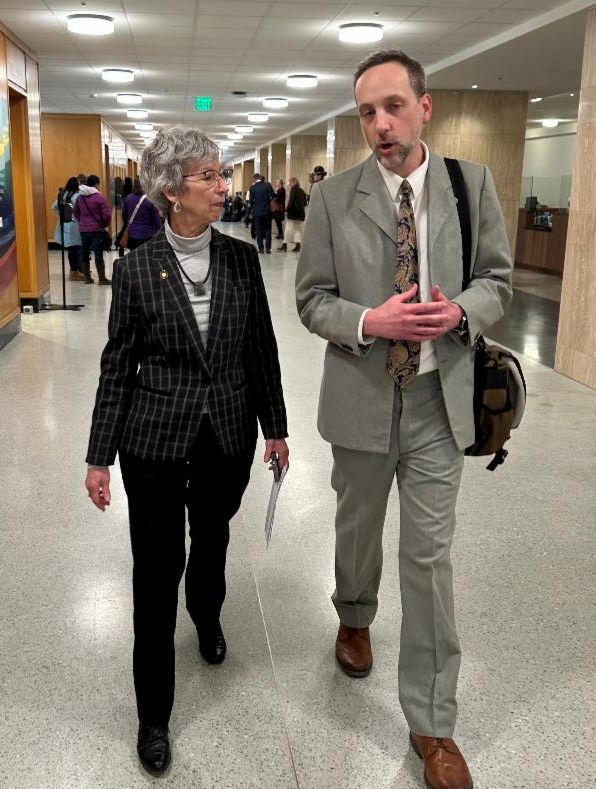
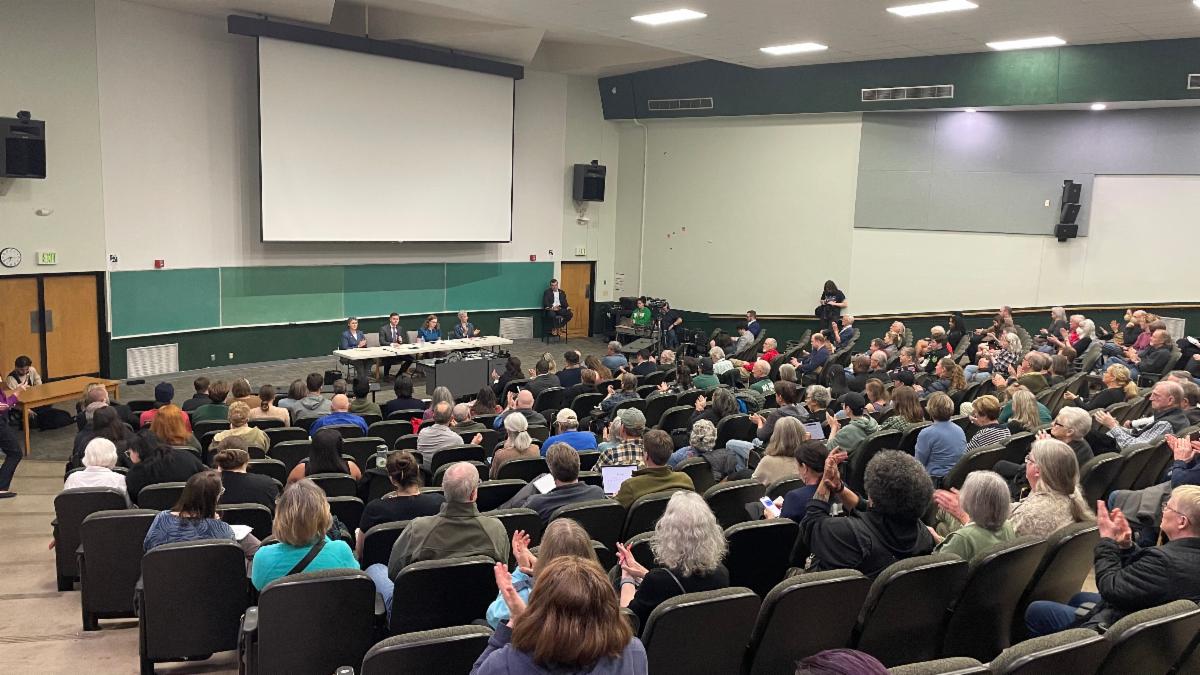
| | Physicians from Oregon Pediatric Society advocating for child immunizations and improving access to care | | Mayor Kaarin Knudson making the rounds | | Habitat for Humanity advocates visiting from Eugene: l-r Kenya Luvert, John Barnum, and Eric Richardson | | Train engineers and conductors explaining why we should require no fewer than 2 crew per train. Freight trains can be two miles or longer, >200 cars, carrying container loads, agricultural products, or hazardous materials like chlorine gas and liquid propane. | | CORAA: Lane County Coalition of Recreation, Arts and Athletics advocating for project funding at Shelton McMurphey Johnson House, Lane Ice Center, Howard Buford Park, a pickleball facility at LCC, and more. | | Sacred Organizing Coalition members Gay Kramer-Dodd, Thomas Dodd, Gayle Faust, and Lynn Kahle advocating for bills regarding food security, farmworker relief, climate change mitigation, and mental health for youth. | | On a busy day we squeeze in conversations between meetings and committee hearings. Here I'm talking with a representative of Ecumenical Ministries of Oregon about supporting first-time homebuyers. | | Attorney General Dan Rayfield held a town hall in Eugene. Here we are: Rep. Lisa Fragala, AG Rayfield, Speaker Julie Fahey, and me. Discussion was focused on how to look out for Oregon's interests in the face of federal actions. People speaking to us included representatives of environmental groups, Basic Rights Oregon, Planned Parenthood, AFL-CIO, and Food for Lane County. | | | | |