|
So far in this series, we've talked about how accessibility and AI need each other, where AI is helping, and where it's falling short. But there's a voice we haven't heard yet, and it's the most important one: the people who actually live with disabilities and use these tools every day.
Their relationship with AI is more nuanced than a tech demo would suggest. There is genuine excitement. There is also real concern. Both deserve airtime. Here is a glimpse at what is actually happening out there.
AI Can Help People with Disabilities
-
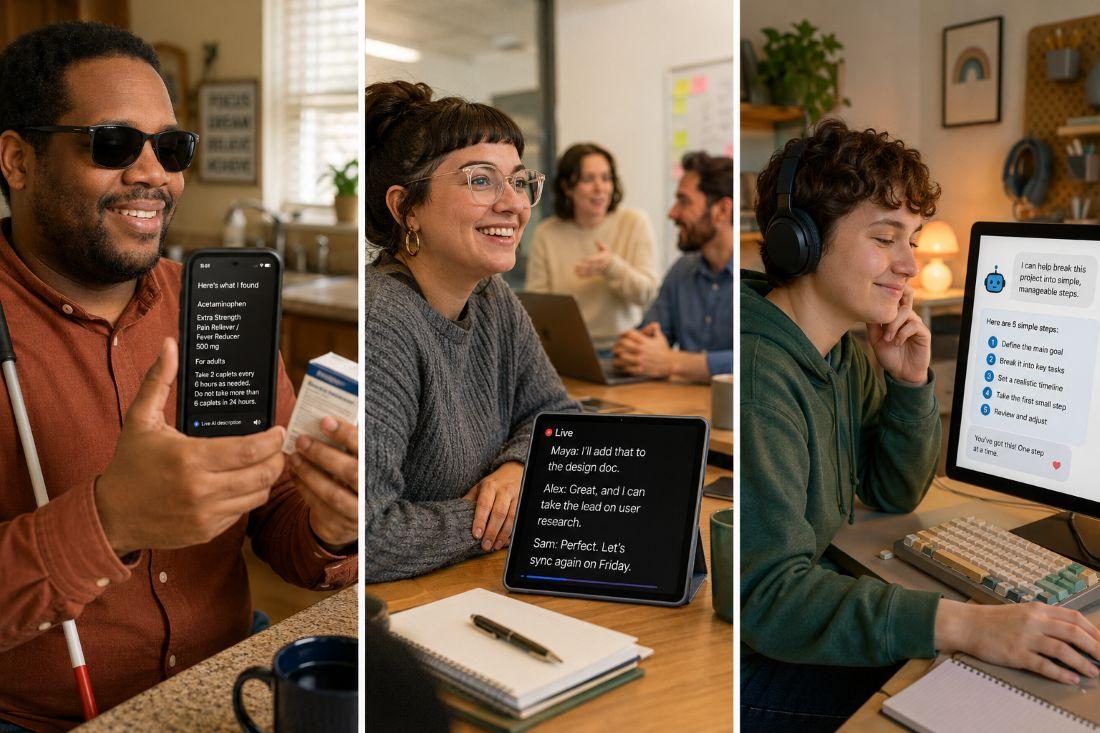
For blind and low-vision users, AI has been quietly life-changing. Be My Eyes, an app that used to connect blind users with sighted volunteers, now offers an AI option that can describe a photo, read a label on a can of soup, or tell you what is on a restaurant menu instantly, any time of day. Microsoft's Seeing AI does similar work. Many blind users describe it as the difference between waiting for help and just getting on with their day. The catch: when the AI gets it wrong (and it does), there's no easy way to know.
-
For Deaf and hard-of-hearing users, live transcription has come a long way. Apps like Live Transcribe and Otter make casual conversations, meetings, and even drive-thru orders more navigable. But, the community has been clear that AI captions aren't a replacement for human interpreters or accurate captions on professionally produced content. They are a “bridge”, not a substitute. The risk is organizations treating them as good enough.
-
For neurodivergent users, individuals with ADHD, autism, dyslexia, and others, AI has become an unexpected ally for tasks that are not about access to information, but about navigating a world built for different brains. Drafting an email that hits the right tone. Breaking an overwhelming task into smaller pieces. Decoding what a vague message from a coworker actually means. Summarizing a 40-page document down to the parts that matter.
-
For people with motor or mobility impairments, AI-powered voice control and predictive input are reducing the physical cost of using a computer. Tools that take a single command and complete a multi-step task on your behalf are especially promising. They turn "I have the energy for this" into "I don't have to."
-
For people with chronic illness or fatigue, AI can act as a kind of cognitive backup. On a brain-fog day, having something that can summarize, draft, remind, and organize can be the difference between functioning and not.
AI Can Fail People with Disabilities
But, and this is important, the same communities celebrating these tools are also the loudest voices warning about how they get misused.
- Captions used as a checkbox instead of an interpreter.
- Chatbots replacing human support staff.
- AI image generators producing stereotyped depictions of disability.
- Companies using "we have AI accessibility" as cover for not doing the actual work.
The lesson for designers, content creators, and developers is simple: the disability community is already living in this AI-enabled world. They have thought harder about it than most of us. If you want to know whether your product is helping or harming, ask them. Hire them. Pay them.
The best accessibility advice has always been "nothing about us without us." That is twice as true when AI is in the mix.
|