Hello!
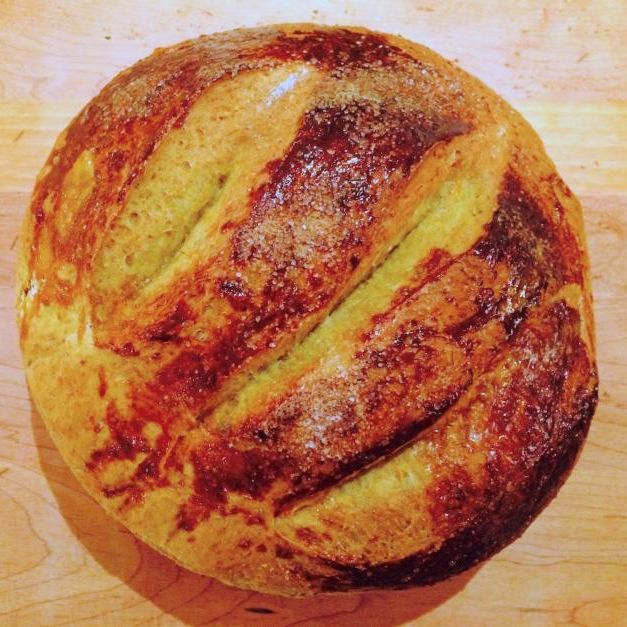
Welcome back! We hope you had a wonderful Thanksgiving. This week is vaguely hamburger themed with buns and pickles from Wholesome Valley Farm. Or, breakfast themed with canned peaches, potatoes, and eggs for the vegetarians.
See below for the winter season schedule, winter veggie storage tips, butternut squash recipes, new cheeses, and more!
-The Fresh Fork Market Team
|
|
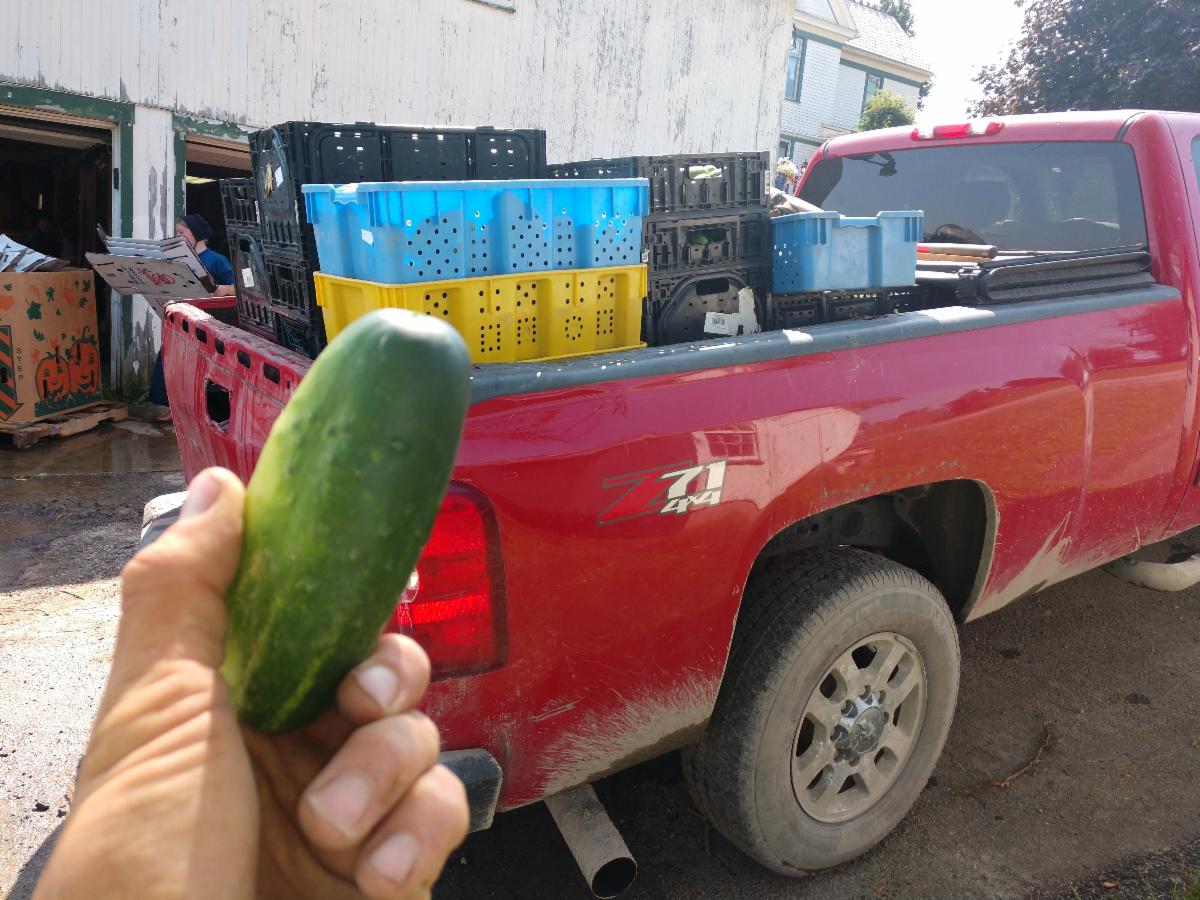
This past summer the produce staff at Wholesome Valley may have gotten tired of seeing pickles. They would go out to pick a "few buckets" and next thing you know there would be a truck load. Literally. See what 1,100 lbs of pickles look like in a truck!
The pickles did very well this year - one of the few crops that wasn't detered by the wet conditions. As soon as they came out of the field, Chef Derek would get them pricked and into a salt-water brine to ferment.
Fermented pickles are similar to sauerkraut. They are preserved by adding salt which allows for the natural development of lactic acid. The acid preserves the pickle, making it possible to enjoy in the winter. While fermented pickles aren't as crunchy as vinegar canned pickles, they do have a unique salty and acidic flavor that makes them the perfect pairing on a burger, chopped as a relish on a bratwurst, or even incorporated into a mayo-based pickle relish sauce to go with fish or fried chicken. Because they are fermented and not thermally processed,
they must remain refrigerated.
When you are done, don't dispose of the brine. The brine is salty and acidic and perfect to use to brine chicken thighs and drumsticks.
|
|
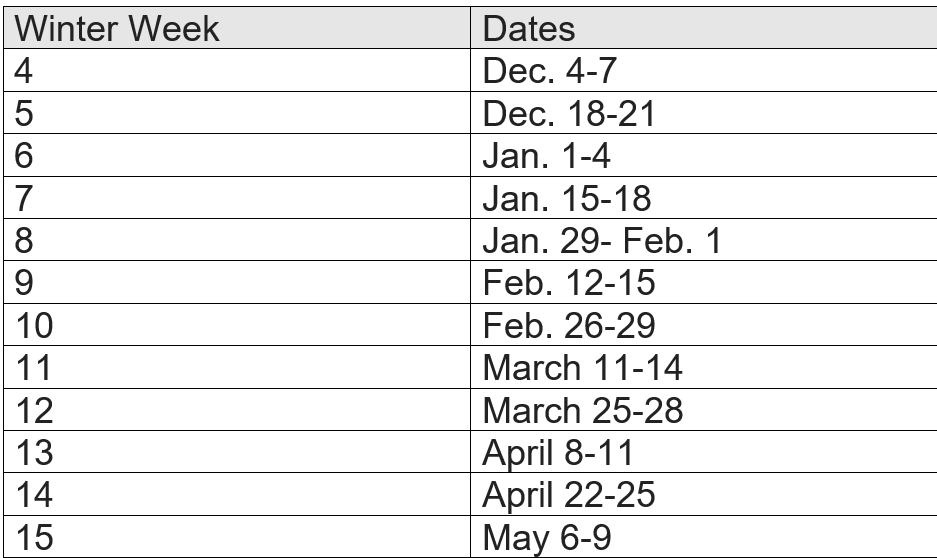
From here on out winter deliveries run every other week. Here's our schedule for the rest of the season!
|
|
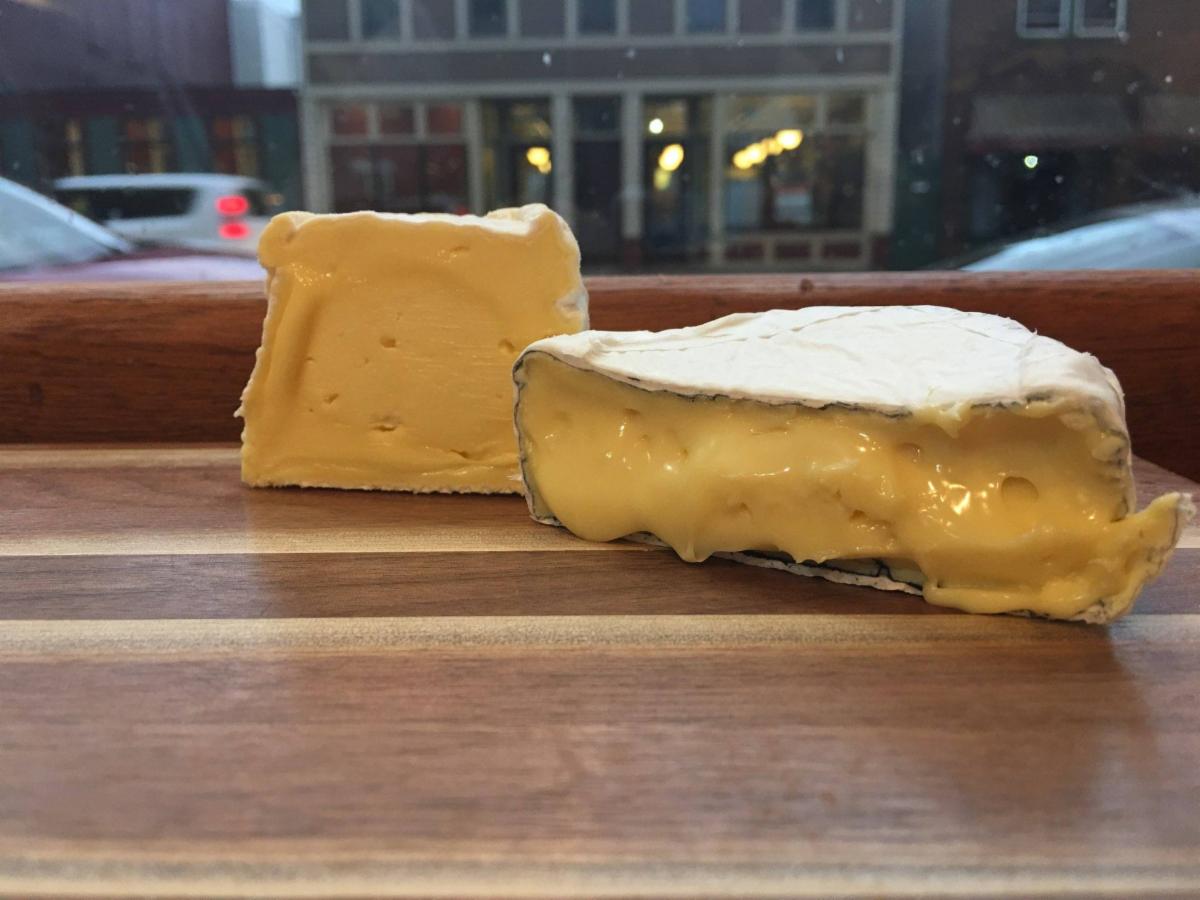
Elmstead Ash (front): Very French-style, luscious triple-crème that starts with milk, then has extra cream added for higher fat content. Great on baguettes and can last three to four months. Wine: Chardonnay. $8
Henley (Back): Velvety texture, named after Henley-in-Arden, an English town, and has vegetal notes. Wine: Syrah. $8
|
|
We are proud to introduce the Marchant Manor cheeses to Fresh Fork. For anyone who is a regular at Ohio City Provisions, you have likely been seeing these cheeses as an exclusive at OCP for the last year. Now, the supply is growing and there is more to spread around.
Last year while shopping at OCP, Dr Kandice Marchant brought in some of her home-made cheeses as a gift. At first bite, the staff at OCP went nuts. The cheeses were rich, smooth in texture, and with an appropriate amount of adult "funk." To say they were good was an understatement.
Trevor and Todd knew there was a market demand for the cheeses, and they began to encourage her (ok, maybe demand) to make cheese commercially. Soon, the ODA was engaged and Kandice was given clearance to make her cheeses at Wholesome Valley Farm and age them at OCP.
The first commercial production was successful. Trevor then worked with the owners over at Paint Valley Creamery, who bottles our A2 Guernsey Milk, to work out a deal with Kandice to use their facility and make the cheese there in bigger batches. Since, Kandice has been making monthly pilgrimages to Wilmot to make her cheese.
We are very proud to offer these excellent cheeses exclusively through the Fresh Fork family of companies. Please preorder yours today to guarantee availability.
Read more, see this article
here.
|
|
|
|
Storing Winter Root Vegetables
|
|
As the seasons change, the way we store produce changes as well. Historically, winter squash, potatoes, and even carrots would have been stored in the root cellar. Though most modern homes lack this feature, here's how to properly store root vegetables to mimic that environment.
- Store in a cool, dry place. We recommend around 50-55 degrees with low humidity. My family keeps potatoes in the garage. The next best option would be the refrigerator (except for potatoes).
- Out of the sun! Potatoes should be kept in the dark, otherwise they will sprout.
- Keep away from ripening fruits like apples and onions. The ethylene gas produced by these fruits can cause squash to yellow.
At our warehouse most items are kept near or at refrigerated temperatures. Maintaining a consistent temperature will prolong the life of your root vegetables. Any vegetables sitting on the counter at room temperature and in the light will likely turn very quickly.
|
|
Winter Omnivore
Whole Wheat Hamburger Buns
Fermented Pickle Chips
Butternut Squash
Celeriac
Onion
Carrots
Potatoes 3#
Canned Peaches
Spinach
Chicken Patties
Ground Beef
|
|
Winter Vegetarian
Whole Wheat Hamburger Buns
Fermented Pickle Chips
Butternut Squash
Celeriac
Onion
Carrots
Potatoes 3#
Canned Peaches
Spinach
Apples
Eggs
Pumpkin Sage Pasta
|
|
|
I remember as a student at Case, one professor would take each student to lunch at Sergios in University Circle. The restaurant has since closed, but I remember one vegetarian dish in particular - Prato Misto. It was a Brazilian dish that had black beans and summer squash and most importantly, crunchy fried spinach on top.
Following Thanksgiving we were in the spirit for something lighter. That's code for no gravy. But it was cold and a salad just felt too summery.
I looked through the fridge and found a bag of spinach, some pickled beets, some Canal Junction Flat Rock cheese, and an apple. Oh, and a few slices of bacon.
I started by cutting the bacon into small pieces and rendering the fat in a large cast iron skillet. As the bacon was starting to get crispy and swimming in a pool of grease, I added my dry (as dry as you can get it after washing the sand off) spinach over medium high heat. After a few minutes, I tossed it with tongs to get some more leaves fried up and crunchy. After about 3 to 5 minutes, I added a pinch of salt and called it done.
The spinach was a cross between wilted and crunchy fried. I topped it with the beets, apple slices, cheese, and a little turkey meat. Then, I tied it all together with a maple vinaigrette, which has become our go to salad dressing.
Making the Maple Vinaigrette
First, make mayonnaise. In your Vitamix or Food Processor, take 3 egg yolks and a teaspoon of vinegar. Spin it until smooth, then slowly drizzle in oil until the mayonnaise thickens. For 3 yolks, you may need about a cup of oil, depending on what kind of oil you use.
When the mayo is quite thick, add salt and pepper to taste. Now use this as the base for your vinaigrette. Essentially you are just adding more vinegar, more oil, and maple syrup until it's sweet with an acidic tang on the backend. Proportions? About 3 parts oil to 1 part vinegar. Exact measurements? No way! Add the vinegar first, followed by the oil. The final yield should be about 3 cups of dressing. It will be creamy, yellow, and thick. Jar it up and keep it in the fridge for up to 2 weeks.
|
|
|
|
|
|
|