What good is a cow?
Many environmentalists are disgusted by cows. They are not native to North American prairies. They are the largest producers of methane, a greenhouse gas. The odor and filthy appearance of cattle at some feedlots gives the impression that the animals are being mistreated or that the feedlot is contributing to pollution. Others think that eating meat is a waste of resources. It is easy to understand why these views are so prevalent – they are based on facts.
Yes, cows are NOT native to North American prairies, but cows are now filling the niche vacated by bison. Bison and cattle have different grazing patterns. Bison create ‘grazing lawns’ by concentrating grazing in certain areas, and leaving other areas lightly grazed. Cattle graze grass to a uniform height, so there is not the diversity in grass height as is seen in pastures grazed by bison. Ranchers take this into account when grazing cattle – many employ a system where cattle are rotated through a series of pastures, so that only one pasture is grazed at a time while the other pastures ‘rest’; this approximates the variable pattern of grazing of bison. More progressive ranchers employ a patch-burn/patch-graze system. Instead of physically moving cattle throughout the summer, they burn a portion of a pasture. Cattle naturally graze more intensively on the recently burned pasture as the grasses are reinvigorated by the release of nutrients, higher soil temperatures, and abundant sunlight created by the lack of dead thatch following the fire. They leave unburned portions of the pasture lightly grazed. The rancher rotates burning each year, so the grasslands rotate through a natural sequence from burned/heavily-grazed to unburned/lightly-grazed.
Prairies NEED grazers like cattle and bison. They naturally recycle plant material back into the nutrients to support more plants. Without grazing, grasses are more competitive and push out wildflowers. With grazing, the grasses are pushed back, allowing wildflowers to flourish.
But why not graze bison instead of cattle? Cattle are a lot easier to work with. Bison require more robust fences and equipment. As a graduate student, I helped with a bison round-up at Konza Prairie near Manhattan, KS. Bison were run through chutes, given ear tags and vaccines, and sorted into those that were going to stay and those that were being sold. It was my job to prep the new ear tags, and to use a permanent marker on old ear tags (still attached to the bison!) so the number could easily be read. The sides of the bison corral were hard steel, but I can still remember poking a stubborn bison with an electric prod on full strength through a narrow slit in the steel. That bison kicked the steel with more force than I thought possible - making a deafening noise, but the bison looked as if it were merely shooing away a pesky fly. I have the utmost admiration for those who work with bison.
Yes, cattle are the largest producers of methane, producing 25% of the methane in the United States with another 9% coming from manure management. In comparison, natural gas and petroleum produce 28% of methane emissions. (Statistics from https://www.epa.gov/ghgemissions/overview-greenhouse-gases). Research is being conducted to determine how animal feeding and manure management practices can be modified to reduce methane emissions.
Yes, feedlots emit unpleasant odors, but they have become a part of the rural lifestyle and economy. Dodge City even has a feedlot overlook with interpretive signage explaining the history of the cattle industry in Kansas. There are strict regulations in place for pollution control and ethical treatment of animals. In fact, all cattle ranchers I have met would take immediate action if one of their cows were suffering.
Yes, we could feed more people if they ate a plant-based diet rather than one with large quantities of meat. Generally, about 10% of the energy in plants is transferred to the cows that eat them, and 10% of the cow’s energy is then transferred to humans. In other words, only 1% of the energy in plants is transferred to humans if they eat meat. If humans ate plants, 10% of energy would be transferred to humans. However, not many humans eat grass, although we eat a lot of other fruits and vegetables. Eating beef allows some of the unpalatable (to humans) grass to be transferred to humans.
Most of our remaining prairies in North America are cattle-grazed ranchlands. If it weren’t for cattle grazing and the passion people have for the rural lifestyle, who knows what these areas would be today? The ranchlands that remain are often unsuitable for growing crops due to soil or slope. We need to thank ranchers for preserving the prairie, and using best management practices so that cattle supports the prairie and the prairie supports cattle. If prairie and cattle thrive, so do a host of other wildlife species like prairie-chickens, meadowlarks, badgers, butterflies, and turtles.
What you can do to support sustainable grasslands is to look for grass-fed, grass-finished beef in supermarkets – or better yet, at a farmers market. Get to know the rancher who provides the food for your table. Ask them about their grazing practices and prairie management. You will be glad you did.
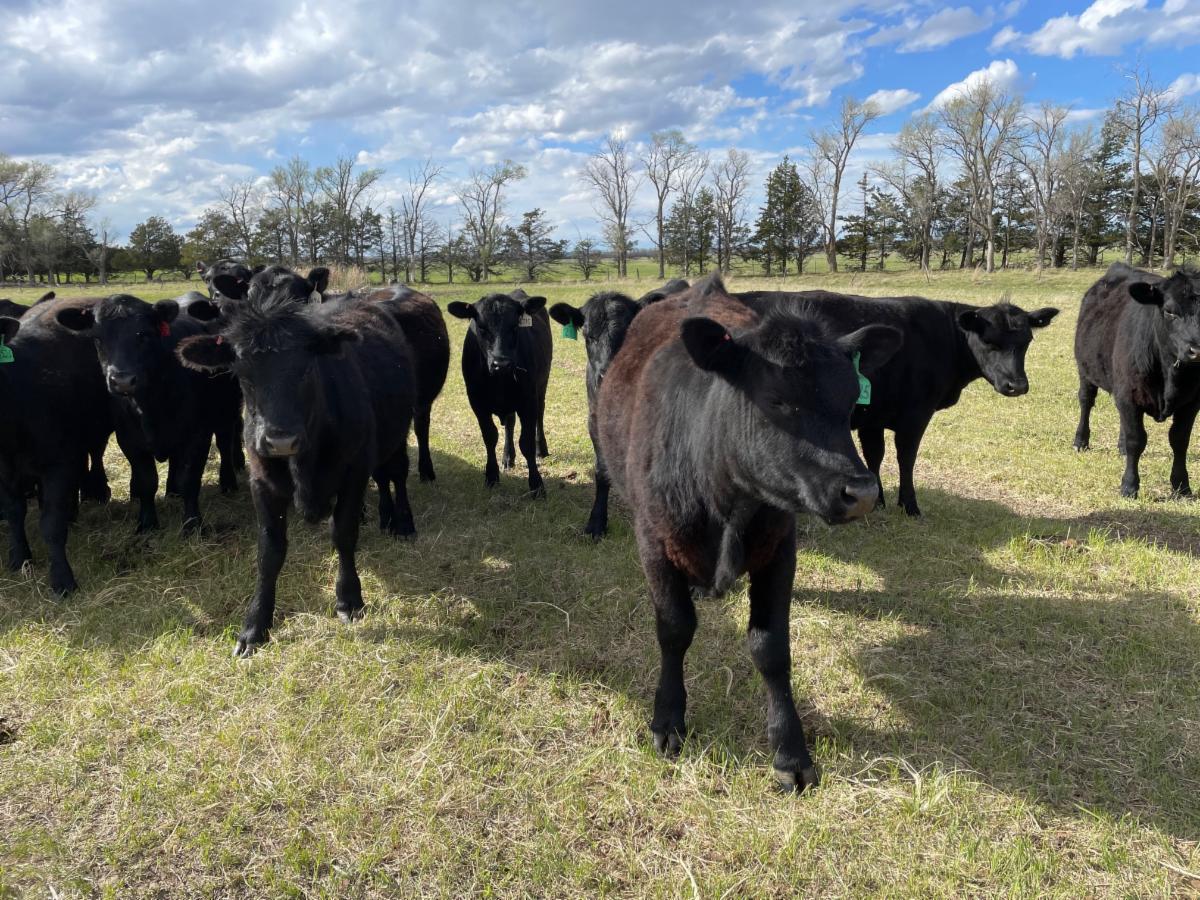
Photo of Brush Creek Ranch’s foundation angus cattle in the Sandhills of Nebraska.
|