|
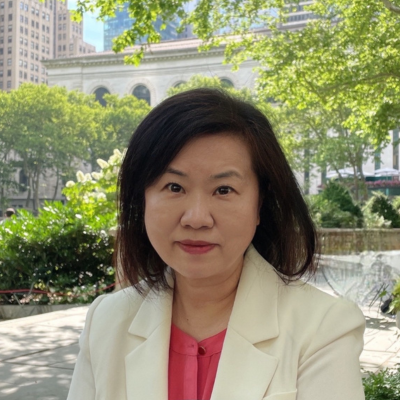
 The Institute for Korean Studies will present a lecture by Mijin Won, Yonsei University, on Thursday, November 9 from 12:45 p.m. to 2:15 p.m. online. Prof. Won will present "한국의 MZ 세대의 문화와 커뮤니케이션 특성 (Generation MZ in South Korea: Their Cultural and Communication Characteristics)."
Abstract: MZ세대는 1980년대 초부터 2000년대 초에 탄생한 밀레니얼 세대와 90년대 중반부터 2000년대 초반 출생한 Z세대를 통칭하는 개념이다. 그러나 이 용어가 쓰이는 맥락은 기성 세대와 다른 사고 방식을 하는 사람들이란 의미를 강조할 때 쓰이는 경향이 있다. 그동안 한국 문화 안에서 사회 생활을 할 때 행동하던 양식과는 다른 방식으로 행동을 하는 새로운 문화 양식을 가리킬 때 ‘ MZ 세대의 사고 방식’, ‘MZ 세대의 노는 방식’ ‘MZ 세대의 일하는 방식’ 이라는 말과 어울려 나타난다. 일반적인 사회생활에서 한국 문화의 특징을 보여주는 몇 마디 말에 담긴 문화적인 특징을 살펴보면, 첫째, ‘우리’라는 단어로 나타내는 ‘공동체 집단 의식’ 둘째, ‘정문화’로 불리는 타인에 대한 관심과 애정, 셋째, 상대방의 체면을 중요하게 생각하는 문화를 들 수 있다. 이런 문화적 특징은 젊은 세대에게 여전히 나타나기도 하지만 이런 것들에 대한 인식의 급격한 변화가 나타나면서 ‘한국의 MZ’ 세대의 문화라는 특징으로 나타난다. 이런 변화를 바라보는 기성 세대는 이 젊은 세대를 ‘나와 달라 이해하기 힘든 세대’로 규정지을 수도 있지만 현재 전 세계의 K-pop 문화와 한류를 이끌어 가는 한국의 문화적 특징으로 자리잡고 있다. 이 강의는 ‘한국의 MZ’ 세대가 잘 사용하는 몇 마디 말을 중심으로 일상 생활에서 쉽게 배울 수 있는 몇 마디의 문장을 배우고, 그 안에 담긴 이들의 커뮤니케이션의 특징을 살펴보고자 한다.
The term ‘Generation MZ’ is used in South Korea to collectively refer to two age groups: Millennials, born from the early 1980s to the early 2000s, and Generation Z, born from the mid-1990s to the early 2000s. This term is often invoked in contexts that emphasize how these groups think differently from older generations. In Korean culture, this distinction manifests in various ways, including ‘the MZ generation’s way of thinking,’ ‘the MZ generation’s way of socializing,’ and ‘the MZ generation's approach to work.’ These concepts are often juxtaposed with traditional cultural values represented by key phrases like woori (‘we’), jeong (‘compassion’), and chemyeon (‘social face’). The term woori encapsulates a sense of communal collective consciousness, while jeong describes warm affection and sympathy for others. The concept of chemyeon reflects the high value Korean culture places on preserving the dignity and face of others. While these traditional cultural characteristics still remain present in the younger generation, rapid changes in their perception are defining the culture of the ‘Korean MZ’ generation. Older generations, observing these changes, may label the younger generation as ‘different from us and hard to understand,’ but these evolving traits are becoming an integral part of modern Korean culture. In this lecture, I will explore key phrases commonly used by Generation MZ in Korea. Through an examination of these phrases, the audience can gain insights into their unique communication styles, which are readily observable in everyday life.
This lecture will be delivered in Korean.
|


 The East Asian Studies Center and Columbus State Community College will present "When East Meets West Symposium: No Peace, No Unity: The 'End' of the Korean War and Its Legacy, 1953-2023" on Wednesday, November 8 from 4:30 p.m. to 6:30 p.m. online (registration required). David Fields, University of Wisconsin-Madison will present "Legacies of the Korean War: The Korean War is Both Over and Not Over" and Benjamin Young, Virginia Commonwealth University, will present "'Renegades of Socialism': What North Korea Learned from the Collapse of the Soviet Union."


