From one parent to another: Here's to the unexpected moments that bring us joy
❤️
| | |
Sometimes, It's the Little Things ❤️
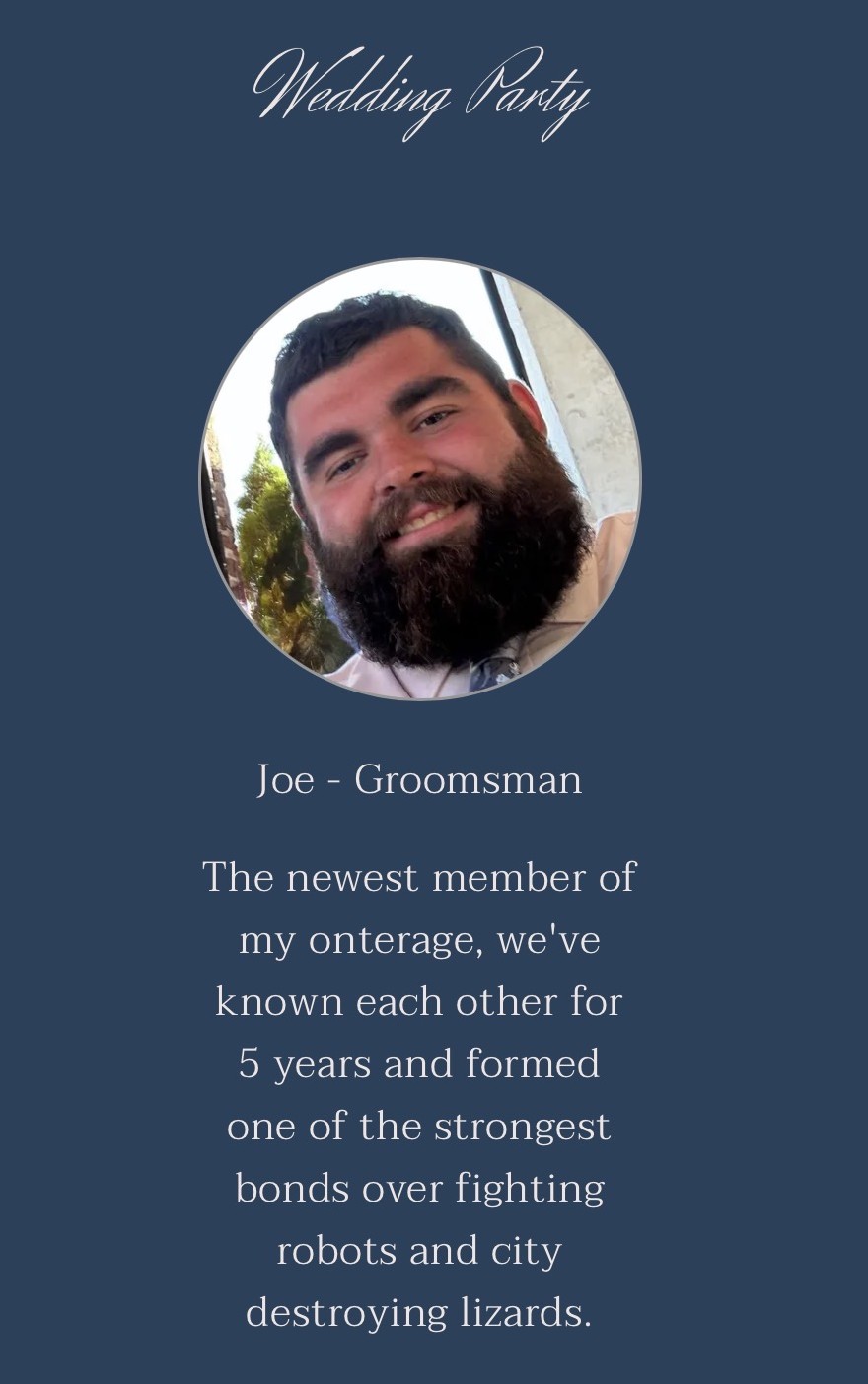
A little over two years ago, a piece of mail arrived at our house addressed to Joe. Assuming it was for my husband, I opened it.
Inside was an engagement announcement featuring a young couple, and on the back were the words, "Will you be my groomsman?"
I had absolutely no idea who the couple was. I facetimed my husband, and he didn't either. Then it dawned on me. The invitation wasn't for Joe, my hubs. It was for Joey, our son!
Such a simple gesture. But for this momma? It meant the world.
Someone thought of him. Someone wanted him to be part of their special day. Someone saw him as a friend they wanted standing beside them during one of life's most important moments.
And my heart was so full.
Of course, I immediately wanted to share my excitement! But when I asked Joey if I could post about it, he told me, "Better not. I think it's on the down low right now." 🤣
So I kept it to myself!
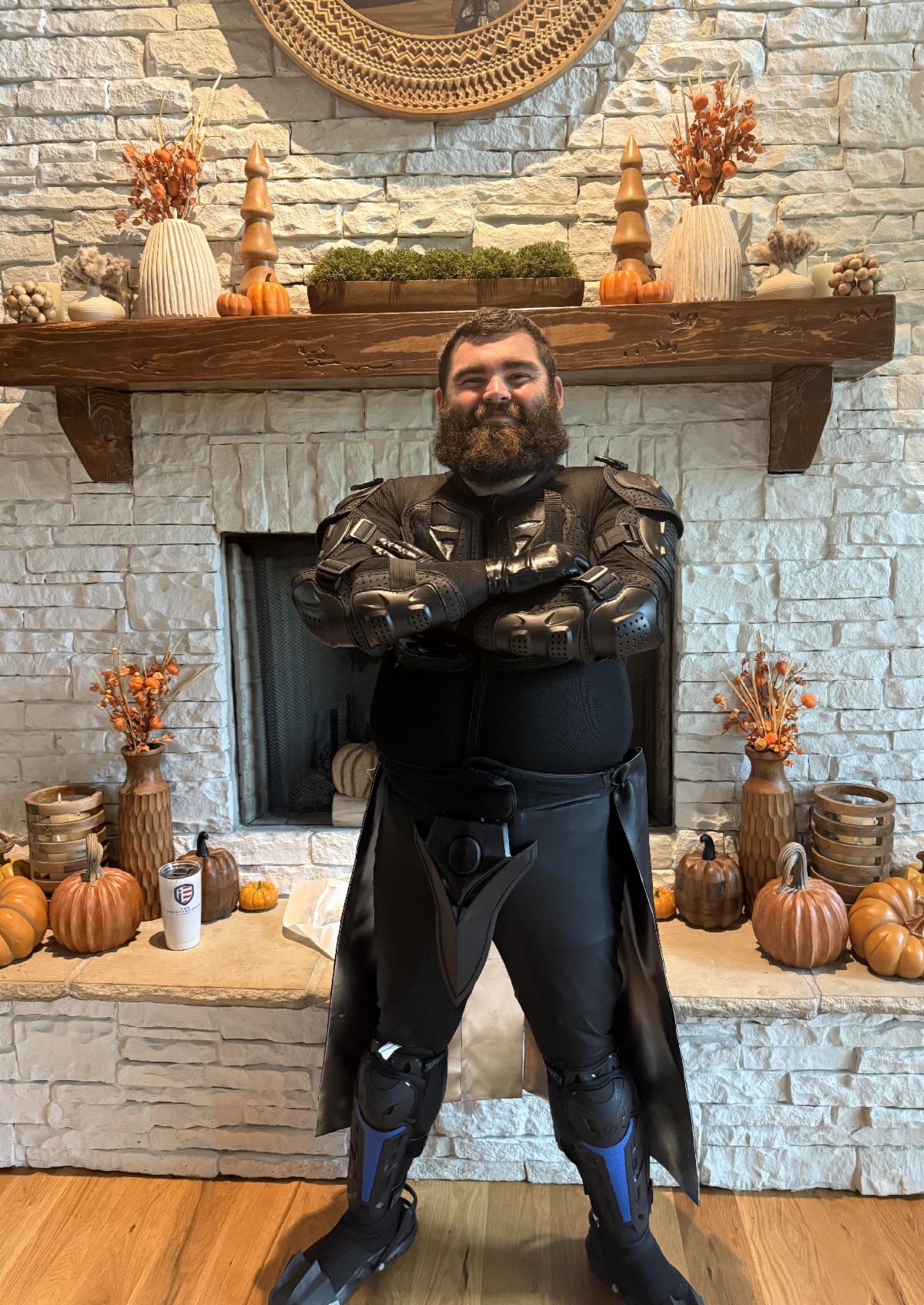
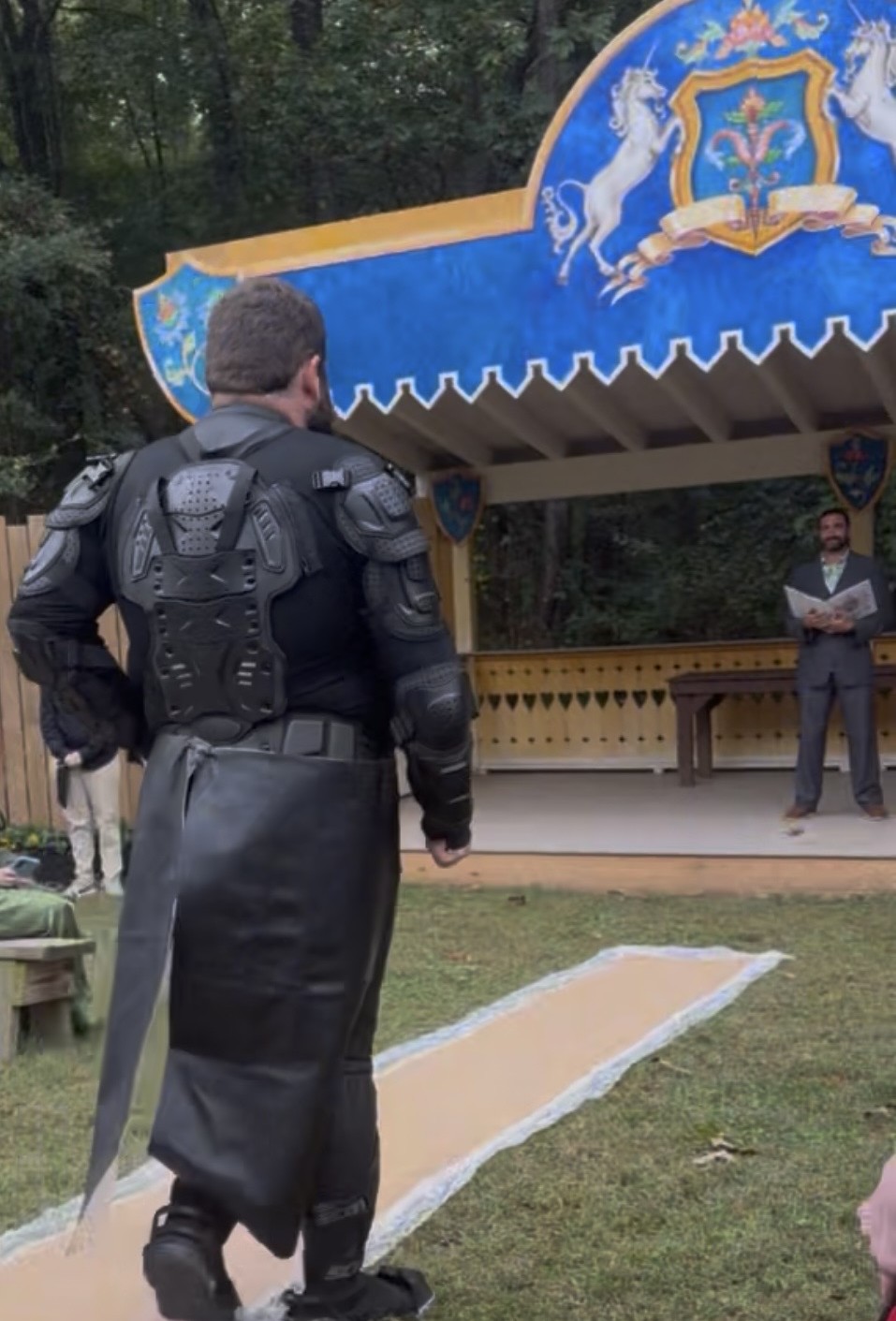
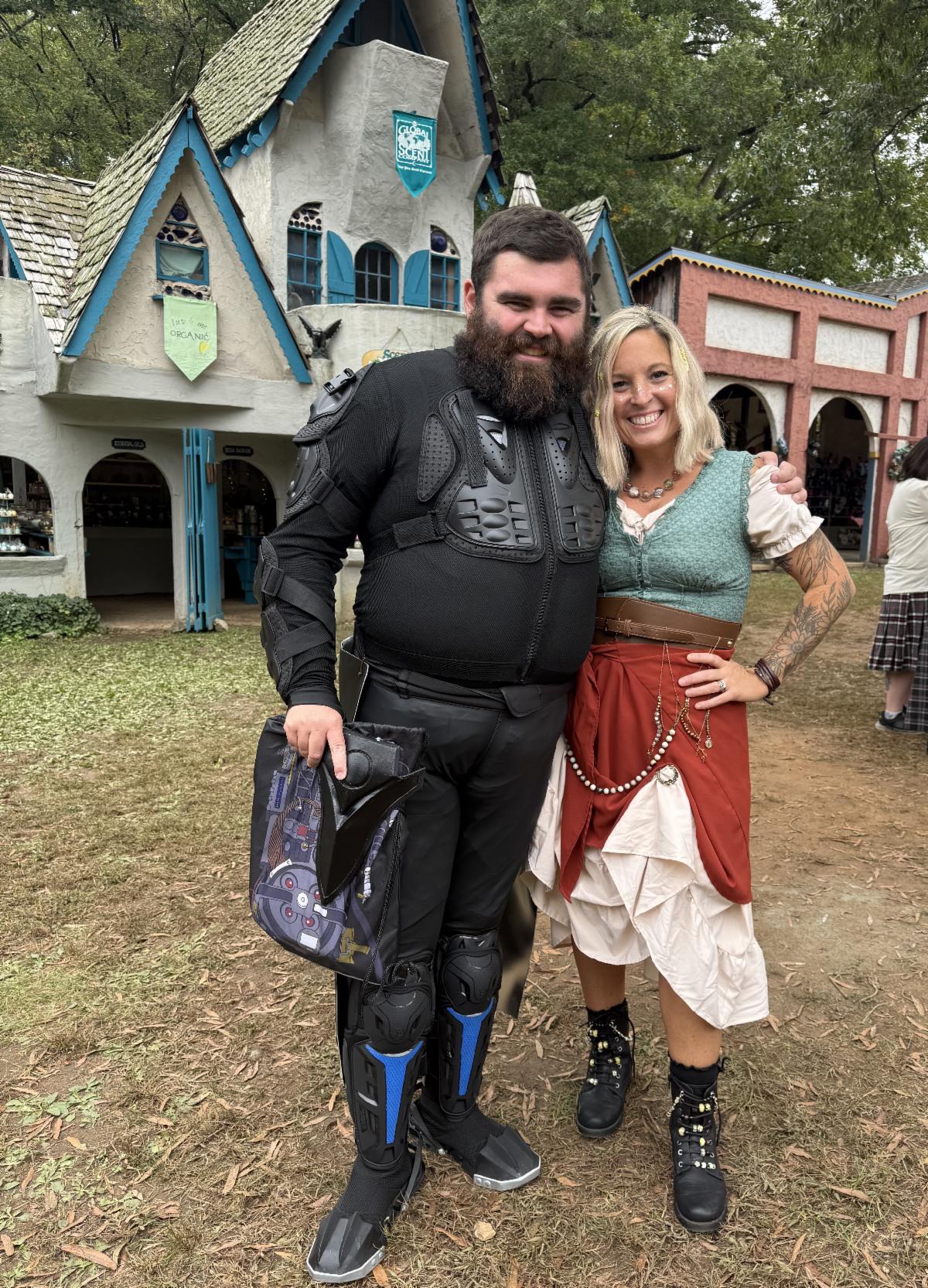
Fast forward to a few weeks ago, and the wedding finally took place at a Carolina Renaissance Festival. Joey worked so hard on his attire and accessories, even creating pieces with his 3D printer. He asked his big sister to be his plus-one, and off they went, looking absolutely fabulous!
| | |
As the mom of a 29-year-old son with autism, moments like this mean more than I can put into words. As parents of children with disabilities, we spend so much time thinking about the future. Will they find their people? Will they have meaningful friendships? Will they have people in their lives who genuinely care about them? Will they be invited, included, and valued simply for who they are?
Even when our children become adults, those hopes don't disappear.
This sweet moment reminded me that belonging isn't always about grand gestures. Sometimes, it's simply about being invited, being included, and knowing that you matter, and having people in your life who want you to be part of theirs.
And sometimes, those little moments turn out to be the really big ones. ❤️
With a full heart,
Aimee Combs
Executive Director and proud mom of Joey
| |
Expanding College and Career Opportunities
for North Carolina Individuals with Disabilities
| | |
Exciting news for North Carolina! The state's Access to Achievement program is expanding, creating more opportunities for individuals with intellectual and developmental disabilities (I/DD) to gain job skills, earn credentials, and prepare for employment through our community college system. With additional state funding, the program is set to grow from 15 to 25 community colleges, helping more individuals access education, training, and pathways to meaningful employment.
Read the article from State Affairs
Read the article from EdNC
| |
| |
Access to Achievement
Access to Achievement is a state-funded IDD workforce training program empowering individuals with intellectual and developmental disabilities (IDD) to pursue their education and career goals with confidence.
Watch the video to learn about programs, courses and resources available at your local community college.
| | | | Building Post-High School Services for Students with Disabilities | | |
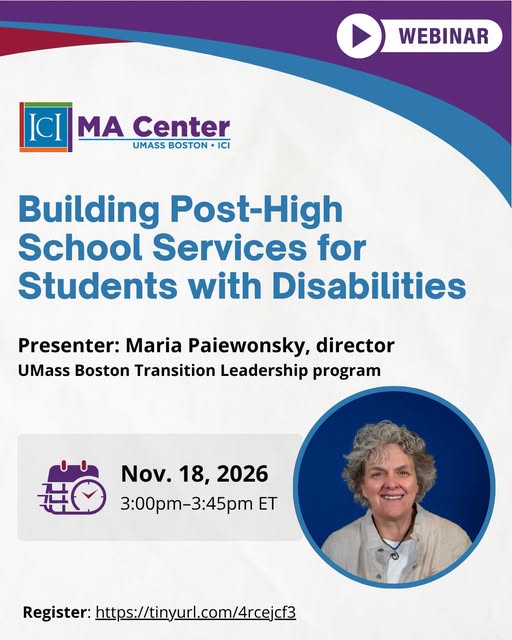
FREE WEBINAR from the MA Center!
Building Post-High School Services for Students with Disabilities
Wednesday, November 18, 2026
3:00 PM
Description:
How can communities create meaningful post-high school services that help students with intellectual and developmental disabilities build skills and apply them in real-world settings?
Maria Paiewonsky has spent more than two decades training professionals who help students plan for life after high school. Join Maria for a practical look at what strong post-high school services can look like and how communities can build them.
Drawing on her experience in leadership and professional preparation, Maria will explore key elements of effective services, including:
• individualized planning
• natural settings
• seamless connections across systems
• collaboration among schools, agencies, and community partners
What you will learn:
Throughout the webinar, Maria will share tools and resources that can help your teams put these ideas into practice.
• Build services around students’ individual goals
• Create meaningful real-world learning opportunities
• Assess current services
• Identifying gaps
• Build an interagency team to strengthen coordination, supports, and outcomes across schools, agencies, and communities
| |
Upcoming Open House Dates for WCU's Inclusive University Participant Program
| | |
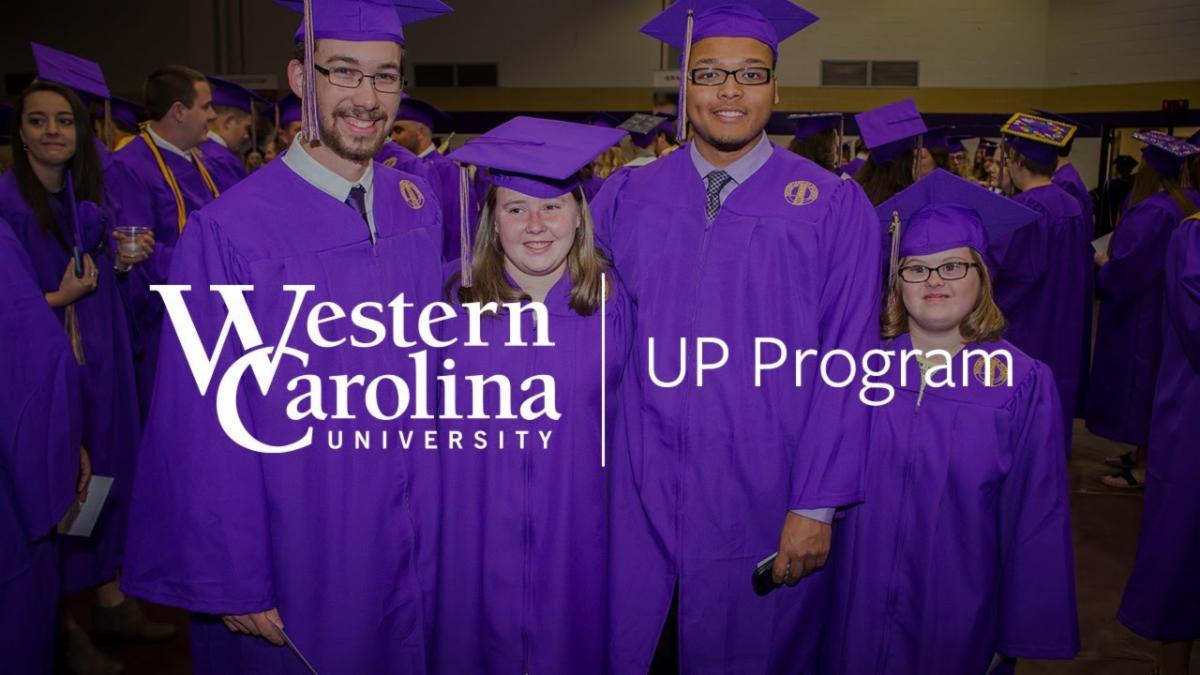
The WCU UP Program is a two‑year, inclusive college experience for young adults with intellectual disability. Students live on campus, take classes they are interested in, work in jobs that align to their future, and join in all the same activities offered to other WCU students.
The goal of the program is to help UP students move from high school into adult life by building skills in education, employment, and independent living. The program can enroll up to 12 students at a time. UP students do not earn a degree or college credit, but they do audit classes, allowing them to receive a Certificate of Accomplishment from WCU’s Office of Continuing Education and Summer Programs upon successful completion of the program.
Upcoming Open House Dates:
November 14th, 2026 | March 6th, 2027 | April 3rd, 2027
Attending open house is a requirement as part of their application process, so you will want to plan ahead! Please go to WCU Open House and register for the date that works best for you. Once you have completed that online registration, please complete this online survey so we know you will be attending with us for the UP Program. If you have further questions about Open House events or Admission deadlines, please email them at wcuupprogram@gmail.com.
| | |
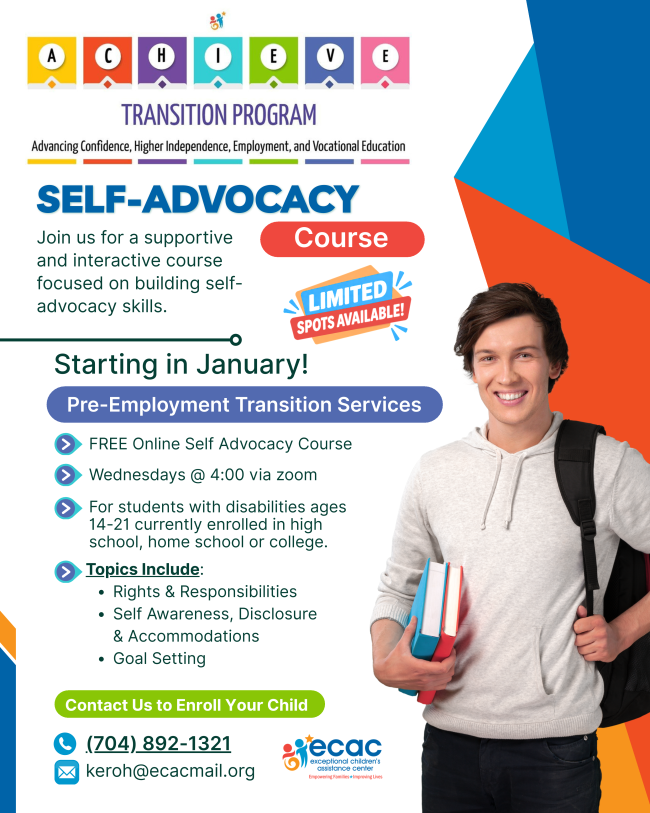
FREE Online Self Advocacy Course from ECAC Starting in January
Wednesdays @ 4:00 via zoom
For NC students with disabilities ages 14-21 currently enrolled in high school, home school or college.
Topics Include:
Rights & Responsibilities
Self Awareness
Disability Disclosure
Accommodations
Goal Setting
To enroll, contact: Kim Eroh, keroh@ecacmail.org
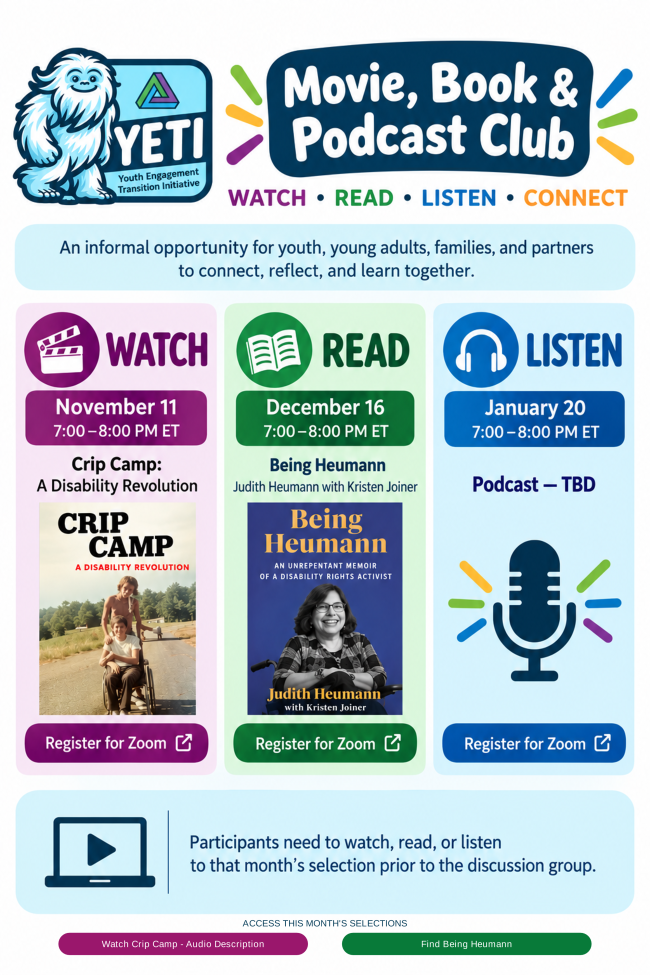
| | MOVIE, BOOK and PODCAST CLUB | | |
The RAISE Center at SPAN supports the Youth Engagement Transition Initiative, also known as YETI. YETI is a national youth leadership and engagement group that brings together young adults with disabilities to shape transition resources, strengthen systems, and make sure youth voice is part of the decisions that impact young people’s lives.
YETI is offering an informal opportunity for youth, young adults, families, and community partners to connect, reflect and learn together via their new Movie, Book and Podcast Club.
Participants will watch, read or listen to a particular month's selection prior to the discussion group.
-
The first opportunity is to watch the documentary Crip Camp and discuss the movie on November 11. To register for that, click here
For more information on YETI and other youth leadership programs at the RAISE Center, click here.
| |
NC Division of Employment and Independence
Frequently Asked Questions
| |
FAQ
What is vocational rehabilitation?
Vocational rehabilitation is a federal–state program that helps eligible people to get and keep employment. VR is committed to helping people with disabilities find meaningful careers in competitive integrated employment.
What types of services can EIPD provide to eligible individuals?
A variety of services may be provided, depending on individually identified needs, such as:
- Assessment (medical, psychological, etc.)
- Rehabilitation counseling
- Vocational evaluation and planning
- Disability related medical and or psychological treatment
- Career counseling and guidance
- Work experience while in high school
- Training and education after high school
- Job-site assessment and accommodations
- Job placement
- Job coaching
- On-the-job training
- Supported employment
- Assistive technology and devices
- Other expenses supporting individual needs (i.e.; travel)
What is competitive integrated employment?
Work that is performed on a full-time or part-time basis for which an individual is:
- Compensated at or above minimum wage and comparable to the customary rate paid by the employer to employees without disabilities performing similar duties and with similar training and experience;
- Receiving the same level of benefits provided to other employees without disabilities in similar positions;
- At a location where the employee interacts with other individuals without disabilities; and
- Presented opportunities for advancement similar to other employees without disabilities in similar positions.
How much does it cost to receive services from EIPD?
The following services are available to all eligible individuals at no cost: assessments to determine eligibility and rehabilitation needs; counseling, guidance and referral services; and job search and placement assistance. Based on the individual’s available financial resources, a client may help pay for some services.
What are “core” vocational rehabilitation services?
Core services include counseling and guidance, diagnosis and treatment of a medical or physical impairment, job training, job-related services, and rehabilitation technology. At least one core service must be included as part of a client’s individualized plan for employment to justify provision of supportive services.
Who is eligible?
You must be an individual with a disability that presents a barrier to employment success and require vocational rehabilitation services to prepare for, secure, retain or regain employment.
What is supported employment?
The term "supported employment" means competitive integrated employment that is individualized and customized consistent with the strengths, abilities, interests and informed choice of the individual. Supported employment services are provided to individuals with the most significant disability-related barriers to employment. These individuals require intensive support services to perform the work involved and extended services to maintain employment. They may also need a negotiated or customized employment opportunity. Flexible strategies may include customizing a job description, job duties, work schedule or other negotiated items
| | |
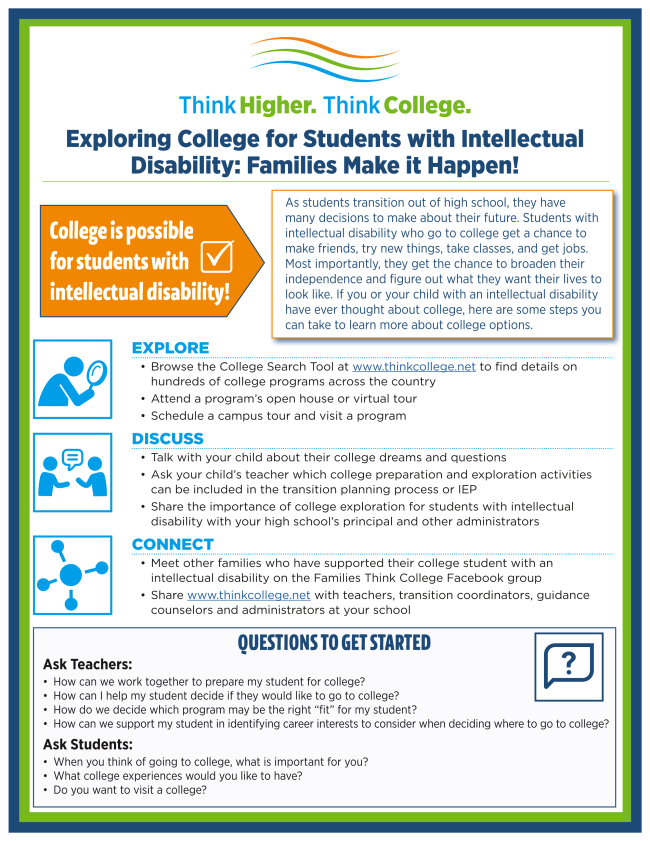
Exploring College for Students with Intellectual Disability: Families Make it Happen!
Families thinking about college for a student with intellectual disability don’t have to have all the answers to get started!
This resource from Think College offers practical strategies and questions to help families begin exploring college together. It will walk you through how to start by:
- Exploring college programs and visiting campuses
- Talking with your student about their college dreams and interests
- Connecting with other families who have supported a student through college
- Asking teachers and your student the questions that can help guide the next steps
College IS possible for students with intellectual disability! This resource is the perfect tool to help start the conversation, explore the options, and help your student imagine what their future could look like.
| |  | |
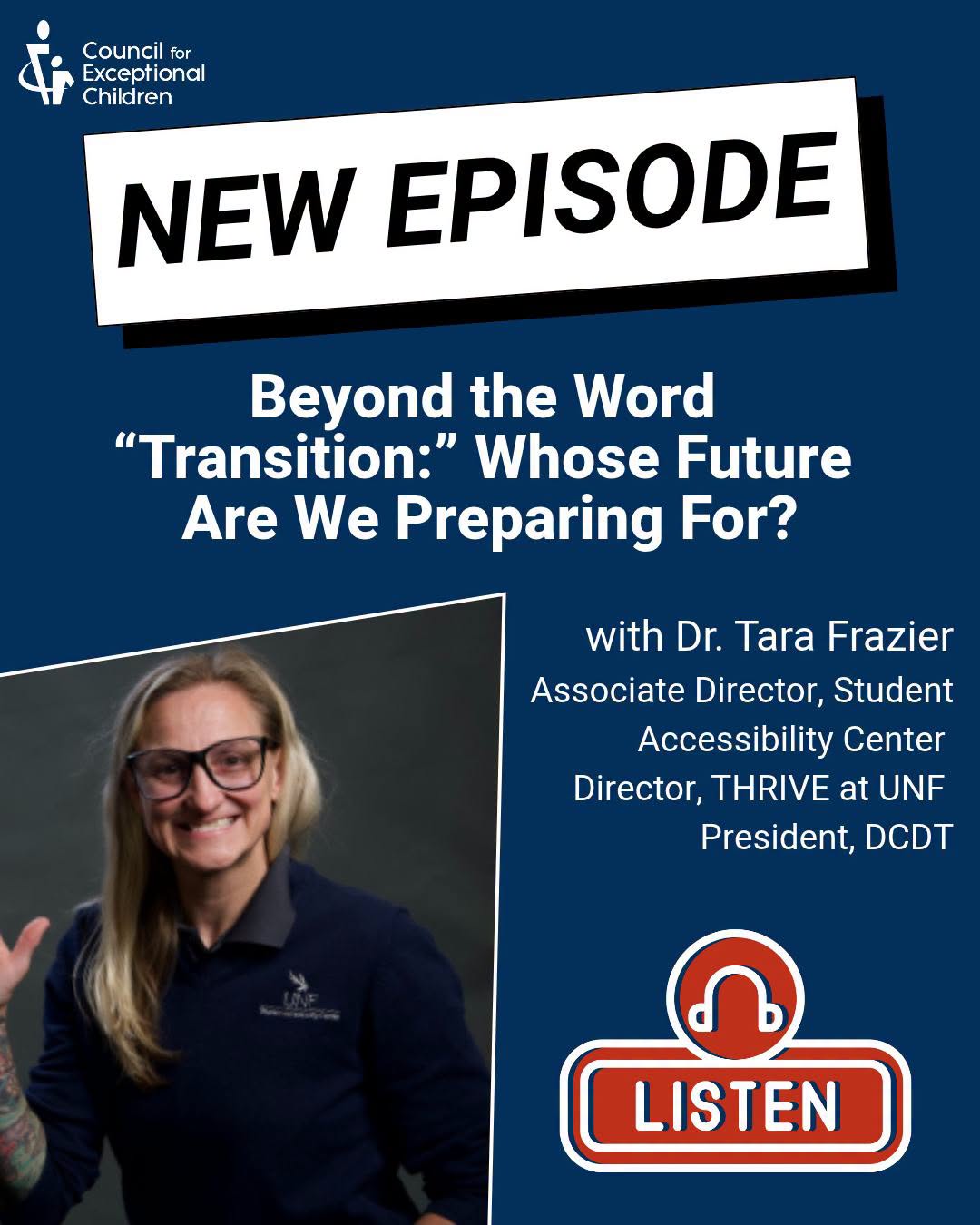
Beyond the Word "Transition": Whose Future Are We Preparing For?
In this episode of Rewriting the Narrative, host Ben Tillotson welcomes Dr. Tara Frazier, associate director of the Student Accessibility Center and director of the THRIVE program at the University of North Florida, and president of CEC’s Division on Career Development and Transition (DCDT), which is celebrating its 50th anniversary. Frazier challenges traditional ideas about transition, describing it as a lifelong process centered on “living, learning, and working” rather than simply preparing students with disabilities for employment. The conversation explores how person-centered planning, higher expectations, and opportunities to take risks and learn from failure can help individuals with disabilities build confidence and independence. Frazier discusses the role of CEC–DCDT transition competencies in preparing professionals, the importance of creating accessible communities, and how educators can prepare students for a rapidly changing world.
| | | |
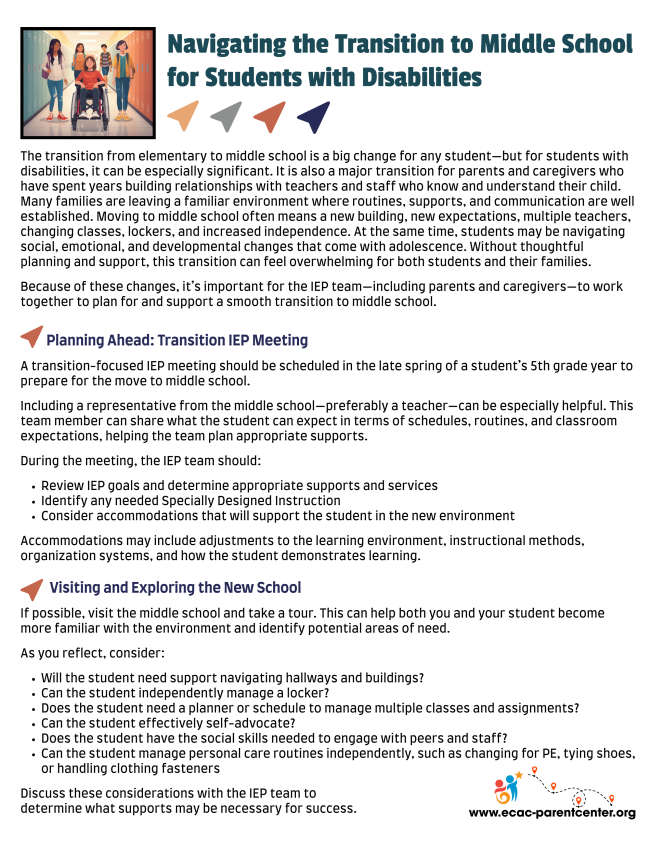
Navigating the Transition to Middle School for Students with Disabilities
The transition from elementary to middle school is a big change for any student—but for students with disabilities, it can be especially significant. Because of these changes, it’s important for the IEP team—including parents and caregivers—to work together to plan for and support a smooth transition to middle school.
| | | |
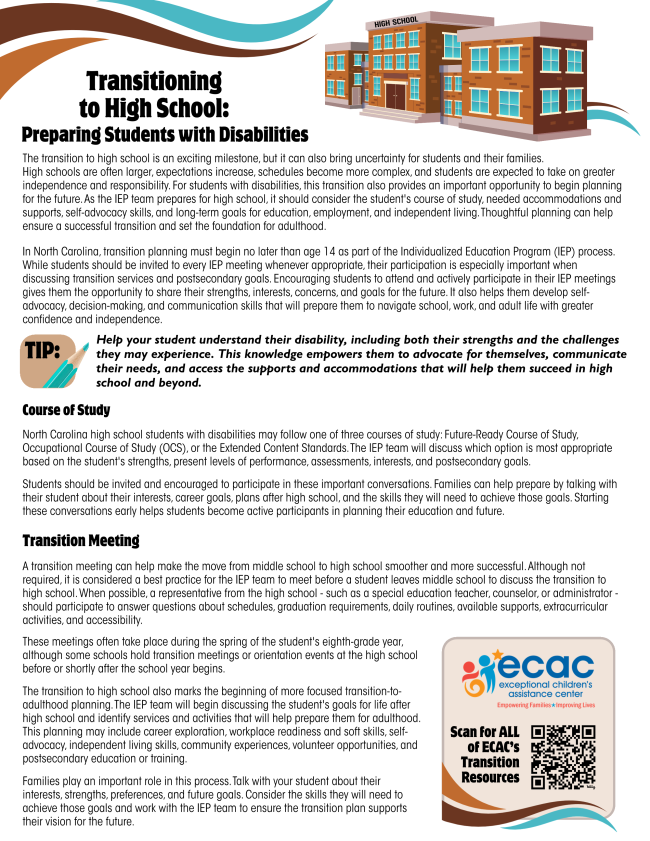
Transitioning to High School: Preparing Students with Disabilities
The transition to high school is an exciting milestone, but it can also bring uncertainty for students and their families. High schools are often larger, expectations increase, schedules become more complex, and students are expected to take on greater independence and responsibility. For students with disabilities, this transition also provides an important opportunity to begin planning for the future.
| | | |
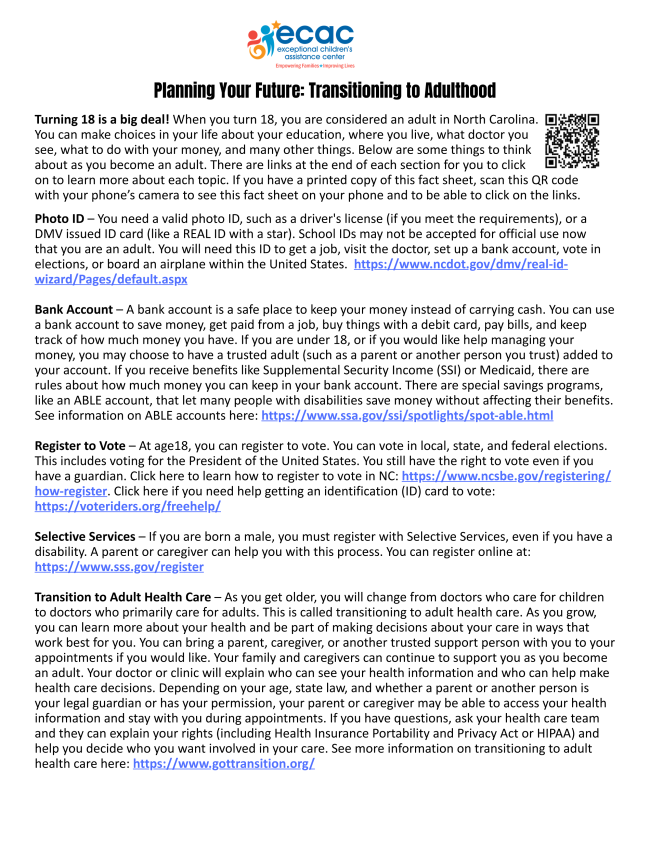
Planning Your Future: Transitioning to Adulthood
Turning 18 is a big deal! When youth turn 18, they are considered an adult in North Carolina. They can make choices in their life about their education, where they live, what doctor they see, what to do with their money, and many other things. This resource covers a variety of things to think about as youth become an adult.
| | | |
College Access - Disability Rights After High School A Resource Document
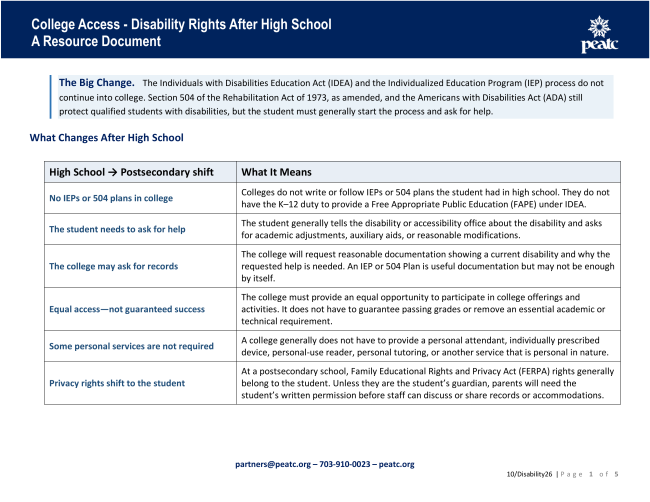
Students with disabilities still have important legal protections in college, but the process for receiving accommodations changes, and students take on more responsibility for requesting the supports they need. Understanding these differences before graduation can help students and families feel more prepared for the transition. PEATC’s College Access: Disability Rights After High School provides information on what to expect and how to prepare for success in college.
| | |
Honoring a Legacy: The Matthew C. Graziadei Award
After many years of celebrating the achievements of young people with disabilities, the Matthew C. Graziadei Award has come to a close.
Established in memory of Matthew C. Graziadei, this special award has recognized the determination, accomplishments, and contributions of young people with disabilities as they prepare for adulthood.
We are deeply grateful to the Graziadei family for their generosity and support over the years and for entrusting ECAC with the opportunity to honor Matthew's life and legacy.
While this chapter is ending, our commitment to celebrating the accomplishments of young people with disabilities continues. ECAC is exploring new ways to recognize and celebrate students with disabilities as they prepare for the transition to adulthood, and we look forward to sharing more in the future.
| | | | | | |