The latest in substance use disorders and pain management education for healthcare providers | |
| |
Greetings,
Welcome to the October edition of the MACS Monthly newsletter!
Recent federal legislation has brought significant changes to Medicaid eligibility that may affect patients in Maryland. Changes for some non-citizens take effect October 2026, with work requirements and more frequent renewal timelines for certain adults beginning January 2027. Providers are encouraged to stay informed and help patients understand how these changes may affect their coverage. Visit the Maryland Department of Health's Medicaid changes page for the latest information and resources.
October also brings American Pharmacists Month, a dedicated time to honor the contributions of pharmacists and pharmacy technicians to patient health and safety. Pharmacy professionals are uniquely positioned to support overdose prevention and expand access.
At MACS, pharmacists are an integral part of our interdisciplinary team of addiction medicine specialists. They work directly with providers to answer clinical questions about evidence-based dosing, harm reduction tools and a range of patient-related concerns. This month, we celebrate the pharmacy professionals who show up every day for patients living with SUDs and chronic pain.
Providers, including pharmacists, can access support in caring for patients with SUDs and chronic pain by scheduling an individualized consultation or registering for an upcoming training with the MACS team of addiction medicine specialists. Call 1-855-337-MACS (6227), email macs@som.umaryland.edu or visit www.marylandmacs.org to learn more.
Explore this newsletter and the tools available on the MACS website for additional information about provider education and treatment resources.
– The MACS Team
| |
OCTOBER 24: NATIONAL PRESCRIPTION DRUG TAKE BACK DAY | | |
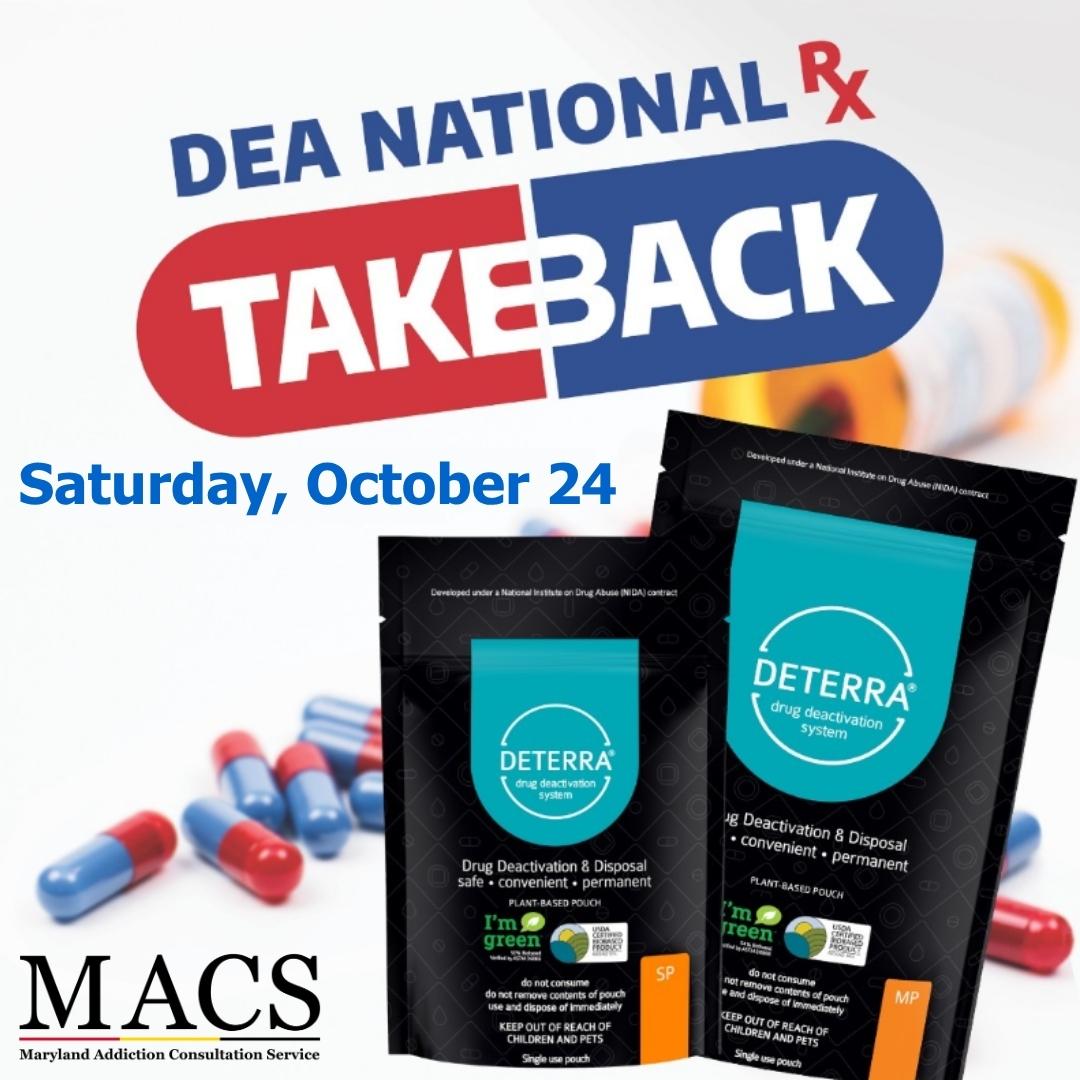
National Prescription Drug Take Back Day is on Saturday, October 24. In addition to finding nearby collection sites, help your patients safely dispose of unused medications from home by requesting free, easy-to-use Deterra drug disposal pouches from MACS.
Please note that this form is for healthcare providers only and should be used to order pouches for their practices and organizations.
| | | |
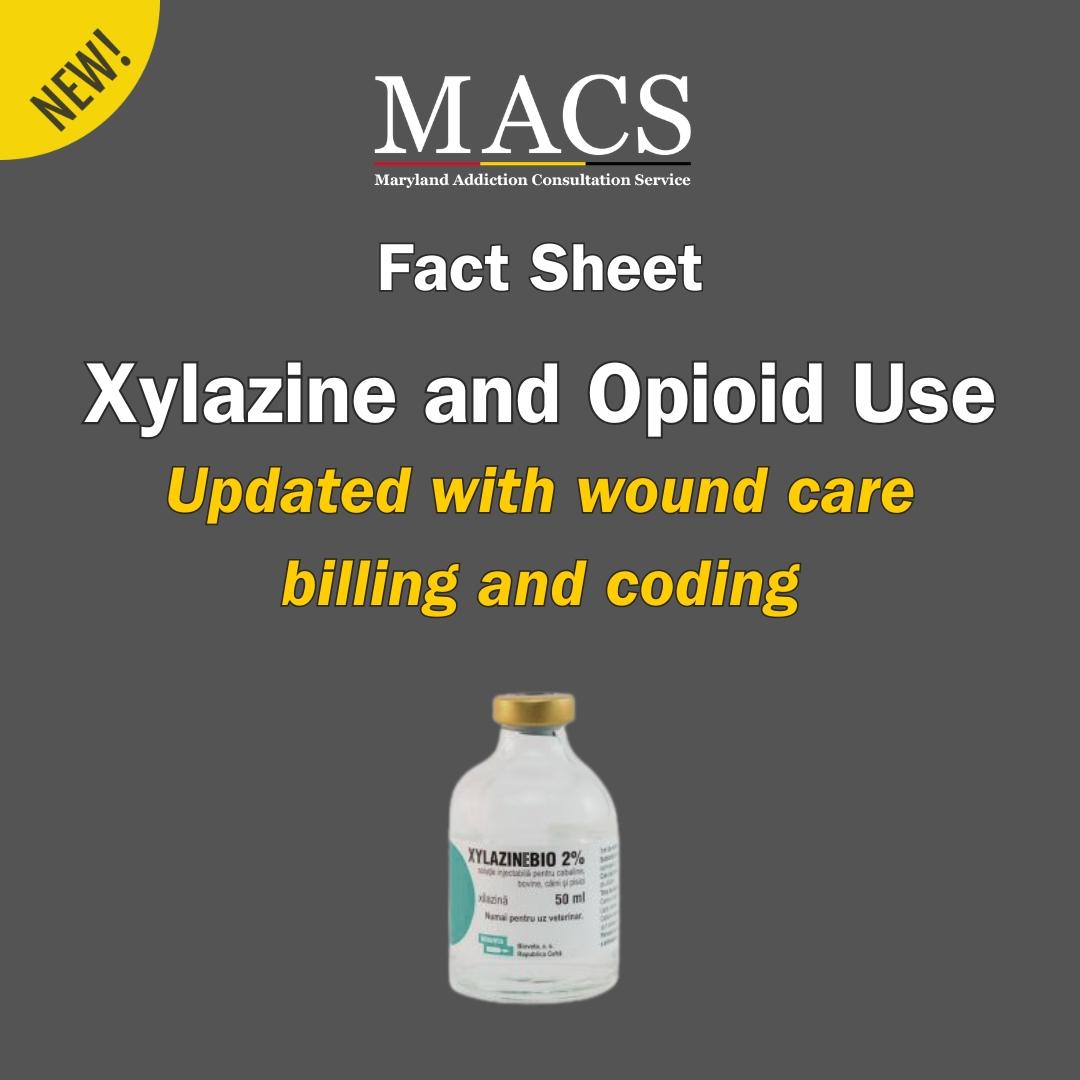
We have updated our Xylazine and Opioid Use fact sheet to reflect critical new clinical and administrative guidance for Maryland prescribers and healthcare teams.
Our updated fact sheet highlights new ICD-10-CM diagnostic codes (T65.841–T65.844) designed to support providers in seeking reimbursement for treating xylazine-related harms while helping track the prevalence of xylazine. Please utilize the new codes when treating xylazine wounds.
| | Upcoming MACS Training Opportunities | | | | |
MACS Webinar
Substance Use Disorders in Older Adults
Thursday, October 22 | 12:00 – 1:00 p.m. ET
Presented by MACS Consultant Michael Fingerhood, MD
| | | | |
MACS Webinar
Community-Based Treatment for Opioid Use Disorder: Models, Access, and the Path Forward
Monday, December 7 | 12:00 – 1:00 p.m. ET
Presented by Will Garneau, MD, MPH, MHS, Assistant Professor, Johns Hopkins University School of Medicine
| | Upcoming Trainings of Interest | | | | |
Grayken Center for Addiction Training & Technical Assistance
Between the Leaves: Prevalence, Withdrawal and Approaches to Care for Kratom Use
Thursday, October 8 | 3 – 4 p.m. ET
| | | | |
NAADAC, the Association for Addiction Professionals
The Battle at Home: Exploring the Complexities of PTSD, Substance Misuse, and Other Co-Occurring Conditions in the African American Veteran Population
Wednesday, October 14 | 12 – 1:30 p.m. ET
| | | | |
Yale Program in Addiction Medicine
Novel Approaches to Buprenorphine Extended-Release and Methadone Initiation and Alpha-2 Agonist Withdrawal Management
Tuesday, October 27 | 12 – 1 p.m. ET
| | Join our learning communities for continuous case-based discussions and didactic presentations linking expert specialist teams with healthcare providers and their practices. MACS ECHO sessions count toward the required 8-hours of SUD training for DEA license renewal or registration. | | |
Opioid Treatment Program
Kratom: Clinical Perspectives for Addiction Professionals
Aaron Greenblatt, MD
Wednesday, October 7
12:30 – 1:30 p.m.
| | |
Maternal Health
Counseling on Prenatal Cannabis Use
Nishant Shah, MD, MPH, and Tina Suliman, MSPH
Tuesday, October 13
12 – 1 p.m.
| | |
Substance Use Care for the General Practitioner
Nurse Practitioners Advancing Substance Use Disorder Care in Maryland: Quality, Innovation and Advocacy
Marian Currens, CRNP
Wednesday, October 21
12:30 – 1:30 p.m.
| | |
Peer Recovery Specialists
Science Over Stigma: The Role of Medications for Opioid Use Disorder in Recovery
Devang Gandhi, MD
Monday, November 2
12:30 – 1:30 p.m.
| | POST OVERDOSE OUTREACH SURVEY | | |
Does your organization conduct post overdose outreach? If so, the Office of Overdose Prevention and Education requests your response to the survey described and linked below.
The purpose of this survey is to gather information about post overdose outreach in Maryland. The information gathered about Maryland’s programs will help the Office of Overdose Prevention and Education to plan and implement organizational and programmatic support for post overdose outreach activities in the state.
The survey will close on Friday, October 16.
If you have any questions, please contact the Non Fatal Overdose Program Coordinator at harriet.smith1@maryland.gov.
| | | | |