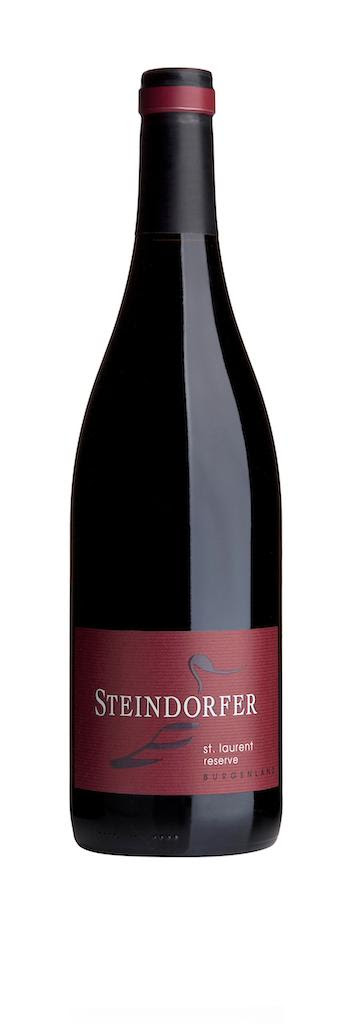
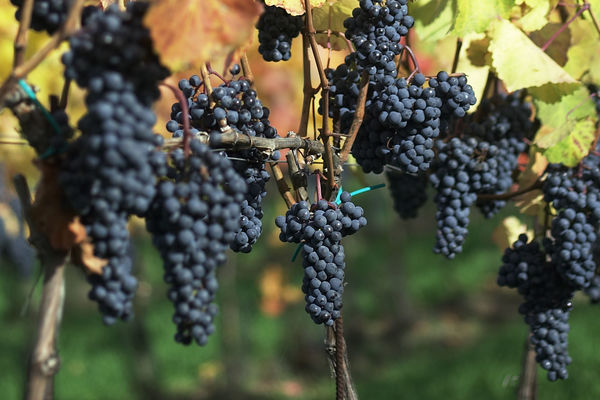
Sankt Laurent is a high-quality red grape variety belonging to the Pinot family. The variety is sometimes called Pinot St. Laurent. Since the more quality-oriented wine production, this red variety experienced a comeback.
The plantings in Austria have grown from 1000 acres in1999 to1922 acres in 2019.
The biggest plantings are in the region of Northern Burgenland (Neusiedlersee and Leithaberg) and Thermenregion in Austria. Other countries growing Sankt Laurent are Germany (1621ac, Rheinhessen and Pfalz), Czech (3190ac) and Slovakia (2320ac).
The origin of this variety is still not finally known, most likely Lower Austria / Stift Klosterneuburg is the place, but Burgundy is considered as well. The village of Saint Laurent in the Medoc is considered as well. The name of Sankt Laurent refers to St. Lawrence's Day - August 10th – this day the grapes begin to change color. DNA profiling is done in New Zealand, limited plantings are there as well, shows a progeny of Pinot Noir and Savagnin. The first mentioning has been in the year 1863 as “Sankt Laurenztraube” in the variety and vineyard plan of the Research Station for Viniculture in Klosterneuburg, Austria.
The variety is early budding, mid-early ripening, sometimes low in yield as Sankt Laurent can be difficult in the vineyard as to susceptibility to rot. Deep soils and a warm climate are required, otherwise, the variety is sensitive during flowering as well as late frost. The yield can change dramatically.
Sankt Laurent wines are dark and deep in color, very fruity, concentrated and the smell and taste remind of Morello Cherry and blackberries and shows affinity to oak. The acidity can be from moderate to high, the moderate tannin is rounded and soft. The wines are of high quality and show potential to age. Compared to Pinot Noir the wines from Sankt Laurent are more powerful.
The best food pairings are baked dishes, cheeses, BBQs, game and wildfowl, roast beef, and of course Turkey!!!