Update — June 2026: What really happened to the young Chinook
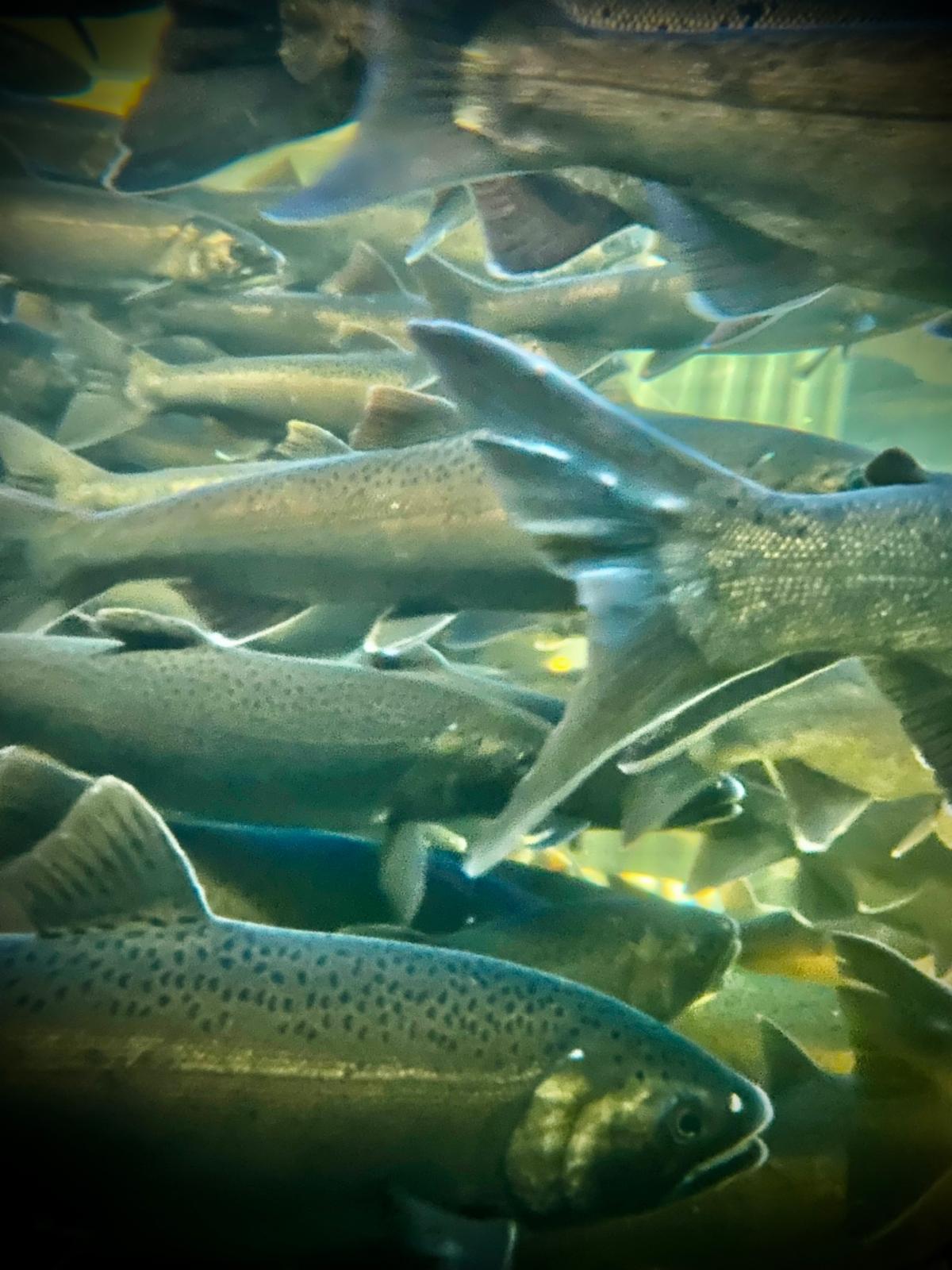
The short version. In early June, large numbers of young Chinook salmon turned up dead in the upper Klamath River. They were almost entirely hatchery fish — part of the 675,000 young Chinook California released on May 14 from the Fall Creek Hatchery, about 7 miles above the old Iron Gate Dam site and roughly 200 miles from the ocean.
They went into the upper river in mid-May, and — according to the Oregon State University scientist examining them — instead of heading for the ocean they lingered for weeks right where a natural fish parasite (C. shasta) concentrates. As the water warmed and parasite levels climbed, sitting in that reach is what made them sick. Fish that move down to cooler water and reach the sea can shed the infection.
The wild run had mostly passed through weeks earlier, while the water was still cold, and largely escaped the parasite. And the threatened fish the river’s flow rules are written to protect — coho salmon — live in cool tributaries, not the warm summer mainstem where this happened.
|