Sasakawa USA Newsletter June Highlights | | |
Included in this issue of the newsletter:
- Message from Sasakawa USA's Chairman Satohiro Akimoto
June Activities
- Japan US Military Program (JUMP): JUMP Honolulu
- U.S.-Japan Research Exchange: Whole Community Resilience Research in Tokyo and Noto
- US-Japan NEXT Alliance Initiative: Allied on AI Assurance: New Directions Under New Administration for U.S. and Japan
- Washington Kenkyu Group: Discussion with Mr. Kazuya Fukuhara
- U.S.-Japan Research Exchange: U.S.-Japan Alliance Briefing with Mr. James Schoff
Announcements
- Lt. Gen. (ret) Leonard (Leo) Kosinski Joins Sasakawa USA as Distinguished Senior Fellow (non-resident)
- US-Japan NEXT Alliance Initiative: 2025 Summer Intern Ms. Hannah Williams
| | Message from Sasakawa USA's Chairman Satohiro Akimoto | |
|
Japan is in the midst of a very important election. The Upper House election scheduled on July 20 will surely have a significant impact on the future of Japanese politics and U.S.-Japan relations. The ruling LDP and Komeito coalition have been facing a very tough battle over economic hardships, financial scandals, and low popularity of Prime Minister Ishiba. The LDP’s traditional conservative support base has deserted the party to a great extent to other “conservative” parties, such as Sanseito, which has been gaining momentum with the slogan “Japanese First.” Moreover, Komeito seems to be experiencing serious decline in its ability to rake in votes from its religious-based group.
The Upper House consists of 248 seats, with half of the chamber up for election every three years. Currently, the LDP and Komeito hold 141 seats, while the opposition parties hold 98 seats, with 9 vacancies.
The LDP and Komeito have a combined 66 seats up for the July 20 election, 52 seats for the LDP and 14 seats for Komeito. Judging from the disastrous defeat that the LDP and Komeito suffered in the recent Tokyo Metropolitan Assembly election, the LDP and Komeito have an uphill battle. While it is highly likely that the LDP and Komeito will lose seats, the question is how badly the two parties will lose. If they can secure 50 out of the 66 seats, they will maintain the majority, holding on to 125 seats of the total 248.
If the LDP and Komeito manage to maintain the majority, even by a thin margin, it will be a huge sigh of relief for them. Prime Minister Ishiba would then continue as the leader. If the LDP and Komeito lose the majority by a small margin though, say up to five seats short of the majority, Prime Minister Ishiba may try to continue on as Prime Minister. However, if the LDP and Komeito lose by a big margin, say more than ten seats short of the majority, Prime Minister Ishiba will likely have to step down. This is the nightmare scenario for the LDP – the LDP and Komeito coalition would face the prospect of not being able to choose the Prime Minister as they would have lost the majority in both the Upper and Lower House.
Since it is believed that Komeito will most likely secure at least 10 seats of the 14 they have up for grabs, the LDP needs to secure 40 seats for the coalition to reach the magic number of 125 seats. Based on polling data and past voting behaviors, it is expected that the LDP will secure at least 25 seats in the proportional representation and districts with two or more seats. If this calculation is correct for the proportional representation and districts with two or more seats, the key will be how well or badly the LDP will do in the remaining 32 districts with only one seat open. It is not clear whether the LDP can win 15 seats out of those 32 districts, considering the strong headwinds the party faces.
The future of Japanese politics is not certain. Even if the LDP and Komeito coalition maintain the majority in the Upper House, their margin of the win will likely be small. Furthermore, the fact remains that the LDP and Komeito do not have the majority in the Lower House. Moreover, whoever the successor to Prime Minister Ishiba is, they might choose to dissolve the Lower House to reset the power balance in the chamber. Sasakawa USA has invited Mr. Koji Sonoda, deputy editor-in-chief of the Political News Section at Asahi Shimbun, to present his views on understanding the House of Councilors election and the implications for Japan’s political landscape, on Monday, July 28. He will help us make sense of what is happening in Japanese politics.
| | |
Japan US Military Program (JUMP):
JUMP Honolulu
| | |
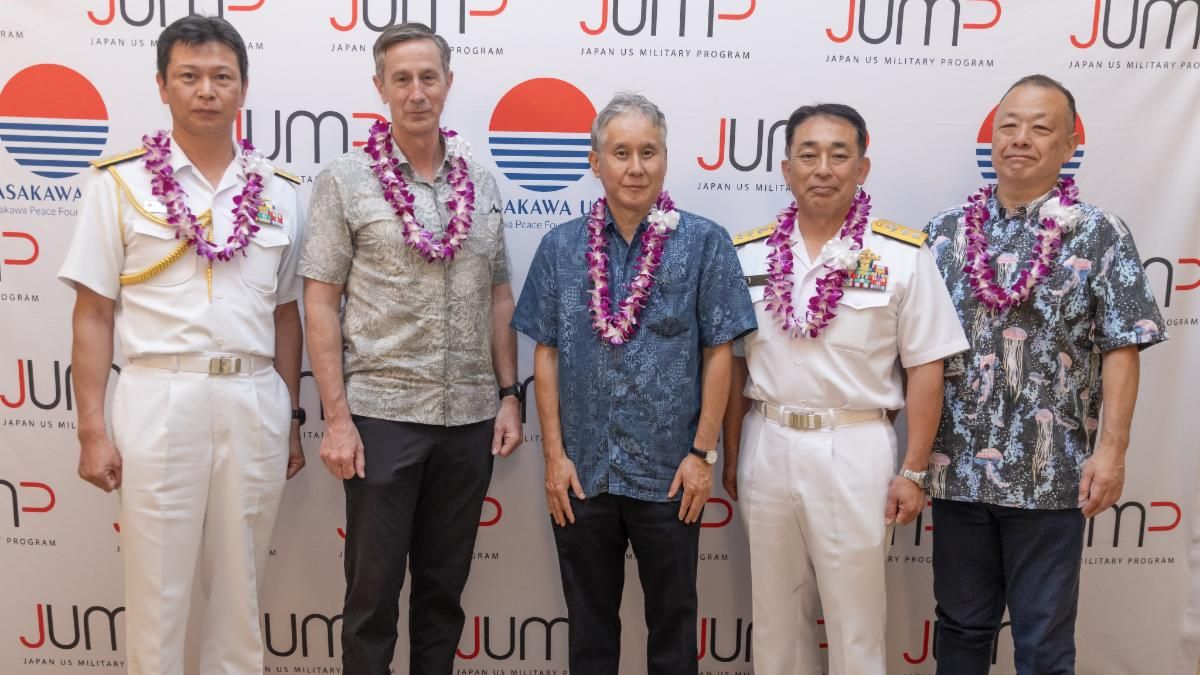
On June 27, Sasakawa USA held a Japan US Military Program (JUMP) event in Honolulu, Hawaii, in partnership with the Embassy of Japan, the Japan-America Society of Hawaii, and the Consulate-General of Japan in Honolulu. General Kevin Schneider (USAF), commander of the Pacific Air Forces shared keynote remarks at the event, discussing his decades of experience working within the U.S.-Japan security alliance through his deployments in Japan and his command experience in the Indo-Pacific. Governor of Hawaii Josh Green also attended the event and shared remarks about Hawaii's important role in the U.S-Japan security alliance and the broader bilateral relationship. Additional remarks were made by Mr. Yoshinori Kodama, Consul-General of Japan in Honolulu; Rear Admiral Takaaki Hayamizu (JMSDF), defense and naval attaché at the Embassy of Japan; Rear Admiral Hiroshi Watanabe (JMSDF), commanding officer of the Japan Training Squadron, and Ms. Karen Knudsen, chair of the Japan-America Society of Hawaii.
JUMP Honolulu was held to mark a port visit at Pearl Harbor by the Japan Training Squadron, an annual training mission for newly commissioned officers of the Japan Maritime Self-Defense Force that develops their experience at sea and allows them to work alongside partners from countries around the world. Over 200 people attended JUMP Honolulu, primarily U.S. and Japanese servicemembers as well as invited guests from the local community. Musical performances were given by the Japan Training Squadron's band and taiko drum group, deepening cultural ties by playing music from both Japan and the U.S.
JUMP is made possible by financial support from the Embassy of Japan.
Photo (left to right): RADM Takaaki Hayamizu (JMSDF), Gen Kevin Schneider (USAF), Mr. Yoshinori Kodama, RADM Hiroshi Watanabe (JMSDF), Dr. Satohiro Akimoto
| | |
U.S.-Japan Research Exchange:
Whole Community Resilience Research in Tokyo and Noto
| | |
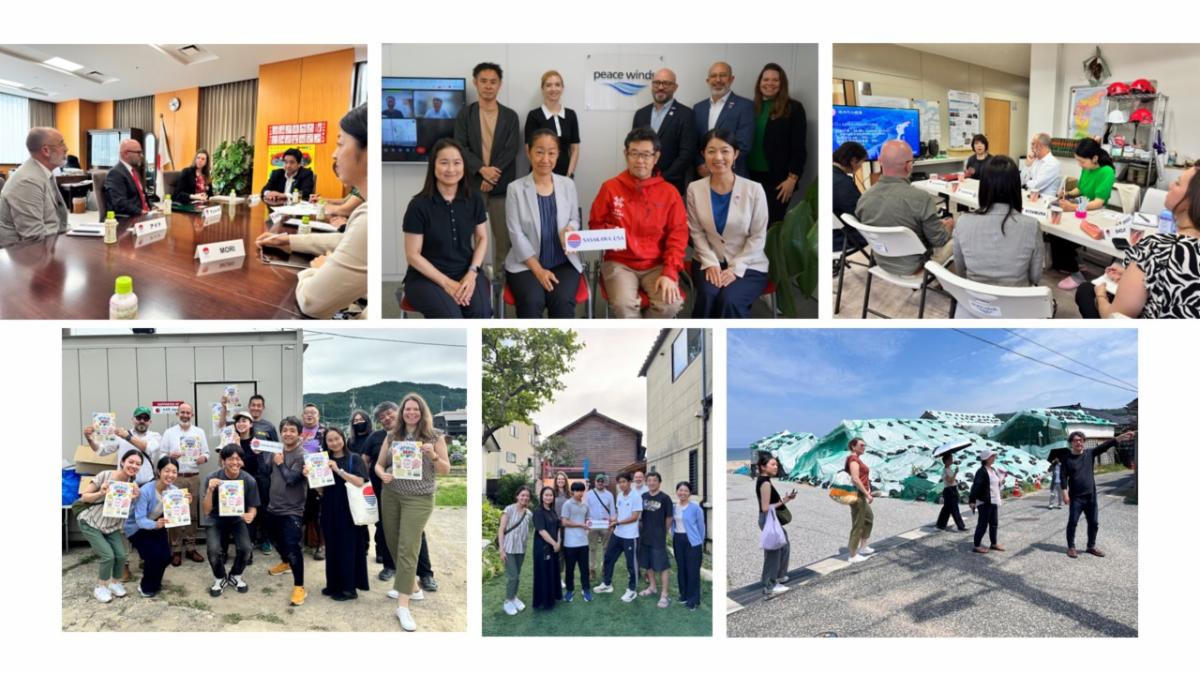
From June 23 to 29, Sasakawa USA Director of Programs Shanti Shoji led a delegation of four research fellows—Mr. Corey Eide, practice leader for state and local government and nonprofit advisory at BDO USA; Dr. Regardt Ferreira, director of Tulane University’s Disaster Resilience Leadership Academy; Dr. Miwako Kitamura, specially appointed associate professor of Tohoku University’s Startup Incubation Center; and Ms. Yumiko Mori, founder and chairwoman of Comachiplus—to Tokyo and Noto through the U.S.-Japan Research Exchange.
The delegation began its research in Tokyo to understand Japan’s formal disaster response apparatus, engaging directly with government agencies, academic experts, and civil society organizations at the forefront of disaster risk reduction (DRR) and community resilience. The delegation’s path then led to the Noto Peninsula, a region still grappling with the aftermath of the devastating 2024 earthquake and torrential rains that struck later that year. Here, the delegation spoke with the unsung heroes whose ingenuity and determination are driving recovery and breathing new life into Noto – such as farmers tending to revive fields, a new radio station disseminating information regarding recovery efforts, artisans restoring lost crafts, chefs reinvigorating the local food scene, youth shaping the future, and shop owners reopening their doors. Also in Noto, the delegation had the unique opportunity to engage with local government officials and civil society organizations who were the first responders to the disasters, such as Suzu City Hall, Noto Town Hall, and Peace Winds Japan and their airborne search-and-rescue team, ARROWS.
Through this weeklong research trip, the delegation gained an understanding of the successes and challenges that these affected communities experienced in the face of the earthquake and rains, and explored the factors that led to various outcomes across differing regions of the peninsula. They also gained valuable insights from those who are working to rebuild their communities to apply in their own work in the U.S. and Japan. The research fellows are now preparing a joint paper and policy brief, sharing lessons learned and recommendations for DRR and whole community resilience, which will be published on the Sasakawa USA website.
Photos (top row, left to right):
- The U.S.-Japan Research Exchange delegation meets with Min. Manabu Sakai, Minister of State for Disaster Management and Member of the House of Representatives.
- The delegation with Peace Winds Japan, an international NGO that was one of the first responders to the earthquake in Noto through their ARROWS team.
- In Suzu, the delegation met with Ms. Toyoko Sanjo, Director of the Health Promotion Center at Suzu City Hall.
Photos (bottom row, left to right):
- The delegates visited members of the Machino Radio team, a community-driven temporary disaster FM station at their prefab studio in the town of Machinomachi.
- In Wajima, the delegation engaged with local youth who have been working to bring their community together by building a new public park.
- The delegation on a field visit to Kuroshima guided by Mr. Takuo Kurosawa, a community leader spearheading the revitalization and rebuilding of the town by blending its traditional and beautiful landscapes with new spaces for artisans to showcase their work.
| | |
US-Japan NEXT Alliance Initiative:
Allied on AI Assurance: New Directions under New Administration for U.S. and Japan
| | |
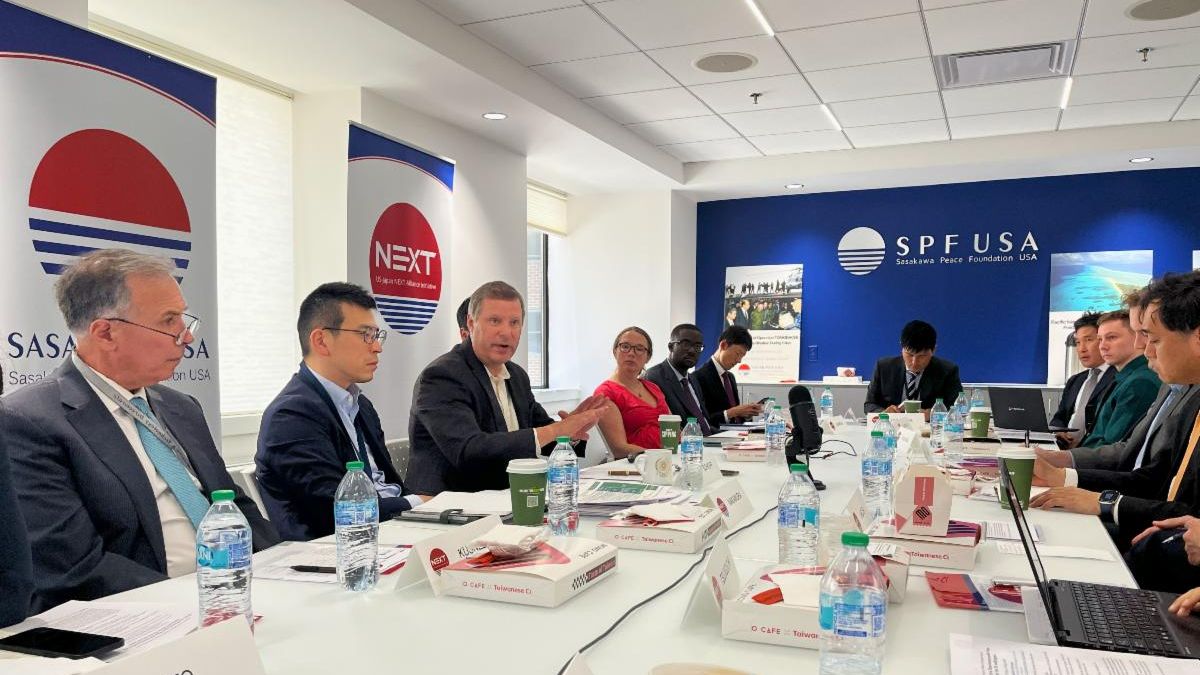
The US-Japan NEXT Alliance initiative hosted a bilateral roundtable dialogue on June 24 to discuss evolving American and Japanese AI governance approaches for AI safety and security, identify possible areas of collaboration, and help mitigate areas of divergence. Dr. Takeshi Takahashi, Director General of the National Institute of Information and Communications Technology (NICT)’s Center for Research on AI Security & Technology Evolution (CREATE), presented on NICT’s Initiative with a special focus on future strategic challenges for Japan and a new BRIDGE project to expand US-Japan AI safety research networks. Ms. Kellee Wicker, former director of the Science & Technology Innovation Program at the Wilson Center, discussed early indicators for the Trump administration's new direction on AI governance; and Mr. Tomohiro Nakamura, counsellor of cyber and digital issues at the Embassy of Japan, briefed the group on Japan’s new AI Utilization Promotion Act. A hybrid group of over 20 experts including current and former government officials, lab researchers, think tank scholars and engineers then built upon the opening remarks in group dialogue. A summary of the event will be published soon.
Photo: Sr. Director James Schoff leads the participants in discussion on allied AI initiatives.
| | |
Washington Kenkyu Group:
Discussion with Mr. Kazuya Fukuhara
| | |
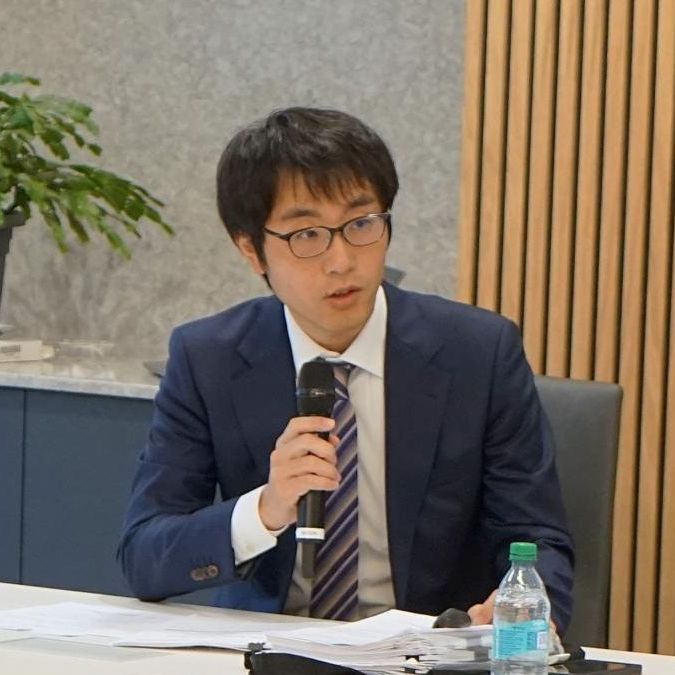
On June 2, Sasakawa USA welcomed Mr. Kazuya Fukuhara, senior representative and senior research fellow at the Japan International Transport and Tourism Institute, USA (JITTI USA), for a Washington Kenkyu Group discussion on the current state of U.S. maritime policy and potential partnerships in shipbuilding with Japan. Mr. Fukuhara provided insights into the growing sense of urgency surrounding U.S. maritime policy and highlighted recent executive and legislative efforts aimed at revitalizing the U.S. shipbuilding industry. His remarks were followed by a lively discussion with attendees on how Japan should respond to this trend.
Photo: Mr. Kazuya Fukuhara, senior representative and senior research fellow, JITTI USA
| | |
U.S.-Japan Research Exchange:
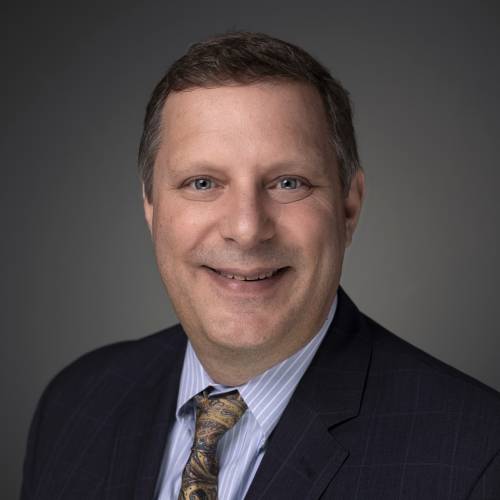
U.S.-Japan Alliance Briefing with Mr. James Schoff
| | |
On June 10, Sasakawa USA hosted a virtual pre-departure briefing for the two U.S. delegates who participated in the U.S.-Japan Research Exchange on Whole Community Resilience: Dr. Regardt Ferreira, director of Tulane University’s Disaster Resilience Leadership Academy, and Mr. Corey Eide, practice leader for state and local government and nonprofit advisory at BDO USA. The session featured Mr. James Schoff, senior director of the US-Japan NEXT Alliance Initiative, who provided an insightful overview of the U.S.-Japan relationship, highlighting its historical roots, current challenges and notable successes both bilaterally and within the broader Indo-Pacific region. With the delegation’s focus on disaster risk reduction (DRR), Mr. Schoff also underscored the significance of Operation Tomodachi following the Great East Japan Earthquake in March 2011 in strengthening the U.S.-Japan alliance.
This preparatory session set the stage for the U.S.-Japan Research Exchange on Whole Community Resilience, which took place from June 23 to 29. During the program, Dr. Ferreira and Mr. Eide traveled to Tokyo and Noto alongside their Japanese counterparts, Dr. Miwako Kitamura, specially appointed associate professor of Tohoku University’s Startup Incubation Center, and Ms. Yumiko Mori, founder and chairwoman of Comachiplus.
Photo: Mr. James Schoff
| | Lt. Gen. (ret) Leonard (Leo) Kosinski Joins Sasakawa USA as Distinguished Senior Fellow (non-resident) | | |
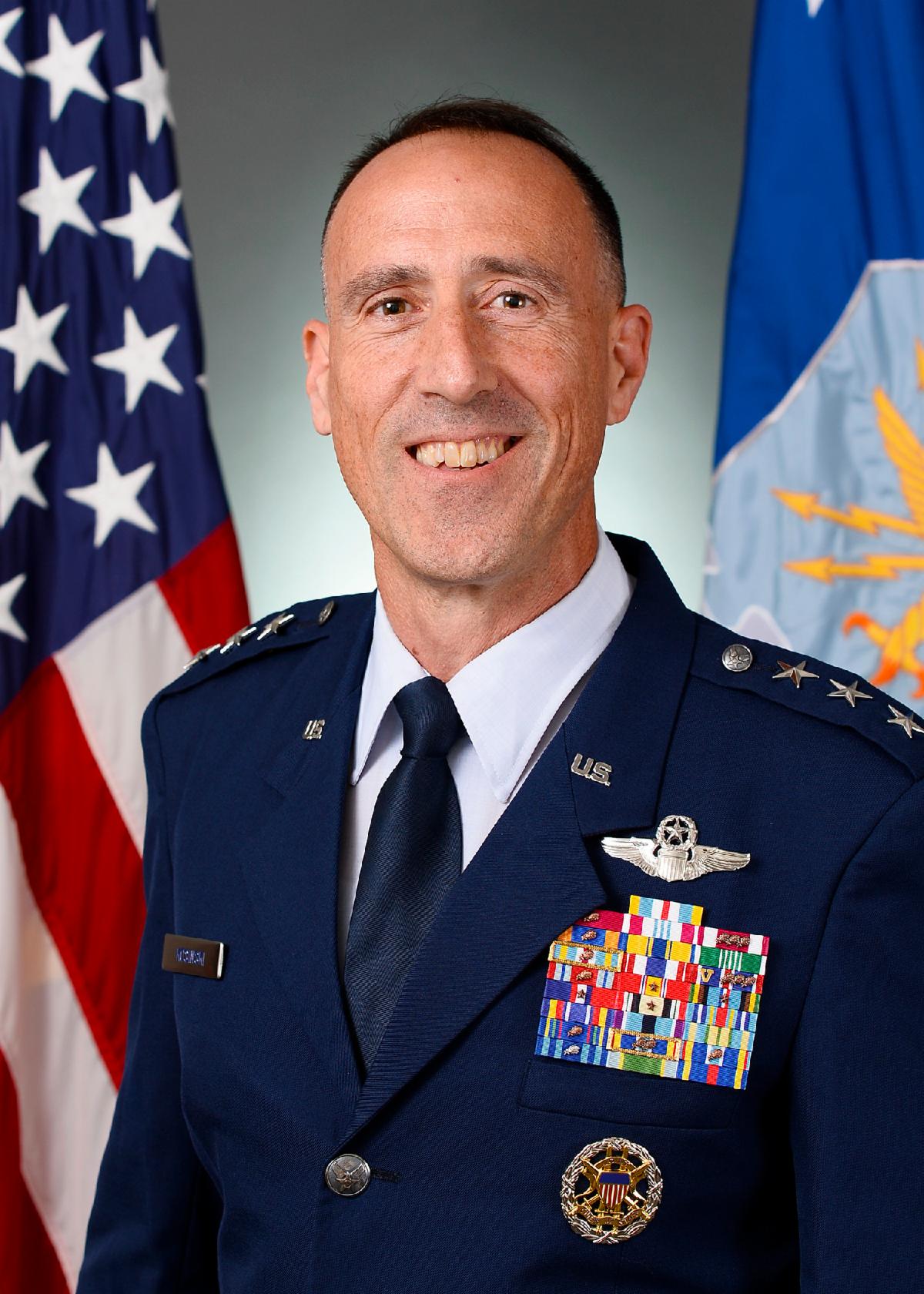
Sasakawa USA is pleased to announce that Lt. Gen. (ret) Leonard (Leo) Kosinski has joined our team as a distinguished senior fellow (non-resident).
Lt. Gen. Kosinski brings extensive knowledge and experience in U.S. national security, including military logistics and the Defense Industrial Base. Through his engagement with Japan’s Self-Defense Forces and academic circles, he has also developed a deep understanding of Japan’s security landscape. With his appointment as distinguished senior fellow (non-resident), we are confident that Lt. Gen. Kosinski’s expertise will further enhance the activities and impact of Sasakawa USA.
Lt. Gen. Kosinski served for 31 years as a commissioned officer after graduating from the U.S. Air Force Academy and completed his pinnacle assignment as Director for Logistics, Joint Staff, where he was responsible for integrating logistics planning and execution in support of global operations for the U.S. Department of Defense. Prior to this position, he was Deputy Commander, Fifth Air Force, responsible for over 30,000 U.S. personnel across Japan and coordinated directly with senior Japan Self-Defense Force and Japan Ministry officials as well as other Japanese organizations to strengthen security in the Indo-Pacific region. He was a command pilot with over 3,300 flight hours.
Lt. Gen. Kosinski is the Chief Strategy Officer at Airspace Intelligence (ASI), a cutting-edge aerospace and defense company specializing in software-driven mission-critical operations and optimizing the world’s most valuable assets. He was an Olmsted Scholar in Japan and holds multiple advanced degrees, including a Master of Science in Industrial Engineering from Texas A&M, a Master of Business Administration from Hitotsubashi University where he studied under Prof. Ikujiro Nonaka, and a Master of Arts in International Relations from The Fletcher School of Law and Diplomacy, Tufts University.
He is also Senior Fellow at National Defense University where he mentors senior leaders on contested logistics, supply chain, Defense Industrial Base, and international/multinational operations.
His exceptional service has been recognized with various awards, including the Defense Distinguished Service Medal, and leadership programs such as the U.S.-Japan Leadership Program. Additionally, his contributions to international military cooperation have been honored with accolades like the Order of the Rising Sun, Gold Rays with Neck Ribbon, for his efforts in fostering U.S.-Japan relations.
Photo: Lt. Gen. (ret) Leonard (Leo) Kosinski
| | |
US-Japan NEXT Alliance Initiative:
2025 Summer Intern Ms. Hannah Williams
| | |
Sasakawa USA welcomes Ms. Hannah Williams as the 2025 US-Japan NEXT Alliance Summer Intern. Ms. Williams is a rising senior at Wellesley College, majoring in International Relations—Political Science with a minor in Japanese. She is from the Dallas-Ft. Worth area in Texas and Miyazaki Prefecture in Japan. Ms. Williams's strong academic performance, focus on Asia-Pacific security and East Asian studies, and passion for the U.S.-Japan alliance made her a top candidate among the many high-quality undergraduate applications from across the country.
Reporting directly to Sr. Director Jim Schoff, she supports NEXT Alliance Initiative projects related to U.S.-Japan cybersecurity Alliance mapping, developments on Japan’s recent AI governance legislation and alliance AI collaboration, and assisting with the bimonthly Alliance Digest. In addition, she will support Sasakawa USA programs by developing an event focused on Japanese rap as soft power. As an intern, she is thrilled to contribute to the NEXT Alliance Initiative’s mission and to enrich her academic and professional development for her future U.S.-Japan alliance endeavors.
Photo: Ms. Hannah Williams
| | |
Sasakawa Peace Foundation USA
1819 L Street, NW, Suite 300
Washington, DC 20036
+1.202.296.6694
| | | | |